
We can gnash our teeth. We can pull our hair. But no matter what we do, the Creation Museum of Answers In Genesis has pulled it off. With its new $1.5 million dinosaur exhibit, the flagship museum of young-earth creationism has successfully mimicked the outward appearance of mainstream scientific museums.

Big Valley Creation Science Museum
It used to be easy. Creationist museums used to be only sad little affairs. They used to look like this one from Alberta, Canada. The Big Valley Creation Science Museum, pictured here, may do a great job in spreading the creationism gospel. But no idle tourist would be likely to confuse it with mainstream museums such as the Smithsonian’s Museum of Natural History or Boston’s Museum of Science.
It used to be easy for outsiders like me to mock the lame pretensions of the many creation museums that dotted our great land. And Canada. As one angry visitor noted, even the bigger creation museums used to have strange, sad displays like this one from San Diego’s Creation and Earth History Museum.

Not a Lot of Big Bang for your Buck
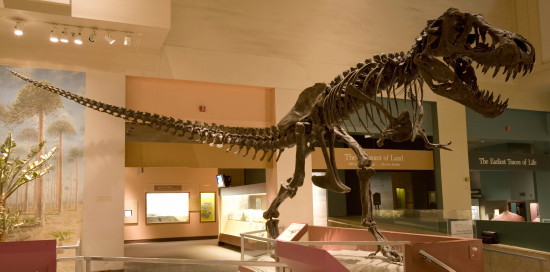
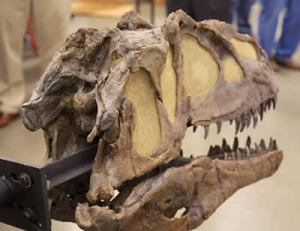
But here’s the new challenge: Can you tell which of the three pictures below comes from Kentucky’s Creation Museum display and which come from the Smithsonian and Boston’s Museum of Science? As arch-creationist Ken Ham explained gleefully recently, this new display of a million-dollar Allosaurus fossil puts Ham’s Creation Museum in the same league as those mainstream museums. As Ham put it,
For decades I’ve walked through many leading secular museums, like the Smithsonian in Washington, D.C., and have seen their impressive dinosaur skeletons. But they were used for evolution. Now we have one of that class, and it will help us defend the book of Genesis and expose the scientific problems with evolution.
So take the Creation-Museum challenge. Just by looking, can you tell which of these images comes from a young-earth creationist museum and which come from mainstream ones? (Don’t cheat. But once you’ve given it a try, you can click on each image to see its provenance.)

Is This “Real” Science?”

Or Is It This One?
Millions of Years? Or Millions of Dollars?
This successful mimicry is important. In creationism’s twentieth-century struggle to establish alternative educational institutions to rival those of mainstream science, young-earth creationists often wrestled with significant disadvantages. Not least of these were questions of funding, as historian Ron Numbers described in his must-read book The Creationists and I detailed in my 1920s book. In the case of this priceless fossil, rich creationists Michael and Stephen Peroutka donated it to help the Creation Museum with its work.
It would be nice to think that America’s public would make its decisions about the age of the earth and the origins of humanity by weighing evidence and considering counter-claims. To people like me, the Creation Museum’s claim that this well-preserved fossil serves as proof of a worldwide flood 4,300 years ago seems absurd.
But I don’t think we need to be very cynical to guess that appearance matters. As Dan Kahan argues, what people believe about creation and evolution usually has more to do with their cultural identity than it does with scientific evidence. If Answers In Genesis can make their museum LOOK like the Smithsonian, many visitors will assume it is just as good. And if Answers In Genesis can crank out peer-reviewed science publications that attest to the scientific veracity of their claims, many readers will assume their science is just as good.
So take the Creation Museum challenge. If you can’t tell the difference, how can you expect anyone else to?




 I Love You but You're Going to Hell