
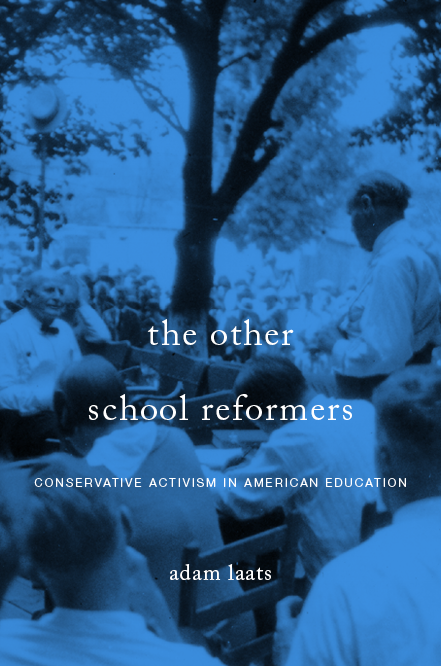
What do you do when your kids misbehave? Do you hit them? Or is that a form of abuse? It seems as if our culture is confused about this question. Throughout the twentieth century, as I argue in my upcoming book, conservatives argued that parents and teachers MUST beat children in traditional ways. Anything else threatened civilization itself. Has that attitude changed?

Is this “abuse?” Or is this “parenting?”
In American culture, a certain form of physical correction of children by parents has long been the norm. Especially “spanking.” In this kind of punishment, the child is swacked on the butt by the parent, either with a hand, a spoon, a brush, a belt, or some other mild weapon.
As a survey article in National Review Online describes, states now differ in their laws about spanking. In New York, for instance, a judge recently ruled in favor of parents’ right to spank, as long as it is done mildly, with only an open hand. In the New York case, the parent insisted he had not used a belt on his child. That would have crossed the line, he felt. In other states as well, courts have struggled to draw clear boundaries between acceptable spanking and unacceptable child abuse.
Until 2012, according to the NRO article, all 50 states recognized parents’ right to spank their own children. In that year, Delaware passed a law forbidding any form of physical punishment. At the first and second degrees, parents in Delaware can be charged with a felony for causing harm to their children.
As you might expect, a certain sort of conservative finds this sort of law outrageous. Not only should the rights of parents over their children be sacrosanct, some conservative activists have argued, but spanking is a healthy and humane form of punishment. The Home School Legal Defense Association, for example, called Delaware’s new law “a violation of the right of parents to direct the upbringing of their children, including the long-recognized right to administer reasonable corporal discipline.”
It’s not a new issue. As I found during my research for my upcoming book, educational conservatives have long insisted on the right and duty of both parents and teachers to use physical punishment on unruly youth. For some conservatives, this sort of corporal punishment is the only way to properly shape character. As the old saying goes, “Spare the rod and spoil the child.”
In 1950 Pasadena, for instance, local activists bubbled over with their outrage at progressive novelties in their local public schools. One parent insisted that teachers must use “whipping . . . when the situation calls for such punishment.” The problem, many conservatives in Pasadena thought at the time, was not that teachers might abuse students. Rather, the danger came from a generation of children left uncorrected and unbowed to authority. Such unguided youth, one letter-writer complained, were in danger of total “moral disintegration.” And the obvious reason for that disintegration, according to this anonymous writer, was the “fatal lack of the right kind of instruction in our schools.”
A few years later, conservative stalwart Max Rafferty agreed on the importance of corporal punishment. In his 1964 book What Are They Doing to Your Children, Rafferty warned of the dangers of progressive methods. New teachers, Rafferty explained, came
Fresh from college and still pretty Dewey-eyed about things, [they] compromise themselves and their careers in a hopeless attempt to convince some freckled-faced [sic] urchin with devilment coming out visibly all over him that he must discipline himself.
Instead, Rafferty believed, the traditional methods remained the best. Each teacher should learn when and how to correct a student using physical punishment. In the old days, Rafferty wrote, such things were beyond argument. In times past, Rafferty described, some parents might
Storm into the schoolyard and whip the teacher for abusing little Willie, but by far the more typical parental reaction to the tearful complaint ‘Teacher licked me!’ was to reach for the razor strop and give a home version of teacher’s treatment out in the woodshed.
Rafferty and the Pasadena conservatives knew that such physical punishment was controversial in their own times. Each conservative writer appealed to a past in which teachers and parents had an unfettered right and duty to use appropriate methods to raise children right. In 1950 and 1964, conservatives saw themselves as stalwarts of traditional methods. Those methods had already come under attack by dunderheaded progressives.
So there is nothing new to controversy over corporal punishment. Yet clearly, as the NRO review shows, things are changing. Could we be on the cusp of a new age for corporal punishment? Will more states follow Delaware in outlawing all forms of physical punishment?



 I Love You but You're Going to Hell