
In the twenty-first century, it can be difficult to remember the menace once posed to Fundamentalist America by communism. Of course, it was not only Fundamentalist Americans, but most Americans, who shared a strong anti-communism, at least since the 1930s. As historian Ellen Schrecker has argued, anti-communism WAS Americanism.
It is too easy to limit our understanding of anti-communism to a narrow campaign against one political group. In Fundamentalist America, the fight against communism took on a broad array of meanings. “Communism” itself came to include a vast spectrum of purportedly anti-American ideas, including anti-theism, progressive education, declining manners, anti-capitalism, disrespect for tradition, and so on. Not surprisingly, the fight against communism came to include such notions as support for more public religion. It often included support for traditional families and social relationships. It also included a fight for more traditional teaching, both in content and in method.
To cite just one example, as President General Anne Minor of the staunchly anti-communist Daughters of the American Revolution insisted in 1923, Americans “want no teachers who say there are two sides to every question.” Teachers must teach a strict patriotic traditionalism. They must tell their students the correct answer, with the correct social values, every time. Those “progressive” teachers who waffle and squirm, who infect their students with a crippling moral relativism, would eventually create a generation of insipid, unpatriotic Americans unable to defend against the menace of communism.
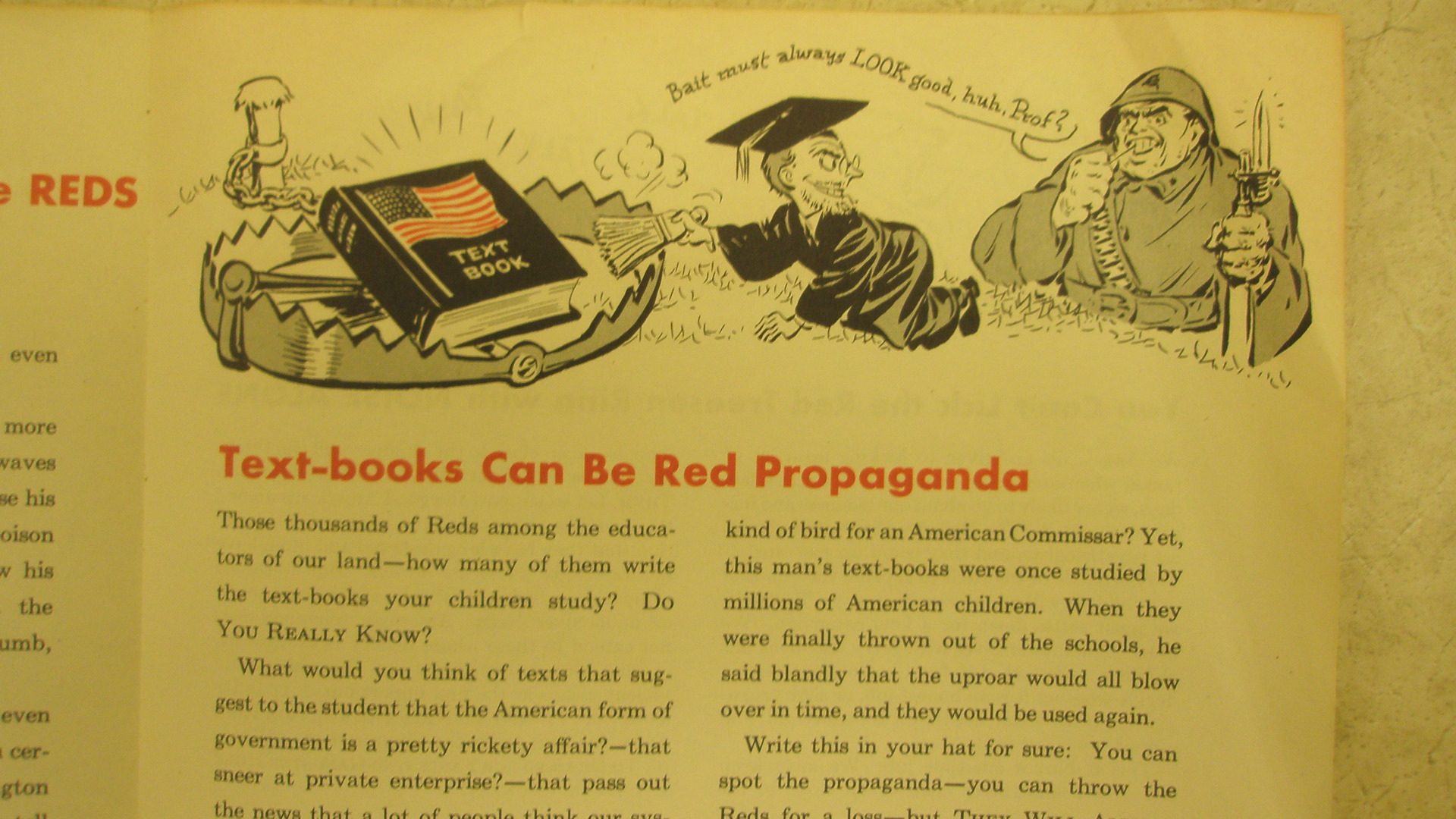
As always, a picture is worth a thousand words. In this case, I’ll share some cartoons from an anti-communist pamphlet from 1949. These cartoons demonstrate one common ideological thread in Cold War Fundamentalist America. At the time, activists like the one who published this brochure felt that Communism threatened a two-pronged attack. The danger included a military menace from Soviet Russia. But it also meant internal subversion by dupes who did the work of the Red Army. Intentionally or not, such subversive activity helped to weaken the resolve of America, making a communist takeover that much easier.
Further Reading: Ellen Schrecker, Many Are the Crimes: McCarthyism in America (Princeton: Princeton University Press, 1998); Jonathan Zimmerman, Small Wonder: The Little Red Schoolhouse in History and Memory (New Haven: Yale University Press, 2009).
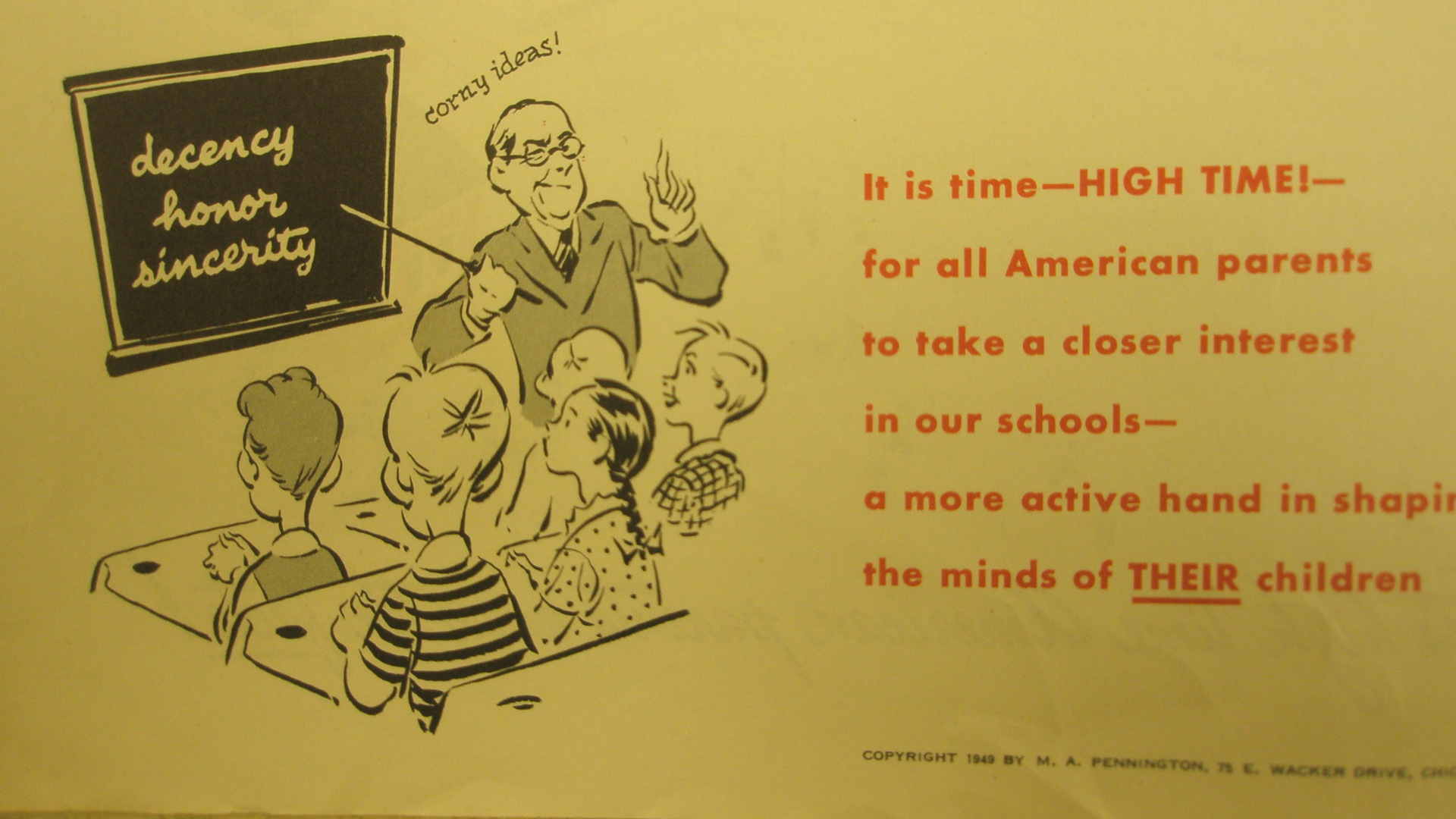
This one shows the vast sweep of cultural ideology folded into the fight against communism. Not only must patriots fight communism, they must also fight to uphold traditional values.
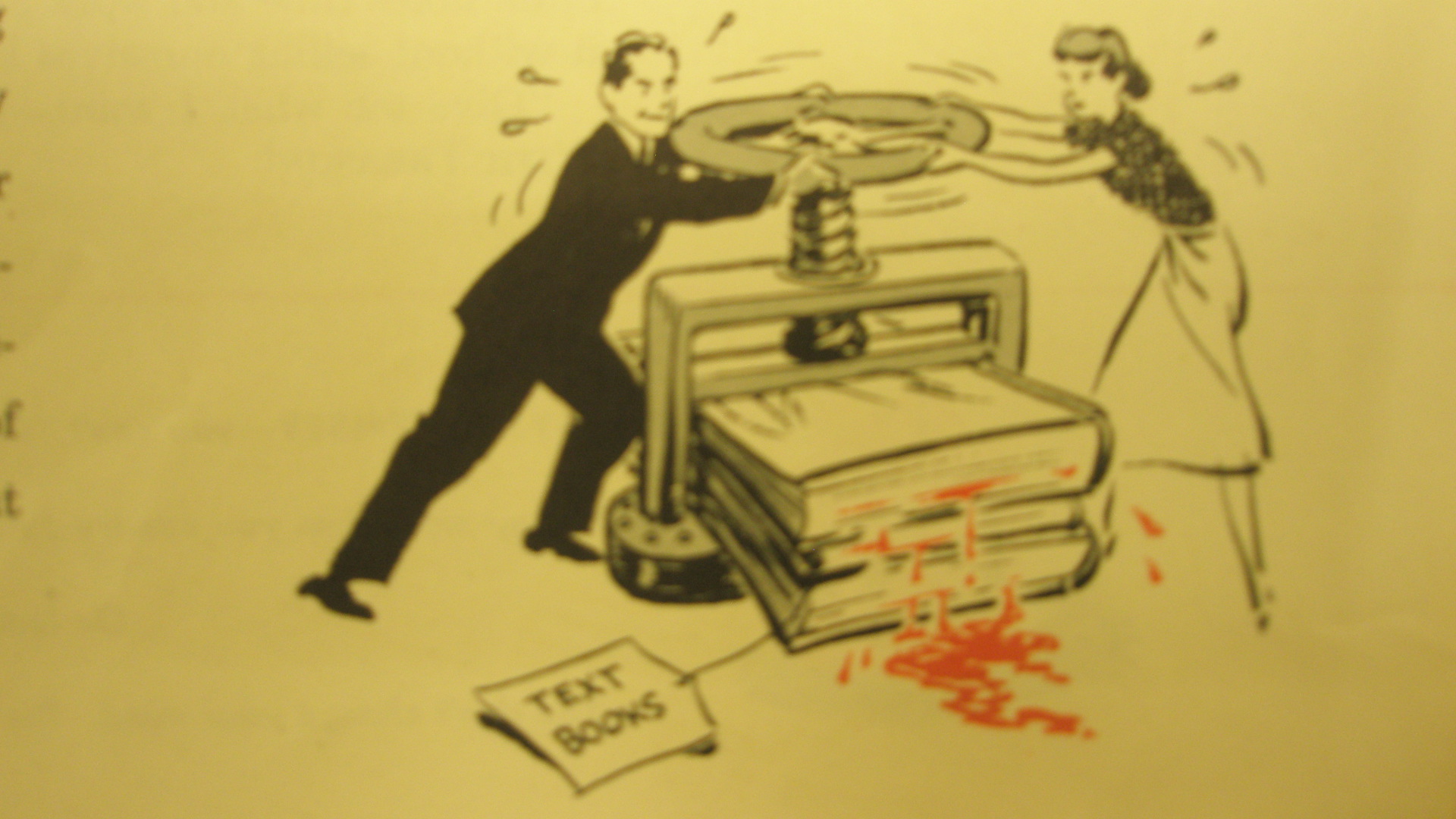
Parents squeezing the “Red” out of textbooks.
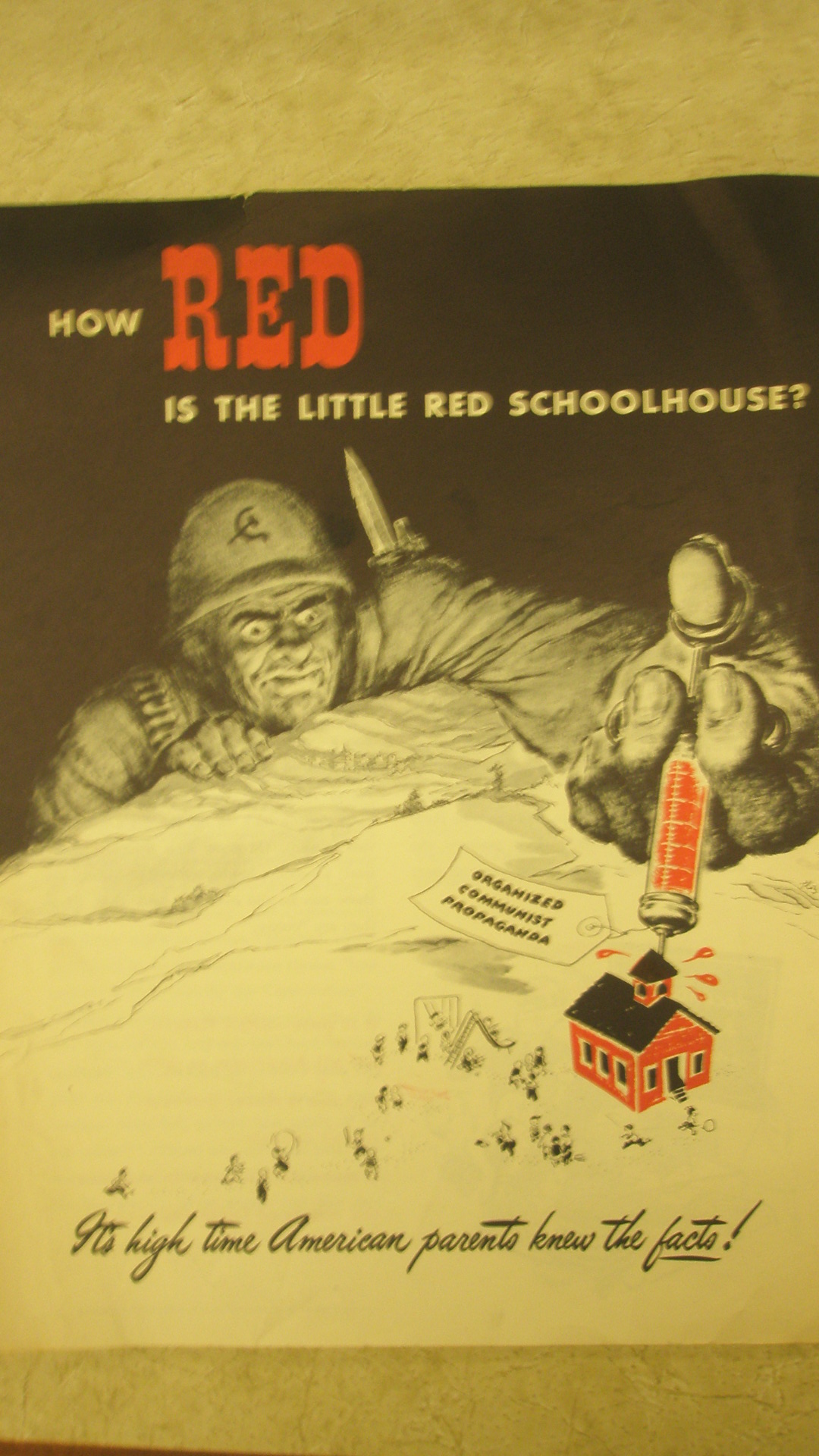
As historian Jonathan Zimmerman has argued, the image of the “Little Red Schoolhouse” has long been a potent political symbol. In this cover image, the cartoonist makes a connection common in Cold-War anti-communism. “Reds” worked hard to subvert the Red Schoolhouse.
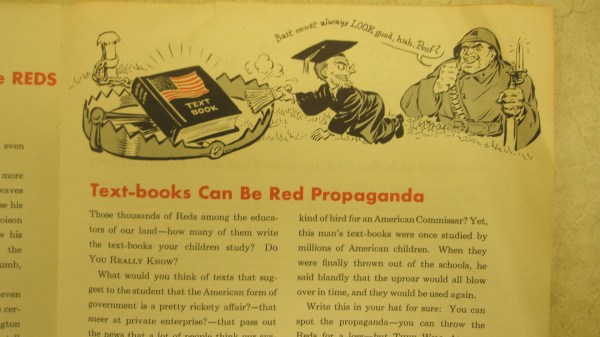
- The scheming, bearded academic has long been an object of suspicion in Fundamentalist America. Here, he does the work of the Red Army.



 I Love You but You're Going to Hell