The Bible in America: Thunderbolt, Part III: What Thunderbolt?

As we’ve discussed here lately, some fundamentalists harp on the Schempp and Engel Supreme Court decisions of 1962 and 1963 as the time God was kicked out of public schools.

Some of the reasons for this go beyond the obvious.  First of all, although the 1963 case took the name of Abington Township School District v. Schempp, it was actually a joinder decision with a case brought by the prominent atheist Madalyn Murray O’Hair.  The Schempp family were religious Unitarians.  Murray (later Murray O’Hair) was an outspoken and aggressive atheist.  Partly as a result, the Schempp case took on overtones of a fight of religion vs. atheism.  It took on overtones, in Fundamentalist America, of a last-ditch defense of God.

Such perceived high stakes led to a perception of a profound loss for Fundamentalist America.  As we’ve argued here recently, conservative evangelical Protestants reacted with profound dismay and disillusionment to the court’s 1963 decision.  A Moody Monthly poll in 1964 ranked the decision as the most important social or political event of the year, more important than the church bombings in Birmingham, Alabama.  Presbyterian fundamentalist leader Carl McIntire asked, after more than a decade of struggle to pass a Constitutional prayer amendment, “Why aren’t Christians standing where it counts and saying, ‘I’m for America and I’m for the Bible?’”

But what did the 1962 and 1963 decisions actually do?  What effects did they have in America’s public schools?

In the aftermath of the Schempp decision, a pair of political scientists—Kenneth Dolbeare and Phillipp Hammond—studied the effects.  They first consulted survey data.  Not surprisingly, they discovered that the Schempp and Engel decisions had led to a precipitous drop in the amount of school-sponsored religious activity that went on in public schools.  More precisely, they found that the decisions had led public school leaders to report a sharp drop.  About two-thirds of school districts reported that they stopped school-sponsored devotions.  Teachers reported a sharp decline.  Sixty percent reported that they had lead classroom prayers before the decisions, while only 28% admitted they still led such prayers.

Of course, even these large declines meant that many teachers and school districts continued to lead prayers and Bible readings.  But even that stubborn minority was isolated.  Most of such holdouts were in the South.  Reports from the West—where such in-school religious practice had often already been banned—and from the Plains and Northeast gave a much different picture.  In those regions, survey responses indicated nearly full compliance with the Supreme Court decisions.

We must remember that the South at this time was roiling with anti-Brown sentiment.  The white power structure had nearly unanimously agreed to resist school desegregation in spite of the 1954 Supreme Court ruling.  Many agreed with Alabama Governor George Wallace, who had declared in 1963, “I don’t care what they say in Washington.  We are going to keep right on beating the Bible in the public schools of Alabama.  I wouldn’t be surprised if they sent troops into the classrooms and arrested little boys and girls who read the Bible and pray.”

In such a climate, school leaders in the former Confederacy had a much easier time publicly renouncing the Supreme Court’s ban on school-sponsored prayer.  Indeed, it may have been political suicide for many of them to publicly support the Court.

Outside the South, however, most survey respondents claimed they had stopped teacher-led prayers and Bible readings.  But when Hammond and Dolbeare examined those schools and classrooms more closely, they found that even outside the South, teacher-led prayer and Bible reading went on just as they had before the decisions.  In other words, teachers and school administrators outside the South told surveyors that they had stopped leading religious devotions in their public schools.  They knew that such practices had been prohibited.  But when the classroom doors were closed, they continued to pray and read from the Bible with their students.

Most remarkable, in Dolbeare and Hammond’s opinion, was the fact that throughout the communities they studied in the Midwest, everyone knew what was going on and no one complained.  As long as state-level school administrators could claim that they did not know of any teacher-led devotions, the devotions themselves went on undisturbed.  Teachers led prayers in their classrooms.  School building principals led prayers at school ceremonies.  Bible verses adorned graduation speeches and school hallways.  According to Hammond and Dolbeare, most of the people involved were aware of the Supreme Court’s ruling.  Yet they continued to engage in exactly the sorts of practice the Court had ruled against.

Fast forward to the twenty-first century, and we see a much different picture.  Regional variations in racial desegregation in schools have often flip-flopped, with the most segregated school districts now in places such as New York City, Detroit, and Milwaukee, Wisconsin.  Similarly, in spite of a relatively recent New York Times article that assumed school-sponsored religious practices had been shunted to “some corners of the country, especially in the rural South,” even a casual observer of the news will see that battles over the proper role of religion in public schools continue all over the country.

For example, we noted recently a remarkable law passed recently in New Hampshire, hardly an outpost of the “rural South.”  This law mandated that parents could request alternate textbooks or curricular materials for any reason.  In theory, this could mean that strict vegetarian parents could object to books that portrayed meat-eating in a flattering light.  The intent of the law, however, was clearly to protect the faith of evangelical Protestant children.  The push for the law began when one family objected to the Jesus-bashing of author Barbara Ehrenreich.

Or the continuing case of Bradley Johnson.  Johnson insisted on putting religion-friendly placards on his classroom wall.  His stubborn activism can only be called “Southern” if we include “Southern” California.  And while San Diego is technically one corner of the country, it is hardly an isolated outpost of ‘hillbilly’ culture.

Just as it was for Dolbeare and Hammond in the 1960s, it is nearly impossible for us to know what really goes on in most public-school classrooms.  Cases like Johnson’s don’t tell us much about what most teachers are doing.  As Dolbeare and Hammond concluded, one of the main reasons for the continuing practices of teacher-led prayers and Bible readings was that everyone involved hoped to avoid any controversy.  Parents did not want to stand out as anti-prayer.  Teachers did not want to appear to denigrate religion.  School administrators did not want to crack down on what many perceived to be wholesome traditional American practices.

These days, it is difficult to predict just what practices might pass for non-controversial in America’s public schools.  Local traditions—even down to the level of individual schools and neighborhoods—trump Supreme Court decisions or New York Times reporters’ assumptions.

For conservatives, this means that traditional practices such as prayer or Bible reading might continue in public schools, as long as there has never been a local complaint against the practice.  It also means that conservative activists such as Bradley Johnson might mount a counter-revolution in any part of the country.

For many such activists, public schools have taken on an aura of secular fortresses.  In the rhetoric of many conservatives, public schools are the headquarters of Jesus-bashing, evolution-teaching, sex-teaching, drug-selling liberals.  A more careful look, like what Dolbeare and Hammond did forty years ago, would likely present a much more traditional, religion-friendly picture of life inside those public-school walls.

Bible Cheats!

Ah, the irony!

One of the interesting parts of managing this blog is watching the search terms that direct people here.  It is not too Big-Brother-y, but I can scroll through the list of terms that people have Googled.

Most of them are no surprise.  Lots of people Google themselves.  Embarrassing, but understandable.

And lots of people who end up on I Love You But You’re Going to Hell also Google terms such as “traditionalist education,” “Bible in schools,” “anti-evolution,” and so on.  Makes sense.

But there’s another common search term that could help English teachers.  Having taught high-school English for several years myself, I remember that teaching the concept of “irony” was always difficult.  It only got harder when Alanis Morrissette butchered the concept with her pop song “Isn’t It Ironic.”   

Thanks to SMS, this should link to the video now. –AL

But now I’ve found a new illustrative example of “irony.”  Among the many common search terms that direct people to ILYBYGTH, one of the top phrases is “What the Bible Means to Me Essay.”

I’m no cynic.  But having taught middle- and high-school for ten years, I can smell a cheat.  In a lot of cases, plagiarism made sense.  For instance, as a US History teacher, I came to expect some students in our Prohibition unit to offer up plagiarized essays in favor of the legalization of marijuana.  It was still cheating, of course, but it made sense.  Fit the profile.

How much sadder is it to have students trying to rip off an essay on “What the Bible Means to Me?”

The Bible in America: Thunderbolt, Part II: Schempp

If we listen to the voices of Fundamentalist America, we might conclude that public schools in America are terrible places to be.  Twenty years ago, John Morris of the Institute for Creation Research warned that public schools had become “aggressively anti-Christian.”  The problems, Morris declared, went beyond the obvious:

Open drug sales and use, ethnic gang wars, and student/teacher violence are easily recognized problems, but how about the more subtle attempts at “values clarification,” or the encouragement of experimentation in “sex education” classes, or the inclusion of homosexuality as a legitimate lifestyle, or easy access to abortions through school clinics.

Other conservative Christian activists agree.  Thirty years ago, Jerry Combee wrote,

the public schools have grown into jungles where, of no surprise to Christian educators, the old Satanic nature ‘as a roaring lion, walketh about, seeking whom he may devour’ (I Peter 5:8).  Students do well to stay alive, much less learn.

More recently, activists involved in the Exodus Mandate have warned that public schools “are no more reformable than Soviet collective farms. . . . Conservative school reformers are a lot like Civil War reenactors who specialize in Pickett’s Charge.  They never take the high ground; they never really win.”

This staggering decline in the quality of public schools began, many conservatives insist, when the US Supreme Court kicked God out of schools in 1962 and 1963.  In 1962, as we’ve seen, the court decreed that states could not impose a non-sectarian prayer in public schools.  More devastating to many conservative Christians, in 1963 the court ruled in the decision Abington Township School District v. Schempp that even Bible reading and the Lord’s Prayer had no legitimate place in those schools.

Despite what many outsiders might think, the world of conservative evangelical Protestantism in America is truly kaleidoscopic, to borrow the phrase of religious historian Timothy L. Smith.  Different schools of thought among Bible believers disagree vehemently on questions of politics, culture, and theology.  Ask twenty “fundamentalists” what the Bible means and you’ll get at least twenty different answers.  Yet when it came to the Schempp decision, a variety of voices from around this diverse world all agreed.  This decision meant not only that God had been kicked out of public schools, but that Christianity itself had been kicked out of American public life.

For instance, in the immediate aftermath of the Schempp decision, separatist Presbyterian fundamentalist Carl McIntire still hoped that concerted political action might overturn it.  McIntire helped organize “Project America” to press politicians to adopt a Constitutional amendment in favor of prayer and Bible reading in public schools.  At first, McIntire repeatedly stressed his feeling that huge majorities of Americans would support such an amendment.  After a bitter political fight, however, McIntire acknowledged that it was hopeless.  Writers in McIntire’s Christian Beacon began to emphasize the notion that their beliefs made them a beleaguered minority in American life.  In 1965 one writer warned that America was “moving farther and farther from its Christian heritage.”  Another predicted that soon mainstream Americans would resort to “repression, restriction, harassment, and then outright persecution . . . in secular opposition to Christian witness.”

Other evangelical voices made similar about-faces in the aftermath of Schempp.  Baptist fundamentalist publisher John R. Rice reflected that the relationship between evangelical faith and public schooling had changed drastically.  He recounted for his readers how things had been radically different in the not-too-distant past:

Once when I was engaged in revival services in the Second Presbyterian Church in Chattanooga, Tennessee, I was invited to speak in every high school in the city and in the principal grade schools, both white and colored, and was gladly received.  The only people offended were those involved in the few elementary schools where I could not come for lack of time. 

Such halcyon days, however, had been destroyed by the cowardly Supreme Court.  Worst of all, Rice concluded, the court seemed to have the support of “the public sentiment.”

This sense of a drastic and sudden shift in the relationship between evangelical belief and public life was widely shared among all different sorts of conservative evangelical Protestants in the aftermath of Schempp.  One writer in the Moody Bible Institute’s Moody Monthly, for example, concluded that evangelicals must retreat to play the role of God’s “witnesses and lights in a dark place” in mainstream American culture.

Similarly, the intellectuals at Christianity Today articulated their shock and dismay of the implications of Schempp. At first, the editors believed that America’s “devout masses” still supported school prayer.  As did other evangelicals, however, they concluded bitterly that “In the schools secularization has triumphed.”  Instead of relying on devout masses, the editors soon hoped only to energize the “believing remnant” in America to support Bible-reading and prayer in public schools.

As we’ll see in future posts, the Schempp decision might not have had the drastic impact many of these writers assumed at the time.  Nevertheless, the degree of unanimity among a wide variety of conservative evangelical Protestants is remarkable.  From separatist fundamentalists to more ecumenical neo-evangelicals, prominent voices all agreed that this momentous decision had done more than just kicked God out of public schools.  In their opinions, Schempp had forced a sudden recalculation of the role of Bible believers in all of American public life.

Coming soon: Thunderbolt, Part III: What thunderbolt?

The Bible in America: What Is the Bible For?

The questions we’ve been wrestling with for the past few weeks here at ILYBYGTH concern the nature, function, and meanings of the Bible in Fundamentalist America.

As I’ve admitted, I do not get it.  But I make no claim to be a Bible believer, at least not in the sense most conservative Christians mean.  I do know that if we hope to understand life in Fundamentalist America, we need to understand the ways Fundamentalist America understands the idea of “the Bible.”  Many of the non-Fundamentalists and anti-Fundamentalists I meet assume that reliance on the Bible as a source of morality and knowledge must imply a certain closedmindedness.  For many folks outside the boundaries of Fundamentalist America, the two sides in America’s rumbling culture wars are precisely that: on one side are openminded intellects who rely on Science and Reason; on the other side are militant Fundamentalists who depend on Scripture and Tradition.

If we want to understand Fundamentalist America, we need to probe beyond those political stereotypes.  Yesterday, Peter Leithart shared some thoughts on the use and meanings of the Bible on First Things.  My hunch is that Dr. Leithart would reject the label “fundamentalist.”  Nevertheless, his exposition What is the Bible For? will help outsiders understand what the Bible can be for in Fundamentalist America.

As Leithart agrees,

The Bible rarely lives up to our ordinary standards of practicality. Page after page is given over to genealogical lists of obscure people whose only role is to be a human bridge between famous ancestors and notorious descendants. A third of Exodus is nothing but verbal blueprints for building the tabernacle and the first quarter of Leviticus contains detailed regulations concerning sacrifice. Two lengthy chapters of Leviticus diagnose the varieties of skin disease that cause impurity. It seems so tedious, and even when the Bible holds our interest, it doesn’t seem very useful. Stories of plagues, exodus, and wars of utter destruction make for juicy reading, but how do they help one become virtuous? Why can’t the Bible be more relevant?

Both the problem and the solution, Leithart articulates, come not from the text but from the reader.  To understand the Bible, in his telling, we need to look at it as more than a old book:

Scripture is ethical paedeia, not an ethics manual. All Scripture is practical because God breathed all of it to form people, both individuals and community. God tells stories to stock our memory with a common moral past that projects his people into the future. God’s word expands our imagination to grasp more of what’s really there and to envision what might be there in the future. The Bible is useful because it opens our eyes, and because it’s highly impractical to walk through life with our eyes closed.

The Bible in America: The Thunderbolt, Part I: Engel v. Vitale

Lots of fundamentalists feel that America has foolishly kicked God out of its public schools.  Try a simple Google search of “God kicked out of public school,” and you will find an endless collection of news alerts, opinion pieces, and videos from fundamentalists decrying the de-theized state of public education.

Many of these fundamentalist pundits insist that the start of the breakdown of public religion and morality was the US Supreme Court’s decision in 1962’s Engel v. Vitale.  In this case, the court ruled that New York State had no Constitutional authority to impose a short, bland, state-written prayer in its public schools.  The prayer mushed along in a no-man’s-land of interdenominationalism: “Almighty God, we acknowledge our dependence upon Thee, and we beg Thy blessings upon us, our parents, our teachers and our Country.”

Due to both the blandness of this prayer and its imposition by state authorities, though, most leading Protestant evangelicals at the time SUPPORTED the court’s decision.  As opposed to later conservatives who locate the start of America’s public decline at the precise moment of the 1962 anti-prayer decision, the majority of conservative evangelical Protestants in 1962 thought the court had made the right decision.  As I argue in an article appearing soon in the Journal of Religious History, leading evangelical and fundamentalist intellectuals in 1962 showed surprising unanimity in their approval of Engel v. Vitale.

For example, William Culbertson of Chicago’s Moody Bible Institute praised the decision.  “The public as a whole,” Culbertson argued,

“and Christians who sense the necessity for safeguarding freedom of worship in the future are always indebted to the Court for protection in this important area.  On the other hand, the case raised the ominous question of whether any kind of non-sectarian prayer or acknowledgement of dependence on God would be upheld by the Court.”

The editors of Christianity Today agreed that much conservative reaction to Engel had been “ill-informed and intemperate.”  Similarly, the National Association of Evangelicals commended the court’s decision.  Even the separatist fundamentalist Carl McIntire, who would soon become the pointman for conservative Protestant school activism, told a US House of Representatives committee in 1964 that he had originally supported the 1962 decision.

Not every conservative Protestant intellectual supported the Engel ruling.  Samuel Sutherland, president of Biola University, attacked Engel as pandering to a “very small, loud-mouthed minority.”  The decision was a sign, Sutherland believed, that the US was becoming “an atheistic nation, no whit better than God-denying, God-defying Russia herself.”

These days, with the benefit of hindsight, most prominent fundamentalist voices agree with Sutherland.  But at the time, conservative Protestants of many different backgrounds thought the court had done the right thing.

Coming soon: Thunderbolt, Part II: Schempp and the de-theization of America’s public schools.

How Does the Bible Work? Rightly Dividing the Word of Truth

Those outside the borders of Fundamentalist America, like me, are often stumped by the way conservative Protestants use the Bible.  For instance, I have a hard time understanding how conservative Protestants, in particular, interact with the Bible.  I should note here that this reverence for the Bible is still a fairly bright line between conservatives Protestants and other conservative religious folks.  Though Catholics, for instance, value the Bible, they generally do not invest it with the same authority as do conservative Protestants.  Also, even among conservative Protestants, there are many different traditions of Bible interpretation, exegesis, and hermeneutics.

Granting all that, there is still one question that puzzles me and many other outsiders: If the Bible is the Word of God, how can fundamentalists edit it?  As we’ve seen, fundamentalist missionaries have long used selections from the Bible as tools.  Fundamentalists often believe that these words have supernatural power to convert people to fundamentalist Christianity.  In addition, some of the most popular books among fundamentalists have been editions of the Bible with fundamentalist commentary.  This history goes back to the earliest days of Pilgrim and Puritan in Europe and the New World.  In 1560, Protestant divines completed an English-language Geneva edition of the Bible, flush with voluminous marginal commentary.  According to historian Harry Stout, it would have been considered irresponsible by sixteenth-century Protestants to “provide this Word raw, with no interpretive guidance.”  The commentary explained to readers, following Martin Luther, that every bit of Bible inclined toward the Christ.

In the twentieth century, this tradition of Bible commentary continued with enormously popular commentary editions, such as the Scofield Bible.  This edition of the Bible adds voluminous commentary on each smidgen of text.  Scofield’s interest in eschatology and suggestions of distinct dispensations contributed materially to the dominance of a dispensational reading of Scripture among American fundamentalists. 

In order for outsiders to understand Fundamentalist America, especially the Protestant traditions of fundamentalism, evangelicalism, Pentecostalism, conservative Lutheranism, and other Bible-based faiths, we need to understand this attitude toward the Bible.  The Bible, to many conservative Protestants, must be understood as the inerrant Word of God.  Yet that does not contradict with the notion that the Bible is also—and has also always been—the proper target of editing, translating, and commentating.

The Bible as America’s Book: Americans Love the Bible

I don’t care much about the Bible.  I admit it.  In my work as a historian of American conservatism and conservative Christianity, I’ve tried a couple of times to study the Bible systematically.  After all, the Bible and its phraseology play a large role in the culture of the people I’m studying.  At the very least, I need to cultivate a familiarity with it so that I can catch the references that fly around so fast and furious in Fundamentalist America.  So I’ve tried to read the Bible.  Turns out I can read it if I have to, but I admit I’ve never felt any of the spiritual power that many Christians have described.

I can take it one step further.  I don’t think the Bible can help me figure out my problems.  I don’t think it has much to say about my personal life.  I feel even more strongly that the Bible doesn’t have any answers for our common cultural or political life.  Intellectually, I agree with skeptics such as Richard Dawkins and others who have dismissed the Bible as a collection of ancient myths, trapped in the provincial traditions of one group of Middle Eastern nomads.

For most of my life, I assumed such attitudes were normal.  I thought that most Americans agreed that the Bible must not be used as the simple truth about life and eternity, but rather as a collection of moral tales from one religious tradition.

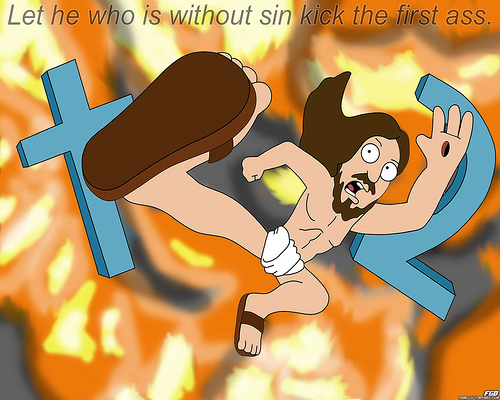
I felt confirmed that my attitudes matched those of lots of Americans by seeing hilarious religion jokes by folks like George Carlin (wait for it) and the makers of Family Guy.

I thought such irreverent attitudes about the Bible were the norm.  They still seem to be the norm among my circle of professional and personal acquaintance.  But they are not.  If we want to understand life in America, and especially if we hope to understand Fundamentalist America, we need to recognize the significant power of the Bible in the lives of most Americans.  If we can believe Gallup poll data, we must acknowledge the continuing deep reverence for the Bible among most Americans.  For instance, one 2000 poll asked respondents, “Do you believe the Bible answers all or most of the basic questions of life, or not?” 65% of respondents answered yes.  65%!  That is a significant majority.

And consider these responses to an often-repeated Gallup question:

  The Bible is the actual word of God and is to be taken   literally word for word The Bible is the inspired word of God but is not to be   interpreted literally The Bible is a collection of myths and fables.
1976 38 45 13
1980 40 45 9
1991 32 49 9
1993 35 48 14
1998 33 47 17

Looking at these results, especially if we combine the first two Bible-friendly categories, we see truly impressive majorities of American respondents view the Bible as the word of God.  Even when we only consider those who think of it as the literal truth, the numbers are still fairly large—certainly large enough to attract the attention of political strategists and advertisers.

Just as with similar questions about evolution, we must acknowledge that the number of Americans who don’t embrace the Bible is remarkably small.  We need to avoid the arrogance and self-importance of many Bible skeptics.  Instead of asking, Why do so many Americans seem to believe in the Bible or creationism?, we really should be asking, How have such small minorities of evolutionists and Bible skeptics been able to achieve such influence in American culture?

I know many ILYBYGTH readers will not be surprised by these statistics.  Anyone who knows much about life in Fundamentalist America recognizes the large majorities Fundamentalism can claim.  But many folks outside of Fundamentalist America’s boundaries have very little idea how isolated they are.  Like me, many people only interact with folks who tend to believe in evolution, with people who do not look to the Bible as their source of answers to life’s problems.  If we hope to understand Fundamentalist America, we need to acknowledge the continuing power of the Bible among such commanding majorities of Americans of every background.


Fundamentalist America: A Lock for the GOP?

Casual observers might assume that every Fundamentalist vote is a lock for the GOP.  After all, at least since Reagan took the evangelical vote away from the evangelical Jimmy Carter, the Republican Party has cultivated an image as the staunch defender of life, family, and traditional values.

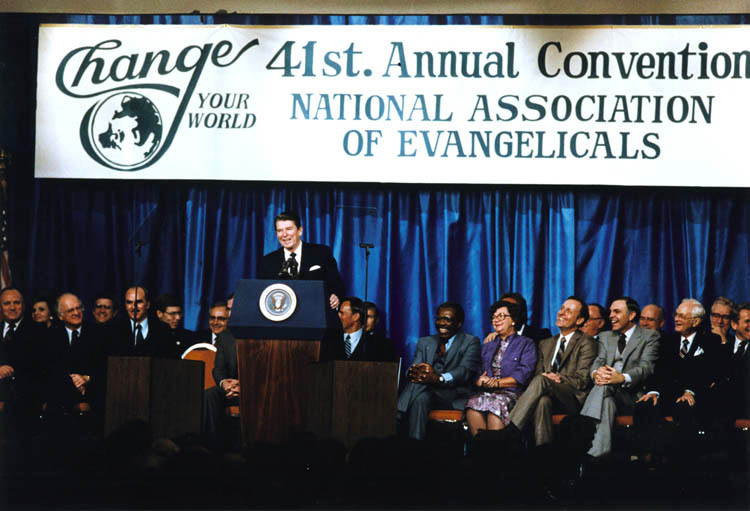
Reagan at the 1983 NAE Convention.


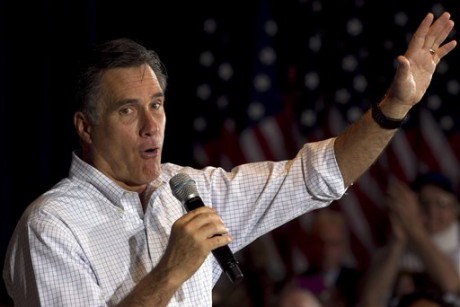
So even though the presumptive GOP nominee is a leader of the LDS Church, it is a general electoral rule of thumb that Bible voters will go for Romney in 2012.

But will they?

An article in this week’s Economist tries to pick apart the “evangelical vote.”  The article offers some interesting numbers.  Here are a few to consider:  in 2008, 65% of (self-identified) white evangelicals called themselves Republicans.  A recent poll put that number at 70%.  Self-identified white evangelicals made up 44% of Republican primary voters in 2008, compared to “over half” in the first 16 GOP primaries in 2012.  That’s a strong vote of support.

But look at the other side of those numbers.  In 2008, almost one-quarter of evangelical voters voted for Barack Obama.  Part of that support comes from a closer look at the meaning of “evangelical.”  President Obama, according to the Economist article (citing a Pew Research Center poll), enjoys a 93-point lead over Governor Romney among African American voters.  And those voters, after all, include a large percentage who are evangelicals.

The numbers get even dicier when we expand our understanding of “Fundamentalist America” beyond the boundaries of evangelical Protestantism.  Many conservative Catholic voters line up these days with conservative Protestants to vote for a vision of traditional Christian values.  And the conservative Catholic vote includes large numbers of Latino voters.  Such voters may vote for the GOP as the pro-life, pro-family, pro-Jesus party.  But many Latinos might be turned off by the Republicans’ growing support for harsh anti-immigration laws, many of which seem to target Latinos specifically.  As the Economist article points out, President Obama leads Governor Romney by 67% to 27% among surveyed Latino voters.

Could these numbers harken a shake-up of the relationship between Fundamentalist America and the two major parties?  For those who know their history, it would not be the first time.  After all, before the 1980 presidential elections, white evangelicals often portrayed themselves as above party politics.  They claimed to vote for candidates who best embodied the values of Bible-believing America.  And before the 1930s, African American voters reliably voted Republican, the Party of Lincoln.

Could we be on the verge of another party shake-up?  Could the Democratic Party attract young and non-white conservative Christians by appealing to social justice issues?  Could the GOP fumble by alienating non-white Fundamentalists and young social-justice evangelicals?  Even more interesting, could we be on the verge of a vast party realignment, of the kind that has revolutionized party politics a few times in the past?  In the mid-1800s, the new Republican Party built a powerful coalition out of the remnants of the Whig Party, the American Party, and abolitionists.  In the 1930s, the Democratic Party built another blockbuster with a Solid (white) South, urban “ethnic” voters, the union vote, and non-whites.

These powerful electoral coalitions don’t need to be logical.  But a new party that combined today’s Democratic Party’s tradition of social justice, plus the GOP’s tradition of traditional Christian values, could capture this broad middle from Fundamentalist America.

Google Trends and Fundamentalist America

Fundamentalist America is aflutter.  One of Fundamentalism’s favorite sons made a big splash last week.

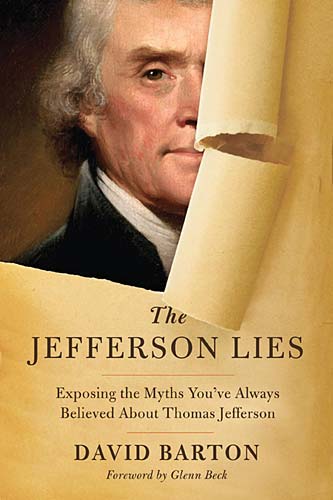
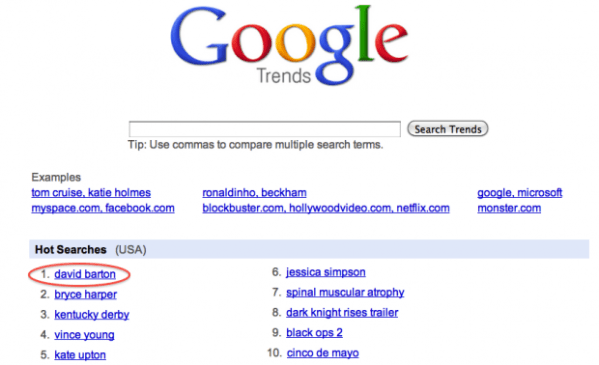
After David Barton’s appearance on Jon Stewart’s Daily Show to promote his new book The Jefferson Lies, the Beckite Blaze reported that the term “David Barton” had surged to number one on the list of trendy Google search terms.

When I followed up, I couldn’t confirm The Blaze‘s claim.  When I checked Google’s “Hot Searches” for May 2, 2012, Barton shows up as number nine.

The experience led to me tinker around a little bit with Google Trends.  Now, I know I need to apologize for my lateness at showing up to this party.  This is yet another example of the way I am far behind the times in finding out about the possibilities of the Google Mothership.

But I want to share a few of the interesting results for those outsiders interested in Fundamentalist America.  First, for those who are as backwards as I am, I’ll explain the premise a little bit.  Google Trends gives users a chance to find out how many people have Googled specific terms over time.  Today (May 5, 2012), many of the hottest search terms concern the recent death of Beastie Boy Adam Yauch.  In general, it seems as if the biggest topics in the daily news tend to attract the most Google searches.

But Google Trends also lets us see what people are googling over time.  If we want to understand what googling Americans are interested in, it gives us a chance to find out.  Now, I won’t make any claims that these results are definitive.  We can’t know very much about the intentions of googlers.  But there are still a few interesting results that I want to share, just to give everyone something to think about.

For example, I checked the trends for terms in tandem and got some interesting results.  For instance, “evolution” has trumped “creationism” by a long sight for the past several years.  On the other hand, comparing the google history of “Bible” and “Origin of Species” shows a huge tilt toward Bible googlers.    And, in the past few years at least, Jesus has almost always been comfortably bigger than the Beatles.  In fact, “Jesus” as a search term has held a comfortable lead over most other topics I could think of, including “David Barton,” “atheism,” and even “cats,” although “cats” seemed to hold its own pretty well.

What does all this tell us about Fundamentalist America?  Not much, really.  But it does demonstrate the enduring popularity of Christian terminology on Google.  Of course, people Google all sorts of different terms for all sorts of reasons.  Are there any other term comparisons that can tell us something about the nature and meaning of life in Fundamentalist America?

The Bible in America: A Graphic

Thanks to Jared Fanning and Mark Misulia of First Things, we have a new graphic to consider.  As we’ve argued before, the Bible sells.  Though we don’t want to jump too quickly to conclusions about what that means, it seems evident that the Bible matters to Americans.  Anyone who hopes to understand Fundamentalist America needs to understand the unique and important role of the Bible in American history and culture.