Before You Blame Fundamentalism, Read This

I can understand why some conservative evangelical intellectuals wouldn’t like my book. In chapter after chapter, I look at some of the most uncomfortable tensions in the world of evangelical higher education, the often-poisonous legacy of decades of fundamentalist anger and vitriol. But why should we single out religious schools for this sort of criticism? Public schools, after all, have their own legacies of racism and pandering, as the news from Colorado attests.

ColoradoState

It’s not only fundamentalist colleges that have to deal with their ugly racist legacies…

At Colorado State, as IHE reports, two high school students were singled out for their appearance, racial and fashion-wise. The students were of Native American background and had driven seven hours to take the campus tour. They joined the tour late, apparently, and didn’t answer the tour guide’s questions adequately.

So another tour member called 911. The two kids, she reported, “really stand out.” Their t-shirts, she complained, featured “weird symbolism.” (They look to this headbanger like pretty standard heavy-metal logos.)

Campus cops came and talked with the teenagers. The two were polite and the cops agreed the high-schoolers had done nothing wrong. The teens told the cops they were shy and didn’t know how to respond to the tour guide’s question. They were invited to rejoin the tour, but unsurprisingly they didn’t feel like it and drove home.

What does any of this have to do with fundamentalism and evangelical colleges? It proves that ALL colleges are in a similar bind. ALL colleges need to pander to the lowest common denominator in the families they are trying to attract. If an ignorant and apparently racist mom decides two other teenagers “really stand out,” the college administration needs to address those concerns, even if the mom in question goes far beyond daffy.

The View from Wall Street

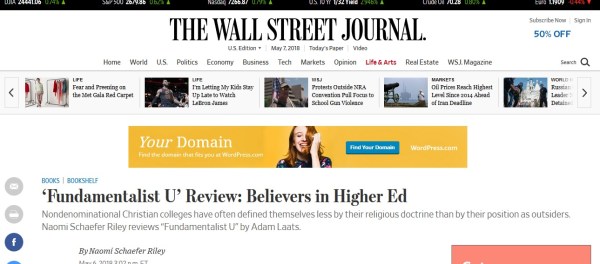
Why would Liberty University love President Trump so much? In the Wall Street Journal, Naomi Schaefer Riley pulls her answer from the pages of Fundamentalist U. As she puts it,

nondenominational Christian schools like Liberty have often defined themselves less by their religious doctrines than by their position as outsiders.

I wouldn’t say “less,” but as I’ve been arguing recently, I do believe the MAGA sensibilities of many white evangelicals have long roots in the history of evangelical higher education. Back in the 1920s, fundamentalist college leaders looked angrily and resentfully at the changes that had occurred at many mainstream schools.

Riley WSJ review

Subscription only, I’m afraid.

Riley puts her finger on this enduring tension at the heart of evangelical higher education. As she concludes her review,

Caught between the vast changes in American higher education and the religious families they are supposed to serve, fundamentalist colleges have had to be especially attuned to which way the cultural winds are blowing. Which may occasionally get them some incongruous commencement speakers.

According to Riley, Fundamentalist U

takes a topic that could easily be treated with condescension and turns it into the occasion for a fascinating and careful history.

Thanks to Riley and WSJ for the thoughtful review.

When to Ban Free Speech

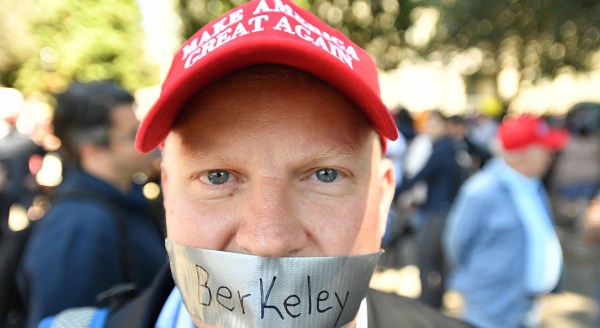
Christ spoke to the University of California this week. Chancellor Carol Christ, that is. And according to Politico she gave her support to a new internal study of the terrible speech riots that plagued Berkeley in 2017. The report’s conclusions make sense to me, but not to Milo.free speech berkeley 2

I know SAGLRROILYBYGTH are divided on questions of campus free speech. We all should be; it’s a complicated issue that deserves more than sound-bite attention and one-size-fits-all solutions.

What if young-earth creationists intentionally manipulate our fondness for free-speech rights in order to water down science instruction? What if political radicals cynically take advantage of their speech rights in order to further their careers at the cost of other people’s feelings?

IMHO, a recent report from Berkeley hit the nail on the head. To wit: Speech must be protected, especially on university campuses—double-especially on public university campuses. But intentional provocateurs forfeit their access to some free-speech protections with their cynical manipulation of our fondness for free speech.

At Berkeley, you may recall, planned speeches by right-wing pundits Milo Yiannopoulos and Ann Coulter provoked violent, riotous protests. A committee of faculty, students, and staff concluded recently that their campus is still a tolerant place. Most students support free-speech rights on campus even for people with whom they disagree strongly.

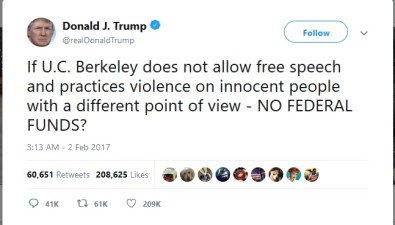
trump tweet on berkeley

Provocateurs provoking…

But the committee defended the notion that some speech and some speakers deserved to be banned. Yiannopoulos and Coulter were singled out by name. How could the committee say so? In their words,

Although those speakers had every right to speak and were entitled to protection, they did not need to be on campus to exercise the right of free speech. . . . Indeed, at least some of the 2017 events at Berkeley can now be seen to be part of a coordinated campaign to organize appearances on American campuses likely to incite a violent reaction, in order to advance a facile narrative that universities are not tolerant of conservative speech.

Not surprisingly, Milo took affront. As he retorted, the committee was made up of

Marxist thugs … criticizing people they don’t listen to, books they haven’t read and arguments they don’t understand.

I’m no Marxist thug, but I think the Berkeley committee has the better end of this argument. The tricky part, IMHO, is that the committee’s conclusion rests on the shaky foundation of their interpretation of Milo’s intent. If he intended to talk politics, they imply, he should have been welcomed. But he didn’t. As they put it,

Many Commission members are skeptical of these speakers’ commitment to anything other than the pursuit of wealth and fame through the instigation of anger, fear, and vengefulness in their hard-right constituency.

In most cases, I’d be nervous about relying on the gut feelings of a few committee members. In this case, though, even thoughtful conservatives fret about Milo’s brainless bluster. In the end, free-speech decisions can and must rely on an informed decision about a speaker’s intent. It’s not easy, but it is necessary.

Consider a different but related example. Many creationist-friendly school laws these days rely on claims to free-speech protection. These bills claim to promote critical inquiry and reasoned free discussion. For example, as Missouri’s 2015 bill worded this mission, schools must

create an environment . . . that encourages students to explore scientific questions, learn about scientific evidence, develop critical thinking skills, and respond appropriately and respectfully to differences of opinion about controversial issues, including biological and chemical evolution.

Sounds good, right?

You don’t have to be a Marxist thug to conclude, however, that the intention of this bill is to water down evolution education. The intention is to promote a certain creationism-friendly environment in public-school science classes.

The way I see it, speech acts that deliberately hope to manipulate free-speech protections for other purposes create a new category of speech. Do people have a right to speak such ideas? Sure! But universities do not need to fork over huge sums of money to provide a home for those speeches. K-12 schools do not need to accommodate speech that intentionally weakens science education for religious purposes.

What do you think?

All in the Family

More ugly accusations from the world of evangelical higher education. They raise a perennial question: Why do fundamentalist college leaders create dysfunctional family dynasties?

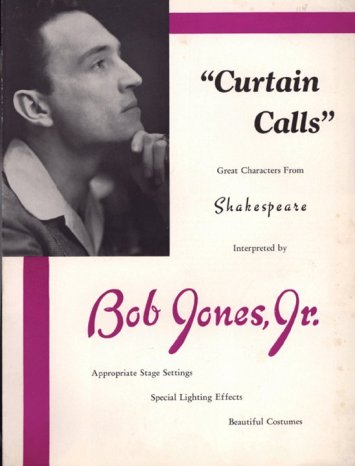
junior-on-curtain-calls

What Junior wants, Junior gets…

The news from Ohio Christian University is grim. According to Inside Higher Education, the president’s son is alleged to have compiled a long record of shocking behavior, including the following:

  • Told a co-worker that “I hate black people” and that “all black people act like they are entitled to everything.”

  • Told a co-worker he hated Mexican people and viewed them as freeloaders.

  • Told a co-worker he hated gay people.

  • Made jokes about Jewish people, including pretending to speak Hebrew in a mocking tone. Further, he is said to have told a co-worker who dropped a ladder to “stop being such a Jew.”

  • Told a co-worker that another co-worker had been hired for being sexually promiscuous. Then he is alleged to have tried to put his finger in the mouth of another female co-worker. When she stopped him from doing so, he reportedly said, “That was a slut test. If they close their mouth, they are a slut.”

  • Attempted several times to take photographs of a female co-worker’s behind, and after obtaining such a photo, posted it to social media with the caption, “This is why we hire women.” (The lawsuit says that some time later Doug Smith deleted his social media accounts.)

We don’t know if these charges are true. But we do know that conservative evangelical college leaders have a long history of building family dynasties that seem unhealthy for their schools. These days, the most obvious example is Liberty University, now under second-generation Jerry Falwell. In the twentieth century, the most blatant example was Bob Jones U.

As I describe in my book, the Bob Jones dynasty grew out of a fundamental structural dilemma in evangelical higher education. In interdenominational fundamentalist institutions, the structure of authority was very unclear. By the 1930s, institutions such as Wheaton College and Bob Jones College struggled to figure out how to handle basic disagreements about the nature of fundamentalism and the goals of their colleges.

At Wheaton, an awkward house of cards was built to figure out such problems. The leadership weighed opinions from powerful fundamentalist celebrities, conservative trustees, faculty members, students, alumni, and loud-mouthed fundamentalist bystanders. The process took a long time and created a lot of bad feelings, but it had the benefit of spreading authority over a fairly broad group of people.

At Bob Jones College, on the other hand, founder Bob Jones Sr. took all authority into his own hands. Dissenters were dismissed as “gripers” and Bob Jones elevated his own opinions into something approaching dogma.

As Bob Jones Jr. grew up, the family elevated his peculiarities into institutional mandates. Most obviously, Junior’s love of thespianism and classy art became part of the Bob Jones brand. Other fundamentalist leaders at the time pointed out the obvious problems. In 1949, J. Oliver Buswell, who had moved to New York after being booted from Wheaton, publicly called Bob Jones Sr. to account for the college’s embrace of drama. No other fundamentalist college allowed students to put on plays, but at Bob Jones it was mandatory. And, as Buswell put it,

Your own educational program is reeking with theatricals and grand opera, which lead young people, as I know, and as you ought to know, into a worldly life of sin.

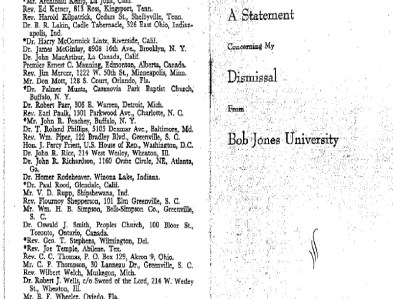
As Junior aged and took over a bigger leadership role at Bob Jones University, the dynastic clash created more and more problems. Some of them came to light in the biggest shake-up in BJU history. When long-time administrator Ted Mercer was suddenly fired with prejudice in 1953, he publicly accused the Bob Joneses of creating a hugely dysfunctional family vibe that threatened the very existence of the school.

mercer statement

No tittering.

As Mercer told his tale, the tension between the father and the son led to terrible effects. When Junior told a group of administrators that Junior was in charge, the group “tittered,” and Junior reacted furiously. All in all, Mercer reported, the high tension created by the father/son dynamic promised to destroy the school.

So why do conservative-evangelical college leaders do such things? Why do they create institutions that elevate their children to heights of authority and leadership when the second-generation leaders aren’t ready for it? The future of the legal case at Ohio Christian is unclear, but the pattern of dysfunctional family dynasties isn’t.

College Professors: The Enemy Within

Want to understand the campus free-speech wars? Chronicle of Higher Education has published a fantastic description of the way one scuffle in Nebraska escalated into a national cause. As with other reporting, however, this article misrepresents the history of conservative ire over liberal colleges.

CHE conservative students

Conservative students under attack in Nebraska…

It’s really a spellbinding story for nerds interested in these sorts of things. Journalist Steve Kolowich tells the tale of one conservative Nebraska student confronted by a progressive student and a faculty member. Kolowich explains how Nebraska politicians and national activists seized upon the conflict as a symbol of their dislike for academic trends.

When it comes to historical context, though, Kolowich misses some important elements. As he writes, after the “culture-war” battles of the 1980s and 1990s, “Conservatives began seeing themselves as minorities in need of protection.” For conservatives, Kolowich explains, in recent years “the public university was transforming into an enemy within[.]”

True enough, as far as it goes. But as I argue in my book about the history of educational conservatism, conservative anger and dismay at the goings-on in higher education have a much longer history.

In the early 1920s, for example, anti-evolution celebrity William Jennings Bryan railed against trends in American higher education. In one public dispute with University of Wisconsin President Edward Birge, for example, Bryan offered the following memorable proposal. If universities continued to promote amoral ideas such as human evolution, Bryan suggested, they needed to post the following notice:

Our class rooms furnish an arena in which a brutish doctrine tears to pieces the religious faith of young men and young women; parents of the children are cordially invited to witness the spectacle.

Elite schools, Bryan warned, had begun actively to teach “moral laxity and corrosiveness.” Universities needed to warn parents that they no longer taught students right from wrong. This sense of conservative outrage at higher-educational trends was a driving force behind the culture wars of the 1920s.

It wasn’t only Bryan and it wasn’t only evolution. Since the 1920s, conservative intellectuals have voiced “with particular intensity” their sense that elite universities had gone off the moral rails. Consider the case made by some patriotic conservatives in the 1930s and 1940s against the anti-American direction of the elite higher-educational establishment.

In 1938, for instance, Daniel Doherty of the American Legion denounced elite institutions as mere “propagandists.” Universities such as Columbia had taken to “attacking the existing order and [to] disparagement of old and substantial values.”

These intense antagonistic feelings toward elite universities were widely shared among conservative thinkers in the 1930s. Bertie Forbes, for example, syndicated columnist and founder of Forbes magazine, warned that elite schools were “generally regarded as infested” with subversive and anti-moral professors.

When it comes to conservative skepticism about the goings-on in higher education, we need to remember the longer context. Recent polls have led some pundits to make a variety of short-term claims about why conservatives don’t like higher education.

If we really want to understand the relationship between conservatism and higher education in America, IMHO, we need to take a different approach. First of all, as I’ve argued before, conservative activists and intellectuals don’t really dislike higher education as an institution. They love it. What they dislike, in general, is the perceived takeover of higher education by progressives.

Second, we need to keep the long view. If we want to understand the Nebraska stand off that Kolowich describes so movingly, we need to keep in mind the full historical context. Conservatives have been griping about the progressive takeover of higher education for a long time. When Nebraska’s pundits and state senators get on board, they are able to dip into a much longer, much more robust political tradition.


Why Didn’t Jerry Falwell Jr. Say THIS Instead?

In this era of playground taunts and adolescent boasting, Jerry Falwell Jr. seems to feel right at home. Falwell complained recently that his Liberty University should still be considered the largest Christian university in America, despite the fact that Grand Canyon University was larger. Falwell claimed that real Christian universities do something GCU doesn’t do. It seems to this reporter he could have made a much more powerful argument against GCU. I have a hunch why he didn’t.

grand-canyon-university_2015-03-23_14-34-58.004

Cactus, cross…and ka-ching?

Here’s what we know: Religion News Service recently published an acknowledgement from Liberty that GCU had “supplanted” them as America’s largest evangelical university. President Falwell wrote to RNS to complain. GCU, Falwell wrote, isn’t really “Christian,” since it doesn’t require faculty to sign an annual statement of evangelical faith.

As historian John Fea commented, Falwell’s use of “Christian” to mean only those few conservative-evangelical universities that grew out of the fundamentalist movement seems stunted.

I certainly agree. When former Liberty President Pierre Guillermin bragged in 1982 that his evangelical school planned to become “the Notre Dame of the Christian world athletically and the Harvard of the Christian world academically,” it’s difficult not to wonder what all those Notre Dame Christians might have thought. For Guillermin, Falwell, and many other conservative-evangelical leaders, the use of “Christian” to denote only their own conservative-evangelical faith seems presumptuous indeed.

However, if we accept for the sake of argument Falwell’s definition of “Christian” universities as limited only to conservative-evangelical schools, his complaint makes a little more sense. As I noted in my recent book about the history of evangelical higher education, requiring faculty annually to sign a statement of faith really HAS been a hallmark of these schools, and GCU really has abandoned that requirement in its effort to attract more students and retain more faculty.

As GCU pointed out, they require faculty to sign a statement saying they “understand” the school’s mission, but that is a far cry from the “ironclad” attempts of fundamentalist schools to ensure all faculty members agreed with their schools’ religious beliefs without any mental reservation. In contrast to that strong fundamentalist tradition, GCU claims to be a “missional community” that welcomes “students, faculty and staff from all walks of life, some of whom may experience Christianity for the first time at the university.” Unlike the conservative-evangelical schools that grew out of the fundamentalist movement—and the many denominational schools that generally consider themselves part of the conservative-evangelical network—GCU does not require faculty to “commit to affirming and practicing the same faith.”

moreton

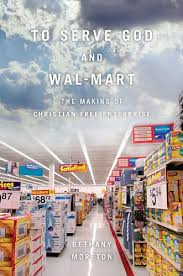
How did capitalism, Christianity, and college combine?

So when Falwell complains that GCU isn’t really following the same playbook, he’s not wrong.

But ditching the required faculty statement of faith is not the most shocking innovation GCU attempted. When its enrollment numbers plummeted at the start of this century, GCU adopted a for-profit business model. It became Grand Canyon Education, Incorporated and focused on in-demand majors such as nursing and education. These days, with for-profit schools under scrutiny, GCU has attempted to move back to non-profit status.

So here’s my question: If Falwell wanted to prove that his “Christian” school was the biggest, why didn’t he say that GCU shouldn’t be considered “Christian” because it was a for-profit business?

And here’s my hunch: Since at least the late 1800s, American cultural conservatives have assumed that capitalism is the best sort of social system. Many conservative Christians have argued that free-enterprise systems are somehow God’s preferred way of organizing an economy. In the twentieth century, a lot of the connections between capitalism and Christianity came from the shared opposition to communism.

9780393339048_FromBibleBelttoSunbelt_PB.indd

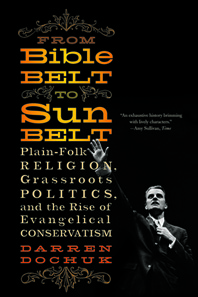
God = Capital

The tight connections between free-market principles and evangelical ones were usually simply taken for granted. To cite just one example, the president of Gordon College promised in 1967 that his school was a place in which

youth is encouraged to have faith in the historical validity and continuity of the principles of competitive free enterprise.

As historians Darren Dochuk and Bethany Moreton have explored, some schools such as Harding College and John Brown University raised the principle of “Christian free enterprise” to an all-encompassing mission.

So it doesn’t seem crazy that President Falwell wouldn’t even wonder if adopting a for-profit status might push his rival GCU out of consideration as a real “Christian” school. At least, that’s how it looks to this reporter.

Am I missing something? Is there any other reason why Falwell would ignore the huge, obvious fact that GCU wasn’t really “Christian” if it peddled its mission for mere lucre?

Why Care about Evangelical Colleges?

Why should historians of religion care about schools? How can our study of history help us heal our culture-war ulcers? This week, I had the chance to talk with Professor Andrea Turpin of Baylor University about these questions and more.

RiAH FU interview

Every mystery explained…

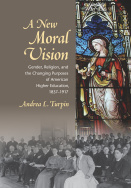
Professor Turpin is one of the few humans who is as fascinated by evangelical educational history as I am. Her first award-winning book examined questions of gender, religion, morality and higher education in the nineteenth century. new moral vision

In our interview, she asked terrific questions that got right to the heart of the matter. What does the history of evangelical higher education tell us about the relationship between “fundamentalists” and “evangelicals?” How does political conservatism line up with theological conservatism? …and more!

For my awkward attempts at answers, click on over to Religion in American History and read the whole thing. Many thanks to Prof. Turpin!

Why Jimmy Carter?

If you didn’t know much about Liberty University or conservative evangelical higher education, you might be surprised to hear that President Jimmy Carter will be giving the commencement address at Liberty this year.

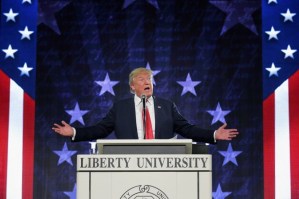
Trump at liberty

Glories of past Liberty commencements…

For SAGLRROILYBYGTH, it makes perfect sense. I lay out my case this morning at The Conversation why Jerry Falwell Jr. would want President Carter to come to Lynchburg.

Why would he? Click on over and check it out. Let me know if you think I’m off base.

Gone but Not Forgotten

Do I have a problem? For sure. Am I embarrassed about it? Not at all. But I do want to make my case for the importance of old grudges and festering scars in understanding the world of evangelical higher education.

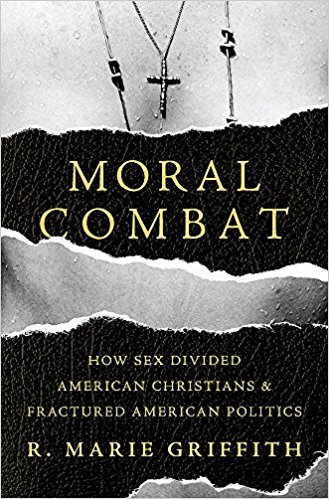
griffith moral combat

Good company…

Here’s the context: I’m grateful to Professor John Compton and the LA Review of Books for a recent review of Fundamentalist U. I’m doubly honored to have my book partnered with R. Marie Griffith’s recent blockbuster Moral Combat.

Even better, Compton has nice things to say about my book. As he puts it, Fundamentalist U

offers an invaluable introduction to the esoteric world of Christian higher education. Few existing studies offer this level of insight into the inner workings of schools like BJU and Liberty.

Compton captures the central dilemmas I emphasized, such as the tension between keeping students safe and keeping up with changing academic trends. He notes the important divisions that emerge between new “evangelical” colleges and stalwart “fundamentalist” ones.

I can’t help but comment, though, on one of Compton’s points. He is doubtless absolutely correct when he states,

some readers may be turned off by Laats’s fascination with long-forgotten rivalries involving long-dead university administrators[.]

I am certainly fascinated by such things. And I don’t doubt that sensible people have better things to do with their time than ponder the administrative squabbles in Cleveland, Tennessee or Wheaton, Illinois in 1937. This is why I don’t get invited out very often. Most people are, in fact, turned off by my fascination with these questions.

For those of us who hope to understand American evangelicalism, though, there’s no way we can consider such rivalries “long-forgotten.” As in any family feud, time may have obscured the details, but it has not tempered the animosity. If anything, bitter feelings caused in 1937 may have earned angry compound emotional interest over the decades, giving original squabbles a power and fury they didn’t originally possess.

To give just one example from the book, I can certainly see how many readers might not immediately care about the firing of President J. Oliver Buswell from Wheaton College in the 1930s. President Buswell wanted Wheaton to pursue a more theologically pure separatist approach. He wanted Wheaton to encourage its faculty and students to withdraw from mainline Protestant denominations and focus instead on creating a consistently conservative evangelical institution.

Wheaton’s trustees disagreed. They insisted that Wheaton maintain its efforts to attract conservative students who remained within mainline denominations as well as those that joined breakaway fundamentalist churches.

As Professor Compton notes, all the players in this 1930s drama are long-dead. But their squabble is anything but long-forgotten. Throughout its history, Wheaton struggled to figure out how to handle the tension between conservative purity and (relatively) big-tent inclusiveness. Time after time, whenever faculty members challenged the vagaries of Wheaton’s assumptions about orthodoxy, they were given the boot.

If you think these patterns are no longer in effect, just ask Professor Hawkins. Perhaps no one in that recent Wheaton battle invoked the specter of President Buswell’s 1930s ouster, but the college as a whole still deals with the echoes of every long-ago conflict.

A New Low?

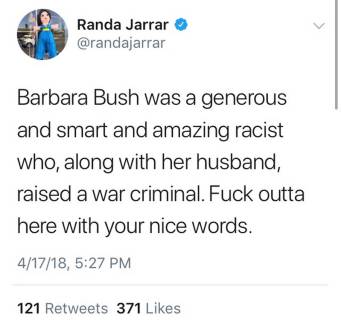
It was despicable. It was crass. It was ugly. IMHO. But as far as I’m concerned, Professor Randa Jarrar’s comments about war criminals, Barbara Bush, and the status of tenured radicals were not much different from what we’ve seen already.

The topic came up when a journalist called me yesterday to talk over the case. Among her questions, she wondered if Professor Jarrar’s hateful tweets represented a new low in academic discourse. I invite SAGLRROILYBYGTH to disagree, but I think Jarrar’s comments, as nasty as they were, are nothing new in academic life.randa jarrar 1

Here’s what we know: Professor Jarrar teaches English at Fresno State University. When former First Lady Barbara Bush passed away, Professor Jarrar seized the opportunity to tweet her outrage about President Bush’s policies. As Jarrar put it,

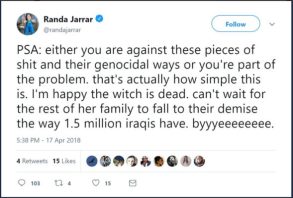
Barbara Bush was a generous and smart and amazing racist who . . . raised a war criminal. . . . I’m happy the witch is dead.

As Jarrar attracted attention from friends and foes for her comments, she bragged that she made a six-figure salary and couldn’t be fired. Trolls dug up video clips of Jarrar’s public talks, in which she seemed to call for violence against white-supremacist Richard Spencer, among other things.randa jarrar 2

Loud. Brash. Unpleasant. But a new low? I don’t think so. I think Professor Jarrar, like so many other academics these days, was scrambling to build her brand. She was looking for attention—as all humanities academics these days feel pressed to do—and she did so in a particularly nasty way.

I don’t like it, but I don’t think it’s worse than other provocations from pundits of both the left and the right. Am I missing something?