Winning the Culture Wars—Arizona Style

Forget a long march through the institutions. Conservatives in Arizona are trying a new tactic to win the campus culture wars. Will this new style of legislative campus coup achieve what generations of conservative intellectuals haven’t been able to pull off?

According to the New York Times, conservative lawmakers in Arizona—fueled by bags of cash—have foisted two “Freedom School” programs onto the party campus of Arizona State. Students study the traditional Western canon–Aristotle, Madison, Adam Smith—unfiltered by recent trends in academic thinking.

ArizonaState

Home to Freedom Schools and beer bongs…

The goal, as one lawmaker told the NYT, was to fix the warped intellectual culture of college life. Students are supposed to hear the powerful arguments for free markets and the superiority of Western culture. As Representative Jay Lawrence put it,

There is too much revisionism being taught in universities today. . . . It’s a big deal to those of us who feel very strongly about a more conservative education.

The NYT article doesn’t go into it, but this style of legislative curriculum-making has been popular lately among conservative politicians. In Colorado, SAGLRROILYBYGTH will recall, pressure from the Capitol forced a new chair of conservative thought onto Boulder’s campus. In Wisconsin, lawmakers foisted a campus rule giving conservative students the right to appeal any slight to their conservative ideals.

To this reporter, these attempts to legislate conservative ideas onto left-leaning campuses represent a new strategy.

For about a century now, of course, conservative intellectuals and academics have fretted about the state of higher education. One particular group of religious conservatives—as I recount in my new book about evangelical higher education—threw in the towel and opened their own wildly successful conservative colleges.

More secular conservatives have tried a variety of tactics. Beginning in the 1940s, conservative intellectuals have founded alternative student groups, journals, and newspapers, as George Nash described so powerfully in his history of conservative intellectual life.

Yet in spite of generations of dedicated conservative academic activism, mainstream college campuses still skew left. As Neil Gross has argued, this is more due to self-selecting than to any vast left-wing conspiracy.

Yet it still rankles conservatives. Will the new strategy make mainstream secular campuses more conservative?

William Jennings Bryan dreamed it in 1922.

Frank Chodorov salivated about it in 1953.

Until now, though, conservative intellectuals haven’t had the big-budget clout that they’ve needed to set up campus programs. Will Arizona State’s new “Freedom Schools” herald a new era in secular conservative higher education?

I doubt it. The programs need to offer the kinds of things that colleges have always had to offer—professional certifications, career opportunities, and so on. My guess is that the funding will peter out and students will return to traditional majors and academic programs.

HT: HD

When Conservative College Students Cancel Campus Speeches

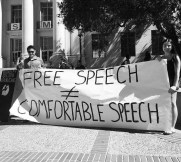
Should they or shouldn’t they? At UCLA, conservative students invited Milo Yiannopoulos to campus. A conservative professor advised them against it. His reasons for doing so highlight another fundamental question buried beneath our campus-free-speech shouting match.

milo yiannopolous

A “legitimate” conservative? Or just a “despicable asshole”?

Like everyone else, we at ILYBYGTH have been pondering questions of campus free speech lately. As SAGLRROILYBYGTH will recall, last week we wondered if arch-creationist Ken Ham could legitimately be disinvited from an Oklahoma university. Then we wondered if conservative student groups could be forced to accept leaders who don’t agree with them.

The issues from UCLA might seem vastly different at first. The College Republicans had issued a speaking invitation to right-wing bomb-thrower Milo. He planned to talk on the topic, “Ten Things I Hate About Mexico.” In an open letter published at Weekly Standard, one of their few conservative faculty mentors, Gabriel Rossman, advised them to cancel the invitation, for conservative reasons. And they did.

Why?

Professor Rossman condemned Milo as nothing but—using the words of Charles Murray—“a despicable asshole.” If UCLA conservatives were really dedicated to promoting conservative ideas and principles, inviting Milo was a bad idea. As Rossman put it,

You need to ask yourselves, what is your goal as an organization? If you’re in it for the lulz and just want to see the world burn, then I guess go ahead and bring in a vapid provocateur.

But if your mission is to spread conservative ideas, you should recognize that hosting Yiannopoulos will only render your organization and our ideas toxic.

Prof. Rossman’s advice—which the students heeded—raises another central underlying question in our debates over campus free speech. Last week in these pages, Agellius noted that the real question was not just creationism or homosexuality or nationalism. The real question, he wrote, was this:

It’s all about who gets to define “discrimination” isn’t it?

If Ken Ham’s version of Christianity is considered ipso facto discriminatory, then it makes some sense that he wouldn’t be invited to speak at a school dedicated to fighting against anti-homosexual discrimination. But if it isn’t, then it doesn’t.

Prof. Rossman’s advice raises a related question. He encourages UCLA’s conservative students to invite provocative conservative speakers. He lauded the decision to bring “War on Cops” author Heather MacDonald to campus. As he explained,

I can understand why some people were offended by Heather Mac Donald’s ideas when she spoke on campus last year. But reasonable people can disagree about whether all Americans, and especially African Americans, on net benefit from aggressive policing. More to the point, Mac Donald expresses her pro-police position without animus, so sponsoring her talk was an entirely legitimate and honorable thing to do.

Milo is different, Rossman thinks. His goal is only to push leftist students into vulgar displays of coercive thuggery. Rossman’s against it; against the entire “epater les SJWs performance art model” that Milo represents. [Editor’s note: SJW = “Social Justice Warrior.”]

We might say that Professor Rossman considered some so-called conservative speakers beyond the pale of legitimacy. Did College Republicans have the right to invite him? Rossman says yes. But was it good conservative strategy to do so? Rossman says no.

The central question, though, is not about Milo or Ken Ham or any single speaking invitation. The central question, it seems to me—following Agellius—is this: Who decides what “extremism” and “legitimacy” are?

Is it “illegitimate” to oppose same-sex marriage? The Oklahoma student protesters said yes. Ken Ham says no.

Is it “extreme” to deride Mexico? To try to provoke UCLA students into wilder and wilder displays of speech-blocking ferocity? Professor Rossman says yes. The College Republicans, apparently, agreed.

Billy Graham and Bob Jones

The news is in: Billy Graham has passed away at age 99. I’m not among his evangelical followers, but over the past several years I’ve gotten to know Billy Graham as I’ve worked on my new book about evangelical higher education.

Billy Graham

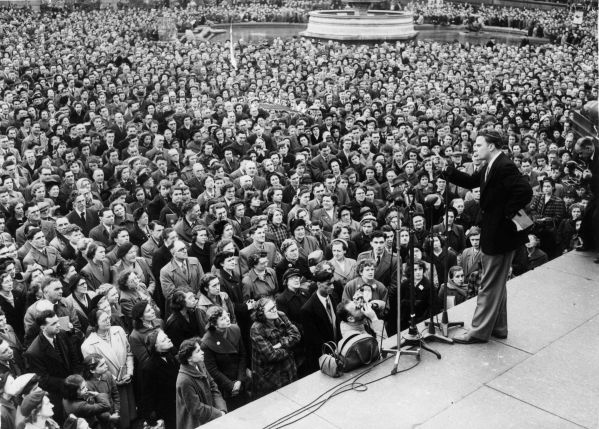
Graham preaching to the multitudes, London 1954.

In the 1940s and 1950s, Graham became the embodiment of a new spirit among American fundamentalists. He reached out to other Protestants to help lead big revival services all across the world. Some fundamentalists thought he went too far. (For details, check out my archival survey of fundamentalist fury about Graham’s revival successes.) As I note in my book, Bob Jones Sr. in particular had a long and tempestuous relationship with Graham.

Graham had started his college career at Bob Jones College. After a year, though, Graham left, ending up with an anthropology major from Wheaton. Jones and Graham kept in close contact and their correspondence is the best single source I’ve found to understand the rift between fundamentalists and new-evangelicals.

By the 1950s, Jones actively warned fundamentalists not to trust Graham or any institution that welcomed Graham. Jones’s letters show both the reasons and the personal anguish involved. Below I’ll quote from a five-page single-spaced letter Jones wrote to Graham in 1951.

                Here is the difference between your mistakes and mine: My mistakes grew out of the way I did things because I did not know how to do them.  After I got the right kind of advice, I quit making them.  Your mistakes have not grown out of your lack of information or your inability to get information.  Your mistakes have grown out of the fact that you are not building your evangelistic campaigns on the right foundation and the right principles.  Billy, if you build a house on the right foundation, the storms and wind may blow that house down, but you do not have to ever rebuild the foundation. . . .

In your heart, you love Jesus, and you are happy to see people saved; but your love for glamour and your ambition (which is the strongest ambition I have ever known any man in evangelistic work to have) and your desire to please everybody are so dominant in your life that you are staggering from one side of the road to the other. . . . You, in your effort to please, are putting yourself on the spot. . . .

Most of the material that goes out about you, you put out. . . .

I could tell you much more, Billy; but it does not do any good to talk to you.  You will agree with a fellow, but you go on just as you are, and that is the discouraging thing about it. . . .

You are popular like any showman is popular, but you have no real grasp upon the hearts of the people like Billy Sunday and other men had. . . .

[When you were young, you begged me] to call you one of my boys and told me that you got your slant on evangelism at Bob Jones  University.  My evangelistic heart was touched, and I put about you the arms of evangelistic affection.  I came back here to the school and told everybody that you were one of our boys.  I did not tell them what kind of a record you made here.  I took at face value what you said about going to Florida because of your health.  I asked all of our boys to pray for you.  I asked my friends to pray for you.  Remember, Billy, that was before you made the headlines. . . .

you began to think that probably the best thing for you was at least on certain occasions and in certain places not to let people know that you were here [as a student at Bob Jones College] and that, as you had said, you got your slant on evangelism here.  So you began to sort of soft pedal. . . .

Now that you are in the headlines, the fact that I ever said that you were one of our boys because you told me to, and people know about that, and you cover it up gives the idea that we are trying to hang on to your coat tail because you are in the headlines; but we are not, Billy. . . .

I still love you…

Trumpist Towers? Or Critical Colleges?

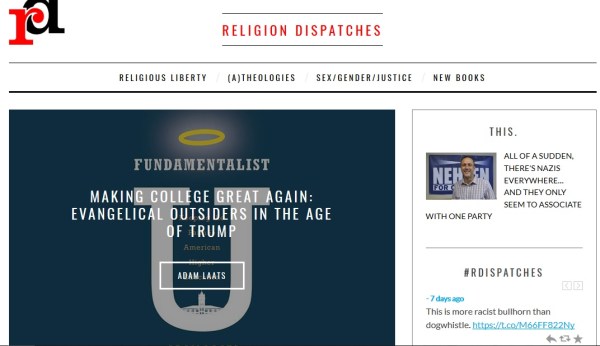
I’ve said it before and now I’m saying it again: Trumpism speaks to long traditions among white evangelicals. And time and again, evangelical colleges have been the institutional homes of Trump-like yearnings to “make America great again.” As I argue this afternoon over at Religion Dispatches, however, evangelical colleges have also played another key role.

RD screenshot

Are evangelical colleges bastions of Trumpism? Or are they the only places evangelicals can turn to find out what’s wrong with loving The Donald?

I won’t give away the entire argument. SAGLRROILYBYGTH might be bored to tears with the topic and you can read the whole thing if you’re interested. But I will say that it’s no surprise that President Trump loves Liberty University. It’s also no surprise, however, that the Liberty community isn’t sure if they love him back.

Free to Discriminate?

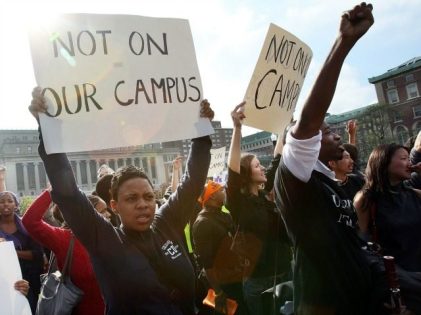
Does a creationist have the right to free speech? That’s the question we’ve been wondering about here at ILYBYGTH lately, ever since arch-creationist Ken Ham got bumped from a talk at the University of Central Oklahoma. News from state legislatures brings up another campus challenge: Do student groups have the right to discriminate?campus-protest-getty-640x480

First, the update, thanks to Donna: According to Ken Ham’s Answers In Genesis organization, he has been re-invited to UCO. Apparently, Ham will talk on campus, then move to a nearby church for a Q&A.

Today, we’ve got an even trickier free-speech/free-assembly question to examine. Should student groups be forced to abide by university anti-discrimination rules? Even for their own leaders? Americans United for Separation of Church and State lists a burgeoning new crop of state laws that would force campuses to make exceptions.

In Virginia, for example, a state senate subcommittee unanimously approved a new bill that would allow student groups to discriminate in their leadership choices. Emphasis added below:

Establishes several provisions for the protection of expressive activity on the campus of each public institution of higher education, including (i) permitting any individual who wishes to engage in noncommercial expressive activity on campus to do so freely, as long as such expressive activity does not materially and substantially disrupt the functioning of the public institution of higher education and (ii) prohibiting any public institution of higher education from (a) denying a student organization any benefit or privilege available to any other student organization, or otherwise discriminating against a student organization, on the basis of the expressive activity of the members of such organization or (b) restricting a student organization’s ability to require any leader or other member of such organization to affirm and adhere to the organization’s sincerely held beliefs, comply with the organization’s standards of conduct, or further the organization’s self-defined mission or purpose.

Why do some conservatives see the need for such bills? As SAGLRROILYBYGTH may recall, evangelical groups on campus have been under fire for the past few years. Intervarsity, for example, has been derecognized on many campuses. Why? Because the group requires its leaders—not members, but leaders—to agree to its statement of belief. And that statement of belief includes traditional definitions of sexual morality.campus-free-speech-720

Conservative religious folks have long fretted about these definitions of discrimination and inclusion. Why can’t conservative evangelical student groups insist that their leaders share their ideas?

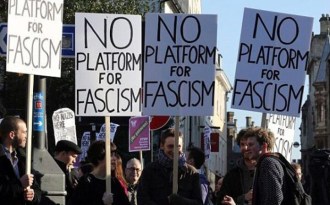
The rub comes once again with the question of university support. Speakers on campus are generally free to do whatever they want, short of issuing threats or starting riots. People can talk their heads off in public areas. There have been important exceptions, as when one professor physically attacked an anti-abortion speaker on the campus of UC-Santa Barbara. campus free speech berkely republicansIn Ken Ham’s case, he wasn’t merely speaking on campus. He was sponsored and promoted by the student government. Some student groups objected to university sponsorship of a speaker that they saw as beyond the pale of legitimate public speech.

Liberal critics make the same case against these student-group laws. In AU’s opinion, such laws are a travesty. As they put it,

Religious freedom is the right to believe—or not—as we see fit. It doesn’t include a right to discriminate—and especially not while using taxpayer dollars or using the tuition fees of the very students who are being excluded. Religious student groups, of course, still have First Amendment rights on campus. They have been able to access school facilities for their meetings and use school bulletin boards to advertise their events like any other group. But they don’t have the right to force public universities to subsidize discrimination. If student groups want to discriminate, they shouldn’t receive public university recognition, tuition fees, or state taxpayer money to do so.

What do you think? Should student groups be free to discriminate? Should public money support student groups that discriminate?

Mumbling Toward Gomorrah

Which side are you on? That’s the question college administrators hate to answer. A few recent headlines make it clear that conservative evangelical college leaders continue to prefer mumbling through some of the touchiest issues they face. As I found in the research for my new book about evangelical higher education, it has always been thus.

baylor-header

What’s their position on homosexuality? …how much time do you have?

I was reminded of this dilemma when I came across a conservative lament about Baylor University in Texas. One outraged correspondent wrote to Benedictophile Rod Dreher to complain that Baylor had ditched its Baptist tradition. Officially, according to this American conservative, Baylor’s code of student conduct prohibits homosexual relationships. But as he or she described, it can be very difficult to actually find that rule spelled out. As s/he told Dreher, in order to find out that Baylor officially bans homosexuality,

You must start here Student Misconduct Defined https://www.baylor.edu/student_policies/index.php?id=32401 only to be redirected here for Sexual Conduct Policy https://www.baylor.edu/student_policies/index.php?id=32294 which says literally nothing, but directs you here: https://www.baylor.edu/content/services/document.php?id=39247. This tells you almost nothing but at least tells you sex is only allowed in marriage–but these days, who knows that means? The Baylor website basically says they understand marriage according to the 1963 Baptist Faith and Message but tough shit, we aren’t going to give you a link; you’re are on your own. I found it: http://www.baptiststart.com/print/1963_baptist_faith_message.html And it turns out that according to the Baptist Faith and Message, marriage is defined as being between a man and a woman. Whew! I’m tired already! Lots of link-chasing and more than a few logical inferences from different webpages are necessary to conclude that in fact, homosexual contact is prohibited by Baylor policy.

Baylor isn’t the only evangelical school to founder in the face of sex policy. SAGLRROILYGYTH may remember a recent case from Boston. Gordon College’s President D. Michael Lindsay set off a firestorm a couple of years ago when he reminded the Gordon community of Gordon’s long-standing policy against homosexual relationships among students. The Gordon community remains painfully divided over the question, with entire faculty committees resigning their leadership roles in protest over leadership decisions.

Now, I’m no evangelical. I’m not conservative. I wouldn’t send my child to a school that banned homosexual relationships, even if that school buried those rules deep in ivy. But as an outside observer, I can’t help but notice what so many school leaders have always known: Sometimes the best policy is mumbles. Anything else can blow up in your face.

After all, Lindsay at Gordon wasn’t changing any rules. He was not imposing a new, draconian policy. Rather, he was simply stating established Gordon rules. And that was enough to create an uproar. It would be difficult for other school leaders not to get the message. Time and time again, cautious school administrators and others can see the enormous benefits of mumbling. Of studied silences. Of intentional ambiguity.

Baylor considers itself a mainstream school, a powerhouse in both faculty lounges and football fields. The fact that its policy officially prohibits homosexual sex isn’t something it likes to promote.

Similarly, President Lindsay’s statement about student sex did nothing more than openly state the school’s longstanding policy, yet his statement has led to prolonged anguish for the Gordon community.

With stakes so high, it certainly seems to be in colleges’ best interest to maintain some flexibility in their official policies. This strategy is nothing new.

To describe just one example from my new book, in the 1960s Wheaton’s administrators faced a similar upsurge from the Wheaton community. Students wanted to revise the forty-year-old student pledge. The old rules against movies, alcohol, and card-playing—rebels insisted—reflected the college’s sad fundamentalist past. They insisted on more flexible rules in order to give them more moral responsibility.

In 1967, President Hudson Armerding agreed, sort of. He approved and announced a new set of guidelines for student behavior. From then on, instead of the old list of banned activities, students were expected to abide by the following rules:

                1.) Cooperate constructively in the achievement of the aims and objectives of Wheaton College and the responsibilities of citizenship in the community and nation.

2.) Exhibit Christian conduct, based on principles taught in the Scriptures, which will result in the glorification of God, the edification of the Church and his own growth in grace

3.) Observe, while under the jurisdiction of the college, Wheaton College’s ‘Standards of Conduct.’

4.) Take maximum advantage of the educational opportunities available to him by ordering his life so that he can live in harmony with both the academic and non-academic goals.

5.) Make full use of his God-given abilities so as to achieve maximum personal development.

6.) Continually evaluate his commitment to Christ and to the purposes of Wheaton College.

Armerding was a past master at mumbling through these questions. He could tell students with a straight face that he had heard their complaints. He really did approve a new approach.

Yet at the same time, President Armerding could tell conservative alumni and trustees that the new rules left the old ones in place. Students still had to abide by the old standards of conduct while on campus. He could look parents in the face, as he did in a 1971 chapel talk, and tell them that nothing had changed. As Armerding put it, Wheaton would never approve

a shallow permissiveness [that] conveys a distorted view of God who deals far differently with His children. . . . We believe that students should be disciplined and corrected and that this should be consistent with the teachings of the Word of God.

The questions in the 1960s and 1970s weren’t about homosexuality. But the strategies were the same. As do administrators at all types of colleges, many evangelical school leaders cherish the value of fuzzy, possibly two-sided rules.

The Ugly Truth: Sex Abuse at Evangelical Colleges

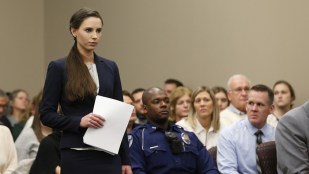
I wish it were a shock or a surprise. Instead, the terrible stories coming out of the Larry Nassar case are all too familiar: young people threatened and abused, an abuser tolerated for the sake of victory, the whole story hushed up. Why did so many responsible adults look the other way? One phrase from gymnast and whistleblower Rachel Denhollander struck me: “not simple institutional protectionism.” Denhollander sees it as a theological problem, but in the research for my new book about evangelical colleges, I found a more complicated truth.

rachel denhollander

Denholland testifies…

Of course, the demon of sexual abuse and institutional cover-up is not a problem for evangelical churches and colleges alone. The Catholic Church, big football schools like Penn State, and in the Nassar case, Michigan State all have an atrocious record of institutional protectionism.

However, I argue in my book that evangelical colleges faced a peculiar double-pronged problem. First, in the early years of the fundamentalist movement, leaders were keen to protect the reputation of their controversial movement. Second, without an outside arbiter—a denominational convention or presbytery or Vatican—fundamentalist institutions tended to turn into self-contained fiefdoms. The thoughts and plans of charismatic leaders tended to become authoritative, if not authoritarian.

A couple of examples will illustrate the trend. In the 1930s, Denver Bible Institute was wracked with a gruesome sex-abuse scandal. The accused leader and perpetrator, Clifton Fowler, turned to a blue-ribbon panel of Bible-institute worthies to clear his name. The panelists tried hard, in the words of the chair, to keep their investigation a “strictly private matter among Christian brethren.” They wanted to find out the truth about Fowler, but they didn’t want to publicize it. They were worried about the reputation of fundamentalism as a whole and Bible institutes in particular. It wasn’t a cover-up, exactly, but it was a form of discouraging complaint and public outcry.

This sort of “institutional protectionism” isn’t exactly theological, but it has been a tradition written deep into the bones of conservative evangelical and fundamentalist institutions since the 1920s. The movement has always had a sense of beleaguered outsider status, of being ripped off and usurped, kicked out of its rightful role as leaders of denominations and higher education. Certainly, this sense of hyper-defensive circle-the-wagons clubbishness is related to the theology of fundamentalism, but it is not itself a theological notion.

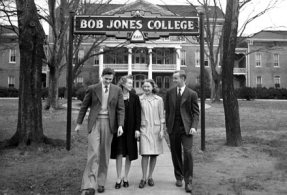
Maybe one more example will help illustrate the tradition. At Bob Jones College during its Tennessee years (1933-1947), founder and president Bob Jones Sr. established the patterns that guided the school for decades. Unfortunately, those patterns also fostered and abetted sexual abuse. During the 1930s, Jones established his rule against “dirty gripers.” Anyone who complained—faculty and students alike—about conditions at the school, Jones insisted, was not welcome. As Jones put it in a chapel talk:

we are not going to pay anybody to ‘cuss’ us. We can get ‘cussin’’ free from the outside. . . . We have never been a divided college. . . . Gripers are not welcome here. If you are a dirty griper, you are not one of us.

It is not difficult to see how this rule discouraged student victims from coming forward. With no other authority to turn to, evangelical colleges like Bob Jones College sometimes deteriorated into authoritarian echo chambers. For years, students and faculty at institutions like this had no chance to condemn their abusers.1940circa-cl000198-bjcsign-4students

This sort of authoritarian structure isn’t strictly a theological thing, but it is also a central part of the fundamentalist tradition. As in the Denver case, Bob Jones College leaders had to create some sort of self-supporting authority. They couldn’t turn to denominational boards or conventions. Instead, they vested authority in other ways, including in overweening charismatic leaders like the Bob Joneses.

Again, these sorts of institutional protection are not at all unique to evangelical colleges. But there are historical patterns that are specific to the fundamentalist movement. Those patterns can make abuse worse. At times, they are linked to theology, as Denholland pointed out. Far more common, though, they are a result of the unique history of evangelical institutions as a self-consciously defensive group that had no higher bureaucracy to help figure out disputes.

Does Jerry Coyne Support Creationism?

Okay, maybe I’m just mad because he poked fun at “humanities” types like me. But I can’t help wondering if Jerry Coyne’s love for free speech is really as consistent as he implies. Does Professor Coyne support creationist “free speech” laws for K-12 schools? Colleges?

Here’s what we know: Right-wing eminence gross Steve Bannon is planning to speak at the University of Chicago. Students and some faculty are protesting. Professor Coyne criticizes the protesters, calling their “tiresome” ideas “reprehensible.”
UChicago sit in

Protesting against unfettered free speech at Chicago…

I tend to agree with Prof. Coyne that almost all speakers should be allowed to speak on university campuses. We need a high bar to prohibit speech, especially for guest lectures at universities. There are exceptions. If someone is likely to directly incite violence, they shouldn’t be allowed to speak. Universities, moreover, are under no obligation to financially support disruptive tactics—the kind of intentional provocation used by the likes of Richard Spencer. That is, when speakers plan to cause riots in order to draw attention to themselves, universities are not obligated to pay for the show. That’s not about free speech, but simple administrative common sense.

White supremacists and Trumpy trolls aren’t the only ones pleading for their right to free speech. As SAGLRROILYBYGTH know, creationists these days demand free speech in schools. Many current school bills insist that they will give teachers “academic freedom” to teach ideas critical of mainstream evolutionary theory. Missouri’s 2015 bill, for example, promises the following:

Neither the state board of education, nor any public elementary or secondary school governing authority, superintendent of schools, school system administrator, or public elementary or secondary school principal or administrator shall prohibit any teacher in a public school system of this state from helping students understand, analyze, critique, and review in an objective manner the scientific strengths and scientific weaknesses of biological or chemical evolution whenever these subjects are taught within the course curriculum schedule.

I’ll say it: I don’t think this kind of “freedom” is good policy. Sponsors of bills like these, IMHO, are mainly trying to cram a wedge into public-school science classes. I’m suspicious of the “scientific weaknesses” that such bills hope to teach about. If they really wanted to teach the various disagreements about the details of evolutionary science, fine. Great, even. But in fact, teaching those “scientific weaknesses” usually means teaching creationist critiques of mainstream evolutionary science as a whole. Teachers in public schools should not consider themselves free to tell students that worse creationist science is just as good as better mainstream academic science.

“Academic freedom” creationist gambits are not limited to K-12 schools. A few years back, for example, Professor Eric Hedin won tenure at Ball State despite accusations that he taught creationism-friendly ideas.

Does Professor Coyne support free speech in cases like these? In the case of Eric Hedin, we don’t have to wonder. Coyne outed Hedin early and often. Coyne protested that no professor at a publicly funded university had the freedom to teach creationism-friendly ideas as if they were science.

In creationist cases, then, Professor Coyne agrees to strict limits on free speech. How does he choose which free speech to prohibit?

A few possibilities:

  • Professor Coyne might say that he only objects to tax-funded religious preaching, as when a public university pays Hedin’s salary.

But tax money supports lots of religious talk on public college campuses. At many schools, religious groups use tax-funded facilities as meeting rooms. They use tax-funded student lists to recruit possible converts and members. Moreover, nearly every decent public university teaches lots of classes about all sorts of religious ideas. Why single out this particular instance?

  • Professor Coyne might object that Hedin taught religious ideas as science.

Surely Prof. Coyne knows better than me how difficult it is to articulate a simple definition of “science.” Shouldn’t scholars have the freedom to explore those boundaries?

  • Professor Coyne might say that he is against schools paying salaries for the promulgation of bad ideas; he doesn’t want intelligent design afforded the prestige of appearing in a college class.

If so, he would be repeating the ideas of the anti-Bannon UChicago protesters and their ilk. They do not want to legitimize hateful trolls such as Steve Bannon by paying him to speak at Chicago. They do not want to afford Bannon the prestige of such an affiliation.

  • Professor Coyne might say that teachers should stick with the curriculum.

But I don’t think he would. The heart and soul of academic free speech is the freedom to explore ideas not dictated from above.

Or, even if Professor Coyne could convince people that Professor Hedin was a special case, a case in which a teacher falsely claimed the freedom to preach religion on the public dime, what would he say about other free-speech schemes out there, like the one in Wisconsin?

Lawmakers in Madison have proposed a law to protect free speech on campus. If a creationist student were told that his “speech” about a 6000-year-old earth was incorrect on an exam, he could complain to an ominously named Council on Free Expression.

I just can’t imagine that Professor Coyne would protect creationists’ freedom to equal status for their ideas. In fact, I’m hopeful he would join me in strident opposition to this sort of thing.

The point, in the end, is not that students, faculty, and outside speakers are all engaging in the same sorts of speech. When a professor teaches a class or a student writes an exam, they are obviously engaged in different sorts of speech than when an outsider comes for a one-off lecture. They’re not all the same, but that’s not the point. Rather, the central point is that some assertions of free speech are strategic manipulations. In the case of most creationist “free speech” bills, the true goal is to make creationism seem legitimate.

When I (and maybe Prof. Coyne would join me) argue against such creationist free speech laws, our motives and goals are not “reprehensible.” We are trying to protect a vital idea—that mainstream science and creationist alternatives are not merely equally valuable scientific understandings. Academic freedom for instructors and free speech for students doesn’t include the right to teach and preach worse science as if it were equal science. People are certainly free to speak their minds about creationism, but schools do not have to pay people to engage in that kind of speech.

Given all that, I don’t understand why Coyne is so quick to bash his Chicago colleagues. Sure, he may disagree with them, but he should recognize his own objections to some purported “free speech” claims. If he did, he would likely have a different take on the “reprehensible” actions of his Bannon-busting colleagues.

Confirmed Sighting

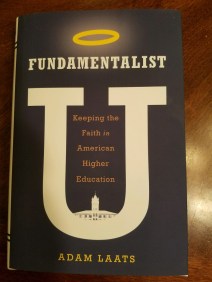
It exists! Thanks to the folks at Oxford, I have received the first copy of Fundamentalist U. Looks good!

fundy u FIRST COPY

Hot off the presses…

Thanks to everyone who pre-ordered a copy. Those pre-orders will be shipping on Thursday. The kindle version will be available then, too. The hardcover release will be on March 1.

In the meantime, you can read some blurbs to see what leading nerds have had to say about it. You can also read a short Q&A at RACM, here and here.

Fundamentalists Were Right

For a hundred years, conservative evangelicals have told themselves that college is a dangerous place. As I argue in my new book about evangelical higher ed, the threat posed by mainstream schools pushed fundamentalists in the 1920s to invest in their own network of interdenominational schools, safe colleges for fundamentalist youth. A new study suggests that fundamentalist fears are still well founded.

20171226_121555

How today’s fundamentalists view college…

Back in the 1920s, fundamentalists loved to recount horror stories of college gone bad. As evangelist Bob Jones like to tell revival crowds in the 1920s, one Christian family he knew scrimped and saved to send their beloved daughter to a fancy college. What happened?

At the end of nine months she came home with her faith shattered. She laughed at God and the old time religion. She broke the hearts of her father and mother. They wept over her. They prayed over her. It availed nothing. At last they chided her. She rushed upstairs, stood in front of a mirror, took a gun and blew out her brains.

Other fundamentalist pundits shared an apocryphal letter from a damned college graduate. This letter, from 1921, told the folks at home,

My soul is a starving skeleton; my heart a petrified rock; my mind is poisoned and fickle as the wind, and my faith is as unstable as water. . . . I wish that I had never seen a college.

Back then, fundamentalists didn’t just rely on anecdotal evidence. They shared social-science evidence of the dangers of mainstream higher education, especially psychologist James Leuba’s 1916 study of college-student religiosity. The students he interviewed tended to grow less religious during their college years. The takeaway? College must be doing something to strip students’ faith.

20171226_121545

Those darn college professors…

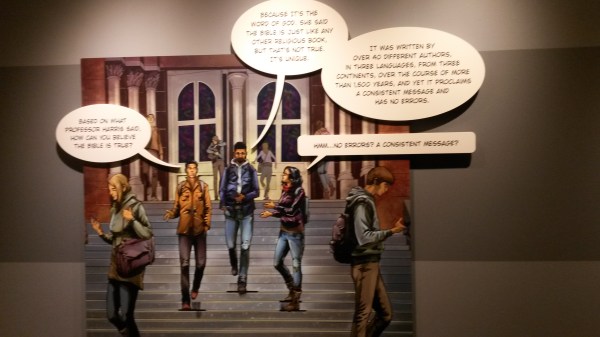
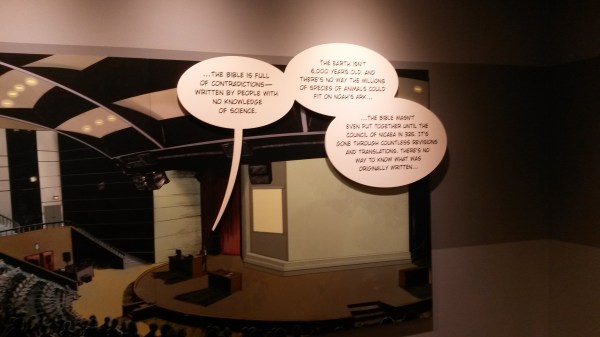
These days, conservative evangelicals are just as nervous as ever about college. On my recent trip to Answers In Genesis’s Ark Encounter in Kentucky, I was surprised to find a huge walk-through comic book illustrating the dangers of higher education.

And, over a hundred years after Leuba’s book, new research seems to suggest that mainstream colleges really do tend to water down student religiosity. The survey by the Interfaith Youth Core was most interested in the ways college students reacted to religious diversity. Along the way, they found that among 7,194 students at 122 colleges, religious activities as a whole tended to drop during the first year of college.

Forty-three percent of the freshman respondents said they had talked about religious ideas in high school, while only a quarter said they did in college. When it came to religious diversity, the numbers are even starker. Thirty-seven percent of respondents said they had attended a religious service of a different faith than their own in high school, but only 20% did in college.

College students also reported friendlier attitudes toward liberal ideas after a year of college, from 55% up to 63%. And a majority said they felt some pressure to change their religious ideas and that they tended to keep their religious ideas to themselves.

So while people like me might worry that students are not getting enough exposure to religious diversity, fundamentalists will likely worry more. Even if college students are shying away from other religions, they are also shying away from their own.