On the Reviewing Block

How do you decide what to read?  For nerds, academic journals provide page after page of book reviews.  I love to read and write these sorts of academic reviews.  But are they really worth the time?

Right now, for instance, I’m reviewing four books for a variety of journals.

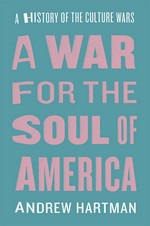
For History of Education Quarterly, I’m writing a review of Andrew Hartman’s War for the Soul of America (University of Chicago Press, 2015). Hartman

For the journal Church History and Religious Culture, I’m reviewing Christopher Rios’s After the Monkey Trial (Fordham University Press, 2014).rios

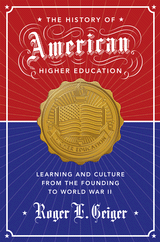
For Teachers College Record, I’m working on a review of Roger Geiger’s new book The History of American Higher Education (Princeton University Press, 2014).geiger

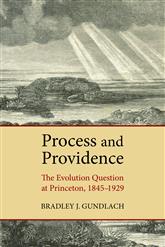
Last but not least, I just agreed to write a review of Bradley J. Gundlach’s Process and Providence: The Evolution Question at Princeton, 1845-1929 (Eerdman’s, 2013), for History: Reviews of New Books.gundlach

For those outside of the academic realm, here’s how the process works: Publishers send out review copies to a variety of journals and magazines.  Book review editors hunt down an appropriate reviewer, usually through word of mouth and academic reputation.  If the first person they ask can’t or won’t write a review, the editor asks for suggestions of other possible reviewers.

I love to write reviews for academic journals.  In each case, putting together a coherent review forces me to do more than simply absorb a book’s argument.  It forces me to take a sharper look at the sources, the implications, and the book’s strengths and weaknesses.  In all of the reviews I’m currently writing, I had planned to read each book already.  Writing the review simply forbids me to read any of them lazily.

But beyond the benefits for the writer, do these reviews matter?  After all, very few people read academic journals.  These days, the long peer-review process means that reviews in academic journals sometimes come out long after the books are published.  We might be tempted to conclude that these kinds of academic book reviews are merely an exercise in higher-education navel gazing.

I think there’s more to it than that.  After all, these reviews are not intended solely for individual readers or book buyers.  This is not just a “rotten-tomatoes” kind of review, in which readers might check out what has been said before choosing one book over another.  This is not simply “like”-ing something on Facebook or scrawling out an angry smear job on Amazon.  Those things may boost or crush sales and reach, but they don’t provide readers with careful descriptions of a book’s structure.

Book reviews in academic journals are different.  The audience for these book reviews is mostly university types, the professors who are choosing books to use with their classes and their students.  No one has time to read every book that comes out, but these short reviews allow academics to remain broadly aware of new trends in their fields.  A “good” review in this context does not mean glowing praise, but rather careful description of the book’s argument and significance.  A professor can choose which books to use in his or her classes.  Professors can also recommend certain titles to graduate students for further study.

Some things that are old fashioned deserve to wither away.  Cassette tapes, large lecture hall classes, and phones with cords come to mind.  This tradition of slow and careful review, on the other hand, may have its roots in a very different technological time.  Nevertheless, it remains a vital part of academic life.

The Social Sciences Need More Conservatives!

Let’s start with some ifs. IF diversity is really a minimum requirement for vibrant intellectual life, and IF college professors really tip toward liberalism and leftism, and IF academic groupthink has had a damaging effect on social sciences . . . IF those things are true, then don’t we need to improve political diversity in order to encourage real intellectual progress? A new study by a group of social psychologists argues that we do.  Only by encouraging researchers who embrace conservative worldviews, they write, can social scientists make real progress.

This academic team is not a collection of conservative pundits. As have other self-identified liberal academics such as Jonathan Zimmerman, these psychologists argue that in order to preserve even the liberal goals of the liberal arts, some sort of academic affirmative action is required.social-scientist

First, some background: this new study will be published soon in the journal Behavioral and Brain Sciences. It has been made available in an unedited, uncorrected pre-publication form to invite peer comment. The authors include José L. Duarte of Arizona State University, Jarret T. Crawford of The College of New Jersey, Charlotta Stern of Stockholm University, Jonathan Haidt of New York University—Stern School of Business, Lee Jussim of Rutgers University, and Philip E. Tetlock of the University of Pennsylvania. These academic psychologists are careful to note that none of them identify as political or cultural conservatives. Their argument is not a bitter lament from an excluded right wing, but rather a call to action by concerned academic insiders.

ILYBYGTH readers may remember Jonathan Haidt’s 2012 book, The Righteous Mind. In a nutshell, Haidt argued that Americans of all political stripes make up their moral minds first, then adduce reasons to explain their positions.

This new argument is different. The authors limit their claims to the field of social psychology. Their field, they contend, is

At risk of becoming a cohesive moral community. Might a shared moral-historical narrative in a politically homogenous field undermine the self-correction processes on which good science depends?

For example, studies of public attitudes toward climate change have described disagreement with mainstream science as “denial.” By calling one side “science” and the other side “denial,” doesn’t the very structure of the study adversely affect its outcome?

As the authors warn, “Embedding any type of ideological values into measures is dangerous to science.”

Not only does political homogeneity threaten to derail the answers found by social scientists, it tends to skew the questions they ask. As an example, the authors describe the career of the idea of “stereotype accuracy.” Due largely to ideological commitments, social psychologists had assumed that stereotyping was a false and negative tendency. In the 1970s, however, a rare conservative psychologist examined the question in a new way, and “found results that continue to make many social psychologists uncomfortable.” In this case, conservative psychologist Clark McCauley found that many stereotypes are actually based on rational assumptions and fact.

Why are there so few political and cultural conservatives in this academic field? The authors suggest a range of possibilities. They reject the notion that academic careers attract liberals because liberals are somehow smarter than conservatives. But they do find that the field may suffer from a self-propagating tendency. Since it is perceived as hostile to conservative thinkers, young conservative academics steer clear. Professor Haidt includes a sample of comments by conservative graduate students from his earlier work. One conservative academic told Haidt that he or she remained in the academic “closet.” Due to anti-conservative prejudice, this person wrote, “I find myself hiding my intellectual views and values every day.” Another conservative graduate student wrote that “the political ecology became too uncomfortable for me.”

This sort of weeding-out, the authors warn, threatens the field. By encouraging a culture of similar-minded researchers, the field of social psychology undermines its own scientific validity.

What is to be done? The authors offer a laundry list of suggestions, including more funding for conservative graduate students and an active recruitment process for tenure-track university positions. Universities are already good at searching for diverse faculties and student bodies. They only need to expand their notion of “diversity” to include a true intellectual, cultural, and political diversity. More broadly, the authors encourage all social psychologists to examine their own prejudices. “Instead of assuming,” they suggest,

That stereotypes are inaccurate without citing evidence, ask, ‘How (in)accurate are stereotypes? What has empirical research found?’ Instead of asking, ‘Why are conservatives so prejudiced and politically intolerant?’ . . . ask, ‘Which groups are targets of prejudice and intolerance across the political spectrum and why?’”

These are issues near and dear to ILYBYGTH hearts. Time and again, conservative intellectuals and pundits have complained that higher education has been lost to a morass of identity politics and destructive Red-Guardism. Perhaps most famously, William F. Buckley Jr. quipped that he would rather trust the government to the first four hundred people listed in the Boston phone book than to the faculty of Harvard University. More concretely, as I’m uncovering in my current historical research, conservative evangelicals have devoted considerable amounts of time and treasure to the establishment of dissenting conservative colleges, where students and faculty will be free to pursue truth undeterred by self-defeating and short-sighted secular humanism.

Certainly, this study will likely be embraced by conservatives as more proof that their complaints are justified. I wonder how many conservative intellectuals, though, will embrace the liberal premises of this study as well as its conservative-friendly conclusions. That is, will conservative thinkers agree that diversity is a requirement for true intellectual growth? Many conservatives, after all, have rejected racial affirmative-action programs that promise greater intellectual diversity. Can conservatives accept this study on conservative grounds?

It is worth repeating that this article limits its claims to the field of social psychology. But clearly its implications are worth considering for academia as a whole. Do mainstream colleges need a dose of true political diversity?

Update: Fundamentalism and Higher Education in the 1930s

For all those in the Binghamton area: We’ve had to move my talk this afternoon until Wednesday, Feb. 25th, at 4 PM in the conference room of the Institute for Advanced Studies in the Humanities, first floor Library Tower on the scenic campus of Binghamton University.  The talk will still be free and open to the public.  All are welcome; no registration is required.

Please note: This is SEPARATE from the radio discussion tonight (Monday, Feb. 23, 2015) at 6:30.  That’s still on as scheduled: Religion and the Modern University, a panel discussion featuring yours truly.  Available streaming through the interwebs.

For those who are just joining us, the talk on Wednesday will include material from my current research.  Here is the official abstract:

What has it meant to be a Protestant fundamentalist in the United States?  For some, it meant engaging in disputes with fellow Baptists or Presbyterians about the proper nature of their denomination.  For others, it has implied a wide-ranging cultural conservatism, including battles against ideas such as evolution and against social practices such attending movies and smoking.  Scholars have had no more success than pundits in defining fundamentalism, though historians have agreed that a network of colleges and universities served as central institutions in this fractious world.  In this talk, historian Adam Laats shares his research into the early history of these schools to demonstrate the ways that fundamentalist leaders and laypeople struggled to define themselves.

Homeschooling and Intolerance

What is the deal with homeschooling? It is really a plan to produce a private army of patriarchs, as some have suggested? Due to the fractured nature of homeschooling, it is very difficult to say anything accurate about homeschoolers as a whole. Thanks to the indefatigable Milton Gaither, we see this week a study that attempts to figure out if homeschooling really does lead to greater intolerance.

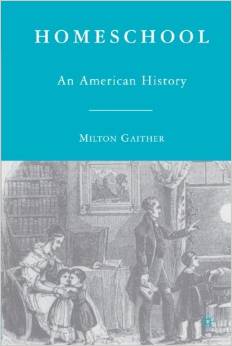
For those who are not familiar with his work, Professor Milton Gaither is an historian at Messiah College in Pennsylvania. In addition to his historical work on homeschooling, he also reviews all the new research about homeschooling on his must-read blog.Gaither homeschool

This week, Gaither reviews a study by Albert Cheng. In short, Cheng compiled data gathered from students at Biola University who had been educated in part at home. Cheng wanted to know if these homeschooled students were more intolerant than their public- or private-school peers.

Read Gaither’s full review for the deets, but the short answer is no. All other things being equal, homeschooled students at Biola were a bit MORE tolerant than school-schooled students. As Gaither points out, though, all other things are not equal. The difference in tolerance between homeschooled and school-schooled students was less than the differences between students from different social backgrounds.

In other words, homeschooling tends to make students in this sample more tolerant of people from other backgrounds, but the difference is not as striking as the differences between students from rich and poor families, white and black ones, boys and girls, etc.

What’s the upshot? Gaither concludes with some intriguing implications that you need to read in full. Do public schools make evangelicals less tolerant? Do students choose relatively liberal evangelical colleges like Biola because they are already more tolerant of differences? Can we say with any confidence that homeschooling, as such, does not tend toward intolerance?

Walker Takes on the Professoriate

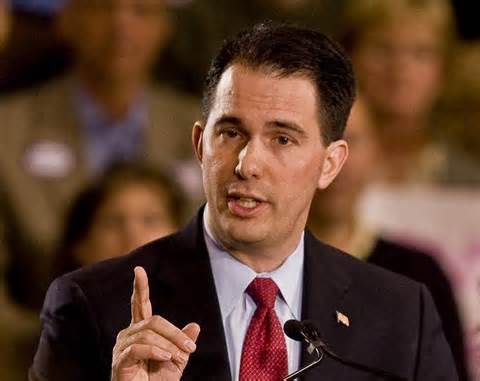
Want to get elected president? If you went to middle school, you know how it’s done: Find an unpopular group and attack them. Last week, Wisconsin Governor Scott Walker tried to pave his path to the Oval Office by attacking lazy good-for-nothing university professors. It might backfire. Walker’s plan has a long and spotty record among conservative politicians and activists. But in general, it’s a safe bet that Walker won’t lose conservative support by standing up to the professoriate.

Get to work, nerds!

Get to work, nerds!

In his new budget proposal, Governor Walker made huge cuts to the University of Wisconsin. The university could make up the shortfall, Walker suggested, by having faculty teach more classes. In short, Walker told reporters, this was nothing more than the core conservative principle of efficiency. The cuts will make the university

do things that they traditionally have not done. Like I said, things like maybe looking at the use of faculty and staff a bit more efficiently like others have done in government in the last four years at both the state and local level.

Naturally, Walker’s proposal has raised hackles among Wisconsin’s academics. History professor John Sharpless argued that he works at least as hard as anyone else. And after all that, Sharpless complained, he will retire with a smaller salary than a Madison bus driver. Walker’s implication that faculty are a bunch of “fat cats who are getting rich off the taxpayer,” Sharpless said, amounted to nothing more than a “crock of cow poop.”

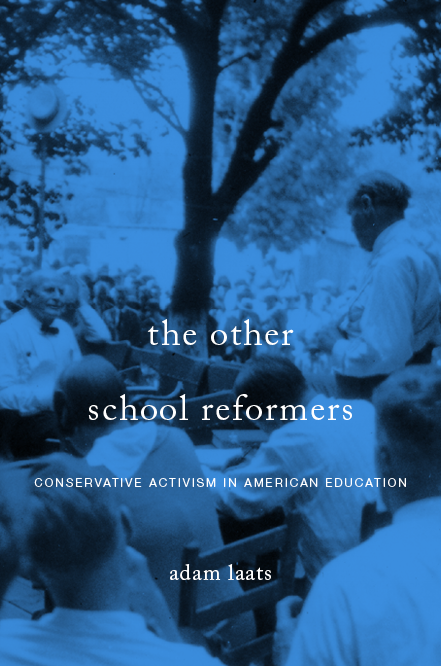
Poop aside, Walker’s attack on the professoriate joins a long tradition among conservative politicians. As I recount in my new book, throughout the twentieth century conservative leaders blamed a leftist academic elite for America’s cultural decline.

In the 1930s, for example, conservative anti-communist leader Hamilton Fish insisted that faculty at leading colleges had become public enemy number one. The faculties at schools such as Wisconsin, Fish charged, had been packed with “socialists, near Communists and Communists.”

University professors make an easy target. As we’ve explored in these pages, many conservatives assume that academic types are overwhelmingly liberal. Governor Walker may be banking on the fact that any attack on college professors will be seen as a win for conservatism.

Is Jerry Falwell an Idiot?

Is Jerry Falwell Jr. an idiot or a genius? Falwell, the president of Liberty University, has hit the jackpot with Liberty’s incredibly popular—and incredibly lucrative—online programs. Falwell has plowed that money into Liberty’s brick-and-mortar campus. Is Falwell a higher-ed visionary? Or does he simply not recognize the way things are really going in higher education?

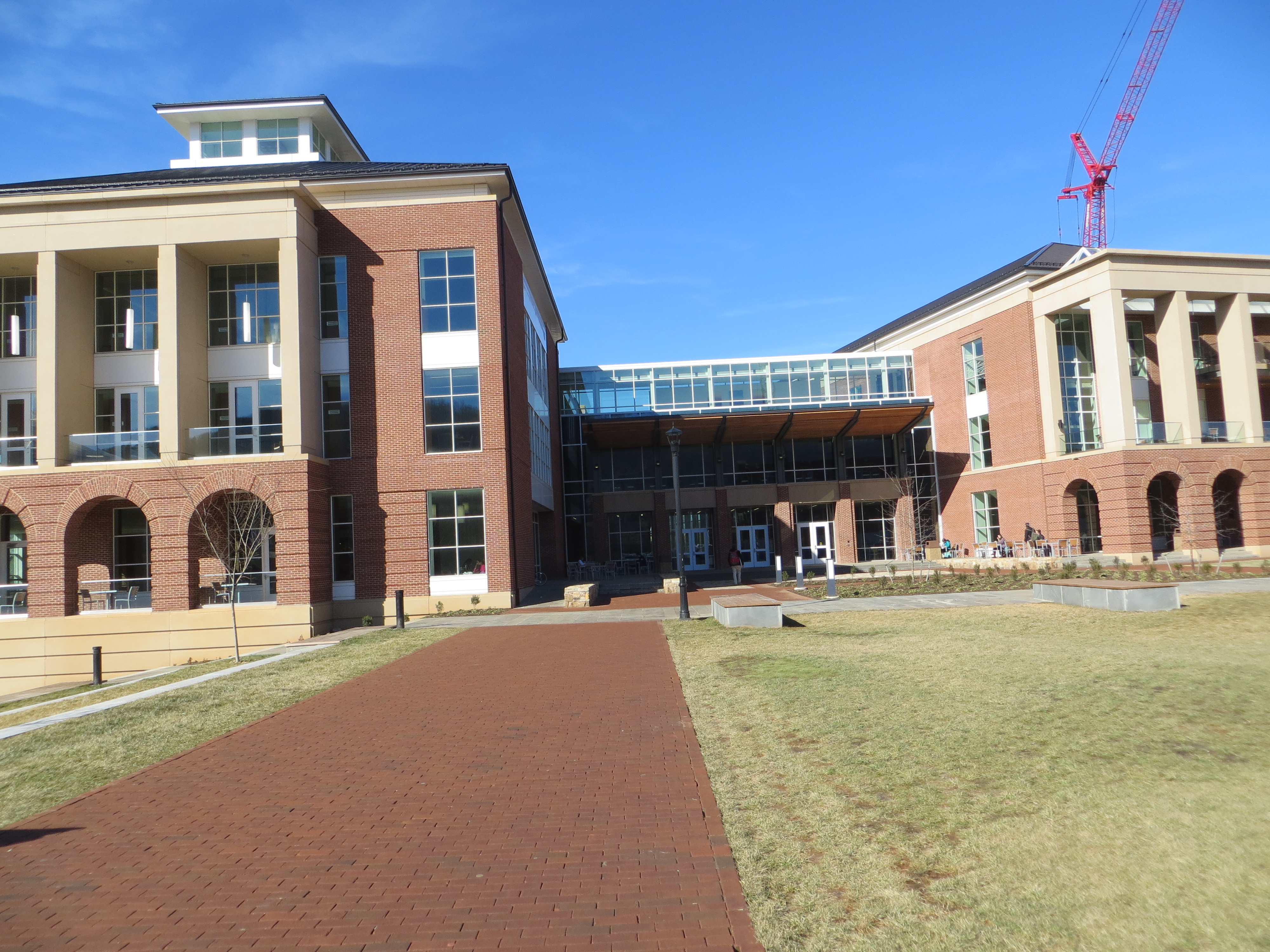
The money is hard to ignore. Between 2006 and 2012, Liberty’s net assets increased from $150 million to $860 million, thanks mainly to its booming online business. Instead of using those funds only to increase online education, Liberty has bankrolled an ambitious sports program and a recession-busting campus building program.

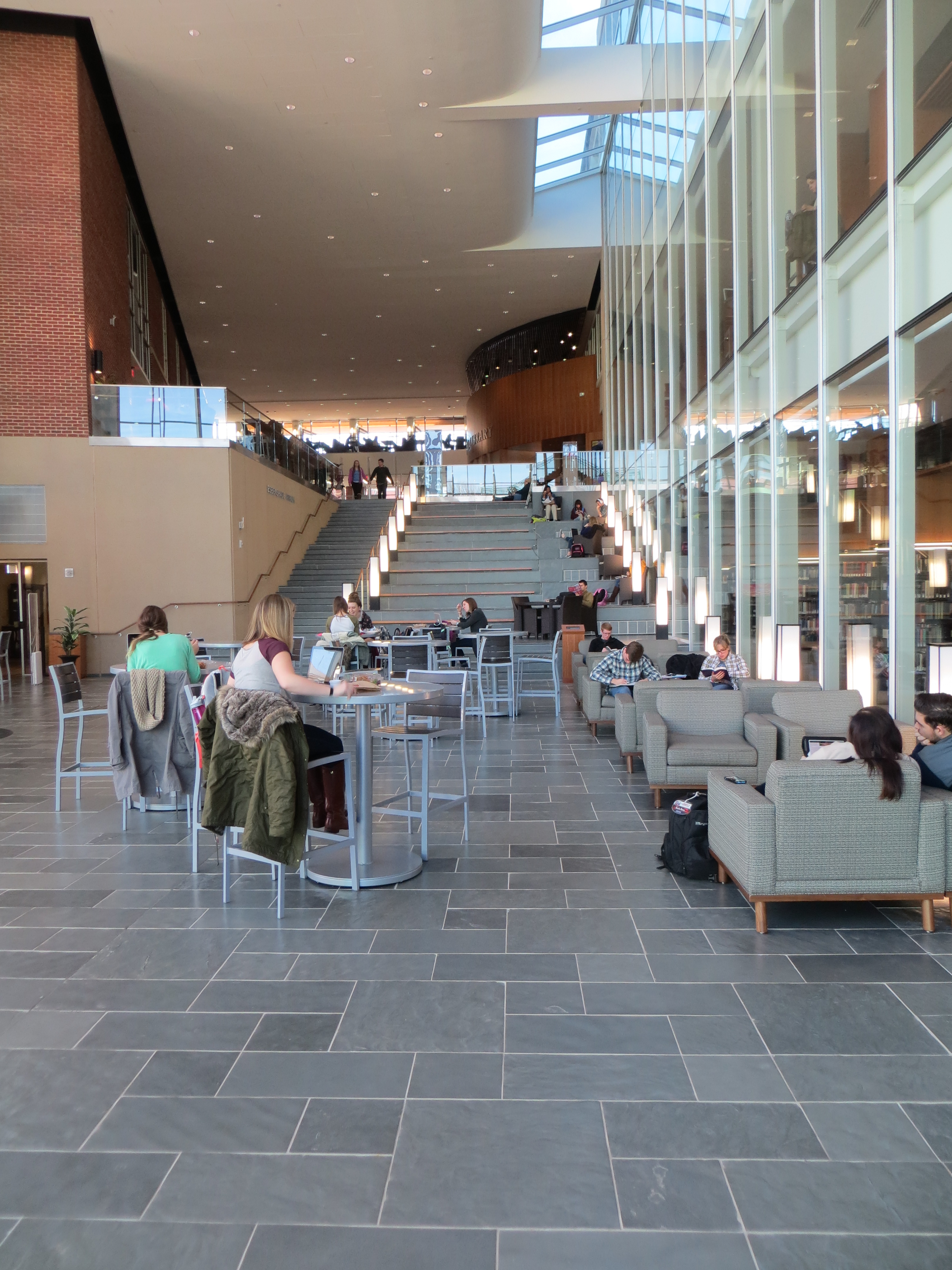
The new bajillion-dollar Jerry Falwell Library

The new bajillion-dollar Jerry Falwell Library

Most campuses are going the other direction. At traditional schools, including my beloved State University of New York, presidents and chancellors are scrambling to find ways to profit from online education.

Perhaps Liberty’s got something to prove. Founded only in 1971, it originally met in the basement of the Thomas Road Baptist Church. As I explore Liberty’s archives this week as part of the research for my next book, I’m finding reminiscences of those early years. One early ministry student remembered that he used to have revival meetings on the “old trash dump road” above the current campus. There was no campus back then, so these earnest “preacher boys,” this alum remembered, used to

Even the archives are nice.

Even the archives are nice.

pray, sing, and practice preaching for about an hour to an hour and a half. We would pray and preach in the Spirit! Walking, shouting, and praying up and down that road, calling out your name to the Father, tears streaming down our cheeks!

As do most fundamentalist schools, Liberty feels a constant need to prove that it is just as good, intellectually, as mainstream universities. As first president Pierre Guillermin put it in an early fundraising letter, any Christian college must maintain “performance standards of unquestionable academic excellence and admirable professional credibility.”

No more Trash Dump Road...

No more Trash Dump Road…

The campus building program may result from a deep need to prove that Liberty is a real university, not just a fundamentalist camp meeting. Or it may be something more strategic. College administrators these days are wracked with anxiety about the future of higher education. Will students in the future simply take classes from a menu of online providers? Will giants such as MIT and Harvard provide the world’s best content online? Can smaller schools continue to exist?

It seems President Falwell is betting big that people will continue to want a traditional campus, with traditional amenities such as sports programs and libraries.

I think he’s right. So far, the leaders in Massive Open Online Courses are not start-up companies in their garages, but established schools such as MIT and Harvard. People still have high expectations that their education—even their online classes—will come from a “real” university.

Spanked with the Bible Belt

Well, fry my biscuits;…things really are different down here. Historians have gone to great lengths to disprove the common misconception that fundamentalism is somehow only a southern thing, or only a rural thing. But there IS something profoundly different about Southern rural fundamentalism.

Go tell it on the mountain...

Go tell it on the mountain…

For those who are just joining us, I’m spending this year traveling to conservative evangelical colleges to research my next book, thanks to funding from the generous Spencer Foundation. Right now, I’m in scenic Lynchburg, Virginia, home of Liberty University. When I rolled into town, I saw something that blew my mind. No, it wasn’t the huge “LU” sign that had taken over a mountainside. I expected that.

Since the mid-1970s, academic historians have thrown out some old myths about American fundamentalism. Led by scholars such as George Marsden and Joel Carpenter, the new generation of histories no longer insist that fundamentalism is an outgrowth of hillbilly religion. Rather, fundamentalism has thrived in America’s biggest cities as well as in its rural hollers.

Consider my itinerary for this research year. To figure out what fundamentalism has meant across the twentieth century, I’ve traveled to schools such as Biola, Wheaton, and Gordon College. I plan to head to The King’s College and the Moody Bible Institute. My travels will take me to Los Angeles, Chicago, Boston, and New York City. Those are nobody’s ideas of rural backwaters. And yet they are the intellectual and spiritual headquarters of much of the fundamentalist movement.

Creationism in the lobby...

Creationism in the lobby…

Fair enough. But there is something different about things down here in the South, something different outside of bigger cities. Not only did I drive along Jerry Falwell Parkway to get here, but the lobby of my boring corporate hotel held a big surprise. The books for sale included the standard stuff about horses, cats, and jokes for kids, but there were also a lot of prayer, psalm, and Bible books. Even more remarkable, the shelf included relatively radical creationist books such as Ray Comfort’s Scientific Facts in the Bible.

This is the kicker: Sure, fundamentalism can thrive in big cities. It can certainly thrive in the North. But down here in the South, outside of big cities, fundamentalism becomes the usual fare. It becomes the accepted norm, not just one way to be religious. Even a non-religious, totally vanilla environment such as my hotel lobby offers books that prove the scientific veracity of the Bible.

...and horses.

Satan, Demons…and horses.

My hunch is that our so-called Bible Belt refers to those parts of our great country in which conservative Protestantism is something people assume they all share. It refers to those places where your new neighbor will ask you when you move in if you’ve found your church yet. It refers to those places where people think the “real” America is much whiter and more born-again Christian than it really is.

That’s my impression, anyway. I was raised in Boston, in a non-religious household. I’m guessing people more intimately familiar with life in the “Bible Belt” will know more about this sort of thing.

A February for Fundamentalism

Don’t dilly-dally. You’ve only got three weeks left to pick out your outfit. It’ll need to look sharp, because you’re invited to a talk on February 23rd, on the scenic campus of Binghamton University.

All joking aside, all Binghamton-area folks are heartily invited to come hear me share some of my current research as part of the university’s spring 2015 speaker series. In this talk, I’ll discuss the ways conservative evangelical colleges helped define what it meant to be a “fundamentalist” in the 1930s.

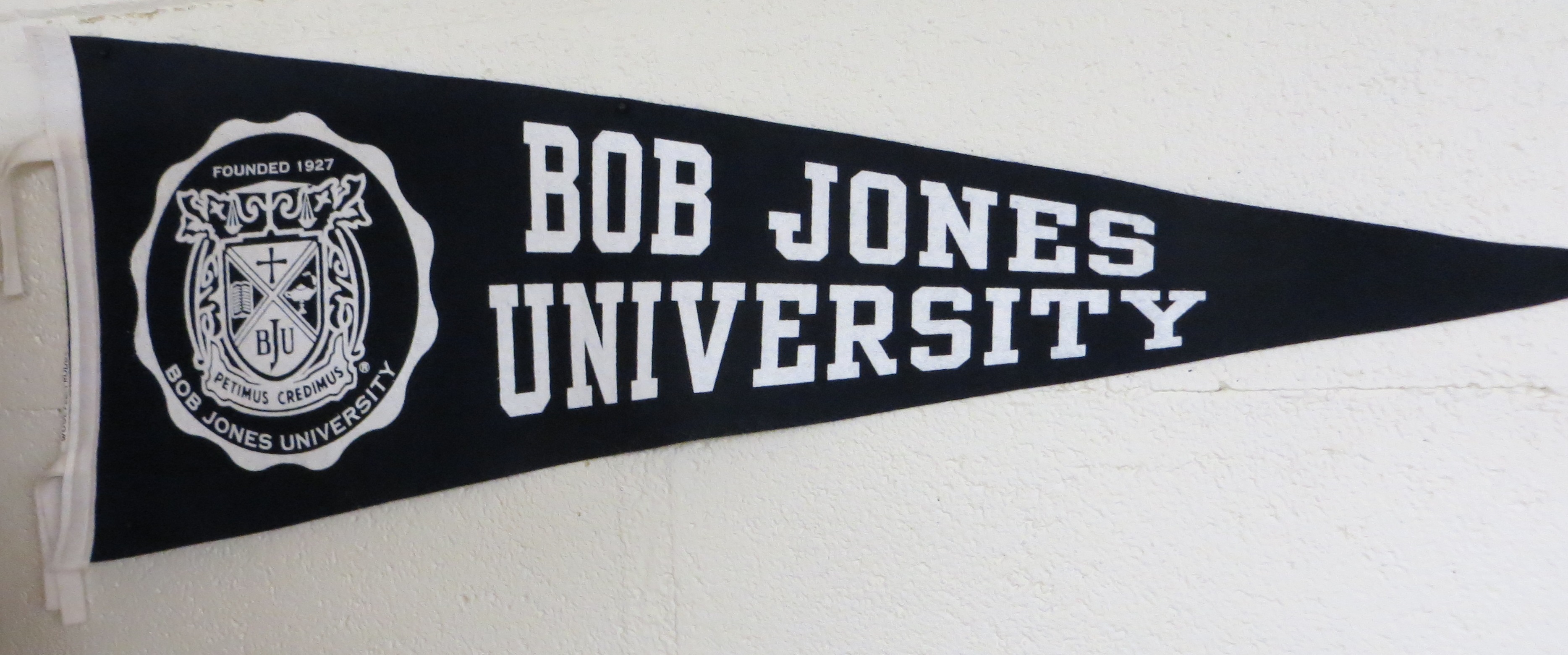
bju bannerI’ll tell stories from three very different places: The Denver Bible Institute, Wheaton College, and Bob Jones College. Each of them had a very different idea of what it meant to be fundamentalist, as well as a different idea of who had the right to decide.

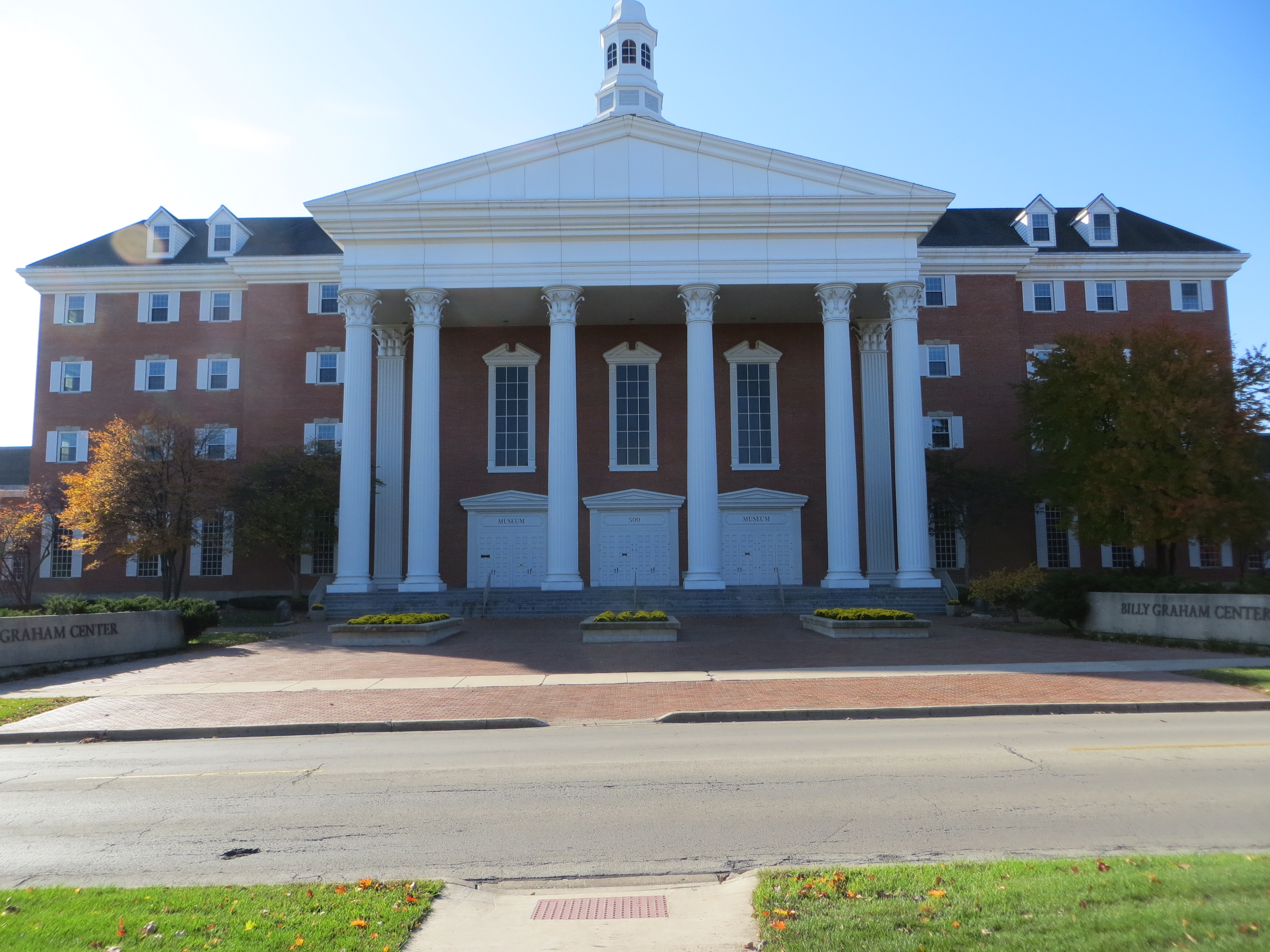
At DBI, supreme leader Clifton Fowler ran into hot water in the early 1930s as his faculty and church split. Fowler was accused of holding non-fundamentalist ideas about sex, leadership, and Scripture. To heal the rift, Fowler appealed to fundamentalist leaders nationwide to conduct an investigation.Billy Graham Center 2

At Wheaton, meanwhile, President J. Oliver Buswell was tossed out for a range of offenses, including Buswell’s leadership of a Presbyterian faction as well as Buswell’s moderate ideas about creationism.

Down at Bob Jones College (not Bob Jones University until the 1940s), founder Bob Jones Sr. engaged in a very different sort of definition. When faculty members got too chummy with students, when they played jazz records and mocked Jones’s uptight attitude toward modern culture, Jones gave them the boot. At Bob Jones College, fundamentalism meant what the founder said it meant.

DBISignIn each case, we can see the ways institutions wrestled with the tricky question of definition. At a small school like DBI, the leader had to ask famous fundamentalists to give him a fundamentalist seal of approval. At Bob Jones College, on the other hand, leaders imposed a more top-down idiosyncratic definition. At Wheaton, fundamentalism did not have room for the sort of bare-knuckle denominational wrangling that Buswell considered the heart and soul of fundamentalism.

These stories have it all: sex, jazz, and Presbyterianism. So come on down to Binghamton University at four o’clock on February 23rd. We’re meeting in the conference room of the Institute for Advanced Study in the Humanities, on the first floor of the Library Tower.

The event is free and open to all; no registration is required.

Spelling and Vaginas: Have We Lost Higher Education?

Are new culture bullies taking over America’s college campuses? Jonathan Chait argued recently that today’s college campuses are suffering a new, more aggressive bout of political correctness. For those of us interested in higher education and America’s culture wars, Chait’s essay raises different questions: Have colleges and universities become hopelessly monolithic? Can students really learn anymore, or will they only be drilled in leftist platitudes?

Like Chait, I’m not asking this as a conservative, but as a liberal. Like Chait, I want college campuses to include a heady mix of ideas. I want students to see and hear a broad range of philosophies, many of which they will disagree with.

Chait catalogs some of the anti-liberal recent occurrences on elite campuses:

Speakers are cancelled; plays are cancelled; lecturers are shouted down. In many high-profile cases, it seems that leftist students are dedicated to blocking any speech they find distasteful. This kind of neo-Comstockery, Chait argues, is a far greater threat to liberalism than any right-wing speaker or writer could possibly create. It has created, as one professor told Chait, an “environment of fear” on college campuses.

Chait explores the way this sort of destructive cultural politics has ranged far beyond college campuses. Those interested in the strange unspooling of America’s culture wars should certainly read his essay in full. But this morning I’d like to ask a slightly different question: What is the relationship between conservatism and mainstream higher education?

It is not as simple as it might seem. Though many conservative intellectuals continue to insist that Chait’s Red-Guardism has squeezed out thoughtful conservatism at many colleges, the truth is more complex. It’s not true that college students these days can’t be conservative. Ironically, the campus climate Chait deplores seems to strengthen some students’ identification as conservative. It does seem, though, that students less committed to a conservative ideology will feel pressured to avoid provoking the wrath of the campus left.

First, there is ample evidence that conservative students are made MORE conservative in college. Sociologists Amy Binder and Kate Wood recently released their findings of conservative students at two elite universities. In each case, they found that conservative students tended to become more conservative at these purportedly leftist universities.

Beyond that, for students who identify as conservatives, there have long been prestigious schools outside of the mainstream that welcome and nurture conservative cultural values. As I’m finding in the research for my new book, conservative evangelicals have a wide choice of colleges that serve as comfortable intellectual homes for conservatives. Often, these schools also embrace political conservatism.

Finally, we have piles of anecdotal evidence that conservatives are often made more conservative by leftist campus environments. Most famously, William F. Buckley Jr. launched his career with an angry memoir about his student days at Yale. Dinesh D’Souza similarly served first as a conspicuous college conservative at Dartmouth. Less famous conservative students have shared similar experiences.

Given all this evidence, it’s not fair to say that conservative students aren’t allowed to be themselves. In spite of what conservative leaders say, conservatism has not been shouted out of American higher education. There is another problem, though. What about students who are not committed to conservatism? Is the climate on campuses today conducive to a true intellectual experimentation among earnest but undecided young people?

This is a much harder question to answer. In some famous cases, colleges have made efforts to include conservative intellectual role models for young people. The most extraordinary case has been that of the University of Colorado at Boulder, where Steven Hayward and Bradley Birzer have worked as visiting conservatives. At that school, students in the middle are guaranteed to have at least one committed conservative academic voice on campus.

In other cases, it seems as if conservatives really have been given the squeeze. The best example is the recent treatment of Intervarsity Christian Fellowship. Intervarsity has been derecognized at leading campuses nationwide. For committed Christian students, it will not be difficult to find a comfortable conservative church near school. But for those who aren’t committed, the exclusion of conservative organizations such as Intervarsity seems to limit students’ opportunities to hear and experience a real range of intellectual and religious ideas.

Chait raises important questions about the goals and limitations of speech-policing on campuses. We need to remember, however, that high-profile cases of neo-PC thuggery do not mean that all universities have been taken over by the leftist thought police. The real situation is more complex. Conservative students and professors seem to thrive. However, those on the fence might be robbed of opportunities to hear more than leftist platitudes.

Do campuses today encourage a real mix of ideas?  What have been your experiences?  Those of your children?  Your students?

Homeschooling: A Scheme to Take Over America

What do Sarah Palin, Gordon College, and Christian homeschoolers have in common? According to evangelical-turned-atheist Frank Schaeffer, they are all “still fighting a religious war against their own country.” I’m no homeschooler or Palin fan, but Schaeffer’s accusations just don’t hold up to historical scrutiny.

Schaeffer’s most recent broadside appeared in Salon. In his article, Schaeffer blasted a wide range of “far-right” institutions. When parents choose to pull their kids out of public schools to indoctrinate them at home, Schaeffer charged, it amounts to nothing less than “virtual civil war carried on by other means.” As Schaeffer put it,

the evangelical schools and home school movement were, by design, founded to undermine a secular and free vision of America and replace it by stealth with a form of theocracy.

According to Schaeffer, this nefarious plot spreads beyond the anti-democratic practice of homeschooling. The “far-right,” Schaeffer insists, turns women into submissive breeding mares. The Right has opened its own colleges and universities as part of its plan to take over civil society. Jerry Falwell himself, Schaeffer relates, explained his reasons for opening Liberty Law School. “Frank,” Falwell confided, “we’re going to train a new generation of judges to change America!”

Is the sky really falling?

Is the sky really falling?

Inspired by the apocalyptic rhetoric of wild-eyed prophets such as Rousas Rushdoony, and marshalled by irresponsible self-aggrandizers such as Sarah Palin, the Christian Right will not stop until it has taken over. Conservative religious folks, Schaeffer insists, want nothing less than to impose a rigid theocracy on the United States. They will not be content until they have dictated the morals and mores of their neighbors as well as those of their children.

Are Schaeffer’s charges fair?

Certainly, he has the right to boast of his insider connections. His father, the late Francis Schaeffer, really did inspire a fair bit of the social philosophy of today’s conservative evangelicals. Schaeffer Senior articulated in the 1970s and 1980s the notion that US culture had been infiltrated by a sneaky “secular humanist” worldview. In order to properly live as Christians, then, Schaeffer Senior advocated a wide-ranging rejection of modern social mores. Perhaps most important for day-to-day culture-war politics, Schaeffer Senior along with C. Everett Koop denounced abortion rights as equivalent to murder.

At times, Frank Schaeffer seems blinded by his own imagined influence. In this Salon article, for example, he shamelessly name-drops his connections to writers such as Rousas Rushdoony and Mary Pride. He claims to have been “instrumental” in bringing together the New Christian Right in the 1970s and 1980s.

Such unpleasantness aside, however, do Schaeffer’s charges stick? Are Christian homeschooling and evangelical higher education part of a long-ranging plot to undermine American traditions of pluralism and tolerance?

Short answer: No.

Before I offer a few examples of the ways Schaeffer’s breathless expose doesn’t match reality, let me explain my background for those who are new to ILYBYGTH. I am no apologist for fundamentalist Christianity. I’m no fundamentalist, not even a former fundamentalist. When it comes down to it, I will fight hard against fundamentalist-friendly school rules about prayer or sex ed. I don’t homeschool my kid. I don’t attend or teach at an evangelical college. I’m only a mild-mannered historian, with the sole goal of deflating hysterical culture-war accusations.

With that in mind, let’s take a closer look at some of Schaeffer’s claims.

First, is Christian homeschooling really as sinister as he claims? Schaeffer suggests that homeschoolers have been inspired by the work of leaders such as Mary Pride and Nancy Leigh DeMoss. The point of homeschooling, Schaeffer charges, is to train girls and women to submit to fathers and husbands, to glory in their second-class role as child-bearers and house-keepers.

There are indeed homeschoolers who adopt these notions. But anyone who follows the work of historian Milton Gaither can tell you that the world of homeschooling—even the more limited world of conservative evangelical homeschooling—is a kaleidoscope of missions, strategies, and techniques. I don’t doubt that some Christian parents hope to impose a rigid patriarchal vision on their children. What falls apart, though, when looked at carefully, is the notion that these folks are somehow the “real” reason behind Christian homeschooling. What falls apart are accusations that Christian homeschoolers are some sort of monolithic force scheming to take over the rest of our society. In reality, Christian homeschoolers are a remarkably fractious bunch.

Second, what about Rousas Rushdoony? As Schaeffer correctly points out, Rushdoony was the intellectual force behind “Reconstructionist” theology. In short, Rushdoony believed that Christians should impose true Christian morality on all of society, including Old-Testament-inspired laws about sex and conduct. In reality, though, the direct influence of Rushdoony’s social ideas has been rather limited. As scholars such as Michael J. McVicar have argued, Rushdoony has had far more influence on liberal pundits than on the conservative rank-and-file.

Next, are evangelical colleges really training a generation of conservative culture warriors? As I conduct the research for my next book, I’m struck by the ways evangelical colleges have been battlegrounds more than training centers. In other words, evangelical colleges and universities have had a hard time figuring out what they are doing. They are hardly in the business of cranking out thousands of mindless drones to push right-wing culture-war agendas.

For one thing, evangelical colleges have usually insisted on maintaining intellectual respectability in the eyes of non-evangelical scholars. Even such anti-accreditation schools as Bob Jones University have used outside measures such as the Graduate Record Examination to prove their academic bona fides. As historian Michael S. Hamilton noted in his brilliant study of Wheaton College, this desire prompted Wheaton in the 1930s to invite outside evaluators such as John Dale Russell of the University of Chicago to suggest changes at the “Fundamentalist Harvard.” This need for intellectual legitimacy in the eyes of mainstream intellectuals has continually pulled fundamentalist schools closer to the mainstream. Such colleges—even staunchly “unusual” ones like Bob Jones—have been much more similar to mainstream colleges than folks like Schaeffer admit.

Schaeffer uses Gordon College in Massachusetts as an example of the ways Christian colleges train new generations of young people to see the US government as evil. But as I found in my recent trip to the Gordon College archives, the community at Gordon has always been divided about the purposes of higher education. Back in the 1960s, Gordon College students held protests, sit-ins, and “sleep-ins” to change Gordon’s policies and attitudes. As one student put it during a 1968 protest, “we want to be treated like real college students.” How did the evangelical administration respond? By commending the students’ commitment to “activism over apathy.” To my ears, that does not sound like a brutal and all-encompassing mind-control approach.

The world of conservative evangelicalism, of “fundamentalism,” is one of continuous divisive tension. There is no fundamentalist conspiracy of the sort Schaeffer describes. Or, to be more specific, there are such conspiracies, but there are so many of them, and they disagree with one another so ferociously, that the threat Schaeffer warns us about is more fiction than fact.

Does Christian homeschooling really serve as a first step in a long-ranging scheme to take over America? Only in the fevered imaginings of former fundamentalists such as Frank Schaeffer.