Which of These Professors Would You Fire?

We keep getting new ones every week. University professors—supposedly enjoying academic freedom—keep getting into trouble for offensive political speech. Sometimes they get fired or punished and sometimes they don’t. How do administrators decide? It doesn’t seem like it’s about the politics.

eots_lawton1

The professor as activist: What will get you fired?

So today it’s time for the latest bitter ILYBYGTH play-along: Can YOU match these professors with their punishments? [Only click on the links if you want to cheat.] [And be warned: These rants sometimes include offensive language.]

Case 1: Law-school professor with a history of racist-y statements declares (incorrectly) that very few black students are top in their class. The line that got her in the most trouble? “[O]ur country will be better off with more whites and fewer nonwhites.”

Case 2: University professor rants on facebook about how much he hates white people. (He’s white, by the way.) The troublesome lines: “I now hate white people. . . . I hereby resign from my race. Fuck these people. . . . Fuck you, too.”

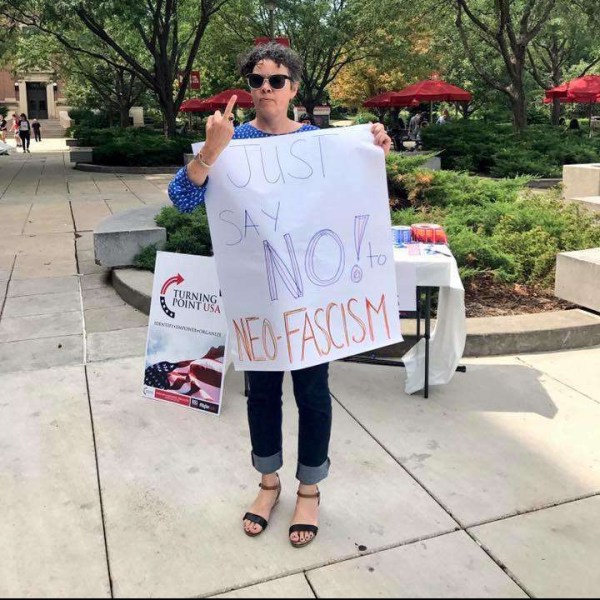
Case 3: Grad student instructor confronts a conservative undergrad. Stood in front of the undergrad’s Turning Point USA table and shouted, “”Becky the neo-fascist, right here. Wants to destroy public schools, public universities. Hates DACA kids. . . . Fight white nationalism! Fight white supremacy!”

Case 4: Adjunct instructor declares his support for antifa and hints that he’d like to hit Trump with a baseball bat. Gets heat for declaring on facebook: “It’s not pretty, and I’m not proud, but seeing what Evangelical Christians are doing to this country and its people fills me with rage, and a desire to exact revenge.”

So how were these professors punished? Are left-wing professors protected? Are conservatives attacked? Not so much. It seems like the differences are more about whether or not the professor had tenure.

Can you match the cases above with the punishments below?

Punishment #1: Instructor is fired.

Punishment #2: Instructor is removed from teaching, but keeps her job. The university president calls her ideas “repugnant.”

Punishment #3: Instructor is removed from teaching but keeps her job. University president privately apologizes to her for having to punish her.

Punishment #4: Instructor is fired, then un-fired. University calls his comments “offensive” and says they “violated university policy.” However, on a re-think, the university decided that “No student or university employee has come forward to assert that [the instructor] has in some way penalized them for their race. . . . There is no evidence that he administered grades and conducted himself in class in a manner that reveals any racial bias on his part.”

…so what do you think? Can you match the punishments with the cases? And, most intriguingly, do these cases reveal that conservative professors are punished more harshly than liberal ones? That mocking and belittling African Americans is a bigger crime on campus than threatening and insulting white people or evangelicals?

Will Fundamentalist U Crush Trumpism?

Don’t be fooled by the noises coming out of Lynchburg. Though Jerry Falwell Jr. of Liberty University might be shameless (and just kind of weird) in his white-evangelical support for Trump, the overall landscape of evangelical higher education might be driving younger white evangelicals off the Trump train. We have to ask: Did the efforts of evangelical school administrators in the twentieth century lay the foundation for Trump’s political demise?

white evangelical youth immigration

Did ‘Fundamentalist U’ teach young evangelicals to value immigration?

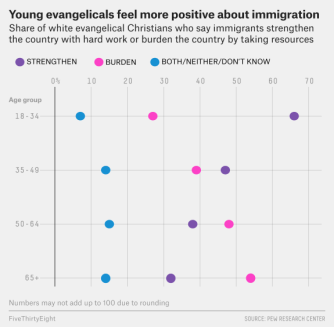
Here’s what we know: Recent surveys show that younger white evangelicals don’t share their elders’ anxieties about immigration. As Daniel Cox wrote recently at 538:

Two-thirds (66 percent) of young white evangelical Christians (age 18 to 34) say that immigrants coming to the U.S. strengthen the country because of their hard work and talents, a view shared by only 32 percent of white evangelical seniors (age 65+). A majority (54 percent) of older white evangelical Christians believe that immigrants are a burden on American society.

That’s bad news for Trumpism. If younger white evangelicals don’t dislike immigration, they might waver in their support Trump. It might just crack his electoral base.

How does any of this relate to evangelical higher education?

As I found in the research for Fundamentalist U, many evangelical universities had a long and shameful racist history, just like most of the rest of American higher education. Starting in the 1950s, though, white evangelicals participated—and often took the lead—in promoting anti-racist attitudes among white Americans.

Institutions such as Wheaton College often floundered, but in the end they added new curriculum about African and African-American history and culture. They recruited more non-white faculty and students. They did not succeed as well as we might hope, but evangelical faculty members and administrators at many colleges worked hard to fight against white racism at their institutions.

What’s the upshot? In some cases, such as at storied Nyack College, the racial climate on campus has been utterly transformed. Nyack might be drowning in debt, but it has succeeded in attracting and retaining non-white evangelical students. When a white evangelical student attends a school like Nyack these days, she gets a very different sense of what it means to be a “good Christian” than her grandmother would have.

It’s not only Nyack or Wheaton. These days, evangelical colleges are far more racially diverse than they were in the past. As Cox notes,

On Christian college campuses, which have seen enrollment gains in recent years, young white evangelical Christians are part of an increasingly diverse student body. White students account for 62 percent of the student body on the roughly 140 campuses affiliated with the Council for Christian Colleges and Universities, down from 82 percent in 1999.

Younger white evangelicals, in other words, are experiencing life as part of a new kind of America, one in which white evangelicals no longer assume that they have a special role to play as the ‘real’ Americans, one in which Making America Great Again is not such a compelling battle cry. In large part, evangelical colleges and universities helped teach each new generation that diversity and immigration are not dangers, but strengths.

And because white evangelicals play such a large role in supporting Trump, today’s evangelical colleges could be spreading a message that will spell the end of Trumpism.

Fundamentalist U Review

It is nerve-wracking waiting to hear what the experts have to say. The latest academic review of Fundamentalist U is in and I’ll be taking the rest of the day off to celebrate.

Gloege Guaranteed Pure

The experts weigh in…

Tim Gloege was the reviewer. Dr. Gloege is author of the terrific book Guaranteed Pure: The Moody Bible Institute, Business, and the Making of Modern Evangelicalism. He knows all there is to know about the history of evangelicalism and evangelical higher education. Naturally, I was dying to hear what he had to say about Fundamentalist U.

The good news: Not only did he conclude that Fundamentalist U is “essential reading for anyone interested in the history of modern evangelicalism,” he claimed that the book succeeded in making three contributions to the history of American evangelicalism. Namely,

Fundamentalist U . . . challenges three persistent myths that have also been targets of the new evangelical historiography. First, it demonstrates evangelical “orthodoxy” was an aspiration, a dream—and a fleeting one at that. . . . Second, Fundamentalist U challenges the myth of fundamentalist “withdrawal from culture” between 1920 and 1970. . . .Finally, Laats demonstrates the utility of defining evangelicalism as a social network anchored by educational institutions. . . . Fundamentalist higher education may be an oxymoron to many outsiders, but Laats has convincingly demonstrated it has been central to American evangelicalism.”

Thank you, Dr. Gloege, for this generous and meaty review! Almost makes me want to read the book.

The Weirdest Good News for Fundamentalist U

It has never been easy to run a mission-driven evangelical college. These days, though, it seems like it might be harder than ever, with storied institutions like Gordon and Nyack Colleges forced to make harsh budget cuts. Even worse, evangelical colleges—like all colleges—are plunged into a facilities “arms-race” that no one can win. For small liberal-arts universities, it feels as if any bit of institutional bad news might just make the wheels come off. A new study of higher-ed scandals, however, might give evangelical administrators a bitter ray of hope.

bj jr who touched me

There will always be scandal in the world of evangelical higher ed…

Turns out, when universities endure high-profile scandals, their fund-raising efforts can actually improve. According to the Chronicle of Higher Education, the recent blow-ups at Baylor, Michigan State, and Penn State did not close alumni wallets, but the opposite. As they put it,

While headline-grabbing scandals involving rogue administrators and structural failures often generate steep legal fees, criminal charges, and public outrage, high-profile universities have seen donations — and sometimes enrollment — rise in the aftermath.

One fund-raiser at Penn State, for example, found that some alumni, though not all, became MORE generous after the ugly scandal.

One donor called in the months after the scandal broke and offered a million-dollar donation — “a birthday gift to myself,” [Penn State fund-raiser] Kirsch recalled him saying. Others were symbolic gestures, he remembered. . . . Those kinds of donations make psychological sense, said Dennis Kramer. . . . He said high-profile athletics scandals could, in a convoluted way, encourage alumni to show financial support.

What does this mean for evangelical colleges? As I found in Fundamentalist U, the top-down institutional structures of schools such as Bob Jones University, Pensacola Christian College, and Liberty University gives them some advantages, but it leaves them prone to wave after wave of scandal.

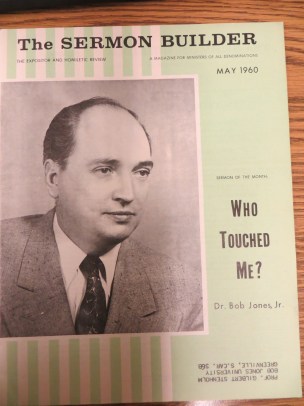
The twenty-first-century scandals at Bob Jones, for instance, in which administrators were found to have been cruelly ignorant of sexual-abuse laws, were only the latest. Throughout the twentieth century, Bob Jones University endured schisms and scandals such as the Ted Mercer affair of the 1950s or the Dorothy Seah episode of the 1930s.

In tough financial times, it might seem as if those scandals would spell the end of conservative colleges, but they never have. As one expert told the Chronicle of Higher Education,

when there’s a scandal, or when there’s something that causes us to question the viability of something we hold dear, we may respond with supporting that entity more.

That sort of circle-the-wagons support has been evident throughout the history of evangelical higher education. Especially for the more conservative fundamentalist schools, such as Bob Jones, every scandal tended to divide the university community, driving some people away but leaving supporters more firmly entrenched than ever before.

Would it make sense for evangelical college administrators to provoke a scandal, then? To intentionally cultivate the scorn and contumely of outsiders? Not really. As CHE concludes, scandals can be dangerous, too.

[T]here’s one instance in which that changes: if a scandal exacerbates or publicizes an already-existing institutional problem — an institution known for lax academics that becomes embroiled in a cheating scandal, for example.

Said [institutional strategist David] Strauss, “If it’s reinforcing of a problem the school already has, watch out.”

Why Are Evangelical Colleges Struggling? Don’t Forget These Two Things

Kudos to Sarah Eekhoff Zylstra at The Gospel Coalition for peeling apart the complicated causes for declining enrollments at evangelical colleges and universities. She goes beyond the obvious, yet her article still leaves out two important factors, two unique trends in evangelical higher ed that were already becoming evident during the twentieth century.

fundamentalist U cover

How did we end up here…?

As Zylstra writes, all colleges these days are charging higher tuition than they had in the past. Moreover, there are more students than ever attending higher education. Seems as if these should be boom times for all universities, but they are not. Revenues are down, enrollments are threatened, and administrators are facing difficult cost-cutting choices. Just ask Alaska.

What gives? As Zylstra notes, we shouldn’t be fooled by high tuition rates. In practice, colleges have to discount that rate for most of their students, and evangelical colleges might be getting only about 50% of their sticker price. Plus, competition with public universities has become even more intense, with many publics adopting the aggressive recruitment models of private schools. Finally, to keep up, evangelical colleges have had to pony up for new kinds of campus accoutrements that families have come to expect, such as high-end dining, climbing walls, and more.

As Zylstra relates,

“It’s an arms race,” [one administrator] said. “We all had to do what we needed to compete.” Colleges upgraded their technology and built new dorms, classrooms, and gyms. . . . “Now we hit a price point, and a lot of parents won’t pay.”. . .  schools are bringing in less money due to discounted tuition while at the same time spending more on upgrades.

In addition to these important reminders, evangelical colleges in particular have their own unique strengths and challenges. First, the good news for evangelical higher ed: These days, small colleges and universities are all struggling to come up with something that evangelical institutions have gobs of. Namely, a niche. In Wisconsin, for example, the hapless Stevens Point campus tried to recreate itself as a “professions” campus, focusing on teaching and health care. It didn’t work.

For a century already, evangelical colleges and universities have had their niche. In this case, conservative evangelical colleges can claim to do something that state schools and secular private schools don’t—they guarantee the faithfulness of their faculty and they promise to shape students’ faith in their own tradition. For a lot of college-shoppers, that’s huge.

But it comes at a big cost. Ever since the 1950s, as I uncovered in the research for Fundamentalist U, evangelical institutions faced a unique sort of intra-evangelical competition. Biola looked anxiously at the success of Azusa Pacific. Wheaton fretted about the successes of Bob Jones. And Bob Jones got nervous about the growth of Liberty.

For evangelical parents and families, the marketplace of evangelical institutions gives them a choice, and that choice tends to push schools to become more and more conservative. From Bryan College to Cedarville, all across the country, evangelical colleges are tightening down on their political and religious distinctives. Why? Because if they want to enjoy the enrollment boosts that come with their religious niche, they need to offer something truly different than mainstream schools. They need to sell themselves to students and families as something other than a public university with mandatory chapel attendance. So they tend to squeeze students and faculty members with more and more conservative requirements.

Does it spell doom for evangelical higher ed? Not at all. But as a perspicacious alumna of Westmont College recently noted in these pages,

The crisis of higher education is felt across the board, and evangelical colleges are no different. At Westmont, enrollment has been down significantly in recent years, making the role of donors even more prominent. By now I recognize that all colleges and universities are beholden to donors to some extent, but Christian colleges especially are due to their generally smaller size and “niche market.” . . . How will these trends impact Christian higher education? I believe there’s already a significant rift between progressive members of Christian colleges (including mostly faculty and some students) and conservative members (donors, administrations, and some other students). If the conservative element continues to control the purse strings, the progressive element will feel increasingly alienated, perhaps contributing to an even greater decline in enrollment.

Is THIS Why White Evangelicals Love Trump?

Why? Why? Why? That’s what nerds have been asking for the past few years. Why, that is, do so many white evangelical voters seem to (still) love Trump? Sometimes even more now than in 2016? Reporter Julie Zauzmer recently examined some interviews to offer a new explanation. To me, it seems like there is still something missing. It’s big and it’s obvious, but it’s not the first thing white evangelicals like to talk about.

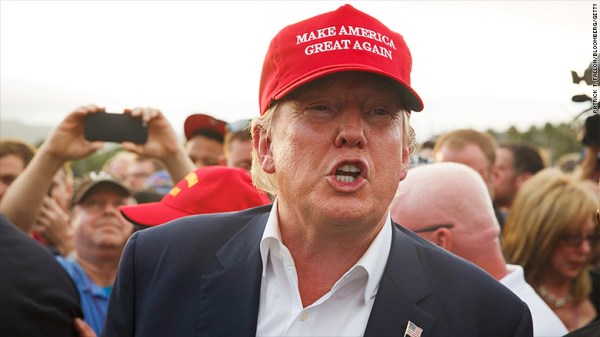
Trump make america great again

It’s the hat, stupid.

When asked, a group of white evangelicals explained that they like Trump because they think he is fighting for them. Finally. As Zauzmer explained,

Interviews with 50 evangelical Christians in three battleground states — Florida, Pennsylvania and Wisconsin — help explain why. In conversation, evangelical voters paint the portrait of the Trump they see: a president who acts like a bully but is fighting for them. A president who sees America like they do, a menacing place where white Christians feel mocked and threatened for their beliefs. A president who’s against abortion and gay rights and who has the economy humming to boot.

“You’ve just got to accept the bad with the good,” Halbert [a white evangelical from Florida] said.

Makes sense. But there’s an important element missing from this explanation. Yes, many white evangelicals feel that America is a “menacing place,” but more important, with a bitter nostalgia they see mainstream America as a menacing place that used to be better. They see a mainstream America that has been warped and perverted, not just an America that isn’t the way they like it. Most important, many white evangelicals see America as a place that has been stolen from them. As I found in the research for Fundamentalist U, white evangelicals have long felt that America has not only declined passively; they feel America has been usurped.

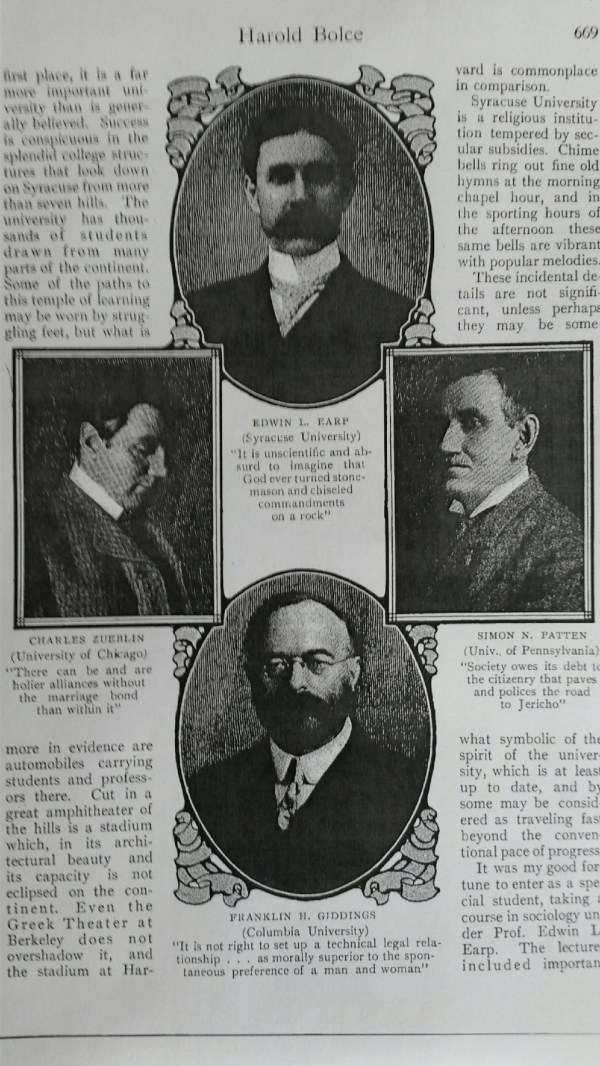
bolce page image

Watch out, white evangelicals–mainstream institutions have been usurped!

It is a hugely important distinction and it’s one that Trump stumbled across with his MAGA approach to the 2016 elections. Consider just a few 20th-century examples of the kind of nostalgism that has driven white evangelical politics for so long. Way back in 1909, for example, journalist Harold Bolce reported in the pages of Cosmopolitan magazine that mainstream colleges had gone to the dogs. Instead of inculcating youth with revered values of God, home, and family, elite colleges taught students a devilish stew of skepticism and “science.”

By way of example, Bolce interviewed Syracuse sociologist Edwin L. Earp. As Bolce told anxious readers,

“Do you not believe, Professor,” I asked, “that Moses got the ten commandments in the way the Scriptures tell?”

The professor smiled. “I do not,” said he. “It is unscientific and absurd to imagine that God ever turned stone-mason and chiseled commandments on a rock.”

For white evangelicals at the time, the message was clear. Something terrible had happened. They could no longer trust mainstream institutions. The feeling lasted throughout the twentieth century and got stronger with time. By 1979, fundamentalist school founder A.A. “Buzz” Baker could warn readers,

It may come as a surprise to some that the very first public and private schools in our country had a traditional approach or philosophy of education.  Harvard, Yale, Andover Newton [sic]—to name but a few—used to be ‘our’ schools.

For white evangelicals in the 1970s, the notion that Harvard used to be a conservative-evangelical stronghold often came as a shock and a revelation. It fit with the sense of angry nostalgia that has driven white evangelical politics for so long. Not only did America use to be great, many white evangelicals feel, but America used to be OURS.

Why did so many white evangelicals vote Trump in 2016? And why do so many like him even better now, in spite of everything? Yes, they see Trump as a fighter in their corner on issues like abortion rights and LGBTQ rights. But even more important, they hear Trump repeating their mantra: America used to be great. America used to be OURS. It has taken some hits, but together we can Make America Great Again.

Fundamentalist U & Me: Kelsey Lahr at Westmont

Welcome to the latest edition of Fundamentalist U & Me, our occasional series of memory and reflection from people who attended evangelical colleges and universities. [Click here to see all the entries.] The history I recounted in Fundamentalist U only told one part of the complicated story of evangelical higher education. Depending on the person, the school, and the decade, going to an evangelical college has been very different for different people.

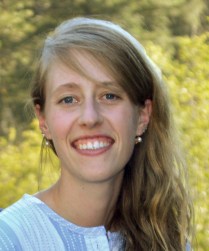
This time, we are talking with Kelsey Lahr. Kelsey had the experience of returning to her alma mater to teach, when she saw her school in a very different light. Today Kelsey is a writer and communication studies professor. In the summer, she works as a park ranger in Yosemite National Park. You can find links to her writing here.

If you attended an evangelical college or university and you’re willing to share your story, please contact Adam at the ILYBYGTH International offices at alaats@binghamton.edu.
wed4 (2018_12_14 05_13_56 UTC) (2)

Kelsey Lahr today.

ILYBYGTH: When did you attend your evangelical institution? What school did you attend?

I attended Westmont College from 2007-2011. I returned to teach there as an adjunct professor for two years, from 2017-2019.

ILYBYGTH: How did you decide on that school? What were your other options? Did your family pressure you to go to an evangelical college?

I was looking for a Christian college because I was interested in the possibility of pursuing vocational ministry as a career path. I looked at a number of evangelical colleges across the country, but was most familiar with Westmont and most drawn to it. My mom and older sister had both attended Westmont, although my family never pressured me to attend a Christian college. Ultimately I decided on Wesmont because I had such positive experiences visiting my sister there. The small class sizes and close-knit student community seemed like a good fit for me. I think my parents were actually a little surprised that I opted for a small, Christian school only an hour and a half from my hometown, but they were supportive, and would have been no matter kind of college I might have chosen.

ILYBYGTH: Do you think your college experience deepened your faith? Do you still feel connected to your alma mater? What was the most powerful religious part of your college experience?

I do think Westmont deepened my faith in some ways. I’m not a person for whom faith comes easily, and I spent my whole life questioning everything I was ever taught, including my family’s faith commitments. At Westmont, I encountered brilliant, open-minded faculty members, many of whom were politically liberal. They showed me that I could think deeply, hold progressive political ideas, ask questions, and still be a Christian. Without this experience, I think I would have become bitter about the Christian church and all its hypocrisy. In those moments of disgust with the Church when I was fresh out of college, when I was ready to give up on it, I often thought back on the great examples of thoughtful, progressive Christians I had encountered at Westmont. I think this is what kept me from leaving my faith behind.

One particularly powerful religious element of my Westmont experience was a study-abroad program I took to South Africa and Northern Ireland. On this trip, we studied racial, political, and religious conflict and reconciliation. I was deeply fortunate to witness the work that Christians and other people of faith were doing to help heal divided societies, and to develop a faith-based framework for social and political engagement. This experience continues to influence me today.

All that said, I do not feel particularly connected to Westmont now. Shortly after I graduated, there was something of a mass exodus of faculty members of color because Westmont was not a hospitable work environment for them. The most influential professor I had at Westmont left during this time because it had become so difficult to exist in that space as a faculty member of color. When I went back to work at Westmont as an adjunct, it was truly a disillusioning experience. Some of the wonderful faculty I had there as a student were still around, but now I got to see up close how the administration functioned. I saw how beholden they were to conservative donors. I had been insulated from this icky reality when I was a student, but as faculty, it was like watching the sausage get made. I knew it wouldn’t be a long-term career fit for me for that reason.

ILYBYGTH: Can you give an example of the tension between donors and faculty? Between the progressive sentiment on campus and the more conservative impulse?

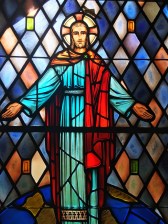
At the center of the college’s spiritual life is a prayer chapel in the middle of campus. The chapel is always open, and is the only overtly “religious” building on the campus. At the front of the chapel is a stained-glass window that depicts Jesus as white, standing on a globe that is positioned so that he is right on top of North America. In the past couple of years, students have begun to recognize this depiction as problematic, colonial, and inappropriately conflating Christianity with whiteness. Many students of color expressed that the centrality of this depiction on campus made them feel even more marginalized than they otherwise would in a school where white students and faculty far outnumber students and faculty of color.  A group of students started a petition last semester, asking the administration to take the window out of the prayer chapel and put it somewhere less visible and less central to the community’s spiritual life. As a faculty member, it was my impression that most students either supported this proposal or didn’t really care about the window one way or the other. Yet the administration balked, and their responses always revolved around the importance of the window to Westmont’s history. (The chapel and the window were both installed in the 1970s as a memorial to the daughter of the college’s president at the time, who died in a car accident as a young woman.) The prioritization of “history” over the concerns of current students of color seems typical of the administration. And of course, older donors are the ones who care about that particular phase of Westmont’s history.  You can read more about the window issue here.
Westmont-Jesus

Westmont’s “White Jesus”–stay or go?

ILYBYGTH: Would you/did you send your kids to an evangelical college? If so, why, and if not, why not?

I don’t have kids, so I guess I’m off the hook! But if I did have children, I suppose it would depend on the college. Not all evangelical colleges are the same. Many of my high school church friends ended up at a very conservative Baptist college, and thankfully my parents discouraged me from applying there. I would likely do the same for my own kids. Westmont was a mixed experience for me, but I think ultimately it allowed me the freedom to question my faith within a supportive context, and I would welcome that for my children as well. On the other hand, in the years since I’ve been a student, Westmont’s faculty has become a lot less diverse, which is a huge detriment to the college. If that trend continued, I would probably discourage my kids from attending. Learning from a diverse faculty was one of the major reasons Westmont was mostly positive for me, so I might instead encourage my children to go someplace where more diversity is offered–and unfortunately, that’s not likely to be an evangelical college.

ILYBYGTH: Do you still support your alma mater, financially or otherwise? If so, how and why, and if not, why not?

I donated what I could when I was a young alum. But when my favorite professor of color left Westmont and told me what was going on, I stopped donating. Knowing what I know now about Westmont’s unfortunate tendency to pander to conservative donors and alums, even to the detriment of students and faculty, I would not donate.

ILYBYGTH: If you’ve had experience in both evangelical and non-evangelical institutions of higher education, what have you found to be the biggest differences? The biggest similarities?

I have attended and taught at both public and evangelical institutions. I was surprised to find that Westmont was by far the most academically rigorous. Maybe because it’s so small (only 1300 students), my students were intensely engaged, and truly a delight to teach. That was an unexpected and welcome difference, although I doubt that Westmont’s evangelical identity is the major cause for that. I don’t really know the major cause for that level of rigor. Perhaps the high cost of tuition selected for a particularly privileged group of students who happened to have been given all the resources they ever needed to be successful academically.

A surprising similarity was the level of closed-mindedness I experienced both at Westmont and at the public university where I attended grad school. Although this closed-mindedness was shown in different ways and toward different people, it was still quite prevalent in both places. By definition, religious colleges will require certain behaviors and encourage certain beliefs. But I also found this to be the case in grad school, although in a different way. Evangelicals were openly mocked all the time by my cohort. I no longer identified as evangelical (by then I considered myself to be simply Protestant), and I could understand why evangelicals seemed so hateable, but it was still uncomfortable. Political conservatism was also verboten. I had been a progressive my entire adult life, so I wasn’t personally affected, but I kept thinking that my grad program and Westmont were both pretty intolerant of beliefs that fell outside the mainstream of the majority.

ILYBYGTH: If you studied science at your evangelical college, did you feel like it was particularly “Christian?” How so? Did you wonder at the time if it was similar to what you might learn at a non-evangelical college? Have you wondered since?

I only took one science class at Westmont, which was a basic biology class, the only one that didn’t require a lab. It was Christian to the degree that all my classes at Westmont were Christian, in that we were encouraged us to undertake our learning with the goal of pursuing God’s truth. The material itself was probably no different from what I would have learned elsewhere. The professor went to great lengths to teach mainstream evolution, but respectfully engaged with students who were offended by having their young-earth creationism challenged. In fact, I doubt many Westmont professors held a literal understanding of Genesis. Even in my Christian doctrine course, the professor spent a lot of time trying to give us a framework for reading the creation story as more metaphorical than literal, and most of my fellow students embraced this, along with standard evolutionary theory. I think this is one major factor that sets Westmont apart from other evangelical colleges. Although Westmont describes itself as evangelical, most faculty reject a strictly literal interpretation of the Bible, which puts the college at odds with one major tenet of evangelicalism. This was most apparent to me in my biology class, but also in many other classes, including theology and Bible classes.

ILYBYGTH: Was your social life at your evangelical college similar to the college stereotype (partying, “hooking up,” drinking, etc.) we see in mainstream media? If not, how was it different? Do you think your social experience would have been much different if you went to a secular institution?

My social life was nothing like the college stereotype. Westmont requires all students and faculty to sign a “Community Life Statement,” which forbids underage drinking and drinking to excess, sex outside of marriage, drug use, etc. For me, both as a student and a faculty member,  it was a matter of integrity to adhere to this agreement, since I had signed it, although I didn’t necessarily agree with every element of it. So I didn’t party at all while I was in college, and once I turned 21 right before my senior year, I drank in moderation (which was allowed by the agreement). Many (but not all) students also adhered to the Community Life Statement, so for us socializing often meant movie nights, wandering the downtown area, or going to the beach. Other students did choose to party, and did so off campus. Being in Santa Barbara, not far from UCSB, those students who did want to party didn’t have any trouble finding that scene. But it happened off campus, and you had to seek it out pretty intentionally.

For me personally, I doubt my social experience would have been that different if I had attended a secular institution. Partying was never my thing. In the summers, I worked in Yosemite for the National Park Service, which was a totally secular environment and offered many opportunities to party, but I never did. Instead, I spent time socializing with other people who were happy to sit on the porch in the evenings and sip moderate amounts of wine. I probably would have gravitated to similar kinds of people at a secular college.

ILYBYGTH: In your experience, was the “Christian” part of your college experience a prominent part? In other words, would someone from a secular college notice differences right away if she or he visited your school?

The “Christian” part of my Westmont experience was certainly prominent, and anyone visiting would definitely notice. Chapel happens three times a week and is required for all students. Faculty intentionally integrate faith and learning; as a new faculty member, my department chair worked with me on this specifically. Courses in the religious studies department are also required for all students. Old Testament, New Testament, and Christian Doctrine were all required when I was a student, and still are. Faculty are also required to sign a statement of faith, although students are not. This statement of faith is not so detailed that it would exclude, say, Catholics, and many denominations are represented on the faculty, but it does ensure that all professors are practicing Christians. This means that religion is discussed openly and often, both in the classroom and in the dorms.

ILYBYGTH: Did you feel political pressure at school? That is, did you feel like the school environment tipped in a politically conservative direction? Did you feel free to form your own opinions about the news? Were you encouraged or discouraged from doing so?

I was a registered Democrat before I enrolled at Westmont, and I never felt any pressure to move right. In fact, my impression as a student was that most faculty members were at least as progressive as I was (perhaps with the exception of the economics and business department, which is probably conservative at most institutions). As a faculty member, I interacted with a greater variety of other professors than I had as a student, and my impression now is that it’s a fairly even mix of liberal and conservative, perhaps tending slightly toward the left. The student body was and is generally conservative, coming from mostly evangelical homes. But like college students everywhere, many of them move left over the course of their time at Westmont. As a student, I definitely felt free to form my own opinions about the news, and in fact I got the impression that faculty were trying to challenge students’ conservative assumptions by exposing them to a greater variety of perspectives. I saw this as a huge benefit, but then again, I was liberal to start with.Westmont_College_logo
I also didn’t feel any political pressure as a faculty member. I openly taught from a progressive standpoint, and felt total freedom to do so. Critical theories were central to my teaching, and I spent a lot of time with my students examining the ways that race, class, and gender influence communication. I also incorporated a number of environmentally-focused readings into my course and assigned works by feminist scholars. A couple of students noted this in their end-of-semester course evaluations, writing that I was “extremely feminist” (this was meant negatively). Although both the provost and my department chair saw these evaluations, no one ever brought it up, which reinforced my sense of academic freedom.

ILYBYGTH: What do you think the future holds for evangelical higher education? What are the main problems looming for evangelical schools? What advantages do they have over other types of colleges?

The crisis of higher education is felt across the board, and evangelical colleges are no different. At Westmont, enrollment has been down significantly in recent years, making the role of donors even more prominent. By now I recognize that all colleges and universities are beholden to donors to some extent, but Christian colleges especially are due to their generally smaller size and “niche market.” And that market is getting even more niche–young Americans are leaving the Protestant church in record numbers.[1] The reasons for this are complicated, but the trend is at least partially explained by the increasingly conservative identity associated with evangelicalism.[2] How will these trends impact Christian higher education? I believe there’s already a significant rift between progressive members of Christian colleges (including mostly faculty and some students) and conservative members (donors, administrations, and some other students). If the conservative element continues to control the purse strings, the progressive element will feel increasingly alienated, perhaps contributing to an even greater decline in enrollment. I saw this tension up close while I was teaching at Westmont, because I was the faculty adviser to the student newspaper, which is both a voice for students and is also sent to alums and donors, placing the paper right in the center of these competing constituencies. I often felt the tension between student free speech (which I prioritized) and pleasing donors (which I did not believe was my job). On one occasion I was called into the provost’s office for a stern warning when the paper published a piece of very mild satire poking fun at white privilege. It turns out that a couple of conservative alums had been offended by the piece, and the student editor in chief ended up having to issue an apology. This incident was one example of several that made It seem to me that the administration cared more about avoiding controversy and pleasing conservative donors than allowing students the opportunity to have difficult conversations in a forum that exists to foster those very discussions, especially when those conversations have to do with “liberal” issues like race, gender, and sexual orientation.

By contrast, increased political polarization might work to the advantage of some evangelical institutions that are more conservative than Westmont. Places like Liberty University will likely continue to market themselves as “safe spaces” for young conservatives, and I suspect those places will continue to draw the same faculty and students they always have. Evangelical colleges that are less overtly connected to the world of politics, like Westmont, might find themselves between a rock and a hard place as donors shape policies in a conservative direction, while students and faculty feel increasingly out of place.

[1] Cooper, B., Cox, D., Lienesch, R., & Jones, R. P. (2016, September 22). Exodus: Why Americans are Leaving Religion—and Why They’re Unlikely to Come Back. Retrieved August 9, 2019, from Public Religion Research Institute website: https://www.prri.org/research/prri-rns-poll-nones-atheist-leaving-religion/

[2] Riess, J. (2018, July 16). Why millennials are really leaving religion (it’s not just politics, folks). Retrieved August 9, 2019, from PBS website: https://www.pbs.org/wnet/religionandethics/2018/07/16/millennials-really-leaving-religion-not-just-politics-folks/34880/

When Loyalty Means Dictatorship: The Latest Sad Story from Liberty U

It is not a happy time to be a Flame. Former student editor Will E. Young offered a blistering expose of the school’s “atmosphere of fear” in the Washington Post. Unfortunately, Young’s experience at Liberty was not a shocking departure from the history of evangelical higher ed, but rather just a new development of an ugly tradition. As Young asks plaintively,

How can a college education stifle your freedom of thought?

Unfortunately, Jerry Falwell Jr.’s dictatorial antics are nothing new. Whether Falwell realizes it or not, he is only the latest fundamentalist school leader to bolster his authority at the cost of his school’s intellectual and spiritual integrity.

Bob jones sr

Falwell adopts the Bob Jones leadership mantra: “My Way or the Highway”

Young was student editor at the Liberty student paper and experienced the full pressure of the administration’s heavy-handed regime of censorship. His faculty advisor required him to preview articles and killed any story that made Liberty or its leader Jerry Falwell Jr. look bad.

As Young explained,

when my team took over that fall of 2017, we encountered an “oversight” system — read: a censorship regime — that required us to send every story to Falwell’s assistant for review. Any administrator or professor who appeared in an article had editing authority over any part of the article; they added and deleted whatever they wanted. Falwell called our newsroom on multiple occasions to direct our coverage personally, as he had a year earlier when, weeks before the 2016 election, he read a draft of my column defending mainstream news outlets and ordered me to say whom I planned to vote for.

Such censorship is not new for Liberty. As we’ve seen, in recent years Liberty’s censorship has grown stricter. As I argued in Fundamentalist U, this kind of leader-focused absolutism has a long and sad tradition in evangelical higher ed. It is not a quirk of Falwell or Trumpism, but rather it is the result of the definitional problem of interdenominational evangelical higher education. Without a single, clearly defined religious orthodoxy to defend, institutions such as Liberty, Bob Jones University, and many others developed a top-down, leader-centric institutional structure. In short, lacking a denominational orthodoxy or hierarchy, some fundamentalist school leaders adopted a bitter, angry “my-way-or-the-highway” approach.

Back in the 1930s, when “fundamentalism” was still finding its legs as an institutionalized religious movement, leaders of fundamentalist colleges such as Wheaton and Bob Jones faced a dilemma. They had no universally agreed-upon definition of fundamentalism, yet they were charged with teaching fundamentalism and maintaining a purely fundamentalist campus.

buswellpres

Buswell at Wheaton.

Different schools reacted differently. Wheaton ended up with a confusing spread of institutional authority. Early President J. Oliver Buswell found out the hard way that he could not simply dictate policy at Wheaton. When Buswell tried to embrace a vision of fundamentalism that meant full separation from non-fundamentalist Protestants, he was summarily fired.

At the same time, Bob Jones Sr. pioneered the kind of fundamentalist leadership that is on display today at Liberty University. All faculty members were required to agree with every jot and tittle of Jones’s beliefs. One faculty member was fired in 1938 for “hobnobbing” with students. As this fired faculty member wrote in an open letter, he had worked at two other evangelical universities in his career,

two of them orthodox. (But not obnoxious.) My loyalty was never questioned . . . . It simply never occurred to me that I was not free to express my opinions and I did express them. How was I to know that loyalty meant dictatorship?

It might never have been crystal clear what “fundamentalism” meant, but at Bob Jones College (later Bob Jones University), it always meant whatever the leader said it meant. Any disagreement, any “griping,” meant a fast ticket out the door, with a furious gossip campaign among the fundamentalist community to discredit the fired faculty member.

Mr. Young’s story from Liberty U is heart-wrenching, but it is not new. The dictatorial style of Jerry Falwell Jr. is not an innovation, but rather only the sad flowering of a poisonous fundamentalist flower.

When “Repugnant” Isn’t Enough

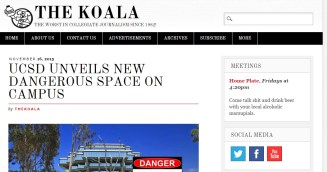
Professor Wax is out. But The Koala is back in. Two campus free-speech cases this week went in different directions, but for some reason they both harp on the same unusual word. It leads to some questions: Does student speech deserve more or less freedom than faculty speech? And does serious speech need more policing than humor?

koala dangerous space

The joke’s on…who?

Here’s what we know: Inside Higher Ed has reported that Professor Amy Wax of Penn Law has been condemned by her school for alleged statements at a recent conservatism conference. According to one reporter, Prof. Wax said,

our country will be better off with more whites and fewer nonwhites.

The Penn Law community reacted with outrage. Wax’s dean said her comments were

repugnant to [our] core values and institutional practices.

Meanwhile, across the country at the University of California—San Diego, a student group has successfully sued for having its humor magazine kicked off campus. Back in 2015, The Koala came under fire for its satiric article about the university’s new “Dangerous Space on Campus.” The article used the “n-word” and referred to violent sex acts.

The administration denounced The Koala, calling it

profoundly repugnant, repulsive, attacking and cruel.

After a few legal back-and-forths, though, The Koala has triumphed. An appeals court ruled that the university could not set up a competition for student funds, then ban only one publication from the competition.

The two cases lead us to a few questions this morning:

  • 1.) Should universities have different rules about free speech for students and professors?
  • 2.) Does offensive language deserve more protection when it is used satirically?
  • 3.) And finally, is the word “repugnant” ever used in any other context? Why is it so popular among campus condemnations?

Star Conservative Professor Rejects Evangelical Higher Ed

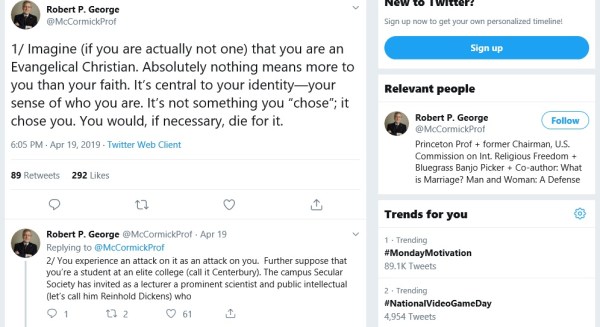
I don’t think he meant to do it. But conservatives’ favorite star academic just trashed the entire tradition of conservative evangelical higher education.robert george christian colleges

It’s pretty safe to say that Professor Robert P. George of Princeton didn’t mean to badmouth conservative evangelical colleges. He was talking—broadly speaking—about the proper way for students to react to campus ideas they didn’t like. They CAN protest, Prof. George wrote, but they really shouldn’t. Even when they are confronted with ideas that strike right at the very heart of who they are as people and as Christians, George advised, students should do something else entirely. They should listen politely, ask questions boldly, and think deeply.

What’s wrong with that? Absolutely nothing. But in his next bit, Professor George inadvertently criticized the entire body of conservative-evangelical universities and colleges. As he put it,

You [students] are there [in college] to be challenged and unsettled—to have your deepest, most cherished, identity-shaping beliefs subjected to scrutiny. That’s what liberal arts learning is most fundamentally about—leading the examined life.

FWIW, I agree entirely. As I found in my research for Fundamentalist U, however, if we accept Professor George’s vision of “what liberal arts learning is most fundamentally about,” we would be forced to admit that conservative-evangelical colleges are not really colleges at all.

After all, though it is fiendishly difficult to define “real” evangelical higher ed, both friends and foes of conservative evangelicalism agree on one thing. Namely, the higher-educational movement that began in the 1920s and included leading evangelical schools such as Wheaton College and Gordon College as well as fundamentalist institutions such as Bob Jones University and Liberty University was built on a profound dissent against Professor George’s vision of proper higher education. They were built, instead, on a promise to carefully control the ideas to which students would be exposed.

For example, though schools such as Bob Jones and Wheaton are worlds apart in many ways, they have always been united by their insistence that all faculty members adhere to a statement of belief. From their beginnings or re-beginnings in the 1920s, conservative evangelical colleges promised evangelical parents, in the words of school founder Bob Jones Sr. (1928), they would have a school in which

Fathers and mothers who place their sons and daughters in our institution can go to sleep at night with no haunting fear that some skeptical teachers will steal the faith of their precious children.

At evangelical colleges and universities, students were never supposed to have their “deepest, most cherished, identity-shaping beliefs subjected to scrutiny.”

It wasn’t only at fundamentalist Bob Jones College. At more-liberal Wheaton, too, the ideas that students encountered were carefully curated.

In 1949, for example, a student group invited a liberal, non-evangelical professor from the nearby University of Chicago to give a campus talk about the Bible. The student leader told Wheaton’s president that his group did not want to shake students’ faiths. Rather, he only wanted to strengthen their faith by giving them the experience Professor George describes.

The trustees did not take to such arguments. Professor George’s vision of proper higher education, one conservative insisted, was “a gross violation of the principles for which Wheaton stands.” Moreover, from the trustee’s point of view, this “inclusive, compromising policy” was nothing less than “clearly destructive of every foundation principle for which Wheaton has stood.”

And, lest one think that such anti-free-speech principles have been left behind in the dustbin of history, consider just a few recent cases. Wheaton students who press for greater LGBTQ inclusion have been squelched. Wheaton faculty who question (or maybe who just look like they might question) evangelical theology have been fired.

In my opinion, and the opinions of the thousands of students who thrive in evangelical institutions, these restrictions are part of what makes conservative schools great. Yes, there are significant restrictions on free speech. Yes, the schools are built on the premise and the promise that some ideas will not be given equal space. But there have always been significant advantages to those restrictions, advantages that many non-religious schools are now looking at with envy. (See, for example, trends toward new in loco parentis rules or creating “safe spaces.”)

If, however, we take Professor George’s word for it, real higher education requires a different approach. I don’t think he meant to do so, but by defining proper higher education as disturbing and soul-shaking, Professor George has accidentally insulted a vast network of successful conservative institutions.