…Could This Possibly Work?

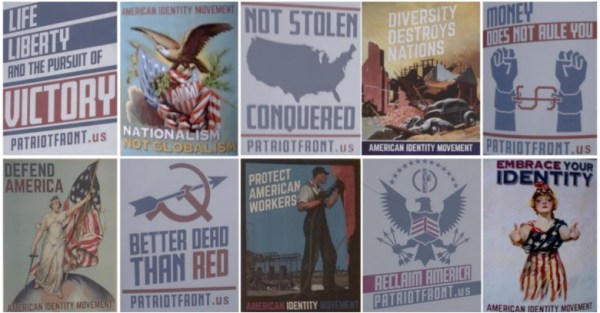
I’m really asking: Does anyone think that white supremacist organizations will  have much luck recruiting on college campuses? According to Inside Higher Education, that’s the reason groups such as the American Identity Movement put up leaflets.

White supremacy posters IHE REAL

…do these things actually work?

Why would they spend time putting up these posters on campuses? According to the Anti-Defamation League, the goal of these white supremacists is to

inject their views into spaces they view as bastions of liberal thinking and left-wing indoctrination.

So here’s my naive question: Is there any possibility some college student will see these posters and think, ‘hmmm, you know that makes a lot of sense”…?

I can’t imagine it, but I know I’m not normal. According to last year’s ADL report, most of the campus “recruiting” was done far away from sunny Binghamton, in Texas and California, Washington state and Florida.

I just can’t imagine this sort of thing getting any traction on our campus. Are other colleges different?

Will THIS Make Colleges Think Twice?

It doesn’t matter how deep your pockets are. An $11,000,000 fine still hurts. I can’t help but wonder this morning if colleges will see Oberlin’s punishment as a wake-up call to rein in their activist students.oberlin protest real.jpg

Here’s what we know: A bakery across the street from Oberlin’s uber-liberal campus has just won a whopping $11 million judgment against the school. Back in 2016, three African-American Oberlin students stole from the bakery. The owner chased them down and they were caught. They admitted to the attempted crime and agreed that the incident was not racially inflected.

Before the students confessed, however, outraged Oberlin students took to the street. They chanted that the bakery was racist and waved signs and banners. According to Inside Higher Ed, the administration of the college assisted with the student protest, suspending business with the bakery, organizing protests, and providing materials such as gloves for the protesters.

In light of the facts of the case, the bakery successfully sued for libel. It convinced a state court that the protests

interfered with business relationships, inflicted emotional distress and libeled the owners.

Will this judgment make other college administrators think twice about supporting student protests? As we all know, no matter if a school is conservative, liberal, or other, no administrator is willing to risk legal liability. I can’t help but think that this case will make cautious university presidents reconsider their knee-jerk support for student activism.

Sinning to Survive: Evangelical Colleges Cheat to Live

Maybe it’s legal, but it sure isn’t ethical. Just like mainstream universities, evangelical ones have engaged in morally dicey practices in order to keep the tuition dollars rolling in. Should they be held to a higher standard?liberty phd online

Here’s what we know: Inside Higher Ed reported this morning on the complicated legal settlements made recently by Oral Roberts University and North Greenville University. The details are confusing, but in short, both ORU and NGU paid big bucks–$300,000 and $2.5 million, respectively—to settle accusations that they had broken the law.

Both schools are accused of contracting with a now-defunct company to recruit students. Apparently, universities aren’t allowed to offer companies a percentage of the “take” for that kind of recruiting if the students are eligible for federal loans. The law makes sense: The feds worry about “predatory” institutions chasing after federal loan dollars, leaving hapless students with big debt.

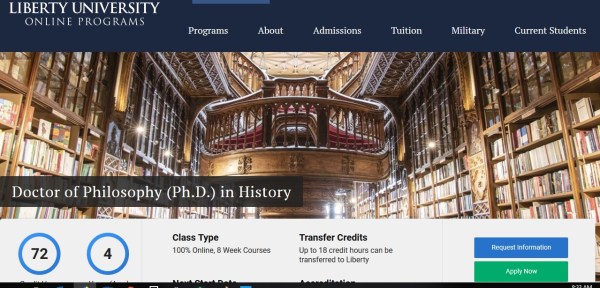
Meanwhile, what Liberty University is doing might not be illegal, to me it seems just as troubling. Recently the evangelical behemoth has been advertising a program that will leave students unemployable. The program in question is a fully online History PhD. Liberty promises that the program will help students land jobs. As they advertise (emphasis added by me),

Are you interested in a career in education, research, politics, archaeology, or management of national landmarks or museums? Whatever your history-related career goals are, Liberty University’s Ph.D. in History can provide the theoretical background, research and writing abilities, and experience you’ll need to excel in either academic or nonacademic career fields related to humanities or social sciences.

When you complete your doctorate in history, you’ll be prepared to pursue a variety of career opportunities. You might join the world of academia as a professor, professional researcher, or academic publisher or editor. Or you could pursue a position as a museum curator, international development specialist, author, archaeologist, or federal government employee.

Academics and many other career fields need people like you who are knowledgeable about the undercurrents, culture, and societal standards surrounding historical events. Prepare to excel in whichever career field you choose when you pursue our doctoral degree in history.

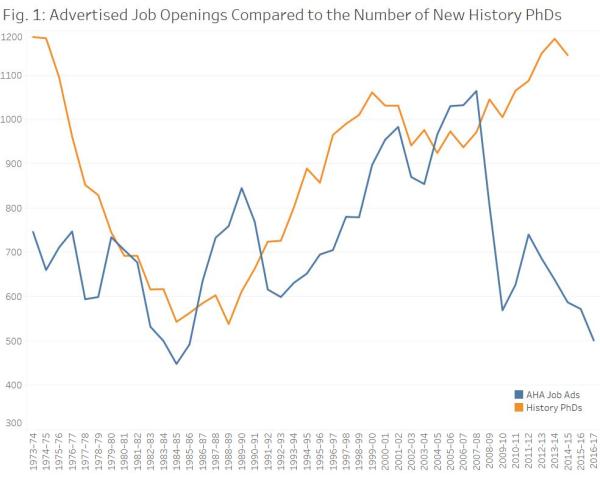
I don’t think there’s anything illegal about this sort of thing, but it does strike me as deeply misleading. The academic job market for history PhDs has not been strong since the late 1960s and these days it is positively dismal.Advertised-Job-Openings-Compared-to-the-Number-of-New-History-PhDsIn general, the very few jobs that are available in history departments have go to candidates with impeccable credentials. I have a hard time imagining that any history department would be willing to hire a candidate who had completed a fully online PhD program. In short, I do not think it is ethical for Liberty to tell people that they “might join the world of academia as a professor.”

I understand that the Liberty advertisement hedges its promises by talking about a “variety of career opportunities.” As do other desperate history programs who offer non-academic career advice, Liberty can fall back on its language about non-academic career paths as proof of its good intentions. I don’t think that’s enough. Even non-academic jobs for history PhDs are ferociously competitive and a candidate with an online degree will not be able to cut the mustard.

Don’t get me wrong. I understand why these evangelical schools make these sorts of insincere promises and shady deals. From the perspective of the recruiters’ offices, the prospect for the entire field of American higher education is scary and getting worse. There are fewer and fewer college-going young people and by 2025 the number will have dwindled even more.

Schools are closing and combining. Evangelical colleges have not been safe from this trend, as a recent shake-up at Gordon College attests. Nevertheless, I think it is fair to demand more than simple law-following from leaders of evangelical institutions. Bending the truth to get students in the door is something no one should tolerate, least of all people who want colleges to hold up the high ethical values of evangelical Christianity.

Why Liberal Evangelicals Aren’t

I’ve been trying to think of one for a long time and I think I’ve finally found an analogy that fits. Let me know: Does this comparison help you understand the difficult pickle in which politically liberal white evangelicals find themselves? Or did you have to grow up watching hockey for it to make sense?


It’s an old problem, I know, but I started thinking about it again this week talking to a reporter from Inside Higher Ed about the changes and cuts at Gordon College. As a relatively elite, relatively liberal evangelical college, Gordon has long found itself in a tough position. It has been accused of being too liberal, yet its president has also staked out some relatively conservative positions on LGBTQ issues in recent years.

At Taylor University, too, liberal students and faculty have protested against the school’s welcome of VP Mike Pence. Several dozen students walked out when Pence took the podium at their commencement ceremony. At least one student (at the 1:27 mark in the video above) refused to shake Pence’s hand.

As SAGLRROILYBYGTH may recall, I don’t share the optimism of some liberal white evangelicals that we are at the start of a new age in America’s culture wars, one with a vibrant “evangelical left,” one in which evangelical religion frees itself from its pact with conservative politics.

Rather, I think these recent higher-ed dilemmas highlight the ultimate weakness of politically liberal white evangelicalism.

Before I lay out my analogy, I should repeat that I don’t have any skin in this game. I’m no evangelical myself, liberal or otherwise. My personal politics certainly tip toward the progressive, so I’m more in tune with liberal evangelicals than conservative ones, but I myself can’t claim to share in the travails of liberal evangelical friends, though I admire them.

From the bleachers, then, I’ve been wondering why politics has been so difficult for politically liberal evangelicals for the past fifty years. As David Swartz has explored so well, the “evangelical left” has always struggled to gain electoral traction. From Mark Hatfield to Pete Buttigieg, from Jim Wallis to John Alexander, liberal evangelicals have often attracted enthusiastic support, but not huge numbers.

Why?

I think I have finally found an analogy that makes sense. The evangelical left is in a similar position to hockey purists who want to ban fighting.


Think about it: In many ways, the anti-fighting faction has a strong case. They argue that the sport is being hurt by the constant fighting, that brutish “enforcers” are kept on team rosters just to intimidate the opposition. The anti-fight faction can point to decades of expert opinion on their side, including a strong 1988 anti-fight statement from the Canadian Academy of Sport and Exercise Medicine. The constant fights, experts agree, are killing the game of hockey. At the college and youth levels, fighting has significantly decreased.

Yet fighting retains its revered unofficial status in the NHL. Why?

For one thing, fans love it. For many hockey lovers, fights are the big attraction, not an unfortunate exception. Indeed, I would wager than many hockey fans have no idea that one could separate fighting from hockey. And it’s not only the fans who love it. Players, coaches, advertisers, team owners…all of them consider fights to be a central part of the appeal of professional hockey.

And here’s the kicker: People who love the fights support them with their dollars. People who don’t like the fights have an easy option; they can just stop watching. Why would the governing body of the National Hockey League listen to the anti-fight faction—the group that is likely to leave the sport—instead of the pro-fight faction—the group that is invested for the long haul?

So forgive me if I’m stretching this analogy too far, but I think it helps me understand the ticklish dilemma of politically liberal white evangelicalism. Like the anti-fight hockey faction, liberal evangelicals have a very easy door out, but a very difficult, slippery, obstacle-filled uphill climb to change things.

Gordon with a Twist

These are tough times for colleges. Dropping enrollments and increasing costs have led many schools to shut their doors or slash programs. The latest in the evangelical world has been Gordon College. As I shared recently with a reporter for Inside Higher Ed, I think we need to understand the peculiar pinched politics of evangelicalism if we hope to make sense of Gordon’s recent changes. I hope the changes work out well for the Gordon community, but I can’t help but notice that they don’t seem to match Gordon’s history or tradition.

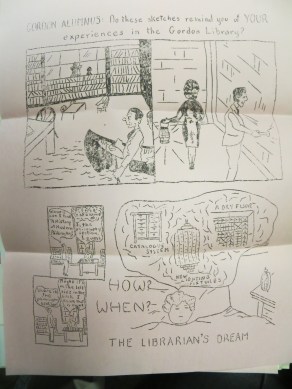
plea to alumnus funds for library cartoon

At Gordon, money has always been tight. This alumni appeal came from the 1940s.

Like all evangelical colleges, Gordon has always had to walk a tightrope. It has always had to promise parents and families a top-notch academic education, including preparation for professional careers. At the same time, it has had to guard its evangelical reputation vigilantly. Like all evangelical colleges, Gordon has had to worry that the college-going evangelical public will see it as too liberal or too conservative.

Back in the day, Gordon was a leader in the evangelical evolution from “missionary-training school” to “Bible college.” What began as the Gordon Missionary Training School in 1895 became the Gordon Bible Institute in 1914, then Gordon Bible College in 1916, then Gordon College of Theology and Missions in 1921.

Back then, the changes were not driven by financial pressures but rather by the changing nature of American higher education. As then-president Nathan Wood explained, the school changed its name in 1921 to accommodate the desires of students and alumni for a college degree, not merely a missionary certificate. As Wood explained in his autobiography, a group of current and former class presidents came to him to request the 1921 name change. They wanted, in Wood’s words,

a change of name . . .  which would express the collegiate and theological work of the school. . . . It meant much to them as future Alumni.

Culture-war politics have also always driven decisions at Gordon. In the 1960s, for example, Gordon’s faculty rejected a move to the political right. In 1964, then-president James Forrester hoped to import a free-market conservative focus to Gordon. With help from politically conservative administrators of The King’s College, Forrester planned a big free-market conference at Gordon, including conservative luminaries such as Congressman Walter Judd and Leonard Read of the Foundation for Economic Education. They wanted to bring Gordon on board, to focus on teaching students

a pervading high regard for Freedom in its spiritual, economic and political dimensions.

When Forrester ran his plan by Gordon’s faculty, however, they nixed the idea. They didn’t want Gordon to be associated with what one faculty leader called the “extreme right.” The faculty had higher academic ambitions for Gordon, not merely to indoctrinate students in what faculty called “a program of education in conservative thinking.”

Today’s changes seem worlds removed from these Gordon precedents. As Elizabeth Redden described, today’s students are not driving today’s changes. Rather, many students seemed surprised and saddened by the reduction in major programs and the reduction of faculty positions.

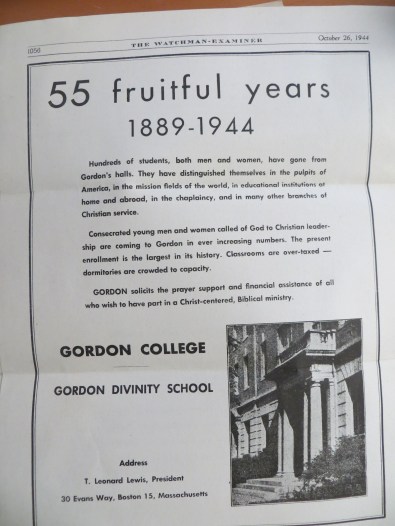
Gordon 1944 ad for donations in Watchman Examiner

A different plea for money, to the evangelical community, c. 1944.

Plus, the current administration of Gordon does not seem cowed by faculty pressure. Rather, Redden found herself unable to find a single faculty member willing to comment. The changes in Gordon were decided upon by top administrators, not faculty. Moreover, the administration seems willing to move Gordon’s reputation more to the conservative side of the evangelical world, with reminders in recent years that Gordon has never approved of LGBTQ “practice.”

I don’t doubt that Gordon’s administrators are feeling pinched. Like college administrators everywhere, they have had to make some difficult decisions. In this case, though, speaking as a fly on the wall, I can’t help but notice how different today’s decisions are from the ones Gordon College has made in the past.

Moody Student RIP

It’s difficult to believe that it’s really only a budget thing. After all, as SAGLRROILYBYGTH are well aware, student newspapers at evangelical colleges have always been a thorn in the sides of conservative administrators. Whatever the real reason, I’m sorry to hear that Moody Bible Institute in Chicago will cease publication of its student paper. In my research for Fundamentalist U I spent many hours reading through back issues. As with other student papers, the old Moody Student gave me a sense of the ways evangelical colleges really operate.

The news from Chicago is somber. One faculty member pleaded to keep the paper going. Administrators, meanwhile, insist the decision to close down the Moody Standard was about budgets, not bibles. As one administrator put it,

The decision to no longer fund The Moody Standard was not an isolated one, but prayerfully considered as a part of our ongoing strategic desire to steward resources in a way that achieves strategic balance in our education department and better serves students.

Whatever the reason for its demise, I’m sorry for future historians of MBI. After all, the old copies of the Moody Student helped me wrap my mind around the ways evangelicalism played out at MBI across the twentieth century.

For example, consider the back-and-forth on the editorial page of the Moody Student in January, 1942. One student complained that he had asked for coffee in the dining room and been snarkily informed by another student, “Real Christians don’t drink coffee.”

It wasn’t a huge issue roiling the world of American evangelicalism. It didn’t involve big labels like “fundamentalists” vs. “new-evangelicals.” There were no celebrities involved. And that’s precisely why the story was so helpful to this historian—it helped me see the everyday gripes and disagreements that defined the world of college evangelicalism.

I found similar examples all over my notes. For example, what did MBI students think of courtship and dating? One series from 1945 was a big help to me, as student reporters interviewed their peers about “What I Look for in a Christian Young Woman” and “What I Look for in a Christian Young Man.” My favorite line: the perfect Christian man, one woman explained, will help even with home décor. He won’t think “it’s sissy to regard neatness and color-harmony.”

Jumping to the 1960s, the Moody Student provided an insight into the upside-down student politics of a conservative institution.

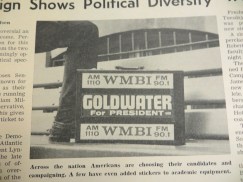
1964 WMBI and Goldwater

Capturing the evangelical vote, c. 1964.

As one student editor wrote in 1969, the job of MBI students should be to prove that a “silent majority” of students weren’t like “SDS.” Those fake radicals, the MBI editor explained,

try to give the impression that they are planting the seeds of freedom.  In truth, they are plowing furrows of division among Americans.

The student paper also helped me understand the divisions that developed over white racism at MBI. In 1970, for example, the Moody Student reported on anti-racism protests among MBI alums. As the anti-racist alums wrote,

The hypocrisy, frustration and profound spiritual damage suffered by us, both consciously and unconsciously, lead us to tear up our degrees and a diploma.

Last but not least, the Moody Student provided a public forum for the MBI community to debate changing ideas about student rules. As one editor opined in 1970,

Rules are necessary to develop discipline in the individual student, but equally important, the student must have freedom to make decisions on his own.  There must be a balance.  A person will not mature nor be able to face today’s world if he is not free to make choices. . . . I personally don’t think Moody has provided its students with that freedom to decide.

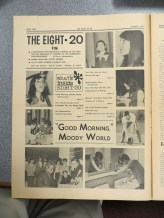
8 20 student paper pictures

What did the “Moody World” look like in 1971?

Reading the student paper, too, gave me a chance to see the non-written clues about changing norms and values at MBI. Student styles in the summer of 1971 were worlds removed from those of the buttoned-down 1940s.

In the end, I wholeheartedly agree with the MBI faculty member who argued that the student paper plays a vital role on campus. But even if I didn’t, I would feel sorry for those future historians who won’t have this resource to help understand the world of college evangelicalism in the twenty-first century.

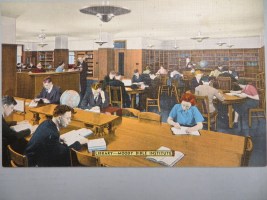
1940s postcard library

…what did it look like c. 1941?

Attention: Fellow Cheapskates!

Good news: if you’ve been waiting for the right time to acquire your copy of Fundamentalist U, wait no longer!

fundamentalist u cheap

These prices can’t last…

I can’t pretend to understand the logarithmic mysteries of Amazon.com, but it seems like they drop the price everytime they come close to selling out their latest batch.

Sales have been brisk, so right now they have dropped the price to a measly $12.25. You can’t even get in to see Endgame for that! So grab your copy while the grabbin’s good!

The Man Who Will Make Elizabeth Warren President

I haven’t heard her say it and I can’t figure out why not. Senator Warren’s campaign promise of free college for all has a long and successful history in these United States and you’d think she’d be crowing about that. As historians are well aware, “free college” is far older than the Charleston and filtered cigarettes.

https://www.youtube.com/watch?v=FQ7SNTSq-9o

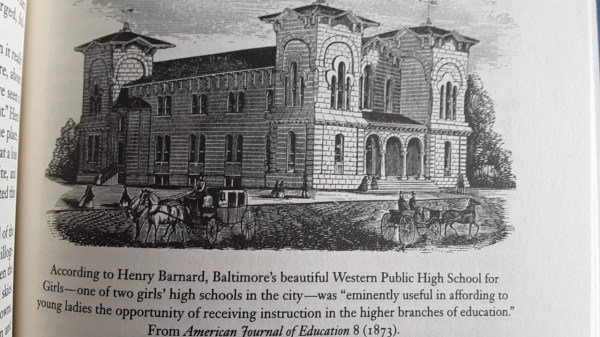
Here’s the scoop: You’ve heard Senator Warren’s plan for free college tuition and diminished student-loan debt. You may have heard that this kind of plan is nothing new. As William J. Reese pointed out in The Origins of the American High School (Yale UP, 1995), in the 1800s Americans faced a dilemma that feels familiar to us today. Reformers weren’t sure what to do about high schools, the “people’s” college. Back then, very few young people attended high schools, but those who did could use their diplomas to give their careers a boost.

At the time, high schools were generally paid for with a mix of public and private funding. Students often paid tuition but the schools usually also received some money from local and state governments.

Baltimore High School Reese

People were willing to pay for it back then.

Sound familiar?

Reformers back then successfully lobbied for greater public funding and greater government oversight and control. Senator Warren would be wise to depict her plan as an heir to this storied American tradition. She could deflect a lot of criticism using tried-and-true political strategy.

For example, according to Business Insider, some folks oppose Warren’s plan as elitist and expensive. As BI reports,

Critics of Warren’s plans argue that free college and debt forgiveness would force taxpayers, most of whom don’t have college degrees, to fund the education of students from wealthy families.

We’ve been down this road before. As Prof. Reese noted, these same criticisms came up in the 1800s. The problems back then were all negotiable. For example, in 1866, the high school in New Haven, Connecticut dropped its Greek curriculum because lower-income voters saw it as an unnecessary frill, a sop to Yale-bound richies.

Overall, though, free (people’s) college became an accepted part of America’s public-school system. There’s no reason why Senator Warren can’t learn from the long history. She should give Prof. Reese a call.

Conservatives Should Be Nervous About This

I’m no conservative, but if I were I wouldn’t be celebrating this recent essay by David French. I’d be quaking in my penny loafers. If we’ve learned nothing else from the history of the culture wars, it’s that this kind of talk heralds the bitter end.

Here’s what we’re talking about: In the pages of National Review this week, conservative pundit David French made the case for freer conservative speech on college campuses. He decried the tactic used by progressive students to declare conservatives beyond the pale of civil discourse. Too often, French lamented, aggressive progressives freeze out any conservative challenge by labeling it “dehumanizing.”

As French puts it,

An atmosphere that is devoid of truly meaningful debate is one that is more likely to give birth to bankrupt ideas. And the woke progressive monocultures in quarters of academia and Silicon Valley have advanced and protected both the idea that speech is violence and the idea that disagreement is dehumanizing — especially when disagreement touches on matters of race, gender, and sexuality.

As SAGLRROILYBYGTH are aware, I’m no conservative myself, yet I’m on the record as agreeing with French that college campuses should welcome real culture-war debates. If I were a conservative, though, I would be terrified to hear French talking this way. If I knew my culture-war history, I’d know that this line of argument is always a memorial to a battle lost long ago.

Consider the case of creationism in public schools. A hundred years ago (ish), at the Scopes Monkey Trial in Dayton, Tennessee, the defenders of evolution education pleaded with America to allow evolution to be heard. As lead attorney Dudley Field Malone made his case,

For God’s sake let the children have their minds kept open — close no doors to their knowledge; shut no door from them. Make the distinction between theology and science. Let them have both. Let them both be taught. Let them both live….

It was a desperate argument for a losing side. Evolution education was not popular in 1920s America, at least not in places such as Dayton, Tennessee. As I discovered in the research for my first book, anti-evolution laws were usually only the sharp point of a much vaster campaign to impose theocratic rule on America’s public schools.

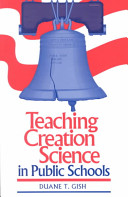
Fast forward seventy years, and the argument had switched sides. By the 1990s, it was the radical creationists who were pleading to have children’s minds kept open. They made their case for inclusion because by the 1990s creationists were just as desperate as Dudley Field Malone was in the 1920s. In 1995, arch-creationist Duane Gish told crowds it was now the creationists who were frozen out. Gish insisted he only wanted to fight against the “bigotry” of excluding creationism.

If you aren’t at the table, you’re on the menu…

What does any of this have to do with David French? A lot. Evolution-lovers like Dudley Field Malone only pleaded for inclusion when they were frozen out. Radical creationists like Duane Gish only begged for inclusion when they had already decisively lost the creationism culture war. By the 1990s, Gish’s brand of young-earth creationism had already become a relic of an imagined fundamentalist past, a fossilized idea that no longer had any real chance of returning to its spot in the American mainstream. It was still popular in fundamentalist pockets, but it had zero chance of returning to its former glories in the Princetons and Harvards of these United States.

If I were a conservative, I’d worry that French’s let-me-in rhetoric heralds the same sorry state for his outdated ideas about sexuality, gender, and race. Don’t get me wrong: I think there are strong conservative arguments that can be made in favor of greater inclusion of traditional sexual norms, but French ain’t making em.

The idea that traditional gender ideas should be included because all ideas should be included won’t convince anyone. Moreover, the fact that French feels obliged to make this case shows how desperate he is. If I were a conservative, these kinds of arguments would make me very nervous about the current state of conservatism in America.

The Conservative/Christian Coalition Gets Weird…

You scratch my back, I’ll…erm…pretend I didn’t just see that dinosaur on Noah’s Ark. It’s not news that more-secular conservatives have long paired up awkwardly with Christian conservatives. With T-Diddy in the White House, though, things seem to be reaching a crescendo of ultimate weirdness. A couple of recent news stories underline the contortions that both sides have to go through to make America great again.
PRRI-Trump-Favorability-and-white-evangelicals-2015-2018-1-1024x683

Fox n Friends strategist: Who’da Thunk We’d Be Hanging out with Dinosaurs for this…?

First of all, let’s clear the air of a few stubborn misconceptions. As we’ve pointed out over and overSAGLRROILYBYGTH are likely tired of hearing it—there’s absolutely nothing “new” about the idea of conservative evangelicals getting involved in politics. The so-called “New Christian Right” of the 1970s was not the first time that evangelicals decided to jump into the political fray. As historians such as Daniel K. Williams, Matthew Avery Sutton, and yours truly have argued for years, evangelical Protestants have always been politically hyperactive.

As any historian knows—and any savvy evangelical could tell you—the evangelical community has always included political conservatives, political progressives, and a bunch of people in the political middle. The emergence of the “New Christian Right” was not a question of evangelicals getting into politics for the first time, but rather an always-awkward alliance between politically conservative evangelicals and the conservatives within the Republican Party.

Having said that, let’s look at some of the recent unpleasantness. At evangelical Taylor University in Indiana, for example (see our further coverage here), Vice President Mike Pence has caused a furor over his invitation to deliver a commencement address. Politically progressive members of the Taylor community have protested.

Not surprisingly, non-evangelical conservatives have weighed in to support the university’s decision. Non-evangelical conservatives have highlighted the justice of the conservative evangelical side at Taylor. For example, Fox & Friends tracked down a politically conservative alumnus of Taylor, who told them,

The vice president has very orthodox Christian beliefs – very traditional beliefs – that a vast majority of Christians believe. His political views are shared by a large section of America, so it’s not a radical choice, and I think people should be able to engage and disagree with his views and do it in a mature fashion.

The conservative PJ Media concluded,

Sadly, this incident illustrates yet again the trend of liberals demonizing dissent from their ideas. Conservative speech is not violence, and Mike Pence is not “rooted in hate.”

It’s no surprise that secular conservatives would jump in to side with evangelical conservatives at Taylor. After all, secular progressives have done the same thing for the anti-Pence side. Things get a little weirder, though, on a different episode of Fox & Friends.
fox n friends at the ark encounter

just…wow!

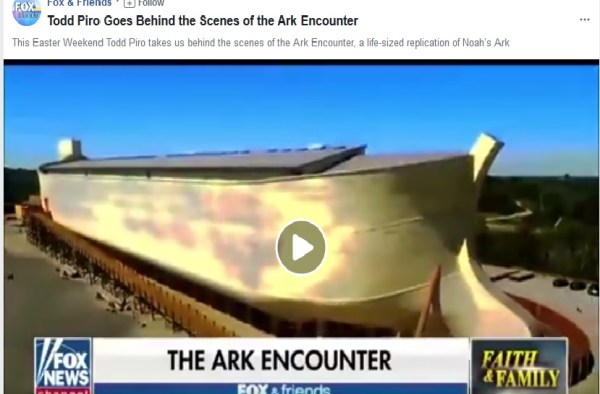
One of the F&F hosts, Todd Piro, goes on a tour of Answers In Genesis’ Ark Encounter. With a straight face, so to speak, the F&F segment shows the creationist megalith in all its zombie-science glory. The camera pans over dinosaurs in cages. Piro interviews visitors who sincerely praise the displays. As one earnest youth explains,

Not only did it give you the Biblical side, but it gave you a lot of scientific facts.

In his introduction, Piro says the Ark is just… “Wow!”

Not, ‘Wow, do you really believe that dinosaurs lived at the same time as humans?’

Not, ‘Wow, do you really believe that a flood could have actually covered the entire planet?’

But, ‘Wow, this is a neat museum, full of learnin n stuff.’

Now, I’m no conservative, but I can understand perfectly well why non-evangelical conservatives would fall all over themselves to support Taylor’s conservative evangelicals. After all, both evangelical and non-evangelical conservatives can agree on their opposition to LGBTQ rights.

But I’m truly flabbergasted when I see non-evangelical reporters describing the Ark Encounter as if it were just another neat museum. How is it possible for anyone who is not themselves a radical young-earth creationist to see the Flintstones-level scientific displays and not ask about them? How is it possible that any journalist can see dinosaurs in cages and not wonder how they count as “scientific facts”?

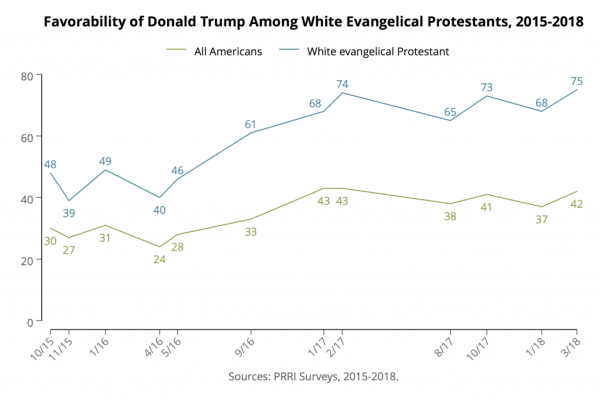
Watching Piro sugar-coat the radical science on display at the Ark Encounter, one can almost hear the political calculations going on in the offices of Fox & Friends. We can almost hear the implicit deal non-evangelicals want to cut with evangelical conservatives. “You give us a solid 81% vote for T-Diddy,” we can hear them thinking, “You give us university commencement speeches for Pence, and we’ll give you a cake-walk visit to your kooky Bible-science museum and a stirring defense of your stubborn resistance to LGBTQ rights.”