Missouri Loves Company: Catholics in Fundamentalist America

Missouri’s Catholic Bishops support Missouri’s proposed constitutional amendment.  In a recent statement, the Missouri Catholic Conference supported Amendment 2, which will go before voters on August 7.  The bishops’ statement argued that the amendment would ensure religious people’s rights in the public square.  As they put it:

“Increasingly, it seems, religious values are becoming marginalized in our society. People of faith need assurance that they remain free to exercise and express their religious beliefs in public, provided just order be observed, without threat of external pressure to conform to changing societal ‘norms’.”

For some, this defense of public religiosity by Catholic bishops seems unremarkable.  But from a historical perspective, this Catholic endorsement of religion in public schools signals a shocking turnaround in the history of religious life in America.

In the nineteenth century, after all, intense Catholic political pressure led to “Bible Wars” in public schools.  For many Protestants, the reading of the King James Version of the Bible in public schools seemed natural.  As Steven Green has argued in his new book, these nineteenth-century battles determined much of the role of public religion long into the twentieth century.

This history of Catholic protest against a Protestant-dominated public religiosity resulted in lingering anti-Catholic animus on the part of many conservative Protestants.  In the 1928 Presidential election, for example, self-described Protestant fundamentalists vehemently opposed Al Smith’s candidacy in the Democratic Party due to Smith’s Catholicism.

Yet even in the 1920s, we can see connections between conservative Catholics and conservative Protestants.  William Jennings Bryan tried hard to recruit Catholic anti-evolution writer Alfred  McCann to testify at the Scopes trial, for instance.  These connections received a boost in the 1950s with the strengthening of anti-communism on the Right.  And Catholics such as William F. Buckley and Phyllis Schlafly assumed new leadership roles in the postwar conservative revival.

By the 1970s, the issue of abortion fused even stronger connections between conservative Catholics and Protestants.  As Daniel K. Williams has argued, abortion politics brought pro-life Catholics into the fold of the “New Christian Right.”

The recent statement by Missouri’s Catholic bishops demonstrates how seamless these connections have become.  Early 1920s fundamentalism in America often included a virulent anti-Catholicism.  But by 2012, we need to include conservative Catholics in any sensible study of conservative religion in American public life.

Some readers have objected to ILYBYGTH’s broad definition of “Fundamentalist America.”  And they are right: “fundamentalism” in the American context usually refers to one subset of conservative evangelical Protestants.  But if we hope to understand the broad sweep of conservative religious activism in America, if we want to talk about the conservative side of America’s culture wars over the proper role of religion in the public square, we need to include a much broader coalition of religious groups.  Not only conservative Catholics, but also Pentecostals, Orthodox Jews, Mennonites, conservative Lutherans, and others who don’t fit within the smaller boundaries of small-f fundamentalism.

The recent statement by Missouri’s Catholic bishops is just further proof of how the times are a-changing.  When conservative Catholics can get behind an amendment protecting religion’s role in public schools, we know the old Catholic/Protestant split has become largely irrelevant.

Olympic Fever and Reading the Bible like a Fundamentalist

Call Benny Hinn!  ILYBYGTH has caught Olympic Fever!

And in our delirium, we’ve hit upon a mental challenge for all our fellow non- and anti-fundamentalists out there.  Here’s the question: Why is mental discipline heroic in sports but anathema in non-fundamentalist intellectual culture?

For the elite athletes who compete in these international games, a key component of their success is mental discipline, mental toughness.  As journalists marveled about Michael Phelps the last time around, winning in the Olympics means being “mentally tough.”   For all peak athletes, it means developing a powerful single-mindedness in training, preparation, and competition.  As one study defined it, mental toughness means “an unshakeable perseverance and conviction towards some goal despite pressure or adversity.”

This is the quality that allows elite athletes to prepare.  It gets them into the pool, or onto the track, or into the gym, day after day, hour after hour, through grueling workouts.

This summer, we’ll see this kind of preparation pay off for some.  But we have to remember that the athletes themselves have no guarantee of victory.  The key to real mental toughness is realizing that these athletes subject themselves to this kind of regimen in spite of the fact that they might still lose.  They might devote years of their lives to preparation, to struggle and suffering, only to find that they did not win, or didn’t even make the Olympic team.

What does this have to do with Fundamentalist America?  For those of us outside of fundamentalism, the way many conservative Protestants read the Bible can seem ridiculous.  For those of us outside this tradition, it makes very little sense to read the Bible as a collection of inerrant writings.  We have been taught, instead, to question every assertion of authority; to approach every statement with profound and illuminating skepticism.

But for many conservative Protestants, the proper approach to reading the Bible is more like the preparation plans of elite athletes.  They read the Bible with “an unshakeable perseverance and conviction towards some goal despite pressure or adversity.”  In other words, those who read the Bible as an inerrant Book might simply be demonstrating the mental toughness necessary to compete at an elite level.  They may be fully aware of the “pressure or adversity” that comes from a skeptical mindset.  But they may consciously and knowingly set those doubts to the side in order to pursue the indefinite goal of greater spiritual understanding.

Is this really the way fundamentalists read the Bible?  I don’t know.  But I do wonder why many of us non-fundamentalists admire this kind of devotion in the realm of Olympic sports, but disdain it in the world of intellectual culture.


Keeping the “Fun” in Fundamentalism

How many Fundamentalists does it take to change a lightbulb? [*Answer below.]

Since the beginning of American fundamentalism in the 1920s, fundamentalism has had an image of a group that could not take a joke. H.L. Mencken, one of the first–and still best–critics of fundamentalism, defined fundamentalism, like Puritanism, as the haunting fear that someone, somewhere, may be having a good time.

The image of dour fundamentalists remains powerful, with popular representations such as the fun-hating father in Footloose.

That’s not funny.

It has long been a temptation for conservatives to take on comedians for irreverence and political buffoonery.  TV shows such as Family Guy have repeatedly come under fire for their offensive sexual and political jokes.  Here, for example, Ben Shapiro and David Menzies accuse Family Guy of un-funny anti-Tea Party animus.  More recently, the aggressive Catholic conservative William Donohue of the Catholic League has worked to get a retraction by Jon Stewart of some contraception jokes.As announced in the Religion News Service, conservative Cardinal Tom Dolan of New York hopes to change that.  He will be appearing alongside Catholic comedian Stephen Colbert in a panel on September 14 at Fordham University in the Bronx.

The goal of the panel, “Humor, Joy, and the Spiritual Life,” is to explore the meanings of humor as a ministry.

Can a fundamentalist be funny?  New York Magazine listed a few of “Cardinal Rimshot’s” zingers since moving to his influential post in New York:

“They asked me when I got here, ‘Are you Cardinals, Mets, Brewers, or Yankees?’ And I said, ‘When it comes to baseball, I think I can be pro-choice.’
—To 60 Minutes

“New York has grown on me.”
—Describing his first year in the city, while patting his midsection, per the Times

“You’re the only people who never leave Mass early.”
—To inmates at Bedford Hills Correctional Facility, on why he loves ministering to prisoners, per the Associated Press

“The only cardinal I wanted to be growing up was Stan Musial.”
—To Matt Lauer on the Today show

“I’m at a Steak ’n’ Shake. What do I order?”
—Dolan, calling his diet doctor, as recounted in the Daily News

“Go away, Lord. I’m not your man. My Spanish is lousy and my English not much better.”
—On his reaction to being moved from Milwaukee to New York, at a 2009 St. Patrick’s Cathedral service

“I am going to give these to a hungry person. Namely me at about four o’clock.”
—On being given a box of French pastries, as quoted in the Times

“I might have to rent a space and a half.”
—To 60 Minutes while touring the crypt of the archbishops of New York beneath St. Patrick’s Cathedral

“My first pastoral letter’s gonna be a condemnation of light beer and instant mashed potatoes.”
—On Sirius XM Radio’s Catholic channel

“I’ll answer any questions—except about my taxes.”
—At a Fordham University press conference in the midst of the Mitt Romney tax-return controversy

But what is Dolan’s boss’s attitude toward humor?
“I’m not a man who constantly thinks up jokes.”
—Pope Benedict XVI

Will this collection of self-deprecating fat jokes and white-bread baseball jokes be able to hold its own against Colbert’s famously incisive wit?  We at ILYBYGTH can’t wait to find out.

* So how many Fundamentalists does it take to change a light bulb? Take your pick:

  • None, fundamentalists don’t believe in change.
  • None, God will change the lightbulb if it is part of His plan.
  • Four, unless there is a slave woman present, in which case they can’t eat pig. (Leviticus 11:4-7).

Okay, so maybe those aren’t so good. Anyone got something better?


Leftist Bias in the Academy?

Conservatives have long complained that American higher education faculty displayed an intellectually crippling ideological bias.  This has been called “anti-intellectualism,” but a more precise term would be something like “anti-professoriate.”  In a recent article in the Chronicle of Higher Education, the non-conservative sociologist Christian Smith of Notre Dame’s Center for Social Research argues that conservatives may be right.

The accusation of academic bias has been so durable in the intellectual world of Fundamentalist America that one is tempted to dismiss it as sour grapes.  For instance, in the 1920s, Presbyterian orthodox leader J. Gresham Machen finally left his beloved Princeton Seminary to start his own school, driven out, he claimed, by his colleagues’ growing intolerance of Machen’s Biblical orthodoxy.  Less intellectually gifted 1920s fundamentalists made similar charges, in more colorful language.  For example, Texas fundamentalist minister J. Frank Norris insisted in 1921 that the problem with America all started when some influential young Americans studied “in Chicago University where they got the forty-second echo of some beer-guzzling German Professor of Rationalism.”

Around the time of the Scopes Trial, a cartoon in the Wall Street Journal captured this anti-professoriate feeling among fundamentalists:
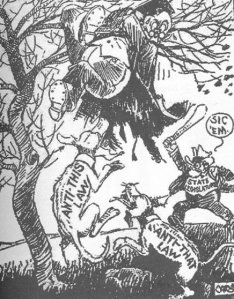
 

Education in the Higher Branches

More recently, in the early 1960s, conservative California State Superintendent of Education Max Rafferty found the main culprit of America’s decline in the progressive, leftist orthodoxy promulgated in America’s institutions of higher education.  Rafferty insisted that colleges had created a new landscape of “temples . . . great universities which marble the land.”  These temples no longer pursued true intellectual endeavor, Rafferty claimed, but only passed along a deadened orthodoxy, “turning out swarms of neophytes each year to preach the gospel of Group Adaptation.  Their secret crypts and inner sanctums are the graduate schools.”

In the twenty-first century, small-f fundamentalist blockbust author Tim LaHaye agreed.  University faculties, LaHaye argued, had placed themselves hopelessly in thrall to the false idols of the cultural Left.  After his huge publishing success with the Left Behind series, LaHaye set out to create a new biblical hero.  In Babylon Rising (2003), LaHaye described the adventures of biblical archeologist Michael Murphy.  In Murphy, LaHaye hoped to create a “true hero for our times,” one who united unwavering biblical faith with scholarly acumen and a dose of two-fisted machismo.  In one telling scene, Murphy is confronted by his smarmy secular dean.  This little episode tells us a lot about continuing fundamentalist attitudes toward the professoriate.

“Hold it, Murphy!”

A bony hand grabbed Murphy by his backpack as he left the hall. “Dean Fallworth.  What a fine example you set for the students by monitoring my lecture.”

“Can it, Professor Murphy.”  Fallworth was as tall as Murphy but cursed with a library-stack pallor that would make some mummies look healthy by comparison.  “You call that a lecture?  I call it a disgrace.  Why, the only thing separating you from a Sunday tent preacher is the fact that you didn’t pass the plate for a collection.” 

“I will gratefully accept any donation you wish to make, Dean.  Did you need a syllabus, by the way?”

“No, Mr. Murphy, I have everything I need to get the university board to begin accreditation hearings for this evangelical clambake you’re calling a class.”

“Temper,” Murphy mumbled to himself.  “Dean, if you feel my work is unprofessional in any way, then please help me to improve my teaching skills, but if you want to bash Christians, I don’t have to stand here for that.”

“Do you know what they’re already calling this silly circus around the campus?  Bible for Bubbleheads, Jesus for Jocks, and the Gut from Galilee.”

Murphy couldn’t help but laugh.  “I like that last one.  I’m intending this to be a quite intellectually stimulating course, Dean, but I confess I did not post an I.Q. requirement for taking it.  The knowledge will be there, I promise you, but I will likely fall short of your apparent requirement that the only acceptable instructional method is to bore your students to an early ossuary.”

“Mark my words, Murphy.  Your hopes of this course surviving and your hopes of tenure at this university are as dead as whatever was in that bone box of yours.”

“Ossuary, Dean.  Ossuary.  We’re at a university, let’s try to use multisyllabic words.  If it doesn’t turn out to be legitimate, maybe I can get it for you cheap and you can keep your buttons in it.  Now, if you’ll excuse me, I have a new artifact to begin work on.”

In this vision of the world of higher education, only fundamentalists have remained true to the original mission.  Fundamentalist intellectuals, this line of reasoning goes, have retained their sense of inquiry and intellectual honesty.  They have not been seduced by the showy appeals of false science, such as evolution.  They have not been lulled by a peaceful-sounding pluralism that in practice degrades human dignity.  And they have not been willing to accept the hidebound leftist, secularist, evolutionist orthodoxy required of the mainstream academic.

Christian Smith’s recent article argues that this leftist orthodoxy is not merely a figment of conservatives’ imaginations.  His article bemoans the attacks on sociologist Mark Regnerus.  Regnerus published an academic article in which he concluded that children raised by same-sex parents have more emotional disorders as adults.  According to Smith, Regnerus followed the guidelines of academic research and publishing.  His conclusions may or may not be correct, but his work followed the traditions of peer review and editing.  Regnerus’ conclusions may be disagreeable to some, but his research methods stand above reproach.

Yet, according to Smith, the attacks on Regnerus demonstrate the problems with today’s left-leaning academy.  As Smith argues,

“The temptation to use academe to advance a political agenda is too often indulged in sociology, especially by activist faculty in certain fields, like marriage, family, sex, and gender. The crucial line between broadening education and indoctrinating propaganda can grow very thin, sometimes nonexistent. Research programs that advance narrow agendas compatible with particular ideologies are privileged. Survey textbooks in some fields routinely frame their arguments in a way that validates any form of intimate relationship as a family, when the larger social discussion of what a family is and should be is still continuing and worth having. Reviewers for peer-reviewed journals identify “problems” with papers whose findings do not comport with their own beliefs. Job candidates and faculty up for tenure whose political and social views are not ‘correct’ are sometimes weeded out through a subtle (or obvious), ideologically governed process of evaluation, which is publicly justified on more-legitimate grounds—’scholarly weaknesses’ or ‘not fitting in well’ with the department.” 

As we have argued elsewhere, this bias is often wrapped in a near-total ignorance about life in Fundamentalist America.  One of the main reasons for this blog has been to introduce the ideas and culture of Fundamentalist America to outsiders who don’t know much about it.  Like Smith, we do not have to actively defend conservative ideas in order to protest against this sort of myopic academic bias.  Rather, we can promote a true diversity of ideas in higher education.  We can push for a true university, one in which the universe of ideas can be discussed calmly, without fear of the vindictive witch-hunts Smith describes.

In order to do so, we need to actively separate the jumble of issues.  The question is not whether children of same-sex parents have a tougher time in life.  The question is whether we will allow that conclusion to be reached in academic journals.  The question is whether researchers will be free to follow their data wherever it may lead, or whether, as Smith concludes, academic life will be governed by a crippling and unnecessary Stalin-lite motto: “Play it politically safe, avoid controversial questions, publish the right conclusions.”


Slaughter, Science, and Fundamentalist America

What if Batman shooter James Holmes had been a seminary student instead of a science student?

The horrific shooting at a Colorado cinema on Friday has led to an understandable search for meaning.  Why did this man allegedly storm into a movie theater and open fire, killing twelve total strangers and wounding dozens?

We here at ILYBYGTH have a different question.  In our quest to understand Fundamentalist America without prejudice and without smug presumption, we must ask: What if Holmes had been a deeply religious person?  What if he had been a student at Liberty University or Bob Jones University instead of the University of Colorado?  How would the media have reported this story?

As it is, as details of Holmes eccentric history have been uncovered, coverage has often noted that Holmes was a scientist, BUT he still engaged in this bizarre atrocity.  The Huffington Post headline, for example, reported the following: “James Holmes, Theater Shooting Suspect, Was Brilliant Science Student.”  ABC News framed the story as an utter mystery.  In its report, ABC said police were “hoping to discover there clues to what would make a young man recognized as one of the nation’s ‘outstanding neuroscientists and academicians’ unleash a storm of terror in a packed movie theater.”  USA Today made this distinction explicit.  They noted that “Two Portraits” of the alleged shooter have emerged, one as an intellectually gifted neuroscience student” and another as a “suspected mass murderer.”

Here’s what we have not seen: “Science Drives Student to Murder;” “Fanatic Scientist Kills Twelve;” or “Science Killings on the Rise.”  We will not likely hear calls to limit the amount of neuroscience young people can study.  We will not listen to talking heads discuss the dangerous way scientists promote their ideas on young and impressionable minds.  We will also not see a rehashing of every story about violent scientists in recent years.  At least in the mainstream media, we won’t hear discussions of the ways a scientific worldview encourages this sort of nihilistic atrocity.

Yet it does not take an enormous leap of imagination to picture what journalists might say if Holmes had been instead a brilliant student at a conservative religious school.  There would doubtless be talk of “American Taliban,” or perhaps “Fundamentalist Massacre.”  The teachings of the religious school would doubtless be used as headlines, such as “Holmes’ School Taught Literal Interpretation of Bible, Young Earth” or some such.  Perhaps the diaries of the student would be plumbed eventually for religious references, such as God’s call to purify the earth.  If we recognize our prejudice against Fundamentalist America, we should recognize that such connections between one mentally troubled murderer and the education and training of that person are not necessarily causally linked.  In other words, if we don’t blame Science for the Colorado shootings, we should not blame religion for every atrocity committed by a religious person.

Fundamentalist Fast Food? Christian Chicken? Fresh Hot Hate?

Chick-fil-A President Dan Cathy

The interweb has been squawking about Chick-fil-A President Dan Cathy’s recent statements.  Earlier this week, Cathy told the Baptist Press that his 1600-strong chain of fast-food restaurants was founded on Biblical principles, and will keep running that way.  Part of this means support for the traditional family.  “We are very much supportive of the family,” Cathy said,

“– the biblical definition of the family unit. We are a family-owned business, a family-led business, and we are married to our first wives. We give God thanks for that.”

Chick-fil-A’s committment to Biblical values goes beyond supporting traditional marriage.  Most famously, the restaurants are closed on Sundays.  The corporation also conducts missionary work among its workers, to its customers, and in its advertising.  When asked about his support for such Fundamentalist groups as Exodus International and the Family Research Council, Cathy happily replied, “Guilty as charged.”

Opponents have accused Chick-fil-A of an anti-gay position.  Many took umbrage at Cathy’s assertion that non-traditional marriages “invit[ed] God’s judgment on our nation.”  On Wednesday, Tim Carman asked in the Washington Post if readers would continue to eat there.  Not everyone will.  As Melissa Browning noted in the Huffington Post, “I can’t eat hate.”  But it appears Browning represents a minority, at least among Carman’s readers.  The results of the Washington Post poll (as of 11:00 New York time on Friday, July 20, 2012) showed 62% of almost 19,000 respondents planning to continue their patronage.

Nevertheless, Chick-fil-A offered yesterday a clarification of its position.  It officially noted that it takes no position on gay marriage.  However, it plans to continue its policy of “Biblically-based” management principles.

Does it matter if chicken is processed biblically?  More important, do we need to be sure that every dollar we spend supports only those corporations whose culture-war positions are as palatable as their products?

Fundamentalist America and Asian America

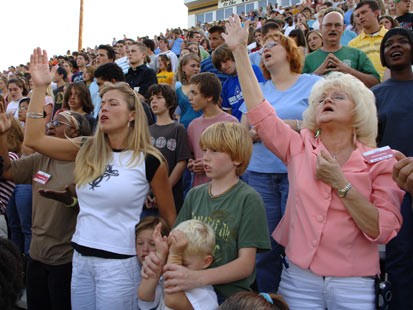
Quick: Which of these two pictures depicts American evangelical Protestants?

Of course, the answer is both.  But a lot of us still have a lingering, politely unmentionable stereotype about the nature of race and ethnicity in Fundamentalist America.

Academic historians of religion in America often lament this knee-jerk connection of whiteness with evangelicalism.  (See, for example, Edward Blum’s recents posts on the subject at Religion in American Life.)

Beyond just African American evangelicals, the connections between non-white America and Fundamentalist America are profound, but complicated.

Yesterday, the Pew Research Forum published the results of a survey that will illuminate the religious lives of Asian Americans.  As the authors titled the report, there is no simple way to pigeonhole this “Mosaic of Faiths.”  Religious identity for Asian American often depends on the country of origin, with Filipinos often Catholic, Koreans often evangelical Protestant, Vietnamese often Buddhist, and Indians often Hindu.  But just as common is a firmly non-religious identity.

“Indeed,” the report describes,

“when it comes to religion, the Asian-American community is a study in contrasts, encompassing groups that run the gamut from highly religious to highly secular. For example, Asian Americans who are unaffiliated tend to express even lower levels of religious commitment than unaffiliated Americans in the general public; 76% say religion is not too important or not at all important in their lives, compared with 58% among unaffiliated U.S. adults as a whole. By contrast, Asian-American evangelical Protestants rank among the most religious groups in the U.S., surpassing white evangelicals in weekly church attendance (76% vs. 64%). The overall findings, therefore, mask wide variations within the very diverse Asian-American population.” 

What does this mean for those of us trying to understand Fundamentalist America?  First of all, it is another reminder that we need to look beyond deep-rooted stereotypes about the nature of conservative religiosity.  The sweaty Southern tent preacher with snakes in a box and a kerosene-soaked cross up on the hill is a thoroughly misleading picture.  On the campus of the large public university where I work, one of the most active campus religious groups is the Korean Baptist Fellowship, not the traditional Campus Crusade for Christ or Intervarsity Fellowship.

Second, we need to keep in mind that Fundamentalist America no longer maps evenly or neatly onto conservative evangelical Protestant America.  The ecumenism of conservatives got a big boost with Jerry Falwell’s inclusion of Jewish and Catholic conservatives in his Moral Majority movement in the late 1970s and 1980s.  More recently, conservative Catholic scholar Robert P. George and conservative Muslim scholar Shaykh Hamza Yusuf teamed up to demand the elimination of pornography from major hotel chains.  Catholics and Jews have long claimed their roles as part of Fundamentalist America.  And those groups have been given a push in a thoroughly conservative direction from members of the faith from outside the Euro-American sphere.

Perhaps in coming decades we will see more and more partnership among conservative Hindus, Muslims, Christians, Jews, and others.  After all, this was the claim of scholar James Davison Hunter in his 1991 book Culture Wars.  The America of the 1980s, Hunter claimed, no longer was divided between Catholics, Protestants, and Jews, but rather between the “tendency toward orthodoxy” and the “tendency toward progressivism.”  Perhaps the orthodox will continue to widen their boundaries to embrace the mosaic of fundamentalism among the Asian American community.

War and Culture War

What is a Culture War?  In America, it generally means an angry squabbling over such issues as the proper role of religion and traditional culture in the public square.  Should public schools teach evolution?  Does a fetus have equal human rights?  Should homosexuals be allowed to marry?

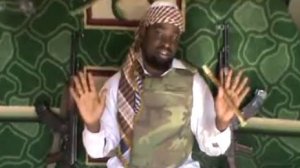
Recent headlines demonstrate the terrifying possibilities of other forms of culture war.  In central Nigeria, for instance, Islamic militant group Boko Haram has sharpened a bloody conflict between Muslims and Christians.  The organization has bombed Christian churches and killed Christians who would not convert to Islam.

BBC: “Who Are Nigeria’s Boko Haram Islamists?”

Could such atrocity result from America’s milder culture wars?  After all, America is no stranger to intensely violent civil war.  It’s not hard to imagine a new breakout.  Jonny Scaramanga of Leaving Fundamentalism has argued recently how easy it is to envision a Bible-Christian theology of suicide bombing.  And unfortunately we don’t even need to imagine.  With shootings of abortion providers and murders of homosexuals, not to mention generations of lynchings and white-supremacist violence, Fundamentalist America has proven itself capable of war, genocide, and atrocity.The Left, too, has shown its teeth.  When the Students for a Democratic Society splintered in the late 1960s, the Weather Underground faction devoted itself to a nearly suicidal campaign of bombings.   More recently, too, angry anti-fundamentalists such as Dan Savage have demonstrated their willingness to demean and belittle their Christian audiences.

Now, we need to be careful here.  There is a vast gulf between Dan Savage’s culture-war anger and the bombing of churches.  There is also, thankfully, a huge divide between ardent advocacy for a more thoroughly Biblical public culture and pogroms.  The point, though, is that the aggressive bombast of America’s culture warriors makes it depressingly easy to imagine an America in which culture war turns into real war.

At the risk of sounding apocalyptic, let’s imagine some of the ways America’s culture wars might escalate into something far more horrific.

1.)    Geographic contiguity.  If two or more regions developed a sense of beleaguered cultural identity, those identities could form the bases of separate warring nations.  For instance, when the eleven states of the Confederacy determined that their interests were no longer defended in the Federal government, they seceded.  Similarly, during the War of 1812, the Hartford Convention nearly led to the secession of the Northeast.  In today’s politics, we can see some sense of a sharpening coastal/flyover divide, a red state/blue state antagonism.

2.)    Connection of culture issues to existing racial/ethnic/religious divisions.  These divisions have often proved the most explosive in American history.  Wars and riots among groups such as Native Americans, Irish-Catholic Americans, and African Americans have burned America’s cities and bloodied America’s plains.  Were similar connections be made between ethnic status and religious affiliation, similar violence could certainly emerge again.

Our hopes, of course, remain high that America’s culture wars will mitigate, not escalate.  The purpose of this blog is to build intellectual bridges between Fundamentalist America and its critics.

Nevertheless, the depressing norm from history and current world events is for culture wars to attach themselves like lampreys to other sorts of conflicts, escalating the bloodshed as each side sees itself as holy warriors in a righteous cause.

Literary Fundamentalism: Specific Belief from Dappled Things

Pope Benedict XVI has made some very fundamentalist statements lately.  He wants a smaller, purer church.  He rebukes dissidents and suggests a “radicalism of obedience.”

Damian J. Ference suggests in an intriguing article on Dappled Things that Pope Benedict’s theology ties in closely with that of novelist Flannery O’Connor.  As Ference notes, the tightest connection between the two writers is their ferocious insistence on specific belief.  In Ference’s words,

Being an admirer of both writers, it has struck me that there is a deep connection between them, that as Catholic Christians, Flannery O’Connor and Benedict XVI both ground not only their work, but their very lives, in belief in the Incarnation, and that both O’Connor and Benedict are unapologetic in working to bring their readers to a fuller understanding of and appreciation for the specificity of the person of Jesus Christ.

O’Connor and Benedict both insist on what I will call specific belief, which understands Jesus Christ to be the Son of God, the turning point of human history, the Savior of humanity, and the one who reveals the meaning of human existence to the world. And both writers work tirelessly to expose the weaknesses of what I will call vague belief, the position which understands Jesus, not as the Son of God, but simply as one religious figure among many, and that belief in him in is neither a matter of life nor death.

As Ference argues, there is much in modern American culture that militates against specific belief.  In a world that places a high moral value on both uncertainty and toleration, any belief system that insists on its own unique truth-claims will be subject to withering attack.

Ference makes the indisputable point that both O’Connor’s and Ratzinger’s theologies are centrally concerned with this tension.

It seems to me, though, that the approach of the two writers is much further apart than Ference suggests.  I’m no expert, and I’ll happily welcome corrections, but it seems to me O’Connor’s work recognizes the difficulties of reconciling orthodoxy with modernity.  Though O’Connor insists on the need for specific belief, the power and beauty of her work largely results from the agonizing tension she maintains in many of her novels and stories.  In O’Connor’s world, in other words, we need specific belief, but we can’t quite be sure we can believe specifically.  Those who can and do are often tipped into the world of fanaticism and mute, violent, incomprehending orthodoxy.

Benedict’s orthodoxy wants to be much different.  In his writings as Pope and in his earlier “Rottweiler” work, Pope Benedict encourages readers to overcome the tension O’Connor dwells upon.  Benedict hopes to assert an articulate, rational, comprehendable orthodoxy.  For Benedict, in other words, the violent need not bear it away.

For those of us hoping to understand the world of Fundamentalist America from the outside, Ference’s article raises another vital point.  Too many people who don’t understand Fundamentalist America are quick to dismiss fundamentalism as somehow outside of modern intellectual culture.  Ference’s article reminds us that a deep theological conservatism lies at the heart of some of the very best modern intellectual culture.  Not only the work of Flannery O’Connor, but other writers such as Wendell Berry build themselves around the modern tension between orthodoxy and rootlessness.  Beyond simplistic dismissals of orthodox belief as somehow trapped in a fundamentalist past, we need to recognize that fundamentalism is just as awkwardly at home in modern and post-modern American intellectual culture as is secularism or theological liberalism.

In the News: Missouri Voters Will Vote on School-Prayer Amendment

Fundamentalist America wants its children to feel comfortable praying in public schools.  Since the US Supreme Court’s 1963 Schempp verdict, many religious conservatives have complained that God has been kicked out of public schools.

As Steven Green’s recent book has described, the historical reality is more complicated.  And, as I have argued elsewhere, to understand these questions, we can’t start in the 1960s, we need to look at the battles of the 1920s.

But that does not stop some conservatives from pressing the issue.  In a recent wrinkle, Missouri State Legislature Representative Mike McGhee has succeeded in presenting a Constitutional amendment to the voters of Missouri.  On August 7th, voters will have see the following questions on a special ballot:

“Shall the Missouri Constitution be amended to ensure:

• That the right of Missouri citizens to express their religious beliefs shall not be infringed; 

• That school children have the right to pray and acknowledge God voluntarily in their schools; and

• That all public schools shall display the Bill of Rights of the United States Constitution.”

Opponents note with considerable justification that this amendment will not actually do anything.  Speaking to the Joplin Globe, an official of the state school administration insisted students already have the right to pray.  And C.J. Huff, superintendent of Joplin schools, told the Globe,

“If it passes, it isn’t really going to make a difference in our schools. Students already have rights for volunteer prayer in school. It happens. I think the misperception is that it (prayer) doesn’t happen (in schools).”

But to the amendment’s supporters, the symbolism is intensely important.  As Representative Jeff Grisamore told OzarksFirst,

“This (legislation) is one of the most important pieces of legislation…that we will pass this year, because it is fundamental to protecting the rights of Missourians to pray and express their faith and at the same time, protect Missourians from being coerced or compelled in a way that would violate their faith.”

Missouri politicians seem keenly aware of this symbolic importance.  According to the Lebanon Daily Record, the proposed amendment passed unanimously in the state Senate and triumphed 126-30 in the state House. 

The constitutional issue seems fairly clear.  This amendment, if successful, will clarify a right that public school students already enjoy.  The big question is the political issue.  Clearly, the elected representatives of the great State of Missouri find the bill politically invulnerable.  Will the voters of Missouri agree?