IN THE NEWS: Santorum on America’s Educational History

This just in from the Republican presidential campaign trail: Rick Santorum knows what conservatives want to hear.  Not much of a surprise there; Santorum’s knack for positioning himself as the true conservative has led him to a surprisingly strong showing lately.

Of interest to ILYBYGTH readers, Santorum recently described his views on the proper nature of American education.  In doing so, he zeroed in on issues that have long resonated deeply with conservatives.

According to stories in the New York Times  and Los Angeles Times (here and here), Santorum outlined his thinking about the nature of public education in a speech on Saturday to the Ohio Christian Alliance in Columbus.

Santorum has already attracted attention as a homeschooler and advocate of government vouchers.  As his official website articulates, Santorum believes parental choice is one way to “restor[e] America’s greatness through educational freedom and opportunity.”

In Saturday’s speech, Santorum blasted the current “factory model” of education.  Today’s public schools, Santorum insisted, represented an “anachronism,” a period in which “people came off the farms where they did home school or had a little neighborhood school, and into these big factories . . . called public schools.”

Proper schooling, Santorum declared, should begin—and often end—at home.  Santorum appealed to a historical vision that is near and dear to the hearts of many American conservatives.  For most of American history, Santorum argued, even the Presidents homeschooled in the White House itself.

Where did they come up that public education and bigger education bureaucracies was the rule in America?  Santorum asked.  Parents educated their children, because it’s their responsibility to educate their children.

As I argue in an essay coming out this month in Teachers College Record,  this vision of the history of American education has been extremely influential among conservatives.  Since at least the 1950s, prominent conservative activists have based their prescriptions for healing American society on the notion that American education went wrong at a specific point in America’s past.  Of course, they also point out the corollary: conservative reforms can put it back on the right track.

Santorum appeals to a glorious educational past in which public schools had not yet tightened their stranglehold on educational opportunity.  This has been a common trope among conservative activists hoping to free traditionalists’ minds from the pernicious notion that education must look like today’s public education system.

Other common ideas that conservatives have insisted upon in their vision of American educational history:

  • schools started out as frankly religious institutions,
  • schools in the past did a better job of teaching more kids with less public money,
  • a set of notions known as “progressive education” ruined America’s strong tradition of real education, and
  • creeping state control led to ideological and theological totalitarianism in public schools.

On Saturday, Santorum indicated his agreement with these notions.  However, just as “progressive” educators have long fought over the proper meaning and function of schooling, so have conservatives.  In my TCR article I take a closer look at four leading activists since 1950:

  • Milton Friedman,
  • Max Rafferty,
  • Sam Blumenfeld, and
  • Henry Morris.

Each of these writers described a different vision of America’s educational past.  Like Santorum and generations of other conservatives, each agreed that the system had broken down.  However, also like Santorum’s unique insistence on the importance of Presidential homeschooling in the White House, each pundit laid out a unique educational past.

Anyone hoping to understand Fundamentalist America will be wise to listen to Rick Santorum this year.  He seems to have a knack for dishing out all the ideas Fundamentalists want to hear.


IN THE NEWS: Fea, Worthen, Santorum, and Civil Discourse

Three cheers for John Fea!  Fea is an American historian and blogger.  I’m a big of both his academic writing and his history-themed blog.

Fea recently criticized a piece in the New York Times about Rick Santorum’s mix of religion and politics.  The author, Molly Worthen, marred an otherwise insightful article about Santorum with some unnecessary derogatory comments about Santorum’s religious tradition.

Instead of summarizing any more, I’ll just include a slice of Fea’s conclusion here:

Let me be clear.  This post is not meant as an endorsement or rejection of Santorum’s beliefs or his candidacy. (I voted for Bob Casey Jr. in the 2006 Pennsylvania senatorial race).  It is rather written out of frustration over the way Santorum’s views are so easily dismissed, as if they are not worthy of being engaged in civil discourse or the public square. I wish Worthen would have done one of two things in this piece:
1.  Simply describe, without the gratuitous swipes, the Catholic natural law tradition that informs Santorum’s conservatism.  She is a good historian and a perceptive political reporter.
OR
2.  Directly engage with Santorum’s ideas rather than just assume that he a crazy, prejudiced bigot because his understanding of moral life comes from Thomas Aquinas.

Hear hear!

IN THE NEWS: A SOCIALIST JESUS AND A NEW EDUCATIONAL REALITY FOR NEW HAMPSHIRE

–Thanks to LC

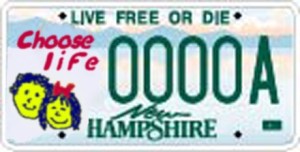
Live Free or Die!  So every New Hampshire license plate proclaims, and a new law in the Granite State looks like it will move New Hampshire residents one step closer to making that decision.

A controversy arose in December, 2010, when two New Hampshire parents pulled their son out of his Bedford High School.  Their complaint was that the boy had been assigned Barbara Ehrenreich’s Nickel and Dimed in a personal finance class.  The parents complained that the book called Jesus Christ “a wine-guzzling vagrant and precocious socialist.”

I haven’t read the book, but for many people, them’s fightin words.  Predictably, the controversy drew national attention.  Glenn Beck’s website agreed with the New Hampshire parent that the school district made a terrible curricular decision.  The Huffington Post, not surprisingly, ran an article much more favorable to the school district and to Ehrenreich.

There’s not much in the story, in fact, that should raise eyebrows among ILYBYGTH readers.  As we are well aware, parents often complain about the curricular materials assigned in schools.  Conservative pundits encourage careful scrutiny of reading materials they suspect of anti-religious, anti-patriotic, anti-capitalist materials.

The best publicized case of this nature in the past generation was arguably Mozert v. Hawkins County [Tennessee] Board of Education.  In this case from the mid-1980s, conservative Christian parents objected to the content of their county’s reading series by the textbook publishers Holt, Rinehart and Winston.  The parents tried to convince a series of courts that the series promoted a vicious religious system, one they called “secular humanism.”  In addition, the parents claimed the books promoted a grab-bag of pernicious notions, such as witchcraft, extra-sensory perception, pacifism, and non-traditional gender roles.

There is nothing unusual about conservative parents objecting to the curricular materials their children use in schools.  What makes the Bedford, NH case so extraordinary is that it has led to a remarkable new state law.  Thanks to the publicity from the controversy, the New Hampshire state legislature passed House Bill 542, then recently overrode Governor Lynch’s veto.

According to the new law, in effect as of the recent veto override, parents may demand alternative course materials to any material they find “objectionable.”  The parent or guardian must pay for the new alternative materials, but the school district must locate them.  The parents may also remain anonymous and they do not have to reveal their reasons for objecting to the material in question.

This is new.  This is remarkable.  I have spent a good deal of my professional time in the past few years researching the history of conservative educational activism.  Across the course of the twentieth century, conservatives have had remarkable success in keeping America’s schools traditional.  They have challenged “progressive” pedagogy, the teaching of evolution, the restriction of traditional Protestant religion from public schools, and the removal of traditional patriotic themes from public schools.

Throughout all that time, however, even in the 1920s heyday of anti-evolution state legislation, there has not been to my knowledge a state law that allows parents to object to any material they may find offensive for any reason.  Parents have not had the nearly unlimited right expressed in this new New Hampshire law to demand alternative curricular materials without explanation or justification.

When Governor John Lynch vetoed this bill in July, 2011, he noted that the bill would be “disruptive” and that it would be “difficult for school districts to administer.”  More compelling, Governor Lynch decried the bill’s tendency to push “teachers to go to the lowest common denominator in selecting material, in order to avoid ‘objections’ and the disruption it may cause their classrooms.”

What effect will this remarkable new law have in New Hampshire?  My guess is: not much.  The new law will generally fall into the very wide category of laws that are on the books but unknown and unenforced.  That, after all, was the fate of the anti-evolution laws from the 1920s, until the US Supreme Court ruled them unconstitutional in the late 1960s.  However, like the case of anti-evolution laws, even in states that did not have such laws, a large percentage of parents and teachers will be influenced by anti-evolution public sentiment.  One large survey of evolution education in 1942 found that eight percent of biology teachers thought evolution education was illegal in their states, even when they taught in states that had not passed such a ban.

In short, this law will not change behavior too drastically.  But that is NOT because teachers and school districts will continue to teach controversial material.  Rather, the law itself will not change behavior since so many teachers and school districts are already bowed down by the weight of perceived public opinion.


In the News: Conservatism a Category of “Diversity” at Iowa Law School?

This just in: Now being a “conservative” is a legally actionable category.  A story in yesterday’s New York Times tells the tale of conservative activist Teresa R. Wagner.  Wagner had applied for a job at the University of Iowa College of Law in 2006.  She was not hired, and recently she won the right to sue from the Eighth Circuit US Court of Appeals in St. Louis.  She hasn’t won anything yet, but the circuit court ruled that she had shown enough evidence that the decision not to hire Wagner was due to unconstitutional discrimination against Wagner’s political beliefs.

Apparently, the smoking gun here was a statement in 2007 by the school’s Associate Dean Jonathan C. Carlson.  Carlson said Wagner ought not be hired since most people at the school “despise her politics (and especially her activism about it).”

Wagner doesn’t dispute her fierce partisan politics. She has worked for the National Right to Life Commitee and the Family Research Council.

One thing that makes this looming lawsuit so interesting to all those interested in the culture wars is that the notion of conservatives as a special kind of persecuted minority has become such a large piece of the jigsaw puzzle of cultural conservatism.  As we have noted on other posts, creationists have complained about this prejudice for years.  Jerry Bergman, for instance, insisted that he was refused tenure at Bowling Green State University due to his religious beliefs.  Clifford Burdick was refused his doctoral degree at the University of Arizona.  He and his supporters have argued that he was only denied due to his religious beliefs.

Of course, these are very different cases.  Some mainstream scientists will find it perfectly appropriate to refuse tenure or a doctorate in science to someone who dissents from one of the basic premises of mainstream science.  At a law school, however, faculty can agree on basic principles, while holding different political ideologies.  In other words, it is not as if Teresa Wagner disputes the existence of the Constitution.

In any case, students of the culture wars will be watching the progression of this case carefully.  Even if the legal issues in play don’t technically mean much for other sorts of conservatives, a legal decision that conservatism should be considered a category of ‘cultural diversity’ will doubtlessly be used as a weapon in upcoming culture-war skirmishes.


In the News: Public Schools and Public Christianity

Yesterday’s New York Times ran an article “exposing” the strong role played in some public schools by Biblical Christianity.

The article describes the evangelistic activities condoned and even promoted by several public schools.  At one school, a performer/evangelist bragged that hundreds of middle-schoolers had embraced the Gospel at an in-school rally.  You can still find his promo video of the event on Youtube.  At another school, a teacher preached the Gospel through a bullhorn as students arrived for school.  In another school district, teachers and administrators led a prayer service before a high-stakes standardized test.

It’s worth reading the article, especially for those who share the perspective of the article’s author that these questions of public Christianity in public schools had been settled since the mid-1960s.  Of course, more careful students of the culture wars will be able to point out a few problems with the article’s interpretation.

For one thing, the notion that these issues had somehow been settled with a couple of high-profile US Supreme Court cases is far too simple.  Those cases–Engel v. Vitale in 1962 and Abington School District v. Schempp in 1963–insisted that public schools could not mandate a prayer, have students read the Bible, nor have teachers lead students in the Lord’s Prayer, even if students could be excused.

As Kenneth M. Dolbeare and Phillip E. Hammond demostrated convincingly in 1971, those decisions often had neglible effect on actual policy and practice in real public schools.  These two political scientists studied five towns in the pseudonymous midwestern state of “Midway,” and they found that school practice after the Engel and Schempp decisions continued largely as before.  In schools where teachers and students had been praying and reading the Bible, they kept on doing it.  More surprising for the authors of the study, this utter evasion of the Court’s intent raised absolutely no controversy in any of the towns.

More careful students of the history of the struggle over the role of conservative Biblical Christianity in the public square will also likely wince at the author’s use of geographic stereotypes.  The author reports that these demonstrations of public Christianity remained powerful “in some corners of the country, especially in the rural South.”  This has long been the oversimplistic cultural geographic stereotype of fundamentalism.  In this case, it is puzzling that a careful journalist would still fall into this misleading stereotype.  After all, the article itself describes one of its cases from Baltimore, Maryland.  It defies even the simplest common sense to lump this major metropolitan area in with others as being some kind of backward corner of the country.

The notion that these “corners of the country” are the strongholds of Biblical Christianity largely results, in my opinion, from the idea that only those areas in which Biblical Christianity remains utterly dominant in the public sphere are important to this discussion.  Evidence piles up, though, that such conflicts over the role of conservative Christianity in public schools map much more completely over the rest of the country, including the North, the West, and in large cities.  Allow me to use a couple of examples.  In one of my first teaching jobs, in St. Louis, I worked briefly in a pretty rough public high school.  The student body was mostly from low-income families.  Students, faculty, and administration were all almost entirely African American.  I was surprised to find out that most of the teachers began their classes with a Bible verse and prayer.  It did not seem to be a controversial thing.  Students and faculty took it as the norm.   Beyond just my personal experience, more careful surveys of traditional religiosity in public schools have found that the stereotypical imagined geography of schools in the rural South as being the most congenial homes of public Christianity don’t hold up.  R.B. Dierenfeld, for instance, conducted surveys of public school religious practice, and found Bible reading the most prevalent in public schools in large cities.  It was equally strong in the Northeast and Southeast, and faded away in the West.

One final point: the tone of  the article’s author tended toward the incredulous.  The author seemed surprised that people “still” prayed in public schools.  The evangelists, on the other hand, seemed fully aware that they were evangelizing on hostile terrain.  Christian Chapman, along with one school’s principal, specifically hoped to reach students in purportedly “Godless” public schools, even if it meant the end of the principal’s career.  As Chapman suggested in the NYT article, students in public schools heard the hostile message of “evolution” every day.  Why shouldn’t they hear from the other side?
These days, this kind of discrepancy seems common.  Secular and pluralistic types often assume that religion has been banished from the public square.  Those battling to get more Jesus into public schools seem fully conscious that their mission has become subversive.

FURTHER READING: Kenneth M. Dolbeare and Phillip E. Hammond, The School Prayer Decisions: From Court Policy to Local Practice (Chicago: University of Chicago Press, 1971); R. B. Dierenfield, Religion in American Public Schools (Washington: Public Affairs Press, 1962).

In the News: Schooling, Poverty, and the Educational Culture Wars

In a recent piece in the New York Times, (Class Matters: Why Won’t We Admit It?)  policy professor Helen Ladd and journalist/college-guide writer Edward Fiske offered a strong argument for the close link between social class and school performance.

Poorer children tend to do worse in school.  As Ladd and Fiske point out, this is not news.  Nor is this only an American dilemma.  Other countries face similar situations.
The point of Ladd’s and Fiske’s piece is that federal policy has obstinately and deliberately ignored this important aspect of education policy.

For those interested in the continuing culture wars over education, the more interesting question is this: how have the progressives/liberals/Left come to embrace the position that fixing only schools can not fix education, while the traditionalists/conservatives/Right has taken to heart the idea that schools can be fixed by more rigorous testing and standards?

After all, the notion that schools are only one educational institution among many has long conservative roots.  For generations, educational conservatives have argued that the educational rights of family, church, and other non-school institutions must be respected.

Similarly, for a long time the notion that schools must find ways to test every student to determine individual capability and performance has a long and respectable progressive history.

Yet these days, the notion that schools alone can’t be held responsible for students’ total education has become a favorite on the educational left.

My hunch is that there are two main reasons for this development.

First of all, ten years of No Child Left Behind has shifted the ideological weight of “testing” squarely from left to right.  But this did not come out of Right field.  The progressive appeal of testing faded when the cultural biases of IQ tests were clearly established in the middle of the twentieth century.  When progressives called for more testing, they did so in the hope that such tests would allow schools to tailor education more closely to individual strengths and interests.  When traditionalists call for more testing, they do it as an appeal to the long American tradition of educational exhibitionism.  In the American tradition, schools, teachers, and students are all expected to make public displays of their learning. Today’s high-stakes tests are only an updated version of the old tradition of calling the schoolmaster out on the rug, forcing students to “toe the line,” to show off their learning in ways the community finds acceptable.

In addition, the argument that schools alone can’t fix education comes from a progressive notion that any social improvement must be more than just a policy band-aid.  That is, in order to fix schools, we must fix the more basic injustices of our society.  In order to improve students’ performance, we need to address the fundamental economic imbalance of society.  This would shift the discussion in markedly progressive directions.  Instead of labeling poor children and schools in less affluent areas as ‘failing,’ we would need to start talking about reducing the Gini coefficient, about reducing the growing chasm between the few rich and the many poor.  Instead of blaming schools and teachers for cheating on high-stakes tests, we would need to find ways to improve the economic well-being of huge numbers of poor people.

The ideological baggage that comes along with each of these educational positions points out the difficulty of speaking calmly and clearly about education reform.  Each side hopes to seize the moral high ground, even while claiming to argue in practical, non-ideological terms.  But the very terms we use frame the discussion in ways that are difficult to overcome.  Are we talking about a redistribution of income?  Or are we talking about improving individual performance in reading and math?

Culture Wars Update: The Tebow Test

As you’ve seen by now, it  looks like we have a new litmus-test question for America’s continuing culture wars.  This one packs a lot more punch than its cultural logic would seem to suggest.

Even if we aren’t really sports fans, we are now supposed to have some opinion about the hyper-public, hyper-Christian persona of Denver Broncos quarterback Tim Tebow.  If you haven’t been following this story at all, there are a couple of wrinkles that make it interesting.  First of all, on just a sports level, there’s the question of whether or not Tebow can handle the pressure of pro football.  He had a great college career, but some sports nerds insist he does not have the goods (yet?) to make it in the NFL.  But a series of improbable last-minute wins seems to prove otherwise.  Check out some of the mainstream sports coverage here and here.

I like the NFL as much as the next guy, especially if the Packers are on and there’s food and beer involved.  But ILYBYGTH readers and everyone interested in culture-war issues have been more interested in Tebow’s loud and repeated public professions of his Christian faith.  This isn’t new.  He has been celebrated among conservative Protestants since his college days.  Tebow is certainly not the first big sports star to push evangelical Christianity into the public spotlight in ways other evangelists haven’t been able to.  But his combination of insistent public evangelism, combined with his meteoric rise as an unlikely NFL star, seems to have focused public attention in a new way.

So now we have a Tebow Test.  For some culture warriors, Tebow’s posturing has seemed nothing short of a prelude to a pogrom.  In a news post on The Jewish Week, pundit and blogger Joshua Hammerman attracted a lot of attention for his claims that Tebow’s in-your-face proselytizing could have some terrifying implications.

Hammerman wrote that if Tebow’s football success continued, it could encourage his Christian followers to do “insane things, like burning mosques, bashing gays and indiscriminately banishing immigrants.”  Hammerman also described his cultural opponents as the side of the “Moral Majority and ‘Hee Haw.'”  Hammerman’s intemperate language caused The Jewish Week to take down the article, and Hammerman apologized on his blog.

But it was not only Hammerman who got overheated about the Tebow Test.  Tebow’s supporters have been just as quick to defend and celebrate Tebow’s insistence on using his fifteen minutes to forcibly inject some Biblical Christianity into the public sphere.  Among some evangelical Christians, for instance, Tebow’s activism has been uniquely heroic.

Other conservative Christians have interpreted the Tebow Test as just another example of the ways conservative Christians represent an unfairly demonized cultural minority.  As Elizabeth Scalia argued recently on First Things,

Were Tim Tebow using his on-camera time to swagger and preen and lecture the nation on green energy, greedy millionaires, and gun control, his Christ-fixation would not only be permitted, it would be held up as a gaudy rebuke to uncool Christians everywhere, and his pronouncements—as long as he kept his mouth shut on abortion and gay marriage—would never be challenged.

So how do you fare on the Tebow Test?  Is his public religiosity a sign of the resurgence of Hee Haw Red State Pogromism?  Is it a sign of hope for a public culture that has gone too far to the dogs?  Is it more evidence that Biblical Christians can’t get a fair hearing in a public sphere dominated by secular materialism?  Or, perhaps, you hope that we can just get back to the food-and-beer part of NFL football.  Maybe you side more with the writers of the satirical Onion, who have concluded that Jesus doesn’t think Tebow has enough arm for the NFL.

Are Culture War Activists MORE Likely to Read from the Other Side?

It has become a tired cliche that our society has grown more culturally segregated due to the fact that we only read/see/hear those ideologically driven news outlets with which we already agree.  An interesting piece in this morning’s New York Times describes a study of media consumership that challenges that common wisdom.  According to a study by Matthew Gentzkow and Jesse Shapiro of the Booth School of Business at the University of Chicago, people who read/view/listen to news and information from one side of the political spectrum are MORE likely to also read/view/listen to sources from the other side.

“Internet news consumers with homogeneous news diets are rare,” the authors wrote.

As James Warren of the Chicago News Cooperative suggests, the problem might not be that hardened culture warriors are clustering farther and farther apart in the newsiverse, reinforcing their own stereotypes and preconceived notions.  The problem might be, Warren suggests, that too many Americans are not reading/viewing/listening to ANY news at all.  Though some news consumers frequented sources from both left and right, larger numbers of Americans consumed very little news from any source.

What does this mean for our understanding of the culture wars?  Morris Fiorina has suggested that the hype of culture war has been overblown.  Fiorina argued that most Americans were centrist, but journalists and politicians eager for attention stressed extreme positions.  Perhaps this study bolsters Fiorino’s argument.  The study’s authors found that most online news consumption clustered around centrist sites such as Yahoo and CNN.  I find that heartening.

Some might say that another, gloomier interpretation is more obvious.  According to the study, listeners to Rush Limbaugh were more likely than the average American to also spend some time on perceived left-leaning sites such as the New York Times.com.   And visitors to the leftist MoveOn.org were more likely than the average American to also visit right-leaning sites such as FoxNews.com.  One interpretation is that those readers and viewers were interested in hearing both sides of an issue.  The most obvious interpretation, though, is that each side is only conducting reconnaissance.  Both sides, in other words, scan through the news outlets from the other side in order to expose their foibles and weaknesses.

So, perhaps these ardent culture warriors are only reading their enemies in order to disprove them.  Even so, I consider that a good thing.  Even if culture warriors are only trying to disprove one another, the fact that they are familiarizing themselves with the “enemy” will mean that they have some sense of what other people are thinking.  This study, in any case, seems to give support to a hunch that Americans are not as far apart culturally as some have suggested.