What Do Conservatives Think?

I’ve been dying to know: What will conservatives think of my new book? Will they agree that I’ve tried to take an even-handed approach? Will they protest that I misunderstood the nature of “conservatism?”

Last week we received an encouraging review from a conservative ILYBYGTH reader. Today we read with interest the opinion of a conservative activist who played a leading role in the events described in the book.

Years ago, when I journeyed down to Charleston, West Virginia to research chapter five, Karl Priest was kind enough to take time to talk with me about his memories of the 1974-75 textbook protest. We also talked about his ideas of evolution, creationism, Christianity, and proper education. Since the 1975 protests, Priest has been an educational activist. On his blog, he recently posted a detailed review of my book.

According to Mr. Priest, the book has some good parts, but it also misrepresents the conservative side of the 1974-75 protest. He is consistently kind to me personally, noting that I am “a gentleman and a scholar.” He also concludes by saying,

For anyone willing to study, Dr. Laats’s book provides a comprehensive history of major conservative battles against progressivism.

Mr. Priest also concedes that at some points I capture fairly the thinking of Kanawha County’s conservatives. But he warns that my liberal biases blind me to the truth of the Kanawha County textbook battle. He insists that I “intentionally slurred” the book protesters in the opening of chapter five.

For those who would like to read his detailed critique of my argument, Mr. Priest has added a section to the review in which he moves point by point through the chapter.

Is he correct? In a few cases, I think he makes valid points. For example, he notes that I awkwardly wrote that one protester prayed with a fellow inmate and “saved” him. As Mr. Priest points out, no protester would use such language. The child was saved, but through the power of God, not through the doings of the protester.

More often, however, I think Mr. Priest is blinded by his own partisan interests. I say it with great respect and with gratitude for the time Karl has spent talking with me. In general, however, I think he is overly convinced that the textbook protesters could do no wrong. He assumes too much about the radical nature of textbook supporters.

For instance, he writes that the National Educational Association was not a mainstream group, but rather “an outside left-wing extremist group.” That does not seem a fair statement. The NEA was indeed generally associated with left-of-center politics, but it was entirely within the mainstream of American politics and culture.

As an historian, I have to examine the evidence and come to conclusions about controversial events. Karl is entirely correct that I’m influenced by my own biases, even when I don’t think I am. I encourage readers to check out his review and chime in with their own thoughts.

Evil and a Young Earth

It’s one of the oldest and toughest questions for monotheists. If God is all-powerful, and the world has evil in it, then God is responsible for that evil. Creationist leader Ken Ham recently argued that only a young-earth attitude can explain away this problem of theodicy.

Ham was reacting to a viral video of Irish comedian Stephen Fry. (Youtube has since taken the video down due to copyright claims.) In the interview, Fry blasted God as evil, capricious, and flat-out monstrous. “Because,” Fry explained,

the God who created this universe, if it was created by God, is quite clearly a maniac, utter maniac. Totally selfish. We have to spend our life on our knees thanking him?! What kind of god would do that?

Of course, theologians and atheists have wrestled with this challenge for centuries. Ham, the well-known leader of Answers In Genesis, explained recently that other forms of creationism could not handle the challenge.

Intelligent Design, Ham argued, fails because it argues only for a vague creator. If there is only a bland, inexact creator, then Fry’s challenge is correct. He, or She, or It, must have created everything, including evil.

Other creationists just don't get it...

Other creationists just don’t get it…

Evolutionary creationism, too, can’t handle evil, according to Ham. The sort of creationism embraced by the BioLogos folks stumbles in the face of Fry’s challenge, Ham says. “If God did use millions of years of evolutionary processes,” Ham wrote,

then He is responsible for all the death, suffering, disease, extinction, pain, cancer, and other evils in this world.

Only a young-earth approach gives a satisfying account of the origins of evil. In Genesis, as Ham reads it, God’s original creation was evil-free. Only when the sinful choices of Adam & Eve introduced evil into the world did things go awry.

For this to make sense, Ham says, we need a real, literal Adam & Eve. We need to take God at His Word. Otherwise, jokers like Fry have the last laugh.

“Enablers of Doubt:” What Do Science Teachers Learn about Teaching Evolution?

Creationists have an easy task. They don’t need to disprove evolutionary science. All they really need to do in public schools is create a reasonable doubt in students’ minds that evolution is the best available scientific explanation. That’s the argument, anyway, made in a recent article by political scientists Michael Berkman and Eric Plutzer. More interesting, from their point of view, are the ways science teachers learn to create that kind of reasonable doubt.*

You may remember Berkman and Plutzer from their terrific book, Evolution, Creationism, and the Battle to Control America’s Classrooms. You may also remember that Professor Berkman will be making a trip up to scenic Binghamton University next month to address our Evolution Studies Program. He’ll be talking about the new research from his new article.

For those who can’t make it up to Binghamton on March 30, you can check out the argument in the pages of The Annals. In evolution education, B&P argue that anti-evolution forces have acted similarly to tobacco companies or climate-change denialists. In each case, they write,

determined political actors have been able to force a stalemate—or even achieve a victory—on an issue by calling into question scientific consensus.

In other words, creationists these days can win merely by playing strategic defense.
Not teaching the controversy, avoiding the controversy

Not teaching the controversy, avoiding the controversy

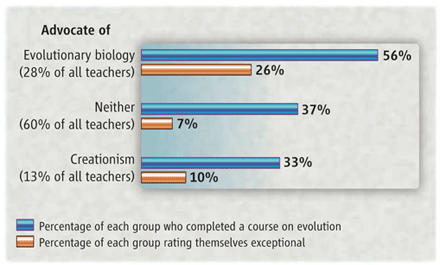
In their earlier survey work, B&P discovered that a large minority of high-school science teachers (28%) teach evolution as the only science game in town. A smaller minority, around 13%, teach creationism as science. The big middle group tended to teach a mish-mash of watered-down evolutionary science mixed with creationism-friendly ideas.

Using a new batch of focus-group data, B&P asked new questions:

How is it possible that young people who major in a scientific field and desire to be science educators lack confidence in their understanding of a central principle of modern biology? Where do teachers develop their belief that they are obligated to be “fair” to nonscientific accounts of creation? And how critical is personal faith in the development of the pedagogical choices that they will make over many years in the classroom?

To find out, B&P conducted focus-group interviews at four different sorts of colleges in Pennsylvania. They interviewed groups of students who planned careers as science teachers.

Significantly, B&P found that pre-service teachers had a shaky hold on evolutionary science, even though they often majored in biology. When the teachers looked ahead to possible future controversies in their own classrooms, an overwhelming majority of pre-service teachers expressed confidence that they could handle any controversy by using better classroom management techniques, not better science. As B&P put it,

The impression we got is that classroom management techniques and skills to negotiate controversy were aspects of professional capital that students felt they needed to absorb, internalize, and have at the ready. They understood that the content of science was also critical in any encounter with a skeptical parent or community member, but they did not feel they needed to own the content in the same way that they needed to become masters of management techniques.

Even when they knew the science and wanted to teach it, many of the pre-service teachers B&P interviewed seemed nervous about provoking any sort of controversy. As student teachers and then new teachers, their main goal was often to avoid attracting negative attention.

If a controversy did arise, pre-service teachers imagined they could take shelter behind their state’s standards or their district’s curricula. Without exception, the teachers-to-be insisted they did not want to become culture warriors in their classrooms. As B&P put it,

their primary identification as educators rather than scientists suggests that they are relatively passive recipients of arguments and political communication from elites and groups trying to shape popular opinion.

In short, teachers are people. As B&P argued in their 2010 book, teachers’ values tend to reflect the consensus values of their school communities. If they teach in a town in which large numbers of people are favorable to creationism, teachers will also be favorable to creationism.

Perhaps more important, teachers are people with very public jobs. Contrary to culture-war presumptions that teachers are somehow trying to undermine or subvert students in one way or another, most teachers are concerned with avoiding controversy.

As Professors Berkman & Plutzer conclude in this article, we are stuck too often in a “feedback loop” of evolution education. Student teachers didn’t learn much evolution in school, because teachers tended to avoid controversial issues. They don’t wrestle with issues of faith and doubt at public universities, since such issues are largely seen as religious, not scientific. As pre-service teachers, students are more concerned with studying nuts-and-bolts classroom issues, not basic science. And when they do their student teaching, they don’t often see classroom teachers wrestle with evolution in their classrooms.

Teachers become “enablers of doubt,” in other words, because anything else might stir up a hornet’s nest of controversy.  And almost all teachers are more interested in getting along with students and parents than in provoking controversy.

*The article requires a subscription to read the whole thing. If you don’t have access to a university library, ask your local public librarian to scour their databases. Many public libraries these days subscribe to pretty broad academic journal databases. Here’s the full citation to look up: Michael B. Berkman and Eric Plutzer, “Enablers of Doubt: How Future Teachers Learn to Negotiate the Evolution Wars in their Classrooms,” The ANNALS of the American Academy of Political and Social Science, March 2015, vol. 658 no. 1: 253-270.

Do Teachers Have the Right to Be Wrong?

How do we draw the line? How do we know when to punish a teacher for being wrong and when to insist that teachers have a right to express their views on controversial topics? A new bill in Montana again insists that creationist teachers should have legal protection to teach their views. Nor is this simply a Montana question. From its headquarters in Seattle, the Discovery Institute has proposed a model bill for legislatures nationwide. From Alabama to Colorado, Florida to South Dakota, lawmakers have offered similar bills.

The basic argument is the same: Teachers must be allowed to teach the full range of ideas about evolution and the origins of life. Should they? And if they shouldn’t, why not?

These are not easy questions, though they might seem so at first. Opponents of these sorts of creationist “academic freedom” laws scoff that no teacher has the right to tell students things that aren’t true. Supporters, on the other hand, might insist that this is a simple question of teachers’ rights to academic freedom.

Neither of those positions captures the complexity of the situation, though. For those of us who oppose these bills, it seems obvious that teachers must not be allowed to tell students things that are not true. As Glenn Branch of the National Center for Science Education put it, Montana teachers do not have the right to teach “bunk.”

The hard question, though, is who decides on the definition of bunk, and how. Historically, we’ve seen teachers persecuted for unpopular political beliefs. As historian Clarence Taylor has described, in the early 1950s eight New York teachers were fired for their leftist sympathies.

Throughout the twentieth century, as I argued in my new book, progressive teachers and school administrators struggled to protect their rights to their political opinions. These educators insisted on their right to hold controversial opinions. More pertinent, they insisted on their right to teach students about these ideas.

In hindsight, it’s clear that the rights of these teachers were egregiously violated. What’s worse, the climate of public education as a whole was degraded by these educational witch-hunts. Only a few teachers were actually purged, but a climate of fear pushed teachers and students to hew more closely to the patriotic party line. That’s not good education.

So creationists ask: Aren’t these bills protecting the same right? Don’t creationist teachers have the right to present all sides of scientific questions about origins?

Yes and no. As philosopher Harvey Siegel and I argue in our upcoming book, creationist teachers and students DO have enormous rights in public-school classrooms. Too often, evolution mavens get too wrapped up in winning culture-war battles to admit it. Far too often, science teachers imply that students need to believe evolution; earnest teachers want students to acknowledge the fact that real knowing means abjuring supernatural explanations of events. Creationist students have every right to dissent from such beliefs. If students want to believe that the earth is 6,000 years old, or that the earth is a floating turtle, or any other sort of thing, they have every right to do so.

Public schools must welcome a plurality of religious beliefs. Creationists—teachers and students alike—must be defended in their quest to protect their faith from assault, even if that assault is only implied or suggested.

By that same token, however, these sorts of academic bills fail on two counts. First, students in public schools have the right to be protected from religious indoctrination. No teacher may preach religious doctrine. Though creationists might howl in protest, even the most intelligently designed creationist bills have religious goals. Instead of protecting teachers’ rights to teach controversial subjects, in effect these sorts of academic freedom bills protect a non-existent right to preach a certain religion-friendly doctrine in public-school classrooms.

Second, students in public schools have the right to learn the best ideas available. When issues are truly controversial, students must be exposed to those controversies. But when ideas are not controversial, students must not be forced to mull false ideas as co-equal to truer ones.

This is not only an evolution/creation idea. In history classes, for example, students should not learn that the South won the Civil War. Or that most enslaved people preferred bondage to freedom. These ideas are held by lots of people, but that doesn’t make them just as true as other historical ideas.

Teach the controversy?

Teach the controversy?

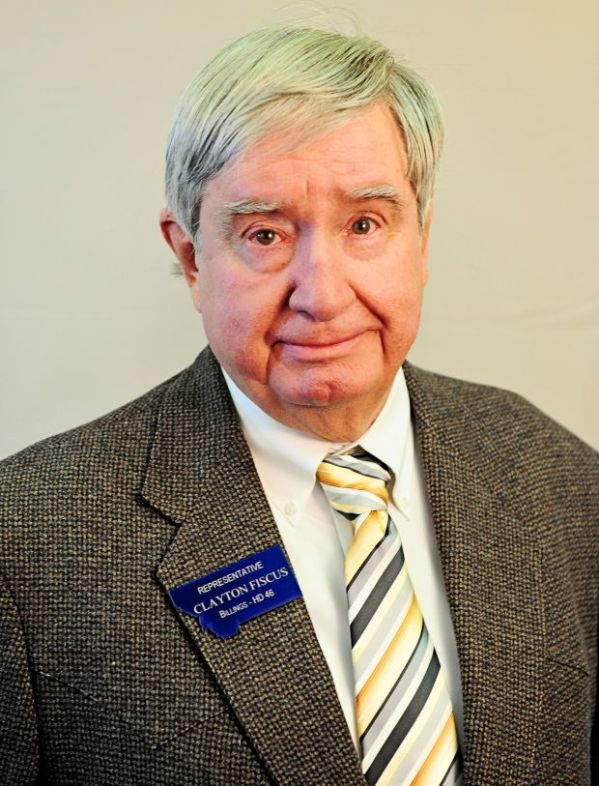
In science classes, the sorts of dissent that people such as Montana legislator Clayton Fiscus wants to protect are not equally scientifically valid. True academic freedom does not include the right to offer worse scientific ideas as equal to better ones. True academic freedom does not include the right to preach religious ideas as facts.

So do teachers have the right to be wrong? Yes, indeed. But they do not have a right to encourage students to believe any particular sort of religious belief. Nor do they have the right to pretend two sets of ideas are equally valid when they are not.

Walker Takes on the Professoriate

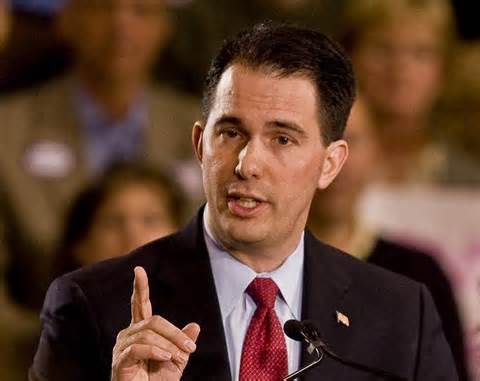
Want to get elected president? If you went to middle school, you know how it’s done: Find an unpopular group and attack them. Last week, Wisconsin Governor Scott Walker tried to pave his path to the Oval Office by attacking lazy good-for-nothing university professors. It might backfire. Walker’s plan has a long and spotty record among conservative politicians and activists. But in general, it’s a safe bet that Walker won’t lose conservative support by standing up to the professoriate.

Get to work, nerds!

Get to work, nerds!

In his new budget proposal, Governor Walker made huge cuts to the University of Wisconsin. The university could make up the shortfall, Walker suggested, by having faculty teach more classes. In short, Walker told reporters, this was nothing more than the core conservative principle of efficiency. The cuts will make the university

do things that they traditionally have not done. Like I said, things like maybe looking at the use of faculty and staff a bit more efficiently like others have done in government in the last four years at both the state and local level.

Naturally, Walker’s proposal has raised hackles among Wisconsin’s academics. History professor John Sharpless argued that he works at least as hard as anyone else. And after all that, Sharpless complained, he will retire with a smaller salary than a Madison bus driver. Walker’s implication that faculty are a bunch of “fat cats who are getting rich off the taxpayer,” Sharpless said, amounted to nothing more than a “crock of cow poop.”

Poop aside, Walker’s attack on the professoriate joins a long tradition among conservative politicians. As I recount in my new book, throughout the twentieth century conservative leaders blamed a leftist academic elite for America’s cultural decline.

In the 1930s, for example, conservative anti-communist leader Hamilton Fish insisted that faculty at leading colleges had become public enemy number one. The faculties at schools such as Wisconsin, Fish charged, had been packed with “socialists, near Communists and Communists.”

University professors make an easy target. As we’ve explored in these pages, many conservatives assume that academic types are overwhelmingly liberal. Governor Walker may be banking on the fact that any attack on college professors will be seen as a win for conservatism.

Does This Chapter Make my Book Look Fat?

Have you got your copy yet?  My new book is now available.  A conservative ILYBYGTH blog reader was kind enough to read the book and send me some reflections.  I’ll post them in full below.  They are very kind.  I’ll be sure to post news of less flattering reviews as well.

I finished reading The Other School Reformers.  These are just my thoughts and opinions.

I don’t think you made a mockery of conservatives / conservatism.  Some activists confound stereotypes, but there are certainly ones who confirm them.  It wasn’t always pretty, but it wasn’t mockery.  It’s just honest.  You talked about “specific people making specific claims about specific educational programs.”  And “specific times and places.”  (7)  It didn’t mean that every conservative would condone or support every action or idea.

I’m glad extremist examples were included.  Pointing out extremists, I think, can give valuable information.  I didn’t object at all to you talking about it.  In the whole context, it made sense to me to include extreme examples since the survival of the US was at stake.  (I don’t condone extremist tactics of course)  And as time went on, they found themselves “fighting for much narrower aims.”  (16)  I didn’t think this a couple years ago, but now think pointing out extremes is a positive thing and helps lead to an understanding that a reader wouldn’t get otherwise.

I started by reading the index, then going through the index again to see what people or ideas you were going to talk about the most.  That was helpful for seeing the continuity of the issues and just getting an idea of what the book was going to be about.

You made it very clear in the introduction and in the first chapter that your intent was to let conservatives speak for themselves and said that a few times in a few different ways.

Your introduction and first chapter were really well thought out and made the rest of the book clear.  I appreciated the quick progressions under A Moving Target starting on page (14) to get a good overview and to provide some understanding of the changes before delving in.

I appreciate that you started and ended with your personal experience in the schools.

I really enjoy your writing style. Though you allowed conservatives to speak for themselves and you put the spotlight on them, you were still the storyteller.  Imho, the style of your writing accurately portrays the feelings (of some conservatives and certainly the people you talked about), and keeps the reader engaged in the story.  There was a nice ebb and flow of being matter of fact, speaking in a bit of an indignant tone, and using creative language to get your point across.  Your writing enhances without sensationalizing or exaggerating.  (or if it does I think the reader knows that)  It can lead people to be introspective and curious.  (Well, it does for me.)

It was interesting to note that the Gablers didn’t seem to understand what a scientific theory was / is.  (195)   I may have said that before to you, but did note it in here.

You demonstrated all throughout the book change and continuity, and the goals and strategies.  There were many interesting things to note and some confirmations of things I’ve been thinking about.

I’d give it a ten out of ten, or a full 5 stars on Amazon.  I can’t see how it could have been better, it was so well thought out.  It provided the reader with a deep understanding of the issues and people.  It seemed to me that you delivered exactly what you said you were going to deliver in a way that made the argument for why you structured the book the way you did make sense.  If I’m supposed to find something negative about the book, that knowledge is above my head.

I enjoyed it!

Is Jerry Falwell an Idiot?

Is Jerry Falwell Jr. an idiot or a genius? Falwell, the president of Liberty University, has hit the jackpot with Liberty’s incredibly popular—and incredibly lucrative—online programs. Falwell has plowed that money into Liberty’s brick-and-mortar campus. Is Falwell a higher-ed visionary? Or does he simply not recognize the way things are really going in higher education?

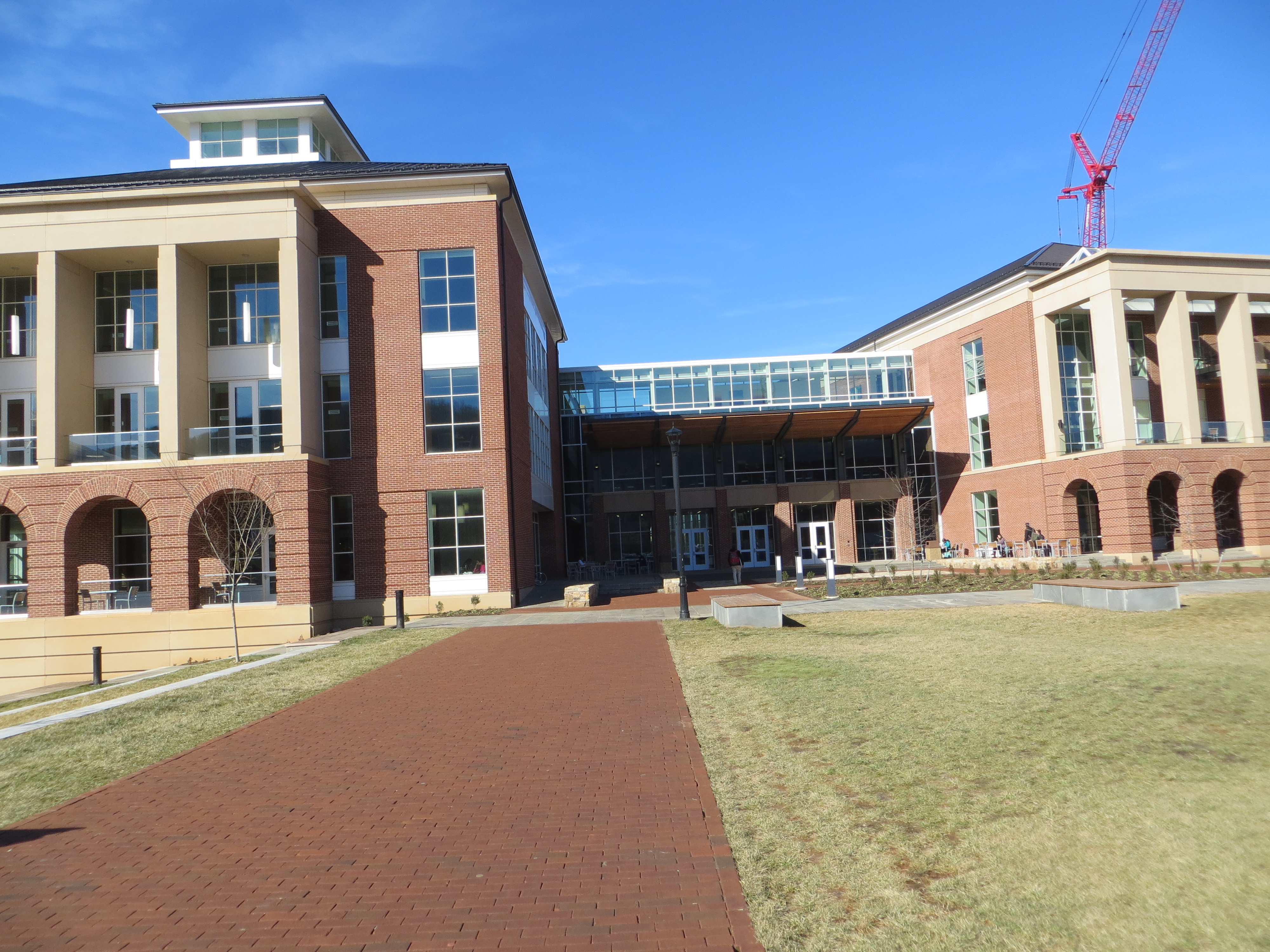
The money is hard to ignore. Between 2006 and 2012, Liberty’s net assets increased from $150 million to $860 million, thanks mainly to its booming online business. Instead of using those funds only to increase online education, Liberty has bankrolled an ambitious sports program and a recession-busting campus building program.

The new bajillion-dollar Jerry Falwell Library

The new bajillion-dollar Jerry Falwell Library

Most campuses are going the other direction. At traditional schools, including my beloved State University of New York, presidents and chancellors are scrambling to find ways to profit from online education.

Perhaps Liberty’s got something to prove. Founded only in 1971, it originally met in the basement of the Thomas Road Baptist Church. As I explore Liberty’s archives this week as part of the research for my next book, I’m finding reminiscences of those early years. One early ministry student remembered that he used to have revival meetings on the “old trash dump road” above the current campus. There was no campus back then, so these earnest “preacher boys,” this alum remembered, used to

Even the archives are nice.

Even the archives are nice.

pray, sing, and practice preaching for about an hour to an hour and a half. We would pray and preach in the Spirit! Walking, shouting, and praying up and down that road, calling out your name to the Father, tears streaming down our cheeks!

As do most fundamentalist schools, Liberty feels a constant need to prove that it is just as good, intellectually, as mainstream universities. As first president Pierre Guillermin put it in an early fundraising letter, any Christian college must maintain “performance standards of unquestionable academic excellence and admirable professional credibility.”

No more Trash Dump Road...

No more Trash Dump Road…

The campus building program may result from a deep need to prove that Liberty is a real university, not just a fundamentalist camp meeting. Or it may be something more strategic. College administrators these days are wracked with anxiety about the future of higher education. Will students in the future simply take classes from a menu of online providers? Will giants such as MIT and Harvard provide the world’s best content online? Can smaller schools continue to exist?

It seems President Falwell is betting big that people will continue to want a traditional campus, with traditional amenities such as sports programs and libraries.

I think he’s right. So far, the leaders in Massive Open Online Courses are not start-up companies in their garages, but established schools such as MIT and Harvard. People still have high expectations that their education—even their online classes—will come from a “real” university.

Spanked with the Bible Belt

Well, fry my biscuits;…things really are different down here. Historians have gone to great lengths to disprove the common misconception that fundamentalism is somehow only a southern thing, or only a rural thing. But there IS something profoundly different about Southern rural fundamentalism.

Go tell it on the mountain...

Go tell it on the mountain…

For those who are just joining us, I’m spending this year traveling to conservative evangelical colleges to research my next book, thanks to funding from the generous Spencer Foundation. Right now, I’m in scenic Lynchburg, Virginia, home of Liberty University. When I rolled into town, I saw something that blew my mind. No, it wasn’t the huge “LU” sign that had taken over a mountainside. I expected that.

Since the mid-1970s, academic historians have thrown out some old myths about American fundamentalism. Led by scholars such as George Marsden and Joel Carpenter, the new generation of histories no longer insist that fundamentalism is an outgrowth of hillbilly religion. Rather, fundamentalism has thrived in America’s biggest cities as well as in its rural hollers.

Consider my itinerary for this research year. To figure out what fundamentalism has meant across the twentieth century, I’ve traveled to schools such as Biola, Wheaton, and Gordon College. I plan to head to The King’s College and the Moody Bible Institute. My travels will take me to Los Angeles, Chicago, Boston, and New York City. Those are nobody’s ideas of rural backwaters. And yet they are the intellectual and spiritual headquarters of much of the fundamentalist movement.

Creationism in the lobby...

Creationism in the lobby…

Fair enough. But there is something different about things down here in the South, something different outside of bigger cities. Not only did I drive along Jerry Falwell Parkway to get here, but the lobby of my boring corporate hotel held a big surprise. The books for sale included the standard stuff about horses, cats, and jokes for kids, but there were also a lot of prayer, psalm, and Bible books. Even more remarkable, the shelf included relatively radical creationist books such as Ray Comfort’s Scientific Facts in the Bible.

This is the kicker: Sure, fundamentalism can thrive in big cities. It can certainly thrive in the North. But down here in the South, outside of big cities, fundamentalism becomes the usual fare. It becomes the accepted norm, not just one way to be religious. Even a non-religious, totally vanilla environment such as my hotel lobby offers books that prove the scientific veracity of the Bible.

...and horses.

Satan, Demons…and horses.

My hunch is that our so-called Bible Belt refers to those parts of our great country in which conservative Protestantism is something people assume they all share. It refers to those places where your new neighbor will ask you when you move in if you’ve found your church yet. It refers to those places where people think the “real” America is much whiter and more born-again Christian than it really is.

That’s my impression, anyway. I was raised in Boston, in a non-religious household. I’m guessing people more intimately familiar with life in the “Bible Belt” will know more about this sort of thing.

A February for Fundamentalism

Don’t dilly-dally. You’ve only got three weeks left to pick out your outfit. It’ll need to look sharp, because you’re invited to a talk on February 23rd, on the scenic campus of Binghamton University.

All joking aside, all Binghamton-area folks are heartily invited to come hear me share some of my current research as part of the university’s spring 2015 speaker series. In this talk, I’ll discuss the ways conservative evangelical colleges helped define what it meant to be a “fundamentalist” in the 1930s.

bju bannerI’ll tell stories from three very different places: The Denver Bible Institute, Wheaton College, and Bob Jones College. Each of them had a very different idea of what it meant to be fundamentalist, as well as a different idea of who had the right to decide.

At DBI, supreme leader Clifton Fowler ran into hot water in the early 1930s as his faculty and church split. Fowler was accused of holding non-fundamentalist ideas about sex, leadership, and Scripture. To heal the rift, Fowler appealed to fundamentalist leaders nationwide to conduct an investigation.Billy Graham Center 2

At Wheaton, meanwhile, President J. Oliver Buswell was tossed out for a range of offenses, including Buswell’s leadership of a Presbyterian faction as well as Buswell’s moderate ideas about creationism.

Down at Bob Jones College (not Bob Jones University until the 1940s), founder Bob Jones Sr. engaged in a very different sort of definition. When faculty members got too chummy with students, when they played jazz records and mocked Jones’s uptight attitude toward modern culture, Jones gave them the boot. At Bob Jones College, fundamentalism meant what the founder said it meant.

DBISignIn each case, we can see the ways institutions wrestled with the tricky question of definition. At a small school like DBI, the leader had to ask famous fundamentalists to give him a fundamentalist seal of approval. At Bob Jones College, on the other hand, leaders imposed a more top-down idiosyncratic definition. At Wheaton, fundamentalism did not have room for the sort of bare-knuckle denominational wrangling that Buswell considered the heart and soul of fundamentalism.

These stories have it all: sex, jazz, and Presbyterianism. So come on down to Binghamton University at four o’clock on February 23rd. We’re meeting in the conference room of the Institute for Advanced Study in the Humanities, on the first floor of the Library Tower.

The event is free and open to all; no registration is required.

Teaching Evolution in a Creation Nation

What do we want out of America’s schoolchildren? . . . out of America’s creationists? I’m tickled pink to announce that my co-author Harvey Siegel and I have just sent in our final manuscript for our new book, Teaching Evolution in a Creation Nation. In this volume, we tackle these difficult questions head-on.

As we’ve explored in these pages, Harvey and I review the historical and philosophical issues involved in America’s long culture-war battle over evolution and creationism. Historically, I argue, creationism (in most of its religiously inspired variants) has worked like other forms of religious and cultural dissent. Philosophically, Harvey reviews the tricky definition of science, as well as the most common objections to evolution education.

In essence, we argue that the best way to understand creationism is as a form of educational dissent. By defining creationism that way, we can see some directions in which classroom policy should go.Jack chick Evolution

Most important, we argue that the proper aims of public-school evolution education should be to inculcate a knowledge and understanding of evolution. No creationist-friendly variants should be allowed in science classes as science. But dissenting students must be allowed and even encouraged to maintain their dissent. We can’t insist that students believe this or that about evolution. Not in public schools, anyway. We must insist, however, that students know and understand that evolution is the best scientific explanation of the ways life came to be on this planet.

Among the tricky questions raised by our book are these:

  1. Is “belief” an inherent part of good evolution education? That is, should children in public schools be encouraged not only to know and understand certain facts about evolution, but to believe that evolution is really the best way to understand the roots of our species’ existence?
  2. Does it water down evolution education to allow dissenters to maintain their dissent, even in the face of overwhelming scientific evidence?
  3. From creationists’ perspectives, is it too much to agree that mainstream evolution science really is the best science? Will creationists agree that their ideas are more religiously inspired belief than legitimate scientific dissent?
  4. Can teachers in the real world walk this line between teaching facts about evolution and teaching belief in evolution?

There’s one important question that is less difficult: When will this baby hit the bookstores? Our editor at the University of Chicago Press tells us our baby will be like a real baby: it needs to gestate for at least nine months before it’s ready to get slapped around.

And I’m confident it will attract plenty of slappers.