Wal-Mart and the Death of College

Don’t be fooled. Just because the rumors of Sweet Briar College’s death have been greatly exaggerated, don’t think that small colleges have any reason to be optimistic. And for small conservative religious colleges, there is an even more difficult problem. They need to perform an impossible feat—get more religious and less religious at the same time.
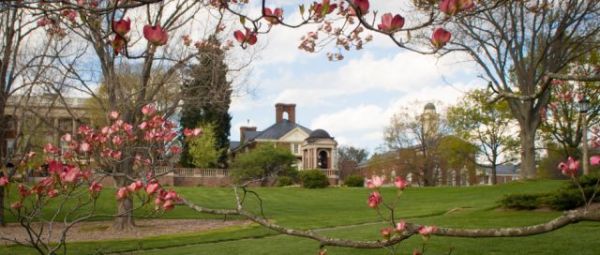
Adorable but unaffordable?

Adorable but unaffordable?

As I’m arguing in my current book, fundamentalist and evangelical colleges and universities have always faced all the same challenges of mainline schools, plus many unique ones. The situation today is exactly the same. Conservative religious colleges face the same sorts of Wal-Mart-style challenges of scale, plus the additional constraints of remaining true to religious orthodoxy.

Though its affluent alumni seem to have saved Sweet Briar College, small evangelical and fundamentalist colleges have been winking out like dead fireflies lately. The reasons are clear. Just as the Wal-Martification of retail stores has made Mom-and-Pop stores impossible, so have the twentieth century’s slow academic revolutions made small colleges impossible. Many of them just don’t seem to know it yet.

What happened at Sweet Briar? The numbers just didn’t add up. Writing in the pages of Inside Higher Ed, Scott Jaschik quoted a gloomy financial report:

A report last month by Moody’s Investors Service said, “In Sweet Briar’s case, challenges included small scale, which, combined with weakening demand, declining pricing flexibility and an insufficient endowment, led to an unsustainable business model.” Some of the very qualities that make alumnae so loyal also make it hard to balance the books, Moody’s said. “Sweet Briar’s model of providing highly personalized education with small class sizes is expensive, as indicated by educational expenses per student of approximately $42,000,” said the report. “Although this cost structure is commensurate with the other rated women’s schools, standing at the median, colleges either need greater pricing flexibility, larger endowments or more gift revenue to sustain the model.”

Small colleges are trapped in a terrible pickle. To survive, they have to achieve a certain minimum size. Otherwise, they can’t afford to offer all the programs and services that students these days expect from a college. But they can’t achieve that minimum size if they keep their prices high. Students will go elsewhere if they are charged the full sticker-price. If schools lower prices, however, they will also die.

In Sweet Briar’s case, activist alumni pledged to raise 12.5 million dollars to keep the school running. That’s a lot of moolah. And no school—not even one with wealthy and involved alumni—can expect to survive only on the good wishes of its past students.

For conservative evangelical schools, the outlook is even more gloomy. In order to attract students, they must continue to demonstrate beyond question their religious orthodoxy. In some cases, such as the controversies lately at Bryan College, Mid-America Nazarene, and Northwest Nazarene, this will mean clamping down on faculty who seem to be moving in a liberal direction. At the same time, however, in order to attract students, they need to widen their pool of potential students. That means offering more programs and more courses. It also means opening up to students from different religious backgrounds. After all, if tuition dollars are getting harder to find, it will get harder and harder to turn paying students away.

Some fundamentalist schools are thriving in this difficult environment, at least for now. Most prominently, Liberty University in Virginia is raking in the dough. By making itself into a leader in online education, Liberty has managed to grow at a breakneck pace in the past decade.
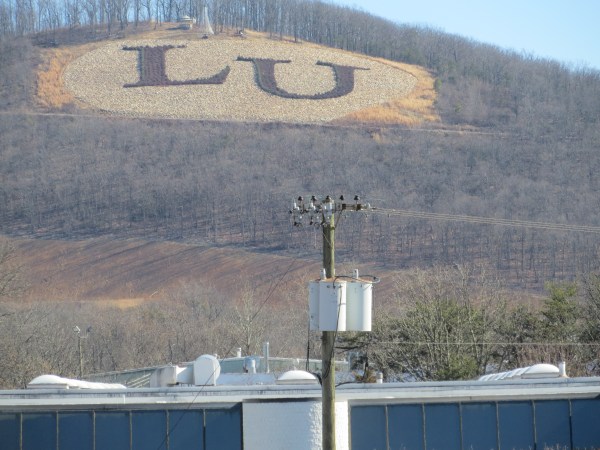
Raking in mountains of dough...

Raking in mountains of dough…

As its online offerings increase, however, Liberty has to somehow demonstrate that it has not watered down its strict religious requirements. Those requirements, after all, are the school’s primary raison d’etre. Even as it pumps money into its football team and its all-year faux snowboard hill, Liberty’s leaders need to watch out for the creeping liberalism that tends to accompany higher-ed growth.

I’m happy for those folks who love Sweet Briar College. But their impressive display of life-support should not give comfort to other college leaders. The fundamental financial situation has not changed. Small colleges have to remain small to maintain their traditional style of teaching, but they have to grow in order to be financially solvent.

Small evangelical colleges face those same impossible challenges, plus some unique ones. They have to remain orthodox in order to keep their niche, yet they have to broaden their appeal in order to survive at all.

I’m glad I’m not in charge of one of those schools.

Mixing It Up with Pope Francis

Confused by the incessant culture-war back and forth on the issue of climate change? Usually, it’s pretty easy to pick a side. Since, as Yale Law School’s Dan Kahan argues, what we “believe” about issues such as evolution, vaccinations, and climate change tells us more about who we are than what we know. Usually, those of us who consider ourselves progressives push for more and faster action on climate change. Those who consider themselves conservatives pooh-pooh the urgency of the issue. Yesterday, Pope Francis threw a St.-Peter’s-size monkey wrench into the works with his encyclical about the environment. In this searing statement, the pope challenged all of us to take a stronger stand about the changing climate.

Is THIS what conservatives should drive? . . .

Is THIS what conservatives should drive? . . .

Now, I admit, I have not read the full document. It weighs in at 184 pages and I’ll be sure to put it at the top of my reading list. Analysis by the New York Times paints a picture of a fairly radical stand by the Argentinian pope. In short, Pope Francis went further than tut-tutting the bromides of climate science. The pope blamed affluent throwaway culture for the dangerous changes that have already begun. What are we to do? Not just consume smarter, but change our feelings of entitlement and our endless apotheosis of appetite.

Climate change, the pope wrote, is nothing less than “one of the principal challenges facing humanity in our day.” It is not enough for us to merely cap-and-trade carbon emissions. It is not enough for us to merely “grow” our way out of the dilemma. The pope’s message is clear, and rather startling in its Greenpeace-scented tones. Those of us who follow culture-war-related developments are more accustomed to the Vatican as a world headquarters for staunchly conservative thinking on issues such as abortion and gay rights.

The new Popemobile?

The new Popemobile?

What does this mean for our climate-change culture wars? It will certainly mess up any bright lines between “conservative” and “progressive” orthodoxies. Of course, we’ve seen conservative intellectuals at places such as Front Porch Republic and The American Conservative who have long promoted this sort of less-is-more conservatism. But by and large, American conservatives might be more likely to agree with Richard Viguerie, who called Pope Francis’ statement a “confusing distraction.”

As Josh Rosenau of the National Center for Science Education has pointed out, American Catholics have been divided on the issue of climate change. “Traditional” Catholics in the USA have tended to be split on the issue and generally have been more interested in preserving traditional religious practices than in environmental activism. Could Pope Francis’ statement push them to action?

More broadly, might the pope’s statement encourage American conservatives to consider tackling climate change as a conservative mission? What about conservative Christians who are not Catholic? Some American evangelicals have openly attacked environmentalism as a “green dragon.” Others have talked about an evangelical environmentalism, calling it “creation care” or respect for the “doctrine of dominion.” Still others have voiced more complicated positions. American creationists, for example, have wondered about their theology of climate change. At the young-earth creationist ministry Answers In Genesis, for instance, readers are told that climate change is certainly a real phenomenon. But should we worry? Here is AIG’s advice:

should we be alarmed about climate change? Not at all. Yes, climate change is real, but according to the true history book of the universe, we should expect it as a consequence of the cataclysmic Flood. Also, Earth—and Earth’s climate—was designed by the all-knowing, all-wise Creator God. He built an incredible amount of variety into the DNA of His creatures so that they could survive and thrive as Earth’s environments change. Surely the God who equipped life to survive on a changing Earth also designed Earth with the necessary features to deal with environmental changes.

No one doubts the pope’s credentials as a smart, earnest, conservative Christian thinker. Might his encyclical spark a dialogue between conservative Catholics and other conservative Christians about the issue of climate change? Could an inter-Christian, inter-conservative dialogue move conservative Christians towards the pope’s position?

College Sex

More bad news: Sexual assault is more than just another crime on college campuses. It is a crime that has been woven into the fabric of college life itself. Will it cause an exodus to conservative colleges?

The Washington Post recently released the findings of its new poll of college life. After surveying 1,053 students and interviewing fifty, the pollsters concluded that a quarter of college women had suffered “unwanted sexual incidents in college” and a fifth had endured “sexual assault.” That is bad news. The worse news is that the cause of these alarmingly high numbers is college itself. Part of what Americans want out of college has long been a licentious student atmosphere. For Frank the Tank and millions of other Americans, the allure of college includes binge drinking, casual sex, and “streaking the quad.”

These numbers have become—like most contentious issues in education—something of a culture-war football. As the Washington Post report points out, different polls have come up with very different results. The Post poll used a broad definition of sexual assault. Victims are those who have experienced

five types of unwanted contact: forced touching of a sexual nature, oral sex, vaginal sexual intercourse, anal sex and sexual penetration with a finger or object. . . . assailants used force or threats of force, or they attacked while their victims were incapacitated.

It is this last phrase that has caused the statistical battle. Last year, a government Bureau of Justice Statistics claimed that only 6.1 out of 1,000 college students experienced sexual attacks, a lower number than non-college students of the same age. But the BJS poll did not include sex that occurred when people were too drunk to give consent.

These days, there are orthodox positions on campus sexual assault. Progressives generally push for harsher punishments for perpetrators. Conservatives often lament the absence of due process on campuses. Hardening culture-war positions can be tested with high-profile cases: Do you think Emma Sulkowicz is a hero or a kook? Do you think Lee Bollinger is a monster?

All sides agree, however, that today’s student culture contributes to the problem. It is normal for students to binge drink. It is normal for students to engage in casual sexual encounters. In such an environment, it can be devilishly difficult to determine if and when students crossed a line from casual drunken sex to incapacitated sexual victimization.

For college leaders, this situation presents an unsolvable puzzle. As historian Roger Geiger has argued, by 1890 most schools participated in the emergence of the modern student lifestyle. Instead of days packed with required chapel visits and several recitations, modern colleges and universities offered students an array of possible majors and a much freer daily schedule. As a result, now-familiar student organizations such as fraternities and athletic teams became important parts of college experiences.

What Geiger called the “collegiate revolution” soon became an expected part of a full college experience. University leaders these days might huff and puff about fighting binge drinking. They might offer counseling and classes about appropriate sexual behavior. But if school leaders really cracked down on the drunken partying that leads to so much of this sexual assault, they’d quickly find themselves out of a job. Alumni donors insist on it. Potential students look for it. Like it or not, one of the expected parts of a college education these days is irresponsible behavior.

As SAGLRROILYBYGTH are well aware, I’m working on a book these days about a dissenting group of colleges and universities. These conservative evangelical schools—schools such as Wheaton College in Illinois and Bob Jones University in South Carolina—have often participated in many elements of modern academic life. For example, like mainstream schools, fundamentalist colleges divided their work into academic disciplines. They encouraged faculty research. They insisted that students complete high school before entering college. All of these things seem obvious to us, but they all came as revolutionary changes between roughly 1870 and 1920.

But fundamentalist schools resolutely refused to accept some of the revolutionary changes at mainstream colleges. For instance, they did not agree to the emerging concept of academic freedom for faculty. At fundamentalist colleges, professors had to agree every year to various school creeds. For students, fundamentalist college life also looked very different. Though most fundamentalist schools allowed student clubs and athletic teams, most of them banned fraternities. They also banned smoking, drinking, and sex.

Fundamentalist colleges have plenty of problems of their own when it comes to sexual assault. Most egregiously, as we’ve noted in these pages, some schools have accused victims of causing the problem. Others have participated in the kinds of shameful cover-up common among mainstream colleges as well.

Yet students at fundamentalist and conservative evangelical colleges will not likely suffer from the same sort of drunken, incapacitated sexual assault that seems so depressingly common at mainstream schools. I’ve been accused of ignorance and insensitivity for pointing this out in the past.

I still can’t help but wonder, though: If the sort of sexual assault reported in the WP poll really shocks people, will the teetotaling atmosphere on conservative campuses begin to seem more attractive? Will secular or liberal Protestants think about enrolling their children at conservative schools just to avoid drunken hookups and assaults?

Academic Impostors

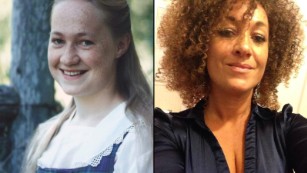
What does Rachel Dolezal have to do with Woodrow Wilson? Her story has been poked and prodded from every angle, it seems, except one. In important ways, this is a story about higher education. Universities have always had non-academic categories that they have preferred. Students and faculty—like Dolezal and President Wilson—have always allowed schools to think they fill those categories, even if they don’t.

Dolezal then & now...

Dolezal then & now…

If you haven’t heard about Dolezal yet, congratulations. Her strange tale of a white woman passing herself off as an African American leader has attracted bajillions of comments from all over the punditocracy. In very brief form, here are the highlights: Dolezal has served as the successful chapter leader of the Spokane NAACP. She has either allowed people to think of her as African American, or has even checked that box herself. She may have performed some Facebook fakery to make her family look more African American. She attended graduate school with a full scholarship at the historically black Howard University. She teaches African American Studies classes at Eastern Washington University. Recently, her very white parents outed her as white. The family had split over Rachel’s accusations of abuse. Rachel had fought for custody of one of her younger brothers.

As journalists have noted, this story has raised tricky questions about race and racism in the United States. Conservative commentators have wondered why people can be transgender but not transracial. The NAACP has issued a statement affirming that its leaders can be from any racial background.

As SAGLRROILYBYGTH are well aware, I’m up to my eyeballs in research for a new book about the history of American higher education. To my tired eyes, one angle of this story jumps out and I haven’t heard any other nerds talking about it. As a student and as a teacher, Dolezal’s imposture has reaped significant rewards. If nothing else, her story can give us another example of the ways preferred categories have always affected higher education.

At Howard University, according to Dolezal’s father, Rachel allowed the school to assume she was African American. They gave her a full scholarship for her graduate program in art. She also teaches part-time at Eastern Washington University in the Africana Education Program. It is not certain that she lied to the people who hired her there, but the director of the program told the New York Times he thought she was black.

It seems evident that Dolezal would not have had the same opportunities at Howard or EWU if she had not been perceived as African American. Academic positions, especially in relevant areas such as Africana Studies, usually have explicit preferences for members of underrepresented groups.

Now, don’t get me wrong, I’m not against hiring preferences in higher education. I agree that personal background can be an important factor when it comes to teaching and scholarship and universities are correct to prefer some candidates based on non-academic qualifications. IMHO. Indeed, I only got my job because of my experience as a secondary-school teacher.

The interesting point, rather, is that these non-academic preferences can tell us a lot about the nature of higher education, the non-academic values of colleges. In the past, elite schools used to prefer Christian professors, for example. This is where Woodrow Wilson comes in. When Wilson, future POTUS, was elevated to the Chair of Political Economy and Jurisprudence at Princeton University in 1890, he received a forceful letter from Princeton President Francis Patton. To keep his chair, Patton warned, Professor Wilson would need to be far more explicit in his Christian testimony.

Patton worried in a letter to Wilson

That in your discussion of the origin of the State you minimize the supernatural, & make such unqualified application of the doctrine of naturalistic evolution & the genesis of the State as to leave the reader of your pages in a state of uncertainty as to your own position & the place you give to Divine Providence.

Princeton, Patton insisted, was determined to “keep this College on the old ground of loyalty to the Christian religion.”

Even at the time, as Patton’s language suggested, such Christian orthodoxy was becoming rarer and rarer in American higher education, at elite schools at least. Patton wanted to hire only Christian scholars. Wilson, for his part, allowed Patton to think he agreed, though Wilson’s later work never embodied the sort of loud-and-proud supernatural thinking Patton desired.

What does any of this have to do with Rachel Dolezal? Back in the 1890s, if one wanted a job at Princeton, one was wise to allow school leaders to think one supported orthodox Calvinism. These days, if one wants a job in a university, one is wise to allow school leaders to think one is a member of an historically underrepresented group.

Back then, conservative schools such as Princeton and Yale were clinging to an older tradition of explicitly Christian education. These days, schools are scrambling to include a wider diversity of racial backgrounds.

Wilson’s career was certainly not hurt by his willingness to let Patton believe his Presbyterianism was stronger than it really was. Dolezal—until this ugly scandal, of course—has not been hurt by people’s assumptions about her racial background.

Christians & Caitlyn

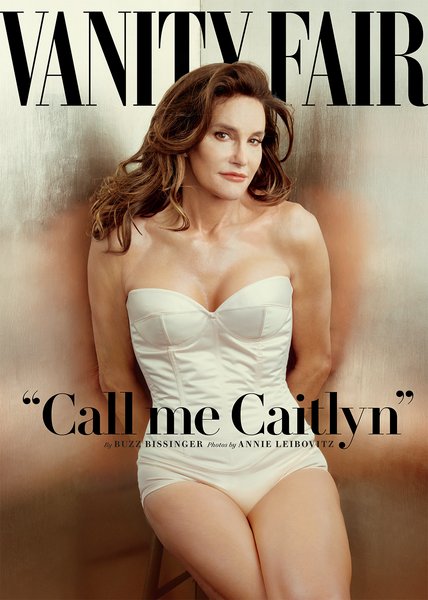
What are conservative evangelical Christians to do? Mainstream American culture seems to be celebrating our newfound openness about sexuality and gender identity. Caitlyn Jenner is feted and adored, not stigmatized and isolated. Should evangelicals join in the celebration? In the pages of Christianity Today, evangelical psychologist Mark Yarhouse lays out his vision of the proper Christian response to transgender issues. Will it work? Can it lift evangelical churches above the culture-war fray?

First, the usual caveat: I’m no evangelical. I’m just a mild-mannered historian interested in culture-war issues. Today’s article by Professor Yarhouse will help outsiders like me understand one way conservative evangelicals might understand those issues.

Good news for the Good News?

Good news for the Good News?

Yarhouse works at Regent University in Virginia, where he directs the Institute for the Study of Sexual Identity. For evangelicals, Yarhouse argues, there are three common reactions to today’s discussions about gender dysphoria.

First, some Christians think of it as a question of “integrity.” God created us male and female, some think, and we need to respect that.

Or, Christians might think of gender dysphoria as a “disability.” Like depression or schizophrenia, gender dysphoria is a mental-health issue. It is not a moral question, Yarhouse argues, though the decisions people make as a result of their mental-health issues can certainly have moral consequences.

Finally, Yarhouse notes, many mainstream Americans see gender dysphoria through the lens of “diversity.” Seen this way, transgender persons should be celebrated for their bravery and moral courage.

In language that some conservative folks might find disconcerting, Yarhouse thinks there is value in all three of these approaches. Churches must continue to value ideas about gender integrity, he believes. Understanding maleness and femaleness must be part of any attempt to live Christian lives. But he thinks evangelicals should also approach transgender people with “empathy and compassion.” Not least, Yarhouse values the notion that transgender people should be welcomed and celebrated, just as every person who comes to every church should be welcomed and celebrated.

As he puts it,

When it comes to support, many evangelical communities may be tempted to respond to transgender persons by shouting “Integrity!” The integrity lens is important, but simply urging persons with gender dysphoria to act in accordance with their biological sex and ignore their extreme discomfort won’t constitute pastoral care or a meaningful cultural witness.

The disability lens may lead us to shout, “Compassion!” and the diversity lens may lead us to shout “Celebrate!” But both of these lenses suggest that the creational goodness of maleness and femaleness can be discarded—or that no meaning is to be found in the marks of our suffering.

Most centrally, the Christian community is a witness to the message of redemption. We are witnesses to redemption through Jesus’ presence in our lives. Redemption is not found by measuring how well a person’s gender identity aligns with their biological sex, but by drawing them to the person and work of Jesus Christ, and to the power of the Holy Spirit to transform us into his image.

Churches, Yarhouse argues, must rise above “culture wars about sex and gender that fall closely on the heels of the wars about sexual behavior and marriage.”

Now, I’m not an evangelical and I’m not a transgender person, so I’m probably getting this wrong. But as an outsider, I can’t help but feel underwhelmed by Yarhouse’s prescription. I can’t help but notice that many conservative evangelical communities are influenced at least as much by their conservative identity as by their evangelical one. For many thoughtful conservatives, the rush to embrace transgender people as part of a “new normal” seems pusillanimous. Even if they recognize the Christian weight of Yarhouse’s arguments, they still feel bound to defend traditional gender rules and norms.

And from the other side, if I were a transgender individual, I don’t think I’d feel fully welcomed into a church that still insisted on maintaining a respect for the “integrity” of male-female gender duality. That is, even in the best-case scenario, if a Yarhouse-ite church allowed me to become a member, but maintained a strong sense that I was suffering from a disability and that I was somehow going against the integrity of God’s gender plan, I don’t think I’d rush to join.

Am I off base? Do conservative Christian readers find Yarhouse’s ideas compelling? Do transgender folks?

Christians and the Gay Bandwagon

There’s no question that American attitudes toward homosexuality are changing at a dizzying pace. Conservative evangelical Americans are changing, too. A recent article in the New York Times described a high-level meeting between concerned evangelicals. As I found in the archival research for my new book, evangelicals used to feel an almost murderous fear and hatred of homosexuality. That is no longer the case. But conservative evangelicals still have a hard time justifying their growing acceptance of homosexuality.

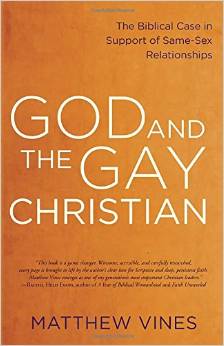
The NYT article describes a meeting at Biola University in California between Matthew Vines and a collection of influential evangelicals. The young Mr. Vines came to public attention recently with his Christian plea for acceptance, God and the Gay Christian. What is the proper evangelical attitude, the discussants asked—the Biblical attitude—toward homosexuality?

A lonely worker in the Vines-yard?  Or the wave of the evangelical future?

A lonely worker in the Vines-yard? Or the wave of the evangelical future?

The fact that this discussion took place at all shows the enormous changes in evangelical America on the subject. But the article raises a perennial question: Why are evangelicals changing? Is it just to keep up with changes in mainstream culture? Do evangelicals simply shift their interpretation of Bible passages when it becomes culturally convenient?

At the outset, I should clarify my position. I’m no evangelical and I have always had trouble understanding how anyone could think other people’s sexuality was their business. For me, the issue of gay rights has always gone beyond big questions of marriage rights to more basic claims to equality. In short, I believe, no one should have to apologize or explain their sexuality. I do think this is the moral high ground, but I recognize that it didn’t take any moral courage for me to get here. The way I grew up, it would be weird for me not to feel this way. I’m sure that if I grew up in different circumstances I would feel very different about it. Nuf sed.

At Biola, organizers invited Mr. Vines to talk about homosexuality and evangelical belief along with a panel of influential figures, including Biola professor and public intellectual Sean McDowell, local pastors Rev. Caleb Kaltenbach and Rev. Ian DiOrio, and Christian radio host Frank Sontag. For hours, the men talked about homosexuality and Biblical belief. Is it possible for evangelicals to understand Romans 1 in any other sense? In that oft-quoted passage, Paul explicitly condemned homosexual practice.

A majority in the room seemed disposed to embrace a change in evangelical attitudes. Vines himself is gay. Kaltenbach has a gay father and two gay mothers. DiOrio has a gay brother and worked in a gay nightclub. But those are not theological reasons.

Evangelicals are in a different position from secular folks. They can’t simply change their beliefs because it seems polite. Rather, they base their ideas on their readings of Scripture. Of course, intelligent evangelicals understand that our interpretation of Scripture can be wrong, even if Scripture itself can’t be. So while secular conservatives such as Dick Cheney can change their minds without much soul-searching, conservative evangelicals need to justify their change in terms of Biblical interpretation.

The Rev. Kaltenbach explained this evangelical dilemma. “In Romans 1,” Kaltenbach told the NYT,

I cannot get past where Paul says that the actual act of having sex with someone of the same gender is a sin. I can’t get past that. And believe me, with two parents who are gay, you’ve got to know I tried, even exegetically through the Greek.

Evangelicals don’t only have to change their minds. They have to justify that change by changing their interpretation of Scripture. And they have to do it fast. There can be no doubt, after all, that evangelical minds are changing. Even to host a respectful meeting between an openly gay evangelical and relatively sympathetic listeners marks the vast break from the past.

Buried in the Biola archives is evidence of a shockingly different attitude toward homosexuality. In the early 1950s, a former Biola student faked his own death in order to avoid exposure as a homosexual. Once the story was out, the student wrote an apology to Biola. He apologized for being a “filthy so-and-so,” and promised that prayer had cured him of his “perverted urge.”

Biola’s administration offered a public explanation of this student’s scandalous behavior:

He has for a number of years been a victim of a vicious condition of inherent baseness and depravity. The Bible clearly describes the condition in Romans One. We give it a more common name of ‘homosexuality.’ Socially it is condemned. Spiritually it is sin. It is impossible to have part in this sordid thing without paying the penalty of mental distress and mental illness that may even lead to more vicious acts, including murder. . . . Surely the devil has taken some measure of control of this man and we need to pray for him.

Of course, in the 1950s evangelical Americans weren’t the only ones with vicious and shockingly angry attitudes toward homosexuality. The US State Department purged homosexuals, since homosexuality was seen at the time as a national security risk.

For conservative evangelicals, however, changing norms carry a different moral weight. It is not acceptable to simply change one’s mind. Rather, conservative evangelicals need to remain true to the primacy of Scripture. If the Bible teaches X or Y, conservative evangelicals need to respect that.

The question facing Mr. Vines and other evangelical gay-rights activists is clear: Will evangelicals find a way to change their minds?

Who Do You Talk To?

Birds of a feather and all that.  We tend to cluster around people like ourselves, don’t we?  This is more than just a social quirk, though. It seems to be a basic requirement of culture wars: All of us spend more time talking to people who tend to agree with us.  We are made more confident that all right-thinking folks agree.  When it comes to academics and intellectual life, this basic truism might have devastating consequences.  But is it true?  Do you ever/often/sometimes/always talk with people with whom you have fundamental culture-war disagreements?

I respect your right to disagree!

I respect your right to disagree!

Academics have a well-earned reputation for ivory-tower insularity. For the past century or so, as I found in the research for my new book, conservative critics have blasted academics time and time again not only for being biased, but for being unaware of life outside of their cloisters.

Renowned historian Gordon Wood, for instance, took to the pages of the conservative Weekly Standard recently to accuse his colleagues of a failure to communicate. The academic echo chamber had become stifling. As Wood put it,

College students and many historians have become obsessed with inequality and white privilege in American society. And this obsession has seriously affected the writing of American history. The inequalities of race and gender now permeate much of academic history-writing, so much so that the general reading public that wants to learn about the whole of our nation’s past has had to turn to history books written by nonacademics who have no Ph.D.s and are not involved in the incestuous conversations of the academic scholars.

Wood’s charges elicited a flurry of outraged responses, and, for the purposes of full disclosure, I should say that they struck me as a strangely curmudgeonly diatribe from such a prominent personage. Our personal politics aside, however, more scholarly inquiries have backed up Wood’s charge that too many academics are out of touch with reality.

In her study of elite academics, for example, Elaine Howard Ecklund found them to be jaw-droppingly ignorant of general trends in American religion. Many professors had no idea even of the vital religious practices going on at their own elite universities.

And, as Neil Gross argued in Why Are Professors Liberal and Why Do Conservative Care?, the professoriate tends to perpetuate its own leftist biases. Not by scheming cadres of devious commie professors, but simply by creating an atmosphere that tends to attract like-minded left-leaning people.

If it is true that elite social scientists are really skewed toward a particular political perspective, and if it is true that many academics are woefully ignorant about the very social realities they purport to study, it must shake our confidence in any “expert” testimony. And, when that’s the case, the reassuring bromides of our close culture-war allies can seem all the more convincing.

To my mind, the only remedy is for each of us to find out more about people different from us. To talk with people with whom we disagree.

Of course, for blog-readers, I guess this is preaching to the choir. Bloggers tend to consume all sorts of other blogs. Creationists might read the Sensuous Curmudgeon. Scientists might read the BioLogos Forum and Around the World with Ken Ham. Conservative Christians read Jerry Coyne, and Professor Coyne might read Agellius’s Blog.

Do any of us do this in real life, though? Does anyone have regular conversations about culture-war issues in which we share fundamental disagreements? We all have an uncle, mother, or neighbor who might differ from us on these issues, but we often politely avoid such impolite topics.

Or is that just me? Do YOU talk to lots of types of people with whom you disagree?

Can Fundamentalist Colleges Survive?

We might be on the cusp of another academic revolution. Over the centuries, what people have expected out of college has changed time and time again. Every time it changes, schools have to adapt or die. With the announced closure of Clearwater Christian College, we see another small conservative evangelical liberal-arts college bite the dust. This seems to be more than just bad management or weak organization.  It looks like yet another shift in what people mean when they say “college.” Can small, private liberal-arts schools keep up?

Going the way of the dodo?

Going the way of the dodo?

Clearwater’s students aren’t the only conservative evangelicals scrambling to find a new home. Tennessee Temple also recently announced its closure. Northland has shut its doors. And outside the bounds of fundamentalist higher education, Sweet Briar College in Virginia caused a fuss when it announced its demise, even with a plump $85 million endowment.

Colleges have always opened and closed and these recent happenings might not mark a trend. But it seems likely that the stern financial logic of mainstream higher education is also compelling at conservative religious schools such as Clearwater, Northland, and Tennessee Temple.

Scott Jaschik of Inside Higher Ed thinks that small liberal arts colleges in rural areas face an existential threat. Students just don’t want to live thirty miles from a Starbucks. They want to go to schools that prepare them for specific careers such as business, health care, or education. The idea of sequestering oneself for four years to contemplate the big ideas in extended bucolic adolescence seems less and less attractive to young people.

Higher education as a whole is not under siege. Some institutions, after all, are thriving. My beloved Binghamton University sees ever-increasing student applications. We can’t build dorms fast enough. In the realm of fundamentalist colleges, too, big enterprises such as Liberty University and Cedarville University are gobbling up students and dollars by the millions.

Historian Roger Geiger’s terrific new book gives us a big-picture perspective on these seismic changes. The higher-education system as we know it is not very old. Only by about 1940 did the system we know come to dominate. Before that time, a slew of higher-ed institutions competed for students and dollars. “Technical institutes,” “normal schools,” “academies,” “female institutes,” and a mess of other schools attracted students. Between the 1890s (ish) and the 1940s, these institutions offered students an array of educational services. In general, they did not insist on completion of high school as an entrance requirement. Some of them did not offer bachelor’s degrees, but rather some sort of training, perhaps accompanied by a certificate of some sort.

By the end of World War II, however, our modern higher-ed system had jelled into place. Schools that did not adapt simply closed down. Students no longer wanted to attend an “institute” that did not offer a bachelor’s degree. Schools that still offered high-school-level work were not seen as real colleges.

That revolution took place in fits and starts over fifty years. Perhaps the wave of school closings we see today reflects the culmination of another fifty-year revolution. Beginning in the 1960s—the decade, not incidentally, in which Tennessee Temple, Northland, and Clearwater were all founded—many traditional notions of “college” began to break down. The idea that a school would serve an authoritative role in dictating students’ educational and lifestyle experiences experienced a thumping defeat. Students themselves came to expect a greater role in running their own educations and their own personal lives.

The idea of college came to tilt more in the direction of student-directed career preparation and away from the notion of a moral and personal formation imposed by authoritative deans and professors. Of course, as Professor Geiger points out, both things have always been part of higher education, but the balance has often shifted. Starting in the 1960s, the college ideal has begun to shift away from one that would favor a small, controlled, rural setting. Instead, in order to be a successful college, schools had to provide a dizzying array of possible professional training and they had to do so in a bustling environment.

Again, it is not that colleges haven’t always offered professional training, but rather that the primary goal of a lot of students and their families seems to have been shifting over the past fifty years. Not enough people still want to pay for college as an incubatory experience. Schools such as Clearwater, Northland, and Tennessee Temple that started as the educational vision of a specific charismatic religious leader can no longer attract a critical mass of students. Young people and their families just aren’t as interested in imbibing one particular formative idea; they want a buffet of career-training and personality-forming possibilities.

My Experts Can Beat Up Your Experts

None of us knows what we’re talking about. That is the problem driving much of our culture-war animus. We can’t possibly understand all the nuances of every field of study, so we rely on networks of competing experts and authority figures to tell us what to believe. I do it, you do it . . . we all do it.

This week, we’ve seen it again with the topic of teaching American history. A coalition of conservative scholars and activists has signed an open letter attacking the new framework of Advanced Placement US History guidelines. They hope to use their collective clout to prove that the “experts” are not all on one side of this debate.

Your Experts Will Send Our Kids to Hell!

Your Experts Will Send Our Kids to Hell!

As SAGLRROILYBYGTH are well aware, these new history guidelines have proven intensely controversial. Conservative lawmakers in Oklahoma have proposed nixing the new standards for Sooner schoolchildren. Conservative pundits have blasted the framework as biased and warped. Professional organizations such as the National Council for History Education and the American Historical Association have fought back, insisting that the new framework is exactly the sort of thing we need in America’s history classrooms.

And, as I argue in my new book, these battles over the nature of American history have a long history themselves. In the 1930s, conservatives successfully blocked a popular series of textbooks that they felt told a slanted, anti-American vision of the nation’s past. More recently, the attempt in the 1990s to write a set of national history standards was sunk when conservatives made similar complaints.

In those battles as in this one, culture-war combatants have hoped to win their case by compiling intimidating lists of experts who back their respective positions. This week’s letter includes a mix of signatories. Some of them really are leading academic historians, such as George Marsden and Joseph Kett. And they take their inspiration from a recent diatribe by renowned historian Gordon Wood. Other signers are not historians, but conservative scholars who disagree with the general drift of mainstream academic life, folks such as Robert George and Patrick Deneen. Yet another category of signer is that of activist conservative historians, a rare breed including folks such as Ronald Radosh and Victor Davis Hanson. Plus, there are political signatories such as Lynne Cheney.

The letter complains that the new APUSH framework pushes an “arid, fragmentary, and misleading account of American history.” The new framework, the letter argues,

Is organized around such abstractions as “identity,” “peopling,” “work, exchange, and technology,” and “human geography” while downplaying essential subjects, such as the sources, meaning, and development of America’s ideals and political institutions, notably the Constitution. Elections, wars, diplomacy, inventions, discoveries—all these formerly central subjects tend to dissolve into the vagaries of identity-group conflict. The new framework scrubs away all traces of what used to be the chief glory of historical writing—vivid and compelling narrative—and reduces history to a bloodless interplay of abstract and impersonal forces. Gone is the idea that history should provide a fund of compelling stories about exemplary people and events. No longer will students hear about America as a dynamic and exemplary nation, flawed in many respects, but whose citizens have striven through the years toward the more perfect realization of its professed ideals. The new version of the test will effectively marginalize important ways of teaching about the American past, and force American high schools to teach U.S. history from a perspective that self-consciously seeks to de-center American history and subordinate it to a global and heavily social-scientific perspective.

As a professional academic historian, I’m certainly not neutral in this fight. My sympathies lie with the new framework. Don’t get me wrong: I admit that these conservative charges are not without merit. Academic historians really have isolated themselves over the past forty years. Americans love history, but they find academic history simply beside the point. Academic historians have tended to obsess over issues that only other academics care about, leaving high-schoolers and regular folks to learn their history from journalists and from Hollywood. But that has always been the case with scholarly work and it does not mean that the big lessons of the past forty years should not be taught to high-schoolers.

More important here, though, is the way culture-war issues are often addressed by letters like this one. Because none of us can understand the nuances of every issue, because none of us really understands what all the fuss is about, we rely on networks of competing authorities to give us our culture-war positions.

In the creation/evolution battles, for instance, we’ve seen this time and time again. Nearly every pro-evolution argument these days starts with some statement that mainstream scientists all agree on the fact of evolution. Activist organizations such as the National Center for Science Education compile bulletproof lists of all the scientists who agree that evolution occurs via natural selection. It has always been this way. In the 1968 US Supreme Court case of Epperson v. Arkansas, the National Science Teachers Association submitted a statement signed by 179 leading scientists. Evolution, the signatories told the court, had become a “fundamental scientific principle” supported by all “scientists and other reasonable persons.”

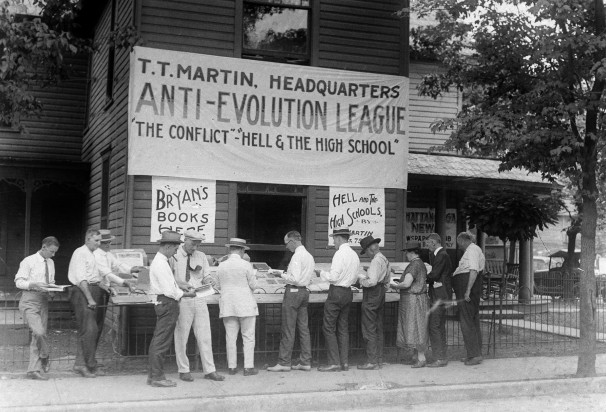
Creationists, of course, have always compiled similar lists of experts. As I noted in my first book, sometimes such lists took over the whole argument. For instance, T.T. Martin’s 1923 book, Hell and the High Schools, was a slim 175 pages. Of those pages, a full 67 were nothing but lists of anti-evolution scientists and experts.

For those few true experts such as Ronald Numbers or Glenn Branch, it is possible to wade through these lists of names to tease out the scientific street cred of each person. For most readers, though, the lists of experts serve only to prove the reliability of writers’ claims.

In every culture-war field, we rely on experts we trust to tell us what to believe. And then we believe it, whether or not we really know what we’re talking about. This doesn’t mean we’re stupid. It doesn’t mean we’re ignorant. As Dan Kahan argues so convincingly, our beliefs about evolution tells us about who we are, not about what we know.

What are we to believe about the new Advanced Placement US History standards? Are they the best wisdom of historians, vetted by true experts in the field and reflecting the latest developments of academic knowledge? Or are they the puerile croaking of a self-satisfied and out-of-touch ivory-tower elite, bent on promoting ideology over true knowledge?

The answer, of course, depends on which group of experts you prefer.

The Talk: Sex Ed at Us & Them

For a society so drenched in sexual imagery and innuendo, we have a surprisingly difficult time talking about sex.  As SAGLRROILYBYGTH are well aware, our American sex paradox leads to one of the most difficult and stubborn issues of our educational culture wars.  This week, Trey Kay explores the question of sex ed at Us & Them.  Is it too much to ask of schools to fix a wider culture that can barely talk about sex?

Can We Talk...?

Can We Talk…?

Kay describes a talk at his alma mater by conservative sex education activist Pam Stenzel.  Watch out, Stenzel yelled at the assembled teens.  If you get an STD, you could be ruined for life.

Kay also chats with a mother who wants kids to learn about sex in a rational, non-judgmental way.  Kids will be having sex, she thought.  It was criminal to leave students floundering without basic information about it.

Other conservatives such as Texas’s Don McLeroy weigh in, too.  If we really want to heal our sex-ed problem, McLeroy argues, we need to do more than teach a class or two about it.  We need to reform our whole society top to bottom.

Historian Jonathan Zimmerman might not agree with McLeroy on much, but he agrees that schools do not take the lead in sex education.  Zimmerman talks with Kay about his new book, Too Hot to Handle.  In that work, Zimmerman examines the history of sex ed and concludes that it has been most conspicuous by its absence in schools.  As Zimmerman explained in a recent talk here on the scenic campus of Binghamton University, in the United States the problem of sexually transmitted diseases was treated first and foremost as a problem for the schools to fix.  In Paris, they changed the laws.  In the US, they changed the curriculum.

The assumption in America has always been that schools can fix any problem.  But, as person after person told Kay about their own real-life sex ed, almost nobody learned anything of importance about sex from classes at school.  Perhaps the real culture-war battle over sex ed needs to learn from these interviews and move out of school onto the streets and TV rooms where the real education seems to take place.

As usual, Trey Kay does a great job of including people with very different perspectives.  Want to know what smart people on both sides of our culture-war divide think about sex ed?  Check out the whole podcast.