Smart people don’t say it’s not science. Some call creation science “dead science.” But anyone with eyes to see and ears to hear can see the bustling activity in the world of creation science. A recent blog post from Answers In Genesis offered an introduction to what creation science can look like. If it’s not dead, but not quite alive in the normal sense, maybe the best term for this sort of research is “undead science” or “zombie science.”
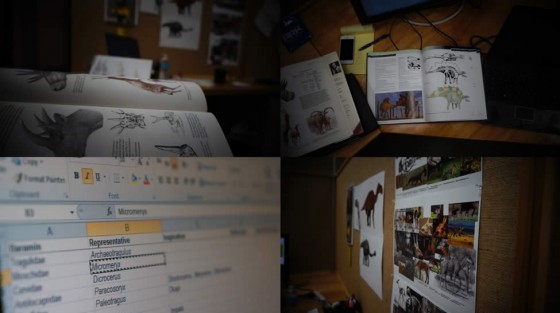
Alternative Science in Action
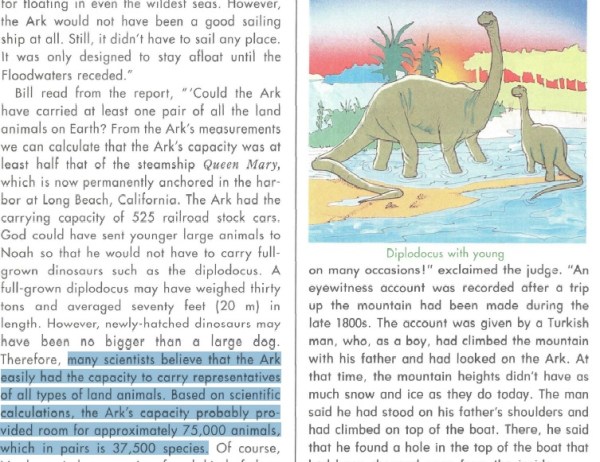
As those of us who follow the creation/evolution debates are well aware, Answers In Genesis is planning a big new museum project. They want to build a replica of Noah’s Ark to prove its practicality. Indeed, this ark project has attracted a sub-controversy of its own, with secularists complaining about public tax benefits going toward this explicitly sectarian religious project.
In a recent blog post, AIG explained some of the scientific challenges of their Ark project. AIG demonstrated some of the unique features of the sort of creation science practiced by AIG scientists. As the post explained, one of the challenges of designing a replica Ark is figuring out how many animals would be on board. Most believers in a literal world-wide flood do not insist that Noah’s Ark contained two of every species we have today. Rather, they say that the Ark contained two of every “created kind,” as described in Genesis. That is, the Ark did not have two wolves, two dingoes, two foxes, two dogs, etc. Instead, the Ark had two of the “kind” of canine.
The term AIG scientists use to describe these “created kinds” is “baramin.” In the recent blog post, AIG uses the example of the mule deer to show how scientists can figure out what kind of created kinds were on the Ark. Creation scientists hypothesize that fossils from the baramin must be in a certain fossil layer, since those fossils were predictably laid down at a certain point in the Genesis flood. In this case, the most likely fossil deposits, according to AIG, were from “moschids buried in rock layers deposited by localized catastrophes just after Flood.” Those samples allow creation scientists to figure out what the baramin on the ark would likely have looked like.
Is this science? It’s tempting for those of us outside the circle of creationism to pooh-pooh this sort of thing as outlandish non-science.
But more thoughtful non-creationists have offered more subtle explanations. Philosopher Philip Kitcher, for example, argued that we should understand this not as non-science, but as “dead science.” This sort of thinking, Kitcher said, had a long and influential career as mainstream science. However, it has been replaced by better science.
Historian George Marsden also offered an explanation of this sort of scientific thinking. Marsden argued that early creationists worked in a Baconian framework. Science, according to this way of thinking, must begin with an authority. From that firm starting point, scientists can collect and classify information. This is not non-science, but rather a certain form of dissenting science.
Throughout the twentieth-century history of creationism, creationists themselves have insisted on the scientific legitimacy of their projects. The leading creation scientist of the 1920s, George McCready Price, repeatedly argued that non-creationists were behind the times. As Price told an audience in London just a few months after the 1925 Scopes trial,
I am perfectly confident that any competent person who will take the time to traverse the evidence now available on this side will reach the same conclusion that I have reached—namely. That the theory of Organic Evolution was a very plausible theory for the times of comparative ignorance of the real facts of heredity and variation and of the facts of geology which prevailed during the latter part of the nineteenth century; but that this theory is now entirely out of date, and hopelessly inadequate for us, in view of the facts of geology and of experimental breeding as we know them. We are making scientific history very fast these days; and the specialist in some corner of science who keeps on humming a little tune to himself, quietly ignoring all this modern evidence against Evolution, is simply living in a fools’ paradise. He will soon be so far behind that he will wake up some fine morning and find that he needs an introduction to the modern scientific world.
Mainstream scientists in the 1920s and ever since would dispute Price’s prediction. But in every generation since the 1920s, creationists have developed and honed their distinct version of science and of scientific research. As this Ark Encounter article makes clear, over the past century creationists have identified research problems and research methodologies that are utterly foreign to mainstream science. They have built schools, museums, and academic publications. They have changed and honed their thinking.
“Dead” science does not grow and change in this way.
So if this sort of creation science is thriving and changing, it seems misleading to adopt Kitcher’s label of “dead science.” I know creationists won’t like the idea of calling it “zombie science” or “undead science.” But is there a better term to describe this unique sort of active-but-dead kind of research?


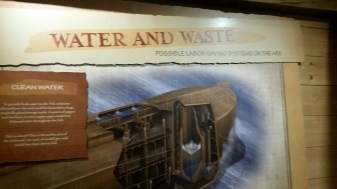
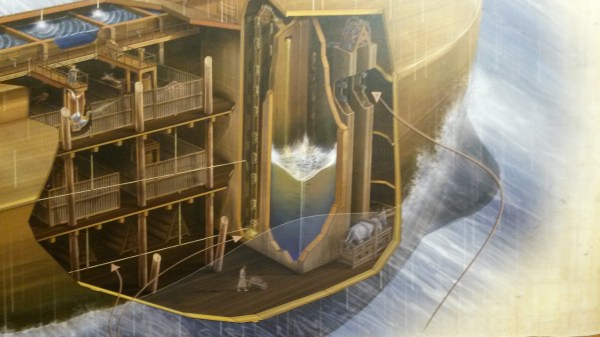
 Once the presents were opened and the piñatas destroyed, I snuck off to see the newish jaw-dropper from Ken Ham’s Answers In Genesis: The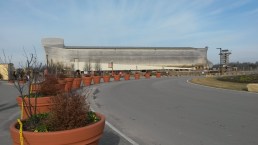




 I Love You but You're Going to Hell