Conservatives, Evolution, and “The Question”

“Do you believe in evolution?”

That’s the question GOP presidential candidates dread. Governor Scott Walker of Wisconsin is the latest to hem and haw his way through an awkward press conference on the subject.

Of course, some GOP contenders have no need to fear. Ben Carson, for example, is a loud and proud young-earth creationist. But other potential nominees have had to dodge, duck, dive, and dip when the question comes up. Bobby Jindal, a former biology major at an Ivy League college, has confessed that he wants his own children to learn evolution. That doesn’t mean schools must teach it, though. Jindal wants “local schools” to decide what’s right for them. And Marco Rubio famously told GQ magazine that he was “not a scientist, man.”

Walker is the latest GOP notable pressured to answer “The Question.” At a London press conference, Walker did his best to avoid it. In the end, though, Walker felt obliged to clarify that he strongly believed that humanity was created by God, and that faith and science are compatible.

It has become such a staple of GOP press conferences that conservative pundits cry foul. Writing in the pages of the National Review, for example, Jonah Goldberg says these evolution questions are a cheap stunt, a way to make conservative candidates squirm. As Goldberg put it,

To borrow a phrase from the campus left, Darwinism is used to “otherize” certain people of traditional faith — and the politicians who want their vote.

As fellow conservative writer Kevin D. Williamson correctly pointed out, leading mainstream scientists will also insist that they don’t “believe in” evolution. Rather, they simply know it; they take it to be the best current explanation and model for understanding the way species have changed and developed.

Yet no matter how you slice it, “the question” has become a defining feature of Republican presidential candidates. Even candidates who seem personally to embrace mainstream evolutionary science are loath to alienate conservative religious voters. For many of those religious voters, evolution has become a moral litmus test, not just a statement of personal belief.
Here’s How We Get a Creationist in the White House

It will take more than six twenty-four hour days. Months ahead of time, the team to put Ben Carson in the White House has been assembled and is feverishly working to get a solid creationist in the White House in 2016.

As Eliana Johnson reports in National Review Online, Carson hasn’t announced his candidacy, but his team is now interviewing thirty-five potential staffers for a possible White-House run. When Johnson asked Carson if he were serious, Carson dodged. “We believe in being prepared,” Carson said,

And that requires a sophisticated and complex infrastructure if I decide to run. . . . It’s like the Boy Scouts: Be Prepared.”

Does Carson think he can win? He told Johnson that the recent mid-term elections pushed him closer. “People are starting to wake up,” Carson told her.

Conservatives love Carson. His rags-to-riches tale and unapologetic religious conservatism, along with his stop-complaining messages to his fellow African Americans, have endeared him to the conservative wing of the party.

That doesn’t mean he has a chance. In the past, conservative hard-liners have entered the primaries even if they don’t think they’ll win. Their goal, in some cases, has been to move the party in a more conservative direction. By running as an unyielding social conservative, Carson will force other GOP hopefuls to tack toward the right.

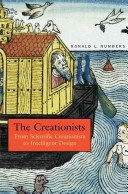
And whether he wins or not, Carson will bring a dose of good old-fashioned Seventh-day Adventist creationism to the race. Seventh-day Adventism, as historian Ron Numbers argued so convincingly, played a leading role in converting American religious conservatives to a young-earth creationism.

Have you read it yet?

Have you read it yet?

Of course, just because Carson is a member of that staunchly young-earth creationist denomination, it doesn’t mean that he would emphasize those beliefs from the White House. After all, similar fears were raised by conservatives when Catholics such as Al Smith (1928) and John F. Kennedy ran for President. Each candidate had to assure voters that policy would not be dictated from the Vatican.

But Carson has taken a different approach. Instead of distancing himself from the rather extreme form of creationism that is official dogma in his church, Carson has publicly embraced it. In an interview last year, Carson doubled down on his SDA creationism. “I’ve seen a lot of articles,” Carson explained,

that say, ‘Carson is a Seventh-day Adventist, and that means he believes in the six-day creation. Ha ha ha.’ You know, I’m proud of the fact that I believe what God has said, and I’ve said many times that I’ll defend it before anyone. If they want to criticize the fact that I believe in a literal, six-day creation, let’s have at it because I will poke all kinds of holes in what they believe. In the end it depends on where you want to place your faith – do you want to place your faith in what God’s word says, or do you want to place your faith in an invention of man. You’re perfectly welcome to choose. I’ve chosen the one I want.

Maybe I’m viewing the world through evolution-tinted glasses, but I can’t help but think that such a firm statement of YEC belief will be off-putting for many voters. But even if Carson can’t win the race, he can pull his fellow Republican prospects into more firmly creationist positions. By standing firm on a six-day recent creation, Carson can make the entire GOP field friendlier to creationism.

Our Creationist President

What would it mean to have a fervent young-earth creationist in the Oval Office?

With Dr. Ben Carson mooted as a possible GOP candidate in 2016, it is a possibility we need to consider.

Creationists themselves trumpet a long history of presidential creationism, from Ike to George Dubya.  The case can be made, by both creationists and their foes, that several conservative presidents have been friendly to the politics of creationism.

Carson’s creationism, however, would be different.  In a recent interview with the Adventist News Network, Carson defended his creationism.  “I’ve seen a lot of articles, Carson told ANN,

that say, “Carson is a Seventh-day Adventist, and that means he believes in the six-day creation. Ha ha ha.” You know, I’m proud of the fact that I believe what God has said, and I’ve said many times that I’ll defend it before anyone. If they want to criticize the fact that I believe in a literal, six-day creation, let’s have at it because I will poke all kinds of holes in what they believe. In the end it depends on where you want to place your faith – do you want to place your faith in what God’s word says, or do you want to place your faith in an invention of man. You’re perfectly welcome to choose. I’ve chosen the one I want.

Carson’s earnest creationism should come as no surprise.  As a lifelong member of the Seventh-day Adventist church, Carson belongs to one of the staunchest creationist denominations out there.

As historian Ron Numbers has demonstrated, much of today’s young-earth creationist orthodoxy among conservative Protestants can be traced back to the creationist activism of Adventists such as George McCready Price.

However, presidential politics in the USA have a long history of denominational wrangles.  In 1928, Al Smith failed to convince voters that his Catholicism would not mean a Roman dictatorship of the White House.  A generation later, Kennedy pulled it off.  Most recently, Governor Romney seemed to have convinced Americans that his LDS religion would not mean a similar sort of Utah overlordship.

As a politician, the good doctor could make a similar plea to be free from the sectarian demands of his denominational background.  He could distance himself publicly from the more controversial aspects of Seventh-day Adventism.  In this interview, Carson does not seem interested in such tactics.  Instead, he embraces the creationism of his church.

What would that mean in the White House?

President Carson 2016: The Education President?

What would a President Carson mean for education?

Recent reporting in the New York Times asks if prominent neurosurgeon Ben Carson is a 2016 GOP contender.  Carson has become hugely popular among conservatives.  In a recent speech at Conservative Political Action Conference, Carson received rousing applause when he mentioned that he had some good ideas . . . “if you should magically put me into the White House.”

Conservatives at CPAC loved Dr. Carson.  They should.  Carson has a dramatic life story and is a compelling public speaker.  His values are profoundly conservative.  He wants more public religiosity.  He wants a flat tax and a smaller public debt.  He wants America to beef up its military strength and return to a vision of the past in which Americans shared common values.

New York Times reporter Trip Gabriel noted that a recent Carson speech at a National Prayer Breakfast “criticized the health care overhaul and higher taxes on the rich, while warning that ‘the PC police are out in force at all times.’” True enough.  But those were just the starting points and final words of Carson’s half-hour talk.  By far the bulk of Carson’s address concerned the vital importance of education.

I wonder if reporter Gabriel ignored the bulk of Carson’s speech because Gabriel considered education to somehow be of lesser political interest than health care and tax policy.  If that’s the case, Gabriel couldn’t be more wrong.

Check out the speech itself if you have thirty minutes to spare.  You’ll see that Dr. Carson focused almost entirely on traditional conservative themes in educational policy and reform.

First of all, Carson lamented the sad state of American public education.  Citing statistics about high high-school dropout rates and low college completion rates, Carson deplored the fact that too many Americans are not getting a good education.  This had echoes of the ugly history of slavery, when it was illegal to educate a slave.  The lesson, Carson insisted, is clear: “When you educate a man you liberate a man.”

Carson shared his own remarkable educational history.  As a child, he grew up in a very poor household.  His mother had been married at age thirteen, soon abandoned by her bigamist husband.  She herself had only attained a third-grade education.  But she insisted ferociously that her two sons would be different.

She required young Ben and his brother to write two book reports per week for her to review.  Eventually, of course, Dr. Carson went on to his spectacular career as a leading pediatric neurosurgeon.

In Carson’s prayer-breakfast speech, he argued that Americans had always loved formal education.  But recently, Carson complained, “We have dumbed things down.”

That is not okay, Carson insisted.  America’s form of government requires a well-informed citizenry.  That is why Dr. Carson offers two programs for low-income youth: a college scholarship fund and reading rooms in low-income public schools.

Education, Carson promised, will prevent criminality.

More important, education will prevent cultural decay and decadence.  Look at Ancient Rome, Carson said.  “They destroyed themselves from within.  Moral decay, fiscal irresponsibility.”  The same thing could happen to the United States, Carson worried, if we don’t beef up our education system.

So what would a President Carson do for education?  Could he combine traditionally leftist education policies—such as financial assistance for the lowest income schools and students—with traditionally rightist policies—such as teaching traditional values and public religiosity in schools?

Even the superhuman brain surgeon himself couldn’t answer that.  But it is worth more consideration than some journalists and commentators seem willing to give it.
