
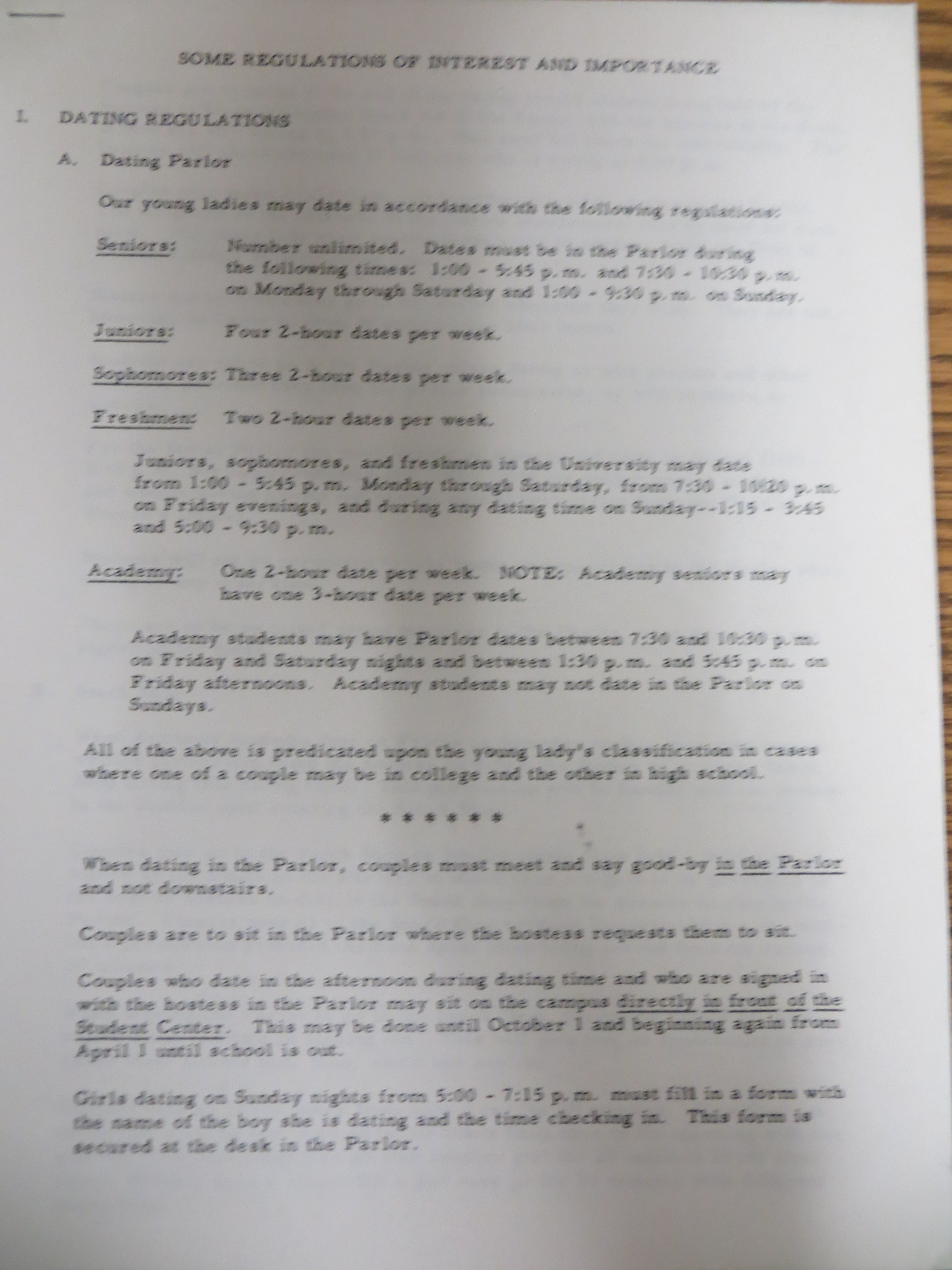
It’s not a new idea. In spite of what journalists and pundits might suggest, today’s push on college campuses for “safe spaces” has a century-long tradition. The schools I’m studying these days—conservative evangelical colleges, universities, and Bible institutes—have always promised to provide “safe spaces” for young people.
We’ve talked before about the ways the recent spate of college protests might best be understood as an “impulse to orthodoxy.” Sometimes the ferocity of student protests seems woefully out of proportion to the alleged offenses at elite schools such as Yale and Claremont McKenna College.
At Yale, for example, two faculty members were berated and hounded for their suggestions that some Halloween costumes might be acceptably offensive. And at Claremont McKenna, a top administrator was driven out for her worry that non-white students might have a legitimate reason to feel unwelcome on her campus.
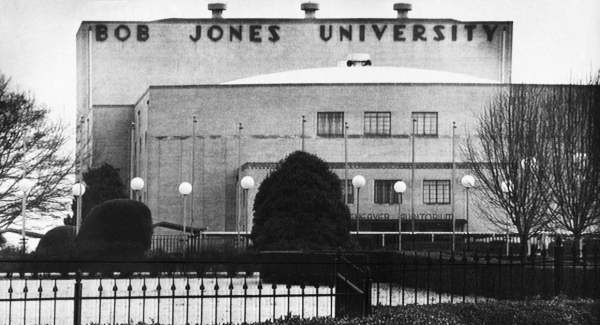
You’ll be safe here…
The moral outrage of students, however, makes perfect sense as a defense of a moral orthodoxy. As with any orthodoxy, deviation is not just disagreement. Orthodox thinking raises seemingly mild disagreement into existential threats. Those who veer in the smallest degree from orthodoxy must not only be ostracized. Their heterodox notions must be denounced in the most ferocious terms in order to emphasize one’s own continued loyalty.
Seen in terms of orthodoxy, talk of “safe spaces” makes perfect sense. In the orthodox mindset, challenging ideas raise the specter of unacceptable deviation. Young people must be protected from threatening ideas until they are well-enough schooled in orthodoxy to protect themselves.
Today’s protesters might not like the company, but the network of Protestant fundamentalist schools that emerged in the 1910s and 1920s made such “safe spaces” its raison d’etre.
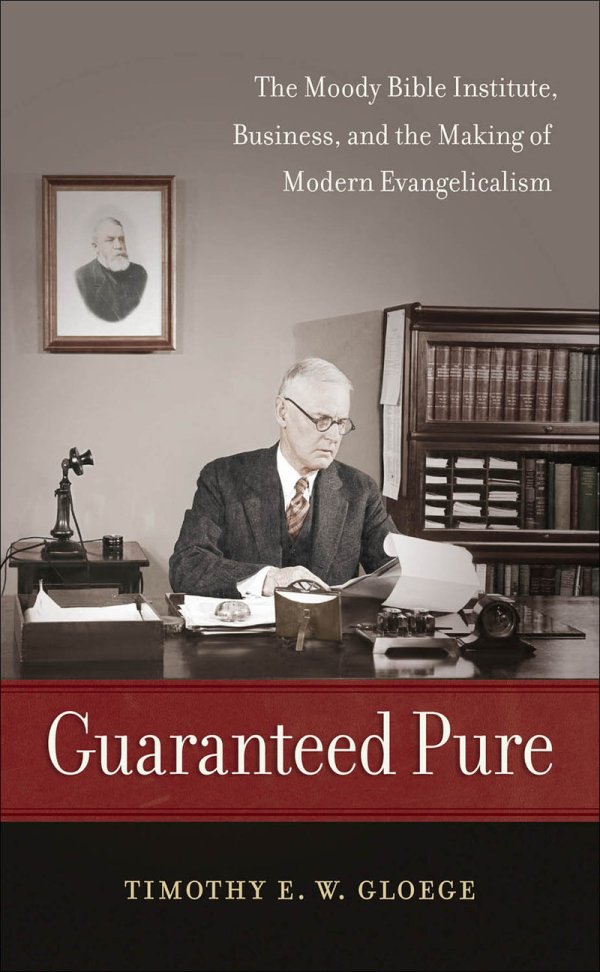
In the 1920s, for example, President James M. Gray of Moody Bible Institute in Chicago told parents to send their fundamentalist children to his “safe space” for two years of Bible training before they went on to a traditional four-year college. Why? In his words,
It renders [a student] immune to the evolution and modernistic germs, while it enables him to examine them in the light of the Christian revelation as he could not have done before.
A few years later, school founder and evangelist extraordinaire Bob Jones promised parents a new sort of college, one that would offer a totalized “safe space.” In the June, 1928 edition of Bob Jones Magazine, Jones promised,
If you fathers and mothers who read this magazine have children to educate, and you wish them to attend a school which will protect their spiritual life, send them to the Bob Jones College. The fathers and mothers who place their sons and daughters in our institution can go to sleep at night with no haunting fear that some skeptical teacher will steal the faith of their precious children.
This tradition of fundamentalist “safe spaces” continues today. As young-earth creationist impresario Ken Ham argued last year in response to my questions,
We are burdened to help parents choose a college wisely that does not put stumbling blocks in their children’s way that could lead them to doubt and ultimately disbelieve the Scriptures.
If some ideas are indeed sacred, then young people do indeed need “safe spaces” in order to preserve their impulse to orthodoxy. For fundamentalists, it was easy to declare their schools “safe spaces,” since they wanted explicitly to protect young people from certain heterodox ideas.
It is much harder, of course, for non-fundamentalists to make the same point. Students who want “safe spaces” without acknowledging their impulse to orthodoxy don’t have the same explicit rationale. They want the results of fundamentalist higher education without being able to acknowledge their desire for it.





 I Love You but You're Going to Hell