Creation College Scorecard

How can you do it? How can outsiders push colleges to do more of what they want? The rage these days is to issue rankings. Since colleges are ferociously competitive and many of them are teetering on the brink of insolvency, college leaders are willing to do what it takes to move their colleges up any ranked list. Everyone from President Obama to young-earth impresario Ken Ham is issuing their own unique college scorecards.

Whom can a creationist trust?

Whom can a creationist trust?

In each case, influential outsiders promise that their scorecards offer students and parents a helping hand. President Obama, for example, insisted that his new scorecard was “meant to help students and parents identify which schools provide the biggest bang for your buck.” Ken Ham, too, promises that his Answers In Genesis ministry now has

resources to help young people (and their parents) with the upcoming college years. In addition to our annual College Expo weekend for students thinking about attending a Christian college (which will be here at the Creation Museum this November 6 and 7), we have just updated our special CreationColleges.org web site. It helps young people (and parents) narrow the overwhelming process of choosing a college even more.

These scorecards, though, do more than just provide information. They pressure schools to move in a certain direction. If college presidents want to move their schools up the list of rankings, they will make changes based on the scorecard’s values.

And college presidents DO want to move their schools up the rankings. Any rankings. Colleges and universities these days are locked in a death-struggle for students and tuition dollars. If they can’t attract ever-increasing numbers of applicants, they won’t survive.

President Obama wants schools to pay more attention to student finances. His recent scorecard compares schools based on their financial performance: How much do average graduates earn? How much debt to students accumulate?

Ken Ham is playing the same game. His recently updated Creation College guide offers families information about the ways colleges measure up to Ham’s definition of creationist orthodoxy. Students can see if a school teaches young-earth creationism. They can also see if the president has agreed, and if other key leaders in the Bible and Science Departments have signed on.

Clearly, some conservative evangelical colleges will be tempted to do whatever it takes to get Mr. Ham’s stamp of approval. Some, like Bryan College, have already tightened their statements of faith and pushed out controversial teachers. Others will consider making similar moves.

Don’t like it?  Then why not try putting together a college scorecard of your own?  You could rank colleges based on whatever criteria you choose.  What are the most Benedict-Option-friendly colleges?  What are the most progressive colleges?  What colleges are the best for teaching evolutionary science?  Etc.!

The Handwriting on the Wall for Christian Colleges

It doesn’t look good.

For small colleges of any sort, the future looks grim. A new report from Moody’s (the investor service, not the Bible institute) offers some scary predictions about the iffy future of small schools. For conservative evangelical colleges, however, this looming financial crisis also represents a uniquely religious crisis. Will small evangelical colleges be able to resist the growing pressure to become more radical in their orthodoxy?

Look out, Daniel!

Look out, Danny!

Inside Higher Education describes the sobering financial outlook. In the next few years, college closings will likely triple. Why? Fewer students means fewer tuition dollars, which means fewer scholarship dollars, which means fewer students. Rinse and repeat.

Among conservative evangelical schools, we’ve already seen the trend. Former evangelical schools such as Northland University, Tennessee Temple, and Clearwater Christian have all closed their doors. In some cases, the “Wal-Marts” of Christian colleges have emerged even stronger. Cedarville University, for example, has offered to accept all students from Clearwater Christian. As with non-evangelical schools, the big will likely get bigger and the small will get gone.

For small evangelical colleges, this presents a double pickle. In desperate need of more students, schools will likely become extra-timid about offending conservative parents and pundits. As I’ve argued before, young-earth impresarios such as Ken Ham already exert outsize influence on college curricula. If Ham publicly denounces a college—which he likes to do—you can bet young-earth creationist parents might listen.

We’ve seen it happen at Bryan College. Rumors of evolution-friendly professors caused administrators to crack down. Any whiff of evolutionary heterodoxy, and schools might scare away potential creationist students.

At other evangelical colleges, too, as we’ve already seen in schools such as Mid-America Nazarene or Northwest Nazarene, administrators desperate for tuition dollars will be tempted to insist on a more rigidly orthodox reputation.

Things aren’t looking good for small colleges in general. But conservative evangelical schools face this special burden. In order to attract the largest possible number of students in their niche, they might have to emphasize more firmly the things that make them stand out from public schools. In the case of conservative evangelical schools, that distinctive element has always been orthodoxy.

In the past, well-known schools such as Bryan College might have relied on their long history as staunchly conservative institutions. They might have assumed that conservative evangelical parents would trust their orthodoxy, based on their long-held reputation as a bastion of conservative evangelical education. These days, no-holds-barred competition for students will mean that every school must guard its image far more aggressively.

Can a College Be Christian?

After Ben Carson’s stupid and hateful comment that the USA should not have a Muslim president, Baylor theologian Roger Olson noted that we really could not have a Christian president, either. In my current work about evangelical colleges, I’m struggling to define what it meant to be Christian at school, too. It raises an ancient question: Can an other-worldly religion (successfully) run worldly institutions?

Olson noted that the only sincere evangelical to sit in the Oval Office in recent decades has been Jimmy Carter. And Carter, Olson argued, was a terrible president. Not by accident, either, but because he was an honest-to-goodness Christian. As Olson put it,

I am not cynical, but neither am I naïve. America is no longer a true democracy; it is run by corporations and the super-rich elite. Occasionally they don’t get their way, but, for the most part, they do. One reason they do not seem to is that they do not agree among themselves about everything. So, sometimes, a president, a senator, a congressman, has to choose between them in decision-making. But, in the end, the policy remains that “What’s good for business is good for America” even when what’s good for business is bad for the working poor (to say nothing of the destitute).

No, given how modern nation states work, I do not think a real Christian, a true disciple of Jesus Christ who seeks to put first the kingdom of God and God’s righteousness, can be president of the United States or any modern nation state.

The deeper question of belief and institutional necessity is one I’m wrestling with these days. As I write my new book about the history of evangelical higher education, I find myself struggling to offer a satisfactory definition of what it has meant to be a fundamentalist. It’s a question that has bedeviled historians (and fundamentalists) for a good long while, so I feel I’m in good company.

For good reasons, historians have insisted that we need a fairly narrow definition of fundamentalism. In his great book Revive Us Again, Joel Carpenter argued, “more generic usage obscures more than it illumines” (page 4). Carpenter was leery of commentators who slapped a “fundamentalist” label on any and all conservatives or conservative Protestants. As he argued,

Labelling movements, sects, and traditions such as the Pentecostals, Mennonites, Seventh-day Adventists, Missouri Synod Lutherans, Jehovah’s Witnesses, Churches of Christ, black Baptists, Mormons, Southern Baptists, and holiness Wesleyans as fundamentalists belittles their great diversity and violates their unique identities (4).

If we need a straightforward definition for those reasons, Matthew Sutton’s recent definition of fundamentalism as “radical apocalyptic evangelicalism” will do the trick. Certainly, fundamentalist theology was defined by its vision of end-times as well as by the centrality of those apocalyptic visions to the movement.

But such definitions don’t seem to match the ways fundamentalism has been defined in its leading institutions. At the colleges I’m studying—schools such as Wheaton College, Bob Jones University, Bryan College, Biola University, The King’s College, and similar schools—there’s more to the school than just theology.

When these schools called themselves “fundamentalist” (and they DID, even relatively liberal schools such as Wheaton), they meant more than theology. They meant more than just “radical apocalyptic evangelicalism.” They meant more than just “not-Mennonite-or-Pentecostal.”

Defining fundamentalism as it was used in fundamentalist institutions is a trickier issue than simply defining fundamentalist theology. By and large, when schools talked about themselves as “fundamentalist,” they meant that the professors and administration all signed on to fundamentalist theology. But they also meant that the students would have a vaguely conservative atmosphere in which to study. No smoking, no dancing, no etc. They also meant that students would be controlled and guided in their life choices. And they also meant that students would be more likely to socialize with similarly fundamentalist friends and future spouses.

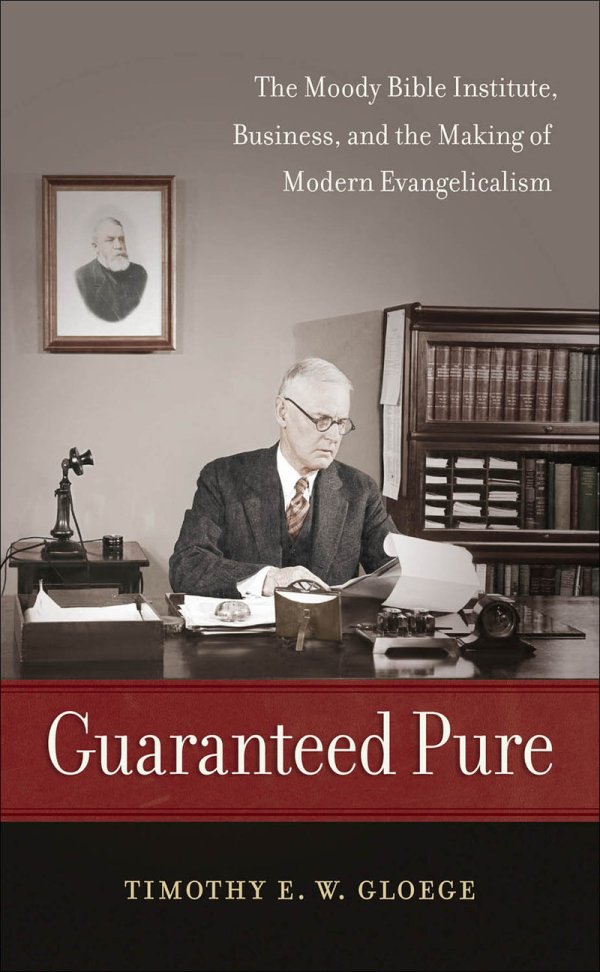
I’m not sure how to define that kind of fundamentalism. I like the way historian Timothy Gloege has done it in his new book about the Moody Bible Institute. Gloege focuses on what he calls the “corporate evangelical framework” that guided MBI since its founding in the 19th century.

What did fundamentalism mean in Chicago?

What did fundamentalism mean in Chicago?

As Gloege argues, at a school like MBI, fundamentalism was more than a set of “manifestos and theological propositions.” Rather, it worked as a set of “unexamined first principles—as common sense.” Fundamentalism, Gloege writes, is better understood as a certain “grammar” than as a list of religious beliefs.

That kind of definition seems closer to the ways it was used in the schools I’m studying.

Roger E. Olson argues that it will be impossible for any sincere evangelical Christian to be president. There are simply too many worldly factors that violate the otherworldly morality of Christianity. Similarly, evangelical colleges have not defined themselves merely along theological lines. They couldn’t. Instead, they have defined what it has meant to be a “fundamentalist” based on a range of factors. Of course, they care about student religious belief. But they also care about student fashions, patriotism, diets, and social lives. And such things were usually considered a central part of making a school authentically “fundamentalist.”

Can a college be Christian? In the sense that Roger E. Olson is asking, I guess not. Just as every president has to violate evangelical morality, so every institution of higher education has to consider a range of non-religious factors in order to survive.

Faculty Fudge Factors at Creationist Colleges

Ding! There it is again—the sound of another evangelical professor being ousted for harboring evolution-friendly ideas.  Some of us outsiders might think that evangelical colleges would slowly become more relaxed about evolution as time went on.  As this case shows, we’d be wrong.  The history of the past century has demonstrated that many evangelical colleges have grown MORE uptight, not less, about proving their creationist credentials.

In this case, the school is Bethel College in Indiana and the professor is Jim Stump. As Karl Giberson described recently, the flap at this Bethel [n.b., there are about one bajillion Bethel Colleges out there and it’s easy for outsiders to mix them up] echoes the trends of the past hundred years: Time and again, creationist colleges have sought to tighten both the image and reality of unshakeable creationist orthodoxy among their faculty.
Stump removal...

Stump removal…

As I’m uncovering as I work on my new book, this pattern has been the dominant theme at conservative evangelical colleges since the 1920s.

Beginning in the 1920s and repeated every generation, schools have tightened the requirements on their faculty. In every generation, some professors have sought to follow a middle path—exploring the science of evolution while remaining firmly committed to their religion. In every generation, nervous college administrators have sought to prove to the creationist community that their school will not tolerate any such thing.

In the 1920s, most schools agreed on ironclad faculty creeds. The hope was that these creeds would prevent faculty from becoming too friendly to evolutionary thinking. At flagship Wheaton College in Illinois, for instance, the trustees in 1926 adopted a creed that all faculty, staff, and administration had to sign annually. They included the following statement:


4. We believe that man was created in the image of God; that he sinned, and thereby incurred, not only physical death, but also that spiritual death which is separation from God; and that all human beings are born with a sinful nature, and in the case of those who reach moral responsibility become sinners in thought, word and deed.

At the time, this statement was thought to define the proper “fundamentalist” attitude toward creation. In 1960, however, a conference about evolution and creationism on Wheaton’s campus attracted ferocious criticism from the more stalwart creationists among the fundamentalist/evangelical community. Too many of the assembled theologians and scientists, critics thought, embraced the principle of evolution.

Among Wheaton’s faculty, zoologist Russell Mixter came in for the fiercest criticism. In spite of his protestations to the contrary, Mixter was accused of teaching and preaching evolution in his classes. In order to calm the storm, Wheaton’s administration altered its faculty creed. At the end of 1961, the school agreed to add the following item:

By Article IV of its ‘standards of faith,’ Wheaton College is committed to the Biblical teaching that man was created by a direct act of God and not from previously existing forms of life; and that all men are descended from the historical Adam and Eve, first parents of the entire human race.

The pattern continues today. At schools such as Bryan College and Northwest Nazarene University, creeds are tightened and faculty are ousted in order to preserve an impeccable reputation for creationism. Time and again, the sticking point has been the historicity of Adam & Eve. It is not enough, evangelical communities insist, for faculty vaguely to endorse the idea of a God-directed creation. Especially when it comes to the origins of humanity, some evangelicals require a belief in a real, literal origin in two real, literal people.

According to Karl Giberson, the folks at Bethel College in Indiana have taken this tradition one step further. Under pressure from the sponsoring denomination, the Missionary Church, Bethel now requires faculty to advocate its firm position on the historicity of Adam & Eve. In the past, at Bethel as at other evangelical colleges, faculty members could sign their annual statements of faith even if they thought that such statements did not require them to disavow mainstream evolutionary science. This policy hopes to push faculty members into a tighter relationship with the denomination’s official position on evolution.

Furthermore, from now on Bethel faculty are not allowed to take leadership positions in organizations that disagree on this point. As BioLogos leader Deborah Haarsma argued, Bethel’s new policy puts evangelical scholars like Jim Stump in a very difficult position. Stump has served as the content manager for BioLogos, an organization that embraces “evolutionary creationism.” The new Bethel policy, in effect, forced Stump to choose between the two organizations.

As the sophisticated and good-looking regular readers of I Love You but You’re Going to Hell (SAGLRROILYBYGTH) are well aware, I am a fan of the BioLogos approach. I’m no evangelical, but I think the way forward in our continuing evolution/creation battles is for both sides to agree to the science of evolution and the freedom of religious belief. As I argue in my upcoming book Teaching Evolution in a Creation Nation (due to hit shelves in February 2016), secular folks like me need to recognize the right of religious dissenters to disbelieve the claims of evolution, even as religious folks need to recognize the duty of public schools to teach evolution as the best available science.

But as I argue in my other upcoming book, schools like Bethel are also in a difficult position. In order to maintain intellectual credibility, they must embrace changing norms of academic excellence. But in order to maintain religious credibility, they must conspicuously root out any whiff of compromise. Not on every issue, but on issues such as evolution and same-sex marriage that seem to make up the foundations of their faiths.

As a result, over the course of the past ninety years, many evangelical colleges–including the relatively “liberal” ones–have made their policies more rigid when it comes to faculty beliefs about human origins.  The recent news from Mishawaka is only the latest attempt by an evangelical college to remove faculty fudge factors.


Wal-Mart and the Death of College

Don’t be fooled. Just because the rumors of Sweet Briar College’s death have been greatly exaggerated, don’t think that small colleges have any reason to be optimistic. And for small conservative religious colleges, there is an even more difficult problem. They need to perform an impossible feat—get more religious and less religious at the same time.

Adorable but unaffordable?

Adorable but unaffordable?

As I’m arguing in my current book, fundamentalist and evangelical colleges and universities have always faced all the same challenges of mainline schools, plus many unique ones. The situation today is exactly the same. Conservative religious colleges face the same sorts of Wal-Mart-style challenges of scale, plus the additional constraints of remaining true to religious orthodoxy.

Though its affluent alumni seem to have saved Sweet Briar College, small evangelical and fundamentalist colleges have been winking out like dead fireflies lately. The reasons are clear. Just as the Wal-Martification of retail stores has made Mom-and-Pop stores impossible, so have the twentieth century’s slow academic revolutions made small colleges impossible. Many of them just don’t seem to know it yet.

What happened at Sweet Briar? The numbers just didn’t add up. Writing in the pages of Inside Higher Ed, Scott Jaschik quoted a gloomy financial report:

A report last month by Moody’s Investors Service said, “In Sweet Briar’s case, challenges included small scale, which, combined with weakening demand, declining pricing flexibility and an insufficient endowment, led to an unsustainable business model.” Some of the very qualities that make alumnae so loyal also make it hard to balance the books, Moody’s said. “Sweet Briar’s model of providing highly personalized education with small class sizes is expensive, as indicated by educational expenses per student of approximately $42,000,” said the report. “Although this cost structure is commensurate with the other rated women’s schools, standing at the median, colleges either need greater pricing flexibility, larger endowments or more gift revenue to sustain the model.”

Small colleges are trapped in a terrible pickle. To survive, they have to achieve a certain minimum size. Otherwise, they can’t afford to offer all the programs and services that students these days expect from a college. But they can’t achieve that minimum size if they keep their prices high. Students will go elsewhere if they are charged the full sticker-price. If schools lower prices, however, they will also die.

In Sweet Briar’s case, activist alumni pledged to raise 12.5 million dollars to keep the school running. That’s a lot of moolah. And no school—not even one with wealthy and involved alumni—can expect to survive only on the good wishes of its past students.

For conservative evangelical schools, the outlook is even more gloomy. In order to attract students, they must continue to demonstrate beyond question their religious orthodoxy. In some cases, such as the controversies lately at Bryan College, Mid-America Nazarene, and Northwest Nazarene, this will mean clamping down on faculty who seem to be moving in a liberal direction. At the same time, however, in order to attract students, they need to widen their pool of potential students. That means offering more programs and more courses. It also means opening up to students from different religious backgrounds. After all, if tuition dollars are getting harder to find, it will get harder and harder to turn paying students away.

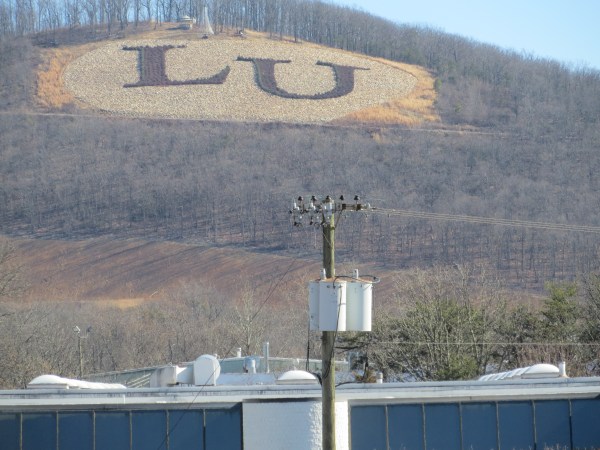
Some fundamentalist schools are thriving in this difficult environment, at least for now. Most prominently, Liberty University in Virginia is raking in the dough. By making itself into a leader in online education, Liberty has managed to grow at a breakneck pace in the past decade.

Raking in mountains of dough...

Raking in mountains of dough…

As its online offerings increase, however, Liberty has to somehow demonstrate that it has not watered down its strict religious requirements. Those requirements, after all, are the school’s primary raison d’etre. Even as it pumps money into its football team and its all-year faux snowboard hill, Liberty’s leaders need to watch out for the creeping liberalism that tends to accompany higher-ed growth.

I’m happy for those folks who love Sweet Briar College. But their impressive display of life-support should not give comfort to other college leaders. The fundamental financial situation has not changed. Small colleges have to remain small to maintain their traditional style of teaching, but they have to grow in order to be financially solvent.

Small evangelical colleges face those same impossible challenges, plus some unique ones. They have to remain orthodox in order to keep their niche, yet they have to broaden their appeal in order to survive at all.

I’m glad I’m not in charge of one of those schools.

Who Cares about Adam?

I don’t get it. Even after all these years studying conservative Christianity and creationism, I still don’t really get it. I mean, I understand the logic and history, but I have a hard time making sense of the ferocious emotion that goes into debates over the existence of an historical Adam & Eve. An author interview in Christianity Today outlines some of the tricky questions involved.

Who cares?

Who cares?

But first, a primer for those like me on the outside looking in: The debate over the historicity of Adam & Eve has a long history in conservative evangelical Protestantism. For us outsiders, making sense of this issue will go a long way toward helping us understand the theological underpinnings for young-earth creationist belief. Without making sense of this theology, it can be easy for mainstream scientists and observers to conclude mistakenly that young-earth creationism is nothing but some kind of cult of personality, a quirk of history.

At least since the 1960s (of course it is an ancient belief, but in 1960 it gained popularity among conservative American evangelicals as a vital theological notion central to orthodox belief), conservative evangelicals have insisted that the obvious meaning of Genesis is that God created two first humans in the Garden of Eden. These two, Adam & Eve, became the progenitors of the entire human race. Theologically, creationists have insisted, our belief in an historical Adam & Eve underpins our trust in the Bible. As Simon Turpin of young-earth ministry Answers In Genesis expressed it,

The debate over whether Adam was historical is ultimately a debate over whether we trust what the Scriptures clearly teach. If we cannot be certain of the beginning, then why would we be certain about what the Scriptures teach elsewhere? The uncertainty of truth is rampant in our culture partly due to the influence of post-modernism which is why many believe the issue over Adam’s historicity is unimportant.

For many creationists, believing the plain truth of the creation story in Genesis means believing in the trustworthiness of Jesus Christ. As Andrew Snelling of the Institute for Creation Research explained,

It is impossible to reject the historicity of the book of Genesis without repudiating the authority of the entire Bible. If Genesis is not true, then neither are the testimonies of those prophets and apostles who believed it was true.

Of course, for mainstream scientists, the notion that human genetic diversity came from only two original humans does not fit the evidence. In order to have today’s genomic sequence, I’m told, humanity must have begun with thousands of original humans.

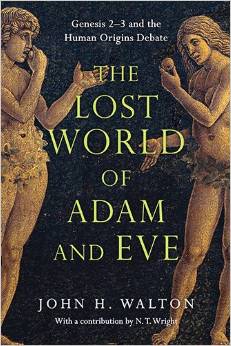
John Walton of Wheaton College explains to Christianity Today why evangelicals can accept this science while still remaining true to a conservative reading of Scripture. In his new book, The Lost World of Adam & Eve, Walton argues that Adam & Eve can be read as the “priests” of early humanity, not the only two first humans.

Again, for those of us outside of conservative evangelicalism, the controversial nature of such claims can be hard to figure. Recently, theologian Peter Enns was booted from Westminster Theological Seminary for advocating similar ideas. Walton explains in this interview why it is possible to respect the authority of the Bible while still reading Genesis in a way that is not contrary to modern science. Walton insists that

You can affirm a historical Adam, but that doesn’t have quite the implications for biological human origins that are often assumed.

The key, Walton argues, lies in reading Genesis as the original readers would have. To them, Walton says, creation would be more about how the world of Adam & Eve was “ordered,” not just how it was “manufactured.” We can understand Adam as both a real person, a real creation, and as an “archetype” for humanity. Though there may have been other early humans, Walton explains, Adam & Eve served as the ones in God’s sacred space.

Why do such ideas matter? Again, for folks like me trying to understand conservative Protestantism from the outside, it can be difficult to make sense of the ferociously controversial nature of such arguments.

Yet they are at the heart of conservative evangelical Protestantism. As I argued in my 1920s book, conservative evangelicals have never agreed on the proper relationship of Genesis to either modernist theology or science. From J. Gresham Machen in the 1920s to Harold Lindsell in the 1970s, conservative intellectuals battled to affirm the notion that any compromise is deadly to faith.

And as I’m finding in my current research, these battles have long sent shock waves through the world of conservative higher education. Recently, Bryan College has firmed up its insistence that faculty members affirm their belief in an historical Adam & Eve. In 1961, Wheaton College did the same thing.

And fundamentalists are not the only ones who will spring to repudiate theories like Walton’s. Leading atheist pundits, too, agree that Genesis requires an historical Adam & Eve. Jerry Coyne, for example, laments the apologism of folks like Walton. Of course, Coyne does not want people to reject mainstream science in favor of a belief in an historical Adam. Rather, he hopes people will simply accept the obvious conclusion that the Bible is a book of myths.

If all of these whirling debates make your head hurt, join the club. For those of us outside the circle of evangelical Protestantism, it can be very difficult to understand the ferocious feelings at play in the Adam debate. But that ferocity lies at the heart of evangelical belief. Historically, any attempt to rationalize our reading of the Bible, any attempt to explain away the most obvious interpretation of Scripture in favor of one that accords with modern science, any effort to bring our faith into harmony with science…all have been seen as the beginnings of apostasy.

For evangelical readers, Adam & Eve matter. For those of us trying to understand conservative Christianity, this complicated debate will be a good place to start. Why would professors lose jobs over it? Why would Christianity Today dedicate a major article to this interview with John Walton? Why will Walton’s position provoke such furious responses?

Here’s What Creationists Call Anti-Science

Who is anti-science? Depends whom you ask! Recently World Magazine offered a creationist list of the real anti-science stories of 2014.

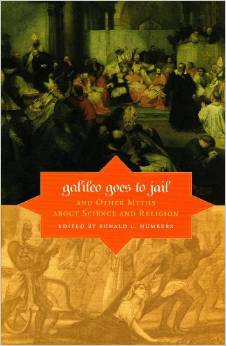
The sophisticated and good-looking readers of ILYBYGTH may be surprised to hear it, but there are still people out there who think this is a simple question. They have not read books such as Ron Numbers’ Galileo Goes to Jail. Such folks are trapped in the old notion that science and religion have been at loggerheads ever since Galileo and Giordano Bruno poked their scientific noses under religion’s intellectual tent.

Your anti-science or mine?

Your anti-science or mine?

Such naïve readers may assume that creationism is simply “anti-science.” They don’t know that creationists and non-creationists have, instead, been fighting for decades over the title of “real” science.

Karl Giberson is not one of these people. Giberson understands the complex cultural politics of creationism and science better than most people. So when Giberson published his list of top-ten anti-science stories of 2014, he knew he was making a political point, not a scientific one. Giberson blasted such creationist institutions as Bryan College, World Magazine, the Discovery Institute, and the Institute for Creation Research. He called out prominent creationists such as Ken Ham and Albert Mohler by name. Such folks, Giberson accused, led the list of “America’s flakerrati” with their “preposterous claims.”

As Giberson knows well, proving that your enemies are anti-science is good politics. In spite of some chatter to the contrary, very few Americans distrust science as an institution. Believe it or not, even conservatives tend to have more trust in science and scientists than they do in such things as big business and churches.

Sure enough, one of the institutions on Giberson’s anti-science list has taken some pains to dispute its anti-science status. At World Magazine, Daniel James Levine has offered a rebuttal. As Levine puts it,

WORLD believes good science is vital, so we want to contribute to the effort to keep research on the straight and narrow.

As we might expect, what World thinks of as anti-science looks very different from Giberson’s list. Levine offers seven top anti-science claims of 2014. Instead of creationism, Ebola hysteria, and climate-change skepticism, Levine gives these top seven anti-science ideas:

1.) “Selling abortion through euphemism;”

2.) “Denying homosexuals can change;”

3.) “Denying the dangers of the gay lifestyle;”

4.) “Searching for extraterrestrials;”

5.) “The ‘overpopulation’ crisis;”

6.) “Gender as a social construct;” and

7.) “The imaginative multiverse theory.”

Clearly, this is not simply a case of to-may-toe/ to-mah-toe. What each side views as “real” science is dramatically different. Nor must we simply shrug our shoulders and conclude that there is no way to differentiate real anti-science from false anti-science. With apologies to creationists and religious conservatives out there, I agree that mainstream science is better science than the creationist alternatives.

In the end, though, we must remember that accusations of “anti-science” are not really about science: They are first and foremost strategic moves in our continuing culture wars.

Bryan College: Creationism Déjà vu All Over Again

It’s all over but the shouting.  That’s the news from Bryan College.  Thanks to the ever-watchful Sensuous Curmudgeon, we see that Bryan College has settled its legal dispute with two of its professors.  The creationist courtroom drama may have been avoided, but we are left with one question: If this is part of a predictable pattern at conservative evangelical colleges, can we learn a better way to handle each new episode?

Why can't we all just get along...?

Why can’t we all just get along…?

Two Bryan College professors, Stephen Barnett and Steven DeGeorge, have settled their lawsuit with the school, according to the local newspaper.  Readers may remember that the school abruptly changed its statement of faith to insist that Adam and Eve did not descend from another species.  Faculty members had to make a tough decision: Could they agree to the newly explicit language about humanity’s origins?  Barnett and DeGeorge argued that it was not fair—nor even legal—for the school to impose such a decision on faculty.  It appears they have decided to drop the lawsuit, though the terms of this settlement have not been made public.

Why did Bryan’s leadership feel a need to make such a change?  They were in a tight spot.  As I’ve argued before, leading young-earth creationists such as Ken Ham are able to wield outsized influence on evangelical colleges.  Even the whiff of suspicion that a school has abandoned the true faith is enough to drive away students and their precious tuition dollars.  At Bryan—and I’m claiming no inside knowledge here, just a historian’s best guess—the leadership felt obliged to shore up its orthodox creationist bona fides.

This tension is nothing new at evangelical colleges.  Perhaps the most startling example of the deja-vu nature of the Bryan situation is an eerily similar case from Wheaton College in 1961.  In that case, faculty such as Russell Mixter hosted a conference on origins.  Whatever actually occurred at that meeting, rumors flew that Wheaton had opened itself to the teaching of evolution.  As a result, anxious trustees rammed through a change to the obligatory faculty creed.  From then on, faculty had to attest to their belief in “an historical Adam and an historical Eve, the parents of the human race, who were created by God and not descended from lower forms of life.”

Back then, Mixter signed.  He was more interested in the broad outlines of what he called “progressive creationism” than the details of the Garden of Eden.  But the nervousness of the leadership at Wheaton was palpable.  In addition to the change in creed, the school took out big advertisements in evangelical magazines such as Christian Life that trumpeted Wheaton’s continuing creationism.

The stories are so similar that it is hard to believe they are separated by over fifty years.  And they lead us to obvious questions: Why do evangelical colleges have such anxiety about their reputations as creationist colleges?  Why do leaders feel such a compelling need to publicize their continuing orthodoxy?  And perhaps most important, if these controversies are so predictable, why is there no better way to handle them?

As historian Michael Hamilton has argued about Wheaton, “Anxiety about constituent response hangs over virtually every decision the college has made since 1925.”  The same could be said for Bryan and every other school that relies on conservative evangelical families for its student bodies.

Each of these schools’ identities, after all, relied on the notion that they have been “safe” alternatives to mainstream schools.  At the more conservative Bob Jones University, for example, founder Bob Jones promised a different sort of college experience.  In 1928, just a few years after the school was founded, Jones promised,

fathers and mothers who place their sons and daughters in our institution can go to sleep at night with no haunting fear that some skeptical teacher will steal the faith of their precious children.

And even though Wheaton College was a very different sort of evangelical school, this central notion was the same.  In the 1930s, Wheaton advertised itself as a “safe college for young people.”

This pledge means more than just institutional window-dressing.  For conservative evangelical schools, the issue of orthodoxy looms large.  This stretches beyond the issue of creationism.  As we see in cases such as the recent controversy at Gordon College, ideas about sexuality also prove intensely controversial.  If schools want to change their policies, or sometimes even to clarify existing policies, they risk sparking a no-holds-barred fight that might threaten the continuing existence of their college.

No wonder school leaders are nervous.

The most recent episode at Bryan seems to have limped its way off the public stage.  But not without resentment, bitterness, and feelings of betrayal all around.  So we are left with a few questions for the leaders of conservative colleges: If this is such a central organizing principle of conservative orthodox colleges, why do they seem never to learn?  Why does today’s controversy at Bryan copy the pattern of Wheaton’s in 1961 so exactly?  Is there no better way to handle this predictable tension?

Bryan College and the Grey Lady

Bryan College is in the news again. A recent New York Times article describes the hullabaloo over creationism and college creeds. But here’s the problem: journalist Alan Blinder seems all too willing to cast today’s struggles as only warmed-over reiterations of the 1925 Scopes trial. That doesn’t do justice to the history nor does it help today’s readers understand the kaleidoscopic world of evangelical higher education.

ILYBYGTH readers will remember that Bryan has been back-and-forth on the issue of Adam and Eve. The school has always been friendly to young-earth creationism. But President Stephen Livesay pushed through a clarification of the school’s traditional creed. From here on out, faculty members must affirm their belief in a literal, historic Adam and Eve. Most recently, the college has been sued by two faculty members who have refused to sign the clarified statement of faith.

I’m glad to see that journalist Alan Blinder has paid some attention to the controversy in the pages of the New York Times. But I can’t help but complain about Blinder’s framing of today’s story. For instance, Blinder calls today’s fight a “similar debate” to the 1925 Scopes trial. He says, “The continuing debate at Bryan College and beyond is a reminder of how divisive the issues of the Scopes trial still are…”

I’m not complaining because Blinder does not name the two professors who are actually suing Bryan—Stephen Barnett and Steven DeGeorge. I’m not complaining because Blinder focuses instead on Brian Eisenback, who had become controversial due to his evolutionary creationism.

No, I’m complaining because this sort of coverage implies that the issue at hand is the teaching of evolution or the teaching of creationism. I’m complaining because so many writers—not just Blinder—feel a need to call every new example of evolution/creation controversy “Scopes II” or something similar.

It would be entirely plausible, I think, for a casual reader to walk away from Blinder’s article thinking that Bryan College is becoming a religious school that teaches creationism, when it used to be a more secular school that taught evolution. It would also be plausible for readers to think that the issue at Bryan College today is the same issue that motivated the Scopes trial so many years ago. Both of these are woefully misleading implications.

First of all, Bryan College is now and has always been a friendly environment for young-earth creationism. Until recently, Bryan hosted the Center for Origins Research and Education. This center was lead in turn by prominent YEC intellectuals such as Kurt Wise and Todd Wood. Today’s controversy at Bryan College is decidedly not between a “creationist” mindset and a “secular” one. Today’s controversy is between a pluralist sort of big-tent creationism and a stricter young-earth-only vision. The school may be tightening its definition of acceptable sorts of creationism, but that is a very different thing than imposing creationism on a pluralist school.

Also, the controversy in 1925 was about whether or not evolution could be banned from public schools. As I argued in my 1920s book and in my upcoming Other School Reformers, due to such controversies, many conservative Christians founded schools like Bryan College. But today’s debate is vastly different. The debate today is over what sort of creationism counts as creationism at a private evangelical college.

Just because it brings journalists from New York down to Dayton again, there is no need to imply that this is somehow a return engagement for Clarence Darrow, H.L. Mencken, William Jennings Bryan, and John Scopes. What we’re seeing today is worlds apart from what Dayton saw in 1925.


Was I Fair to Ken Ham?

Ken Ham complains that I was not precise enough.  I think I was.

Here’s the issue: On his blog today, leading young-earth creationist Ken Ham chided yours truly for saying “Ken Ham” when I really meant something like “conservative Christians.”  Ham was reacting to a recent post of mine in which I asked about Ham’s inordinate influence over some conservative Protestant colleges.  In that post, I noted Ham’s recent pronouncements about leading evangelical schools such as Calvin College and Bryan College.  I wondered if conservative schools had to bend over backwards to satisfy Christian critics like Ham.  Did schools like Bryan College have to toe the Ham line in order to maintain their support base among conservative evangelical Protestants?

Be More Precise, Please

Be More Precise, Please

Ham said I needed to be “more precise.”  Ham made the fair point that Science Guy Bill Nye often used the unfair rhetorical strategy of reducing all creationism to simply Ken Ham.  Of talking about creationism as if it were just a one-man crusade to bilk taxpayers and fool schoolchildren.

When it comes to Bill Nye’s language, I agree with Ham.  Bill Nye–with whom I generally agree–does not always seem to understand creationism.  In a recent post, for instance, I agreed with Mr. Ham that Bill Nye “Misse[d] the Boat on Creationism.”  I have also agreed with Mr. Ham that Mr. Nye’s use of phrases such as “Ham’s followers” is sneaky and unfair.

But in this case, I was not doing any such thing.  In my essay about Mr. Ham’s influence on conservative Christian colleges, I was talking precisely about the work of Mr. Ham and Answers In Genesis.  If I was incorrect about the influence of Ham in the recent controversy at Bryan College, I’ll apologize.  But I won’t apologize for mistakes I didn’t make.

Ham also notes that I expand my questions to include the state of conservative evangelical colleges and sexual assault.  As ILYBYGTH readers know, this is a question that has been bandied about here recently.  Those who are new to the blog will not be aware that we do not simply attack “fundamentalist” schools as rape havens.  Indeed, our recent string of commentary began with questions about a journalist’s unschooled presumptions about the nature of fundamentalism.  We do not assume that sexual assault is somehow unique to conservative religious colleges, but it does seem that there is a connection between the opaque authoritarian cultures of many conservative colleges and a culture that blames the victims of sexual assault.

The central point of interest to me, though, then and now, is whether and how Mr. Ham has come to wield such authority over conservative evangelical colleges.  In the case of Bryan College, at least, Ham’s worries led to changes at the school.  I can’t help but wonder if Ham’s say-so is of enormous influence at similar colleges and universities.  This is not a question about conservatism in general.  This is not a question about creationism in general.  This is a specific question about the influence of Mr. Ham’s Answers In Genesis ministry.