Bill Nye Misses the Boat on Creationism

What does it mean to be a creationist?  Especially a young-earth creationist of the Ken Ham sort?  “Science Guy” Bill Nye argued the other day that creationism represents “striking science illiteracy.”

I like Bill Nye.  I like science.  But Nye’s statement represents a lamentable cultural illiteracy.  In the long run, it doesn’t help the cause of evolution education.  It does not help to bridge the culture-war trenches.

Around minute five of the video above, Nye begins to discuss his recent debate with young-earth creationist leader Ken Ham.  Nye humbly acknowledges that it might not have been a good idea to debate Ham.  But he went ahead with the debate.  Why?  Because Nye worries about the “striking science illiteracy” represented by young-earth creationism in the United States (around 6:23 in the video clip above).  Without science, Nye goes on, there would be no internet.  There would not be enough food for everyone.  Science and especially science education represent basic building blocks of a just and prosperous society.  Nye hopes that high-profile debates might help voters and taxpayers de-fund and delegitimize creationism in America’s public schools.

For the record, I agree that the “Ham-on-Nye” debate was a good thing for those of us who want more and better evolution education in America’s schools.  I applaud Nye’s bravery and his presentation skills.  But I wish he would not rely on this false notion that young-earth creationism represents a simple lack of knowledge about evolution.  It is not true, and it suggests bad policy approaches to improving evolution education.

Consider, for example, our best recent polls about science literacy and creationism.  As political scientists Eric Plutzer and Michael Berkman recount in their book Evolution, Creationism and the Battle to Control America’s Classrooms, creationists are not less scientifically literate than non-creationists.

For instance, one Pew poll from 2005 found that Americans who know about the scientific consensus in favor of evolution still support the teaching of creationism in public schools.  You read that right: Among the 54% of Americans who agree that scientists agree about evolution, large majorities (74%) supported teaching creationism, intelligent design, or some mix of evolution, ID, and creationism in public-school science classes.

Another poll that Berkman and Plutzer summarize found that general scientific literacy was not correlated with belief in evolution.  That is, whether or not one was aware of general scientific information had no relation to whether or not one evinced a belief in evolution.

As Dan Kahan noted recently, even the National Science Foundation has considered removing a question about evolution from its science-literacy poll.  Why?  Because there is no correlation between general scientific knowledge and beliefs about evolution.  What people know or don’t know about evolution does not give us any information about whether they believe it or don’t.

Knowledge is distinct from belief.

Bill Nye’s assumption that young-earth creationism represents a lack of scientific knowledge is more than just an embarrassing ignorance on Nye’s part.  The educational and political tasks in cases of naïve non-knowledge are worlds apart from the educational and political tasks in cases of intentional or constructed non-knowledge.  In the case of evolution education, if creationists were simply unaware of evolutionary science, then outreach programs would have a good chance of success.  The task would be simply to spread information.  But in reality, evolution education must recognize that many students and families are not simply ignorant, but resistant to this form of knowledge.  Educational efforts must strive first to understand the reasons for this resistance.  Only then can evolution educators hope to develop effective strategies to teach evolution.

Consider an example from outside the world of evolution education.  Imagine your task is to deliver polio vaccine in a rural area.  If the people in the area did not know about the vaccine, you could simply publicize the benefits and the location of the vaccination clinic.  Then people would bring their children to receive the vaccine.

But if the people in the area thought that the vaccine was dangerous, you couldn’t simply put up posters and distribute flyers.  You would have to engage in a very different task.  You would have to understand why people thought the vaccine was dangerous.  You would have to get to know the reasoning involved in order to offer counter-arguments that would be convincing.  Only if you could convince people that the vaccine was helpful and not dangerous could you ever hope to vaccinate large percentages of the population.

Bill Nye is talented.  Bill Nye is brave.  Bill Nye is smart.

But he continues to display a puzzling ignorance about the contours of creationism in America.  Instead of using his considerable influence to suggest pragmatic policies to spread evolution education, he continues to misdirect evolution education policy.  He needs to learn about creationism if he wants to debate it intelligently.
 

Jesus Is the Answer

We Americans don’t have any confidence in evolution.  But we might if Jesus told us about it.  That’s the implication I get from Dan Kahan at the Cultural Cognition Project.

This fits with anecdotal evidence we hear from our evangelical friends and colleagues.  Many folks who grew up in strict young-earth creationist homes reported a life-changing experience at a Christian college.  When they heard about evolutionary theory from a science professor who was ALSO a devoted evangelical Christian, it changed the equation.  Instead of being forced to choose between their religious identity and evolutionary theory, they could accept both without facing a crisis.

Professor Kahan argued yesterday that Americans, in general, do not distrust science or scientists.  Skeptics who complain that Americans do not listen to scientific truth, Kahan says, simply don’t know what they’re talking about.  The evidence just doesn’t show it.  In case after case, Kahan shows, Americans love science.  We want more science and more funding for science.

With issues of climate change and vaccinations, people don’t argue against science.  Rather, Kahan says, people argue about who is a legitimate scientific expert.  People tend to trust more in the credentials of “experts” with whom they agree, or, more precisely, in the credentials of experts with whom they can identify.  As Kahan puts it,

If subjects observed the position that they were culturally predisposed to accept being advanced by the “expert” they were likely to perceive as having values akin to theirs, and the position they were predisposed to reject being advanced by the “expert” they were likely to perceive as having values alien to their own, then polarization was amplified all the more. . . . polarization disappeared when experts whom culturally diverse subjects trusted told them the position they were predisposed to accept was wrong.

When it comes to evolution, creationism, and evolution education, we can’t help but conclude that Jesus should do it.  That is, evangelical Christians and other resistant populations will be more amenable to learning about evolution if they can learn from someone who seems to share their religion.  It makes sense, then, to support the evangelical-friendly approach of organizations such as BioLogos.

On the other hand, Kahan’s argument implies that the angry-atheist approach will actually INCREASE creationist belief.  When evolutionary theory is associated with an anti-religious personality, religious people will tend to reject evolution entirely.


What If Stories, Part VII: Last but not Least

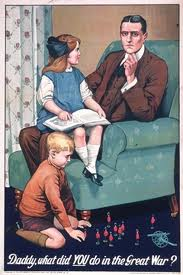
We always save the best for last, right?  Today at the blog of the National Center for Science Education, I make my case: How would the history of creationism be different without World War I?

For those who haven’t been keeping up, the NCSE has asked a handful of historians to give their best guesses.  How did World War I influence the development of creationism?  Of evolutionary theory?

We’ve read about creationism in Turkey and the Netherlands. We’ve read about the influence of the war on German intellectual life.  And about textbooks, the 1920s, and William Jennings Bryan.

So what did yours truly have to add to this discussion?  How do I think World War I changed the course of creation/evolution history?  You’ll have to read my post on the NCSE blog to find out.

What If Stories, Part VI: Evolution in Germany

As we approach the hundredth anniversary of the start of World War I, historians and journalists are asking how life might have been different if the Great War had never happened.

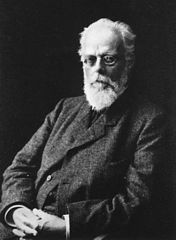
As the National Center for Science Education blog, historians and scientists are wondering how the history of evolution/creation might have been different.  Today, biologist Ulrich Kutschera argues that the war changed the way evolutionary scientists told the story of evolution.  Kutschera notes the work of German zoologist August Weismann, who forcefully and elegantly promoted evolutionary ideas in the years leading up to the war.

August Weismann, the Lost Answer?

August Weismann, the Lost Answer?

Without the war’s shattering effect on Germany and the world, Kutschera writes, Weismann’s legacy would have been very different.  It may have changed everything in the intellectual worlds of creationism and evolution.  How?  You’ll have to read the NCSE post to find out.


What If Stories, Part V: World War I as Game-Changer

What would the history of creationism have been like if World War I had never happened?  Today we read the most far-reaching argument yet in this series at the National Center for Science Education blog.

Much Less than 6,000 Years Ago

Much Less than 6,000 Years Ago

As ILYBYGTH readers are aware, we’ve been following this series of historians’ arguments.  The NCSE asked a tough question, and historians have offered different perspectives and ideas.  Today, Professor George E. Webb suggests that everything would have come out radically different if there had been no Great War.

What would have made such a difference?  You’ll have to read the NCSE post to find out the details.


Americans Know that We Don’t Know about Evolution

Smoking will kill you. Americans are confident about that scientific fact. But we are far less confident in the scientific truths about evolution, the Big Bang, and creation. A new Associated Press/GfK poll of just over a thousand American adults reveals some fairly predictable results. It also raises important questions about the meanings of knowledge and ignorance. As this poll shows, most Americans are not entirely confident in either our incorrect knowledge or our correct knowledge. What the poll only hints at, though, is the way most mainstream American scientists are heartily ignorant about the thinking of the majority of Americans.

Most Americans now agree that smoking is unhealthy. Just over half think that life is too complex to have happened on its own. And only minorities of adults seem to have great confidence in evolution, an ancient earth, or the Big Bang.

There Are Known Unknowns...

There Are Known Unknowns…

These poll results can tell us more than just the raw numbers, though. Perhaps most interesting, this poll did not quiz respondents about their scientific knowledge. Rather, it asked people to rate their confidence in these scientific facts. Most Americans were very or extremely confident in their knowledge that smoking causes cancer. Only a minority, however, felt the same way about evolution.

As the Associated Press commented, these results struck mainstream scientists as particularly troubling, since these questions represented “settled scientific facts.” Mainstream scientists, in other words, are extremely confident in these ideas. Overwhelmingly confident.

Clearly, there is a more complicated dynamic going on here than simple non-knowledge of science. As historian Robert Proctor argued, tobacco companies spent a good deal of time and treasure to promote a certain sort of ignorance about the connection between smoking and cancer. This poll suggests that those efforts at manufactured ignorance have been foiled by mainstream science and public-health campaigning. Americans are now confident in their knowledge about the dangers of smoking.

But in the case of evolution and creation, skepticism about mainstream science still flourishes. A slim majority of Americans are “extremely” or “very” confident that life is so complex it must have been created by a “supreme being.” Most Americans are confident about this knowledge. And most Americans lack confidence in evolution.

When Americans lack confidence in the dangers of tobacco or the truth of evolution, they are doing something very different than simply being unaware of facts. They are expressing—some of them at least—confidence in a different set of facts, a different system of knowledge. There is a vast difference, after all, between the “knowledge” tobacco executives had in the 1960s about the health dangers of smoking and the “knowledge” most Americans in the 1920s had about the health dangers of smoking. The tobacco executives carefully built their non-knowledge in the 1960s. Most Americans in the 1920s, on the other hand, were simply unaware of the health dangers.

Similar complexity swirls around Americans’ current non-knowledge about evolution. Many of the people who are most furiously opposed to mainstream evolutionary science “know” a great deal about it. But they have very little confidence in the truth of those evolutionary ideas. That is a vastly different sort of non-knowledge than when someone is simply unaware of modern evolutionary thinking.

In short, it is not that Americans simply don’t know about evolution. We know that we don’t know.

Elite scientists, on the other hand, seem simply to not know things. Most elite scientists, it seems, don’t know much about what non-elite-scientists think. As sociologist Elaine Howard Ecklund argued in her book Science vs. Religion, elite academics tend to be woefully unaware of mainstream religious ideas. The fact that so many Americans are so radically unconfident in ideas that mainstream scientists call “settled scientific facts” underlines this cultural divide once again.

If we want to talk about ignorance, we have to do it very carefully. Scientists are ignorant about Americans. Americans are ignorant about science. But scientists seem simply not to know about the ideas most Americans feel confident about. Most Americans, on the other hand, even when we know about scientific ideas, express very little confidence in them.


Ham on Nye: The Debate Continues

He-said-he-said.  Who are we to believe? Bill Nye “The Science Guy” and creationist leader Ken Ham have published reflections on their recent debate.  Nye explains his triumphHam says, not so fast.  To this reader, Ham seems to be on the defensive.

As ILYBYGTH readers recall, the debate itself occurred a couple of months ago.  Bill Nye traveled to Ham’s Creation Museum to tackle the question, “Is creation a viable model of origins in the modern scientific era?”  The debate rollicked over some familiar territory and included some surprises.  Ham focused on his idiosyncratic definition of science, split into authentic “observational” science and illegitimate “historical” science.  Nye piled on the traditional skeptical puzzlers: How could a tree be more than 6,000 years old on a young earth?  Why are there no fossils out of order?  How could an Ark survive?

In the pages of the Skeptical Inquirer, Nye recently offered his reflections on the debate.  He explains his strategy to pile on example after example of young-earth-confounding science.  He explains his decision to spend his first precious ninety seconds on a mild joke about bow ties.  He profusely thanks his advisers, such as the experienced creation/evolution debaters at the National Center for Science Education.  Nye’s tone is profoundly celebratory.  In short, he explains how and why he triumphed.

Perhaps not surprising, Ken Ham took exception to Nye’s comments.  Never one to back away from a challenge, Ham recently published a rejoinder to Nye’s memoir.  To me, Ham’s article seems strangely defensive.  Don’t get me wrong: I’m no follower of Mr. Ham.  But I have defended him against vicious verbal assaults from skeptics.  I have also taken The Science Guy to task for his woeful misunderstanding of the culture of creationism.  But in this case, Ham’s only defense seems to be to niggle around the edges of Nye’s memories.

Ham objects, for example, to Nye’s memory of how the debate came about.  The way Nye tells it, Ham persistently challenged Nye to a debate until Nye agreed.  The way Ken Ham remembers it, however, the whole thing came about at the suggestion of an Associated Press reporter.

Ham also objected to Nye’s repeated suggestion that Ham has a “congregation,” and that all of these museums appeal to “Ham’s followers.”  Such language, Ham protests, seems to be an effort to marginalize Ham’s Answers In Genesis ministry as a fringe cult.  Fair enough.  I would be surprised if Bill Nye knew much about the history of parachurch organizations in American (and Australian) evangelical Protestantism.  For evangelical Protestants, there is often a clear distinction between church and broader organizations that also help the cause.  Missionary groups, Bible leagues, youth organizations, and similar parachurch organizations are a familiar part of the evangelical experience.  Nye really does seem to miss this distinction entirely.  But does it matter?  Does it really hurt Ham’s cause if outsiders think of his work as a “congregation” instead of a “ministry?”  It seems the distinction only matters to members themselves.

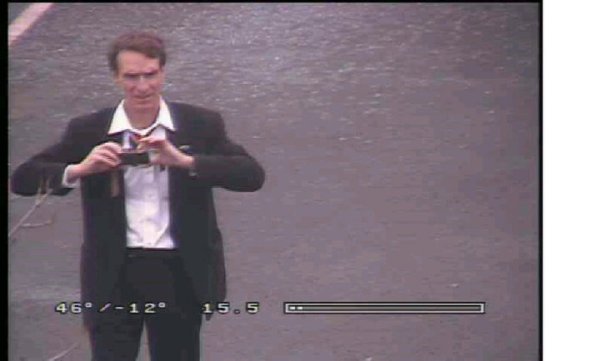
Perhaps strangest of all, Ham claims to catch Nye in an embarrassing distortion of the truth.  Nye insists that he had never been inside the Creation Museum before the debate.  One time when he was in the area, Nye explained, he drove around the parking lot, but the museum itself was closed.  Nye says he saw the “infamous” statue of a dinosaur with early humans outside the museum.  But Ham seems to prove that Nye distorted this memory.  Ham produces a photo that apparently shows Bill Nye outside the Creation Museum in 2011.  Ham even notes a 2011 Facebook post that seems to confirm the date and duration (122 seconds!) of Nye’s visit.  The museum, Ham claims, was indeed open at the time.  Plus, there is no statue outside the museum that depicts humans cavorting with dinosaurs.  How could Nye have seen a statue that doesn’t exist?

Nye's 122 Seconds Outside the Creation Museum

Nye’s 122 Seconds Outside the Creation Museum

These sorts of nitpicks put Nye in an awkward position.  Why would Nye embellish his memories of his 2011 visit to the Creation Museum’s parking lot?

In the end, though, they don’t seem to make a difference.  Throughout this post-debate commentary, Ken Ham takes a decidedly defensive tone.  He pokes holes in Nye’s memories, but he doesn’t really challenge Nye’s central conclusion that the debate was a triumph for mainstream science.


Schools and Science: Good News for Creationists

Whose science gets taught in America’s public schools?  A new study of Oklahoma high-school students finds that students emerge from their Biology classes with a creationist-friendly understanding of evolution.  This study suggests once again that we can’t just ask HOW MUCH science education young people receive.  We must also ask about WHOSE DEFINITION of science is taught.

Looks like more evidence that science in public schools might be far friendlier to dissenting visions of science than we might think.  Communities that include large numbers of creationists may take solace from the implication: Science in schools might mean very different things to different people.

The findings were published recently in the pages of Evolution: Education and Outreach.  Researchers Tony B. Yates and Edmund A. Marek surveyed students at thirty-two Oklahoma high schools.  They administered tests before and after the students took a course in Biology.  Taken as a whole, the students expressed 4812 misconceptions before they took the class.  Afterward, they had 5072.

Yates and Marek pulled those misconceptions from a list of twenty-three common ones, including the following:

According to the second law of thermodynamics, complex life forms cannot evolve from simpler life forms.

And

Evolution cannot be considered a reliable explanation because evolution is only a theory.

Though the students had more misconceptions about evolution after their classes, Yates and Marek claimed, they also came out more confident in their knowledge of evolution.

What’s going on here?  Yates and Marek blamed the teachers.  As they concluded,

teachers may serve as sources of biological evolution-related misconceptions or, at the very least, propagators of existing misconceptions.

Of course, for creationists, this must be a cause for celebration.  What Marek and Yates call “misconceptions,” creationists might call “critical thinking” about evolutionary “dogma.”  In spite of conservative worries that public schools have become godless institutions, hostile to religious belief, this study provides more evidence that teachers represent the beliefs of their local communities.  As political scientists Michael Berkman and Eric Plutzer argued in their book Evolution, Creationism, and the Battle to Control America’s Classrooms, teachers most often teach the values of their communities.  In the case of creationism and evolution, we see more evidence here that teachers do not challenge the religious beliefs of their students.  The science on tap in these Biology classes seems accommodating to skepticism about mainstream evolutionary thinking.


What If Stories, Part IV: War and Creationism in Europe

How did World War I change creationism in Europe?  Check out part four of the National Center for Science Education’s series.

If you’ve been following the series, you’ve read what historians Ron Numbers, Taner Edis, and Adam Shapiro had to say.  How did World War I change the history of creationism in the USA?  In Turkey?  In textbooks?

In today’s post, Abraham C. Flipse of VU University Amsterdam puts in his two cents.  Flipse attracted attention a couple years ago with his history of creationism in the Netherlands.

Obviously, the devastation of the war was much closer to home in the Netherlands.  How would creationism’s history have been different in this “stronghold of creationism” if the war had never happened?

Read Dr. Flipse’s post to find out!

What If Stories, Part III: Schools, Scopes, and the War

What if World War I had never happened?  How would the history of creation/evolution controversies have changed?  That’s the question the folks at the National Center for Science Education blog are asking these days.  In today’s third post of the series, historian Adam Shapiro makes his case for a vastly different story without the Great War to stir the pot in 1914-1918.

Shapiro’s the right person to ask.  His recent book Trying Biology offered a smart new argument about the importance of textbook publishing in the history of creationism in the United States.

So how does Shapiro think World War I changed things in the world of American creationism?  You’ll have to read his NCSE blog post to find out.