Election Update: Darwin Defeated in Georgia

As we reported recently, some evolutionists hoped to make an election-day point in Georgia with a write-in campaign for Charles Darwin.  The incumbent, Dr. Paul Broun, had called evolution, embryology, and the Big Bang Theory “lies straight out of the pit of hell.”

The tallies are not fully in, but it looks as if Darwin went down to a decisive defeat.

The candidate could not be reached for comment.

Election Coverage: Evolution Skeptic Wins Seat on Texas State School Board

Education-watchers have long focused on the politics of education in the Lone Star State.  From The Revisionaries to Rod Paige’s skewed statistics, Texas education often serves as a harbinger of education trends nationwide.

Nowhere is this more true than in the touchy issues of education culture wars.

Yesterday’s election put one more conservative voice on Texas’ 15-member State Board of Education.

Marty Fowler of Amarillo won a resounding victory over Steven Schafersman.  The politics of the two candidates demonstrate what Texas voters in district 15 want out of their public schools.

Schafersman went down to defeat with his pro-mainstream science, pro-sex ed platform.  According to mywesttexas.com, Schafersman, “a practicing scientist in the petroleum industry with 23 years of college  teaching experience, said he ran for the board because he wants students to have  unbiased, factual and scientific textbooks and increase[d] knowledge about  contraception.”

Schafersman won a measly 20% of the vote with these positions.  Earlier this year, Fowler explained his support for teaching multiple scientific approaches–intelligent design along with evolution–in Texas’ public schools.  As Fowler put it in an interview with an Amarillo newspaper:

“Evolutionists would say that we progressed to this point through a series of unplanned, random circumstances and random events.  I don’t believe that tells the whole story. I think there is more to our creation that indicates an intelligent being that has played a significant role.”

Beyond the issue of evolution/creation, Rowley won support as the more consistently conservative candidate, with opinions on issues from standardized testing to vocational education that more closely matched the conservative district.

As fence-sitting observers like me have pointed out, this is the real crux of the issue in educational culture wars.  Schools prohibit sex ed and teach creationism not because teachers are ignorant, not because administrators are prudes, but rather because those educational policies are often the clear mandate from large electoral majorities.

Much as it pains me to admit it, Marty Rowley would be acting in an irresponsible fashion if he did not go to work to promote multiple scientific theories in Texas textbooks and schools.  That, after all, is what the voters seem to be demanding.

Marsden & Gould on Creationist Science

What is science?

Andrew Hartman offers a review of some of the keenest analyses of fundamentalist/creationist science at US Intellectual History.

Hartman looks at a few essays from the mid-1980s about the nature of science in the intellectual world of conservative evangelical Protestants.  Hartman reviews an essay by leading religious historian George Marsden  in which Marsden sums up the fundamentalist difference.  The key to understanding creationist science, Marsden argued, is to understand the Baconian/Common Sense roots of fundamentalists’ self understanding.

Marsden’s analysis certainly fit the intellectual world of the 1920s.  In that era, leading fundamentalists articulated a different vision of science, one that did not match the world of leading mainstream scientists.

Since the 1960s, however, the scientific visions of creationism have transformed themselves.  Though 1920s creationists might insist with some justification that the jury was still out on natural selection, later generations of creationists have had to come to terms with the fact that mainstream science had embraced evolution.  More recent arguments that evolution is “just a theory” often do not match the intellectual sophistication that 1920s fundamentalists demonstrated about the nature of science.  Instead, later generations of creationist intellectuals have moved away from the Baconian/Common Sense vision.  Most often, creationists have derided evolutionary science as mistaken, fallible, closedminded, and even duplicitous.  But they have not as often criticized the framework of mainstream science as having slipped away from a proper Baconian framework, at least not nearly as often as did 1920s fundamentalists.

Election Day Coverage: Voting “Darwin” in Georgia

Darwin for Congress?

He’s not on the ballot.  He’s not even alive.  But Charles Darwin is campaigning for the US House of Representatives in Georgia.

After US Representative Dr. Paul Broun famously opined that evolution, embryology, and the Big Bang theory were “lies straight out of the pit of hell,” Georgia’s evolutionists decided to push for a write-in election for Charlie D.

Does Darwin stand a chance?  Maybe if given billions of years to evolve a campaign.

All joking aside, Representative Broun will win in a cake walk.  Even Broun’s most ardent foes are hoping for only a small symbolic protest vote for Darwin.

For those like me who hope to see better education in America’s schools–including better evolution education–Broun’s lack of opposition comes as a sobering reminder of the political nature of American education.  Those evolutionists such as Bill Nye who slam Broun’s credentials forget one crucial detail: Representative Dr. Broun was elected, and he’s going to be re-elected.  Signing a petition–as have roughly 85,000 people at Change.org–is not the easy way to remove Dr. Broun from the House committee on science.

The way to do it is to get involved in local and state politics.  Don’t just run a last-minute write-in campaign for a dead Darwin.  Seek out a plausible electoral alternative to politicians whom you don’t think are qualified to make decisions about science.

Creationists Excel in Science

What’s wrong with teaching creationism?  Some folks say creationism will block America’s students from learning science.  I oppose the teaching of creationism as science in public schools, but this argument does not hold up.  As uncomfortable as it might be for non-creationists like me, we need to abandon the false argument that creationism is incompatible with learning science.

We see it now and again.  For instance, in a recent editorial in Church & State, Americans United for the Separation of Church and State insisted that creationism “leaves youngsters woefully unprepared for the demanding science courses many of them will encounter in college.”

Similarly, in his recent Youtube video against creationism, Bill Nye “The Science Guy” insisted that creationism would cripple science education.  “I say to the [creationist] grownups,” Nye announced,

“if you want to deny evolution and live in your world, in your world that’s completely inconsistent with everything we observe in the universe, that’s fine, but don’t make your kids do it because we need them. We need scientifically literate voters and taxpayers for the future. We need people that can—we need engineers that can build stuff, solve problems.”

This is a powerful argument.  We must teach science well and thoroughly, otherwise young people will not be able to understand the world.  Young people robbed of scientific education will not be able to contribute to society.

Unfortunately for those of us who want to promote more comprehensive evolution education, this argument does not hold up when we examine it closely.  Turns out creationist students can do just fine with science.  We need to grapple with this inconvenient truth.  It seems that—somehow—creationists do fine with science.

Consider a few examples.

From the recent headlines, US Representative Paul Broun received a lot of criticism for his comments that evolution, along with embryology and the Big Bang, were “lies from the pit of hell.”  Many of Broun’s critics insisted that Broun was utterly ignorant of science.  Now, I don’t agree with Broun’s ideas about evolution or astrophysics.  But we non-creationists have to acknowledge that Broun, an MD with a bachelor’s degree in chemistry, is not really utterly ignorant of science.  He certainly understands it differently, but it is a false refuge to conclude that he is simply ignorant.  He has been educated in science.  It appears he somehow chooses creationism in spite of this education.

Or take one of the most famous creationists of the twentieth century, Henry Morris.  In spite of Bill Nye’s lament that creationism will block the flow of “engineers that can build stuff,” Morris held a PhD in hydraulic engineering from the University of Minnesota.  At the same time, Morris led the way for a new sort of creationism with his books and institutional leadership.

There are other leading creationists with scientific credentials.  Kurt Wise, for instance, earned his PhD in geology at Harvard.

But we non-creationists could take some solace from the notion that exceptions are always possible.  We could tell ourselves that a few outliers do not prove that creationism is somehow compatible with scientific education.  Like the folks at Project Steve, we could take comfort from the fact that overwhelming numbers of scientists DO embrace evolution.

However, those who have looked closely at the broader picture suggest that creationists often do just fine with mainstream science education.

Political scientists Michael Berkman and Eric Plutzer, for instance, found in their large-sample survey of high-school biology teachers that many self-professed creationists had completed lots of college-level science classes.  Of the teachers who professed a belief in young-earth creationism, 32% had completed a full-semester course in evolutionary science.  More than one in ten (13%) held a graduate degree in science.  Almost half (49%) had earned forty or more college credits in biology.

These creationists managed to do fine in what Americans United called “the demanding science courses” in college.  The creationist teachers, to evolutionists’ chagrin, must be acknowledged to be among Bill Nye’s “scientifically literate voters.”

Clearly, something else is going on here.  For those of us outside the circle of creationist thinking, it is difficult to understand how creationists can combine the utterly unscientific notions of a young earth with such widespread success in the highest levels of academic science.  How do they do it?

David Long’s ethnography provides at least one clue.  Long studied creationist students enrolled in a secular biology program at a large public university.  The results suggest some disturbing lessons for those of us who want a more thorough evolutionary education.  As one of his informants described, doing well in college science classes was a snap.  “I take those really big classes,” this student informed Long,

“because it’s really easy to excel in those huge classes.  I mean, I got like a hundred on every test.  You have to be an idiot pretty much not to.  If you just sit, and you listen to what they’re saying, and you know how to take tests, it’s very easy to do well in those classes.”

Long’s ethnographic study can’t tell us how common this experience is among creationist students.  But it suggests a far more complicated educational reality than the black-and-white schemes suggest by Bill Nye and Americans United.  In a nutshell, creationists do fine in college science classes.  They do fine in science-related careers such as engineering, teaching, and medicine.

If we really want to improve evolution education in the United States, we need to wrestle with this perplexing fact: Creationists excel in science.

Ken Ham Is Right!

No, not about a young earth.  But Ken Ham, the obstreperous mastermind of Answers in Genesis, is right to complain about the language directed at him and his campaign.

I’ll say it again: I don’t agree with Ken Ham’s theology.  I don’t agree with his notion that a young earth is a central idea of Christian faith.  More important, I think Ham’s angry, combative tone drowns out much of the productive and respectful conversation that could go on about the issues of faith, science, creation, and evolution.

But Ham is right to complain recently about the ways his ministry has been attacked.  In his AiG blog, Ham pointed out the rhetorical excesses of some of his foes.  In a post on an Australian atheist blog, one Simon Doonar attacked Ham intemperately.  Here’s Doonar’s post in full:

“I hope that sometime in the future this kind of deliberate misleading of people and especially kids can be treated as a criminal breach of the law, and those who commit such breaches are excluded from society permanently.

“What these type of people are doing is damaging our species by inhibiting our ability to free our minds from superstition and the dream like notions of how we came to be and where we are going.

“And to think that this idiot believes that all the research and evidence which proves evolution can be simply brushed away by the simple answer of ‘where you there’. How can you possibly deal with this type of person, they are psychologically ill and like all dangers nut casers should be put somewhere to reduce the risk of them harming others.”

Doonar also included an angry frowny-face emoticon, but I’m not sure how to reproduce that here.

Now, I understand that such blog posts lend themselves to extravagant emotion.  But still, Doonar’s assertion that creationists should be rounded up and locked up terrifies me.  The notion that we need to criminalize ideas with which we disagree inches frighteningly close to lynch law.

If it were only one kooky Australian who had had a few too many Foster’s and allowed himself to do some angry blogging, we should perhaps pay no attention.  But Ham correctly points out that these sentiments, though usually expressed more calmly, haunt the edges of the creation/evolution debates.

For instance, Bill Nye “The Science Guy” recently implied that creationists should not be allowed to pass their ideas on to their children.  Less famous thinkers ask, apparently sincerely, if creationism equals “child abuse.”  Other hotheads call creationism “terrorism” and “child abuse.”

Again, I understand the Wild-West rules of the blogosphere.  People will say all kinds of stuff to get attention.  The more extreme, the more attention.  And I understand that Ken Ham loves this kind of extremism, since it allows him to play the misunderstood victim.

But as a historian, I get nervous when any group is talked about in these dehumanizing ways.  We don’t need to go all the way back to Quakers executed in colonial Boston to find examples of religious groups targeted for military-style attack due to allegations of “child abuse.”

Just a few years ago, the government raided the Yearning for Zion ranch of the Fundamentalist Church of Jesus Christ of Latter-day Saints.  The raid was utterly illegal, utterly unconstitutional.  Yet it was approved and carried out due to accusations of child abuse, along with deeper cultural suspicions about the breakaway LDS sect.

Talking about creationists as child abusers and criminals does not help defang thinkers such as Ken Ham.  Ham thrives on such attack.  But it does reduce the possibility of constructive, respectful dialogue about creationism.

Required Reading: Moran’s American Genesis

From time to time people ask me for a place to start.  For those who don’t want to dedicate their entire lives to understanding the creation/evolution controversies, they ask, what is one smart, short book that offers a useful introduction?

I am very happy to suggest a new book by Jeffrey Moran of the University of Kansas: American Genesis: The Evolution Controversies from Scopes to Creation Science.  In the newest edition of the Reports of the National Center for Science Education, I offer a brief review of this terrific book.

Moran was already the author of two essential books on my shelf, Teaching Sex and The Scopes Trial.  In American Genesis Moran does more than just hash over the history of controversy.  As I write in my NCSE review,

“Moran examines the history of antievolutionism as more than just religion, more than just science. As Moran explains, ideas about evolution offer a unique “mirror, however distorted, of [American] culture itself” (p 24). The most intriguing sections of American Genesis, accordingly, offer readers more than just a clear and compelling brief history of the American antievolution “impulse” (p x). Moran demonstrates the ways that anti-evolutionism has been both a bellwether and an influence on broader trends in American culture. In the first three chapters, Moran’s book approaches antievolutionism as a question not only of religion and science, but also of gender, region, and race.”

In just under 200 pages Moran crafts an argument that connects anti-evolutionism to the bigger pictures of American history and culture.  His book is consistently readable and wonderfully worthwhile for both experts and the general public.

Those interested in creation/evolution will find other items of interest in the most recent Reports of the NCSE.  The editors include a review of David Long’s ethnographic study of creationism among college students and Jason Rosenhouse’s Among the Creationists.

Worth checking out!


Marxists and Creationists: Peas in a Pod?

Are Marxists and Creationists sharing carrel space at American universities?

A query by Kurt Newman at the ever-interesting US Intellectual History blog generated a lively discussion of the question: How many Marxist historians are out there?

Reading the discussions led me to wonder a different question: Are academic Marxists and creationists flip sides of the same coin?

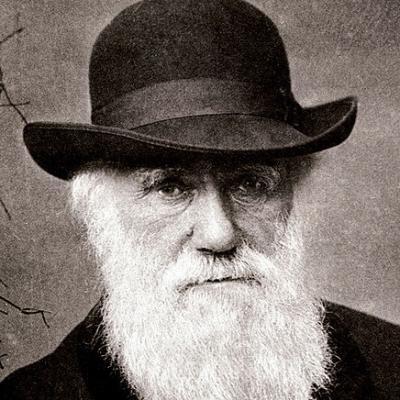
Darwin. Image Source: Humanist Life

Full disclosure: I’ve got thoroughly Marxist intellectual roots myself.  As an undergraduate, I found Marxism and its derivatives intensely interesting; those years remain profoundly influential in my thinking.  On the other hand, I’ve never been a creationist, though recently I’ve been accused of being one.  My intellectual world in my formative years had absolutely nothing to do with religion, the Bible, or creationism.

I’m not trying to promote one or the other, but the similarities between the two traditions jumped out at me.  Allow me to list a few of the obvious parallels:

  • Both Marxists and creationists remain surprisingly common on mainstream college campuses.  As David Long discovered when he began his ethnographic study of creationism on secular campuses, creationists are far more common than one might think.  The same result for Marxists becomes starkly clear when we read the responses to Newman’s query at USIH.
  • Both Marxists and creationists could make some claim to being persecuted.  Certainly, many mainstream scientists would not want to have creationist faculty in their departments.  And, as Newman points out in one of his comments, Marxist professors have a long history of institutional controversy.  Newman astutely mentioned in one aside, “(This is to say nothing of the apoplexy that would be induced in large swaths of the political class upon learning that any state-funded school was offering Marxist classes under the guise of US history, which might also say something about the stakes of doing Marxist research in 2012).”
  • Both Marxists and creationists could be accused of clinging obdurately to an intellectual tradition whose heyday has come and gone.
  • Both Marxist and creationist intellectuals and academics have always been famously and ferociously sectarian.  Gramsci-ites might not speak with Trotskyites, who might look down their noses at Bernsteinians, etc.  The same is true with today’s creationist galaxy of “evolutionary creationism,” “young-earth,” pre-Adamics, post-Adamics, day-agers, gap theorists, etc. etc. etc.

Marx. Image Source: Georgia Spears

Of course, some obvious differences jump out at us.  Here are a couple:

  • Marxism is profoundly secular, though some have called it a religion.  Creationism is profoundly religious, though some have insisted on its secular merits.
  • The two groups have enormous sociological differences.  Creationism does not thrive at elite schools, while Marxism seems to. The background of each group of scholars likely differs immensely.
  • Marxism seems to be losing influence outside the academy, while creationism has been steadily gaining strength in politics and popular culture for the past century.

So, are these flip sides of the same phenomenon?  Intellectuals who pride themselves on their superior insight into the workings of humanity and history?  Folks who take encouragement from the cultural slings and arrows directed their way?

Just askin…


Condoms on Bananas, or, Why Culture Warriors Aren’t Funny

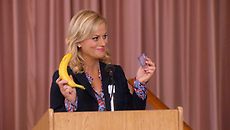
Parks and Rec’s Leslie Knope Sheaths the Banana

I disagree with Russell Moore on many things.  But I do agree with the heart of Moore’s recent argument in the pages of Christianity Today.

Moore commented on a recent episode of the sitcom Parks and Recreation.  I didn’t see the show.  But according to Moore, the plotline concerned an outbreak of sexually transmitted infections among residents at a small-town nursing home.  Moore argued that the show engaged in the worst kind of smug culture-war preaching.

Moore’s accusations ring true.  Many self-professed “liberals” engage in the kind of liberal fundamentalism that Moore describes on the show.  In Moore’s words,

“the show intended to reinforce a view already held by the people to whom they were talking. Those who already deride abstinence education could nod their heads in affirmation, ridicule the morons who oppose good common sense, and feel much better about their moral and intellectual superiority to the Neanderthals out there.”

I support comprehensive sex education in public schools.  But as Moore points out, lots of people disagree.  And lots of those people are smart, caring, informed, and engaged.  At best, the kind of self-satisfied mockery that he describes on Parks and Rec sounds ineffective.  As Moore charges, “few people are going to have minds changed by seeing their viewpoints caricatured.”  At worst, this kind of preaching to the choir deepens our culture-war divisions and leaves us all more bitter, angry, and, in the end, ignorant about the real conflict.

As we battle over issues such as sex ed, prayer in schools, and creationism, we need to keep in mind that those with whom we disagree may have legitimate reasons for their positions.  Moore takes conservative evangelicals to task for often forgetting this message.  As Moore argues,

“Sexual liberation ideology is deadly, but we aren’t preaching to those in bondage to it if we simply repeat slogans. In order to see the true wickedness of sexual liberation, we must ask why it’s appealing, and why deceptive arguments can seem plausible. Only when we speak to the conscience can we get to where people are, as we all once were, hiding from God.

“Darwinism can’t explain the meaning and purpose of the universe or of humanity. But when we simply laugh and say, “My grandpa wasn’t a chimpanzee,” we aren’t taking seriously the claims of our opponents. In fact, we’re not speaking to them at all, just to ourselves.

“When unbelievers hear a canned, caricatured argument, they recognize exactly what I recognized when I listened to the moralizing of the Parks and Rec script: They’re not trying to convince me, or even to talk to me. They just want to soothe the psychologies of their partisans.”

Moore’s central point remains powerful even if we don’t agree about the nature of Darwinism or sex ed.  When we talk about the cultural truths at the heart of our education system, we need to remember that those with whom we disagree deserve respect.  True liberalism is not the pat preachiness of Leslie Knope.  Rather, it requires a much more difficult cultural argument that disagrees without deriding its opponents.

Darwin Denounced as “Jew” in Turkish Textbooks

Every now and again we hear from evolution educators that creationism is somehow unique to the United States.  In his recent popular video denouncing creationism, for instance, Bill Nye “The Science Guy” said exactly that.

Not so fast!  As scholars such as Ronald Numbers have documented, creationism has long been an international affair.  In places such as Australia and Turkey, for instance, creationism has strong and apparently growing support.

And, thanks to the Sensuous Curmudgeon, we come across a story from the international edition of the Financial Times demonstrating the durability of Turkish anti-evolution education.

The FT story demonstrates both the similarities and differences of creationism across national and cultural boundaries.  In some senses, the story could come straight out of the USA.  Other parts seem uniquely Turkish.

For instance, the story describes a controversy over the use of anti-evolution textbooks in Turkish schools.  A teachers’ union has taken legal action to block schools in Istanbul from using anti-evolution textbooks.  Just as in the USA, the Turkish government has made moves to loosen Turkey’s traditional government secularism in a strongly religious nation.  The government, according to the FT article, has allowed more schools to favor religious themes.

All of this sounds like it could have come directly from the evolution/creation controversies in the USA.

But other parts of the story have a uniquely Turkish twist.  The schoolbooks, for example, denounce Darwin as Jewish.  According to the FT, the textbooks warn students that Darwin “had two problems:  first he was a Jew; second, he hated his prominent forehead, big nose and  misshapen teeth.” The books mock Darwin’s lack of formal education, noting strangely that he preferred to spend his time with monkeys in the zoo.

Such anti-Semitic attacks do not usually appear in America’s evolution/creation controversies.  More common would be attacks on Darwin’s atheism.  For the record, Darwin was not Jewish.  However, a creationist attempt to discredit Darwin by “accusing” him of Jewishness makes some sense in a Turkish context.

Clearly, context matters.  Students in Louisiana’s publicly funded schools might read textbooks promoting creationism and evangelical Protestantism.  Students in Istanbul’s publicly funded schools had read that Darwin could not be trusted because he was Jewish.