My Experts Can Beat Up Your Experts

None of us knows what we’re talking about. That is the problem driving much of our culture-war animus. We can’t possibly understand all the nuances of every field of study, so we rely on networks of competing experts and authority figures to tell us what to believe. I do it, you do it . . . we all do it.

This week, we’ve seen it again with the topic of teaching American history. A coalition of conservative scholars and activists has signed an open letter attacking the new framework of Advanced Placement US History guidelines. They hope to use their collective clout to prove that the “experts” are not all on one side of this debate.
Your Experts Will Send Our Kids to Hell!

Your Experts Will Send Our Kids to Hell!

As SAGLRROILYBYGTH are well aware, these new history guidelines have proven intensely controversial. Conservative lawmakers in Oklahoma have proposed nixing the new standards for Sooner schoolchildren. Conservative pundits have blasted the framework as biased and warped. Professional organizations such as the National Council for History Education and the American Historical Association have fought back, insisting that the new framework is exactly the sort of thing we need in America’s history classrooms.

And, as I argue in my new book, these battles over the nature of American history have a long history themselves. In the 1930s, conservatives successfully blocked a popular series of textbooks that they felt told a slanted, anti-American vision of the nation’s past. More recently, the attempt in the 1990s to write a set of national history standards was sunk when conservatives made similar complaints.

In those battles as in this one, culture-war combatants have hoped to win their case by compiling intimidating lists of experts who back their respective positions. This week’s letter includes a mix of signatories. Some of them really are leading academic historians, such as George Marsden and Joseph Kett. And they take their inspiration from a recent diatribe by renowned historian Gordon Wood. Other signers are not historians, but conservative scholars who disagree with the general drift of mainstream academic life, folks such as Robert George and Patrick Deneen. Yet another category of signer is that of activist conservative historians, a rare breed including folks such as Ronald Radosh and Victor Davis Hanson. Plus, there are political signatories such as Lynne Cheney.

The letter complains that the new APUSH framework pushes an “arid, fragmentary, and misleading account of American history.” The new framework, the letter argues,

Is organized around such abstractions as “identity,” “peopling,” “work, exchange, and technology,” and “human geography” while downplaying essential subjects, such as the sources, meaning, and development of America’s ideals and political institutions, notably the Constitution. Elections, wars, diplomacy, inventions, discoveries—all these formerly central subjects tend to dissolve into the vagaries of identity-group conflict. The new framework scrubs away all traces of what used to be the chief glory of historical writing—vivid and compelling narrative—and reduces history to a bloodless interplay of abstract and impersonal forces. Gone is the idea that history should provide a fund of compelling stories about exemplary people and events. No longer will students hear about America as a dynamic and exemplary nation, flawed in many respects, but whose citizens have striven through the years toward the more perfect realization of its professed ideals. The new version of the test will effectively marginalize important ways of teaching about the American past, and force American high schools to teach U.S. history from a perspective that self-consciously seeks to de-center American history and subordinate it to a global and heavily social-scientific perspective.

As a professional academic historian, I’m certainly not neutral in this fight. My sympathies lie with the new framework. Don’t get me wrong: I admit that these conservative charges are not without merit. Academic historians really have isolated themselves over the past forty years. Americans love history, but they find academic history simply beside the point. Academic historians have tended to obsess over issues that only other academics care about, leaving high-schoolers and regular folks to learn their history from journalists and from Hollywood. But that has always been the case with scholarly work and it does not mean that the big lessons of the past forty years should not be taught to high-schoolers.

More important here, though, is the way culture-war issues are often addressed by letters like this one. Because none of us can understand the nuances of every issue, because none of us really understands what all the fuss is about, we rely on networks of competing authorities to give us our culture-war positions.

In the creation/evolution battles, for instance, we’ve seen this time and time again. Nearly every pro-evolution argument these days starts with some statement that mainstream scientists all agree on the fact of evolution. Activist organizations such as the National Center for Science Education compile bulletproof lists of all the scientists who agree that evolution occurs via natural selection. It has always been this way. In the 1968 US Supreme Court case of Epperson v. Arkansas, the National Science Teachers Association submitted a statement signed by 179 leading scientists. Evolution, the signatories told the court, had become a “fundamental scientific principle” supported by all “scientists and other reasonable persons.”

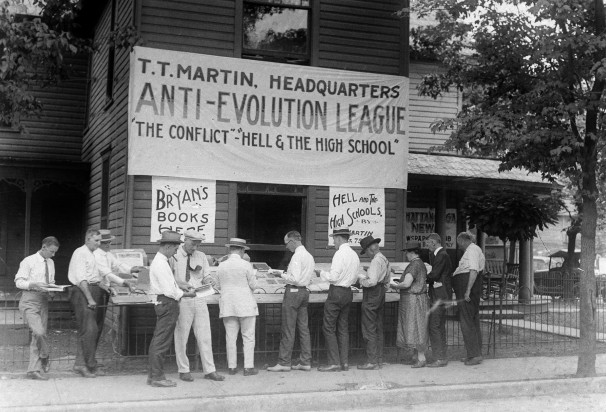
Creationists, of course, have always compiled similar lists of experts. As I noted in my first book, sometimes such lists took over the whole argument. For instance, T.T. Martin’s 1923 book, Hell and the High Schools, was a slim 175 pages. Of those pages, a full 67 were nothing but lists of anti-evolution scientists and experts.

For those few true experts such as Ronald Numbers or Glenn Branch, it is possible to wade through these lists of names to tease out the scientific street cred of each person. For most readers, though, the lists of experts serve only to prove the reliability of writers’ claims.

In every culture-war field, we rely on experts we trust to tell us what to believe. And then we believe it, whether or not we really know what we’re talking about. This doesn’t mean we’re stupid. It doesn’t mean we’re ignorant. As Dan Kahan argues so convincingly, our beliefs about evolution tells us about who we are, not about what we know.

What are we to believe about the new Advanced Placement US History standards? Are they the best wisdom of historians, vetted by true experts in the field and reflecting the latest developments of academic knowledge? Or are they the puerile croaking of a self-satisfied and out-of-touch ivory-tower elite, bent on promoting ideology over true knowledge?

The answer, of course, depends on which group of experts you prefer.
Would You Fire This Teacher?

HT: MM

Would you fire a teacher if he did any of the following?

  • Graphically described a sex act to his high-school class?
  • Graphically described a homosexual sex act to his high-school class?
  • Graphically described a submission/bondage sex act to his high-school class?
  • Read a poem in class by one of the greatest twentieth-century American poets?

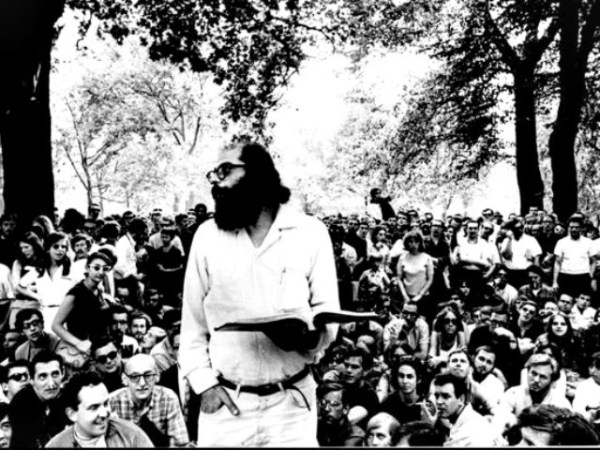
The trick, of course, is that the teacher in question did all of those things, and all at the same time.  We read news from the wilds of South Windsor, Connecticut, where an experienced and award-winning teacher was pushed out of his classroom.  His crime?  Reading Allen Ginsberg’s 1968 poem “Please Master.”

The SAGLRROILYBYGTH will no doubt leap to the culture-war implications of this case.  To my mind, Olio’s ouster raises a couple of issues of perennial difficulty.  First, what are public schools supposed to be doing about sex?  And second, are hippies heroes or villains?

Your sub for today will be hairy...

Your sub for today will be hairy…

As David Freedlander reports in The Daily Beast, David Olio had taught in the district for nineteen years.  He had won awards for teaching excellence.  On the fateful day in question, a student brought in the Ginsberg poem and asked if they could read it in class.  Olio agreed.

The poem does contain some pretty explicit sexual language.  It makes me uncomfortable to think about reading it to any group of people.  More interesting, though, are the interpretations of Olio’s use of the poem.  Progressives see it as a proper and even heroic act.  Conservatives call it something else entirely.

As Freedlander argues from the progressive side, shouldn’t high-school students be reading such things?  Students at that age are keenly aware of explicit sexual activities, even if many students have only vague and false notions of what they are.  Is it not the point of a rigorous education to guide students through these difficult and controversial topics?

Or is this a question of sexual malfeasance?  At Breitbart.com, Susan Berry pleads the conservative case against Olio.  Using such “graphic gay sex” material in class, Berry believes, abrogates the “trust” parents place in public schools.

At the heart of such disagreement lurks a deep divide over the meaning of Allen Ginsberg himself.  Was he a heroic boundary-pusher?  Freedlander cites Ginsberg fan Steve Silberman.  Ginsberg, Silberman insisted,

thought that by bringing material into poetry that were previously considered unpoetic, he enlarged the poetic occupation.

Or was Ginsberg only typical of 1960s sexual excesses?  Conservatives might scoff at the notion that there is any true artistic merit in poetry that apotheosizes our most prurient sexual nature.  As usual, conservative educational icon Max Rafferty expressed in 1968 some of the most memorable anti-hippie bon mots.  He blasted the literary pretensions of “the lank-haired leaders of our current literati.”  Too many hippie protesters, Rafferty insisted, “look as though their main grievance was against the board of health.”  Young people needed more talk about sex, Rafferty believed, “about as much as Custer needed more Indians.”  Instead, Rafferty thought, literary education should focus on the tried-and-true guides to basic morals such as bravery, self-sacrifice, and honesty.

At the heart of this case, it seems, we find some tangled culture-war history.  As Andrew Hartman argues in his new book, the “1960s” serves as a flashpoint for continuing battles over morality and public policy.  If Ginsberg is a Great American Poet, then it does indeed seem short-sighted to punish a teacher for exposing students to his work.  If Ginsberg, on the other hand, was the dirty edge of a vapid adolescent “howl” of self-seeking hedonism, then teachers have a duty to protect children from such foul material.

What would you do?  Would you punish this teacher for a sex crime?  Would you perhaps forgive him for a momentary lapse in judgement?  Or, on the contrary, would you reward him for engaging his class in a bold and inspired moment of curricular bravery?

Are We Too Polite to Tell Our Children the Truth?

It’s not a secret. The roots of Memorial Day lie twisted with America’s toughest problems of race and region. But my hunch is that very few Memorial Day speeches mentioned such things. In addition to the vexing problems of knowledge and politics that cause our continuing educational culture wars, I think we need to add one surprisingly boring cause.

Historian David Blight has argued convincingly that the first Memorial Day (Decoration Day back then) was part of a furious effort by African American Southerners to defend the memory of Union soldiers buried in the South. On May 1, 1865, the first Memorial Day celebration took place on Washington Race Course in Charleston, South Carolina.

That first Memorial Day did not bring Americans together. It celebrated the victory of the Union. It celebrated the end of slavery. It used a display of African American military force to make the point to white Southerners that the old days were gone forever.

A dozen years later, of course, many of those white former Confederates had regained political power in the South. African American freedoms had been wrested away by vengeful white elites North and South. By the time of the fiftieth anniversary of the Battle of Gettysburg, Professor Blight tells us in Race & Reunion, North and South had come together to celebrate the heroics of white soldiers on both sides. Memorial Day had come to be a celebration of white unity, at the cost of African American rights.

What would YOU tell them?

What would YOU tell them?

Why don’t we tell any of that to our children? I think there are two obvious culprits and one surprisingly banal one.

Around these parts, local historians like to remind us that the official first Memorial Day took place in Waterloo, New York. In 1966, then-President Lyndon Baines Johnson decreed that Waterloo was the birthplace of the tradition. That’s a comforting story everyone can get behind. And it points out the many reasons why we don’t tell ourselves the story of the Charleston Race Track.

First, lots of us just don’t know. We might not have read Professor Blight’s book. In all fairness, we might assume that the history we get in our newspapers and from our parents is the truth.

Second, there has been significant political activism to make sure we don’t know. As Professor Blight detailed, organizations such as the United Daughters of the Confederacy worked hard to obscure the race-conscious history of Memorial Day. In textbooks and historical markers, in schools and in Memorial-Day speeches, activists such as Mildred Rutherford insisted that the memory of the Confederacy must be honored.

What not to know and how not to know it...

What not to know and how not to know it…

But above and beyond ignorance and activism, there is a far more basic reason why we don’t talk much about the still-festering racial issues at the real root of Memorial Day. For those of us interested in educational culture wars, we can see the same operation at work in questions about evolution and sex education in public schools as well.

As I argue in my new book about conservative school activism in the twentieth century, conservatives have often had a very easy time vetoing ideas or methods in public-school classrooms or textbooks. Why? Because they didn’t have to disprove the ideas, they only had to insist that such ideas were controversial.

Public schools are surprisingly similar to polite dinner parties. Not because everyone’s manners are at their best, but because any topic that is perceived as controversial is taboo. Teachers will avoid it; administrators will recoil from it.

We’ve seen this over and over throughout the twentieth century, in subject after subject.

Here in scenic Binghamton, New York, for example, in 1940, school Superintendent Daniel Kelly yanked a set of history textbooks from the district’s classrooms. Why? Not because he disliked them. He told a reporter, “Personally, it’s the kind of book I want my children to have. To say it is subversive is absurd.” However, he was willing to get rid of them in order to “stop the controversy” about them.

A few years later, in 1942, an enterprising group of academics tried to determine why so few teachers taught evolution. They mailed a survey to a representative group of teachers nationwide. Overall, they found that fewer than half of America’s biology teachers taught anything close to recognizable evolutionary science. Why not? In the words of one of their respondents, “Controversial subjects are dynamite to teachers.”

When it comes to Memorial Day, this polite impulse to avoid controversy must be part of our loud silence about the roots of the holiday. Who wants to be the boor at the cookout who turns a sentimental get-together into a racial confrontation? Who is willing to tell the gathered Boy Scouts and VFW members that their parade is a charade, since it has its roots in the reinstitution of American racial slavery? Who is willing to tell kids in class that their long weekend is really a reminder of America’s long and continuing race war?

Such things are simply not done.

In addition to the obvious culture-war culprits of knowledge and politics, we need to remember this obvious fact: Teaching the truth is rude.

Trigger . . . a Celebration

Do universities these days coddle their students? Do progressive dreams of inclusive campuses result in hothouse indignation? That’s the charge from pundits as students complain of hostile classrooms. Far from a problem, though, this trigger-warning brouhaha should be cause to celebrate, for two reasons.

Warning: Woman turns into a tree...

Warning: Woman turns into a tree…

In recent days, commentators have leaped upon a story from Columbia University. A group of students published a complaint about insensitive classrooms and professors. One student had been forced to endure a discussion of Ovid’s Metamorphoses, replete with stories of rape and assault. The problem was not just Ovid. The students wrote,

like so many texts in the Western canon, it contains triggering and offensive material that marginalizes student identities in the classroom. These texts, wrought with histories and narratives of exclusion and oppression, can be difficult to read and discuss as a survivor, a person of color, or a student from a low-income background.

Even worse, when students complained about these texts, or suggested other authors such as Toni Morrison, they were pooh-poohed or dismissed.

Predictably, writers from a variety of religious and ideological backgrounds have pointed out some of the over-the-top elements of such student protests. Atheist author Jerry Coyne denounced the students’ “Literature Fascism.” Conservative columnist Peggy Noonan cussed the over-sensitivity of the “trigger-happy generation.”

Noonan pulled no punches. She blasted this “significant and growing form of idiocy” as something that must be addressed. “I notice lately,” Noonan goes on,

that some members of your generation are being called, derisively, Snowflakes. Are you really a frail, special and delicate little thing that might melt when the heat is on?

Do you wish to be known as the first generation that comes with its own fainting couch? Did first- and second-wave feminists march to the barricades so their daughters and granddaughters could act like Victorians with the vapors?

Everyone in America gets triggered every day. Many of us experience the news as a daily microaggression. Who can we sue, silence or censor to feel better?

Ouch. Before we talk about why these crusty columnists give us cause for celebration, let us make a few complaints. First, contra Noonan, this is not a generational thing. As SAGLRROILYBYGTH are keenly aware, Columbia and other elite schools are nearly beside the point when it comes to understanding the broad picture of higher education in this country. They attract a tremendously disproportionate share of commentator attention, but almost no one attends such schools.

And even in the calculated environment of Columbia, the student protesters represent only a tiny sliver of the student body. As Noonan smartly pointed out, the reaction from other Columbia students was not sympathetic. One student wrote, “These girls’ parents need a refund.”

Second, anyone of a certain age can attest to the fact that these same discussions have been happening—with different buzzwords—for the last fifty years. I remember my days as a student radical, back in the 1980s. Sure enough, at one of our indignant protest meetings with a dean, one student complained that the dean’s cigarette smoke was causing her some anguish. His response? Deal with it, Snowflake.   Nowadays, of course, I can’t imagine any college official smoking during a meeting, but the general tenor of student complaint was the same.

In spite of all that, this dustup over trigger warnings should give us cause for celebration. Why? First of all, it has brought together indignant “kids-these-days” jeremiads from all sides of our campus culture wars. Atheists and conservative Catholics, liberals and conservatives, Jerry Coynes and Peggy Noonans . . . a variety of pundits can agree that this sort of student activism is both silly and counterproductive. Any time we can have people from different culture-war perspectives agree on something, we can build on that.

Second, as historian Andrew Hartman has pointed out recently, simply having students who seem to care about Ovid and Toni Morrison is a refreshing sort of culture-war problem. Too often, those kinds of disputes over the proper types of college reading have been replaced by more frightening existential questions of whether or not colleges will fund literature departments.

So rejoice, all those who yearn for robust college campus life! When students are interested in the morals of their reading lists, we might suspect that they are actually doing the reading. When students come together to protest against campus policies, we might hope that they will remain active citizens as they age and fatten. And finally, whenever an issue can bring together curmudgeonly elders from a variety of culture-war positions, there is hope that we all can continue to have robust, controversial conversations.

Would You Buy Cookies from a Girl with a Penis?

It is difficult to ask that kind of question, because we don’t like to think about children and sexuality at the same time. It’s even more awkward, since we don’t seem quite sure what we mean when we say “boy” and “girl.” Recently the Girl Scouts announced their continuing policy to allow transgender girls to participate in scouting. Today in the Christian Post we see some explanation of why religious conservatives dislike it.

As SAGLRROILYBYGTH are well aware, ideas about gender are among the most contentious in today’s culture wars. We’ve recently seen in these pages a productive interchange across the culture-war trenches.

...can we talk?

…can we talk?

In general—and I’m painting with a broad brush here—conservatives tend to see gender as a God-given and immutable part of human identity. People are born male or female, just as God created them. On a more sophisticated level, conservative intellectuals might look askance at gender-bending ideas as merely the latest efflorescence of cultural degeneration. When Rome rotted, for example, sophisticated Romans scoffed at old ideas about divinity and sexuality. The moral thing to do, with this mindset, is to fight all attempts to blur the bright line between boys and girls.

On the other side, progressives—including your humble editor—tend to see gender as more fluid. People are born with a wide spectrum of biological parts. Babies are assigned one gender at birth, based usually on their dominant physical sex characteristics. That assigned gender does not always match a person’s true gender, or a person may not identify with any particular gender at all. In this mindset, the moral thing to do is to recognize and value the ways people discover and identify their own genders.

The Girl Scouts now officially agree with this position. As their “Chief Girl Expert” explained recently, they have decided to recognize girls as those young people who identify as girls, regardless of external biological characteristics and regardless of the gender they were assigned at birth. As she put it,

If a girl is recognized by her family, school and community as a girl and lives culturally as a girl, Girl Scouts is an organization that can serve her in a setting that is both emotionally and physically safe.  Inclusion of transgender girls is handled at a council level on a case by case basis, with the welfare and best interests of all members as a top priority.

What’s wrong with that? The socially conservative American Family Association started a petition to encourage the Girl Scouts to change their minds. As the AFA explained,

This means girls in the organization will be forced to recognize and accept transgenderism as a normal lifestyle. Boys in skirts, boys in make-up and boys in tents will become a part of the program. This change will put young innocent girls at risk.

Adults are willing to experiment on our kids – both the boys who are confused and the girls who will wonder why a boy in a dress is in the bathroom with them.

The Girl Scouts of America has lost its moral compass and needs your encouragement to rescind this new policy. Since 2003, bad policies like this have resulted in GSA’s enrollment dropping by over one million girls, almost 27% of its membership.

In this statement we can see what some conservatives object to in the Girl Scouts’ decision. First, the AFA says that this decision will normalize transgenderism. Fair enough, I think. But to folks like me, that seems like a good goal. To some conservatives, it does not. To the AFA, transgender girls are not brave people who have worked hard to wrestle with fundamental questions about their true selves. Rather, they are “boys in skirts. . . . boys who are confused.” For many conservatives, this notion that transgender girls are really boys seems enormously powerful.

Also, the AFA charges that these masquerading boys will be put in intimate and potentially sexual contact (“boys in tents”) with “real” girls. Just as we’ve seen elsewhere when the question of transgender youth comes up, there is worry among conservatives that the inherent aggressive sexuality of males will put “young innocent girls at risk.”

Moreover, these sinister changes are not merely accidental. According to the AFA, they are the calculated efforts of wrong-headed progressive adults. As I argue in my new book, this accusation against progressives’ proclivity to engage in dangerous experimentation on kids has a long history. In this conservative mindset, progressivism isn’t just wrong, it is dangerous to children.

Finally, in this AFA petition we see an appeal to a bedrock conservative notion. The AFA accuses the Girl Scouts of having lost their “moral compass.” Just as with our cultural disagreements over the notion of gender itself, conservatives and progressives tend to disagree over the idea of a moral compass. For many conservatives, we know—and have always known—the distinction between right and wrong. The rules have been laid out for millennia. When organizations change or challenge those rules, some conservatives think, they have willfully abandoned those God-given rules.

Progressives, for their part, tend to value the ability to adapt to changing and unique circumstances.  What is the morally correct thing to do?  In general, we should value all persons, regardless of their differences.  In this case, that means welcoming transgender girls into the Girl Scouts.  To do otherwise would be cruel and immorally rigid.

Predictably, it will be very difficult to communicate when we have such fundamental disagreements.  Predictably, progressives will accuse conservatives of hatred and bigotry. Conservatives will accuse progressives of encouraging sexual license among children. Both accusations are intensely hurtful. Who wants to be a bigot? Who wants to be a pimp?

Isn’t there any better way to have this discussion?

Loving your Homosexual Neighbor: Hell or Rapture?

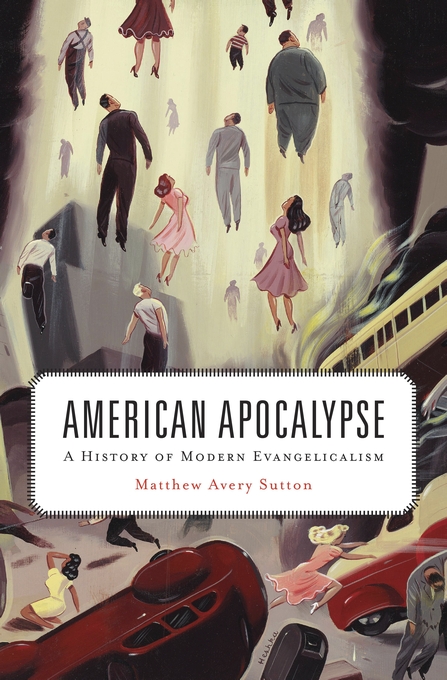
Why are our culture wars so durable? In his new book American Apocalypse, historian Matthew A. Sutton argues that the answer lies in the end of the world. But more evidence keeps piling up that there is a different answer, a better explanation. For some conservative religious people, the culture wars are about more than just winning elections or improving schools. The fight for America’s soul is nothing less than a battle to save people from eternal torment.

I Love You but It's the End of the World...?

I Love You but It’s the End of the World…?

Professor Sutton’s book is really terrific. He examines the history of what he calls “radical evangelical” belief as it emerged in the twentieth century. Unlike most historians, he doesn’t ignore important aspects of the radical evangelical family, such as Pentecostals and African Americans. The part that I’m struggling with is Prof. Sutton’s definition of radical evangelicalism. At its heart, Sutton says, American fundamentalism can be understood as

radical apocalyptic evangelicalism. . . . fundamentalists’ anticipation of the soon-coming apocalypse made them who they were.

In other words, Professor Sutton thinks that the heart and soul of fundamentalist belief comes from beliefs about the imminent and cataclysmic apocalypse. Our American culture wars are so virulent, he explains in chapter four, because fundamentalists and other radical evangelicals believe that they will be judged soon by a righteous God. They must fight against immoral movies, immoral booze, and other immoral trends because such things are part of the seductive Satanic lure of the end days.

Certainly, ideas of Bible prophecy and apocalypse are central to fundamentalist belief. But are they really as central as Professor Sutton contends? Are there other ideas that are even more important?

We stumbled across an evangelical warning this morning that raises the question again. In the pages of World Magazine, conservative evangelical Andree Seu Peterson explains why fundamentalists can’t relax. She does not mention the coming apocalypse. To Peterson’s way of thinking, there is a different reason why fundamentalists must continue fighting culture wars.

Peterson warns that things have changed fast in the last ten years. For conservatives, the question of homosexuality used to be cut-and-dried. Ten years ago, she says,

homosexuality was fringy and dangerous and you were dead set against it. Today homosexuality is the guy grilling steaks next door, waving to you over the picket fence, calling, “How about those Phillies!”

Conservatives might be tempted to accept homosexuals as part of God’s family. Christians might be tempted to love their neighbors, as Christ commanded. In secular terms, we might say, conservatives might feel pressure to adapt their beliefs to changing cultural norms.

Such thinking is dangerous, Peterson warns. Not because the world will be ending soon, but for a more basic reason, a reason more fundamental to fundamentalists. If you really care about your neighbor, Peterson explains,

If you want to talk about “love your neighbor,” need we mention that neighbors don’t let neighbors go to hell? … What good is all the good will you reap now when in the future Mr. Steak Griller next door curses you from across the chasm for your quiet complicity in his damnation?

When it comes to culture wars, this I-Love-You-but-You’re-Going-to-Hell logic is the equivalent of a perpetual motion machine. Whenever religious conservatives might be tempted to relax, to get along, to go with the flow, they can remind themselves of the eternal dangers of compromise. Even when it seems as if the kind thing to do, the loving thing to do, is to meet our neighbors in the middle, such apparent kindness, to some religious conservative, is a terrible mistake.

For some conservative religious people, culture-war issues are not just about accepting our neighbors’ “alternate lifestyles.” If they were, then we could all just get along. As Peterson tells the tale, we could all just smile and wave at one another, then go our separate ways. But for some conservatives, the culture wars have eternal stakes. If they don’t win, they will be guilty of sending people straight to hell.

Is that related to the apocalypse? Sure. Sorta. If Jesus will be returning sometime soon, suddenly and without warning, then these questions of damnation become even more urgent. But it is the damnation itself that is the crucial idea.

For those of us outside the circle of conservative evangelical belief, it can be difficult to understand the vital importance of the idea of damnation to evangelicals. For those of us who don’t believe in a real and terrifying hell, it can be easy to miss the enormous implications of such an idea. The apocalypse is only scary because of the threat of eternal damnation. The culture wars are only worth fighting if we can save some souls from such torment. Missionary work is only crucial because we need to spread the light as far as we can. Indeed, rather than defining fundamentalism as the radical evangelical belief in the apocalypse, we might better define fundamentalism as the radical evangelical belief in a real, eternal, and difficult-to-avoid Hell.

Certainly everyone interested in the nature of fundamentalism and culture wars should read Professor Sutton’s book. And maybe someone can explain to me what I’m missing. It seems to me, though, that the central idea to understanding what makes fundamentalists unique is hell, not just the coming apocalypse.

The Creeping “Christian” Coup

Take a stroll around America and you’ll see bajillions of “Christian” book stores, “Christian” schools, “Christian” churches. Of course, these institutions represent a certain sort of Christianity, a conservative evangelical Protestant one. There are lots of Christians who do not fit this definition of “Christian.” But a new set of survey data from the Pew Research Center for Religion and Public Life shows that the gap between the two seems to be narrowing. There are fewer Christians overall, but “Christians” are doing just fine.

Anytown, USA

Anytown, USA

So get ready for it. In the next week or so we’ll hear lots of exclamations about the recent Pew numbers. We’ll be told that the United States is becoming less Christian. As the folks at Pew tell us,

The Christian share of the population is declining and the religiously unaffiliated share is growing in all four major geographic regions of the country. Religious “nones” now constitute 19% of the adult population in the South (up from 13% in 2007), 22% of the population in the Midwest (up from 16%), 25% of the population in the Northeast (up from 16%) and 28% of the population in the West (up from 21%). In the West, the religiously unaffiliated are more numerous than Catholics (23%), evangelicals (22%) and every other religious group.

Does this mean we’ll see an abatement in culture-war scuffles over religion? Will America disagree less about abortion? Gay rights? School prayer? Evolution?

Not likely. In fact, we should expect the opposite.

Here’s why: Christianity’s share of the overall population might be dwindling, but evangelical Christianity has shrunk, if at all, by a much smaller percentage. In the words of the Pew report,

The new survey indicates that churches in the evangelical Protestant tradition – including the Southern Baptist Convention, the Assemblies of God, Churches of Christ, the Lutheran Church-Missouri Synod, the Presbyterian Church in America, 0ther evangelical denominations and many nondenominational congregations – now have a total of about 62 million adult adherents. That is an increase of roughly 2 million since 2007, though once the margins of error are taken into account, it is possible that the number of evangelicals may have risen by as many as 5 million or remained essentially unchanged.

I don’t know why the pollsters lumped Missouri Synod Lutherans in with evangelical denominations, but they certainly belong in the conservative camp. In any case, as anyone who knows the long history of our culture wars is aware, the fiercest fights have usually been between liberal and conservative Protestants.

Many of our liberal and secularizing culture-war leaders have come from mainline Protestant denominations. These days, for example, from the United Church of Christ, the denomination formerly known as Congregationalism, The Reverend Barry Lynn heads the liberal Americans United for Separation of Church and State. In the 1920s, as I argue in my first book, liberal Protestants such as Edward Birge and Edwin Conklin led the fight for evolution education.

If that sort of liberal Christianity continues to dwindle, it is entirely possible that Americans will come to agree that to be a “Christian” means adhering to a conservative evangelical Protestant faith. It might even snowball. The new Pew numbers show that evangelicalism is the only major religious group to pick up adherents from other churches. As they put it,

The evangelical Protestant tradition is the only major Christian group in the survey that has gained more members than it has lost through religious switching. Roughly 10% of U.S. adults now identify with evangelical Protestantism after having been raised in another tradition, which more than offsets the roughly 8% of adults who were raised as evangelicals but have left for another religious tradition or who no longer identify with any organized faith.

If evangelical Christianity bucks the trend of shrinking Christian identification, it makes sense to think that soon more and more Americans will identify evangelicalism with Christianity as a whole. What might that mean?

It’s impossible to predict, of course, but I’ve got a couple of hunches. First, we’ll see a stronger distinction between liberal evangelical Protestants and conservative ones. There is a strong tradition of politically progressive evangelicals, but its story tends to get swamped when people talk about evangelicalism.

Second, we’ll see a continuing weakening of the racial divisions between conservative evangelicals. As the new Pew report asserts, “Black Protestant” groups are also growing. But the Pew pollsters don’t differentiate between very different sorts of African American evangelicals. If evangelicalism becomes more of a stand-in for Christianity as a whole, pollsters will begin to connect conservative evangelicals across the race line. The interesting questions will become how many conservative evangelicals there are out there, not how many “Black Protestants.”

Third, and for SAGLRROILYBYGTH perhaps the most interesting, we will likely see a heating-up of culture-war rhetoric. Conservative evangelicals will frame themselves more and more vociferously as the voice of “Christianity.” With smaller numbers of liberal Christians to naysay, the identification of conservative evangelicals with the entire Christian community will become ever tighter.

Climate-Change Party Crashers

I love the analogy, but I don’t know if the story sounds realistic.

Over at the National Center for Science Education blog, Executive Director Ann Reid tells a story about converting skeptics into climate-change believers. Dr. Reid tells a two-part tale of her encounter at a dinner party with someone who does not accept the scientific consensus on climate change. She explains how she made her case.

Full disclosure: I’m a big fan of the NCSE. Unlike some of my fellow evolution mavens, I appreciate the NCSE’s accommodating attitude toward life in a pluralistic society. I’ve personally seen the ways leaders at the NCSE speak respectfully and productively with creationists. Instead of labeling conservatives “the enemy,” the thoughtful activists at the NCSE try to understand creationist thinking, try to see things from a creationist perspective.

Will she be invited back?

Will she be invited back?

But Director Reid’s story still sounds a little outlandish to me, on two counts.

Before I describe my objections, let’s hear the story. Dr. Reid tells a two-part tale (one and two) in which she chats amiably at a dinner party with a scientist who believes that today’s climate changes are just part of naturally occurring cycles. What to do?

Dr. Reid listens to the skeptic’s reasons, then lays out her best case. One doesn’t need to know everything about everything, Dr. Reid says, to see the overwhelming evidence. Consider just a couple of studies that show the drastic warming of the North American landmass. Species are moving north. And planting zones are shifting, too.

What did her interlocutor say?

Well, I’d never heard that before. That’s very interesting.

The savvy Dr. Reid knows that she won’t convince every skeptic this way. She’s not even sure she convinced this one guy.   But, she concludes,

I certainly made him think a little bit. I didn’t get into a debate, and I gave the rest of the table some conversational fuel for the next time they are seated next to a skeptic. Not bad for one dinner party. Give it a try! And let us know how it turns out.

Can it work? Like Dr. Reid’s dinner-party companion, I’m skeptical. Here’s why:

First, I agree that a Thanksgiving dinner is an excellent analogy for our continuing culture wars over climate change and other educational issues. But the analogy really points in a different direction.

As I argue in my new book, conservative activists have usually been able to exercise a veto over new ideas in America’s public schools. And they do so in a dinner-party way. That is, in America’s public schools—like at America’s dinner-party tables—controversial issues are anathema. It is not acceptable at dinner parties (except, of course, at really good dinner parties) to lambaste one’s fellows with offensive phrases or ideas.

Across the twentieth century, conservative activists have used this sort of dinner-party mentality to restrict significantly the advance of progressive ideas in America’s schools. Should we teach evolution? Not if it’s controversial! Should we teach kids how to have safer sex? Not if it’s controversial! Should we teach kids that boys can like pink toys? …that good books sometimes include bad words? …that every idea should be questioned, even religious ideas? …that every country has its flaws, even the USA? …and so on?

When an idea can be labeled “controversial,” public schools will flee from it in terror, as timid as a dinner-party host who has invited the boss over.

In generation after generation, conservatives have been able to maintain fairly traditional classrooms—though the vision of “tradition” has changed over time—by exercising this sort of dinner-party veto. Conservatives do not need to prove their case against progressive textbooks, or science, or literature. All they need to do is prove that those things are considered offensive by some, and the dinner-party rule kicks in.

Of course, that’s not the only reason to be skeptical about Dr. Reid’s optimistic story. In real life, most encounters like hers will go very differently, for a fundamental culture-war reason.

The way she tells the tale, her two mind-blowing pieces of evidence got everyone thinking. They exposed the skeptic to a new way of thinking about climate change. And her story ended there.

In real life, educated and informed culture-war partisans are not simply ignorant of the other side. Creationists know a lot about evolution. Wallbuilders know a lot about academic history. Abstinence-only educators know a lot about sexually transmitted diseases.

Dr. Reid’s dinner-party companion would likely know a lot about climate change. At the very least, he would have some of his own party-pleasing evidence ready to share. Instead of receiving Dr. Reid’s examples in humble silence, he would likely have countered with his own show-stopping studies. The rest of the dinner table would be left in the same position as it was when the party started: Confronted with two competing and seemingly convincing arguments, from two authoritative-seeming sources.

How should they pick?

Like most of our educational culture-war issues, this climate-change dinner party would likely come to a more obvious conclusion. Instead of fighting vehemently for one side or the other, instead of splitting the dinner table into hostile camps, most dinner parties come to a different conclusion. Like public schools, dinner parties choose to avoid any controversial subject, rather than get into a down-and-dirty debate.

Of course, I don’t get invited to many dinner parties, so I don’t really know what I’m talking about. Does my dinner-party analogy seem too cynical? Too negative?

Required Listening: Us & Them

Can we talk across the culture-war divide?  That’s the question journalist Trey Kay is asking in his new podcast series, Us & Them.  Is it worth talking to someone with whom we have fundamental disagreements?

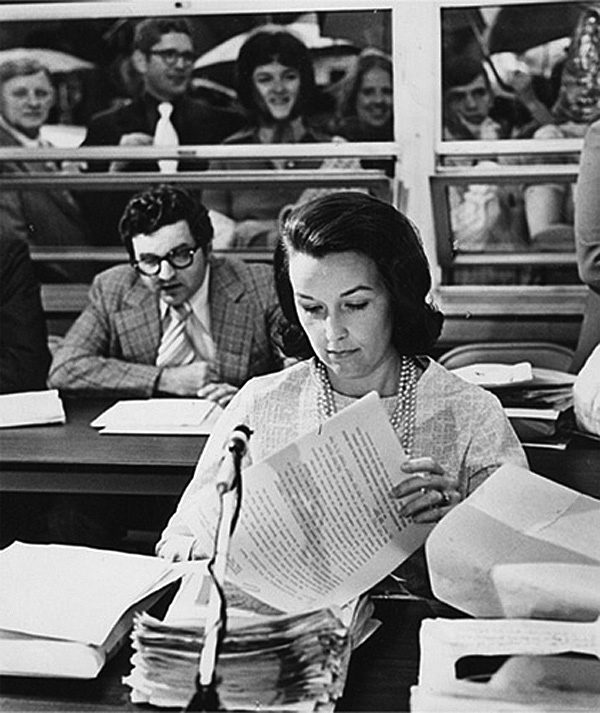
In his first episode, Trey Kay describes his culture-war-defying friendship with conservative activist Alice Moore.  Kay first got to know Alice Moore when he was working on an earlier documentary about the 1974-75 textbook controversy in Kanawha County, West Virginia.

As the sophisticated and good-looking regular readers of I Love You but You’re Going to Hell (SAGLRROILYBYGTH) are well aware, this Kanawha County story also plays a prominent role in my recent book about educational conservatism.  Alice Moore played a leading role as a conservative leader in that tumultuous school boycott.

Ms. Moore makes her case in a crowded 1974 school-board hearing...

Ms. Moore makes her case in a crowded 1974 school-board hearing…

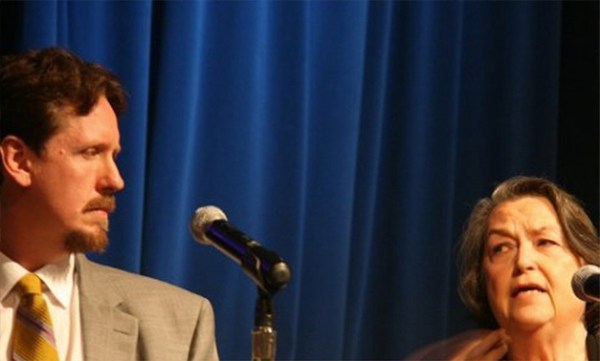
In his first podcast, Kay describes his continuing friendship with her.  The two of them inhabit different culture-war realms; Kay is a self-identified “blue-state liberal,” while Moore is a “red-state conservative.”  More than that, Ms. Moore believes in a conservative evangelical Protestantism that liberals often find intellectually outrageous.

Can the two of them be friends?

At the very least, it would take careful diplomacy on both sides. As Kay asked himself, “I have core beliefs.  What if I truly felt that they were under attack?”

Check out the whole episode when you’ve got a few spare minutes.  Kay and Moore manage to do the things friends do: Get a meal together, talk about politics and religion.  Yet neither of them budges an inch on his or her core beliefs.

Are such conversations worth having?  As Kay includes in this episode, his editor wasn’t sure.  She told Kay, “I don’t know how you can stand to have this conversation.”  It seemed to Kay’s editor that he was listening to Moore, but Moore wasn’t listening back.

Frenemies?

Frenemies?

Yet Kay remained convinced there was some value to such outreach programs.  He asked historian Jonathan Zimmerman’s opinion.  Zimmerman insisted that Americans need to speak with each other; we need a common language to discuss “American problems . . . shared by all of us.”  The most dangerous culture-war idea going around, Zimmerman said, is that those who disagree with us are either morally warped or ignorant.

Trey Kay hopes his new series will help figure out “what might happen if we take the time to listen to each other.”  Can it work?

Sex Sells, but Who’s Buying?

The kids are alright. And if they’re not, all of our culture-war fuss ‘n’ stuff over sex in schools is not making too much of a difference. Thanks to the inestimable Jonathan Zimmerman, Binghamton University last night enjoyed a mind-blowing discussion of sex education worldwide. Among the many takeaway lessons, Professor Zimmerman argued that culture-war fulminations about sex ed generally have only a very tenuous relationship to what children actually learn about sex.

As the sophisticated and good-looking regular readers of I Love You but You’re Going to Hell (SAGLRROILYBYGTH) are well aware, sex education has long been a lightning rod for controversy in the USA. Liberal activists insist that this is literally a life-and-death matter, with the rise of HIV and unplanned pregnancies. For their part, conservatives have blasted liberal efforts as something akin to child pornography. Or even as a scheme by sex predators to loosen up the victims.

In his talk last night on the scenic campus of Binghamton University, Prof. Zimmerman shared some of his work from his new book, Too Hot to Handle: A Global History of Sex Education. Over the course of the twentieth century, sex education has spread around the world, led in many ways by pioneers in the United States. What people have wanted out of sex ed, and the shape sex ed has taken, have continually been subject to withering debate.

Who's for it?

Who’s for it?

Sex ed—and fights over sex ed—have a long history, back to about 1914. But things changed radically with the introduction of HIV. Since that time, everyone involved has agreed that sex ed is a drastic necessity. But there have been bitter disagreements about what sex ed should look like.

Two distinct types of missionary outreach have competed for global influence. On one hand, we have what might be called the “health and autonomy” position. Advocates of this type of sex ed—which, for the record, is generally something your humble editor supports—want children to have maximum information about sex. This might be touchy, but children need to learn how sex works. Perhaps more important, children need to learn to assert control over their own sexuality. Coerced and risky sex are the twin scourges against which effective sex education should be designed to fight.

On the other side, conservatives have preached a moral approach, something we might call the “just say no” school. Around the world, activists have insisted that the best offense in the case of sex is a good defense. If traditional courtship patterns can be preserved, if sex can be something done only within the bounds of a heterosexual marriage, then the blights of disease and exploitation can be eliminated.

From New York to Auckland, Dhaka to Copenhagen, these sorts of culture wars over sex education have raged for a generation. During that time, leaders and organizations have come and gone. Buzzwords and strategies have mutated and metastasized.

One thing that has not changed, according to the good professor, was that the sex education curricula in public schools has not had much direct correlation to the ways young people learn about sex.

First of all, activists tend to debate official curricula, not actual learning. In other words, as with other educational culture-war issues such as evolution and school prayer, adults tend to fight over the official standards for what should be taught in public-school classrooms. In practice, there is a vast and unmeasured distance between official learning standards and real classroom learning.

Also, even if we take official sex-ed curricula as our guide to what kids are learning, in the USA we don’t find much. At most, Professor Zimmerman explained, students in US public schools get about six hours per year of sex education.

It might be no surprise, then, that students don’t learn much about sex in school. Since the 1920s, Professor Zimmerman told us, students have put school near the bottom of their lists of places they learn about sex. Consistently, students respond that they glean about five percent of their knowledge about sex from their classes in school. Five percent! That means that almost all of their sex education takes place outside the classroom walls.

Yet time and again, both sides in our tumultuous sex-ed culture wars have issued dire warnings about the importance of public-school sex-education programs. Do such programs matter? Certainly. But too often, culture-war activists make cataclysmic claims about the positive or negative effects of school programs. And too often, these claims are about building political careers and establishing public profiles, rather than helping kids learn.