Do You BELIEVE in Evolution?

It’s a deceptively simple question and it lies right at the heart of the creation/evolution controversies.  Unfortunately, Keith Blanchard’s recent opinion piece on the subject seems to miss the point.  Not because Blanchard doesn’t understand the issues, but because he deliberately hopes to change the conversation.  But it’s not that simple.  In at least two important ways, we need to wonder more deeply what we mean when we say we “believe” in evolution.
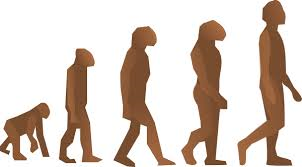
Can you BELIEVE this???

Can you BELIEVE this???

Blanchard writes from the heart of mainstream science.  We shouldn’t say we “believe” in evolution, Blanchard writes.  As he puts it,

if someone asks, “Do you believe in evolution,” they are framing it wrong. That’s like asking, “Do you believe in blue?”

Evolution is nothing more than a fairly simple way of understanding what is unquestionably happening. You don’t believe in it — you either understand it or you don’t…

Of course, we see what he means.  I even agree with his position.  But IMHO, this line or argument is nearly entirely beside the point.  It puts us evolution-supporters in the silly position of insisting that there is no debate about evolution.  Like Blanchard, we mean that the scientific facts of evolution are not open to debate, any more than is the fact of gravity or the fact of blue.

But so what?  How does that position get us anywhere?

Because there IS a debate about evolution, obviously.  Lots of influential people do not accept the facticity of evolution.  They do not accept that evolution explains the deep history of species on this planet.  Therefore, it matters to say that we believe in evolution.  Saying we “believe” in evolution, politically, means taking a stand about educational politics and cultural politics.

On a more basic level, too, saying that we believe in evolution has a value beyond Blanchard’s knee-jerk empiricism.  After all, in our society, we believe all sorts of things about which we only have a tentative or tenuous understanding.  For instance, when we have a serious medical malady, we trust in what medical experts tell us.  Not blindly, of course, but we talk to several experts and decide on a treatment course that seems to make sense to us.  We don’t necessarily understand every jot and tittle of the medical science.  But we take the life-or-death advice of doctors.  When it matters, we trust our experts.

And that is also the case here.  Saying we “believe” in evolution means something different than saying we understand its meaning.  Saying we “believe” in evolution means we trust a certain set of authorities over others.  Not blindly, of course, but in general outline.  So, for instance, when the National Center for Science Education mounts its Project Steve, I’m convinced.  The sheer numbers of mainstream scientists who publicly announce their “belief” in evolution convinces me.

After all, for educated folks these days, the un-interpreted evidence of our senses has long been suspect.  Blanchard writes that we should all trust the “evidence of [our] own senses.”  If we do so, he concludes, we’ll be convinced about the fact of evolution.  But educated people know that their senses might mislead them.  After all, the intuitive case for creationism is very strong.  Things seem to have been created according to some system, some plan.  Creationists might regularly appeal to people’s senses to prove their point, along the lines of Paley’s watchmaker.

As careful studies have proven, people who reject evolution don’t necessarily have a spottier understanding of science.  Contrary to what Blanchard says, people can and often do understand evolution yet reject it.  Michael Berkman and Eric Plutzer, for example, concluded from their large-group study of science teachers that creationists have an edge beyond the logic of folks like Blanchard.  Even among those Americans who understand that mainstream scientists agree on evolution, Berkman and Plutzer found, a large majority prefers that public schools teach both evolution and creationism.  That’s right: Even those Americans who know what mainstream science says about evolution still want schools to teach creationism.

In a world like that, Blanchard’s argument seems at best irrelevant.  Insisting that evolution is a simple fact, either to be understood or not understood, makes no sense in these circumstances.  On the other hand, if we say we “believe” in evolution, we’re doing something important.  Something with necessary political weight.

But there is one sense in which we should not try to “believe” in evolution.  Not Blanchard’s sense, but a more nuts-and-bolts kind of meaning.  As I’m arguing in an upcoming book with co-author Harvey Siegel, public schools need to get out of the belief business when it comes to evolution education.  That is, the goal of evolution education must not be to convince students to “believe” in evolution.  Rather, the goal should be to make sure all students understand it.

In a way, this is what Blanchard is saying, but I wonder if he would recoil in disgust from the implications.  Blanchard wants people to understand evolution.  We don’t “believe” in something that is obviously true.  We don’t “believe” in facts of nature.

In contrast, our prescription for public schools is that teachers adopt the goal of leading students to an understanding of evolution, and no more.  Students should be led to understand the principles of evolution, its mechanisms, and its evidence.  If they then choose not to “believe” evolution, that is an entirely private matter, beyond the realm of public school goals.

I don’t know for sure, but I suspect that this sort of “understanding-not-belief” is not what Blanchard has in mind.

What about you?  Do you “believe” in evolution?  What does it mean to “believe” it, rather than to just “know” it?  Or, from the other direction, what does it mean to “dis-believe” it, even if you understand it?


Bill Nye Misses the Boat on Creationism

What does it mean to be a creationist?  Especially a young-earth creationist of the Ken Ham sort?  “Science Guy” Bill Nye argued the other day that creationism represents “striking science illiteracy.”

I like Bill Nye.  I like science.  But Nye’s statement represents a lamentable cultural illiteracy.  In the long run, it doesn’t help the cause of evolution education.  It does not help to bridge the culture-war trenches.

http://www.youtube.com/watch?v=5I95sTHR2mc

Around minute five of the video above, Nye begins to discuss his recent debate with young-earth creationist leader Ken Ham.  Nye humbly acknowledges that it might not have been a good idea to debate Ham.  But he went ahead with the debate.  Why?  Because Nye worries about the “striking science illiteracy” represented by young-earth creationism in the United States (around 6:23 in the video clip above).  Without science, Nye goes on, there would be no internet.  There would not be enough food for everyone.  Science and especially science education represent basic building blocks of a just and prosperous society.  Nye hopes that high-profile debates might help voters and taxpayers de-fund and delegitimize creationism in America’s public schools.

For the record, I agree that the “Ham-on-Nye” debate was a good thing for those of us who want more and better evolution education in America’s schools.  I applaud Nye’s bravery and his presentation skills.  But I wish he would not rely on this false notion that young-earth creationism represents a simple lack of knowledge about evolution.  It is not true, and it suggests bad policy approaches to improving evolution education.

Consider, for example, our best recent polls about science literacy and creationism.  As political scientists Eric Plutzer and Michael Berkman recount in their book Evolution, Creationism and the Battle to Control America’s Classrooms, creationists are not less scientifically literate than non-creationists.

For instance, one Pew poll from 2005 found that Americans who know about the scientific consensus in favor of evolution still support the teaching of creationism in public schools.  You read that right: Among the 54% of Americans who agree that scientists agree about evolution, large majorities (74%) supported teaching creationism, intelligent design, or some mix of evolution, ID, and creationism in public-school science classes.

Another poll that Berkman and Plutzer summarize found that general scientific literacy was not correlated with belief in evolution.  That is, whether or not one was aware of general scientific information had no relation to whether or not one evinced a belief in evolution.

As Dan Kahan noted recently, even the National Science Foundation has considered removing a question about evolution from its science-literacy poll.  Why?  Because there is no correlation between general scientific knowledge and beliefs about evolution.  What people know or don’t know about evolution does not give us any information about whether they believe it or don’t.

Knowledge is distinct from belief.

Bill Nye’s assumption that young-earth creationism represents a lack of scientific knowledge is more than just an embarrassing ignorance on Nye’s part.  The educational and political tasks in cases of naïve non-knowledge are worlds apart from the educational and political tasks in cases of intentional or constructed non-knowledge.  In the case of evolution education, if creationists were simply unaware of evolutionary science, then outreach programs would have a good chance of success.  The task would be simply to spread information.  But in reality, evolution education must recognize that many students and families are not simply ignorant, but resistant to this form of knowledge.  Educational efforts must strive first to understand the reasons for this resistance.  Only then can evolution educators hope to develop effective strategies to teach evolution.

Consider an example from outside the world of evolution education.  Imagine your task is to deliver polio vaccine in a rural area.  If the people in the area did not know about the vaccine, you could simply publicize the benefits and the location of the vaccination clinic.  Then people would bring their children to receive the vaccine.

But if the people in the area thought that the vaccine was dangerous, you couldn’t simply put up posters and distribute flyers.  You would have to engage in a very different task.  You would have to understand why people thought the vaccine was dangerous.  You would have to get to know the reasoning involved in order to offer counter-arguments that would be convincing.  Only if you could convince people that the vaccine was helpful and not dangerous could you ever hope to vaccinate large percentages of the population.

Bill Nye is talented.  Bill Nye is brave.  Bill Nye is smart.

But he continues to display a puzzling ignorance about the contours of creationism in America.  Instead of using his considerable influence to suggest pragmatic policies to spread evolution education, he continues to misdirect evolution education policy.  He needs to learn about creationism if he wants to debate it intelligently.


Schools and Science: Good News for Creationists

Whose science gets taught in America’s public schools?  A new study of Oklahoma high-school students finds that students emerge from their Biology classes with a creationist-friendly understanding of evolution.  This study suggests once again that we can’t just ask HOW MUCH science education young people receive.  We must also ask about WHOSE DEFINITION of science is taught.

Looks like more evidence that science in public schools might be far friendlier to dissenting visions of science than we might think.  Communities that include large numbers of creationists may take solace from the implication: Science in schools might mean very different things to different people.

The findings were published recently in the pages of Evolution: Education and Outreach.  Researchers Tony B. Yates and Edmund A. Marek surveyed students at thirty-two Oklahoma high schools.  They administered tests before and after the students took a course in Biology.  Taken as a whole, the students expressed 4812 misconceptions before they took the class.  Afterward, they had 5072.

Yates and Marek pulled those misconceptions from a list of twenty-three common ones, including the following:

According to the second law of thermodynamics, complex life forms cannot evolve from simpler life forms.

And

Evolution cannot be considered a reliable explanation because evolution is only a theory.

Though the students had more misconceptions about evolution after their classes, Yates and Marek claimed, they also came out more confident in their knowledge of evolution.

What’s going on here?  Yates and Marek blamed the teachers.  As they concluded,

teachers may serve as sources of biological evolution-related misconceptions or, at the very least, propagators of existing misconceptions.

Of course, for creationists, this must be a cause for celebration.  What Marek and Yates call “misconceptions,” creationists might call “critical thinking” about evolutionary “dogma.”  In spite of conservative worries that public schools have become godless institutions, hostile to religious belief, this study provides more evidence that teachers represent the beliefs of their local communities.  As political scientists Michael Berkman and Eric Plutzer argued in their book Evolution, Creationism, and the Battle to Control America’s Classrooms, teachers most often teach the values of their communities.  In the case of creationism and evolution, we see more evidence here that teachers do not challenge the religious beliefs of their students.  The science on tap in these Biology classes seems accommodating to skepticism about mainstream evolutionary thinking.


Hamas, Textbooks, and a Real Educational Culture War

What does a real educational culture war look like?  A recent story in the New York Times describes the way the Hamas government in Palestine’s Gaza Strip has pushed its all-out war against Israel into its textbooks.

The militant Hamas government has produced new histories that glorify the role of Hamas, that denigrate Israeli land claims, and that teach a self-consciously heroic history to youngsters in the Gaza Strip.

Will these textbooks change the way the next generation understands the Palestinian/Israeli conflict?

The director of the research study about the Hamas textbooks thinks so.

As quoted in the NYT story, Daniel Bar-Tal, a professor at Tel Aviv University, explained,

When a leader says something, not everyone is listening. But when we talk about textbooks, all the children, all of a particular peer group, will be exposed to a particular material. . . . This is the strongest card.

Fair enough.  Textbooks matter.  As Professor Bar-Tal carefully put it, textbooks “expose” children to a certain perspective.   As we’ve seen in the American context, every conservative group from the American Legion to Accelerated Christian Education has attempted to introduce patriotic or religious textbooks that will transform schooling and culture.

But “exposing” children to a certain worldview is not the same as imposing that worldview on them.  Textbooks make up only one part of education.  As we’ve seen with evolution/creation battles in the USA, the way teachers use textbooks is significantly more important.  As political scientists Eric Plutzer and Michael Berkman argued, teachers function as “street-level bureaucrats,” making important decisions about what to teach and how to teach it (pg. 149, see also pps. 160-169, 219).

As the NYT article argues, Hamas certainly seems to understand this.  The education policies of Hamas have ranged far beyond altering textbooks.  Hamas sends morality police to patrol school campuses for proper behavior between boys and girls.  They have also made important structural changes in schools in the Gaza Strip.

Most of all, we see in this case the central importance of schooling and education in culture-war battles far beyond the shores of the United States.  It seems whenever two groups come into drawn-out conflict, schools become an important battleground.


Creationists: We Don’t Want Creationism in Public Schools

We don’t push creationism on America’s public schools.  That’s the word from two very different ends of America’s creationist spectrum.

An intelligent observer might be forgiven for feeling a little confused.  If creationists don’t want creationism in America’s schools, what do they want?

Seen from this outsider’s perspective, this creationist plea demonstrates the important fact that America has not hit a wall with evolution/creation controversies; we are not trapped in a timeless deadlock; evolution and creation are not grappling in an endless, changeless battle.

Evolution is winning.

Don’t believe me?  Consider the recent statements of two leading creationists, two creationists with very different anti-evolution ideas.

Our first creationist voice for keeping creationism out of public schools comes from the leading proponent of intelligent design, Seattle’s Discovery Institute.

According to the conservative Christian World Magazine, the Discovery Institute’s Stephen Meyer has called recently for intelligent design advocates to stop pushing ID on public schools.  In a New York talk about his new book, Darwin’s Doubt, Meyer insisted it would be “imprudent for our side to be pushing intelligent design into textbooks.”

There was no need for such forceful public advocacy, Meyer argued.  Instead, growing doubt among mainstream scientists should be allowed to bubble over into public-school science curriculum.  According to Meyer, “There are too many scientists doing science from this perspective to keep it out of schools.  I’d prefer for it to happen organically.”

At the other end of the creationism spectrum, Ken Ham has called for a similar hands-off policy concerning public schools.  Ham, the founder of the leading young-earth creationist ministry Answers In Genesis, has insisted recently that his group does not push young-earth creationism into public schools.  Why not?  Because mandated creationism, Ham argued, would “likely be taught poorly (and possibly mockingly) by a teacher who does not understand what the Bible teaches. . .”

On the other hand, Ham does hope that public schools will teach a greater variety of ideas about evolution, including young-earth creationism.

For those of us non-creationists hoping to understand American creationism, what lessons can we take out of these statements?

At first glance, such arguments seem merely strategic.  My hunch is that both Meyer and Ham would prefer to see more intelligent design or young-earth creationism in America’s public schools, respectively.  Insisting that they do not push such notions seems nothing more than an attempt to play the role of innocent bystander in creation/evolution fights.

But we can take other lessons from these creationist statements as well.  First of all, both statements demonstrate a recognition that ID or YEC are not currently dominant in America’s public schools.  Dr. Meyer says he does not want to push ID, since that will leave the decisions in the hand of a judge, as happened in the Dover trial.  Mr. Ham worries that mandatory creationism would lead to withering critiques of the creation curriculum by the vast numbers of anti-creationist teachers.

As I’ve argued in my 1920s book, such creationist attitudes represent a wholesale revolution in anti-evolution politics.  In the 1920s, anti-evolution campaigns wanted more than to have creationism included in public schools.  Back then, anti-evolution politicians hoped to ban evolution wholesale.  Not only that, in the 1920s politicians and activists insisted on banning all sorts of ideas that might have challenged traditional Protestant culture.  Consider the “anti-evolution” law that passed the US Congress in 1924.  That law specified that no teachers could engage in “disrespect of the Holy Bible.”  But the law also insisted that DC teachers could not teach that the USA had an inferior form of government.

The sort of “us-too” strategy engaged in by Ham and Meyer demonstrates a very different goal.  Even if they are being duplicitous in their insistence that they do not want to push creationism on public schools, the very fact that they choose to disavow such insistence speaks volumes.

In the 1920s, anti-evolutionists wanted evolution out.  All the way out.  With all its attendant theories of atheism, socialism, sloppiness, and bad manners.  Anti-evolutionists went out of their way to show their vehement condemnation of all things evolutionary.

In the 21st century, in contrast, anti-evolutionists claim only to want a place at the public-school table.

This revolution in anti-evolution strategy demonstrates that there is no long-term deadlock in the evolution/creation struggle.

I’ll say it again: Evolution is winning.

It only appears to be a deadlock if we restrict ourselves to a short historical perspective.  Yet, for understandable reasons, many of the smartest voices in the evolution/creation debates have implied that we are in fact stuck.

Randy Moore, for example, has long been the smartest guy in the room when it comes to the struggle over creationism and biology education.  Yet even he allows himself to imply that evolution/creation has bogged down.  In a recent essay in the BioLogos Forum, for example, Moore opens with the following assertion: “the evolution-creationism controversy has been one of the most abiding controversies in America during the past several decades, public attitudes about evolution and creationism have changed relatively little during that time.”

True enough, but he restricts himself to a relatively short timeline.  Opinions since the 1980s may have congealed, but that does not imply a longterm freeze.

Michael Berkman and Eric Plutzer, too, open their wonderful study of evolution and creationism battles with the assumption that these battles have changed little.  They do not ask IF creation/evolution fights have deadlocked.  They only ask WHY such fights have been so durable.

Today’s statements from Stephen Meyer and Ken Ham demonstrate the dangers of these assumptions.  From an historian’s perspective, attitudes that have stayed the same since the 1980s are not proof of deadlock.  Rather, they appear only to be recent trends.

The fact that leading creationists insist that they do not want to push their theories into public schools tells us a lot.

It doesn’t tell us, of course, exactly how sincere such protestations might be.

But it does tell us that the evolution/creation controversy has changed dramatically over the past century.  Whereas the first rounds of this battle saw anti-evolutionists pound evolution education into the ropes, more recent decades have seen that trend reversed.

It is now creationists who insist they don’t want to push their ideas into public schools.

“Why can’t creationism be included?” is a vastly different question than “Why should schools include evolution?”

Call Me, New York Times

Did you see it yet?

All of us who follow creation/evolution debates have likely read by now the “Room for Debate” essays in the New York Times the other day.

The jumping-off point, it seems, was Virginia Heffernan’s recent claim that she is a creationist.  The editors asked contributors, “Is it really so controversial to believe in biblical creationism?”

Each essay is short and pithy.  Certainly worth your time.  They include fourteen cents altogether, two each from an evangelical physicist, a liberal theologian, an evangelical apologist, a Muslim pundit, a political scientist, a law professor, and a theologian/environmentalist.  All in all, an interesting and idiosyncratic collection of opinions on the subject.

But here’s my beef: Where is education in all these voices?

Other scribblers, I’m sure, will ask other questions.  For example, where is atheism?  Or any sort of strong argument that it is, indeed, a big problem to believe in biblical creationism?

The editors would not have had to work hard to find a good atheist to contribute.  Even outside the big names such as Jerry Coyne or PZ Myers, plenty of articulate atheists could have offered a strong opinion about the dangers of believing in biblical creationism.

More directly relevant to readers of ILYBYGTH, where is the voice of education?

IMHO, the issue of “biblical creationism” would not be nearly as controversial if Americans did not have to decide what to teach in our public schools.

As Professor Giberson noted in his piece, “The brouhaha about ‘biblical creation’ is really a proxy war about the reality of meaning in the world.”

Well put.  But that proxy war is fought primarily in boards of education, in classrooms and PTA meetings, in state textbook meetings, and in thousands of other school-related battlefields.  The evolution/creation controversy is not primarily an issue simply of scientific or theological disagreement about epistemology and ontology.  There are plenty of other issues on which people do not agree that have not had the tumultuous career of the creation/evolution debates.

In short, the brouhaha over reality of meaning is only a brouhaha because we need to decide on what sorts of meanings we will teach our children.

It would have helped this discussion enormously, I believe, if someone had pointed this out; if at least one contributor made education his or her primary intellectual interest.  I’m not only saying this because I wish the NYT had called me.  Though I do work for peanuts.

In the bigger picture, leaving an “education” voice out of a creation/evolution debate has long been a problem for those of us trying to understand the issue.  Too often, creation/evolution is framed as an issue of science and religion.  Science and religion only.  As if the truth of life’s origins remained the primary source of controversy.

That makes it difficult to understand the real issues.  As thoughtful scholars such as Randy Moore, Lee Meadows, Michael Berkman & Eric Plutzer, and David Long have pointed out, creation/evolution is not only about “the reality of meaning in the world.”  The rubber hits the road in this culture-war issue with individual students, in specific classrooms, day after day, decade after decade.

Unless we recognize the importance of the way creation/evolution plays out in such real-life environments, we will not move forward.

So, for the record, the next time any editor wants to corral a herd of scholars to comment on creation/evolution issues, please be sure to include someone with a primary interest in evolution.

It doesn’t have to be me.  But I’m always available.

I will also talk about creation/evolution at Labor Day cookouts, Bar/Bat Mitzvahs, awkward crowded elevator rides, or any other event.  Just call me!


Creation Wins the Culture War

Quick: What rhymes with mitochondria?

It’s a tough question, and it helps illustrate the uphill cultural battle evolution has faced for the past hundred years in America.

A fluffy piece in Sunday’s New York Times gives us an example of this persistent imbalance.

The article describes the results of an outreach program to New York City teens, Science Genius.  The program hopes to use hip-hop as a sweetener to connect urban youth to science.

A victory for evolution and mainstream science?  I don’t think so.  I’m no creationist, but I can’t help but conclude that pop music seems to be more suitable for creationism than mainstream science.

Though the supporters of the NYC program claim some limited successes, even those claims highlight the deep difficulties of engaging young people of every cultural background with mainstream science.

We don’t want to make too much out of just one example, but listeners are not likely to be much moved by rhymes like the following: “Bioclast, foliation, and that granite, . . . I can tell you something ‘bout an aphanitic.”

I applaud the student, and the program, but rapping the truths of mainstream science doesn’t fall as trippingly off the tongue as those of creationism.

How much evolution music can you name?  Good stuff?

Creationists, on the other hand, can claim all sorts of pop music from the headlining Jonas Brothers to internet-cluttering obscure artists across the world.  Christian and Creation rock has long been an enormous and aggressive cultural presence, as ex-fundamentalist Jonny Scaramanga has remembered.

Where is the evolution-rock?

As critic Jason Rosenhouse perceptively noted in his book Among the Creationists, mainstream science does not have to worry about creationist challenges to the strength of real evolutionary science.  But creationists, Rosenhouse argues, DO have an easy time of constructing narratives that make sense to people.  Mainstream science?  Not so much.

Perhaps this is why people trust their intuition about creation and evolution more than they trust mainstream science.  As Penn State political scientists Michael Berkman and Eric Plutzer noted in their book Evolution, Creationism, and the Battle to Control America’s Classrooms, even the small minority of Americans who agree that mainstream science is firmly evolutionist support the inclusion of creationism in America’s classrooms.  That’s right: even those Americans who recognize that scientists agree about evolution tend to agree that creationism should be part of public science education.

Why is that?  At least part of the reason must be because mainstream science does not offer a compelling story to which Americans can cling.  There is no telos, no plot, no conflict (in the literary sense), no protagonists worth following.

Creationism, on the other hand, makes a good deal of intuitive sense.  It makes sense that a world so complex, so morally challenging, must have been created on purpose.

Evolutionary science, for its part, needs to make the case that humanity occurred somehow, but we don’t know exactly how.  It needs to explain that the feelings people have of purpose, of cosmological intent, are only vestiges of happenstance.

A hard bill of goods to sell on the pop-culture marketplace.  Just like it is hard to find a rhyme for mitochondria.


Apocalyptic Academics: Conservatives and the Myth of Outrageous Schools

There it is again!

Today we find yet another example of conservative commentators lambasting the outrageousness of public education.  This firmly ensconced tradition of school-bashing doesn’t make much sense to me.  I would think conservatives would want to promote public education in America as one field in which conservative ideas and ideals have taken firm control.

Today’s example comes from the pages of Public Discourse, in an essay by Professor William Jeynes.  The opening paragraph highlights the terrible activism of public schools:

An inquisitive elementary school student asked his teacher, “Is it wrong to steal?” The teacher replied, “I don’t know. What do you think?” This incident in a major midwestern public school alarmed thousands of parents, and reminded myriad others why they value religious private schools: these schools are usually guided by a moral compass for academics and behavior that public schools patently do not offer.

This notion of vaguely outrageous teaching in America’s vaguely described public schools is a dominant theme of conservative talk about public schooling.

Browsers of conservative media hear about high-school students strip-searched during exams, or teachers rewarded for “stomping” on the American flag.

In all these stories, public schools and their teachers loom as out-of-control dictators, blasting away at traditional morality, patriotism, religion, and common sense.

Nor is this theme a new one among conservative pundits.

In the 1980s, for example, commentator Sam Blumenfeld warned readers that “the neighborhood school is controlled by a national educational and bureaucratic hierarchy completely insulated from local community pressures and answerable only to itself.”[1]

In the 1970s, US Representative John Conlan (R-AZ) worked hard to control what went on in public schools.  Debating House Bill 12851 in May, 1976, Conlan advised,

I think one of the things that perhaps the gentleman from Michigan is not aware of is that there is a significant current in education to teach children that there are no values, there is no right, there is no wrong, that everything is relative, and it all depends upon situational ethics.[2]

As I argued in my 1920s book, conservatives in that decade also insisted on the terrifyingly amoral or immoral dominance of public schools.  For instance, one well-funded insurgent group, the Bible Crusaders, warned that public schools had been taken over by a conspiratorial sect determined “to secretly and persistently work to overthrow the fundamentals of the Christian religion in this country.”[3]

In all these tellings, schools and teachers represent insidious threats to traditional values.  As with Professor Jeynes’ recent warning, a single example, often vague or imprecise, is used as proof of the continuing trend of public schools nationwide. For some reason, conservatives have long tended to exaggerate the perniciousness of public schools.

Of course, this is not only a conservative tendency.  Progressives, too, often hyperventilate over isolated examples of conservative influence in schooling.  As we noted recently, for instance, the specter of creationism often looms much larger in the progressive imagination than it does in actual schools.

In the face of such assertions of apocalyptic academics in public schools, more careful scholarship demonstrates that most teaching fits in with local community values.  Political scientists Michael Berkman and Eric Plutzer have noted that most teachers’ values match those of their school and district.[4]

Of course, there always are and always have been some teachers who flout local values.  But such events are newsworthy precisely because they are unusual.  In general, most teachers prefer to avoid controversy.  Most teachers, like most people, try to fit in.  The notion that teachers and schools are out to demolish the values of their students just doesn’t match experience.

Yet conservatives will presumably continue to trumpet examples of outrageous public-school teaching.  To a non-conservative like me, this does not make sense.  I would think conservatives would rather exaggerate the conservative nature of most public education.  These days, talk about public schooling is dominated by demonstrably conservative themes: privatization, competition, and union-bashing, to name a few.

Wouldn’t it make better strategic sense for conservatives to claim all of these as victories?


[1] Samuel L. Blumenfeld, Is Public Education Necessary?  (Old Greenwich, CT: Devin-Adair, 1981), 4.

[2] Congressional Record, May 12, 1976, pg. 13532.

[3] “The Bible Crusader’s Challenge,” Christian Fundamentals in School and Church 8 (April-June 1926): 53.

[4] Michael Berkman and Eric Plutzer, Evolution, Creationism, and the Battle to Control America’s Classrooms (New York: Cambridge University Press, 2010), 199-200.

Pennsylvania Science Teachers Teach Creationism as Science

Pennsylvania science teachers teach creationism.  It really should come as no surprise, since that is the case for science teachers in public schools across the country.  But every new batch of data offers some new insight.

Thanks to the ever-vigilant Sensuous Curmudgeon, we see a new survey from the Pittsburgh Post-Gazette.  It doesn’t contain any mind-blowingly unexpected results, but the facts on the ground in the evolution/creation/intelligent design controversy are always mind blowing.

This survey collected results from 106 science teachers from the Keystone State.  The responses show us once again that there is no bright line between science and religion in many public-school classrooms.  For instance, while 90% of teachers said they believe in evolution, 19% listed creationism as their belief, while 13% claimed to believe in intelligent design.  Unfortunately, the survey did not require respondents to define what they meant by any of these terms.

But even with these results, we see that for many science teachers, it is entirely possible to claim both creationism and evolution as beliefs.  Teachers could choose more than one label, and many did.

As we might expect, teachers’ beliefs seem to carry over into their classroom practice.  One teacher claimed to spend five class periods teaching evolution and one class teaching creationism.

Another accused the newspaper of conducting a witch hunt to identify and persecute Biblical Christians.

One teacher warned his students against tools such as radiocarbon dating, since they contradicted the Bible.

In each of these cases, teachers insisted their school administrators approved of their classroom practice.

Most intriguing, one anonymous teacher—the one who taught one creationism class among five classes about evolution—confirmed the findings of political scientists Michael Berkman and Eric Plutzer.  Though Berkman and Plutzer hail from Penn State, they collected data from across the nation.  “Many teachers’ individual values,” they concluded, “match up well with those of the district in which they teach” (30).  Stricter state standards and certification rules, Berkman and Plutzer argued, will not make a decisive impact.  Instead, teachers tend to teach the ideas and values of their local communities.

This teacher agreed.  “Most parents and officials,” this teacher from Indiana County—just west of Pittsburgh—reported, “do not want evolution ‘crammed’ into their children.  They have serious philosophical/religious issues with public schools dictating to their students how to interpret the origins of life.”

For those like me who want to see more and better evolution education in public schools, this survey confirms the difficulty of the task.  Just as schools cannot be charged with solving poverty, so school science cannot fairly be asked to change our culture’s beliefs.  In the case of evolution, creation, and intelligent design, those beliefs are far different from what mainstream scientists might like to see.  Instead of locating the problem in science classrooms, we need to understand the true dimensions of this controversy.


Will It Matter?

The New York Times reports that new state science standards endorse more rigorous teaching of climate change and evolution. According to one conservative group consulted by the Times, the new standards will disregard creationists’ rights, will “classify them as outsiders within the community.”

But will they?

Happily for religious conservatives, and unhappily for those like me who support more rigorous evolution education, these standards will not make much impact on the ways evolution is actually taught.

Political scientists Michael Berkman and Eric Plutzer have argued convincingly that state standards have “only minimal impact” on what goes on in science classrooms.[1]  The decisions made at the state level are not nearly as important as the daily decisions made by teachers.

Similarly, science educator Randy Moore has noted that state standards “often mean little in biology classrooms.”[2]

So will these new standards fulfill the hopes of science educators or the fears of religious conservatives?  Likely not.  That does not mean that such standards are useless.  The political process of crafting and wording state education standards can make a significant symbolic statement about the cultural and intellectual values of a community.

However, in terms of transforming teaching on a day-to-day level, these new suggested standards will not likely have the impact journalists suggest.  As long as local communities feel ambivalent about evolution education, teachers will largely avoid the topic.


[1] Michael Berkman and Eric Plutzer, Evolution, Creationism, and the Battle to Control America’s Classrooms (New York: Cambridge University Press, 2010), 160.

[2] Randy A. Moore.  2002. “Teaching Evolution: Do State Standards Matter?” BioScience 52 (4) 380.