GOP Race Kicks Off…at Fundamentalist U

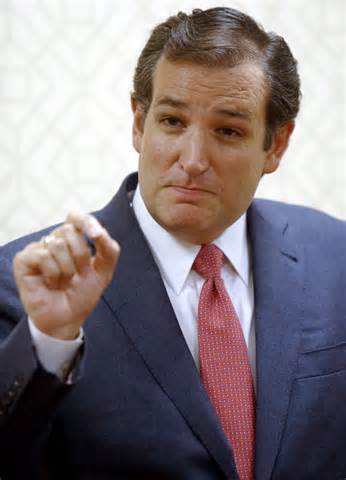
…and they’re off! Senator Ted Cruz of Texas plans to announce his formal candidacy for president today, according to the Houston Chronicle. And he’s making the announcement at Liberty University.

Why Liberty? As the Sophisticated and Good-Looking Regular Readers of ILYBYGTH (SAGLRROILYBYGTH) are well aware, I’m working on a history of fundamentalist higher education. These schools–places like Liberty, along with more liberal cousins such as Wheaton College and Biola University, and more conservative ones such as Bob Jones University—are central institutions of American conservatism.

Cruz at Fundamentalist U

Cruz at Fundamentalist U

Not only do they represent conservative evangelical belief, but also a vaguer (and politically powerful) sense of cultural traditionalism. The campuses of Wheaton, Liberty, and Bob Jones are not just in-your-face religious environments, but also places where you wouldn’t see until recently a man with long hair or a woman with a short skirt.

Not only that, but college campuses also represent cutting-edge learning. Fundamentalist and evangelical colleges are not only religious, not only conservative, but also forward-looking places. By hosting scholarship and teaching, evangelical schools represent the future.

For all these reasons, at least since Reagan, GOP candidates have made it a point to campaign at these campuses. As CNN noted this morning, everyone from Romney to McCain, Rick Perry to Michele Bachmann has put in an appearance.

It makes sense. And it leads us to an interesting question: If you planned to run for president, where would YOU make your announcement? I have an idea of what I’d do.

Fundamentalism and the Modern University

Are evangelical colleges modern? Or, with their insistence that knowledge has its roots in God’s Holy Word, are they somehow trapped in medieval ideas about knowledge and the purposes of higher education? The answer is more complicated than it might seem at first.

As the sophisticated and good-looking regular readers of ILYBYGTH (SAGLRROILYBYGTH) are sick of hearing, I’m hard at work on my book about evangelical higher ed. In the twentieth century, Protestant fundamentalists opened or transformed a network of colleges dedicated to protecting fundamentalist faith. If students are led astray at mainstream secular colleges, the thinking went, fundamentalists needed their own schools to teach each new generation of Christians how to be educated and evangelical.

As part of my reading list, I’m deep in Roger Geiger’s new book, The History of American Higher Education (Princeton University Press, 2015). I’m writing a full review for Teachers College Record and I’ll be sure to post links to that review when it comes out.

Are fundamentalists colleges modern? Or are they trapped in the 1600s?

Are fundamentalist colleges modern? Or are they trapped in the 1600s?

In the meantime, though, Professor Geiger’s survey of the first colleges raises some tricky questions for fundamentalist higher education. As with so many early American institutions, colleges such as Harvard and Yale represented the tail end of medieval traditions, just as they were changing into recognizably modern ways of thinking.

Conservative evangelicals like to point out that America’s leading colleges were often founded as religious schools. It’s true. Harvard and Yale were both intended, first and foremost, to defend orthodox Puritanism. Not only were they ferociously religious, but they envisioned their role in a radically non-modern way. Instead of serving as an institution that encouraged new thinking, Harvard and Yale in the 1600s and early 1700s both saw their role as passing along established truth. As Prof. Geiger puts it, in the early decades, “The corpus of knowledge transmitted at Harvard College was considered fixed, and inquiry after new knowledge was beyond imagining.”

Orthodoxy at these early schools was defended with a rigor that would make twentieth-century fundamentalists proud. Harvard’s first president, for example, was ousted for theological reasons. President Henry Dunster came to believe that infant baptism was not a scriptural practice. As a result, the General Court summarily got rid of him. In their words, no one could lead a college if they “manifested themselves unsound in the faith.”

Both Harvard and Yale made explicit their goals. In early years, Yale explained its primary religious mission:

Every student shall consider the main end of his study to wit to know God in Jesus Christ and answerably to lead a Godly sober life.

It was not much different at Harvard:

the main end of [a student’s] life and studies is, to know God and Jesus Christ which is eternal life, Joh. 17.3

In all these aspects, life at Harvard and Yale between the 1630s and 1720s seems remarkably similar to life at fundamentalist colleges in the early twentieth century. For schools such as Wheaton College, Bob Jones College, Bible Institute of Los Angeles, or Gordon College, these Puritan echoes resounded loudly. At all these fundamentalist schools, leaders insisted that the first goal was to help students understand themselves as Christians. The first intellectual challenge was to study seemingly distinct bodies of knowledge to see the hidden connections put in place by God.

In this way, then, it seems as if fundamentalist colleges—even those more liberal schools that eventually abandoned the “fundamentalist” label—hearken back to a pre-modern vision of higher education.

We have to be careful, though, before we assume too much. In other important ways, twentieth century dissenting religious colleges participated fully in the central intellectual tradition of modern higher education.

According to Professor Geiger, colonial higher education went through a revolutionary change in the 1720s-1740s. During that period, endowed professorships at Harvard gave some faculty members the independence to pursue new forms of knowledge. These professors began to incorporate the ideas of new thinkers such as Isaac Newton and John Locke.

The radical change came not only from the newness of the ideas, but from the notion that the college or university should be the place to explore such new ideas. As Professor Geiger puts it,

The significance and prestige of Newtonian science altered college teaching by introducing the experimental lecture employing apparatus, creating a demand for specialized professors and establishing the expectation that the curriculum should incorporate new knowledge.

A fundamental characteristic of the modern university emerged in the decades before the American Revolution. College, more than any other institution, came to be seen as the province of cutting-edge thinking. As Professor Geiger points out, even before Ben Franklin made his famous experiments with lightning, John Winthrop at Harvard used his endowed Hollis Chair funding to purchase equipment that would allow him to demonstrate the properties of electricity.

Just as the fundamentalist colleges of the twentieth century clung to the pre-modern notion that universities ought to pass along established truths, those same fundamentalist schools fully participated in the modern notion that universities ought to explore new truths.

An evangelical scientist, for example, such as Russell Mixter at Wheaton College in the 1950s, believed that no amount of human investigating could overturn the truths of Scripture. But Mixter (and others like him) also saw himself as an intellectual specialist, a scientist exploring the outer boundaries of biology to discover new things about God’s creation.

Are fundamentalist and evangelical colleges modern? In this sense, they certainly are. The faculty at twentieth- and twenty-first century conservative colleges are divided into academic disciplines. Each of them is expected to carry out research in his or her field. The definition of those fields may be different from the ones at secular institutions, but the fundamentally modern notion of research remains central.

At the same time, though, by envisioning themselves as the guardians of students’ faiths, fundamentalist colleges hearken back to the pre-modern roots of the Ivy League. As Professor Geiger argues about 17th century Puritan higher education, “the deeper purpose of the college course and the overriding preoccupation of the institutions were to demonstrate the truth of Christianity.”

Today’s evangelical colleges would agree.

Update: Fundamentalism and Higher Education in the 1930s

For all those in the Binghamton area: We’ve had to move my talk this afternoon until Wednesday, Feb. 25th, at 4 PM in the conference room of the Institute for Advanced Studies in the Humanities, first floor Library Tower on the scenic campus of Binghamton University.  The talk will still be free and open to the public.  All are welcome; no registration is required.

Please note: This is SEPARATE from the radio discussion tonight (Monday, Feb. 23, 2015) at 6:30.  That’s still on as scheduled: Religion and the Modern University, a panel discussion featuring yours truly.  Available streaming through the interwebs.

For those who are just joining us, the talk on Wednesday will include material from my current research.  Here is the official abstract:

What has it meant to be a Protestant fundamentalist in the United States?  For some, it meant engaging in disputes with fellow Baptists or Presbyterians about the proper nature of their denomination.  For others, it has implied a wide-ranging cultural conservatism, including battles against ideas such as evolution and against social practices such attending movies and smoking.  Scholars have had no more success than pundits in defining fundamentalism, though historians have agreed that a network of colleges and universities served as central institutions in this fractious world.  In this talk, historian Adam Laats shares his research into the early history of these schools to demonstrate the ways that fundamentalist leaders and laypeople struggled to define themselves.

Homeschooling and Intolerance

What is the deal with homeschooling? It is really a plan to produce a private army of patriarchs, as some have suggested? Due to the fractured nature of homeschooling, it is very difficult to say anything accurate about homeschoolers as a whole. Thanks to the indefatigable Milton Gaither, we see this week a study that attempts to figure out if homeschooling really does lead to greater intolerance.

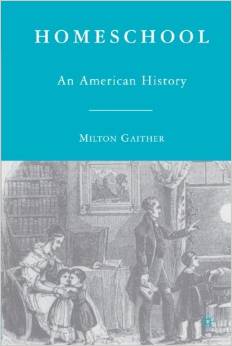
For those who are not familiar with his work, Professor Milton Gaither is an historian at Messiah College in Pennsylvania. In addition to his historical work on homeschooling, he also reviews all the new research about homeschooling on his must-read blog.Gaither homeschool

This week, Gaither reviews a study by Albert Cheng. In short, Cheng compiled data gathered from students at Biola University who had been educated in part at home. Cheng wanted to know if these homeschooled students were more intolerant than their public- or private-school peers.

Read Gaither’s full review for the deets, but the short answer is no. All other things being equal, homeschooled students at Biola were a bit MORE tolerant than school-schooled students. As Gaither points out, though, all other things are not equal. The difference in tolerance between homeschooled and school-schooled students was less than the differences between students from different social backgrounds.

In other words, homeschooling tends to make students in this sample more tolerant of people from other backgrounds, but the difference is not as striking as the differences between students from rich and poor families, white and black ones, boys and girls, etc.

What’s the upshot? Gaither concludes with some intriguing implications that you need to read in full. Do public schools make evangelicals less tolerant? Do students choose relatively liberal evangelical colleges like Biola because they are already more tolerant of differences? Can we say with any confidence that homeschooling, as such, does not tend toward intolerance?

Is Jerry Falwell an Idiot?

Is Jerry Falwell Jr. an idiot or a genius? Falwell, the president of Liberty University, has hit the jackpot with Liberty’s incredibly popular—and incredibly lucrative—online programs. Falwell has plowed that money into Liberty’s brick-and-mortar campus. Is Falwell a higher-ed visionary? Or does he simply not recognize the way things are really going in higher education?

The money is hard to ignore. Between 2006 and 2012, Liberty’s net assets increased from $150 million to $860 million, thanks mainly to its booming online business. Instead of using those funds only to increase online education, Liberty has bankrolled an ambitious sports program and a recession-busting campus building program.

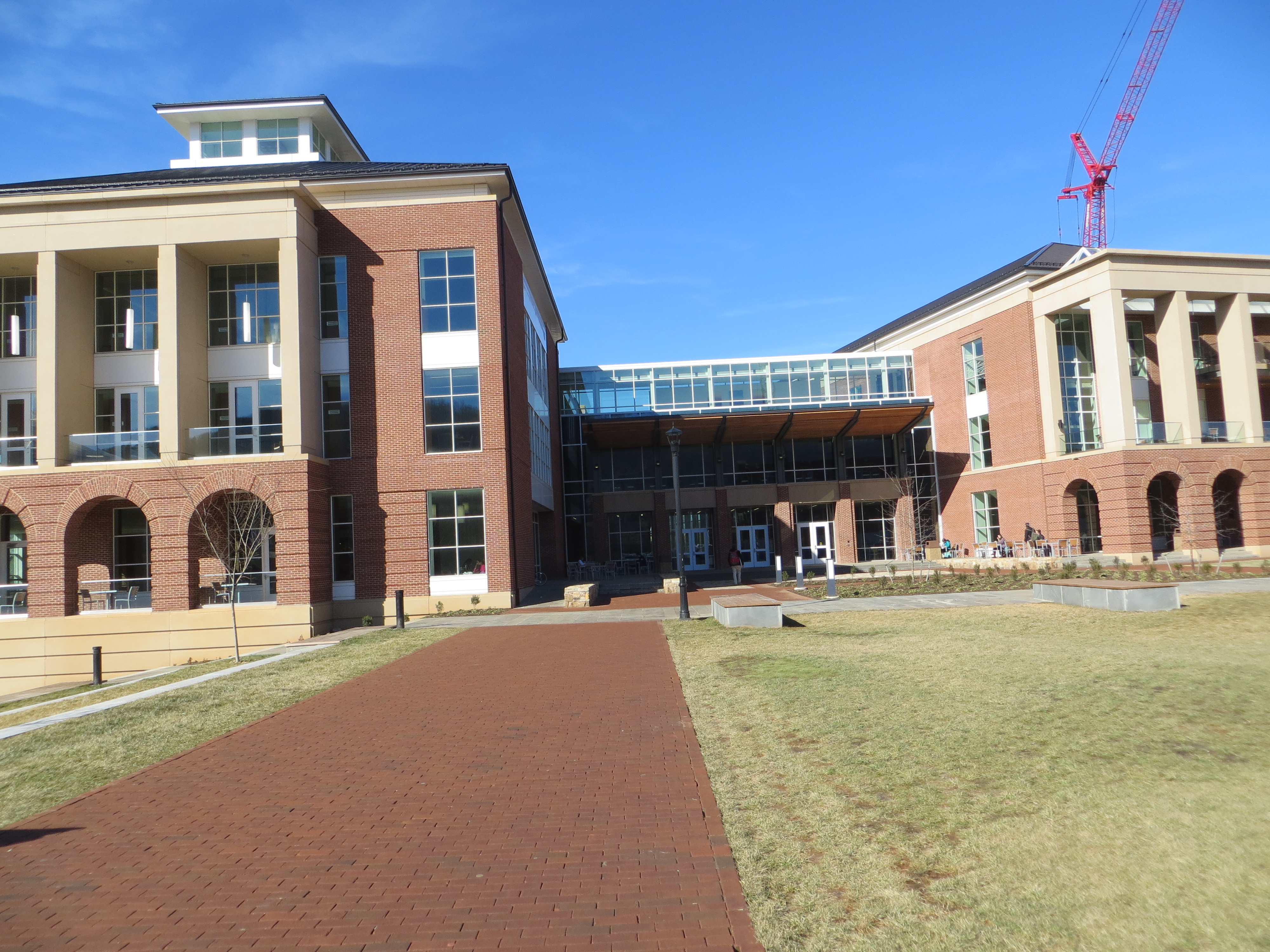
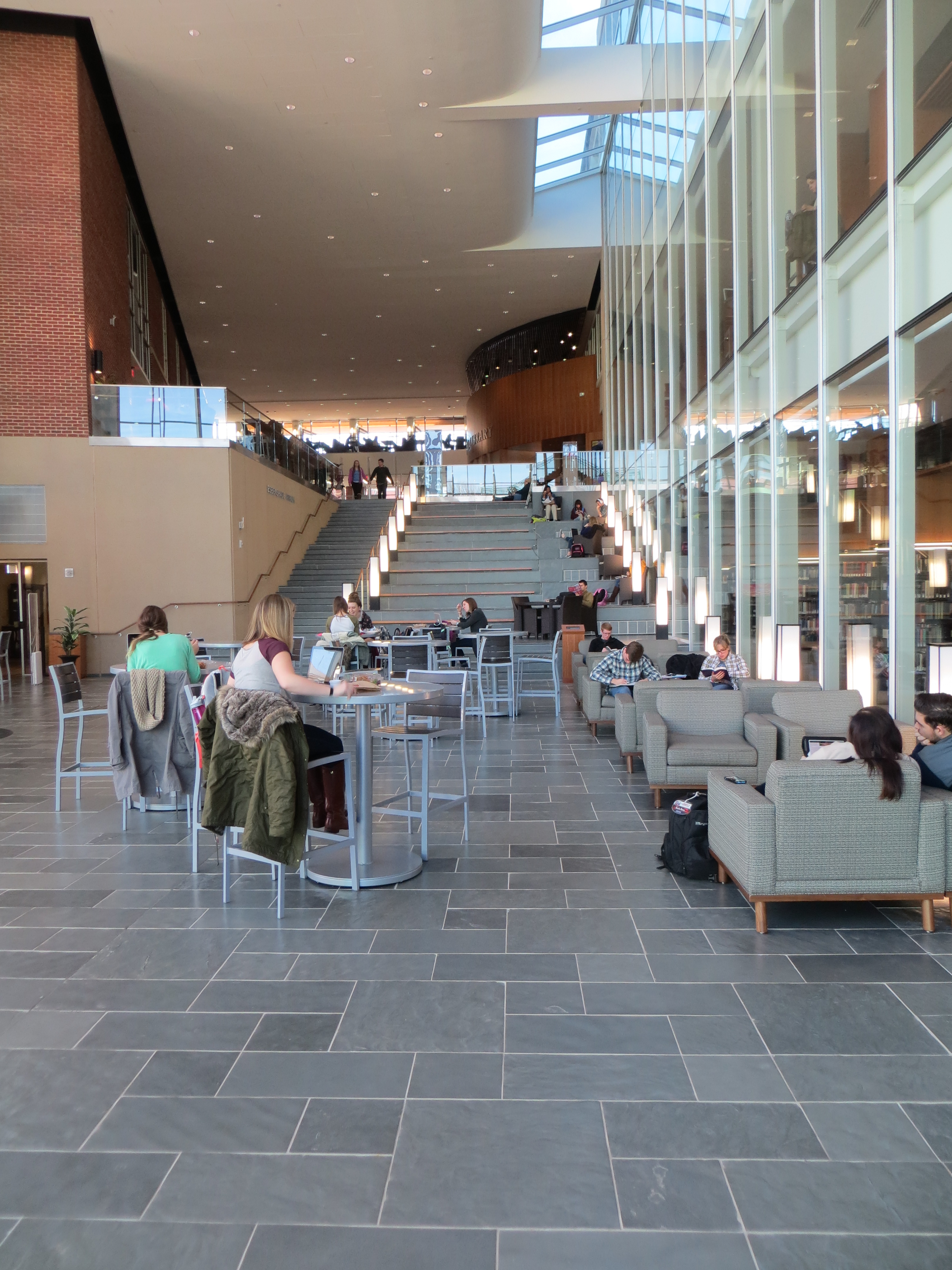
The new bajillion-dollar Jerry Falwell Library

The new bajillion-dollar Jerry Falwell Library

Most campuses are going the other direction. At traditional schools, including my beloved State University of New York, presidents and chancellors are scrambling to find ways to profit from online education.

Perhaps Liberty’s got something to prove. Founded only in 1971, it originally met in the basement of the Thomas Road Baptist Church. As I explore Liberty’s archives this week as part of the research for my next book, I’m finding reminiscences of those early years. One early ministry student remembered that he used to have revival meetings on the “old trash dump road” above the current campus. There was no campus back then, so these earnest “preacher boys,” this alum remembered, used to

Even the archives are nice.

Even the archives are nice.

pray, sing, and practice preaching for about an hour to an hour and a half. We would pray and preach in the Spirit! Walking, shouting, and praying up and down that road, calling out your name to the Father, tears streaming down our cheeks!

As do most fundamentalist schools, Liberty feels a constant need to prove that it is just as good, intellectually, as mainstream universities. As first president Pierre Guillermin put it in an early fundraising letter, any Christian college must maintain “performance standards of unquestionable academic excellence and admirable professional credibility.”

No more Trash Dump Road...

No more Trash Dump Road…

The campus building program may result from a deep need to prove that Liberty is a real university, not just a fundamentalist camp meeting. Or it may be something more strategic. College administrators these days are wracked with anxiety about the future of higher education. Will students in the future simply take classes from a menu of online providers? Will giants such as MIT and Harvard provide the world’s best content online? Can smaller schools continue to exist?

It seems President Falwell is betting big that people will continue to want a traditional campus, with traditional amenities such as sports programs and libraries.

I think he’s right. So far, the leaders in Massive Open Online Courses are not start-up companies in their garages, but established schools such as MIT and Harvard. People still have high expectations that their education—even their online classes—will come from a “real” university.

Spanked with the Bible Belt

Well, fry my biscuits;…things really are different down here. Historians have gone to great lengths to disprove the common misconception that fundamentalism is somehow only a southern thing, or only a rural thing. But there IS something profoundly different about Southern rural fundamentalism.

Go tell it on the mountain...

Go tell it on the mountain…

For those who are just joining us, I’m spending this year traveling to conservative evangelical colleges to research my next book, thanks to funding from the generous Spencer Foundation. Right now, I’m in scenic Lynchburg, Virginia, home of Liberty University. When I rolled into town, I saw something that blew my mind. No, it wasn’t the huge “LU” sign that had taken over a mountainside. I expected that.

Since the mid-1970s, academic historians have thrown out some old myths about American fundamentalism. Led by scholars such as George Marsden and Joel Carpenter, the new generation of histories no longer insist that fundamentalism is an outgrowth of hillbilly religion. Rather, fundamentalism has thrived in America’s biggest cities as well as in its rural hollers.

Consider my itinerary for this research year. To figure out what fundamentalism has meant across the twentieth century, I’ve traveled to schools such as Biola, Wheaton, and Gordon College. I plan to head to The King’s College and the Moody Bible Institute. My travels will take me to Los Angeles, Chicago, Boston, and New York City. Those are nobody’s ideas of rural backwaters. And yet they are the intellectual and spiritual headquarters of much of the fundamentalist movement.

Creationism in the lobby...

Creationism in the lobby…

Fair enough. But there is something different about things down here in the South, something different outside of bigger cities. Not only did I drive along Jerry Falwell Parkway to get here, but the lobby of my boring corporate hotel held a big surprise. The books for sale included the standard stuff about horses, cats, and jokes for kids, but there were also a lot of prayer, psalm, and Bible books. Even more remarkable, the shelf included relatively radical creationist books such as Ray Comfort’s Scientific Facts in the Bible.

This is the kicker: Sure, fundamentalism can thrive in big cities. It can certainly thrive in the North. But down here in the South, outside of big cities, fundamentalism becomes the usual fare. It becomes the accepted norm, not just one way to be religious. Even a non-religious, totally vanilla environment such as my hotel lobby offers books that prove the scientific veracity of the Bible.

...and horses.

Satan, Demons…and horses.

My hunch is that our so-called Bible Belt refers to those parts of our great country in which conservative Protestantism is something people assume they all share. It refers to those places where your new neighbor will ask you when you move in if you’ve found your church yet. It refers to those places where people think the “real” America is much whiter and more born-again Christian than it really is.

That’s my impression, anyway. I was raised in Boston, in a non-religious household. I’m guessing people more intimately familiar with life in the “Bible Belt” will know more about this sort of thing.

A February for Fundamentalism

Don’t dilly-dally. You’ve only got three weeks left to pick out your outfit. It’ll need to look sharp, because you’re invited to a talk on February 23rd, on the scenic campus of Binghamton University.

All joking aside, all Binghamton-area folks are heartily invited to come hear me share some of my current research as part of the university’s spring 2015 speaker series. In this talk, I’ll discuss the ways conservative evangelical colleges helped define what it meant to be a “fundamentalist” in the 1930s.

bju bannerI’ll tell stories from three very different places: The Denver Bible Institute, Wheaton College, and Bob Jones College. Each of them had a very different idea of what it meant to be fundamentalist, as well as a different idea of who had the right to decide.

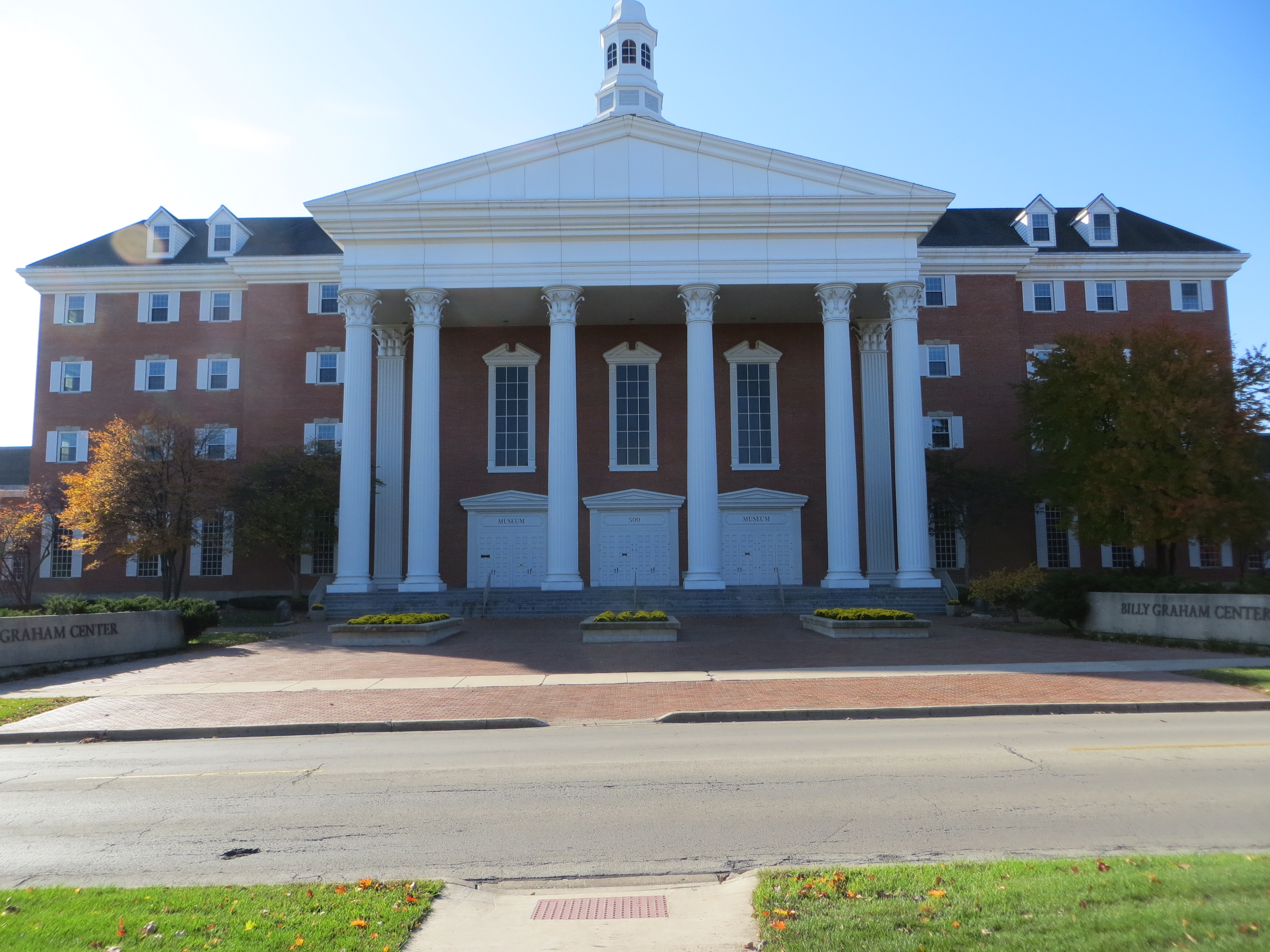
At DBI, supreme leader Clifton Fowler ran into hot water in the early 1930s as his faculty and church split. Fowler was accused of holding non-fundamentalist ideas about sex, leadership, and Scripture. To heal the rift, Fowler appealed to fundamentalist leaders nationwide to conduct an investigation.Billy Graham Center 2

At Wheaton, meanwhile, President J. Oliver Buswell was tossed out for a range of offenses, including Buswell’s leadership of a Presbyterian faction as well as Buswell’s moderate ideas about creationism.

Down at Bob Jones College (not Bob Jones University until the 1940s), founder Bob Jones Sr. engaged in a very different sort of definition. When faculty members got too chummy with students, when they played jazz records and mocked Jones’s uptight attitude toward modern culture, Jones gave them the boot. At Bob Jones College, fundamentalism meant what the founder said it meant.

DBISignIn each case, we can see the ways institutions wrestled with the tricky question of definition. At a small school like DBI, the leader had to ask famous fundamentalists to give him a fundamentalist seal of approval. At Bob Jones College, on the other hand, leaders imposed a more top-down idiosyncratic definition. At Wheaton, fundamentalism did not have room for the sort of bare-knuckle denominational wrangling that Buswell considered the heart and soul of fundamentalism.

These stories have it all: sex, jazz, and Presbyterianism. So come on down to Binghamton University at four o’clock on February 23rd. We’re meeting in the conference room of the Institute for Advanced Study in the Humanities, on the first floor of the Library Tower.

The event is free and open to all; no registration is required.

Feed ‘Em to the Lions!

HT: KP, DW

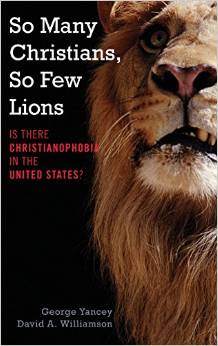
Are Christians persecuted in American culture? Two sociologists say yes. Elite attitudes, David Williamson and George Yancey say, are dominated by a vicious self-righteous “Christianophobia.”

In the pages of the Christian Post, Yancey lays out the argument of his recent book, So Many Christians, So Few Lions. There are plenty of Christians around, they say. But among certain influential elites, they noticed “unnecessary vitriol and fears” about evangelical Protestantism.

Do YOU feel persecuted?

Do YOU feel persecuted?

The problem, Yancey explained, is that this particular form of bigotry does not see itself as bigotry. Anti-Christian elites tend to see themselves as anti-bigots, fighting the forces of religious obscurantism. As Yancey put it, Christianophobes think

Christians are ignorant, intolerant and stupid individuals who are unable to think for themselves. The general image they have of Christians is that they are a backward, non-critical thinking, child-like people who do not like science and want to interfere with the lives of everyone else.

But even worse, they see ordinary Christians as having been manipulated by evil Christian leaders and will vote in whatever way those leaders want. They believe that those leaders are trying to set up a theocracy to force everybody to accept their Christian beliefs. So, for some with Christianophobia, this is a struggle for our society and our ability to move toward a progressive society. Christians are often seen as the great evil force that blocks our society from achieving this progressive paradise.

The authors note that there is also a good deal of bigotry toward atheists. It is the elite status of the anti-Christian bigots, they say, that makes it so troublesome. It is difficult to get elected to public office as an atheist, they note, because so many average voters dislike atheism. On the other hand, Christianophobia might cause Christians to have a harder time winning scholarships and admission to elite universities, where Christianophobes dominate.

Even for non-evangelicals like me, it is easy to see some intuitive truth in these claims. At a big public university like mine, it might be difficult for conservative evangelicals to avoid certain dismissive attitudes among their professors or colleagues.

Poll data also suggests some truth to these anti-Christian claims. Consider the results of a 1993 Gallup poll, for instance, in which 45% of respondents admitted they had a “mostly unfavorable” or “very unfavorable” view of “religious fundamentalists.”  Or a similar Gallup finding from 1989, in which 30% of Americans admitted they would not like to have “religious fundamentalists” as neighbors.

Such poll results, one might object, do not fairly specify the meaning of “fundamentalist.”  The folks answering such questions might have objected to living next door to Osama bin Laden as much as they did to Jerry Falwell.  The 1993 poll, for instance, found that only 25% of respondents had a “mostly unfavorable” or “very unfavorable” view of “born-again Christians” in general.  And in the 1989 poll, even 24% of the respondents who identified themselves as “evangelical” said they would not want to live next door to a “religious fundamentalist.”

Consider also, the work of prominent sociologist D. Michael Lindsay. In his 2007 book Faith in the Halls of Power, Lindsay interviewed hundreds of Christians in influential positions. If these religious folks are our leaders, we might ask, where is the Christianophobia Yancey and Williamson warn against?

Homeschooling: A Scheme to Take Over America

What do Sarah Palin, Gordon College, and Christian homeschoolers have in common? According to evangelical-turned-atheist Frank Schaeffer, they are all “still fighting a religious war against their own country.” I’m no homeschooler or Palin fan, but Schaeffer’s accusations just don’t hold up to historical scrutiny.

Schaeffer’s most recent broadside appeared in Salon. In his article, Schaeffer blasted a wide range of “far-right” institutions. When parents choose to pull their kids out of public schools to indoctrinate them at home, Schaeffer charged, it amounts to nothing less than “virtual civil war carried on by other means.” As Schaeffer put it,

the evangelical schools and home school movement were, by design, founded to undermine a secular and free vision of America and replace it by stealth with a form of theocracy.

According to Schaeffer, this nefarious plot spreads beyond the anti-democratic practice of homeschooling. The “far-right,” Schaeffer insists, turns women into submissive breeding mares. The Right has opened its own colleges and universities as part of its plan to take over civil society. Jerry Falwell himself, Schaeffer relates, explained his reasons for opening Liberty Law School. “Frank,” Falwell confided, “we’re going to train a new generation of judges to change America!”
Is the sky really falling?

Is the sky really falling?

Inspired by the apocalyptic rhetoric of wild-eyed prophets such as Rousas Rushdoony, and marshalled by irresponsible self-aggrandizers such as Sarah Palin, the Christian Right will not stop until it has taken over. Conservative religious folks, Schaeffer insists, want nothing less than to impose a rigid theocracy on the United States. They will not be content until they have dictated the morals and mores of their neighbors as well as those of their children.

Are Schaeffer’s charges fair?

Certainly, he has the right to boast of his insider connections. His father, the late Francis Schaeffer, really did inspire a fair bit of the social philosophy of today’s conservative evangelicals. Schaeffer Senior articulated in the 1970s and 1980s the notion that US culture had been infiltrated by a sneaky “secular humanist” worldview. In order to properly live as Christians, then, Schaeffer Senior advocated a wide-ranging rejection of modern social mores. Perhaps most important for day-to-day culture-war politics, Schaeffer Senior along with C. Everett Koop denounced abortion rights as equivalent to murder.

At times, Frank Schaeffer seems blinded by his own imagined influence. In this Salon article, for example, he shamelessly name-drops his connections to writers such as Rousas Rushdoony and Mary Pride. He claims to have been “instrumental” in bringing together the New Christian Right in the 1970s and 1980s.

Such unpleasantness aside, however, do Schaeffer’s charges stick? Are Christian homeschooling and evangelical higher education part of a long-ranging plot to undermine American traditions of pluralism and tolerance?

Short answer: No.

Before I offer a few examples of the ways Schaeffer’s breathless expose doesn’t match reality, let me explain my background for those who are new to ILYBYGTH. I am no apologist for fundamentalist Christianity. I’m no fundamentalist, not even a former fundamentalist. When it comes down to it, I will fight hard against fundamentalist-friendly school rules about prayer or sex ed. I don’t homeschool my kid. I don’t attend or teach at an evangelical college. I’m only a mild-mannered historian, with the sole goal of deflating hysterical culture-war accusations.

With that in mind, let’s take a closer look at some of Schaeffer’s claims.

First, is Christian homeschooling really as sinister as he claims? Schaeffer suggests that homeschoolers have been inspired by the work of leaders such as Mary Pride and Nancy Leigh DeMoss. The point of homeschooling, Schaeffer charges, is to train girls and women to submit to fathers and husbands, to glory in their second-class role as child-bearers and house-keepers.

There are indeed homeschoolers who adopt these notions. But anyone who follows the work of historian Milton Gaither can tell you that the world of homeschooling—even the more limited world of conservative evangelical homeschooling—is a kaleidoscope of missions, strategies, and techniques. I don’t doubt that some Christian parents hope to impose a rigid patriarchal vision on their children. What falls apart, though, when looked at carefully, is the notion that these folks are somehow the “real” reason behind Christian homeschooling. What falls apart are accusations that Christian homeschoolers are some sort of monolithic force scheming to take over the rest of our society. In reality, Christian homeschoolers are a remarkably fractious bunch.

Second, what about Rousas Rushdoony? As Schaeffer correctly points out, Rushdoony was the intellectual force behind “Reconstructionist” theology. In short, Rushdoony believed that Christians should impose true Christian morality on all of society, including Old-Testament-inspired laws about sex and conduct. In reality, though, the direct influence of Rushdoony’s social ideas has been rather limited. As scholars such as Michael J. McVicar have argued, Rushdoony has had far more influence on liberal pundits than on the conservative rank-and-file.

Next, are evangelical colleges really training a generation of conservative culture warriors? As I conduct the research for my next book, I’m struck by the ways evangelical colleges have been battlegrounds more than training centers. In other words, evangelical colleges and universities have had a hard time figuring out what they are doing. They are hardly in the business of cranking out thousands of mindless drones to push right-wing culture-war agendas.

For one thing, evangelical colleges have usually insisted on maintaining intellectual respectability in the eyes of non-evangelical scholars. Even such anti-accreditation schools as Bob Jones University have used outside measures such as the Graduate Record Examination to prove their academic bona fides. As historian Michael S. Hamilton noted in his brilliant study of Wheaton College, this desire prompted Wheaton in the 1930s to invite outside evaluators such as John Dale Russell of the University of Chicago to suggest changes at the “Fundamentalist Harvard.” This need for intellectual legitimacy in the eyes of mainstream intellectuals has continually pulled fundamentalist schools closer to the mainstream. Such colleges—even staunchly “unusual” ones like Bob Jones—have been much more similar to mainstream colleges than folks like Schaeffer admit.

Schaeffer uses Gordon College in Massachusetts as an example of the ways Christian colleges train new generations of young people to see the US government as evil. But as I found in my recent trip to the Gordon College archives, the community at Gordon has always been divided about the purposes of higher education. Back in the 1960s, Gordon College students held protests, sit-ins, and “sleep-ins” to change Gordon’s policies and attitudes. As one student put it during a 1968 protest, “we want to be treated like real college students.” How did the evangelical administration respond? By commending the students’ commitment to “activism over apathy.” To my ears, that does not sound like a brutal and all-encompassing mind-control approach.

The world of conservative evangelicalism, of “fundamentalism,” is one of continuous divisive tension. There is no fundamentalist conspiracy of the sort Schaeffer describes. Or, to be more specific, there are such conspiracies, but there are so many of them, and they disagree with one another so ferociously, that the threat Schaeffer warns us about is more fiction than fact.

Does Christian homeschooling really serve as a first step in a long-ranging scheme to take over America? Only in the fevered imaginings of former fundamentalists such as Frank Schaeffer.

Are Colleges REALLY Charlie Hebdo?

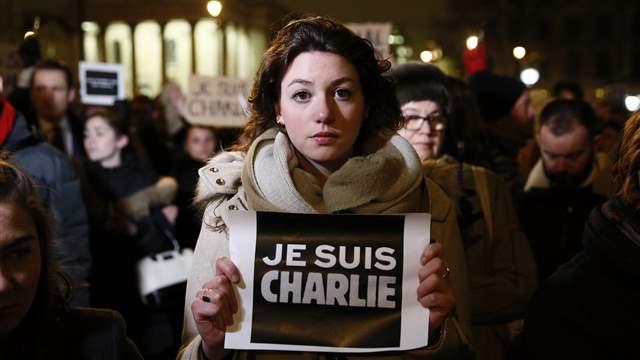
David Brooks raises a tough question about college culture. In the aftermath of the killings in Paris, shocked observers have voiced their solidarity with the slain writers and editors at Charlie Hebdo. But Brooks challenges college students and deans.

Are today's college students REALLY Charlie?

Are today’s college students REALLY Charlie?

“Let’s face it,” Brooks writes,

If [Charlie Hebdo] had tried to publish their satirical newspaper on any American university campus over the last two decades it wouldn’t have lasted 30 seconds. Student and faculty groups would have accused them of hate speech. The administration would have cut financing and shut them down.

As Brooks points out, critics of Islam such as Ayaan Hirsi Ali have been snubbed by schools such as Brandeis University. And anti-Islam comedian Bill Maher was the subject of a protest by students at Berkeley.

In neither case did students articulate the same sort of Islamic fundamentalism seen in the Charlie Hebdo murders. Rather, students protest that anti-Islam speakers were “racist” and must not be allowed to spew their “hate speech” on an enlightened campus.

Brandeis said it could no longer offer Hirsi Ali an honorary degree due to “certain of her past statements.” Hirsi Ali had apparently condemned all of Islam, not only “radical” Islam. She had called for Islam as a whole to be “defeated.”

In Berkeley, students protested the choice of Bill Maher as commencement speaker. In a much-ballyhooed argument with actor Ben Affleck, Maher denounced Islam as “the only religion that acts like the mafia.” Maher’s anti-Islam comments, students argued, constituted “racist and bigoted remarks.”

Maher himself insisted he still wanted to come to Berkeley. He pointed out the irony of celebrating the fiftieth anniversary of Berkeley’s famous Free Speech Movement by banning a speaker.

Obviously, these “attacks” on anti-Islam speakers are not the same as the murders in Paris, and Brooks does not equate them. But he does raise a question we need to consider: Are campus activists who ban speakers hypocritical when they now claim, “Je Suis Charlie Hebdo?”