Harvard Brings Lynching Back

Have college campuses welcomed a new generation of lynch mobs? It is a disturbing question raised recently by Harvard Law School Professor Janet Halley in the pages of the Harvard Law Review.
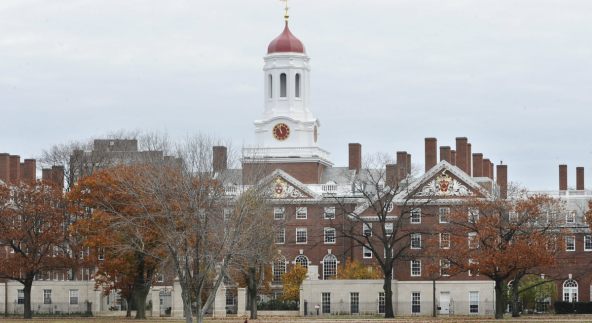
New home of the academic lynch mob?

New home of the academic lynch mob?

Last November, Halley publicly critiqued Harvard’s new policy for handling accusations of sexual assault. Under pressure from the federal Office of Civil Rights, Harvard and many other schools, Halley charged, felt

immense pressure to decide flimsy, weak, doubtful and difficult cases favorably to complainants, or face the wrath of a government agency that can cut off all federal funding to the entire institution.

In her commentary in the Harvard Law Review, Halley takes her argument a step further. How can we decide cases of alleged sexual assault, Halley asks, when policy is decided more by emotion than by reason? As she asks, new policies at many schools include

a commitment to the idea that women should not and do not bear any responsibility for the bad things that happen to them when they are voluntarily drunk, stoned, or both. This commitment cuts women off — in theory and in application — from assuming agency about their own lives. Since when was that a feminist idea?

More disturbing, Halley raises the obvious but horrifying parallel. In America’s brutal history, there is plenty of precedent for what can happen when those accused of sexual assault have no legal right to defend themselves. We call it lynching. As a new report from the Equal Justice Initiative makes painfully clear, America’s white population often brutalized and murdered African American men on the merest whiff of accusations.

Is it hyperbole to suggest that today’s campus-rape rules threaten to bring back such lynch-mob mentalities? The danger, Professor Halley suggests, is that colleges are under intense pressure to convict someone accused of sexual assault, even if there is not enough evidence to do so. She cites a widely publicized case from Hobart and William Smith Colleges. In that case, the college decided that it did not have enough evidence to charge anyone with sexual assault, in spite of ample evidence that a rape had occurred.

Halley does not suggest that the victim was lying or making it up. But she worries that colleges will feel pressure to convict someone in such cases, even when there is not enough evidence to do so. In this case, Halley argues that the rush to bring justice for the victim blinds us to the rights of the accused. As she puts it,

the Colleges had to assign blame to one or more of their students despite their complete lack of direct evidence about which of them actually deserved it.

Halley wonders if such policies will bring lynching back. She writes,

American racial history is laced with vendetta-like scandals in which black men are accused of sexually assaulting white women that become reverse scandals when it is revealed that the accused men were not wrongdoers at all.

These are difficult charges to hear, much less evaluate. After all, the more obvious moral challenge facing colleges is not the violent history of lynching, but the shameful history of ignoring the pleas of victims of sexual assault. For decades, universities—including the evangelical schools I’m studying these days—covered up campus rape in an ill-conceived quest to preserve their reputations as safe havens for young people.

Nevertheless, these are vital questions we must ask. Do Professor Halley’s worries have merit? Are colleges these days—in an understandable rush to correct past abuses—heading too far in the other direction? Must the rights of the accused be protected with the same vigor as the rights of the accuser?

Bloomberg Bashes College Liberal Orthodoxy

It’s not news when conservative intellectuals complain about liberal orthodoxy at America’s colleges.  But recently former New York Mayor Michael Bloomberg told Harvard’s commencement audience that colleges needed to include more conservative voices.

The conservative intellectual world has long been aghast at the purported liberal bias of American higher education.  After all, it was in many ways William F. Buckley Jr.’s enfant-terrible critique of Yale that launched the post-war conservative fusion movement.  More recently, as we’ve noted in these pages, conservatives in Colorado managed to insert a prominent conservative into the faculty of that state’s flagship university.  And conservatives have offered prescriptions to heal America’s blighted leftist ivory towers.

In this commencement season, the world of higher education has been aflutter with commencement cancellations.  Rutgers pulled the plug on Condoleeza Rice, Brandeis said thanks but no thanks to Ayaan Hirsi Ali, and Asuza Pacific University cancelled Charles Murray’s talk.

Mayor Bloomberg warned that universities must welcome a real intellectual diversity.  Chanting and protesting to shut out conservative voices, Bloomberg warned, threatened the very purpose of the university.  “In the 1950s,” Bloomberg told Harvard,

the right wing was attempting to repress left-wing ideas.  Today on many college campuses it is liberals trying to repress conservative ideas even as conservative faculty members are at risk of becoming an endangered species.

Not surprisingly, conservatives have embraced Bloomberg’s theme.  Richard D. Land of the Southern Evangelical Seminary agreed heartily in the pages of the Christian Post.  Bloomberg, Land enthused,

has done the nation a great service by speaking bold truth to intolerant power.

Liberal intolerance was prevalent when I was a Princeton undergraduate in the 60s. It has become far worse in the intervening decades. Too many students are being brainwashed and indoctrinated, instead of educated, in our nation’s colleges. Unless such dangerous trends are reversed, it will increasingly imperil everyone’s liberties – personal, civil, and religious.

Similarly, Glenn Beck gushed, “you have to respect his willingness to speak so definitively about the intolerant culture at far too many universities and colleges.”

As I argue in my upcoming book, conservatives have worried about the ideological slant of America’s elite colleges throughout the twentieth century.  Now they have a prominent ally in former mayor Bloomberg.

Hell and Harvard

It looks as if Harvard will not host its Black Mass after all.  The school had planned to allow a Satanic group to perform its signature ceremony as a gesture toward inclusion and free speech.  Conservative reaction to the event tells us something about conservative ideas about higher education.

Naturally, many Catholics, conservative or otherwise, protested the plan.  The Black Mass, after all, is a deliberate inversion of the most sacred Catholic ritual.  According to some reports, Satanists in the Harvard mass boasted that they had acquired a consecrated Eucharistic wafer to mock and humiliate in their performance.  Harvard alumnus Father Roger Landry pleaded with Harvard president Drew Gilpin Faust to cancel the ceremony.  Harvard, Landry argued, would not allow a mock lynching in the name of free speech.  Nor would Harvard allow racist verbal assaults.

But other conservatives criticized the event for different reasons.  This sort of bizarre public performance, some conservatives argued, demonstrated just how deeply elite colleges have veered out of the cultural mainstream.  Schools such as Harvard, some conservatives say, have lost all sense of what is normal in real life.

In the pages of National Review, for instance, AJ Delgado did not attack Satanism.  But he did attack elite higher education.  The perverted reasoning that led Harvard to accommodate such a hateful attack on Catholicism, Delgado argued, demonstrated the ways “the Ivy League continually sinks to shockingly low depths.”

Oklahoma representative Rebecca Hamilton elaborated on this theme.  “Harvard,” Hamilton insisted,

and its little troupe of elite schools are not healthy for this country. They create a 1% that is disconnected from and hostile to the rest of us. They are, in many ways, predatory.

As I argue in my upcoming book, educational conservatives have long insisted that elite colleges had lost their way.  At times, historians have accused conservatives of being “anti-intellectual” due to this tradition.  But that’s not the case.  Conservatives in general are no more anti-intellectual than anyone else.  But throughout the twentieth century conservative activists and intellectuals specifically lamented the perverted ideas dominant at elite universities and institutions.

In the 1930s, for example, conservatives attacked schools such as Columbia University for coddling communists and subversives.  It was not “college” in general that had gone wrong, conservatives argued.  But elite schools in particular had strayed from educational tradition.  US Congressman Hamilton Fish, a founder of the American Legion and dedicated red-hunter, listed in 1935 the schools that had become “honeycombed with socialists, near communists, and communists.”  Watch out, Fish warned, for Columbia, New York University, City College of New York, the University of Chicago, the University of Wisconsin, the University of North Carolina, and the University of Pennsylvania.  Such elite schools had gone off the rails.

Harvard’s flirtation with Satanism seems to have confirmed this theme among conservative activists and intellectuals.  Higher education is a good thing, most believe.  But the kooky garbage on offer at elite schools such as Harvard demonstrates the problem with the upper crust of academia.
