Racists Welcome

Is even the vilest speech protected? The expulsions of racist chanters at the University of Oklahoma has riled up conservative commentators. No matter how hateful the speech, some say, colleges have no right to expel students for exercising their rights to say it. I can’t help but think that the real target of conservative ire is the current vibe on college campuses.

In this case, the speech in question was undeniably horrifying. Frat members sang along that Sigma Alpha Epsilon would never welcome an African American member. Of course, they used a much more offensive term than “African American.” They cheerfully shouted that they could lynch any offender. Horrible stuff.

But is it protected?

Eugene Volokh of the Volokh Conspiracy thinks so. There is no exception to free-speech rights for racist language, even language that creates “hostile environments.” Unless one is issuing specific threats, one may even use language that suggests violence.
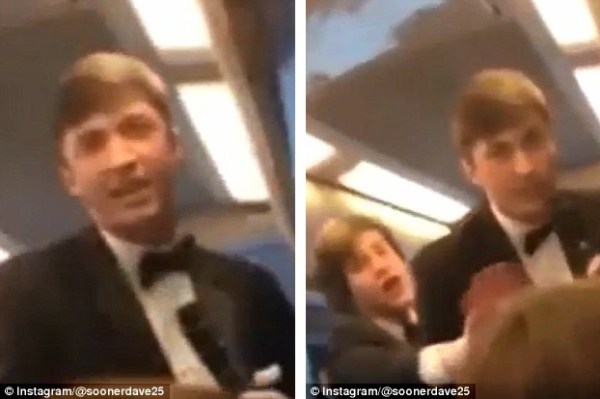
Voices of protest?  Or drunken howl?

Voices of protest? Or drunken howl?

At National Review, David French agrees. In its rush to justice, French says, the university failed to observe basic constitutional principles. It was entirely right and just for the national officers of the fraternity to punish the Oklahoma chapter. And it seems fair that the Sooner football team will now lose a prize recruit—to Alabama, no less. But such private-party sanctions are different than official university sanctions.

As have many other conservative commentators, French identifies the broader problem as one of higher-education ideology careening out of control. “Our public universities,” French writes,

are becoming national leaders in trampling the Constitution to legislate their brand of “inclusive” morality.

I understand the argument. And generally, in these pages, I try to refrain from injecting my own opinions. I can’t help but wonder, though, if these conservative intellectuals have over-stepped in their constitutional rationalizations. It seems some conservatives are too quick to protest any action by the leaders of today’s universities.

As I argue in my new book, this anti-university tradition among conservative intellectuals has a long history. Beginning in the late nineteenth century, conservative thinkers bemoaned the changes taking place at leading schools. Instead of passing along time-tested truths, universities made it their job to subvert and question those ideas.

These days, many conservatives lament, universities have become special homes for welcoming certain sorts of offensive speech. For instance, as Professor Volokh points out, many kinds of hateful speech—even violent speech—have long been recognized as protected on campus. No student would be sanctioned for displaying pictures of African American militants wielding shotguns and intoning, “By Any Means Necessary.”

There seems to be an important difference, though, between speech meant to protest against existing conditions and the SAE’s brand of exuberantly hateful race-baiting. The students in this case were not engaged in thoughtful commentary on unfair conditions. They did not hope to attract attention to their cause by using intentionally inflammatory language.

Instead, this looks like a drunken outburst of knee-jerk segregationism, a case in which vino exposed a terrible veritas. When exposed, the expelled students did not defend their actions on the grounds of free speech. Rather, they humbly acknowledged the shamefulness of their actions.

Indeed, it might have been more compelling as a free-speech case if the students had defended their outburst. If, that is, students had been even more painfully racist; if they had been intentionally offensive and if they had knowingly provoked this sort of reaction, then they would have a better claim to constitutional protection. It seems to me, though, that these students are merely petty campus despots, shouting in secret language that they abjure in public.

Does it count as an exercise of free speech when even the speakers find it offensive?
Fundamentalist University Can’t Stay Afloat

Looks like the world of fundamentalist higher education will be shrinking at the end of this semester. Chattanooga’s Tennessee Temple University will be closing its doors, merging with nearby Piedmont International University. In spite of accusations by some critics, this closing does not prove that fundamentalist colleges can’t make it in today’s society. After all, these kinds of closings are all too common among all sorts of schools.

On their Last Crusade...

On their Last Crusade…

Officially, TTU will close due to the lack of financial support from alumni. Instead of the needed three to five million dollars trustees hoped for, TTU alumni coughed up a meager $65,000.

Critic David Tulis blamed the closure on the insular theology of the school. Leaders had grown too fond of their own dispensational truths and “Christian Zionism,” Tulis charged. TTU had allowed itself the unaffordable luxury of inbred intellectualism and backwater academics.

There may be truth in such charges, but anyone familiar with the shaky history of higher education will know that all sorts of schools close for all sorts of reasons.

Most recently, the closing of Virginia’s Sweet Briar College has sent tremors through the world of higher education. If a storied institution with a fat endowment can be run out of business, who is safe?

Among evangelical colleges, too, these sorts of closings and mergers are not unique to the more conservative fundamentalist type. In the 1980s, Barrington College merged with nearby Gordon College. Financial pressures can obviously become overwhelming, irrespective of theological positions.

In the case of Barrington and Gordon, as I’m finding in my current research, these two (relatively) liberal evangelical schools had long been rivals. As late as 1961, the president of Barrington declared that he would never consider joining with Gordon in any sort of money-saving merger. The only way for Barrington to succeed, President Howard Ferrin insisted twenty-five years before the schools’ eventual merger, was by “stressing its differences from Gordon.”

We must remember also that colleges from this fundamentalist Baptist tradition can do very well financially. Most obviously, Virginia’s Liberty University makes more money than it knows what to do with. By making savvy investments in online education, the leaders of Liberty have proved that a fundamentalist school can thrive in today’s turbulent higher-education market.

But not every fundamentalist school. The leaders of Tennessee Temple have promised that current students will be able to finish their academic programs, one way or another. Also, as President Steve Echols ruminated,

countless lives have been forever changed and will continue to be changed through the heritage of Tennessee Temple University.

In spite of what some pundits might assert, this news from Chattanooga does not mean that fundamentalist higher education is on the way out. The financial struggles at TTU, after all, serve as more proof that fundamentalist universities and colleges often have more in common with non-fundamentalist schools than their leaders might like to admit.

Religious Students, Secular Schools

HT: HH

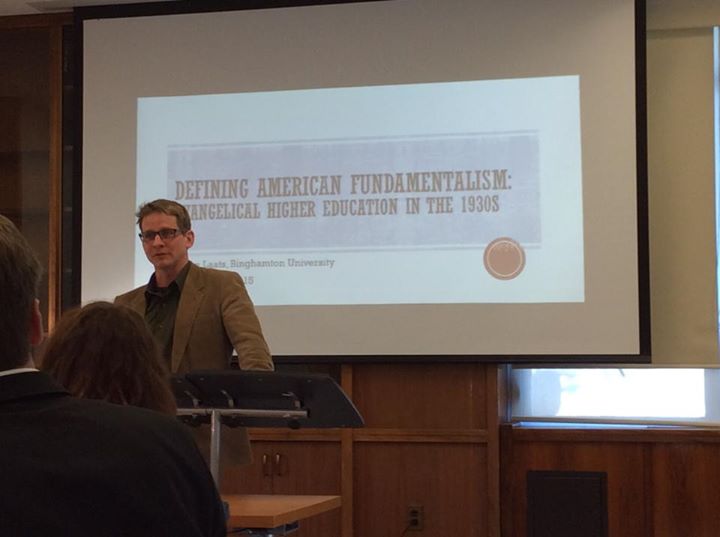
Thanks to all those who came out Wednesday to participate in my talk at Binghamton University about fundamentalist colleges in the 1930s.  Not only was a good time had by all, but the conversation made clear that even at this, our most “secular” of colleges, religion is thriving.  Despite the ignorant nostrums of elite secular academics and fuming fundamentalists, conservative religious students and faculty seem to thrive at pluralist schools like ours.

Don't hate me  because I'm beautiful...

Don’t hate me because I’m beautiful…

For those who are just tuning in, this talk was part of our series in “Religion in the Modern University.”  I shared my current research into conservative evangelical colleges.  The conversation after the formal talk revealed that both students and faculty at our beloved public university come from all sorts of religious backgrounds, including conservative evangelical Protestantism.

Unlike the schools I’m studying, our “secular” college does not actively encourage any specific sort of religious belief.  Nevertheless, our school proves a congenial home for students and faculty who hold conservative evangelical beliefs.

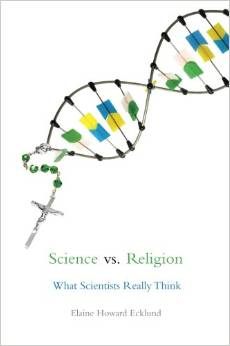
This flies in the face of some common assumptions about secularism and higher education.  As sociologist Elaine Howard Ecklund found in her study of elite secular academics, many of them have absolutely no idea of the high level of religious belief at their own non-religious elite universities.

Fundamentalists, too, have long assumed that “secular” colleges were hostile to their sort of religious belief.  As fundamentalist college founder Bob Jones Sr. was fond of saying in the 1920s, he would

just about as lief [sic] send a child to school in hell as to put him in one of those institutions.

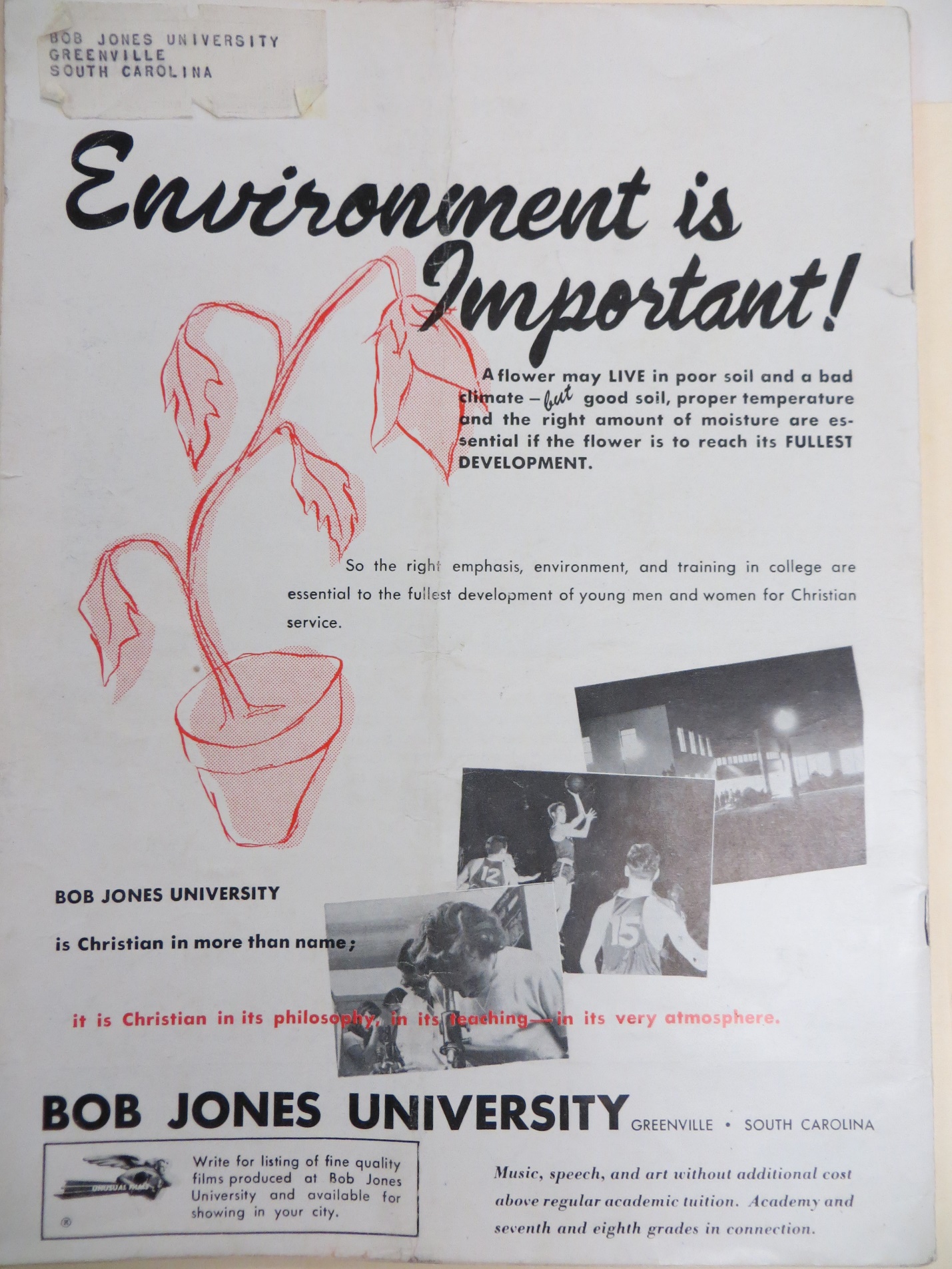
At Bob Jones University, as at other fundamentalist universities, this notion that only a truly fundamentalist school can protect students’ faith remained central throughout the twentieth century, as this 1956 advertisement demonstrated.

Fundamentalist students, fundamentalist schools

Fundamentalist students, fundamentalist schools

More recently, too, creationist leader Ken Ham took me to task for questioning his insistence that creationist families must send their children to young-earth-friendly colleges.  As Ham concludes,

at the very minimum I do urge parents to ensure they do all they can to equip their children to be able to defend the Christian faith against the attacks of our day, and to stand uncompromisingly on the authority of the Word of God.

Does that mean that religious students need to go to schools that share their faith?  I don’t think so.

I certainly understand the many differences between a pluralist school like our beloved Binghamton University and schools with a unified religious message.  But we need to remember that so-called “secular” colleges like ours are often very friendly places to creationists and fundamentalists.

Harvard Brings Lynching Back

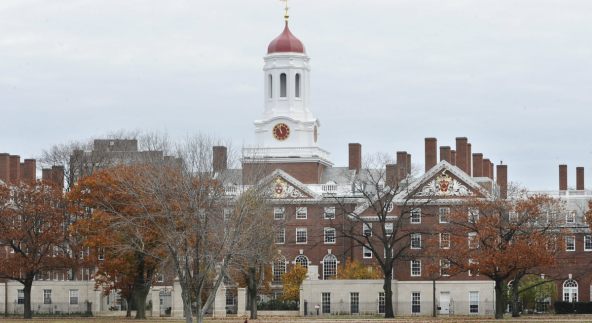
Have college campuses welcomed a new generation of lynch mobs? It is a disturbing question raised recently by Harvard Law School Professor Janet Halley in the pages of the Harvard Law Review.

New home of the academic lynch mob?

New home of the academic lynch mob?

Last November, Halley publicly critiqued Harvard’s new policy for handling accusations of sexual assault. Under pressure from the federal Office of Civil Rights, Harvard and many other schools, Halley charged, felt

immense pressure to decide flimsy, weak, doubtful and difficult cases favorably to complainants, or face the wrath of a government agency that can cut off all federal funding to the entire institution.

In her commentary in the Harvard Law Review, Halley takes her argument a step further. How can we decide cases of alleged sexual assault, Halley asks, when policy is decided more by emotion than by reason? As she asks, new policies at many schools include

a commitment to the idea that women should not and do not bear any responsibility for the bad things that happen to them when they are voluntarily drunk, stoned, or both. This commitment cuts women off — in theory and in application — from assuming agency about their own lives. Since when was that a feminist idea?

More disturbing, Halley raises the obvious but horrifying parallel. In America’s brutal history, there is plenty of precedent for what can happen when those accused of sexual assault have no legal right to defend themselves. We call it lynching. As a new report from the Equal Justice Initiative makes painfully clear, America’s white population often brutalized and murdered African American men on the merest whiff of accusations.

Is it hyperbole to suggest that today’s campus-rape rules threaten to bring back such lynch-mob mentalities? The danger, Professor Halley suggests, is that colleges are under intense pressure to convict someone accused of sexual assault, even if there is not enough evidence to do so. She cites a widely publicized case from Hobart and William Smith Colleges. In that case, the college decided that it did not have enough evidence to charge anyone with sexual assault, in spite of ample evidence that a rape had occurred.

Halley does not suggest that the victim was lying or making it up. But she worries that colleges will feel pressure to convict someone in such cases, even when there is not enough evidence to do so. In this case, Halley argues that the rush to bring justice for the victim blinds us to the rights of the accused. As she puts it,

the Colleges had to assign blame to one or more of their students despite their complete lack of direct evidence about which of them actually deserved it.

Halley wonders if such policies will bring lynching back. She writes,

American racial history is laced with vendetta-like scandals in which black men are accused of sexually assaulting white women that become reverse scandals when it is revealed that the accused men were not wrongdoers at all.

These are difficult charges to hear, much less evaluate. After all, the more obvious moral challenge facing colleges is not the violent history of lynching, but the shameful history of ignoring the pleas of victims of sexual assault. For decades, universities—including the evangelical schools I’m studying these days—covered up campus rape in an ill-conceived quest to preserve their reputations as safe havens for young people.

Nevertheless, these are vital questions we must ask. Do Professor Halley’s worries have merit? Are colleges these days—in an understandable rush to correct past abuses—heading too far in the other direction? Must the rights of the accused be protected with the same vigor as the rights of the accuser?

The Social Sciences Need More Conservatives!

Let’s start with some ifs. IF diversity is really a minimum requirement for vibrant intellectual life, and IF college professors really tip toward liberalism and leftism, and IF academic groupthink has had a damaging effect on social sciences . . . IF those things are true, then don’t we need to improve political diversity in order to encourage real intellectual progress? A new study by a group of social psychologists argues that we do.  Only by encouraging researchers who embrace conservative worldviews, they write, can social scientists make real progress.

This academic team is not a collection of conservative pundits. As have other self-identified liberal academics such as Jonathan Zimmerman, these psychologists argue that in order to preserve even the liberal goals of the liberal arts, some sort of academic affirmative action is required.social-scientist

First, some background: this new study will be published soon in the journal Behavioral and Brain Sciences. It has been made available in an unedited, uncorrected pre-publication form to invite peer comment. The authors include José L. Duarte of Arizona State University, Jarret T. Crawford of The College of New Jersey, Charlotta Stern of Stockholm University, Jonathan Haidt of New York University—Stern School of Business, Lee Jussim of Rutgers University, and Philip E. Tetlock of the University of Pennsylvania. These academic psychologists are careful to note that none of them identify as political or cultural conservatives. Their argument is not a bitter lament from an excluded right wing, but rather a call to action by concerned academic insiders.

ILYBYGTH readers may remember Jonathan Haidt’s 2012 book, The Righteous Mind. In a nutshell, Haidt argued that Americans of all political stripes make up their moral minds first, then adduce reasons to explain their positions.

This new argument is different. The authors limit their claims to the field of social psychology. Their field, they contend, is

At risk of becoming a cohesive moral community. Might a shared moral-historical narrative in a politically homogenous field undermine the self-correction processes on which good science depends?

For example, studies of public attitudes toward climate change have described disagreement with mainstream science as “denial.” By calling one side “science” and the other side “denial,” doesn’t the very structure of the study adversely affect its outcome?

As the authors warn, “Embedding any type of ideological values into measures is dangerous to science.”

Not only does political homogeneity threaten to derail the answers found by social scientists, it tends to skew the questions they ask. As an example, the authors describe the career of the idea of “stereotype accuracy.” Due largely to ideological commitments, social psychologists had assumed that stereotyping was a false and negative tendency. In the 1970s, however, a rare conservative psychologist examined the question in a new way, and “found results that continue to make many social psychologists uncomfortable.” In this case, conservative psychologist Clark McCauley found that many stereotypes are actually based on rational assumptions and fact.

Why are there so few political and cultural conservatives in this academic field? The authors suggest a range of possibilities. They reject the notion that academic careers attract liberals because liberals are somehow smarter than conservatives. But they do find that the field may suffer from a self-propagating tendency. Since it is perceived as hostile to conservative thinkers, young conservative academics steer clear. Professor Haidt includes a sample of comments by conservative graduate students from his earlier work. One conservative academic told Haidt that he or she remained in the academic “closet.” Due to anti-conservative prejudice, this person wrote, “I find myself hiding my intellectual views and values every day.” Another conservative graduate student wrote that “the political ecology became too uncomfortable for me.”

This sort of weeding-out, the authors warn, threatens the field. By encouraging a culture of similar-minded researchers, the field of social psychology undermines its own scientific validity.

What is to be done? The authors offer a laundry list of suggestions, including more funding for conservative graduate students and an active recruitment process for tenure-track university positions. Universities are already good at searching for diverse faculties and student bodies. They only need to expand their notion of “diversity” to include a true intellectual, cultural, and political diversity. More broadly, the authors encourage all social psychologists to examine their own prejudices. “Instead of assuming,” they suggest,

That stereotypes are inaccurate without citing evidence, ask, ‘How (in)accurate are stereotypes? What has empirical research found?’ Instead of asking, ‘Why are conservatives so prejudiced and politically intolerant?’ . . . ask, ‘Which groups are targets of prejudice and intolerance across the political spectrum and why?’”

These are issues near and dear to ILYBYGTH hearts. Time and again, conservative intellectuals and pundits have complained that higher education has been lost to a morass of identity politics and destructive Red-Guardism. Perhaps most famously, William F. Buckley Jr. quipped that he would rather trust the government to the first four hundred people listed in the Boston phone book than to the faculty of Harvard University. More concretely, as I’m uncovering in my current historical research, conservative evangelicals have devoted considerable amounts of time and treasure to the establishment of dissenting conservative colleges, where students and faculty will be free to pursue truth undeterred by self-defeating and short-sighted secular humanism.

Certainly, this study will likely be embraced by conservatives as more proof that their complaints are justified. I wonder how many conservative intellectuals, though, will embrace the liberal premises of this study as well as its conservative-friendly conclusions. That is, will conservative thinkers agree that diversity is a requirement for true intellectual growth? Many conservatives, after all, have rejected racial affirmative-action programs that promise greater intellectual diversity. Can conservatives accept this study on conservative grounds?

It is worth repeating that this article limits its claims to the field of social psychology. But clearly its implications are worth considering for academia as a whole. Do mainstream colleges need a dose of true political diversity?

Update: Fundamentalism and Higher Education in the 1930s

For all those in the Binghamton area: We’ve had to move my talk this afternoon until Wednesday, Feb. 25th, at 4 PM in the conference room of the Institute for Advanced Studies in the Humanities, first floor Library Tower on the scenic campus of Binghamton University.  The talk will still be free and open to the public.  All are welcome; no registration is required.

Please note: This is SEPARATE from the radio discussion tonight (Monday, Feb. 23, 2015) at 6:30.  That’s still on as scheduled: Religion and the Modern University, a panel discussion featuring yours truly.  Available streaming through the interwebs.

For those who are just joining us, the talk on Wednesday will include material from my current research.  Here is the official abstract:

What has it meant to be a Protestant fundamentalist in the United States?  For some, it meant engaging in disputes with fellow Baptists or Presbyterians about the proper nature of their denomination.  For others, it has implied a wide-ranging cultural conservatism, including battles against ideas such as evolution and against social practices such attending movies and smoking.  Scholars have had no more success than pundits in defining fundamentalism, though historians have agreed that a network of colleges and universities served as central institutions in this fractious world.  In this talk, historian Adam Laats shares his research into the early history of these schools to demonstrate the ways that fundamentalist leaders and laypeople struggled to define themselves.

Spelling and Vaginas: Have We Lost Higher Education?

Are new culture bullies taking over America’s college campuses? Jonathan Chait argued recently that today’s college campuses are suffering a new, more aggressive bout of political correctness. For those of us interested in higher education and America’s culture wars, Chait’s essay raises different questions: Have colleges and universities become hopelessly monolithic? Can students really learn anymore, or will they only be drilled in leftist platitudes?

https://www.youtube.com/watch?v=Eus2GCvBiKY

Like Chait, I’m not asking this as a conservative, but as a liberal. Like Chait, I want college campuses to include a heady mix of ideas. I want students to see and hear a broad range of philosophies, many of which they will disagree with.

Chait catalogs some of the anti-liberal recent occurrences on elite campuses:

Speakers are cancelled; plays are cancelled; lecturers are shouted down. In many high-profile cases, it seems that leftist students are dedicated to blocking any speech they find distasteful. This kind of neo-Comstockery, Chait argues, is a far greater threat to liberalism than any right-wing speaker or writer could possibly create. It has created, as one professor told Chait, an “environment of fear” on college campuses.

Chait explores the way this sort of destructive cultural politics has ranged far beyond college campuses. Those interested in the strange unspooling of America’s culture wars should certainly read his essay in full. But this morning I’d like to ask a slightly different question: What is the relationship between conservatism and mainstream higher education?

It is not as simple as it might seem. Though many conservative intellectuals continue to insist that Chait’s Red-Guardism has squeezed out thoughtful conservatism at many colleges, the truth is more complex. It’s not true that college students these days can’t be conservative. Ironically, the campus climate Chait deplores seems to strengthen some students’ identification as conservative. It does seem, though, that students less committed to a conservative ideology will feel pressured to avoid provoking the wrath of the campus left.

First, there is ample evidence that conservative students are made MORE conservative in college. Sociologists Amy Binder and Kate Wood recently released their findings of conservative students at two elite universities. In each case, they found that conservative students tended to become more conservative at these purportedly leftist universities.

Beyond that, for students who identify as conservatives, there have long been prestigious schools outside of the mainstream that welcome and nurture conservative cultural values. As I’m finding in the research for my new book, conservative evangelicals have a wide choice of colleges that serve as comfortable intellectual homes for conservatives. Often, these schools also embrace political conservatism.

Finally, we have piles of anecdotal evidence that conservatives are often made more conservative by leftist campus environments. Most famously, William F. Buckley Jr. launched his career with an angry memoir about his student days at Yale. Dinesh D’Souza similarly served first as a conspicuous college conservative at Dartmouth. Less famous conservative students have shared similar experiences.

Given all this evidence, it’s not fair to say that conservative students aren’t allowed to be themselves. In spite of what conservative leaders say, conservatism has not been shouted out of American higher education. There is another problem, though. What about students who are not committed to conservatism? Is the climate on campuses today conducive to a true intellectual experimentation among earnest but undecided young people?

This is a much harder question to answer. In some famous cases, colleges have made efforts to include conservative intellectual role models for young people. The most extraordinary case has been that of the University of Colorado at Boulder, where Steven Hayward and Bradley Birzer have worked as visiting conservatives. At that school, students in the middle are guaranteed to have at least one committed conservative academic voice on campus.

In other cases, it seems as if conservatives really have been given the squeeze. The best example is the recent treatment of Intervarsity Christian Fellowship. Intervarsity has been derecognized at leading campuses nationwide. For committed Christian students, it will not be difficult to find a comfortable conservative church near school. But for those who aren’t committed, the exclusion of conservative organizations such as Intervarsity seems to limit students’ opportunities to hear and experience a real range of intellectual and religious ideas.

Chait raises important questions about the goals and limitations of speech-policing on campuses. We need to remember, however, that high-profile cases of neo-PC thuggery do not mean that all universities have been taken over by the leftist thought police. The real situation is more complex. Conservative students and professors seem to thrive. However, those on the fence might be robbed of opportunities to hear more than leftist platitudes.

Do campuses today encourage a real mix of ideas?  What have been your experiences?  Those of your children?  Your students?

From the Archives: Fashion & Calvin

As an outsider to evangelicalism, one of the biggest surprises I’ve found is the new hipness of Calvin. No, not THAT fashionable Calvin. Not that one, either. For the past decade or so, Christian intellectuals have been thrilled or horrified by the very old theology of Ur-Protestant John Calvin. As I continue my research into the twentieth-century history of evangelical higher education, I see that the trendiness of Calvinism has longer twentieth-century roots.

Not THAT fashionable Calvin...

Not THAT fashionable Calvin…

Of course, we all know Calvinism as such has a much longer American history. In the early British colonies of Massachusetts and Connecticut, Calvinism served as the de facto governing theology. As time went on, dissenters blasted the rigid dictates of predestination. Most famously, in the early 1800s, febrile anti-Calvinist Lorenzo Dow famously warned, with Calvinism

You can and you can’t

You shall and you shan’t-

You will and you won’t-

And you will be damned if you do-

And you will be damned if you don’t.

As the Second Great Awakening unfolded in Dow’s era, some might think that Calvinism’s days would be numbered. The notion that God has predestined all things and all souls can sound a little intimidating to go-getting Americans. It might be a tough sell, one might think, to convince twenty-first century Americans to embrace such a 16th-century idea. Americans, we might think, prefer the anti-Calvinist Arminian idea that people can choose to embrace the grace that God freely offers.

Not that one either.

Not that one either.

But as Collin Hansen noticed in an attention-grabbing article several years ago in Christianity Today, Calvinism has been making a steady comeback among earnest American evangelicals. The “Young, Restless, and Reformed,” as Hansen called them, had become the most exciting scholars at several leading evangelical seminaries. Writers such as John Piper had fired the hearts of young intellectuals with his “New Calvinism.”

To folks like me—secular types heedless about the internecine theological disputes among evangelicals—such storms raged utterly unnoticed. We were not aware of earnest groups of scholars debating TULIPs and other blooms in the garden of predestination.

In my new research, I’m finding that the “New” Calvinism has always played a role in evangelical intellectual life. Just as secular young folks might continually rediscover the works of Frantz Fanon or Antonio Gramsci, so each new generation of evangelical intellectual seems to feel it has found something radically new and exciting in Calvinism.

In my archive work today, I came across an echo of this sort of intellectual excitement from the 1930s. I’m at storied Gordon College this week, in scenic Wenham, Massachusetts. After I happily survived the drive through storms of Boston drivers, I dug into the papers of second President Nathan R. Wood.

In 1934, Wood wrote to Loraine Boettner, author of The Reformed Doctrine of Predestination. Wow, Wood wrote (in essence). Wood’s actual words were these:

The thinking of the Christian world has in general drifted a long way to the left, and such thinking as yours will be a tonic and should help to bring back the swing of the pendulum from that extreme. I am a great admirer of Calvin. I do not promise to follow him at certain points, but if anyone could make me do it, it would be you yourself in your candid, devout and virile statement of that great system.

At Gordon College in the 1930s, just as at seminaries today, Calvinism has always been a lurking fashion among evangelical intellectuals. It might have experienced an upsurge in the past few years, as Hansen argues, but that upsurge itself is nothing more, it seems, than a perpetually reoccurring enthusiasm over the stern doctrine.

What’s the Most Christian College?

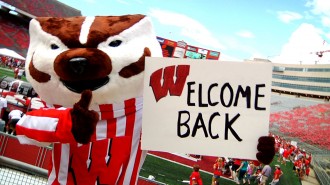
If I want my child to have her faith protected at college (and I don’t), where should I send her? Sometimes the answer can be surprising, as new evidence keeps reminding us. Maybe the environment at “secular” colleges isn’t so hostile after all.

As my current research is hammering home to me, one of the most powerful themes among conservative evangelicals and fundamentalists in the twentieth century has been that mainstream education can be dangerous. Children, conservatives have believed, will learn evolution, secularism, and loose morals at most schools and colleges.

As a result, conservative evangelicals have founded and protected a network of explicitly fundamentalist colleges, schools such as Wheaton College, Bob Jones University, Biola University, and many others.

As a professor at a large public university, though, I can’t help but wonder if our “secular” universities are really such hostile places for conservative Christians. Don’t get me wrong: I am likely one of the secular, skeptical, left-leaning academic types many conservatives worry about. But are folks like me the only sorts of professors allowed at big research universities?

A new talk by Jeff Hardin of the University of Wisconsin—Madison helps shatter that stereotype. Hardin spoke with journalists a few weeks back at the Ethics and Public Policy Center about the proper way to talk about creation, evolution, and evangelical religion.

[Full disclosure: I am a Madison graduate myself, and I love the school dearly. My graduate work with Bill Reese and Ron Numbers began my continuing interest in the tangled history of education and conservative religion in these United States.]

C'mon back, Christians!

C’mon back, Christians!

Hardin’s academic credentials are impeccable. He is a biophysicist at a leading research university. He has a PhD from Berkeley. He has published widely, including authoring a mainstream textbook. He now chairs Madison’s zoology department. And he is an evangelical Christian.

The main thrust of Hardin’s talk was the many differences between and among “creationists.” One can be a young-earth creationist like Ken Ham, or one can be an evolutionary creationist like Hardin himself. There are intelligent design folks, progressive creationists, and even run-of-the-mill unreflective creationists. Hardin wanted his audience of prominent journalists to be more aware of these nuances. He wanted them to avoid talking about “creationists” as an undifferentiated mass of young-earth believers. Certainly, an important point.

For our purposes, Hardin himself presents a more interesting idea. For many conservative evangelicals, mainstream colleges represent an onslaught of secularist ideas. Conservative religious students at such schools, evangelicals have assumed, must prepare themselves to be battered by hostile skeptical professors and an amoral campus culture.

Don't know much about religion...

Don’t know much about religion…

And of course there is some truth to such stereotypes. As sociologist Elaine Howard Ecklund has argued, elite academics at schools like Madison tend to be ignorant or even hostile to conservative religious faith. Like all stereotypes, though, there are important exceptions. In his talk, Hardin tells a story of his work at Madison. An evangelical graduate student came to him one day. As Hardin tells the story,

he spilled his heart out in this meeting, and he explained that he was very close to jettisoning his Christian faith when he came to the university because he realized what he had been told about science didn’t square with what he learned at the university, and so he felt that he was pushed into an impossible position:  either accept his Christian faith and jettison what he was learning about science or, conversely, accept was he was learning about science and cut loose his Christian faith.  He seemed to be in an impossible situation. And so we talked about options and I helped him think through a lot of these issues.

For this student, at least, attending a leading “secular” college did not mean his faith was battered and attacked. This student found an evangelical mentor at a school that has been infamous among fundamentalists since the start of the twentieth century, as I recount in my 1920s book.

So what is the most “Christian” college out there? Is it a staunchly evangelical school that insists all faculty conform to a fundamentalist statement of faith? Or it is a pluralist school that offers young scholars a range of mentors and intellectual futures?

Hardin helps demonstrate that our so-called secular universities are not quite so secular. A better word to describe them might be “pluralist,” since they include students and faculty members of a variety of religious backgrounds.

Libertarian Securitarianism on Campus

It’s just not funny. Campus culture has gotten so weird, comedian Chris Rock has accused, that it’s not even funny anymore. Conservative writer Peter Lawler has offered recently a mouthful of a phrase to help explain the paradox at the root of today’s bizarre campus culture.

Today’s students, Lawler charges, too often combine a libertarian faith that they can do as they please with a securitarian insistence that they be provided with an utterly safe environment to do so. As Lawler put it in the pages of The Weekly Standard,

The campus . . . can be close to a consumer-sensitive libertarian and securitarian paradise, where students are offered a comfortable, “no worries” environment in health-club dorms with gourmet food, recreational facilities, student-affairs staffs that function like concierges, and classes that are virtually impossible to flunk. Students are remarkably free to frolic with each other in the service of pure enjoyment. Sure, that’s an exaggeration and not true at all about some campuses. But like any good exaggeration, it points to an inconvenient truth—this one about privileges without responsibilities.

Lawler charges that the root of Rock’s disgust, the root of incredible stories such as the Virginia faux-rape case, the root of higher education’s increasingly jarring disconnect from reality, lies in this paradoxical expectation.