Fundamentalist Homeschoolers Seize Control of American Pop Music!

I am happy to say I don’t know anything about the Jonas Brothers.

I survive the shame of my ignorance by putting them in a mental category along with Hannah Montana, Barney, and all other noxious pop culture targeted at America’s youth.  As far as I am concerned, these are things I do not need to know about.

So imagine my surprise to learn that this pop group has become a leading advocate of school choice.  Imagine my surprise to learn that this leading pop group learned about the world and everything in it from their conservative evangelical Protestant homeschool curriculum.  It appears the Jonas Brothers have been educated with the Accelerated Christian Education curriculum, one of the most ferociously conservative Protestant curriculum choices available.

But let’s start at the beginning.

This morning, I came across a story from the libertarian Reason TV.  The Jonas Brothers headlined a National School Choice Week kickoff event.

Curious as to why such a high-profile pop band would sign up for an event so popular among conservatives, I looked into the Jonas Brothers.  As usual, everyone but me seemed to be already aware of the Jonas Brothers’ deep commitment to conservative evangelical religion.  Slack-jawed comedian Russell Brand, for instance, earned some opprobrium for mocking the Brothers’ virginity pledges.

When I checked out a “Day in the Life of the Jonas Brothers” video, I was surprised to see (check out the video at 3:58) that the homeschool curriculum they used was from Accelerated Christian Education.

Image Source: Accelerated Christian Education

Image Source: Accelerated Christian Education

As I argued a couple years ago in the pages of History of Education Quarterly, among Christian fundamentalist school publishers, ACE stands out for its rigid traditionalism and strict sectarian notions in every subject, from creationism to the religious meanings of the US Constitution.

I have no beef with conservative religious families who choose to use ACE materials to teach their children.

But I am surprised to find that young people educated with such materials have had such a meteoric rise to the peaks of pop culture.  After all, one common theme among conservative educational activists is that American pop culture peddles filth and trash.  Long before the Beatles, long before Elvis, conservatives worried about the sex and loose morals associated with such pop singers as Jimmie Rodgers.

Yet with the Jonas Brothers, we find a group doing very well in the choppy seas of pop music.  As far as I am aware, the Jonas Brothers did not come to fame as a particularly “Christian” music group, but rather as a particularly saccharine tween-idol music group.

Is it fair to say that conservative worries about the anti-Christian nature of American pop culture are overstated?  Or are groups like the Jonas Brothers simply exceptions that prove the rule?
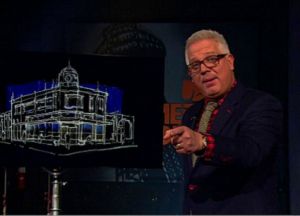
Glenn Beck’s Educational Utopia

“A place of real learning.”

What will life be like when Glenn Beck is finally made Emperor of the Universe?  More interesting for ILYBYGTH, what will education be like?

Beck recently outlined his vision of paradise.  As usual with Beck, the plan is short on details but expansive in its claims.  In short, it seems Glenn Beck’s perfect educational system would have three important components:

1.) apprenticeships;

2.) homeschooling;

3.) intellectual inoculation.

Image source: The Blaze

Image source: The Blaze

Beck described his vision of utopia in his plans for a new theme park, Independence, USA.  Like Walt Disney’s early visions, Beck wants a new kind of park, one that embodies Beck’s vision of proper American culture and society.

Parts of that vision include a radical de-schooling.  As Beck promoted it, this park would include a chance for students to learn by doing.  He asks (video 1—3:25),

“Does everybody have to go to an Ivy League university?  Or can we teach craft, can we teach business, can we teach things?  Are there people willing to teach through apprenticeships? . . . If it’s not possible, then America’s golden streets are dead.”

More profoundly, Beck insists, “Schools are a thing of the past the way we’ve designed them.”  For those who would live inside the boundaries of Beck’s Potemkin, children would learn in “neighborhood” clusters.  Children would be freed from the artificial constraints of institutional education, freed to learn by downloading content directly from the archives in Independence USA.

For those who insist on attending traditional schools, maybe even Ivy League colleges, Beck promises a handy inoculant.  Families should bring their college-age children to Independence for a week of authentic education.  Young people as well as old could receive a thorough training in Beck’s vision of American history and culture.  Such a week, Beck insists, will protect young people exposed to the lies and distortions in mainstream higher education.  Working with David Barton, Beck will teach young people, presumably, that the United States was created as an explicitly Christian nation, and that such Christian principles ought to remain at the center of American public life.  As Beck puts it (video 2—9:11),

“Before you send your kids to college, you come with us.  And you come here.  You spend a week.  You have a kid that’s going into college, you spend a week with us.  We’re going to tell them exactly, we will show them the truth, we will tell that what they’re going to try to do.  And we will deprogram them.  Every summer if you care.”

One is tempted to ask if any of this makes sense, as several commenters have done (see here and here for examples).  In this video, he offers only the vaguest sketches of his utopia, several aspects of which sound at best contradictory and at worst totalitarian.  More intriguing is the combination Beck demonstrates of a fairly radical anti-institutionalism with a keen, combative patriotism.  Beck combines an aggressive distrust of some of the central institutions of American life with an in-your-face defense of the American way of life.  Schools and colleges can’t be trusted, Beck insists, yet American traditions and culture are the strongest in the history of the world.  Young people need to be freed and protected from mainstream education, yet the theme-park plans—if they are to succeed at all—must appeal to large numbers of presumably mainstream folk.

For students of conservative education thinking in the United States, Beck’s paradoxes offer a unique window into the complex attitudes toward education among many American conservatives.  Beck, of course, is enough of an odd duck that his nostrums must not be taken as representative.  Yet he is popular enough that we can assume his fantasies resonate with at least a large number of his followers.

School, in this vision, has become something intellectually dangerous.  Young people, at the very least, need an intense counter-training, an intellectual inoculation against the false notions peddled in colleges.  If possible, in this plan, children should be freed from the outmoded walls of brick-and-mortar schools entirely.  Such institutions, Beck implies, have outlasted their usefulness.  Schools, Beck argues, have become the problem, not the solution.  Yet unlike the unschoolers of the cultural left, such as Ivan Illich, Paul Goodman, or John Holt, Beck’s deschooling promises a return to his vision of authentic American values of hard work, thrift, patriotism and religion.

Progressive Education for Christian Homeschoolers

More evidence that “progressive” and “conservative” labels just don’t fit when it comes to schooling: An interview with educator and filmmaker Micheal Flaherty of Walden Media in the conservative evangelical WORLD magazine.

Flaherty is best known for making films for a wide popular audience that include a healthy moral message. These are not niche “Christian” movies, but movies such as the Chronicles of Narnia series. Each film is based on a popular children’s book. In the longer interview, Flaherty describes the history of Walden Media. Nobody wanted to fund the project, until at last they met with a hearty welcome from conservative Christian Philip Anschutz.

Most interesting for us here at ILYBYGTH, Flaherty describes his reasons for homeschooling his three children. Though he is an evangelical talking to a conservative evangelical magazine, Flaherty doesn’t say he chose to homeschool to avoid sex ed, or Bible-hating, or evolution. Instead, Flaherty explains his thoroughly “progressive” reasons:

“We wanted to spend more time letting them read and not rushing them from bell to bell. We wanted to enjoy them and watch all of those lights go on—the first time they nail their multiplication tables or the first time they read a good book. At home we ask not, ‘What did you learn today?’ but ‘Tell me a great question you asked today.’ We want to keep it focused on the inquiry and on making sure the kids are asking the big questions.”

More evidence, if any were required, that slapping labels such as “progressive” and “conservative” around might only confuse things in today’s kaleidoscopic world of education.

Homeschooling and Fundamentalist America

As we’ve noted here before, there are many voices in Fundamentalist America who insist public schools are rotten.  One option for parents that has become increasingly popular since the 1980s has been homeschooling.

There’s still a lot we don’t know about homeschooling.  First of all, though it has become associated in many people’s minds with conservative religion, we don’t really know why parents choose to do it.  That is, we don’t know how many of the homeschoolers out there are motivated to do so by a fundamentalist religious or cultural distrust of the dominant ideology of public schooling.  After all, since the 1960s there has been a small but vocal minority of homeschoolers from the cultural left, too.

We also don’t know much about the success of homeschooling.  Do kids learn?  If so, would they learn just as well in traditional schools?  In other words, is it homeschooling that helps kids learn better?  Or is it the fact that they are talented students from homes with involved, active parents–just the type of student who would tend to do well in a public school, too?

Just as with any contested cultural issue, it’s hard to know where to turn for reliable research in these areas.  Many homeschoolers hope to prove that their method is equal to or superior to traditional schooling.  Many public-school advocates want to show that homeschooling is not an acceptable alternative.  We have to look at any “research” promoted by either side with a good deal of skepticism.

This is why we’ve noted with interest a couple of reviews that came across our screens lately.  The first is by Brian D. Ray of the National Home Education Research Institute.  There’s no doubt that Ray is partisan.  His organization promotes the legal rights of homeschoolers.  And he doesn’t hide his delight at the implications of the study he’s reviewing.  The study, by Sandra Martin-Chang, Odette N. Gould, and Reanne E. Meuse, (Martin-Chang, Sandra; Gould, Odette N.; Meuse, Reanne E. (2011, May 30). The impact of schooling on academic achievement: Evidence from homeschooled and traditionally schooled students. Canadian Journal of Behavioural Science/Revue canadienne des sciences du comportement, pp. 1–8) compared students from 37 homeschool families with 37 traditional ones.  The sample size was small, as Ray concedes.  The researchers found that students from “structured” homeschool environments did significantly better on academic achievement than their public-school counterparts.  Students from “unstructured” homeschools tended to do worse.  The most interesting part of this study results from the researchers’ attempt to control for other factors.  That is, they chose families that were similar in all variables except for type of schooling.  In other words, they tried to solve the question of whether homeschoolers performed better because they had other family advantages besides homeschooling.  Of course, as Ray and the study’s authors all acknowledge, this result does not prove much.  The kinds of testing done to ascertain academic performance tend to reward those students who experience “structured” teaching, whether at a homeschool or a public school.

The second review comes from the leading academic historian of homeschooling in America, Milton Gaither.  Gaither teaches at Messiah College in Pennsylvania and blogs about the latest finds in homeschooling at Homeschooling Research Notes.  He noted recently the publication of a rare longitudinal study of homeschoolers.  This study by Linda Hanna of West Chester University in Pennsylvania (Linda G. Hanna, “Homeschooling Education: Longitudinal Study of Methods, Materials, and Curricula” in Education and Urban Society 20, no. 10 (2012): 1-23) looked at hundreds of homeschooling families in 1998, then again in 2008.  Hanna’s results offer some interesting hints about the perennial homeschooling questions.  For example, Hanna finds that an overwhelmingly large percentage of families in her study seem to choose homeschooling due to conservative religion and culture.  Also, the number of families choosing to stick with homeschooling all the way through secondary school increased significantly over the course of one decade.  The most obvious explanation for this change seems to be the rise of computers and internet access during that time.  When more families had better online access to educational resources, more chose to keep their kids at home for middle- and high-school, too.

As always, these kinds of studies leave us wanting more.  We’d like to see larger sample sizes, longer studies, more exhaustive research methods.  But these studies and others like them help make the case that homeschooling is a legitimate alternative to public schools.  For those of us trying to understand Fundamentalist America, this can tell us a couple of things.  First of all, we can acknowledge that those conservative religious folks who choose homeschooling might be making an educationally superior choice.  Second, we can see that some of the hostile stereotypes about Fundamentalist America just don’t hold water.  Just because parents are conservative and deeply religious doesn’t mean they are not willing to embrace alternative cultural institutions.  Many conservative folks jumped headlong into a very experimental form of alternative schooling when they thought public schools were not doing the job.

IN THE NEWS: Santorum on America’s Educational History

This just in from the Republican presidential campaign trail: Rick Santorum knows what conservatives want to hear.  Not much of a surprise there; Santorum’s knack for positioning himself as the true conservative has led him to a surprisingly strong showing lately.

Of interest to ILYBYGTH readers, Santorum recently described his views on the proper nature of American education.  In doing so, he zeroed in on issues that have long resonated deeply with conservatives.

According to stories in the New York Times  and Los Angeles Times (here and here), Santorum outlined his thinking about the nature of public education in a speech on Saturday to the Ohio Christian Alliance in Columbus.

Santorum has already attracted attention as a homeschooler and advocate of government vouchers.  As his official website articulates, Santorum believes parental choice is one way to “restor[e] America’s greatness through educational freedom and opportunity.”

In Saturday’s speech, Santorum blasted the current “factory model” of education.  Today’s public schools, Santorum insisted, represented an “anachronism,” a period in which “people came off the farms where they did home school or had a little neighborhood school, and into these big factories . . . called public schools.”

Proper schooling, Santorum declared, should begin—and often end—at home.  Santorum appealed to a historical vision that is near and dear to the hearts of many American conservatives.  For most of American history, Santorum argued, even the Presidents homeschooled in the White House itself.

Where did they come up that public education and bigger education bureaucracies was the rule in America?  Santorum asked.  Parents educated their children, because it’s their responsibility to educate their children.

As I argue in an essay coming out this month in Teachers College Record,  this vision of the history of American education has been extremely influential among conservatives.  Since at least the 1950s, prominent conservative activists have based their prescriptions for healing American society on the notion that American education went wrong at a specific point in America’s past.  Of course, they also point out the corollary: conservative reforms can put it back on the right track.

Santorum appeals to a glorious educational past in which public schools had not yet tightened their stranglehold on educational opportunity.  This has been a common trope among conservative activists hoping to free traditionalists’ minds from the pernicious notion that education must look like today’s public education system.

Other common ideas that conservatives have insisted upon in their vision of American educational history:

  • schools started out as frankly religious institutions,
  • schools in the past did a better job of teaching more kids with less public money,
  • a set of notions known as “progressive education” ruined America’s strong tradition of real education, and
  • creeping state control led to ideological and theological totalitarianism in public schools.

On Saturday, Santorum indicated his agreement with these notions.  However, just as “progressive” educators have long fought over the proper meaning and function of schooling, so have conservatives.  In my TCR article I take a closer look at four leading activists since 1950:

  • Milton Friedman,
  • Max Rafferty,
  • Sam Blumenfeld, and
  • Henry Morris.

Each of these writers described a different vision of America’s educational past.  Like Santorum and generations of other conservatives, each agreed that the system had broken down.  However, also like Santorum’s unique insistence on the importance of Presidential homeschooling in the White House, each pundit laid out a unique educational past.

Anyone hoping to understand Fundamentalist America will be wise to listen to Rick Santorum this year.  He seems to have a knack for dishing out all the ideas Fundamentalists want to hear.
