Were the Fundamentalists Right All Along?

Is it time for atheists to celebrate? ThinkProgress calls a recent federal court decision a “major win” for them. In that decision, Oregon’s Judge Ancer Haggerty declared that Secular Humanism deserved to be counted as a religion.

But isn’t that what fundamentalists have been saying for decades? Is this decision really a long-term win for conservative religious folks, who have long argued that secular humanism is a religion? If SH is a religion, it can’t be promoted in public schools. Will fundamentalists be able to use this court decision to demand SH-free textbooks and state standards?
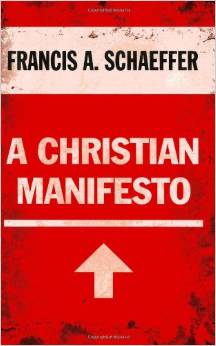
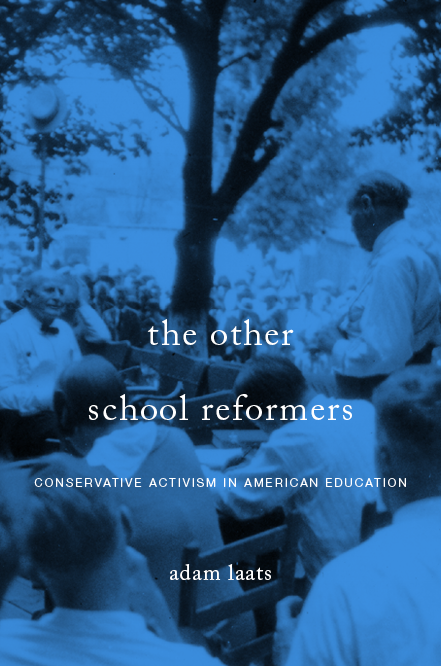
SH SchaefferI take a detailed look at this anti-SH school campaign in my upcoming book. The notion that SH functioned as a religion was popularized among fundamentalists by evangelical intellectual Francis Schaeffer. In his 1982 book A Christian Manifesto, Schaeffer defined SH as a religion that made the terrible error of denying God and making humanity the “measure of all things.”

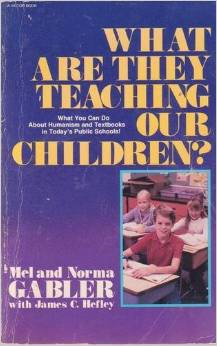
Mel and Norma Gabler, the school watchdogs who pushed Texas’ schools in profoundly conservative directions during the 1970s and 1980s, denounced SH as a “religion with an anti-biblical, anti-God bent.” Beginning with John Dewey in the 1930s, the Gablers believed, humanists had taken over schools and pushed leftist, amoral ideas on generations of schoolchildren. SH was not a neutral arbiter between religions, the Gablers argued, but rather a pernicious religion of its own. As such, it should not be allowed to do its damning work in public schools.SH Gablers
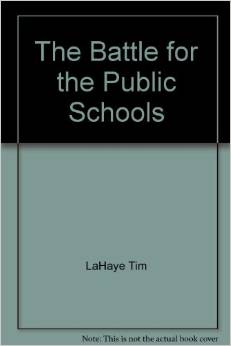
Tim LaHaye agreed. The blockbuster fundamentalist author argued in his Battle for the Public Schools (1983) that SH taught kids in public schools to be “anti-God, antimoral, antifamily, anti-free enterprise and anti-American.” By 1980, LaHaye wrote, humanism had achieved a “stranglehold” on the US government. As LaHaye put it,

Public education today is a self-serving institution controlled by elitists of an atheistic, humanist viewpoint; they are more interested in indoctrinating their charges against the recognition of God, absolute moral values, and a belief in the American dream than they are in teaching them to read, write, and do arithmetic. I call these people humanist educrats.
SH LaHayeThis claim among fundamentalists has become ubiquitous over the years. Conservatives insist that public schools are only interested in freezing out real religion. False religions, especially SH, receive special treatment. Kids in public schools, fundamentalists insist, are not actually in a neutral environment. They are, instead, effectively in an SH madrasah.

So here’s the $64,000 question: will last week’s federal court ruling fuel this fundamentalist fire? In coming years, will fundamentalist activist groups be able to prove their claims about SH and schools by citing Judge Haggerty’s argument?

It will help to look at the specifics of the case. In this case, an SH prisoner complained that he was being treated unfairly. He had demanded similar privileges for his SH group to those given to a list of religious groups. If Catholics, Shias, Sikhs and Druids could have special meeting times, Secular Humanists should too.

The judge agreed. In Haggerty’s words, “Secular Humanism is a religion for Establishment Clause purposes.” That is, as far as the Constitution is concerned, the government cannot favor any one religion over another. Judge Haggerty pointedly noted that his decision was in line with earlier court decisions that differentiated between Secular Humanism in general and organized groups of Secular Humanists who demanded equal treatment. It does not matter if SH in general is a religion. Those who claim equal privileges to religious groups deserve them.

So, in short, the judge did not decide that SH was or was not a religion. His decision was based on the notion that any religion or non-religion deserves equal treatment by the government. But here’s my hunch: For the coming few decades, fundamentalist pundits will refer to this case as proof that SH is a religion. They will ignore the niceties of Judge Haggerty’s decision. We might even see a re-do of the Mozert v. Hawkins County case from the 1980s. In that case, fundamentalist parents insisted that school textbooks pushed the religion of SH on their trusting children.

A new generation of fundamentalist activists might take heart from this decision. It is proof, fundamentalists might conclude, that they’ve been right all along.

Only Conservatives Can Be Good Teachers

Quick: What’s the most important trait a child needs in order to do well in school? Brains? A cool retro lunchbox? At World Magazine this morning, Amy Henry offers what she calls the “conservative” answer.

All I need is the Hoff...

All I need is the Hoff…

She tells the story of her struggles as a classroom teacher. No matter how dedicated, no matter how creative, Henry argues, no teacher can make any headway if students offer determined resistance. As Henry tells the tale,

Four times I asked him to take out a piece of paper. Four times I asked him to find a pencil. Each and every time we reached a new vocabulary word, I stopped reading and told him to write it down. By the time the history lesson was over, I was exhausted and so was he, I suspect. Whether the directive is to get out a book, pick up a piece of trash, or sit in a particular seat, I am met with stiff resistance, if not outright refusal to cooperate.

No student, Henry insists, can be taught if he or she isn’t willing to obey. As she puts it,

without obedience none of that [good teaching] can happen. I can teach an ADHD, dyslexic, dysgraphic child with severe anxiety issues the world, but I cannot teach a high-functioning, intellectually bright, whippersnapper of a kid who won’t obey a doggone thing.

For conservatives, Henry says, the most important ingredient in education is obedience. This is not just her off-hand observation. As evidence, Henry cites new-ish poll data from Pew Research. Those who identify as “consistent conservatives” are more likely than “consistent liberals” to place a high value on children’s obedience. She interprets those numbers in a sketchy way, I think, but let’s save that argument for another post. For now, let’s talk about why so many conservatives agree with Henry.

For Henry, conservatives are the only ones who really get it.  Liberals fudge and whine, but they avoid the obvious conclusion: education in classrooms can only happen if kids come to school equipped with an obedient attitude. As we’ve talked about in these pages, this notion has proven extremely influential among certain conservative activists throughout the twentieth century.

For example, from the mid-1960s, Max Rafferty attracted a huge popular following with his traditionalist nostrums on good education. [For any up-and-coming historians out there, we really need a good academic history of Rafferty’s career and ideology. It’s a fabulous dissertation just waiting for you in Iowa City and Sacramento.] Rafferty served as the state superintendent of public education in California, but he attracted the most attention with his syndicated columns about the nature of childhood and proper education. In one such column from the early 1960s, Rafferty explained why children must begin by learning to obey. In Rafferty’s words,

a child usually has neither the maturity nor the judgment to understand the need for self-discipline. Too many instructors, fresh from college and still pretty Dewey-eyed about things, compromise themselves and their careers in a hopeless attempt to convince some freckled-faced [sic] urchin with devilment coming out visibly all over him that he must discipline himself when all he really needs is a session after school with the ruler.

In the 1970s, too, leading conservative activists Mel and Norma Gabler agreed on the primary importance on obedience. The Gablers are best known for their indefatigable textbook commentary. At every Texas textbook-adoption meeting in the 1970s, the Gablers were there with long detailed lists of ideologically suspect material from the books under consideration. Given the influence of the Texas textbook market among publishers, the Gablers managed to punch far above their weight in terms of national textbook selection.

But the Gablers cared about more than conservative histories and science books. They prided themselves on their attitude toward children and obedience. As an admiring biographer wrote,

The Gabler boys were expected to be respectful and they were. A black friend of the family was always marveling, ‘Your boys are the only ones who call me, “Mister.”’ And the parents’ response was always, ‘They’d better.’

For the Gablers, as for so many cultural conservatives, parents needed to ensure that kids came to school ready to learn. That didn’t mean just pencils and lunchboxes. That meant children must come to school ready to submit to teachers’ authority.

In the narrower world of conservative evangelicalism, too, Henry’s focus on obedience has long roots. Many conservative Christians have agreed with Henry that children must obey, for both classroom and churchly reasons.

For example, as fundamentalist writer Jerry Combee argued in a late-1970s guide to good Christian schooling,

Without Biblical discipline the public schools have grown into jungles where, of no surprise to Christian educators, the old Satanic nature ‘as a roaring lion, walketh about, seeking whom he may devour’ (I Peter 5:8). Students do well to stay alive, much less learn. . . . If Christian educators give one inch on discipline, the devil will take a mile.

Certainly, among many conservatives, Henry is absolutely correct. Only conservatives can be good teachers, because only conservatives embrace the primary need for obedience. Without obedience, all the fancy-pants progressive toys and tricks in the world will do no good. But with obedience, any child from any background can learn.

Creationists Love Angry Science Teachers

Why would America’s leading young-earth creation ministry go to the National Education Association convention?  After all, Answers In Genesis castigates the NEA for its “godless, liberal agenda.”  AIG frets that the NEA combats conservatives’ right to homeschool their children and to teach godly creationism.

But that anti-God bias is exactly why the creationists go every year.  Answers In Genesis tries to engage NEA attendees with the gospel of creationism.  The creationist outreach at the NEA convention hopes to explain the goals of creationists and melt the hard hearts of some secular teachers.

The folks at AIG are not the first conservatives to try such tactics.  For generations now, the National Education Association has been perceived by conservative education activists as the enemy.  The NEA is seen as promoting secularism and a wrong-headed moral relativism.  As conservative gadflies Mel and Norma Gabler argued in the 1970s, the NEA had always tried to get public schools to teach that “there was no absolute transcendental God, Bible, or system of beliefs.”

And even long before the Gablers, conservatives tried to maintain their influence with the NEA.  As I note in my upcoming book about conservative educational activism in the twentieth century, the patriotic school activists in the American Legion pioneered this approach.  For the stalwart conservatives in the American Legion, the NEA offered the best way to influence American public education.  Therefore, they held their noses and collaborated on American Education Week.  Starting in 1921, the Legion and the NEA encouraged schools nationwide to focus on a certain theme for a week.  They tried to get everyone in every community engaged with their public schools.  For the conservative leaders of the American Legion, this was a way to promote patriotism and religion in public schools.  For the leaders of the NEA, this seemed like a good way to direct the public’s attention toward its schools.

For conservatives, then, the NEA has long been a target.  Generations of conservatives have hoped to influence the NEA with conservative educational ideas.  Does it work?  The conservative creationists at AIG seem to think so.  One missionary to the NEA relates the story of “Tom,” a hostile secular science teacher.  After spending time with the creationists at the NEA convention, Tom was able to understand more about the wholesome gospel mission of the creationists.  Walls were broken down, hearts were touched.


Learning by Discipline

What should schools do with students who behave badly?  Who assault other students?  Who treat teachers disrespectfully?

A new announcement about school discipline from Education Secretary Arne Duncan and Attorney General Eric Holder might drive some conservative pundits to distraction.  Discipline, the two leading officials of the Obama Administration announced yesterday, must be more sensitive to student background and more responsive to individual situations.  Blanket zero-tolerance policies, they proclaimed, lead to worse school discipline, not better.

Those zero-tolerance policies, however, grew out of a groundswell of popular conservative opinion throughout the 1980s and 1990s.  Conservative commentators and activists long complained that schools treated students too gingerly.  Good old-fashioned discipline, some conservative writers insisted, would help return schools to their proper role.  Instead of being places where polite students and teachers cower and wince at the domineering swagger of loud-mouthed punks, schools should be calm and orderly places where infractions of the rules are not tolerated.

Some studies have demonstrated the central importance of a reinvigorated school discipline to many conservative parents in the 1980s.  One Stanford study[1] of two new fundamentalist schools in the 1970s and 1980s found that leaders put bad discipline in public schools as one of their top reasons for opening their own school, right up there with “secular humanism,” “evolution teaching,” and the fact that “kids weren’t learning.”  In a fundamentalist school that opened in September 1974 with a grand total of eleven students, one teacher informed the Stanford researcher that most parents assumed that the fundamentalist school was “solving discipline problems the public schools could not.”

Another study, this one from Temple University in Philadelphia,[2] found that parents listed poor discipline as one of their top reasons for abandoning public schools in favor of private Christian ones.  Nearly 65% of switching parents listed “discipline” as a leading reason for changing schools.  By way of comparison, just over 68% of parents listed “secular humanism” as a primary reason for their switch.

It may come as no surprise that some conservative parents choose Christian schools out of fear of disorderly public schools.  Leading conservative religious writers throughout the 1980s insisted that public schools had utterly abandoned all attempt at imposing discipline.  Jerry Combee, for example, warned readers in a 1979 book,

Without Biblical discipline the public schools have grown into jungles where, of no surprise to Christian educators, the old Satanic nature ‘as a roaring lion, walketh about, seeking whom he may devour’ (I Peter 5:8).  Students do well to stay alive, much less learn.

Similarly, in his 1983 book The Battle for The Public Schools, blockbuster fundamentalist author Tim LaHaye insisted that one of the vital reforms that could save education was a return of traditional discipline.  As LaHaye put it, “We must return discipline, authority, and respect to public schools”

In 1986, conservative Texas school watchdogs Mel and Norma Gabler asked readers, “Why has discipline become so bad that policemen must patrol the halls of many schools?”  The Gablers’ answer was simple:

We were taught that if you plant potatoes, you get potatoes.  If you plant rebellion and immorality in children’s minds by teaching them that only they can decide what is right and wrong, that parents are old-fashioned, and that the Judeo-Christian Bible is a book of fairy tales, then what can you expect?  Garbage in—garbage out!

These conservative critiques of the sorry nature of school discipline were not limited to conservatives of a primarily religious background.  After his turn as Education Secretary under Ronald Reagan, William J. Bennett lamented the sorry state of school discipline.  In his 1994 book Index of Leading Cultural Indicators, Bennett cited a fraudulent but evocative historical comparison:

In 1940, teachers identified talking out of turn; chewing gum; making noise; running in the halls; cutting in line; dress code infractions; and littering [as “top problems”].  When asked the same question in 1990, teachers identified drug abuse; alcohol abuse; pregnancy; suicide; rape; robbery; and assault.

Due at least in part to this widespread sense that American public schools had reached a nadir of weak discipline, many states and school districts imposed variants of “zero-tolerance” policies.  According to these policies, student infractions would be met with an escalating series of ever-harsher punishments, including out-of-school suspensions and reports to police.  Politicians could claim that they were taking action to ensure a no-nonsense disciplinary attitude in America’s schools.

Yesterday’s announcement by Arne Duncan and Eric Holder represents the Obama administration’s repudiation of that zero-tolerance approach.  Though “zero-tolerance” may sound good, Duncan told an assembled crowd at Frederick Douglass High School in Baltimore, “Too many schools resort too quickly to exclusionary discipline, even for minor misbehavior.”  According to the Baltimore Sun, Duncan described a new federal approach that would de-emphasize suspensions and put more emphasis on creating nurturing in-school environments.  Attorney General Holder agreed.  Principals, not police, should be responsible for school discipline, Holder insisted.

Will conservatives care about this shift in school disciplinary policies?  If history is any guide, I’m guessing that conservatives will paint this new policy as yet another soft-headed, over-complicated liberal approach to a simple problem.  Folks such as Eric Holder and Arne Duncan may worry that zero-tolerance policies unfairly target racial minorities, but I’ll be surprised if conservative educational activists don’t complain that such social-science talk only obscures a far more obvious point.

If students misbehave in school, conservatives will likely insist, they should not be allowed to be in school.


[1] Peter Stephen Lewis, “Private Education and the Subcultures of Dissent: Alternative/Free Schools (1965-1975) and ChristianFundamentalistSchools (1965-1990),” PhD dissertation, StanfordUniversity, 1991.

[2] Martha E. MacCullough, “Factors Which Led Christian School Parents to LeavePublic   School,” Ed.D. dissertation, TempleUniversity, 1984.

Creationist Textbook Fight: A Progressive Victory?!?

Déjà vu all over again.  That might be the sensation for those of us who have followed Texas’ political battles over textbook content.  Recent politicking has demonstrated the continuing influence of creationists in textbook decisions.

But debate-watchers may not realize that these Texas-textbook headlines represent a progressive victory.

Here’s why: Back in the 1920s, states such as Texas adopted state-wide textbook adoption policies precisely in order to make the process more transparent.  Recent work by liberal watchdogs in the Texas Freedom Network demonstrates the long-term progressive success of those 1920s efforts.

Let’s start at the beginning.  As I describe in my 1920s book, debates over the content of Texas textbooks began way back.  In the 1920s, Texas officials insisted that textbook publishers produce “Texas” editions, with large sections on evolution cut out.  More than that, Texas officials demanded textbooks that ratified a Protestant-dominated vision of American history and culture.  Ever since, as I discuss in my current book, conservative activists such as the Gablers have been able to wield outsized influence on the textbook adoption process in Texas.

Yet this long history of conservative influence in Texas textbooks is not merely the story of conservative domination of Lone Star public education.

As Adam Shapiro argues in his excellent new book Trying Biology, progressives in the 1920s fought hard to ensure that these textbook decisions were made openly and publicly.  Previous textbook purchases had been made at the local level.  Sweetheart deals between publishers and school-district officials often left students with low-quality, high-priced textbooks.

Progressive reformers wanted more open discussion of textbook purchasing decisions.  In several states, including Texas, they passed state-wide adoption laws.  In Texas a state board selects a list of approved textbooks, from which districts can choose.  Those deliberations are public events, with legal requirements to share documents and content.

In a sense, therefore, recent headlines about creationist influence on textbook purchases represent a long-term victory for those early progressive reformers.  Liberal activists in the Texas Freedom Network have been able to monitor these deliberations.  The Texas board of education is legally required to provide public access to many of their discussions and debates.  As a result, concerned liberals and science-education types have been able to mount effective and informed protests over creationist influence.

Do progressives have a long history of winning culture-war battles in Texas?  Not really.  Conservative influence in Texas public education remains dominant, as Scott Thurman documented in his film The Revisionaries.  Indeed, the Texas Freedom Network has lamented the delays and obfuscations of conservative officials as the TFN has demanded access to public records.  Nevertheless, the TFN’s strong legal case—their insistence on access to those records—represents the hard-fought victories of earlier generations of progressive activists.


Who Owns the Children?

Do parents own their children?  Does the government?

A recent MSNBC promo has put this perennial conservative issue back in the headlines.  Glenn Beck, Sarah Palin, Rush Limbaugh, and others have denounced the sentiments of the ad.

Yesterday conservative pundit Glenn Beck accused liberal-leaning MSNBC of finally exposing their “radical goals” to steal children from parents.  The plan all along, Beck argues, has been for “progressives” to seize government control of the most intimate family decisions.

The specific MSNBC promo to which Beck objected contained this ideological smoking gun:

We have never invested as much in public education as we should have because we’ve always had kind of a private notion of children. Your kid is yours and totally your responsibility. We haven’t had a very collective notion of these are our children. So part of it is we have to break through our kind of private idea that kids belong to their parents or kids belong to their families and recognize that kids belong to whole communities.

This thirty-second promo by Melissa Harris-Perry contains the proof that liberals want to take children away from their parents and raise them in dysfunctional public schools.  His fears, Beck insisted, had been proven right by this “terrifying” video.  Though he recognized he might be called a “conspiracy theorist,” Beck insisted that this short video contained all the proof he needed of a vast left-wing plot to steal children into indoctrination centers.

Sarah Palin chimed in too, tweeting that MSNBC’s notion that children don’t belong to parents was “Unflippingbelievable.”

Rush Limbaugh predicted that soon children could be forced to mow everyone’s lawns, not just their own.  This notion, Limbaugh concluded, was as “old as communist genocide.”

The idea that “progressives” have set their sights on sneakily seizing control of America’s children has long ideological roots.

Back in the 1970s, for example, the influential conservative activists Mel and Norma Gabler asked fundamental questions about the nature of the textbooks under consideration in their home state of Texas:

To WHOM does the child belong?  IF students now belong to the State, these books are appropriate.  IF students still belong to parents, these books have absolutely no place in Texas schools.  The author clearly states that these books are designed to change the behavior, values, and concepts of the child, based on the premise that the teacher is NOT to instruct, but to moderate, and to ‘heal.’ [Gablers, What Are They Teaching Our Children, pg. 119]

Similarly, Connie Marshner, affiliated at the time with the Heritage Foundation, argued in 1978, “A parent’s right to decide the direction of his child’s life is a sovereign right, as long as the child is subject to his parent.  Educators have no business creating dissatisfaction with and rebellion against parental wishes” (Connie Marshner, Blackboard Tyranny, pg. 38).

But such notions go back much further in the conservative consciousness.  One leading conservative activist in 1951 Pasadena warned a state senate investigating committee that the root cause of public school problems was “a definite elimination of parental authority, undermining of parental influence.”

And back in the 1920s, the US Supreme Court ruled that parents had a right to educate their children in private schools if they chose.  The reason, the court ruled in Pierce vs. Society of Sisters (1925), is that “The child is not the mere creature of the state.”

Beck’s, Palin’s, and Limbaugh’s outrage are nothing new.  Conservative activists have long been convinced of a far-reaching plot to substitute state control of children for that of parents.


The Trauma of Evolution

Can we educate by banning ideas?  For one group of conservative Christian homeschoolers, proper education means banishing lots of ideas.  How can progressive educators like me understand this impulse to put up intellectual walls around young people’s minds?  I wonder if some creationists view exposure to evolutionary ideas as a form of trauma, an entirely harmful experience.

The Finish Well homeschooling conference, in the words of its organizers, “is designed to equip homeschooling families to confidently homeschool the high school years for the glory of God!”

One of the ways the conference promises to help attendees is by purging the atmosphere of any hint of evolution.  In order to secure a table at the conference, vendors are required to agree to the following statements:

“1) Scripture teaches a literal 6 day creation week, a young earth of approximately 6,000 years, and a literal understanding of Adam and Eve, the Fall, and the world-wide Flood of Noah’s day. 2) The Bible is the verbally inspired Word of God. It is inerrant and our ultimate authority in what we believe and how we live. Any speakers who contradict these two truths during their speaking session will be immediately asked to leave.”

Clearly, the goal of Finish Well is not only to keep out evolution.  Any other explanation about humanity’s origins will be verboten as well, including the evolutionary creationism of folks such as Darrel Falk or the big-tent creationism of the intelligent-design movement.

This notion of proper education is one of the hardest intellectual nuts for progressive educators like me to crack.  How are we to understand this idea that good education means hiding important ideas away from young people?  My first reaction, my gut reaction, is that this is precisely the sort of totalitarian impulse that kills any real education.  This sort of intellectual protectionism smacks of Nazi Germany or Stalinist Russia.  To me, and to lots of people, one of the first rules of true liberal education means opening intellectual doors, not bricking them up.  Real education, in my opinion, means allowing young people to explore a variety of ideas, to make up their own minds.

But in the conservative tradition, an important aspect of improving education has long consisted of the effort to remove “dangerous” ideas from the educational mix.  For generations, various types of conservative activists have insisted that simple exposure to certain ideas represented a danger—something from which young people had to be protected.

This idea played a big part in the first “creationist” controversies in the 1920s, as I explored in my 1920s book.  One of the public leaders of the anti-evolution movement of that decade was populist politician and former US Secretary of State William Jennings Bryan.  Bryan condemned the notion that good education meant a willy-nilly exposure to perfidious ideas.  In a battle with the University of Wisconsin over the teaching of evolution on campus, Bryan offered this sarcastic advertisement for the college:

“Our class rooms furnish an arena in which a brutish doctrine tears to pieces the religious faith of young men and young women; parents of the children are cordially invited to witness the spectacle.”  [SOURCE: William Jennings Bryan, “The Modern Arena,” The Commoner (June, 1921): 3.]

For my current book, I’m exploring the longer history of conservative educational activism.  This notion of proper-education-as-protection echoed throughout the twentieth century.  For instance, Grace Brosseau, President General of the Daughters of the American Revolution, argued that young children ought not be harmed by “the decrepit theory that both sides of the question should be presented to permit the forming of unbiased opinions.”  Such modern theories of education, Brosseau insisted, fundamentally misunderstood the nature of childhood and the responsibilities of education.  As she explained in 1929,

“One does not place before a delicate child a cup of strong black coffee and a glass of milk; or a big cigar and a stick of barley candy; or a narcotic and an orange, and in the name of progress and freedom insist that both must be tested in order that the child be given the right of choice.”

Instead, parents and teachers must give students only what students need to develop the “delicate and impressionable fabric of the mind.” [SOURCE: “The 38th Continental Congress, N.S.D.A.R.,” DAR Magazine 63 (May 1929): 261-271.]

More recently, the late Mel and Norma Gabler echoed this notion that proper education meant protecting young people from dangerous ideas.  In their 1985 book What Are They Teaching Our Children, the Gablers compared modern teaching to letting young children float in dangerous seas in flimsy lifeboats.  Modern teachers, the Gablers argued, too often allowed children to drift near sharp reefs and crashing waves, without offering any sort of guidance.  The teachers knew the rocks were there, the Gablers argued, yet these ‘progressive’ teachers did not see fit to warn the students.  Better for the students to ‘discover’ such dangers for themselves.  The Gablers asked, “Has the instructor gone mad?” (pg. 99).

For the Gablers, as for Bryan, Brosseau, and the organizers of the Finish Well conference, the notion that some ideas must be hidden from children made perfect sense.  For those like me who don’t agree, perhaps one key to understanding might come from the school controversies of the 1920s.  During that decade, many state lawmakers proposed bills that promised to keep certain ideas out of children’s paths.  One 1927 bill in Florida would have banned “any theory that denies the existence of God, that denies the divine creation of man, or that teaches atheism or infidelity, or that contains vulgar, obscene, or indecent matter” [Florida House Bill 87, 1927].

To the authors of this bill, evolution and atheism could be treated the same way as “obscene” material.  To those 1920s legislators, it made sense to keep obscene materials out of the hands of school children.

I agree that young people ought not be exposed to “obscene” materials.  And maybe this is the way for folks like me to understand the conservative impulse to keep some ideas out of schools.  After all, all of us—not just conservatives or fundamentalists—agree that some things must be kept from children.  No one wants young people to view a lot of hard-core porn at school, for instance.  Nor do we think that children should see graphic violence.  Exposure to such things seems traumatic.

Is this the key to understanding the conservative insistence on keeping certain ideas out?  For some young-earth creationists, mere exposure to evolutionary ideas represents a danger to their young children.  It might be that such conservatives view exposure to evolutionary ideas as an intellectual trauma, a theological trauma.  Such ideas might be ‘out there’ in the world, just like genocide, rape, and lynching might be ‘out there,’ but that does not imply that education must include graphic exposure to them.

Is this the way to understand Finish Well’s prohibition of any hint of evolution?  I’d love to hear from those who believe that young people should be protected from such ideas.

“Awash with the intolerance of enthusiasm:” Michael Ruse Takes on the New Atheists

I don’t think I’d like to be Richard Dawkins in a dunk tank.  The provocative and prolific New Atheist, though, seems to relish his role as cultural provocateur.  Dawkins is well known for his biting and vicious jabs against faith.  One of his most famous books derides “The God Delusion.”  In 1996, Dawkins told one audience, “faith is one of the world’s great evils, comparable to the smallpox virus but harder to eradicate.”  Elsewhere, Dawkins opined, “I think there’s really something very evil about faith.”

A recent article by philosopher of science and anti-creationist Michael Ruse takes Dawkins to task for being so fanatically religious in his atheism.  Ruse argues that the virulent anti-religion of Dawkins and his followers awkwardly conceals “the enthusiasm of the true believer, and this encourages a set of unnerving attributes: intolerance, hero-worship, moral certainty and the self-righteous condemnation of unbelievers.”

Ruse himself claims to be more atheist than Dawkins, more Darwinian.  Ruse has fought tirelessly against creationism in schools and culture.  Yet he insists that Dawkins’ brand of in-your-face atheism misses the point.  Instead of condemning religion as fit only for the ignorant or insane, as Dawkins likes to do, Ruse insists, “I think my religious friends are mistaken, but I don’t think they are stupid or crazy or ill or evil simply because they are religious.”

Though Ruse claims this is not a personal issue, his feelings have clearly been hurt.  Dawkins and allies such as Jerry Coyne have made it personal.  As Ruse complains,

“I, and others of my ilk, am reviled in terms far harsher than those kept for the real opponents like the Creationists. We are labelled ‘accommodationists’ for our willingness to give religion a space not occupied by science.”    

Ruse makes a powerful argument that the “enthusiasm” of the New Atheists resembles nothing so much as religious sectarianism.  But he strangely conflates the New Atheism of Dawkins and his allies with a far broader Humanist movement.  There are certainly connections, but it does not make sense to use the two terms interchangeably.

And, as Ruse must certainly be aware, his diatribe will likely be most celebrated by the very creationists he and Dawkins both condemn.  The notion that humanism itself is a religion has long been a central strategic point of conservative religious activists.  For example, in the early 1980s, evangelical Protestant theologian Francis Schaeffer condemned “humanism” as a set of ideas that placed humanity at the center of all things, and made humans the “measure of all things.” Fundamentalist school activists Mel and Norma Gabler similarly denounced humanism as “a religion with an anti-biblical, anti-God bent.”  And as blockbuster fundamentalist author Tim LaHaye insisted in his 1983 book The Battle for the Public Schools:

“Don’t be deceived into thinking that humanism is merely a philosophy.  That is a masquerade humanists have utilized for over three centuries to deceive millions in the Western world.  And don’t be duped into thinking that because religious people believe in God, those who do not believe in God are not religious.”(pg. 75).

My hunch is that Ruse would not relish the intellectual company.  All the more since such arguments about the essential religiosity of humanism have long been at the core of conservative strategies to transform public schooling.  Most famously in the 1980s case Mozert v. Hawkins County, religious conservatives had initial strategic success portraying humanism as a religion.

If humanism counts as religion, the argument went, then public schools have no Constitutional business promoting it.  Textbooks with an evolutionary perspective, books that promote a notion of material origins of humanity, schoolbooks that teach the primary importance of human reason, such things smack of government instruction in the religion of humanism.

Strange bedfellows.

As Professor Ruse notes in his essay, his anti-creationist credentials are impeccable.  Yet just as sectarian disputes among religious folks have provided some of the most profound and influential arguments against religion in general, so the clash between these atheistic Darwinists will likely provide the very best reasons to include more creationist-friendly ideas in public schools.