Power on Campus: Fundamentalists Have the Last Laugh

It doesn’t make a lot of sense. At places such as Yale, Claremont McKenna, and Missouri, presidents are resigning and faculty are trembling. Ham-fisted protesters are demanding an end to free speech. Halloween costumes have become a disguise for racial oppression. To regular joes and pundits alike, this burst of campus outrage can seem puzzling. But there is one group to whom this phenomenon would make perfect sense.

A brief review of the cases:

The episodes can tell us a good deal about the real levers of power on campus. Who doesn’t have power? Administrators charged with insensitivity toward systematic racism and oppression. They get the boot, and fast, if they seem to oppose racial inclusivism.

Who else doesn’t have power? Students who want bread-and-butter economic reforms of higher ed. Even when a million students protested for lower tuition and lower student debt, it didn’t generate the same feverish buzz as these recent racial protests. To my knowledge, no university president has resigned because his or her school is expensive.

Who else is out? Even protesters against racial insensitivity, if they try to use physical coercion. When that happened recently at Missouri, for instance, the offending bully resigned and even sympathetic leftist pundits agreed that the protesters weren’t “always-wise.”

Just as informative, these protests tell us who really has power on campus. Who has it? Football teams. Duh. But even those athletes are energized by a surprising fact.

The real power on campus these days comes from an ancient but complicated moral idea. We might call it “the impulse to orthodoxy.” It can be tricky to understand, especially since no one is talking about it in those terms. The impulse to orthodoxy includes a moral two-step: Not only must people behave in a moral way, but they must actively seek out and root out those who fail to understand the proper reasons for moral action.

How does this ancient idea work in today’s campus protests? The successful campus protests these days insist not only that school leaders fight racism. More telling, protesters are fired up by the idea that they are under a moral imperative to expose and exclude all those who do not adequately understand the nuances of systematic racism.

At Missouri, for example, system president Tim Wolfe eventually resigned due to a perceived lack of administrative action against repeated racial incidents. The protesters wanted more than new policies. They wanted Wolfe out. Why? Because Wolfe personally seemed to misunderstand or even belittle complaints about systematic racism. One student leader went on a much-publicized hunger strike until Wolfe was kicked out. The student, Jonathan Butler, explained that only the ouster of Wolfe would make the school “a better place.”

At Yale, too, the impulse to orthodoxy has caused some observers to scratch their heads. On one level, it seems like a slightly hysterical protest about a fairly reasonable request. Faculty masters Nicholas and Erika Christakis suggested that students might relax about Halloween costumes. So what’s the problem? Morally orthodox students could not stand Christakis’s suggestion that they simply “look away” from offensive outfits. For the orthodox, looking away from immorality is as bad or worse than the immorality itself.

A similarly insufficient zeal damned an administrator of the elite Claremont McKenna College in California. Dean of Students Mary Spellman wrote a sympathetic email to a student who complained about racial insensitivity. So what’s the problem? Spellman included a line about non-white students who “don’t fit our CMC mold.” To protesters, such language smacked of a hidden, intolerable insensitivity.

In all these cases, school leaders and faculty are under attack for two reasons. First, they are accused of displaying an inadequate understanding of and zealousness about racial inclusivity. The oft-confusing part, though, comes from the second reason. The impulse to orthodoxy demands that such inadequate agreement be tirelessly sought out and ruthlessly purged. It is not enough to apologize. Campus protesters feel free to use any coercion, stamp out any speech, if those things seem to promote immorality.

Today’s racial protesters will be surprised at the people who might understand them best: Protestant fundamentalists. As I’m finding out as I research my new book, the history of fundamentalist higher education is mostly the story of a similar impulse to orthodoxy. Beginning in the 1920s, it was not enough for fundamentalists simply to protest against secularization of the academy. It was not enough simply to disagree with the theological implications of evolution. Rather, for fundamentalists since the 1920s, it was necessary to demand that schools purge all such things. When that didn’t work, fundamentalists opened their own schools, places such as Wheaton College, Bob Jones University, and Bryan College.

Throughout their histories, fundamentalist colleges have taken drastic action to purge any hint of compromise. In 1961, for example, Wheaton scientist Russell Mixter had to offer elaborate apologies to those who thought he might have accepted mainstream evolutionary theory.

These days, similar drastic action is wracking the campus of Bryan College. Faculty who seem not to be sufficiently zealous in their embrace of a young earth are being shown the door.

Of course, the specific moral ideas are extremely different. At fundamentalist colleges, the dangerous trends were toward theological modernism and evolutionary science. At today’s elite mainstream colleges, the moral imperative demands the removal—root and branch—of those who don’t sufficiently act against systematic racism.

Yet the impulse remains the same. The moral imperative of orthodoxy requires more than just a certain set of ideas. It implies a tireless and ruthless dedication to root out all those who do not adequately understand or embody those ideas.
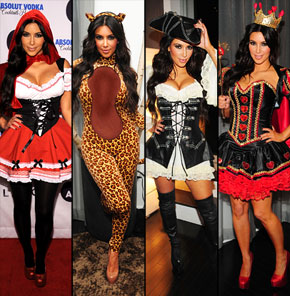
Yale + Halloween = Kardashian

Do we dare not to care?  You’ve seen the news by now: Students and administrators at Yale fretted that thoughtless Halloween costumes might subject them to “cultural appropriation” and steal from them their “voice” and “agency.”  Certainly, it’s easy enough to poke fun at this sort of holiday “snowflake”-ism.  But there’s another question we should also ask: Why do we care?

Insensitive appropriation of cats?...pirates? ...bad taste?

Insensitive appropriation of cats?…pirates? …bad taste?

In case you’ve been preoccupied with real life, the story can be told quickly.  (If you’d like more detail, try here, here, or here.)  Yale’s administration issued an email suggesting that students should think in advance about the cultural sensitivity of their costumes.  Don’t use blackface.  Don’t go as a “wild Indian.”  Etc.  One faculty member, Erica Christakis, responded that such warnings reduced adult Yale students to quivering infants.  Can’t we all be trusted, she asked, to act a little subversive on Halloween?

The response was swift and sure.  Students and their allies denounced Christakis and called for her removal.  They denounced her intentions and racist and oppressive, though she had explicitly supported “concerns about cultural and personal representation.”

It is easy enough to bemoan Yalies’ response to this Halloween email as another egregious overreach by “Snowflake Totalitarians,” privileged students who censor and shout down any smidge of a disturbing idea.  It is also fairly easy to defend the students, in the words of one writer, “to understand why people of color would feel marginalized by the email and the university.”

I’ve said it before and I’ll say it again.  I tend to agree with the protestors.  Or, at least, I’m happier to see students morally outraged—perhaps to excess—than to see students drinking their way through country-club collegiate life.

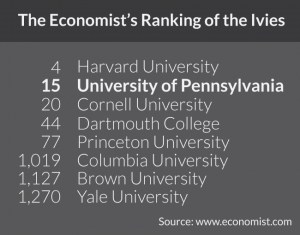
But let’s consider a different question today: Why do we care?  Why is it so very interesting to so many of us what goes on at Yale?  After all, hardly anyone actually goes to school there.  For almost everyone, college life is worlds removed from the elite goings-on at Yale, or Princeton, or Harvard.  And, if we measure college by relative earnings, Yale comes out near the bottom.yale low rank

So why do we care?  I’d like to suggest two possible reasons and I’ll welcome suggestions and denunciations.  In essence, though, I think we’re seeing here the higher-educational fruits of Americans’ ferocious love/hate relationship with celebrities.

First, I think there’s some amount of schadenfreude at play.  Just as ratings skyrocket when Kim Kardashian stumbles through another atrocious episode of her public life, we regular folk outside of the Ivy League love to see those snobs act stupid.  More proof, if we needed it, that those grapes were sour to begin with.

Also, I detect among academic schlubs like myself a certain titillation with the celebrity factor.  No one doesn’t know Yale.  Americans are excited and interested in the lifestyles of the rich and famous.

When Ivy-League students act with predictably adolescent over-zealousness to each new situation, do we all have to talk about it so much?  Or will it be culturally insensitive of us to take Professor Nicholas Christakis’s advice and “look away”?

Shocking Kids to Justice

Is it a good idea? For decades now, progressive teachers have sought to shock children into recognizing their traditional prejudices. Recently, a Kansas teacher ignited some controversy by showing a provocative video. His goal was to shock kids out of their anti-gay mindsets. They are not easy questions: Should teachers intentionally shock and provoke their students in order to make them better people?  It’s easy to see such teachers as heroes when we agree with their goals, but what about when we disagree?

But first, the latest: according to ThinkProgress, Tom Leahy is fighting for his job. Leahy, a high-school teacher from Conway Springs, Kansas, was disturbed by the anti-gay murmurings he noticed among his students. To help show his kids the light, Leahy showed them a short film, “Love Is All You Need.”

The film depicts a world in which heterosexual kids are bullied for their sexuality. One heterosexual girl ends up killing herself.

Outraged parents demanded Leahy’s ouster and the school district complied. At first, Leahy agreed to go, but after an outpouring of support he’s back in his classroom.

I think I would like Tom Leahy. He sounds like an engaged and caring teacher. I, too, was saddened and concerned in my high-school classroom by the nonchalance with which some kids made anti-gay statements. Like Leahy, I hastened to intervene to let kids know that such hateful attitudes, such targeted hostility was not okay.

But is it a good idea to shock kids into enlightenment?

The tactic has a long history. SAGLRROILYBYGTH have probably heard the story of Jane Elliott. In 1968, the story goes, when Martin Luther King Jr. was assassinated, Elliott began an anti-racism activity with her third-graders in Iowa.

Kids with blue eyes were given extra benefits. Kids with brown eyes had to wear fabric collars. Hostility quickly erupted between the two made-up groups of kids. Elliott didn’t let the two groups play together or drink from the same water fountains. She explained that collar-free kids tended to be smarter and better behaved. The next day, she reversed the set-up. Now blue-eyed kids wore the collars and suffered the consequences.

The point was to let white kids experience discrimination, to let them “[walk] in a colored child’s moccasins for a day.”

Are such shock tactics a good idea?

Sometimes, social justice is going to seem shocking. When the US Supreme Court ruled in 1954 that schools could no longer be segregated by race, nothing much changed, because no one in power was willing to ram such shocking change through the system.

Nevertheless, I think we need to remember to give such tactics the smell test. Even after forty-five years, Jane Elliott’s tactics seem harsh and unnecessarily cruel. Her taunting of her third-graders just doesn’t seem right, no matter how noble the goal.

Does Tom Leahy’s activism rise to the same level? It doesn’t seem that way to this reporter. As a former high-school teacher, I found the video he showed to be provocative, but not intentionally cruel to viewers. As far as I know, Leahy did not insult his students or belittle them in public to make his point. He merely showed a thought-provoking video.

What would I say, though, if a teacher pushed kids in directions with which I didn’t agree?  What if a teacher in a public school wanted to lead her kids in prayer?  Or what if a teacher showed a gruesome and intentionally provocative anti-abortion film?

I’m not confident that I would find such teacher activism brave and morally heroic.

Should we shock our students? Every day.

But we need to be very careful about our self-righteousness.  We must remember that our students are in class to be loved, not to be “fixed.”  This has to be true even in cases in which we agree with the moral activism of our teachers.

So how do we know when teachers are engaging in proper thought-provocation, and when they are being moral bullies?

We need to let students know that we are on their side, that we care about them as people even if we want to upset them a little with mind-blowing ideas.

Demonstrating our moral superiority by belittling kids can never be the proper path to a more just society.

How NOT to Get a Conservative in the White House

Do conservative politicians need to have more heart? Do they just need to find snappy, appealing slogans to describe their existing economic policies? That’s the argument, apparently, in Arthur C. Brooks’ new book, The Conservative Heart. I’m no conservative myself, so I hope conservatives listen to Brooks. Because his argument just doesn’t match reality.

SAGLRROILYBYGTH will not be surprised to hear that I don’t really know what I’m talking about. I haven’t read Brooks’ new book. Based on the recent review by N. Gregory Mankiw in the New York Times, though, I feel justified in saying nertz to Brooks’ diagnosis.

Heart attack...

Heart attack…

Both Brooks and Mankiw hail from the free-market-conservative American Enterprise Institute. According to Mankiw, Brooks thinks that conservatives do not have a problem with policy. Rather, they have a problem with publicity.

As Mankiew recounts, President Obama is able to rally support for a minimum-wage hike by saying simply, “It’s time to give America a raise.”

Free-market conservatives, on the other hand, mumble through a complicated but correct four-point rebuttal. By the end, Brooks thinks, Americans just aren’t listening.

This Casssandresque portrait of market conservatives might be flattering to conservatives, but it just doesn’t match political reality. It’s not that overly nerdy conservatives lose their audiences mid-way. Rather, the public never even starts listening.

The problem for conservatives is not that they have too much Spock and not enough Kirk. Conservatives’ main problem has not been their overly logical public image. Rather, conservatives have struggled and failed to portray themselves as something different from their elitist, racist twentieth-century roots.

They need to do more to overcome their twentieth-century history. There are plenty of non-white conservatives out there, but they tend to think that voting for the GOP will be a betrayal. With good reason: This year, GOP presidential candidate Donald Trump insults Mexicans and Mexican-Americans. Last year, ham-handed GOP leaders denounced a voter-registration drive in Ferguson, Missouri.

It is not only these recent events that work against conservatism. Conservatism in the United States has always been perceived (with plenty of justification) as a movement of elite white racists. As I argued in my recent book about twentieth-century conservatism, by the end of the century conservative activists tried to refute their reputation for racism. It didn’t work.

When conservative leaders denied their racism, non-white voters did not believe them. In 1974-75, for example, most of the leaders of the conservative school boycott movement in Kanawha County, West Virginia adamantly denied that they were racist. Folks such as Avis Hill pointed out that he went to church with lots of African Americans. Conservative teachers such as Karl Priest pointed out that he coached a mixed-race basketball team.

Nevertheless, local African American leaders were not impressed. The Reverend Ronald English, for example, conceded that most of his African American friends and congregants were just as conservative as the book protesters. But because of the legacy of conservative activism; because of the presence of a weak and wilted Ku Klux Klan in support of the boycott; because many of the authors of the “offensive” books were African Americans, very few African Americans supported the conservative boycotters.

This legacy continues. In spite of Mr. Brooks’ recommendations, non-white voters—even staunchly conservative ones—will hate to vote for the party of white racism, even if those GOP leaders speak from the heart.

What should conservatives do?

They need to do more than simply insist that they are no longer racist. This will involve promoting non-white leaders such as Bobby Jindal, Nikki Haley, and Ben Carson. This will involve policing their own ranks to prevent any winking at old-fashioned white racism. This will involve highlighting cross-racial areas of conservative agreement on cultural issues such as abortion, same-sex marriage, and creationism.

Can it work? It can and has. When President Reagan appealed to working-class ethnic whites, he swept into the White House with the support of such “Reagan Democrats.” The next big conservative winner will do something similar. He (or she) will undercut the traditional lock between non-white voters and the Democratic Party. He or she will speak from the heart, for sure, but that heart will have to prove somehow that it has had an authentic conversion. Otherwise, voters just won’t listen.

Academic Impostors

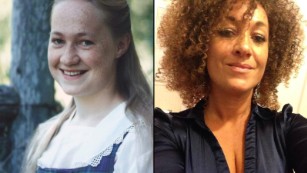
What does Rachel Dolezal have to do with Woodrow Wilson? Her story has been poked and prodded from every angle, it seems, except one. In important ways, this is a story about higher education. Universities have always had non-academic categories that they have preferred. Students and faculty—like Dolezal and President Wilson—have always allowed schools to think they fill those categories, even if they don’t.

Dolezal then & now...

Dolezal then & now…

If you haven’t heard about Dolezal yet, congratulations. Her strange tale of a white woman passing herself off as an African American leader has attracted bajillions of comments from all over the punditocracy. In very brief form, here are the highlights: Dolezal has served as the successful chapter leader of the Spokane NAACP. She has either allowed people to think of her as African American, or has even checked that box herself. She may have performed some Facebook fakery to make her family look more African American. She attended graduate school with a full scholarship at the historically black Howard University. She teaches African American Studies classes at Eastern Washington University. Recently, her very white parents outed her as white. The family had split over Rachel’s accusations of abuse. Rachel had fought for custody of one of her younger brothers.

As journalists have noted, this story has raised tricky questions about race and racism in the United States. Conservative commentators have wondered why people can be transgender but not transracial. The NAACP has issued a statement affirming that its leaders can be from any racial background.

As SAGLRROILYBYGTH are well aware, I’m up to my eyeballs in research for a new book about the history of American higher education. To my tired eyes, one angle of this story jumps out and I haven’t heard any other nerds talking about it. As a student and as a teacher, Dolezal’s imposture has reaped significant rewards. If nothing else, her story can give us another example of the ways preferred categories have always affected higher education.

At Howard University, according to Dolezal’s father, Rachel allowed the school to assume she was African American. They gave her a full scholarship for her graduate program in art. She also teaches part-time at Eastern Washington University in the Africana Education Program. It is not certain that she lied to the people who hired her there, but the director of the program told the New York Times he thought she was black.

It seems evident that Dolezal would not have had the same opportunities at Howard or EWU if she had not been perceived as African American. Academic positions, especially in relevant areas such as Africana Studies, usually have explicit preferences for members of underrepresented groups.

Now, don’t get me wrong, I’m not against hiring preferences in higher education. I agree that personal background can be an important factor when it comes to teaching and scholarship and universities are correct to prefer some candidates based on non-academic qualifications. IMHO. Indeed, I only got my job because of my experience as a secondary-school teacher.

The interesting point, rather, is that these non-academic preferences can tell us a lot about the nature of higher education, the non-academic values of colleges. In the past, elite schools used to prefer Christian professors, for example. This is where Woodrow Wilson comes in. When Wilson, future POTUS, was elevated to the Chair of Political Economy and Jurisprudence at Princeton University in 1890, he received a forceful letter from Princeton President Francis Patton. To keep his chair, Patton warned, Professor Wilson would need to be far more explicit in his Christian testimony.

Patton worried in a letter to Wilson

That in your discussion of the origin of the State you minimize the supernatural, & make such unqualified application of the doctrine of naturalistic evolution & the genesis of the State as to leave the reader of your pages in a state of uncertainty as to your own position & the place you give to Divine Providence.

Princeton, Patton insisted, was determined to “keep this College on the old ground of loyalty to the Christian religion.”

Even at the time, as Patton’s language suggested, such Christian orthodoxy was becoming rarer and rarer in American higher education, at elite schools at least. Patton wanted to hire only Christian scholars. Wilson, for his part, allowed Patton to think he agreed, though Wilson’s later work never embodied the sort of loud-and-proud supernatural thinking Patton desired.

What does any of this have to do with Rachel Dolezal? Back in the 1890s, if one wanted a job at Princeton, one was wise to allow school leaders to think one supported orthodox Calvinism. These days, if one wants a job in a university, one is wise to allow school leaders to think one is a member of an historically underrepresented group.

Back then, conservative schools such as Princeton and Yale were clinging to an older tradition of explicitly Christian education. These days, schools are scrambling to include a wider diversity of racial backgrounds.

Wilson’s career was certainly not hurt by his willingness to let Patton believe his Presbyterianism was stronger than it really was. Dolezal—until this ugly scandal, of course—has not been hurt by people’s assumptions about her racial background.

A School Plan to Cure Racism

It can be depressing. Just over fifty years ago, Thurgood Marshall announced the civil-rights victory of Brown v. Board of Education. In no more than five years, Marshall predicted, the nation’s schools would be racially integrated. Looking at America’s schools today, scholars see more and more racial segregation in schools, not less. One fancy school in New York City has embarked on a more aggressive plan to cure racism. Both liberal and conservative commentators are aghast. But can it work?

In New York Magazine, Lisa Miller reports on the new anti-racism plan of Fieldston School. At this private progressive school, the administration planned to separate kids out into racial groups. The goal was to allow kids to talk about race and ask potentially “impolite” questions without feeling subtle pressure.

As the head of the school told Miller,

We don’t want to replicate what has happened traditionally. The education that many of us have received about race has not been adequate. Hence, where are we as a nation? We are trying to pioneer, to be at the vanguard of this opportunity, to see if we can get it right.

How do the kids feel? One student in the “black” group told Miller that he liked it:

I get to be with people I can share my race with, and I don’t feel uncomfortable about it. . . . We talk about how it’s important to know what your race is. We talk about the difference between being prejudiced and being racist. So I can know when someone’s being racist to me, and I can help other people know that, too. I can say I’m proud of being black. I remember my friend saying that the affinity groups are racist, but they’re not. They put you in a group of what race you are — I don’t think that’s racist at all. We get to make jokes and stuff, and comments. When we’re talking, we get to draw, we get to laugh.

Other students weren’t so sure. A student in the “Asian” group reported, “It’s so fricking boring.”

The idea, in general, is to help students of all races talk about race and racism. Too many white liberals, the thinking goes, are trapped by their own progressive prejudices. They see themselves as enlightened and post-racial, yet they are unable to recognize the ways race and racism function. Programs like this will help make visible the ways white privilege works.

Some parents objected. How is segregating kids by race a good way to fight racial segregation? And what categories would the school use? A Jewish parent objected that his family had been persecuted by the Ku Klux Klan. Did that make him something other than “white?”

One group of progressive parents started a protest petition. The school’s plan, they insisted, would cause “irreparable harm” to their kids.

Conservatives, too, balk at such racial programs. Rod Dreher, for example, called the program a “grievance-building fun house.”

But is it the best way to teach kids about race? To help kids understand from a young age that racism is a real thing? Or does this sort of thing only promulgate racial stereotypes?

Creationists against Racism

Do they really mean it?

These days, leading creationists claim to be anti-racist. But fundamentalist Protestantism has a sour history of racism. Do today’s creationists have a fair claim to be authentically anti-racist? Short answer: Yes. Though it might muddy our progressive assumptions, we need to recognize that dissent from mainstream science has also often included dissent from mainstream racism.

Today’s conservative pundits usually don’t like to talk about it. But historically, as I argue in my new book, in the United States conservatism has been tied pretty closely to racism. And as we’ve seen in these pages, white racism has enjoyed strong support within fundamentalist circles.

Let me be clear: Unlike some progressive pundits, I’m not insisting that white conservatives these days are *really* all a bunch of racists. And unlike some progressive historians, I don’t believe that the *real* explanation for the politicization of conservative evangelicals in the 1970s was white racism. But the historical record is pretty clear: Throughout most of the twentieth century, white conservatism was bound up with traditional notions of white dominance.

There is, however, one glaring and important exception to this rule. Among white conservative creationists, there has been a long record of anti-racism. This has usually not been motivated by a civil-rights style of social activism, but rather from creationism itself. If Adam and Eve were the literal historic parents of all humanity, then there can’t be real differences between the races.

Today’s leading young-earth creationist ministry, Answers In Genesis, has long trumpeted its anti-racist creationism. As AIG likes to explain, racism can’t survive if we really believe in Adam, Eve, and Noah’s Ark.

AIG’s position is nothing new among dedicated creationists. As Bradley Gundlach argues in his terrific new(ish) book, Process & Providence, at the dawn of our modern evolution/creation battles, creationists defined themselves as opposed to racist mainstream science. In 1859, Professor Gundlach writes, the main evolutionary question at conservative Princeton Seminary was not Darwin’s new book. Rather, the creationists at Princeton in 1859 were outraged by the new scientific fad of “polygenism.” Leading contemporary scientists embraced the notion that human races were actually different species. Creationists at Princeton said no.

As the creation/evolution battles heated up in the 1920s, too, the anti-evolution crusade had the better claim to anti-racism. White mainstream science at the time often proved friendly to notions of “scientific racism.” As I describe in my new book (page 49 for those of you following along at home), leading evolutionary pundit Henry Fairfield Osborn supported both evolutionary theory and the racism that he thought went along with it.

Of course, simply because dedicated and consistent creationists have often been anti-racist, we can’t conclude that all creationists are anti-racist. Perhaps most famously, Bob Jones University in South Carolina has been fervently creationist AND fervently racist throughout most of its history.

The point here, rather, is that mainstream science has not always been right. Creationists these days can legitimately claim a more consistent history of anti-racism than can mainstream scientists. The same theological impulse that leads young-earth creationists to insist on a young earth also leads them to insist that all of humanity has the same roots.

Racist Fundamentalists…It’s Complicated

Sometimes the archives can make things too complicated. White fundamentalists have always been accused of racism—a charge they’ve vehemently denied. But what do we do when an African American fundamentalist agrees with the racism of his white fellow fundamentalists?

First, a quick historical sketch: Since the 1920s, as I argued in my first book, fundamentalism got tangled up with ideas about Southern Pride. Conservative religion has often become part and parcel of a broader cultural conservatism, one that included support for racial segregation and white supremacy.

Racist? Or just fundamentalist?

Racist? Or just fundamentalist?

By the 1970s, leading white fundamentalists became some of the most public supporters of racial segregation. Most famously, Bob Jones University steadfastly clung to its whites-only policy long after many white Southerners and white fundamentalists had grudgingly moved on. Some historians, such as Randall Balmer, have insisted that white racism among fundamentalists was the real root of the so-called New Christian Right that emerged in the 1970s.

I disagree. There is no doubt that white fundamentalism—especially in the South—has long had close ties to white racism. There is more to the story, however, than quick condemnations of conservative religion as a front for white supremacy.

In my recent work at the archive of the Moody Bible Institute, I came across a document that reminds us how messy history is. In 1970, the leaders of Moody dis-invited prominent fundamentalist John R. Rice from Moody’s big annual Founder’s Week event. Why? Because Rice had come out in support of the segregationist policies of Bob Jones University.

As President William Culbertson informed members of the Moody community,

Moody Bible Institute has for 85 years welcomed young people of all races and nationalities to its tuition-free training in the Bible. Through times of changing social mores the policy has always been to emphasize the salvation from God by which all men who believe are made one in Christ. We have sought, and do seek, to apply the spiritual principles set forth in the Word of God to the practical problems of our culture. We believe that there is nothing in the Bible that forbids interracial relationships. We are absolutely opposed to injustice and exploitation. We are dedicated to the proposition that we are debtors to all men.

Moody Bible Institute, Culbertson told anyone who would listen, still agreed wholeheartedly with John R. Rice’s fundamentalist theology. Moody refused to compromise with those who would modernize the Bible or water down fundamentalist religion. But Moody could not be seen as part of a racist, segregationist movement.

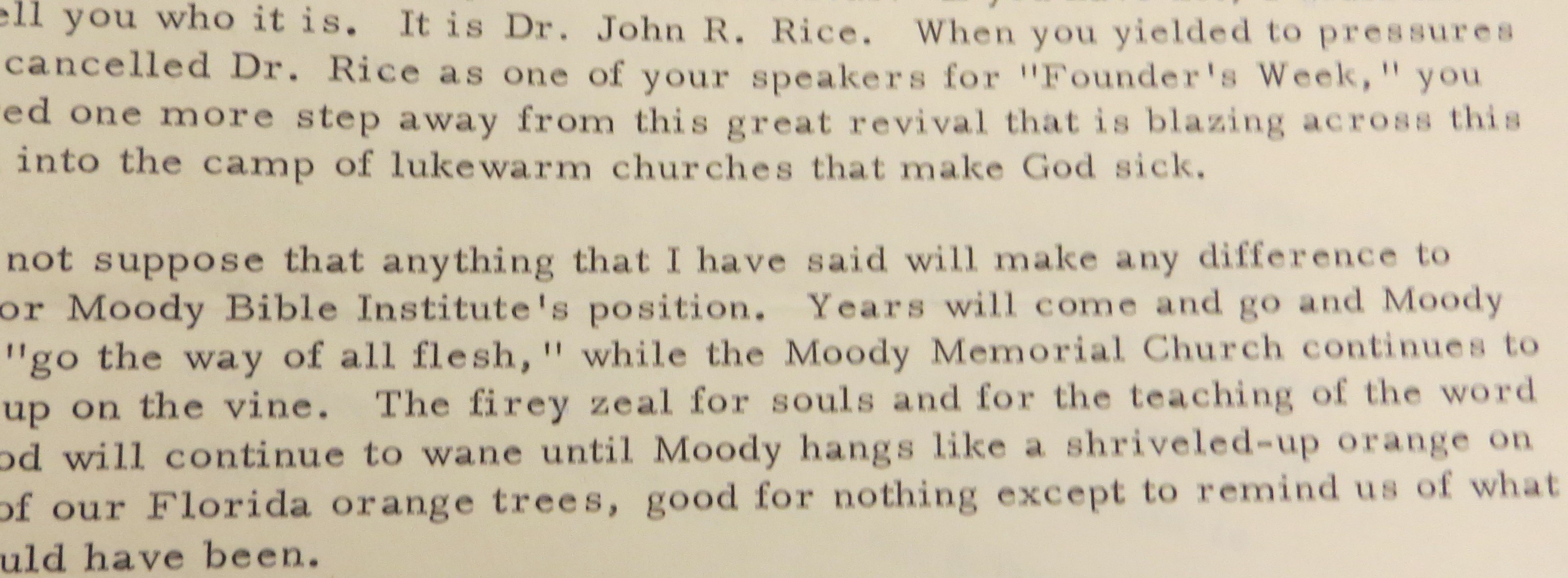
Naturally, John R. Rice and his supporters blasted this decision. More evidence, one Rice supporter charged, that Moody had

moved one more step away from the great revival that is blazing across this land into the camp of lukewarm churches that make God sick. I do not suppose that anything that I have said will make any difference to you or Moody Bible Institute’s position. Years will come and go and Moody will ‘go the way of all flesh,’ while the Moody Memorial Church continues to dry-up on the vine.

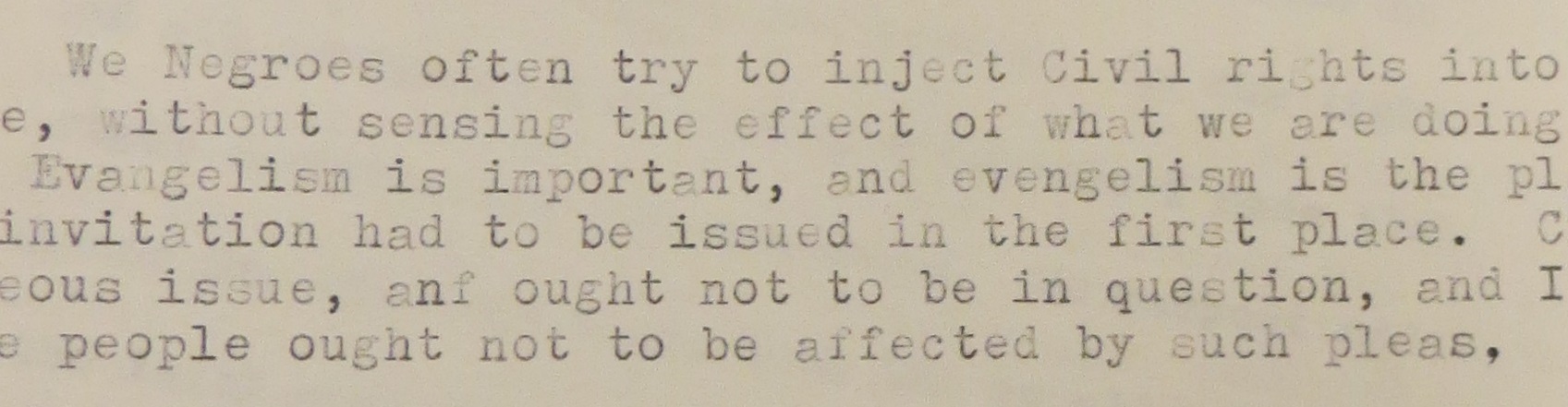
Among the fat stack of angry letters supporting John R. Rice, one stands out. It came from William H. Dinkins of Selma, Alabama. Dinkins was an African American fundamentalist and, in his words, someone who “stand[s] with Dr. Rice for fundamentalism and the old-time religion and all that goes with it.” Too often, Dinkins charged, “We Negroes [sic] . . . try to inject Civil Rights into every circumstance, without sensing the effect of what we are doing.” When it comes to religion and the Word of God, Dinkins continued, “Civil Rights is an extraneous issue, and ought not to be in question, and I feel that responsible people ought not to be effected by such pleas.”

The view from Selma, 1971

The view from Selma, 1971

Dinkins’s letter raises difficult questions about race and religion. First of all, we wonder if this letter was legitimate. Could someone have faked it in order to create an impression of biracial support for racial segregation? If not, we wonder how common such sentiments have been. As historian Jeffrey Moran has argued, white fundamentalists have long tended to ignore their African American co-religionists, at best. And, as John Dittmer and others have showed, in the early days of the Civil Rights movement many African American leaders in the Deep South supported segregation, at least temporarily and pragmatically.

In the early 1970s, was there really any support for racial segregation among African American conservatives? Did fundamentalism trump race?

Conservatives Win a Prize They No Longer Want

A new report about racial segregation in Connecticut’s schools raises a painful historical reminder for conservatives: Conservatives, both white and African American, often promoted school segregation as a central tenet of conservative ideology. These days, mainstream conservatives want to shed their historic legacy of racism. Ironically, that means that no conservative is claiming “credit” for the current resurgence of racial segregation in schools.

The report from Gary Orfield’s Civil Rights Project praises Connecticut’s schools. Unlike most states, Connecticut has made real progress in racial integration of schools. In other states, though, public schools are becoming more starkly segregated.

Sixty years ago, this would have been cause for conservative celebration. Though they don’t like to be reminded, conservatives embraced racial segregation back then as a central plank in the conservative platform. At National Review, for example, William F. Buckley Jr. took a stand in favor of continued white supremacy in the South.

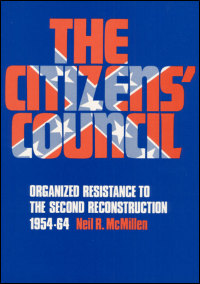
As Neil McMillen made clear in his history of the White Citizens’ Councils, too, leading segregationists consistently tied their racist policies to the broader 1950s conservative movement. In his famous “Black Monday” speech, for example, Mississippi Circuit Court Judge Thomas Pickens Brady denounced the US Supreme Court’s Brown v. Board decision in both racist and anti-communist terms. Not only would school desegregation lead to “amalgamation” of the races, Brady charged, it was also part of a “socialistic” scheme to degrade southern traditions.

Back then, conservatism = segregationism

Back then, conservatism = segregationism

As McMillen tells us, southern segregationists often joined and led other leading conservative organizations. Georgia’s R. Carter Pittman, for example, not only led his local white supremacist Citizens’ Council, but also joined the John Birch Society, the Liberty Lobby, and Billy James Hargis’s Christian Crusade.

Many white segregation leaders in the 1950s embraced religious conservatism as well. The Citizens’ Councils denounced “pinkos in the pulpit” who had declared “private enterprise, rugged individualism, and conservatism in politics . . . equally un-Christian.”

The historical record is clear, if awkward. Though most mainstream conservative thinkers these days don’t like it, in the tumultuous 1950s and early 1960s “conservatism” was tightly bound up with white supremacy.

Even weirder from today’s perspective, many African-American conservatives in the 1950s also embraced continued school segregation. Obviously, they did so in different ways and in different organizations than did white conservatives. No African Americans joined the White Citizens’ Councils, for example. And no African-American conservatives embraced school segregation in the name of white supremacy. Rather, African-American leaders supported segregation in a cautious and strategic way and they abandoned segregation as soon as better options appeared possible.

More complicated than we might think...

More complicated than we might think…

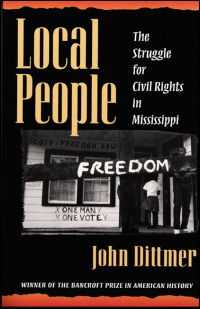
But as John Dittmer demonstrates in his careful history of the civil-rights saga in Mississippi, African-American leaders often preferred racially segregated schools, at least in the early 1950s. At that time, some leaders felt, segregated schools provided Mississippi’s African American population with a steady source of teaching jobs. Some African American leaders also believed that segregated schools offered a better option for African American students than hostile integrated ones.

These days, no one likes to be reminded of this history. African American conservatives largely got on board with anti-segregation campaigns. White conservatives, too, if a little later. But in the 1950s at least, conservatism meant racial segregationism.

And this leads us to our unusual current situation. If today’s public schools are reverting to racial segregation, as the Civil Rights Project documents, we might see this as a long-term victory for 1950s conservatism. Yet, since mainstream conservatives have since abjured their 1950s racist roots, there is no one around to celebrate this significant conservative “victory.”

Racists Welcome

Is even the vilest speech protected? The expulsions of racist chanters at the University of Oklahoma has riled up conservative commentators. No matter how hateful the speech, some say, colleges have no right to expel students for exercising their rights to say it. I can’t help but think that the real target of conservative ire is the current vibe on college campuses.

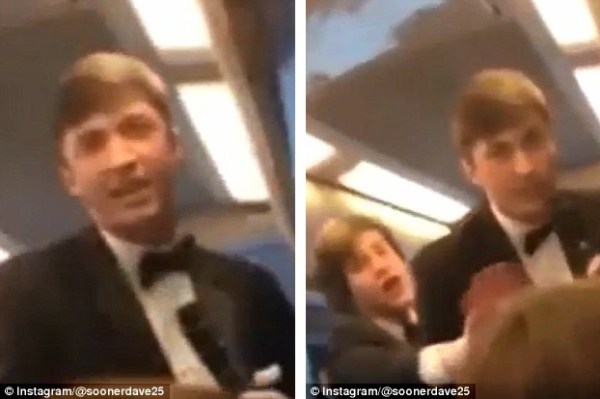
In this case, the speech in question was undeniably horrifying. Frat members sang along that Sigma Alpha Epsilon would never welcome an African American member. Of course, they used a much more offensive term than “African American.” They cheerfully shouted that they could lynch any offender. Horrible stuff.

But is it protected?

Eugene Volokh of the Volokh Conspiracy thinks so. There is no exception to free-speech rights for racist language, even language that creates “hostile environments.” Unless one is issuing specific threats, one may even use language that suggests violence.

Voices of protest?  Or drunken howl?

Voices of protest? Or drunken howl?

At National Review, David French agrees. In its rush to justice, French says, the university failed to observe basic constitutional principles. It was entirely right and just for the national officers of the fraternity to punish the Oklahoma chapter. And it seems fair that the Sooner football team will now lose a prize recruit—to Alabama, no less. But such private-party sanctions are different than official university sanctions.

As have many other conservative commentators, French identifies the broader problem as one of higher-education ideology careening out of control. “Our public universities,” French writes,

are becoming national leaders in trampling the Constitution to legislate their brand of “inclusive” morality.

I understand the argument. And generally, in these pages, I try to refrain from injecting my own opinions. I can’t help but wonder, though, if these conservative intellectuals have over-stepped in their constitutional rationalizations. It seems some conservatives are too quick to protest any action by the leaders of today’s universities.

As I argue in my new book, this anti-university tradition among conservative intellectuals has a long history. Beginning in the late nineteenth century, conservative thinkers bemoaned the changes taking place at leading schools. Instead of passing along time-tested truths, universities made it their job to subvert and question those ideas.

These days, many conservatives lament, universities have become special homes for welcoming certain sorts of offensive speech. For instance, as Professor Volokh points out, many kinds of hateful speech—even violent speech—have long been recognized as protected on campus. No student would be sanctioned for displaying pictures of African American militants wielding shotguns and intoning, “By Any Means Necessary.”

There seems to be an important difference, though, between speech meant to protest against existing conditions and the SAE’s brand of exuberantly hateful race-baiting. The students in this case were not engaged in thoughtful commentary on unfair conditions. They did not hope to attract attention to their cause by using intentionally inflammatory language.

Instead, this looks like a drunken outburst of knee-jerk segregationism, a case in which vino exposed a terrible veritas. When exposed, the expelled students did not defend their actions on the grounds of free speech. Rather, they humbly acknowledged the shamefulness of their actions.

Indeed, it might have been more compelling as a free-speech case if the students had defended their outburst. If, that is, students had been even more painfully racist; if they had been intentionally offensive and if they had knowingly provoked this sort of reaction, then they would have a better claim to constitutional protection. It seems to me, though, that these students are merely petty campus despots, shouting in secret language that they abjure in public.

Does it count as an exercise of free speech when even the speakers find it offensive?