Why Do Evangelicals Doubt Evolution?

For outsiders like me, it can seem an utter mystery why intelligent, informed American adults remain skeptical about the truths of evolutionary science.

The BioLogos Foundation recently re-posted a 2010 video by evangelical scientist Jeffrey Schloss to help people like me understand evangelical skepticism.

Professor Schloss offers two main reasons why evangelicals oppose evolution.  The video is short and worth watching.  But the message is misleading.

Schloss argues that evangelical faith depends on the reliability of Scripture.  Accepting any ideas that challenge that reliability, he points out, would force evangelicals to make profound changes in their core religious beliefs.

Also, Schloss notes that some visions of evolution force evangelicals to doubt the omnipotence and benevolence of God.  If evolution implies a purposeless development of life, it must be rejected by evangelicals.

Such insights are important, but in the end they suggest misleading conclusions.

The vast majority of evangelicals who reject evolutionary science do not do so primarily for theological reasons, as Dr. Schloss suggests.  Rather, evangelicals who doubt evolution mostly do so due to their complex cultural identities as members of communities who doubt evolution.  In other words, evolution skepticism should not be understood as one rational decision among others, made by evangelicals (and others) based on reasoned theological considerations.  Rather, those who doubt evolution do so as members of communities reliant on authoritative statements about the theological impossibility of evolution.

In other words, people doubt evolution because they come from churches, families, towns, and denominations that doubt evolution.  They explain their doubt in theological terms, and such explanations are immensely important.  But they are not the primary reasons why people doubt evolution in the first place.

Perhaps this problem will make more sense if we try an analogy.  Historically, some economists suggested that people tend to make rational economic decisions.  By plotting a rational economic forecast, the thinking went, economists could predict the ways homo economicus would behave.  Unfortunately, real people don’t act often enough like homo economicus to make those predictions useful.  Some people do, naturally, but not enough to make homo economicus a useful explanatory tool.

I suggest that Professor Schloss is crafting a similarly misleading picture of homo theologicus.  Professor Schloss suggests that American evangelicals deny evolution due to two important theological considerations.  Doubtless there are some American evangelicals who have done so.  But more people make decisions for other reasons.  The theology is important, but it is not the place to start if we want to understand evolution skepticism.

Professor Schloss is doubtless fully aware of these sociological and cultural reasons for evolution skepticism.  He notes the many factors that go into evolution skepticism.  But by describing two theological ideas as the most important reasons for opposing evolution, he grossly mischaracterizes the nature of American evolution skepticism.

For those of us who hope to improve evolution education, this matters.  If we think of evolution skepticism as a rational theological belief, then we may decide that the best way to spread evolutionary theory is to explain evolutionary theory rationally and repeatedly.  We may be led to believe that reasonable independent actors have chosen evolution skepticism, and may thus be open to rationally and reasonably changing their minds.

That’s not how it works.  As my grad-school mentor Ronald Numbers has shown, the boundaries of acceptable “creationist” belief among evangelicals and other creationists have changed over time.  Such boundaries have not been something each individual evangelical creationist has reasoned out for him- or herself.  Rather, the meanings of evolution skepticism have themselves evolved.  And, as David Long’s ethnographic studies have demonstrated, personal commitments to evolution skepticism are not often changed by exposure to evolutionary theory.

Evolution skepticism is a complex cultural identity.  Americans do not choose to believe in either evolution or creationism in a sort of cultural cafeteria.  Rather, they are born (or adopted) into communities of belief.

Those of us who hope to spread the acceptance of evolutionary science must begin with a thorough and nuanced understanding of evolution skeptics.  Professor Schloss’ overemphasis on homo theologicus does not do that.


An Age of Denial—of History

Attention, fellow followers of the evolution/creationism controversies!  Want to read

  • Hysterical exaggerations?
  • Misleading claims?
  • Willful ignorance?

Then look no further than the pages of the New York Times.

These aren’t the ravings of a fringe Bible-thumping creationist, nor are they the feverish exhalations of a Dawkins wannabe.
Rather, the New York Times recently ran a sadly mistaken opinion piece by physicist Adam Frank of the University of Rochester.

Professor Frank and I are on the same side of these debates.  We both want better evolution education in America’s schools at every level.
But Professor Frank engaged in some terrible punditry that even his allies must protest.  Frank made the tortuous claim that

Narrowly defined, “creationism” was a minor current in American thinking for much of the 20th century. But in the years since I was a student, a well-funded effort has skillfully rebranded that ideology as “creation science” and pushed it into classrooms across the country. Though transparently unscientific, denying evolution has become a litmus test for some conservative politicians, even at the highest levels.

Creationism is not Professor Frank’s only concern.  He also blasted America’s growing—or at least durable—disdain for climate-change science and vaccination science.  For those notions, Frank may have a point.  But his claims about creationism don’t pass the smell test.

Even on his own terms, Professor Frank muddles things.  He opens by acknowledging the fairly flat lines of American creationism illustrated by Gallup polls.  Since the 1980s, about 42-44% of respondents have agreed that God created humanity in pretty much its present form at some point in the last 10,000 years.

How, then, does it make any sense for Frank to conclude that his “professors’ generation [in the 1980s] could respond to silliness like creationism with head-scratching bemusement”?  Creationism in the 1980s was a roaring lion, pushing “two-theory” laws onto the books in states such as Arkansas.  Indeed, President Reagan swept into the White House based, in part, on his ardent support for creationism.

Frank’s personal experience with self-satisfied academic scientists in the 1980s who looked at creationism with “head-scratching bemusement” demonstrates the surprising cultural isolation of academic scientists more than it does any weakness of creationism in the 1980s.  As sociologist Elaine Howard Ecklund has argued, many scientists in elite academic settings these days show a surprising ignorance about conservative religion in America.  That may have been true of Frank’s teachers in the 1980s as well.  If they thought 1980s creationism posed no threat to mainstream science and science education, they certainly misunderstood the nature of American culture and politics.

More startling is Frank’s bizarre claim that creationism was a “minor current in American thinking for much of the 20th century.”  Such a statement reveals a breathtaking ignorance about the career of American creationism, indeed about American culture in general.

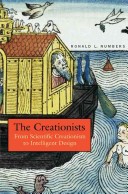
I don’t suggest that physicists such as Professor Frank need to take the time to read the excellent academic literature out there, such as Ron Numbers The Creationists, Michael Lienesch’s In the Beginning, or Jeffrey Moran’s American Genesis.  Though it wouldn’t hurt, especially if one is planning to spout off about the history of creationism in the pages of the New York Times.

But even if Frank only scanned through the Wikipedia entry on the Creation-Evolution Controversy, he would see that creationism has never been a “minor current.”  Creationism has always been embraced by leading figures; creationism has always had powerful political support.

So what could the good professor have been thinking?  How could an intelligent, informed commentator really believe that creationism has grown from inconsequential to insuperable between 1982 and today?

Perhaps Professor Frank believes that his claims are true if we look only at creationism “narrowly defined.”  That is, one could make the case that today’s sort of creationism did not exist for most of the 20th century.  This could hold some water.  After all, the sort of creationism we’re used to today is very different from that of the 1920s, 1930s, 1940s, and 1950s.  The 1961 publication of Morris and Whitcomb’s Genesis Flood heralded a new sort of creationist thought and belief.

If this is what Professor Frank meant, good for him.  But I don’t think it is.

After all, Frank does not claim that creationism has become powerful since the 1960s.  He seems to believe that creationism has escalated in political intensity since 1982.

Also, if he hopes to argue that creationism’s political power is stronger now than it has ever been, he can’t hide behind his faulty “narrow” definition of creationism.  In the first half of the 20th century, creationism—not the same creationism as today, but recognizably the same cultural and political impulse—ruled the ballot box in states across the country.  It did so far more powerfully than it has done since.

The claims of “early” creationism were far more strident than the claims of latter-day “creation scientists.”  Since the 1960s, most creationists have fought to include creationism alongside evolution in public-school science classes.  Earlier activists had much greater ambitions, hoping to ban evolution entirely.

So what can we make of Professor Frank’s anxious tut-tutting?

Frank’s misleading conclusions, I believe, result from a disturbing willingness to ignore the historical record and rely on flawed personal experience to make sweeping charges about the way America has changed over time.  The goal is to create a sense of hysteria, a sense that we are now approaching a crisis worse than any we have seen.

Such antics may make for good politics.  But they make for very bad policy-making.  Our thinking about creationism, education, and culture should be based on clear-heading thinking, not on false claims.

So, to set the record straight, let’s look at a few simple facts:

  • Is America in 2013 ferociously creationist?  Yes.
  • Do politicians truckle to creationists?  Yes.
  • Has America become more ferociously creationist since Professor Frank began his college career in 1982?  No.

It may be politically expedient to skew the history this way, but it doesn’t do justice to the facts.  In the end, this kind of misrepresentation hurts the cause of evolution education.  It depends on a false sense of crisis; it gives readers a misleading depiction of our current cultural situation.

America is not facing the strongest creationist surge in our history.  Education policy should not be based on hysterically misleading claims.  Rather, creationism today is powerful, just as it has been since before America landed on the moon, just as it has been since before America landed on Omaha Beach.

American creationism, in short, is not a sudden new challenge to mainstream science, but rather a durable tradition.  Science pundits such as Professor Frank must recognize this.


Our Creationist President

What would it mean to have a fervent young-earth creationist in the Oval Office?

With Dr. Ben Carson mooted as a possible GOP candidate in 2016, it is a possibility we need to consider.

Creationists themselves trumpet a long history of presidential creationism, from Ike to George Dubya.  The case can be made, by both creationists and their foes, that several conservative presidents have been friendly to the politics of creationism.

Carson’s creationism, however, would be different.  In a recent interview with the Adventist News Network, Carson defended his creationism.  “I’ve seen a lot of articles, Carson told ANN,

that say, “Carson is a Seventh-day Adventist, and that means he believes in the six-day creation. Ha ha ha.” You know, I’m proud of the fact that I believe what God has said, and I’ve said many times that I’ll defend it before anyone. If they want to criticize the fact that I believe in a literal, six-day creation, let’s have at it because I will poke all kinds of holes in what they believe. In the end it depends on where you want to place your faith – do you want to place your faith in what God’s word says, or do you want to place your faith in an invention of man. You’re perfectly welcome to choose. I’ve chosen the one I want.

Carson’s earnest creationism should come as no surprise.  As a lifelong member of the Seventh-day Adventist church, Carson belongs to one of the staunchest creationist denominations out there.

As historian Ron Numbers has demonstrated, much of today’s young-earth creationist orthodoxy among conservative Protestants can be traced back to the creationist activism of Adventists such as George McCready Price.

However, presidential politics in the USA have a long history of denominational wrangles.  In 1928, Al Smith failed to convince voters that his Catholicism would not mean a Roman dictatorship of the White House.  A generation later, Kennedy pulled it off.  Most recently, Governor Romney seemed to have convinced Americans that his LDS religion would not mean a similar sort of Utah overlordship.

As a politician, the good doctor could make a similar plea to be free from the sectarian demands of his denominational background.  He could distance himself publicly from the more controversial aspects of Seventh-day Adventism.  In this interview, Carson does not seem interested in such tactics.  Instead, he embraces the creationism of his church.

What would that mean in the White House?

Inter-faith Creationism?

It is no longer surprising to see deeply conservative religious thinkers reach across religious lines to work together.  Could we soon see effective Muslim-Christian coalitions to support the teaching of creationism?

Perhaps as a model, interfaith creationists could consider Robert George and Hamza Yusuf’s collaboration.  The two leading intellectuals, one Catholic, one Muslim, co-wrote an open letter to hotels, requesting the removal of pornography from television options.

Even more apt, we could consider the fact that American creationism has always used the work of fellow creationist writers from different religious traditions.  In the 1920s, as my grad-school mentor Ronald Numbers argued, Catholic writers such as Alfred McCann were favorites among ferociously Protestant creationists.  More recently, this tradition has continued with the creationist embrace of Jonathan Wells’ work.

Could this tradition of creationist ecumenism work to bridge the Christian-Muslim divide?

There is no doubt that both religions harbor fervent creationists.  A recent article in The Economist detailed recent creationist developments among Islamic populations.  The article cited a study by Salman Hameed of Muslim attitudes to evolution.  That study found that 20% of Muslims in Indonesia, Malaysia, and Pakistan embraced evolution.  In Egypt, only 8% did.

As The Economist article describes, “controversial” Turkish evangelist Adnan Oktar, known as Harun Yahya, has long conducted an energetic creationist campaign in Muslim circles, including a series of conferences in the USA.

Of course, the conservative theology behind both Islamic and Christian creationism creates some barriers.  Orthodox religious thinkers on both sides will be wary of working with people from opposing traditions.

But there has also been a long tradition of cooperation.  As Ronald Numbers pointed out in The Creationists, in the mid-1980s, the Institute for Creation Research received a telephone call from the minister of education of Turkey, requesting teaching materials (Creationists, 2006, pg. 421).  In 1992, a Turkish creationism conference invited ICR stalwarts Duane Gish and John Morris as keynote speakers.  Professor Numbers also describes the founding in 1990 of the Turkish Science Research Foundation (Bilim Arastirma Vakfi, or BAV).  In Numbers’ words, “For years BAV maintained a cozy relationship with Christian young-earth creationists, feting them at conferences, translating their books, and carrying their message to the Islamic world”  (Creationists, 2006, pg. 425).

For a long generation, then, Muslim and Christian creationists have worked together.  The question is not whether such cooperation can happen.  Rather, the question is whether and when these efforts will gather enough support to become a major influence on the politics and policies of creationism and evolution education.


Darwin Denounced as “Jew” in Turkish Textbooks

Every now and again we hear from evolution educators that creationism is somehow unique to the United States.  In his recent popular video denouncing creationism, for instance, Bill Nye “The Science Guy” said exactly that.

Not so fast!  As scholars such as Ronald Numbers have documented, creationism has long been an international affair.  In places such as Australia and Turkey, for instance, creationism has strong and apparently growing support.

And, thanks to the Sensuous Curmudgeon, we come across a story from the international edition of the Financial Times demonstrating the durability of Turkish anti-evolution education.

The FT story demonstrates both the similarities and differences of creationism across national and cultural boundaries.  In some senses, the story could come straight out of the USA.  Other parts seem uniquely Turkish.

For instance, the story describes a controversy over the use of anti-evolution textbooks in Turkish schools.  A teachers’ union has taken legal action to block schools in Istanbul from using anti-evolution textbooks.  Just as in the USA, the Turkish government has made moves to loosen Turkey’s traditional government secularism in a strongly religious nation.  The government, according to the FT article, has allowed more schools to favor religious themes.

All of this sounds like it could have come directly from the evolution/creation controversies in the USA.

But other parts of the story have a uniquely Turkish twist.  The schoolbooks, for example, denounce Darwin as Jewish.  According to the FT, the textbooks warn students that Darwin “had two problems:  first he was a Jew; second, he hated his prominent forehead, big nose and  misshapen teeth.” The books mock Darwin’s lack of formal education, noting strangely that he preferred to spend his time with monkeys in the zoo.

Such anti-Semitic attacks do not usually appear in America’s evolution/creation controversies.  More common would be attacks on Darwin’s atheism.  For the record, Darwin was not Jewish.  However, a creationist attempt to discredit Darwin by “accusing” him of Jewishness makes some sense in a Turkish context.

Clearly, context matters.  Students in Louisiana’s publicly funded schools might read textbooks promoting creationism and evangelical Protestantism.  Students in Istanbul’s publicly funded schools had read that Darwin could not be trusted because he was Jewish.

Look, Kids, a Real Live Conservative…

The ad hit the Chronicle of Higher Education yesterday.

The University of Colorado at Boulder is looking for a Visiting Scholar in Conservative Thought and Policy.  Chancellor Philip DiStefano disputed criticism that this move was either a sop to politically powerful conservatives or a strategy to hire one “token” conservative on a liberal campus.

The original plan to fund a full Chair has been scaled back to a three-year pilot program to bring in prominent visiting scholars, according to a school news release.  The program hopes to bring in a prominent intellectual, not necessarily an academic, to provoke intellectual ferment on the beautiful mountain campus.  Will it work?

As we’ve discussed here recently, the notion that many public universities have been captured by the cultural, intellectual, and political left resonates strongly with many conservatives.  But we’ve also noticed that such “secular” universities are also often home to many conservative students and faculty.

Whatever the true purpose for this new program, I can’t wait to see who takes the job.  Would a young-earth creationist–no matter how distinguished–be considered intellectually respectable enough?  Or, if a young-earth thinker lays beyond the pale, could someone such as Alvin Plantinga or Darrel Falk fit the bill?  Or would the campus powers-that-be prefer a more secular thinker?  How about Paul Gottfried?

Though the university insists it would be open to a scholar as well as an activist, it seems they would prefer someone who speaks as a conservative, not just about conservatism.  That’s too bad.  Some of the most interesting university interactions might come from hiring a scholar of whatever personal beliefs, someone whose work illuminates conservatism in America.  Maybe someone like George Marsden?  Or Ron Numbers?

We’ll be watching to see what shakes out with this position.  Who do you think it should go to?  For those conservatives and scholars of conservatism out there, would you want the job?

Bill Nye Doesn’t Get Creationism

Thanks to Our Man in Scotland, we recently read some comments on American creationism from “The Science Guy,” Bill Nye.  Though we at ILYBYGTH don’t defend young-earth creationism, we do hope to understand it on its own terms.  In that task, mainstream scientists like The Science Guy often seem uniquely unhelpful.

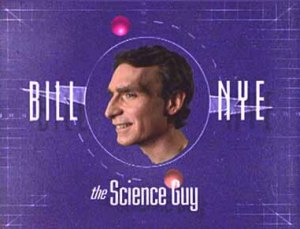
Bill Nye The Science Guy. Image Source: Educational Communications Board

In a bit from February on Big Think, the well known TV science popularizer had some harsh words for those who believe in a young earth.  Only when we understand the extreme age of the universe, Nye charged, does the story of life on Earth make sense.  Those who try to stick to a young earth make things “fantastically complicated,” Nye insisted.  “The idea of deep time,” Nye explained, “of this billions of years, explains so much of the world around us.  If you try to ignore that, your world view just becomes crazy, just untenable, itself inconsistent.”

Let’s take this accusation apart a little bit.  As I read it, America’s favorite nerd is not quite calling young-earthers crazy, the way Richard Dawkins likes to do.  Instead, Nye is saying that trying to frame a conception of the universe that takes all the evidence into a account is crazy, unless we assume an extremely long timeframe.

Nye makes other statements about creationism that are just plain wrong, though.  First, Nye ends his diatribe with a familiar “progressive” fallacy.  Nye asserts that young earth belief will wither away.  “In another couple centuries,” Nye states, “. . . it just won’t exist.  There’s no evidence for it.”  But that is not how things have worked historically.  Young earth belief was far less prevalent in 1920 than it became in 1980, for instance.  Some evolutionists fall into this trap of assuming that young-earth belief is strictly a matter of ignorance and isolation.  As more and more people are exposed to the evidence for evolution, the assumption goes, young earth belief must surely die out.  But young-earth belief has grown along with America in the twentieth century.  As more and more people get more and more education, a significant minority of them are educated into young-earth belief, not away from it.  As I describe in my 1920s book (Now in paperback!) anti-evolutionists in the 1920s set up a durable and influential network of schools and colleges to educate American toward young-earth belief, not away from it.

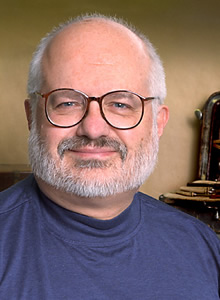
Ronald Numbers. Image Source: University of Wisconsin Madison

The second error Nye makes is in his opening statement.  “Denial of evolution,” Nye insists, “is unique to the United States.”  That is simply not true.  Strong creationist movements thrive world wide, especially in Australia and New Zealand.  As my mentor Ronald Numbers has explored in the new edition of his classic book The Creationists, young-earth belief is also strong in countries such as Turkey.

Like a lot of evolutionists, Nye seems to be a particularly bad guide to the world of young-earth creationism.  Perhaps because from his position firmly within the scientific mainstream, the ideas of creationism look particularly outlandish.  Nye and his mainstream scientific colleagues have no ability to understand something that builds its intellectual structure upon a radically different foundation.  To Nye and his ilk, the only explanation is that such thinking is crazy, etc.  We at ILYBYGTH hope to understand it more profoundly.

Barton and Evolution

You might be tired of hearing about David Barton.  I know I am.  But how about just one more point?  This morning, History News Network ran an essay of mine asking a new question about Barton.  In the essay, I ask what might happen if Barton was defending the notion of a young earth, rather than the notion that Thomas Jefferson was a devout Christian.

Thanks to the History News Network for running that piece.  Since I submitted to their editor, the Barton story has developed in ways that make me even more intrigued in the comparison between (some) conservative Christians’ views of history and creationists’ views of biology and geology.

In a piece that ran in the August 13 online edition of Glenn Beck’s Blaze newsletter, Barton defended his work.  According to the Blaze article,

“Barton seemed anything but shaken by the controversy when he spoke via telephone with TheBlaze. He freely answered questions about the controversy and explained that he’s prepared to respond to some of the critiques, while dismissing what he believes is an ‘elevated level of hostility that’s not really rational in many ways.’

David Barton Responds to Jefferson Lies Controversy and Warren Throckmorton

“While he stands by his central arguments about Jefferson, Barton isn’t pretending to be immune from error. The historian said that the book has already gone through three or four printings and that there have been word and text changes based on spelling or grammar errors along the way. Also, he addressed a willingness to amend historical items, should they be pointed out and proven wrong by other academics.”

What’s intriguing to me in this defense is the way it echoes the challenges posed by 1920s creationists.  Note the phrase “other academics.”  Barton here defends his position as one academic historian among others.

It has been a very long while since scientific creationists insisted that they were part of of the mainstream scientific establishment.  As Ron Numbers described in his classic The Creationists, after the Scopes trial in 1925 leading creationist scientists still fought for creationism’s acceptance in mainstream science.  But they quickly learned that such debates did not offer a real chance to convince mainstream scientists of creationism’s superiority.  Seventh-day Adventist George McCready Price, for instance, left one debate in London shocked and demoralized by the reaction of the crowd.  “Do not confine your reading wholly to one side,” Price pleaded in response to one scornful outburst from the audience.  “How can you know anything about a certain subject if you read only one side of the case? There is plenty of evidence on the other side, and this evidence is gradually coming out.”  After this debate, Price left the stage feeling humiliated, and he never engaged in another public debate. (Numbers, ed. Creation-Evolution Debates, pg. 186).

This does not mean, of course, that creationists gave up.  No, it demonstrates that creationists moved in the 1920s, in fits and starts, away from fighting for acceptance by mainstream scientists.  Instead, they built their own powerful institutions: schools, publishers, and research organizations.  By 2012 no politician needs to retreat from creationist belief.  Similarly, no creationist feels a need to prove his or her claims to an audience of mainstream scientists.

David Barton, on the other hand, is giving us what might be a new Scopes moment.  Forced to endure the public humiliation of having his book withdrawn, Barton has taken a defiant posture.  He has insisted, like Price in 1925, that readers do more than “read only one side of the case.”  He continues to claim his credentials as one academic historian among others.  I wonder if soon historians like Barton will embrace their outsider status.  If so, as I argue in the History News Network piece, we might be seeing another sort of 1925.

Required Reading: The Big Tent of Creationism

Creationism ruffles feathers.  As the belligerent atheist Richard Dawkins memorably quipped, those who do not believe in evolution must be “ignorant, stupid or insane (or wicked, but I’d rather not consider that).”  There is comfort in Dawkins’ dismissal.  An insightful article in the most recent Christianity Today, however, probes deeper into the complexities of creationism.

I still remember my first introduction to the world of creation science.  I was a staunch outsider, having had little interaction with creationism until my mid-30s.  In graduate school, reading Ron Numbers’ The Creationists, I was astounded to learn that nearly 50% of American adults agree with a young-earth creationism, according to Gallup polls.  And one-quarter of those creationists have college degrees.

Much of my academic research has been devoted to puzzling out how such a thing is possible.  Since the 1920s (my Scopes book now available in paperback!), creationism has entrenched itself in schools, colleges, and alternative scientific organizations.  It has become a viable way for millions of Americans to understand the origins of life on Earth.

Glib dismissals like those of Richard Dawkins do not help us understand this cultural phenomenon.  What will help are thoughtful, sympathetic explorations like that of Tim Stafford in July’s Christianity Today.  In “A Tale of Two Scientists,” Stafford explores the lives and careers of two evangelical scientists, Darrell Falk and Todd Wood.  Falk is an evolutionary creationist, Wood a young-earth creationist.

Falk describes his falling away from his upbringing in the Nazarene Church.  As a graduate student, he had fallen in love with the beauty of genetics, and soon found himself estranged from the church.  When he watched his two daughters growing up, he knew he wanted to find them a church home like the one he had known.  He was worried about a cold reception from church members, but as a tenure-track scientist at Syracuse University, he looked for a church he could join.  At first, he was nervous.  As Stafford tells the story,

“Falk went alone, like a spy, into the church for a worship service.

“After the service, he found himself surrounded by friendly faces. They seemed delighted that he was a professor at Syracuse. Falk went home and told his wife, ‘We might have a church after all.’

“So it proved to be. Though the church certainly didn’t believe in evolution, and came to know that Falk did, they never bothered about it. ‘That church, God’s gift to us, built a bridge to us and welcomed us just as we were, gradual creation perspective and all.’ The pastor helped Falk as he found his way to a fuller, more robust faith, eventually asking him to teach a Sunday school class for young adults.”

Wood had a very different upbringing and career.  As he explains in the article, he never moved away from the assumption that the Bible’s description of a six-day creation tells the real story of the origins of life.  But that did not mean that he was somehow ignorant of evolution.  As Stafford writes,

“The first human genome sequence was published the year that Wood began graduate school, providing strong evidence for evolution. The DNA for chimps and humans was virtually the same. Traces of common origins were everywhere: Humans even possessed a broken version of the gene that lizards and birds use to produce eggs. Wood remained fully committed to a six-day creation—he says he never doubted it for a minute—because he saw no other way to read the Bible. But that didn’t keep him from recognizing that evolution had powerful attestation.”

The two men have very different ideas about the origins of life.  Yet they can both describe themselves as “creationists.”  And, unlike the harsh denunciations of critics like Dawkins, neither scientist is stupid, insane, or ignorant.  Rather, their relationships to mainstream science have been profoundly shaped by their religious beliefs.  This does not mean they have been brainwashed or indoctrinated.  Nor does it mean they are anti-science.  Rather, they came to very different conclusions about the need to reconcile science and religion, all within the big tent of creationism.

We do not have to agree with their conclusions in order to recognize the intellectual complexities of their positions.  If we hope to understand Fundamentalist America, it will help to dig deeper than Dawkins’ brand of simplistic denunciation.