Kicking Out the Christians: Duck Dynasty and “Facial Profiling”

Christians are a persecuted minority!

That’s the claim we hear over and over again from conservative religious folks.

Today we get some surprising evidence that bearded holy men of the Christian faith really are punished unfairly.  Duck Dynasty star Jase Robertson was apparently kicked out of the Trump Hotel in New York City when an employee assumed he was homeless.
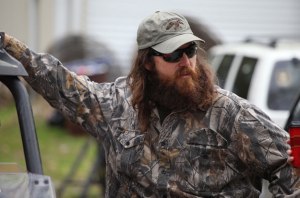
jase-robertson4

Robertson. Image Source: A&E

As the Christian Post reports, Robertson didn’t take the incident too seriously.  He called the episode a case of “facial profiling.”

It was not Robertson’s Christian faith, but rather his appearance, that apparently led to this embarrassing incident.  The big reality-show star didn’t make a fuss.  But other conservative Christians like the Robertson family have consistently complained that they are treated like despised minorities in American culture.

In 1980, for example, evangelical superstar Jerry Falwell called conservative Fundamentalists “the largest minority bloc in the United States.”[*]

These feelings among conservative Protestants have been especially strong in debates over public education.  Since the 1920s, conservative evangelical Protestants have complained that their rights have not been respected.  To cite just one example, in 1965 evangelical editor John R. Rice lamented the fact that conservative Christians were not only a minority, but a minority that had been consistently singled out for unique persecution.  “Why not have freedom in America as much for one minority as another?” Rice asked.  “Why not observe the rights of Bible believers as well as the rights of the infidels in the churches and infidels in courts or schools?”[†]

We have seen despised-minority rhetoric again and again in conservative calls to include creationism in public-school science classes.  In the early 1980s, creationists pushed laws that would include both evolution and creationism, in order to protect the constitutional rights of minority creationist students.  Laws such as Arkansas’ Arkansas’ Act 590 of 1981, for example, emphasized that such rules would “protect academic freedom . . . [and] freedom of religious exercise.”[‡]

Creationists have also often complained that their views are ignored out of an anti-scientific zeal to punish minority dissent.  In 1984, for example, creationist Jerry Bergman published his expose of anti-creationist persecution in American higher education.  Bergman himself claimed to have been denied tenure at Bowling Green State University solely for his religious beliefs.  “Several universities,” Bergman lamented,

state it was their ‘right’ to protect students from creationists and, in one case, from ‘fundamentalist Christians.’ . . . This is all plainly illegal, but it is extremely difficult to bring redress against these common, gross injustices.  This is due to the verbal ‘smoke-screen’ thrown up around the issue.  But, a similar case might be if a black were fired on the suspicion that he had ‘talked to students about being black,’ or a woman being fired for having ‘talked to students about women’s issues.’[§]

Kicking out a bearded Christian holy man from a fancy New York hotel won’t offer much clarity to this old dispute.  Jase Robertson himself did not seem at all offended that a hotel employee took him outside to a park when Robertson asked for directions to a bathroom.

Other conservative evangelical Protestants, however, have not laughed off this kind of thing so lightly.  In controversies about the nature of America’s public square, including its public schools, conservative Christians have consistently insisted that they had been treated like persecuted minorities.

It makes me wonder if Jerry Falwell was ever kicked out of a fancy hotel.


[*] George Vecsey, “Militant Television Preachers Try to Weld Fundamentalist Christians’ Political Power,” New York Times, January 21, 1980, A21.


[†] John R. Rice, “White Minorities Have Rights, Too,” Sword of the Lord 31 (3 September 1965): 1.


[‡] “Act 590 of 1981: General Acts, 73rd General Assembly, State of Arkansas,” in in Marcel C. LaFollette, ed., Creationism, Science and the Law: The Arkansas Case (Cambridge: MIT Press, 1983), 15.


[§] Jerry Bergman, The Criterion: Religious Discrimination in America (Richfield, MN: Onesimus Press, 1984), 43.
“Worker Ants in an Insect Society:” The Case for Christian Education

Can government schools produce anything except totalitarian drones?

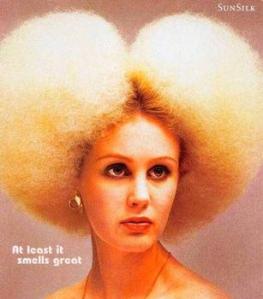
The folks at Patheos: The Anxious Bench recently re-ran a consideration of this question by the accomplished historian Thomas Kidd of Baylor University.  But does this conservative criticism assume too much about America’s public school system?  Are bad schools more like bad haircuts than anything else?

Source: Sodahead

Source: Sodahead

More on haircuts later.  The question of public schools and Christian students has long exercised conservative intellectuals.  I’ve described the history of this perennial concern among American conservatives in general and among conservative evangelical Protestants in particular in a couple of academic articles and in my 1920s book.  As Professor Kidd notes, this question of separate “Christian” schools has long been a central concern among conservative religious thinkers.

Professor Kidd lays out the case: even in his hometown of Waco, “where parents can pretty reasonably assume that Christian students at public schools will not be harassed for their faith,” public-school values do not pretend to match the values of evangelical Protestantism.  The problem, as Kidd notes, has been trumpeted by conservative Christian intellectuals for generations.  Kidd cites J. Gresham Machen, Christopher Dawson, Douglas Wilson, and Anthony Esolen as varied exemplars of this intellectual tradition.

Kidd cites Christopher Dawson’s 1961 accusation that public schools were only fit to produce “worker ants in an insect society.”  The problem, Kidd argues, is not simply the familiar laundry list of evangelical complaints.  It is not simply that public schools teach evolution, or that they discourage prayer, or that they teach a skewed secularized history.  The deeper problem is an utter lack of purpose in public education.

As Kidd puts it,

Public education, and private secular education, is floundering to identify any purpose these days, other than perhaps “math and science” training, and the ever-popular “critical thinking skills.” (Excellent standardized test scores and successful football teams are also good.) The modern public school system was originally intended to form citizens for democratic citizenship; perhaps that purpose lingers in some public schools today. But Christians should be wary even of education for democratic citizenship, which can easily shade into nationalism and cloud a child’s understanding that her ultimate citizenship is in the city of God.

At a fundamental level, Kidd argues, parents must spend more time asking what purpose they hope their children’s education will serve.  For conservative evangelical Protestants, in general, even the most efficient public schools may seem only efficient paths to damnation.

Here at ILYBYGTH, we must ask: Are public schools really so profoundly anti-Christian?  And, perhaps more important, what does any of this have to do with poodle haircuts?

After all, the public schools also take their share of accusations from the left.  Liberal watchdogs such as the Texas Freedom Network blast politicians for using schools as catspaws in a rabid anti-leftist witch huntAmericans United for Separation of Church and State warns of the “Religious Right’s Plan to Force Fundamentalism on Our Public Schools.”  Academic leftists such as Michael Apple accuse twenty-first century public schools of being profoundly dominated by the conservative shibboleths of “Markets, Standards, God, and Inequality.”

Is this only a matter of perspective?  Are public schools centrist institutions, forced to muddle down the middle of cultural controversies?  From the left, schools appear dominated by conservatism.  From the right, they look like secularist left-wing indoctrination centers.

Or could this be the oldest public-school question in the book?  That is, could these critics be making the mistake of treating public schools as if they were a single ideological entity, when in fact they are a ten-thousand-member cluster with no discernible goals or guiding ideology?  In other words, if you want to attack the ideology of the public school system, you’ll be able to find convincing and terrifying examples of all sorts of ideas.  With such an incredible diversity of schools and school districts, it is all too easy for commentators to accuse “public schools” in general of problems that may not trouble the majority of real schools.

Now, at long last, let’s consider what schools have to do with haircuts:

Blasting “the ideology of the public schools” in general might be like attacking America’s hairstyles in general.  Of course, there are fashions and historic trends.  And of course, anyone can pull up terrifying examples of how they can go wrong.  But America’s hairstyles, like America’s public schools, have no controlling central intelligence.  Both are the result of thousands, millions, of decisions by individuals on a daily basis.

Of course, parents and pundits of any religious or political persuasion should make the decisions that fit them best.  But when those decisions are pushed as a simple rule about the ideological nature of the public schools in general, we may have veered off into poodle-haircut territory.


Call Me, New York Times

Did you see it yet?

All of us who follow creation/evolution debates have likely read by now the “Room for Debate” essays in the New York Times the other day.

The jumping-off point, it seems, was Virginia Heffernan’s recent claim that she is a creationist.  The editors asked contributors, “Is it really so controversial to believe in biblical creationism?”

Each essay is short and pithy.  Certainly worth your time.  They include fourteen cents altogether, two each from an evangelical physicist, a liberal theologian, an evangelical apologist, a Muslim pundit, a political scientist, a law professor, and a theologian/environmentalist.  All in all, an interesting and idiosyncratic collection of opinions on the subject.

But here’s my beef: Where is education in all these voices?

Other scribblers, I’m sure, will ask other questions.  For example, where is atheism?  Or any sort of strong argument that it is, indeed, a big problem to believe in biblical creationism?

The editors would not have had to work hard to find a good atheist to contribute.  Even outside the big names such as Jerry Coyne or PZ Myers, plenty of articulate atheists could have offered a strong opinion about the dangers of believing in biblical creationism.

More directly relevant to readers of ILYBYGTH, where is the voice of education?

IMHO, the issue of “biblical creationism” would not be nearly as controversial if Americans did not have to decide what to teach in our public schools.

As Professor Giberson noted in his piece, “The brouhaha about ‘biblical creation’ is really a proxy war about the reality of meaning in the world.”

Well put.  But that proxy war is fought primarily in boards of education, in classrooms and PTA meetings, in state textbook meetings, and in thousands of other school-related battlefields.  The evolution/creation controversy is not primarily an issue simply of scientific or theological disagreement about epistemology and ontology.  There are plenty of other issues on which people do not agree that have not had the tumultuous career of the creation/evolution debates.

In short, the brouhaha over reality of meaning is only a brouhaha because we need to decide on what sorts of meanings we will teach our children.

It would have helped this discussion enormously, I believe, if someone had pointed this out; if at least one contributor made education his or her primary intellectual interest.  I’m not only saying this because I wish the NYT had called me.  Though I do work for peanuts.

In the bigger picture, leaving an “education” voice out of a creation/evolution debate has long been a problem for those of us trying to understand the issue.  Too often, creation/evolution is framed as an issue of science and religion.  Science and religion only.  As if the truth of life’s origins remained the primary source of controversy.

That makes it difficult to understand the real issues.  As thoughtful scholars such as Randy Moore, Lee Meadows, Michael Berkman & Eric Plutzer, and David Long have pointed out, creation/evolution is not only about “the reality of meaning in the world.”  The rubber hits the road in this culture-war issue with individual students, in specific classrooms, day after day, decade after decade.

Unless we recognize the importance of the way creation/evolution plays out in such real-life environments, we will not move forward.

So, for the record, the next time any editor wants to corral a herd of scholars to comment on creation/evolution issues, please be sure to include someone with a primary interest in evolution.

It doesn’t have to be me.  But I’m always available.

I will also talk about creation/evolution at Labor Day cookouts, Bar/Bat Mitzvahs, awkward crowded elevator rides, or any other event.  Just call me!


Creationism in the Business World

Forbes Magazine is not known for its religious fervency.

Yet, thanks to the all-seeing eye of the Sensuous Curmudgeon, we see that Forbes has welcomed to its pages some creationist commentary.

Just as we saw last month an odd creationist duck with Virginia Heffernan’s “postmodern creationism,” we now see a surprising sort of CPA creationism.  Forbes commentator Peter J. Reilly describes the tax difficulties of controversial creationist celebrity Kent Hovind.

This is not the first time Reilly has commented on Hovind’s tax dilemmas for Forbes readers.

But in his most recent column, Reilly does more than cover the Hovind tax story.  In his recent contribution, Reilly admits, “I’m probably something of a creationist myself.”  Though Reilly hedges a little bit by putting himself “at the far left of the creationist spectrum,” it is intriguing to see “creationism” embraced in this way.

Of course, conservative politicians have long gone to great lengths to support creationism.  Marco Rubio’s recent waffle in his GQ interview is just one example.

But it has been less common for conservative writers and commentators outside of the circles of evangelical Protestantism to embrace creationism.  Non-Protestant conservative intellectuals often maintain a polite silence on the issue, or assert a bland sort of openness to the idea of divine creation.

Reilly’s statement, like Virginia Heffernan’s, seems more provocative.

Could it become fashionable for pundits to embrace “creationism” even if they don’t represent the stereotype of “fundamentalist” Protestant believer?


Science, Schools, and Scientism

School science is different from research science.

Duh.

But this obvious truth seems out of the grasp of some commentators on the creation/evolution controversies.

Here’s what I mean:

School science is not simply science that goes on in schools.  School science is, like all school subjects, inextricably bound up in the necessarily complex process of formal education.  As such, it is inseparable from questions of morality, authority, sexuality, religion, and culture.

Anyone who has ever spent time teaching in a K-12 classroom knows this.  The formal curriculum is only one element of the constant intellectual ballet in which good teachers engage daily.  Teachers are responsible for considering everything about their students.  Are they tired?  Do they speak English?  Do their parents help with their homework?  Is this content too easy?  Too hard?  Easy for some, hard for others?  Is this a good time to introduce new material?  Is this a compelling way to introduce it?

These questions are only tangentially related to the curriculum as dictated by district, state, Jesus, or any other entity.

Nevertheless, this obvious fact is consistently ignored by participants in the creation/evolution debates.

To cite just one example, the witty and engaging science pundit Jerry Coyne often condemns the “accommodationist” tactics of science educators at the National Center for Science Education.  In one recent essay, for instance, Coyne denounced the “purely political” and “purely tactical” argumentation of NCSE leaders Eugenie Scott and Kevin Padian.

Coyne’s implication is that science should not be muddied with such non-scientific thinking.

Fair enough.  But this demonstrates the difficulties of the debates.  SCHOOL SCIENCE must necessarily be discussed in political terms.  And pedagogical terms, and developmental terms, and publishing terms, and scheduling terms, and moral terms, and historical terms, and ethical terms.

Asserting that such things are not scientific, and therefore not part of a proper science classroom, is only itself a political argument.

For those of us interested in education issues, it can be frustrating to see the ways this simple truth can be ignored.  Recent writing from all sides, for example, does not address the ways “science” is not the same as “school science.”

One essay by Steven Pinker in the New Republic, for example, defends the role of science against charges of overweening “scientism.”

Another article in First Things defends religious conservatism against charges of anti-scientism.

For those of us interested in understanding the cultural meanings of science, these are all worth reading.  But they do not help much when it comes to understanding the debates swirling around school science.

School science needs a different language.  School science—as a school subject—cannot be separated from ideas about morality and youth.  It cannot be separated from notions of proper ethics, proper family structures, or proper activities for young people.

For example, we spend time fussing and feuding over whether or not it is good to teach evolution.  Such debates are worthwhile, but they can lead to dead-ends, cultural trenches whose walls no one can see over any more.  If we want to make real progress teaching good science in real classrooms, we need to talk about a wider range of topics.  We need to discuss where it should fit in a curriculum.  How it will be introduced.  What ideas will be emphasized, at what ages.

As the old cliché goes, teachers don’t teach academic subjects, they teach children.  And the complexity of teaching decisions will necessarily be as complicated as the nature of each individual child, crowded together into classrooms with dozens of other infinitely complicated children.

We need a more distinct language with which to address these issues.  This is not simply a question of “Science,” “Religion,” or “Scientism.”  This is a question of teaching young people.  It must allow room for the full complexity of the process.

This is not a plug for creationism.  This is not a plug for teaching watered-down science.

This is a plug for a more effective language to discuss school science.  A plug to recognize the distinct nature of school science and to stop wasting time saying school science should be something it is not.  It is nonsensical—except as a political ploy—to bemoan the fact that creationism is a religious idea and therefore improper in a science classroom.  If students have religious ideas about science, those ideas will automatically be part of a science classroom, whatever research scientists or science-education experts may say.

Classrooms do not parcel out bodies of information the ways research laboratories at the Universities of Chicago or Cambridge do.  In schools, knowledge is always tangled.

Maybe we need Professor Pinker to add another target to his subtitle.  In his recent essay, Pinker directed his “impassioned plea” to “neglected novelists, embattled professors, and tenure-less historians.”

I would like to see an impassioned plea about the complicated nature of school science addressed to school-board members, classroom teachers, PTA members, research scientists, and activist religious folks.

Telling such people that “science” does not include religion has been a losing strategy for over a century.

Why?  Because “school science” does indeed include a host of other ideas.

Spilling more ink cramming school science into the procrustean bed of research science will not help.


Jesus Yes, Honey Boo Boo No

Southern Cross, Bible Belt, Hillbilly Heaven…you’ve heard the stereotypes of the American Deep South.

Thanks to the National Center for Science Education’s blog, we see some confirmation of the old chestnuts in a recent poll from Georgia.  On a second look, however, we also see some surprises.

A poll of 520 Georgia voters from the Public Policy Polling group finds strong support for creationism.  As the NCSE notes, 53% of respondents said they believed more in creationism than in evolution.  Among the (self-identified) “very conservative,” the number skyrocketed to 77%.

That is strong support for creationism.

For some folks, this might serve as just more proof that there’s nothing really “new” about the “New South.”  Folks in Georgia love their Bibles.

For us here at ILYBYGTH, two things jump out.

First, it demonstrates the stubbornness of region as a category for understanding culture and religion.  Since even before the Civil War, the Deep South has been accused of retrograde politics, reactionary culture.  When “fundamentalism” reared its head as an influential movement in the 1920s, both opponents and supporters used ideas about “Southernness” to either bolster or discredit it, as I argue in my 1920s book.

Other historians, too, have skewered the overly simple notion that conservative Christianity is somehow simply a Southern thing.  George Marsden and William V. Trollinger, for example, demonstrated the power of early fundamentalism in places such as Chicago and Minneapolis.

Nevertheless, as this poll suggests, there is yet stronger creationist support in a state like Georgia than there might be elsewhere.  No matter what the nerds might say about the complexity of religion, region still plays a hugely influential role in conservative Christianity.

Also, beyond the question of creation and evolution, this poll shows some surprising cultural changes among the Georgians polled.  First off, support for creationism did not vary much between white and black respondents, 54% of whites preferred it, 52% of African Americans.

Second, some Georgia notions that once seemed eternal now seem less so.  For instance, from the nineteenth century, only 28% of respondents said they had an “unfavorable” idea of William Tecumseh Sherman.  Even only among white respondents, only 34% reported an unfavorable opinion of the General credited with the rape, burning, and looting of Georgia.  Apparently, this sea change in Georgians’ public memories mostly represents ignorance.  A significant majority of respondents did not seem to know who Sherman was.

But more recent history also finds some surprises for those who cherish old stereotypes of the Deep South.  An overwhelming majority (73%) reported a favorable opinion of Dr. Martin Luther King Jr., including 65% of white respondents and 67% of the “very conservative.”

Another possible surprise for those of us outside the South: No one likes Honey Boo Boo.  Well, not exactly no one, but only 8% of respondents reported a favorable opinion of her.  The cartoonish reality show, filmed in rural Georgia, likely angers people who actually live there.

What do we know about Georgians?  They like creationism.  In large numbers.

Significantly, especially for those science pundits who like to frame the creation/evolution debate as a matter of scientific knowledge vs. bullheaded religious ignorance, this poll suggests that support for creationism is firmly grounded in a complex conservative cultural identity.

Among those who called themselves “very conservative,” over three quarters preferred creationism.  Among the “very liberal,” just over one third did.  The poll results show a strong correlation between ideology and preference for creationism.  The more conservative one is, the more likely one is to prefer creationism.

Assuming that those creationist beliefs are somehow simply a product of isolation or ignorance ignores the important truth that creationism is part of a coherent and powerful way of understanding the world.


Bullies, Schools, Homosexuality, and the Confederate Flag

Who is a school bully?  Can it be a teacher who disciplines students for wearing Confederate flags or for denouncing homosexuality?

That is the question conservative commentator Anthony Esolen asks today on The Public Discourse.

Esolen, Professor of English at Providence College, considers a recent case from Michigan.

In this compellingly tangled case of homosexuality, history, religion, and education, a teacher hoped to fight anti-homosexual attitudes among his students.  This teacher participated in a school event in which teachers and students wore t-shirts opposing anti-gay bullying.  The teacher showed his class a video about anti-gay bullying, then engaged in a discussion about it.  During the discussion, the teacher noticed that one student wore a Confederate-flag belt buckle.  The teacher ordered the student to remove the buckle.  When another student asked about the obvious contradiction between the student’s right to wear the buckle and the teacher’s right to wear the t-shirt, the discussion exploded.  The teacher eventually disciplined both students, one for the buckle, and one for insisting that his Catholic faith forced him to disapprove of homosexuality.

Esolen brings up these snarled issues in all their complexity.  Does a Catholic student have a right to disapprove of homosexuality?  Does a teacher have a duty to discipline dissenting students?  Can a student wear offensive belt buckles or t-shirts?  What ideas are too offensive to be protected in schools?

Also, importantly, Esolen considers whether an economics teacher should be engaged in these sorts of pedagogical discussions.  If teachers are, as Esolen argues, “a group of tutors hired by a group of parents,” shouldn’t those teachers respect parents’ beliefs more rigorously?

Yoga—Not for Public Schools


Does the Constitution allow US public schools to teach religion to children?

Only if that religion is not about the Bible, according to religion scholar Candy Gunther Brown.

Thanks to contributions from Natalia Mehlman Petrzela, we’ve been following a case from Encinitas, California.  Some parents complained that teaching yoga forced religion onto their children.  The program had been funded by the Jois Foundation, though classroom teachers developed the specific yoga curriculum on their own.  Recently, Judge John Meyer ruled that public schools may use yoga as an exercise program without violating the Constitution.  The school district, he decided, had sufficiently purged the religious heritage of yoga and engaged in yoga for sufficiently secular purposes.

One of the participants in that trial was Professor Brown.  In a recent interview at the Oxford University Press blog, Brown explains why she thinks Judge Meyer got it wrong.

As she testified at the trial, Brown explains why the yoga practices are inherently religious.  Such practices, in the vision of Ashtanga devotees,

will “automatically” lead practitioners to experience the other limbs and “become one with God,” in the words of Jois, “whether they want it or not.”

Brown argues that the practices in Encinitas would be—and indeed had been—perceived as religious by objective outside observers.  As she puts it,

EUSD teachers displayed posters of an eight-limbed Ashtanga tree and asana sequences taught by the “K. Pattabhi Jois Ashtanga Yoga Institute”; used a textbook, Myths of the Asanas, that explains how poses represent gods and inspire virtue; taught terminology in Sanskrit (a language sacred for Hindus); taught moral character using yamas and niyamas from the Yoga Sutras; used guided meditation and visualization scripts and taught kids to color mandalas (used in visual meditation on deities). Although EUSD officials reacted to parent complaints by modifying some practices, EUSD classes still always begin with “Opening Sequence” (Surya Namaskara) and end with “lotuses” and “resting” (aka shavasana or “corpse”—which encourages reflection on one’s death to inspire virtuous living), and teach symbolic gestures such as “praying hands” (anjalimudra) and “wisdom gesture” (jnanamudra), which in Ashtanga yoga symbolize union with the divine and instill religious feelings.

Furthermore, Brown charges, Judge Meyer ignored crucial evidence and even got his facts wrong.  School district teachers, Brown says, used Jois Foundation funds to take children to an Ashtanga conference.  Nor did teachers secularize the practice as much as Meyer implied.  Meyer stated in his decisions that religious terms such as the “lotus” position had been renamed with neutral names such as “criss-cross applesauce.”  But Brown points out that the term “lotus” appears 194 times in the spring curriculum guide.

So is yoga religious?

Brown makes a powerful case.  Simply because some teachers did not engage in the practice for primarily religious reasons does not make it a secular practice.  Simply because Judge Meyer did not think children would see the practice as religious does not make it so.

Atheists could pray for secular reasons, but teaching children to pray in public schools would not be constitutional.  Similarly, in other religious-dissent cases, the perception of religion has been decided by those who feel marginalized.  For instance, in the Schempp case (1963), the feelings of non-religious people that school prayer forced religion upon them carried legal weight.

The question forced upon us by Professor Brown is a good one: Do we allow yoga in public schools simply because we like it?  To be fair, do we need to recognize the dissent of conservative Christians who find the practice religious and therefore offensive?


Religion? Or Discrimination?

What if I think my religion condemns homosexuality?

The US Constitution says the government must not interfere with my right freely to practice my religion.  Does that mean I have a right to discriminate against homosexuals?

Thanks to liberal watchdog Texas Freedom Network, we see a case from San Antonio that forces us to confront this dilemma.

According to the San Antonio Business Journal, the Texas-based Liberty Institute has complained about a proposed city ordinance in San Antonio.  The proposed ordinance would extend the city council’s non-discrimination rule to include sexual orientation and gender identity.

Conservative Christians have complained that this expanded rule would effectively prohibit them from the free practice of their religion.

Such issues often wend their way through education debates.  For instance, religious conservatives in America have warned against the “homosexual agenda” in public education.  In this CitizenLink video, for example, conservative Christian commentators explain the “sneaky” nature of pro-homosexual ideology in America’s schools.  Conservatives have repeatedly scoured their school libraries and classrooms for books that cram a “gay is okay” message down the throats of unsuspecting schoolkids.

Thinking conservatives have complained that sexual orientation and gender identity are not simply the newest civil-rights issue.  In cities with an anti-discrimination rule, would conservative opposition to homosexuality become illegal?  Would conservative Christians find themselves forced to choose between the free practice of their religion and their observation of the law?

The San Antonio City Council has found itself in the thick of this dilemma.  By proposing a ban on anti-gay discrimination, are they unintentionally proposing a ban on many conservative Christians?  Are they trampling conservative constitutional rights in an effort to protect the rights of homosexuals?


School Choice: Failing

We don’t normally hear criticism of school privatization from free-market conservative types.  But a recent essay by Michael Q. McShane in National Review included some harsh talk about vouchers and charters.

McShane, Education Fellow at the staunchly free-market American Enterprise Institute, complained that free-market solutions were not working.

Seems like a shocking admission for a conservative intellectual, until we get into McShane’s argument.

Vouchers aren’t working, McShane argues, because they are not being pushed hard enough.

McShane looks at the example of Milwaukee.  For twenty-five years, as McShane points out and as academic historians have agreed, Milwaukee has been one of the most “choice-rich” big cities in the nation.

The result?  As McShane notes, Milwaukee’s student test scores lag far behind Chicago and other big cities.

Some critics might conclude that “choice”—vouchers for parents to send children to private schools, charter schools that use public funding but avoid public-school bureaucracy, and rules that encourage parents to move their children between schools—has been proven a loser.

McShane says no.  What school systems really need, he argues, is a more thorough-going application of the principles of “choice.”  Ultimately, cities such as Milwaukee have only tinkered around the edges of the destructive public-school mentality.  Free-market solutions won’t really work, McShane believes, until cities allow the “creative destruction” that the market demands.

Private schools must be encouraged, he writes, to create new schools and new capacity, not merely fill existing seats.  In conclusion, McShane writes,

Private-school choice will drive positive change only when it creates high-quality private schools within urban communities. New schools and school models need to be incubated, funding needs to follow students in a way that allows for non-traditional providers to play a role, new pathways into classrooms for private-school teachers and leaders need to be created, and high-quality school models need to be encouraged and supported while they scale up. In short, policymakers, private philanthropy, and school leaders need to get serious about what’s necessary to make the market work.

Those of us hoping to make sense of conservative attitudes toward American education must grapple with this free-market thinking.  To scholars such as McShane, data that seem to prove the failure of free-market reform really only means such reforms have not been implemented thoroughly enough.