Fundamentalist Fast Food? Christian Chicken? Fresh Hot Hate?

Chick-fil-A President Dan Cathy

The interweb has been squawking about Chick-fil-A President Dan Cathy’s recent statements.  Earlier this week, Cathy told the Baptist Press that his 1600-strong chain of fast-food restaurants was founded on Biblical principles, and will keep running that way.  Part of this means support for the traditional family.  “We are very much supportive of the family,” Cathy said,

“– the biblical definition of the family unit. We are a family-owned business, a family-led business, and we are married to our first wives. We give God thanks for that.”

Chick-fil-A’s committment to Biblical values goes beyond supporting traditional marriage.  Most famously, the restaurants are closed on Sundays.  The corporation also conducts missionary work among its workers, to its customers, and in its advertising.  When asked about his support for such Fundamentalist groups as Exodus International and the Family Research Council, Cathy happily replied, “Guilty as charged.”

Opponents have accused Chick-fil-A of an anti-gay position.  Many took umbrage at Cathy’s assertion that non-traditional marriages “invit[ed] God’s judgment on our nation.”  On Wednesday, Tim Carman asked in the Washington Post if readers would continue to eat there.  Not everyone will.  As Melissa Browning noted in the Huffington Post, “I can’t eat hate.”  But it appears Browning represents a minority, at least among Carman’s readers.  The results of the Washington Post poll (as of 11:00 New York time on Friday, July 20, 2012) showed 62% of almost 19,000 respondents planning to continue their patronage.

Nevertheless, Chick-fil-A offered yesterday a clarification of its position.  It officially noted that it takes no position on gay marriage.  However, it plans to continue its policy of “Biblically-based” management principles.

Does it matter if chicken is processed biblically?  More important, do we need to be sure that every dollar we spend supports only those corporations whose culture-war positions are as palatable as their products?

Fundamentalist America and Asian America

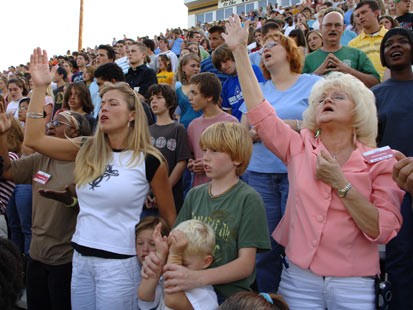
Quick: Which of these two pictures depicts American evangelical Protestants?

Of course, the answer is both.  But a lot of us still have a lingering, politely unmentionable stereotype about the nature of race and ethnicity in Fundamentalist America.

Academic historians of religion in America often lament this knee-jerk connection of whiteness with evangelicalism.  (See, for example, Edward Blum’s recents posts on the subject at Religion in American Life.)

Beyond just African American evangelicals, the connections between non-white America and Fundamentalist America are profound, but complicated.

Yesterday, the Pew Research Forum published the results of a survey that will illuminate the religious lives of Asian Americans.  As the authors titled the report, there is no simple way to pigeonhole this “Mosaic of Faiths.”  Religious identity for Asian American often depends on the country of origin, with Filipinos often Catholic, Koreans often evangelical Protestant, Vietnamese often Buddhist, and Indians often Hindu.  But just as common is a firmly non-religious identity.

“Indeed,” the report describes,

“when it comes to religion, the Asian-American community is a study in contrasts, encompassing groups that run the gamut from highly religious to highly secular. For example, Asian Americans who are unaffiliated tend to express even lower levels of religious commitment than unaffiliated Americans in the general public; 76% say religion is not too important or not at all important in their lives, compared with 58% among unaffiliated U.S. adults as a whole. By contrast, Asian-American evangelical Protestants rank among the most religious groups in the U.S., surpassing white evangelicals in weekly church attendance (76% vs. 64%). The overall findings, therefore, mask wide variations within the very diverse Asian-American population.” 

What does this mean for those of us trying to understand Fundamentalist America?  First of all, it is another reminder that we need to look beyond deep-rooted stereotypes about the nature of conservative religiosity.  The sweaty Southern tent preacher with snakes in a box and a kerosene-soaked cross up on the hill is a thoroughly misleading picture.  On the campus of the large public university where I work, one of the most active campus religious groups is the Korean Baptist Fellowship, not the traditional Campus Crusade for Christ or Intervarsity Fellowship.

Second, we need to keep in mind that Fundamentalist America no longer maps evenly or neatly onto conservative evangelical Protestant America.  The ecumenism of conservatives got a big boost with Jerry Falwell’s inclusion of Jewish and Catholic conservatives in his Moral Majority movement in the late 1970s and 1980s.  More recently, conservative Catholic scholar Robert P. George and conservative Muslim scholar Shaykh Hamza Yusuf teamed up to demand the elimination of pornography from major hotel chains.  Catholics and Jews have long claimed their roles as part of Fundamentalist America.  And those groups have been given a push in a thoroughly conservative direction from members of the faith from outside the Euro-American sphere.

Perhaps in coming decades we will see more and more partnership among conservative Hindus, Muslims, Christians, Jews, and others.  After all, this was the claim of scholar James Davison Hunter in his 1991 book Culture Wars.  The America of the 1980s, Hunter claimed, no longer was divided between Catholics, Protestants, and Jews, but rather between the “tendency toward orthodoxy” and the “tendency toward progressivism.”  Perhaps the orthodox will continue to widen their boundaries to embrace the mosaic of fundamentalism among the Asian American community.

In Search Of . . . Love in an Age of Culture War

Can a creationist and an evolutionist be in love?  I’ve got no idea.  I’m sorry to the searcher who came by ILYBYGTH in search of an answer to this timeless question.

This touching search, though, brought to mind a memory from my wasted youth.  Readers of a certain maturity may remember the other gig Leonard Nimoy enjoyed.

This episode: Nimoy In Search Of . . . Atlantis!

Every week, Nimoy hosted a smarmy pre-cable show about the search for the paranormal: Atlantis, Roswell, etc.Managing this blog has opened my eyes to some of the searching that goes on these days.  As we’ve noted here before, Google Trends offers all of us a way to take the intellectual temperature of Fundamentalist America.

The editing tools of this blog offer additional perspectives.  We can see some of the search terms that direct people here.  Some of them are just pathetic, such as one about plagiarizing “What the Bible Means to Me.”  Some of them are encouraging, like the many searches for “I Love You But You’re Going to Hell.”  Some of them tell us something about what people care about.  We see a lot of searches, for instance, for “traditional schools vs. progressive schools.”  We see searches for “Richard Dawkins is going to hell.”  And we see various permutations of searches like, “Why are fundamentalists so resistant to evolution?”

A lot of the search terms we see are puzzling.  Consider a few recent gems:

  • “Tim Tebow is going to hell”
  • “Santorum loves Satan”
  • “Smart people become professors”
  • “Mounted patrol Horace Mann”

What were these anonymous searchers looking for?  Why do they dislike Tim Tebow so much?  And how did Horace Mann get a horse?  We will likely never know, and that’s what makes it so intriguing.

Along these lines, we have a new all-time favorite for poignancy:

  • Can a creationist and evolutionist be in love?

Somewhere, out there, two star-crossed lovers gaze longingly at one another, one from his Bible college dormitory, the other from the mean streets of secular public education.

If there’s hope for this culture-war Romeo & Juliet, there’s hope for us all.

War and Culture War

What is a Culture War?  In America, it generally means an angry squabbling over such issues as the proper role of religion and traditional culture in the public square.  Should public schools teach evolution?  Does a fetus have equal human rights?  Should homosexuals be allowed to marry?

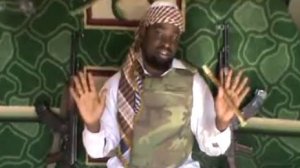
Recent headlines demonstrate the terrifying possibilities of other forms of culture war.  In central Nigeria, for instance, Islamic militant group Boko Haram has sharpened a bloody conflict between Muslims and Christians.  The organization has bombed Christian churches and killed Christians who would not convert to Islam.

BBC: “Who Are Nigeria’s Boko Haram Islamists?”

Could such atrocity result from America’s milder culture wars?  After all, America is no stranger to intensely violent civil war.  It’s not hard to imagine a new breakout.  Jonny Scaramanga of Leaving Fundamentalism has argued recently how easy it is to envision a Bible-Christian theology of suicide bombing.  And unfortunately we don’t even need to imagine.  With shootings of abortion providers and murders of homosexuals, not to mention generations of lynchings and white-supremacist violence, Fundamentalist America has proven itself capable of war, genocide, and atrocity.The Left, too, has shown its teeth.  When the Students for a Democratic Society splintered in the late 1960s, the Weather Underground faction devoted itself to a nearly suicidal campaign of bombings.   More recently, too, angry anti-fundamentalists such as Dan Savage have demonstrated their willingness to demean and belittle their Christian audiences.

Now, we need to be careful here.  There is a vast gulf between Dan Savage’s culture-war anger and the bombing of churches.  There is also, thankfully, a huge divide between ardent advocacy for a more thoroughly Biblical public culture and pogroms.  The point, though, is that the aggressive bombast of America’s culture warriors makes it depressingly easy to imagine an America in which culture war turns into real war.

At the risk of sounding apocalyptic, let’s imagine some of the ways America’s culture wars might escalate into something far more horrific.

1.)    Geographic contiguity.  If two or more regions developed a sense of beleaguered cultural identity, those identities could form the bases of separate warring nations.  For instance, when the eleven states of the Confederacy determined that their interests were no longer defended in the Federal government, they seceded.  Similarly, during the War of 1812, the Hartford Convention nearly led to the secession of the Northeast.  In today’s politics, we can see some sense of a sharpening coastal/flyover divide, a red state/blue state antagonism.

2.)    Connection of culture issues to existing racial/ethnic/religious divisions.  These divisions have often proved the most explosive in American history.  Wars and riots among groups such as Native Americans, Irish-Catholic Americans, and African Americans have burned America’s cities and bloodied America’s plains.  Were similar connections be made between ethnic status and religious affiliation, similar violence could certainly emerge again.

Our hopes, of course, remain high that America’s culture wars will mitigate, not escalate.  The purpose of this blog is to build intellectual bridges between Fundamentalist America and its critics.

Nevertheless, the depressing norm from history and current world events is for culture wars to attach themselves like lampreys to other sorts of conflicts, escalating the bloodshed as each side sees itself as holy warriors in a righteous cause.

Literary Fundamentalism: Specific Belief from Dappled Things

Pope Benedict XVI has made some very fundamentalist statements lately.  He wants a smaller, purer church.  He rebukes dissidents and suggests a “radicalism of obedience.”

Damian J. Ference suggests in an intriguing article on Dappled Things that Pope Benedict’s theology ties in closely with that of novelist Flannery O’Connor.  As Ference notes, the tightest connection between the two writers is their ferocious insistence on specific belief.  In Ference’s words,

Being an admirer of both writers, it has struck me that there is a deep connection between them, that as Catholic Christians, Flannery O’Connor and Benedict XVI both ground not only their work, but their very lives, in belief in the Incarnation, and that both O’Connor and Benedict are unapologetic in working to bring their readers to a fuller understanding of and appreciation for the specificity of the person of Jesus Christ.

O’Connor and Benedict both insist on what I will call specific belief, which understands Jesus Christ to be the Son of God, the turning point of human history, the Savior of humanity, and the one who reveals the meaning of human existence to the world. And both writers work tirelessly to expose the weaknesses of what I will call vague belief, the position which understands Jesus, not as the Son of God, but simply as one religious figure among many, and that belief in him in is neither a matter of life nor death.

As Ference argues, there is much in modern American culture that militates against specific belief.  In a world that places a high moral value on both uncertainty and toleration, any belief system that insists on its own unique truth-claims will be subject to withering attack.

Ference makes the indisputable point that both O’Connor’s and Ratzinger’s theologies are centrally concerned with this tension.

It seems to me, though, that the approach of the two writers is much further apart than Ference suggests.  I’m no expert, and I’ll happily welcome corrections, but it seems to me O’Connor’s work recognizes the difficulties of reconciling orthodoxy with modernity.  Though O’Connor insists on the need for specific belief, the power and beauty of her work largely results from the agonizing tension she maintains in many of her novels and stories.  In O’Connor’s world, in other words, we need specific belief, but we can’t quite be sure we can believe specifically.  Those who can and do are often tipped into the world of fanaticism and mute, violent, incomprehending orthodoxy.

Benedict’s orthodoxy wants to be much different.  In his writings as Pope and in his earlier “Rottweiler” work, Pope Benedict encourages readers to overcome the tension O’Connor dwells upon.  Benedict hopes to assert an articulate, rational, comprehendable orthodoxy.  For Benedict, in other words, the violent need not bear it away.

For those of us hoping to understand the world of Fundamentalist America from the outside, Ference’s article raises another vital point.  Too many people who don’t understand Fundamentalist America are quick to dismiss fundamentalism as somehow outside of modern intellectual culture.  Ference’s article reminds us that a deep theological conservatism lies at the heart of some of the very best modern intellectual culture.  Not only the work of Flannery O’Connor, but other writers such as Wendell Berry build themselves around the modern tension between orthodoxy and rootlessness.  Beyond simplistic dismissals of orthodox belief as somehow trapped in a fundamentalist past, we need to recognize that fundamentalism is just as awkwardly at home in modern and post-modern American intellectual culture as is secularism or theological liberalism.

In the News: Missouri Voters Will Vote on School-Prayer Amendment

Fundamentalist America wants its children to feel comfortable praying in public schools.  Since the US Supreme Court’s 1963 Schempp verdict, many religious conservatives have complained that God has been kicked out of public schools.

As Steven Green’s recent book has described, the historical reality is more complicated.  And, as I have argued elsewhere, to understand these questions, we can’t start in the 1960s, we need to look at the battles of the 1920s.

But that does not stop some conservatives from pressing the issue.  In a recent wrinkle, Missouri State Legislature Representative Mike McGhee has succeeded in presenting a Constitutional amendment to the voters of Missouri.  On August 7th, voters will have see the following questions on a special ballot:

“Shall the Missouri Constitution be amended to ensure:

• That the right of Missouri citizens to express their religious beliefs shall not be infringed; 

• That school children have the right to pray and acknowledge God voluntarily in their schools; and

• That all public schools shall display the Bill of Rights of the United States Constitution.”

Opponents note with considerable justification that this amendment will not actually do anything.  Speaking to the Joplin Globe, an official of the state school administration insisted students already have the right to pray.  And C.J. Huff, superintendent of Joplin schools, told the Globe,

“If it passes, it isn’t really going to make a difference in our schools. Students already have rights for volunteer prayer in school. It happens. I think the misperception is that it (prayer) doesn’t happen (in schools).”

But to the amendment’s supporters, the symbolism is intensely important.  As Representative Jeff Grisamore told OzarksFirst,

“This (legislation) is one of the most important pieces of legislation…that we will pass this year, because it is fundamental to protecting the rights of Missourians to pray and express their faith and at the same time, protect Missourians from being coerced or compelled in a way that would violate their faith.”

Missouri politicians seem keenly aware of this symbolic importance.  According to the Lebanon Daily Record, the proposed amendment passed unanimously in the state Senate and triumphed 126-30 in the state House. 

The constitutional issue seems fairly clear.  This amendment, if successful, will clarify a right that public school students already enjoy.  The big question is the political issue.  Clearly, the elected representatives of the great State of Missouri find the bill politically invulnerable.  Will the voters of Missouri agree?

In the News: Fundamentalist America–A Happy Place

Fundamentalist America is a happy place.

At least according to a piece in today’s New York Times by Arthur C. Brooks of the American Enterprise Institute.  Brooks argues that the stereotype of the angry, frustrated conservative–Adorno’s warped “authoritarian personality”–doesn’t match American reality.

In fact, Brooks’ review of survey data concludes that the happiest Americans of all are those who identify themselves as extreme conservatives.  Why so?  Brooks ventures a guess:

One possibility is that extremists have the whole world figured out, and sorted into good guys and bad guys. They have the security of knowing what’s wrong, and whom to fight. They are the happy warriors.

But conservatives in general tend to be happier than liberals, Brooks notes.  There may be simple, obvious explanations.  For instance, stable marriages and religious faith tend to add to general happiness, statistically speaking.  And conservatives tend to be more married and more religious than their liberal counterparts.

So, all my fellow outsiders in Fundamentalist America, the next time you need to go to your happy place, try a trip to Fundamentalist America!

In the News: Fanaticism, Freedom, and Building Code Violations

It has all the elements of a Left Behind novel: Government thugs storm into a Bible meeting.  They threaten to arrest the pastor and fine his congregants for praying together.  They appeal for community support by accusing Bible-believing Christians of “fanaticism” and “intolerance.”

And that’s the way the story is being told in some of Fundamentalist America’s news outlets, such as Glenn Beck’s Blaze.  It is the tale told by the Bible pastor himself and his wife in recent YouTube videos.

Of course, neighbors and city officials in Phoenix tell a different story.

In any event, this story is worth the attention of all of us who are struggling to understand Fundamentalist America.

In short, as Ray Stern and Sarah Fenske have been following the story in the Phoenix New Times, Michael Salman is battling his neighbors over his desire to build a church in his backyard.  Several years ago, he built a shed-like structure and began hosting smallish worship services there.  He has been in a battle with the city ever since about code violations and his right to freedom of worship and freedom of assembly.

As Alan Weinstein, the director of the Law & Public Policy Program at the Cleveland-Marshall College of Law in Cleveland, commented in 2008,

“Say I just bought a 63-inch TV, and every Sunday at 11 a.m., I have 20 people over my house to worship at the church of the NFL,” Weinstein says. “There are probably football fans who do that every Sunday. And if they don’t stop that, they can’t stop a Bible study that’s meeting once a week, either.”

The city has insisted all along  that the issue is not about religion but about building and fire codes.  The neighbors, too, complain about Salman’s building plans.  They say his proposed church would be too close to a property line.  They say it would change the character of the quiet neighborhood of large homes and large lots.  But they also agree that Salman’s kind of religious zealotry left a bad taste in their mouths.  As Sarah Fenske reported in 2008,

When, at a neighborhood association meeting, one neighbor told Salman he didn’t like the plan, Andrea and Mike Julius watched Salman grow visibly angry. . . .

“It was clear at that point what we were dealing with,” Andrea Julius says. “I don’t want to say someone who seemed possessed, but not a cool-headed person.”

Tom Woods remembers thinking the same thing. When neighbors complained about how his project would affect their property values, Woods says, Salman was dismissive.

“He gave us a lecture on the fact that all of us were going to make money on our property, and if we were true Christians, we ought to be willing to sacrifice a little bit,” Woods recalls. “You can imagine, a few guys in the audience were all over him for that.

“That meeting is where the real animosity started. He made no effort at being conciliatory or cooperative. That really united the neighbors against him,” Woods says. “He was his own worst enemy.”

And Salman’s personal story and theology are somewhat different from what his neighbors might have hoped for.  In his youth, he was a drug-using, gun-toting member of a Phoenix street gang.  He served jail time for shooting up a rival’s house, nearly killing the rival’s mother.  In jail, he experienced a religious conversion.  Upon release, he dedicated his life to his new Bible ministry.  He embraced some beliefs decidedly outside the mainstream, such as the human-government-defying Embassy of God movement.  He also posted a series of sermons on YouTube, including this one in which Salman calls evolution “nothing but hogwash.”

But does that mean he shouldn’t be allowed to have a church in his backyard?  He doesn’t think so.

Does the fact that he wants to build a church mean that he can ignore building codes?  The city of Phoenix and his neighbors don’t think so.

Perhaps the most telling twist in this continuing story is that when Salman recently tried to turn himself in for some jail time, Phoenix authorities refused to arrest him.  As Ray Stern reported in the Phoenix New Times, when Salman reported to jail to serve a pending 60-day sentence, jail officials turned him away.

Salman had an easy explanation: “God granted me an injunction.”  Though Phoenix officials wouldn’t comment, the fear of bad publicity likely had more influence on their decision than the fear of God.

Required Reading: A Summer List from Matthew Lee Anderson

If we want to understand most people, we just need to look at the car they choose to drive and the clothes they choose to wear.  But if we want to understand smart people, we should look at the books they choose to read.

For this Fourth of July holiday, Mere Orthodoxy‘s Matthew Lee Anderson has offered a terrific list of his summer reading picks.

From Unpacking My Library, Steven Pinker’s bookshelf

As Leah Price noted recently in Unpacking My Library: Writers and Their Books (Yale University Press, 2011), book collections say a lot about an intellectual life.

Of course, not every book lover is necessarily a brainiac (See figure 2).  But Anderson’s list demonstrates some of the intellectual richness of today’s conservative evangelical Protestantism.  His picks include some new releases that will likely be of interest mainly to evangelicals themselves, such as Fred Bahnson’s and

Figure 2: Ol’ Blue Eyes sounding it out.

Norman Wirtzba’s Making Peace with the Land or Richard J. Mouw’s Talking with Mormons.  But it also includes titles that promise to help outsiders understand the intellectual culture of Fundamentalist America, such  as Roger Scruton’s The Face of God and Amy Black’s Honoring God in Red or Blue.  And it  features new books of interest to all, such as Andrew Delbanco’s College and a new translation of the Bhagavad Gita.

We here at ILYBYGTH are going out to celebrate our nation’s birth by blowing up a small piece of it.  But after that, we’ll hunker down with Anderson’s list and do some summer reading.

The Bible in America: Reading Prayerfully and Relating Autistically

Here’s a thought experiment: Could fundamentalists accuse the rest of us of a profound intellectual disorder?  Do non-fundamentalists fail to read the Bible properly?

As we’ve been discussing lately, conservative Protestants in Fundamentalist America insist on the importance of the Bible.  But in order to be meaningful, they often repeat, such reading must be done prayerfully.  This injunction is so ubiquitous it almost fades into meaninglessness.  That is, the instruction to read prayerfully is such a commonplace that it almost becomes part of the intellectual wallpaper of Fundamentalist America.  But if we stop and look carefully at the importance of reading prayerfully we might learn a good deal about the nature of the Bible in Fundamentalist America.  For us outsiders, an honest and humble attempt to understand the meaning of prayerful Bible reading might help us understand the meanings of the Bible in Fundamentalist America.

To do so, we need to take a look at what it might mean to read prayerfully.  As the Reverend Craig Ledbetter (to be fair, a voice from Fundamentalist Ireland, but the accent does not seem much different from that of Fundamentalist America) described recently, reading prayerfully means inviting the Holy Spirit to guide our understanding.  Without such a guide, Ledbetter writes, “much . . . will seem only foolishness.”  It means wrestling with the Bible, conversing with it, praying with it.  Anything else will lead to “a God of [one’s] own design.”

Or, as another advocate suggests, reading prayerfully means that the reading must be done with the “major goal . . . that we become more and more satisfied with God. Pray that this encounter through the word produces that fruit.”  Reading the Bible without that prayerful attitude will not result in any sort of meaningful religious experience.

In the words of another non-American Bible-lover, the Archimandrite Justin Popovich, those who do not have their questions answered from reading the Bible “have either posed a sense-less question or did not know how to read the Bible and did not finish reading the answer in it.”

This notion is the heart of our thought experiment.  What if a non-fundamentalist reading of the Bible meant that we simply do not know how to read the Bible?  What if it meant we non-fundamentalists read with some sort of overly “flat” approach?  Could non-fundamentalists be accused of reading with an autistic approach? 

Before we pick it apart any further, let’s start with a few givens.  First of all, autism spectrum disorders are a very diverse group of phenomena.  People with these disorders can think and behave in very different ways from one another.  But let’s take as a given that one distinguishing feature of autism is a tendency to understand other people as object-like.  This does not mean that people with autism are necessarily selfish or aggressive, but only that many people with autism do not relate to other people the way non-autistic people do.  Autistic people often relate in a distinctly unengaged, unemotional fashion.

Here’s another condition we need to set: reading the Bible prayerfully means investing one’s self in the reading.  It is very different from reading for information.  The Bible, read prayerfully, is one part of a dialogue, or even a multilogue.  The voices of the past, the voice of God, the voice of the reader, all can become part of a conversation in which the reader takes a profoundly active role.  Reading prayerfully means doing much more than simply reading to find out what the Bible says.  It means approaching the Bible with an open and humble heart.  It can mean treating the Bible as the inerrant Word of God, but it must mean reading with an understanding that what we read may be beyond our comprehension.  The fault, in that case, must be understood to be more than just an inadequacy of the text, but a failing of the reader as well.  Reading prayerfully means putting other things out of our mind and entering into the reading as if we are entering into an intimate conversation with God.  Reading prayerfully means praying to find understanding in the Bible.

For non-fundamentalist people like me, this is a foreign experience.  I have read the Bible, but I can’t say I’ve ever read it prayerfully.  When I read the Bible, I experience it as I’ve been taught to.  To me, it seems like a sometimes edifying, sometimes brutal, sometimes incomprehensible collection of traditional tales from Jewish and early Christian tradition.  I find it very difficult to understand why the words of this collection of tales should be presumed to be inerrant, just as I find it difficult to understand why one religious leader in Vatican City should be presumed to be able to speak infallibly.  I think there are lots of people who think the way I do.  It does not mean that I am not Christian.  I find it easy to be Christian and yet not look to the Bible as an inerrant collection of God’s word.

But let’s return to our thought experiment.  Many liberals, ex-fundamentalists, and secular people assert that fundamentalists have an infantile intellectual approach to the Bible.  Fundamentalist Bible exegesis is accused of missing the ambiguities and ambivalences that come with a more sophisticated reading.   Instead, this line of argument continues, fundamentalists are intellectually “frozen” into a simple inerrant reading of the Bible.  To be clear, I am not making this argument, only acknowledging that this is a common indictment of fundamentalist culture.  I imagine informed fundamentalists will recognize it as well.

But what if we put the shoe on the other foot?  What if we outsiders tried to imagine how fundamentalists could critique a non-fundamentalist reading of the Bible?  This is where the shaky analogy to autism comes in.  I wonder if fundamentalists could compare a non-prayerful reading of the Bible to autism. 

People like me who do not read the Bible prayerfully could be compared to people with autism spectrum disorders.  By not pouring myself into the reading, by not opening myself up to the possibilities of a new and profound truth coming to me during and through my Bible reading, I am approaching the reading “flatly.”  I’m reading the Bible the way some autistic people relate to other people.  They understand intellectually the concept of other people, but they often do not share the emotional experience of relating to people.

Is non-prayerful reading like that?  Do non-prayerful readers like me understand we can get information from the text, but not relate to the text in a way that prayerful readers do?  So, for instance, by reading the Bible as if it were just another book, do we misunderstand the possibilities of truly relating to the text?  Here’s an example: a non-prayerful Bible reader can certainly find parts of the Bible that seem to contradict one another.  There seems to be two different creation stories in Genesis, for instance.  Or, we can read about Noah drinking and cursing Ham and conclude that these supposed prophets were not so upright after all.  We can find in Abraham’s murderous faith clear signs of undiagnosed mental disorder.  Then we can dismiss the Bible as a parochial collection of outdated tribal tales.  We can wait for the Bible to overcome our skepticism; wait for the Bible to prove itself beyond a rational doubt.  And when it does not do that, we can allow ourselves to feel superior to those who still cling to its stories.

But that treats the Bible as if it were a mere object.  It relates to the Bible the way some autistic people relate to other people.  It does not approach the Bible with the necessary attitude.  Therefore, there is no surprise that the Bible does not share its lessons.  A human relationship in which only one person shares herself would also not prove very fulfilling.

Does it hold water?  I’m not sure.  But at the very least, this thought experiment might help non-fundamentalists see their theology through fundamentalist eyes.  By acknowledging our theological deficiencies from the fundamentalist viewpoint, we can begin to understand how different a fundamentalist understanding of the Bible can be.  We can avoid pat dismissals of fundamentalist intellectualism.  We can steer clear of an all-too-common smugness among secular intellectuals about the possibilities of non-secular intellectual culture.