When School Prayer Gets Creepy

It’s not because we don’t like conservative Christians. It’s not because we think Christianity is inherently bigoted. It’s not because we misunderstand SCOTUS precedent. But the more we hear this evangelical school group talking, the more likely we are to hear creepy tones of Handmaid’s Tale takeover. I’m hoping there are plenty of evangelicals who agree.

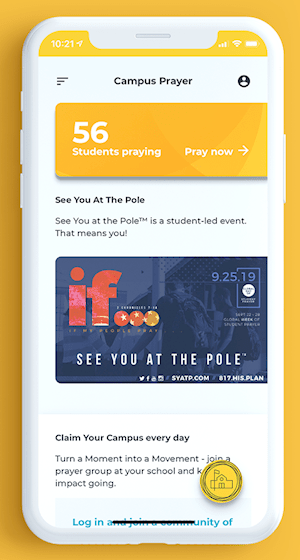
SYATP phone

See You at the Pole, fine. But don’t “Claim My Campus” !

Here’s the latest: Today is See You at the Pole day. That means K-12 students nationwide are encouraged to meet at their schools’ flagpoles to share a prayer.

So far, so good. There’s absolutely nothing wrong with students praying in schools. Teachers, too, as long as they don’t try to impose their religious views on their students.

The problem only comes when the organizers keep talking. The organization in charge partnered with another group to spread the word. This associated group declares its goal to spread prayer groups to every single school in the USA.

Nothing wrong with that, either. The problem only peeks through when we see the name of the sponsoring organization. It’s not “Pray If You Want.” It’s not “We Pray, Okay?” No, the name of the organization is “Claim Your Campus.”

Do we need to spell it out? Non-evangelical people—and I’m guessing most evangelicals, too—don’t want prayer groups to claim our campus! We want them to participate, sure. We want them to feel at home, of course. But we wish that Claim Your Campus and other evangelical groups would realize that they don’t have a right to CLAIM anything.

When the Saints Come Backtracking In

Bibles in schools, yes. Anti-LGBTQ sentiment, no. That was the combo pleaded last week by NFL quarterback Drew Brees. To this reporter, the most important question is not about Bibles in schools or Brees’s personal attitudes, but rather about the status of anti-LGBTQ organizations among other conservative evangelicals. Can anti-LGBTQ groups claim much support at all?

Here’s the story: Brees recently recorded a promo video for “Bring Your Bible to School Day.” In the short little clip, Brees tells kids what his favorite Bible verse is, then says,

I want to encourage you to live out your faith on Bring Your Bible to School Day and share God’s love with friends.

https://www.youtube.com/watch?v=qPFEyeug99g

So far, so good. But a few progressive New Orleanians tracked down the sponsor of Brees’s video and accused Brees of sharing the anti-LGBTQ animus of Focus on the Family. Reporters asked Brees if he really was as anti-LGBTQ as FoF and he backed up faster than a [insert football-related sports analogy here.]

As Brees put it,

[My school-Bible video] was not promoting any group, certainly not promoting any group that is associated with that type of [anti-LGBTQ]] behavior. I know that there are, unfortunately, Christian organizations out there that are involved in that kind of thing, and to me that is totally against what being Christian is all about. Being Christian is love. It’s forgiveness, it’s respecting all, it’s accepting all.

There are a lot of things we could talk about. First, is it cool for kids to bring their Bibles to their secular public schools, hoping to “share God’s love with friends”? Absolutely. Religious kids in public schools are totally free to be as religious as they want, as long as they aren’t disruptive of school procedures.

The only thing that is necessarily “secular” about public schools is the school’s administration itself. Teachers are no longer allowed to preach any religion, nor are they allowed to imply that some religions are better than others. Students, on the other hand, can do whatever they want—pray by the pole, preach during lunch, whatever. As long as the school doesn’t imply its support (like with the famous Kountze cheerleaders), religious kids can religion all they want in public schools. More power to em.

We could also wonder if Drew Brees were still as awesome as we thought. But then we’d remember the time on the Bear Grylls Show that Brees tackled an alligator.

Finally, we’d get down to the really important issue, from the ILYBYGTH point of view. Namely, this episode makes us wonder if Focus on the Family has really lost its base. If FoF no longer can claim the support even of conservative evangelical Christians like Drew Brees, whom can it appeal to? If evangelical celebrities like Brees won’t allow themselves to be associated with FoF, is there any hope for FoF?

If I were an anti-LGBTQ ministry like Focus or Answers In Genesis, I’d be doing some serious soul- (and Bible-) searching.

Christian America on the Ropes

You’ve heard about Project Blitz, the MAGA scheme to impose Christianity back on America. More polling evidence from the Harris folks this week shows how desperate such efforts are.

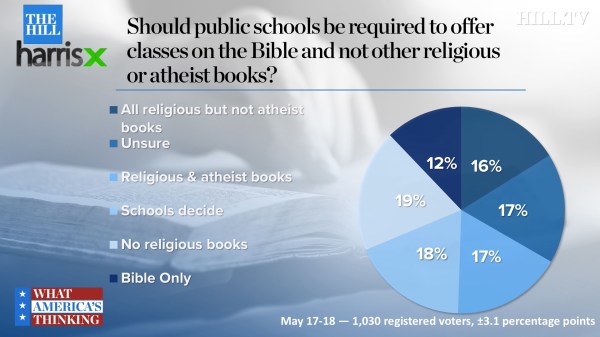
Harris bible classes

…people don’t really care about Christian America.

Here’s what we know: In a survey of just over 1,000 adults, Harris pollsters found that a mere 12% thought public schools should have kids read the Bible and not other religious books. By way of comparison, far more respondents (17%) didn’t have an opinion.

Historically speaking, those numbers are pretty astounding. It wasn’t that long ago that large numbers of public schools included devotional Bible reading as part of every school day. In 1960, just before SCOTUS ruled against devotional Bible-reading in public schools, 42% of public-school districts nationwide reported incorporating Bible-reading. The highest proportion was in the South (77%) and East (68%). In the Midwest (18%) and West (11%) the numbers were far lower.

So what? People like me might get anxious when we read the theocratic ambitions of regional politicians such as Indiana’s Dennis Kruse. We get nervous for our public institutions when we hear Kruse say things like,

I’m a Christian person and a religious person. . . . I think we need more Christianity and more religion in our society, in our state.

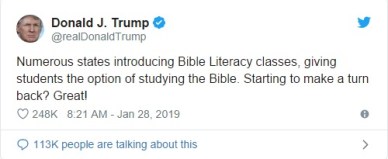
Trump bible tweetWe get even more skeeved when Trump tweets his support for school-Bible laws, as he did a few months back:

Numerous states introducing Bible Literacy classes, giving students the option of studying the Bible. Starting to make a turn back? Great!

In fact, though, the Blitzers, MAGists, and Trumpies who endorse such notions are not the vanguard of a vast right-wing army. Rather, they are the last snarls of a disappearing vision of the proper role of religion in America’s public square.

Buddhist Missionaries?

Is is just me? Or is this an unusual thing for everyone?

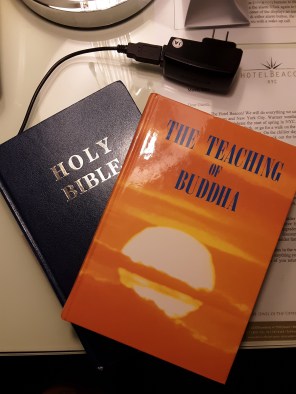
bible and buddha

A new thing? Or just another NYC quirk?

Here’s what  happened. I was minding my own business, getting ready for my Nerd Spring Break (NSB) at the New-York Historical Society (more about that later).

In my hotel room, in addition to the usual Gideon Bible, I found a copy of The Teaching of Buddha.

As SAGLRROILYBYGTH are well aware, the Gideon Bible has a long history, tightly intertwined with the history of American evangelicalism. As John Fea and other historians have described (including yours truly) Bible missionaries have long tried to get Bibles in people’s hands wherever possible.

Have Buddhists started doing the same thing? Is this a widespread missionary effort? Or is it just a NYC thing, like dogs in purses and grown men riding scooters?

What You Need to Know about: Yoga in Public Schools

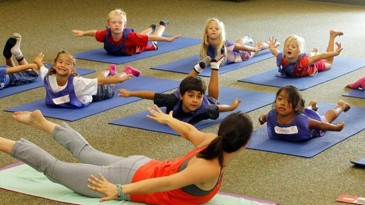
The most recent case is enough to make anyone’s head spin. It involves a disgruntled former school administrator, yoga stretches, and community prayer rallies to help “Jesus to rid the school of Buddhism.” Sic.

yoga in sschools

Look out! Flying Buddhists!

Here’s what we know: This case has roots back to 2014, when Cobb County (Georgia) elementary principal Bonnie Cole introduced a yoga program into her school. Local parents protested. Cole was transferred and is now suing the district. She claims that pro-Christian religious influence unduly hurt her career.

Cole insisted that her use of yoga was not at all religious. She used it for purely secular reasons, to help students stay healthy and manage stress. The school already removed some religious elements of yoga practice. For instance, they didn’t allow students to say “Namaste” or press their hands to their hearts. Students were also not allowed to color mandalas.

In this case, though, the specific lawsuit isn’t about whether or not yoga is a religious practice. Rather, it is about whether or not Christian protesters exerted undue religious influence on the school to ban yoga. Principal Cole explains that parents would press their hands up against her office window to put prayer-pressure on her to stop teaching yoga. And in this case, that Christian influence is the legal issue, not the notion of yoga as a religion (or not).

Clear as mud!

In an effort to clear up some of the religion-in-school fog, we’ve dug through our ILYGYBTH archives for relevant background material. Here’s some earlier coverage you might find interesting:

wellness programs are likely the next theater of battle in our ongoing but evolving educational culture wars… in which the earnest claim of the Encinitas superintendent that “it is just physical activity” sounds ever more naïve.

  • In that Encinitas case, Professor Candy Gunther Brown of Indiana University thought the judge goofed. As we observed at the time, Prof. Brown thought that certain forms of yoga practices—and certain deep-pocketed devotees—insisted that yoga practice would “automatically” lead people to god, “whether they want it or not.”
  • The controversy over yoga as a religious practice in school is nothing new. As far back as the 1970s, religious conservatives—Christian ones—were protesting against such “religious indoctrination” in public schools.
  • Last but not least, evangelical Christians are divided over the religious implications of yoga. As we noted, some think the practice can be done in purely secular fashion, one acceptable for public schools. Others disagree.

Of course, none of this helps us sort out this most recent case from Georgia. Legally, after all, the religious nature (or not) of yoga is not in dispute. Bonnie Cole accuses the school district of succumbing unfairly to Christian pressure. Of course, underneath that complaint festers the unanswered question of yoga’s religious nature.

Under current rules, if yoga constitutes religious practice, it shouldn’t be taught by teachers in public schools. It could be taught about, of course, but yoga classes actually engage students in yoga practice. On the other hand, if yoga is done as a secular pursuit for purely secular reasons, it would be okay for public schools. However, in that case, religious devotees of yoga would likely complain—with good reason, IMHO—that the school districts were unfairly appropriating their religious practice and mutilating it into something it shouldn’t be.

Just another example of the ways nobody knows quite what to do about religion in public schools!

Why Queen Betsy’s Rule about Religious Schools Is a Very Big Deal

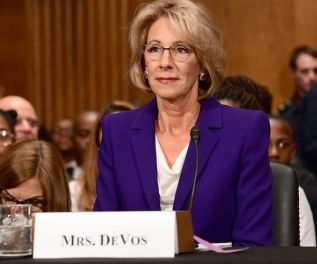
If life gives you Lemons…change fifty years of SCOTUS precedent. That might be the new motto of Ed Secretary Betsy DeVos, as she pushes through a change in the relationship between private religious schools and public ones.

Betsy DeVos Confirmation Hearing, Washington DC, USA - 17 Jan 2017

…I’ll make Lemon-ade.

Now, I’ve been accused by very smart SAGLRROILYBYGTH of being hyperbolic when it comes to interpreting DeVos’s recent moves, so I’ll try to be careful in my hysteria here. Here’s what we know: This week DeVos introduced a change in enforcement of federal law regarding the interaction between public schools and private religious ones. It may sound like a snoozer, but it has enormous implications for those interactions. And those interactions, in turn, have huge implications for the presumed boundaries between religion and government in these United States.

Some facts in the case:

  • Queen Betsy’s proposed change would cease enforcement of a rule banning religious groups from providing secular services to students in private religious schools.
  • So, for example, if a student in a Catholic school needed speech therapy, the law requires the public school district to provide those services.
  • In the past, the district had to provide the services itself, or hire a non-religious contractor to do it.
  • Now, the public school district can hire a religious organization—not the private religious school itself—to provide those services.
  • The services are only supposed to be “secular, neutral and nonideological” in nature. In other words, things like speech therapy and literacy coaching, not religious instruction.

Clear as mud?

To understand why these changes are such a big deal, we need to revisit the SCOTUS ruling that has laid the foundation for the past half-century of policy regarding public aid to religious schools. One of the outcomes of that case, Lemon v. Kurtzman, was the famous “Lemon test.” This three-prong guideline helped Americans find the proper line when it came to public funding of religious education. Since 1970, when deciding if relations were too close between a religious school and the government, we could check these three guidelines:

  1. Does the statute have a “secular legislative purpose?”
  2. Is the “principal or primary effect . . . one that neither advances nor inhibits religion?”
  3. Does the rule “foster an excessive government entanglement with religion?”

In the original case, SCOTUS considered laws that helped pay the salaries of religious-school teachers. They found that those laws did indeed have a secular purpose—states wanted all children to get good educations. They punted on the second part—they didn’t rule on what the primary effect of the laws were. But the justices agreed that the laws violated the third rule. By putting government in charge of part of the school day of teachers at religious schools, the laws hopelessly entangled government with a religious institution.

To this reporter, it seems DeVos’s new rule would throw the Lemon Test out the window. Imagine the likely outcomes. A public school district would be able to hire a speech therapist (for example) who is employed by the Catholic Church, or by Focus on the Family, or by any other of a million religious organizations. The school district would not be able to pay for any type of religious instruction, but only the secular services provided.

In practice, the school district would have to monitor the goings-on in the speech-therapy sessions themselves. The “entanglement” of the public school district and the religious service provider would be beyond “excessive.”

Furthermore, if any religious service provider were able to capture the market for, say, speech therapy in religious schools, it would be able to earn a huge payday from the public tax coffers. I can’t see how that is anything other than a rule that “advances . . . religion.”

Is it a done deal? Not yet. As Americans United protested,

Betsy DeVos is neither the Supreme Court nor Congress. She does not get to unilaterally declare that a statute is unconstitutional, especially with a provision that is designed to protect church-state separation, a bedrock of our democracy.

An administrative decision not to enforce certain provisions of existing legislation is not at all permanent. Just ask Obama. If DeVos’s plan survives, however, it will reverse the past fifty years of church-state guidelines when it comes to private religious schools.

Vermont Really Does Discriminate against Religious Schools

Hot off their Colorado no-gay-weddings baker case, the Alliance Defending Freedom (ADF) is at it again. This time, the target is the state of Vermont. ADF alleges that the state discriminates against religious schools. They’re absolutely right, but until now ADF wouldn’t have had a chance. They’re hoping a recent SCOTUS win has put a crack in the wall between church and state wide enough to pull the state of Vermont through. The case comes down to one tricky question: Is a college class the same as tire mulch?

The Simpsons Lemon GIF - Find & Share on GIPHY

Here’s what we know: Three high-school students from a Catholic school wanted to participate in a dual-enrollment program. In this program, the state pays tuition for students to take college courses for advanced credit. Because they attended a religious private school, they weren’t allowed to participate. According to the Burlington Free Press, Vermont’s Supreme Court ruled in 1999 that state funds could not sponsor students at religious schools.

ADF says such laws are discriminatory. As they complained,

The Dual Enrollment Program statute discriminates against students attending religious high schools not because of the content of college courses they wish to take, but instead because of the religious status of the high schools they attend.

As SAGLRROILYBYGTH are aware, two SCOTUS cases are most relevant here. Lemon v. Kurtzman (1971) established the three-prong “Lemon Test.” This case decided whether or not Rhode Island and Pennsylvania could financially support religious schools.

  1. Any law, SCOTUS ruled, must have a secular purpose. So, for example, a state government COULD pay for children to go to religious schools if the government was mostly interested in the secular goal of providing a basic education for children.
  2. Second, any law’s primary effect must not be one that supports or inhibits religion. If a religious school is part of a church’s religious mission, for example, the government can’t pay for it, because the primary effect would be to support that religious mission.
  3. Trickiest of all, any law must avoid “excessive government entanglement with religion.” But what constitutes “excessive?” IMHO, this is where things get really tricky.

Because last year, SCOTUS ruled that a church could not be excluded from a grant program that had a secular purpose. Trinity Lutheran complained that it was being discriminated against by not being allowed to participate in a program for its playground. The church wanted an equal chance to get government-sponsored tire mulch for its playground.

In its new case, ADF is undeniably absolutely correct in its primary assertion. The state of Vermont really does discriminate against students from religious schools. That discrimination, however, is intentional and seems to be in line with the Lemon Test tradition.

The way I see it, ADF deserves to lose this case. A college class is not the same as tire mulch. To be able to offer college course credit, IMHO, would be a big bonus for any high school. It would promote the mission of the school. If that mission is religious, as it certainly is in the case of Catholic schools, then government money would constitute excessive entanglement. Moreover, funding this important educational experience would mean supporting the Catholic diocese’s religious mission.

But if it helped students in religious schools take college classes, would Vermont’s PRIMARY purpose be to support the Church? Or merely to help all its citizens further their educations? And how would a judge decide what constitutes “excessive” entanglement?

What do you think?

Trump Scores Better Than Us on GREs

It wouldn’t work. It’s not even new. But Trump’s tweeted support for school Bible bills shows that he understands what grass-roots evangelicals (GREs) really think.

At the Atlantic, Jonathan Merritt took Trump to task for a nonsensical and self-defeating policy. As Merritt wrote,

If conservative Christians don’t trust public schools to teach their children about sex or science . . . why would they want to outsource instruction about sacred scripture to government employees?

From a theological point of view, Merritt’s absolutely right. Moreover, conservative evangelical intellectuals have always agreed. That’s why so many of them supported SCOTUS’ 1962 ruling in Engel v. Vitale. In that ruling, SCOTUS decided that a state couldn’t impose a prayer in public schools, even a bland ecumenical prayer that seemed acceptable to people of many faiths.

The National Association of Evangelicals supported Engel, as did fundamentalist activists such as Carl McIntire. Why? Because they agreed with Merritt. They didn’t want public schools telling children how to pray. As William Culbertson of the Moody Bible Institute wrote,

The public as a whole and Christians who sense the necessity for safeguarding freedom of worship in the future are always indebted to the Court for protection in this important area.

For a long time now, conservative evangelical intellectuals have recognized the distinction Merritt’s making. And, as leading school-Bible scholar Mark Chancey noted at WaPo, there’s really nothing new or constitutionally challenging about teaching the Bible in public schools. There’s no need for new bills or laws, because academic study of the Bible has always been constitutional.

In these pages, too, we’ve looked at the nonsensical curricular plans of these types of school-Bible bills. In Indiana, for instance, Senator Dennis Kruse has slapped together a MAGA stew of Bible, “In God We Trust,” and creation science. It wouldn’t pass constitutional muster. It wouldn’t teach kids their parents’ faiths. It wouldn’t change anything at all.

But for all of our rational superiority, Trump’s Bible tweet still makes sense, on both a religious and a political level. Religiously, grass-roots evangelicals (GREs) have long seen the Bible as a supernatural book, a uniquely magical book that has power to change lives and save souls. For all Merritt’s reasoned counterargument, no one will shake GREs from this bedrock faith. Simply getting the Bible into public schools, many GREs think, will be enough. The Bible can take it from there.

bicabooks

Recipients of MBI’s school outreach, c. 1940.

For instance, a while back I studied the Bible outreach programs of Chicago’s Moody Bible Institute. Among its other goals, the MBI missionaries tried to get Bibles and tracts into schools in the Appalachian region. To the missionaries, the words of the Bible—even in tract form—had the power to convert people by the merest glance. As head of the program described in 1921,

A man was given a tract by the roadside; simply glancing at it, and coming to a hedge, he stuck the tract into the hedge; but it was too late; his eyes had caught a few words of the tract which led to his conversion.

For many GREs, the Bible maintains this sort of power. Regardless of what wonks like Merritt might say, GREs think the Bible can never do wrong, even in the hands of secular public-school dupes.

Far beyond religious considerations, Trump’s Bible tweet nails once again the angry nostalgia among white GREs. These bills aren’t about making real change in public schools, as Prof. Chancey has made abundantly clear. Instead, they are about—in Trump’s words—“Starting to make a turn back”. Part of the imagined MAGA past of GREs is a world in which their faith ruled America’s public spaces. Not in a theologically pure form, but in a symbolic way.

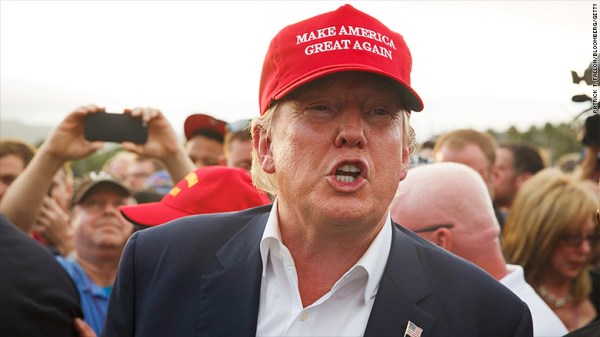
So we nerds can say what we want. We’re not wrong. Trump’s support for today’s batch of school-Bible bills is nonsensical at best, anti-conservative at worst. None of that really matters, though. Trump is not trying to convince us or actually save children’s souls. He is only trying to placate white GREs who love his hat.
Trump make america great again

GRE’s: About the hat as much as the Bible.

Robo-Teaching: It’s Not Just about the Benjamins

The creepiest part might be its utter believability. Curmudgucrat Peter Greene warns this morning of the dangers of artificial intelligence in the classroom. For a long time now, however, dreams of teacher-bots have been about more than just saving money.

Greene is reacting to news out of the big Davos conference. Tycoons are lusting after fully automated workforces with no pensions, no health insurance costs, and no wages at all. What could this mean for classrooms? As Greene worries, why wouldn’t fat cats set their sights on eliminating teachers? After all, as he puts it, reformers

were going to “teacher proof” classrooms with instruction in a box, complete with scripts, so that anybody could do it. We were going to staff schools with Teach for America temps who would never stay long enough to make more than starting salary or earn a pension. We were going to identify the super-teachers and give them classes of hundreds of students (after we fired everyone else). We were going to implement merit pay, meaning we’d lower the base pay into the basement and give “bonuses” whenever we felt like it. We were going to get rid of tenure and FILO so that we could fire people who were too expensive. We were going to redefine success as high test scores keyed to a list of simplified standards so that no special expertise was needed to achieve success. We would break the teacher unions and strip them of negotiating power.

The common thread, Greene concludes, is all about money: these “reforms” “allow management to spend less money on trained professional teachers.”

True enough, but as Greene would likely agree, there’s always been another dream that AI promises to fulfill: Utter control.

Back in the twentieth century, for example, some of the fundamentalist school reformers I studied shared the goal of teacher-proofing every classroom. Yes, having fully scripted lessons would be cheaper. But there was a more important purpose as well. For many conservatives, the ultimate ideological and religious threat of schools came from independent-minded teachers.

What if your kid’s teacher decided to teach them too much about evolution, or sex, or a secular vision of American history? What if your kid’s teacher was a closet socialist, infusing every lesson with a distorted and subversive anti-Americanism?

Baker successful christian school

Taking the “fun” out of fundamentalism

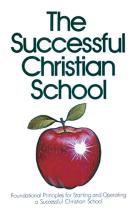
As fundamentalist ed pundit A.A. “Buzz” Baker wrote back in 1979,

The public school’s philosophy over recent years has been to take a new teacher who has just graduated from college and place her in the classroom, allowing her to do pretty much what she wants to do.  This is often referred to as ‘academic freedom’ and translates into nothing more than ‘experimentation at the expense of the students!’

Instead, evangelical schools, Baker advised, should purchase his company’s pre-made curriculum. No more experimentation, no more fake teacher freedom. Instead, as he promised,

one of the greatest benefits of using day-by-day curriculums is that the principal can know what is being taught.  He can check the class and the curriculum to make certain that the job is getting done.  Substitute teachers can also step in and continue without a loss of valuable teaching time.

What would a pre-scripted fundamentalist curriculum look like? Baker offered a script that could be implemented by a robot just as easily as by a human:

Teacher’s Statement:
Heaven is a real place, just as real as this room.  It is a wonderful, safe, happy home where God lives.  God wants everyone to come there and live with Him.  Anyone who has taken Jesus as his Savior will be able to go to heaven and live forever with God; but anyone who has not taken Jesus as his Savior cannot go to heaven, but must go to a terrible place of eternal punishment.
Drill Questions:
1. Will everybody get to go to heaven? No.
2. Who gets to go to heaven? The people who trust in Jesus and who take Him as their Savior while they live here on earth.
3. Does God want everybody to go to heaven? Yes.
4. Why won’t everybody get to go to heaven? Because some people won’t take Jesus as their own Savior.

The folks at Davos don’t care about Jesus. But their vision of a teacher-free classroom would be just as appealing to ideologues worried about the moral influence of unpredictable humans. Would teacher bots save money? Sure. Promote efficiency? Definitely. But for Baker and the hundreds of thousands of students who attended this kind of private school, teacher-proofing was all about CONTROL.

Why We’re Doomed

We all knew it was going to be ugly and stupid. I’m still surprised, though, when people say these things with a straight face. Conservative pundits lump middle-of-the-roaders like me into a vast, scheming “secular Left . . . who cannot stand the presence of religion in everyday  life.” Lefties blast middle-of-the-roaders like Cory Booker into the conspiratorial Right. No wonder we can’t have a decent convo.

First, my alleged anti-religiosity. After my recent commentary about Karen Pence in the Washington Post, Ben Shapiro took to the tube-waves to rebut. At about 19:30 in this segment, he hoped to redefine Ms. Pence’s ordeal. Instead of an old-fashioned fight between religious groups, Shapiro insisted, what we’re facing now was an outright fight by powerful secular forces against traditional religion as a whole.

Shapiro argued that people like me assume that there is no legitimate traditional religion anymore. People like me, Shapiro said, see conservative religion as only

a basket of bigotries masquerading as religion.

I won’t rebut Shapiro’s rebuttal, though I will point out that SAGLRROILYBYGTH have offered much more powerful and insightful counterarguments to my Pence commentary in these pages.

The point this morning is bigger and it’s not only about my hurt feelings. It’s not even about conservatives alone. Pundits on the left tend to shoot their mouths off just as wildly. For example, though I’m not a fan of Senator Cory Booker’s (fading?) support for charter schools, I can acknowledge that he often endorses traditional progressive political positions.

Yet, as Molly Ball noted a few years back in The Atlantic,

Booker has faced a steady drumbeat of criticism from sites like Daily Kos, where a contributor asserted last year that he “would actually be much more at home in the Republican Party.” Booker’s team has grown all too familiar with the rap that he is “some sort of Manchurian candidate for the right,” as his campaign spokesman, Kevin Griffis, put it to me with a sigh.

The problem is bigger than Cory Booker or Karen Pence. It’s even bigger than Ben Shapiro. In a sensible system, pundits on both sides would rush to include as many people as they can on their team. Ben Shapiro would notice that my argument wasn’t really against traditional religion at all. Cory Booker would be welcomed into a big-tent Left and encouraging to squeeze every possible progressive drop out of his role.

That’s not what happens. Instead, as pundits on both sides try to get clicks by excoriating their natural allies, the left-right divide only gapes ever wider.