Time to Pray at School!

It’s that time of year again. Time for students to gather together in their public schools and pray. You heard that right: School prayer is alive and well. In this case, it’s almost the fourth Wednesday of September, which has been set aside as a day for evangelical students to meet at their schools’ flagpoles to pray. This tradition started in 1990, and a San-Diego-based group has promoted the practice nationwide. Is this sort of school prayer constitutional? Even more tricky, are conservative evangelicals consciously pushing the limits of constitutionality with this kind of prayer event?

Let’s take those questions one at a time. Is this sort of student-led prayer constitutional in public schools? Short answer: yes. In spite of a great deal of nervousness among evangelical Protestants and other religious groups, the US Supreme Court’s 1962 Engel decision and its 1963 Schempp decision never outlawed prayer in public schools. The first decision ruled that states could not impose a prayer on students, the second that schools and teachers could not lead students in devotional Bible-reading or prayers. But students still may pray all they want in public schools.

The issues get more complicated these days over the question of school sponsorship. Most recently, SCOTUS ruled against student-led prayer in Santa Fe v. John Doe (2000). In that case, though, the Court did not rule that students couldn’t pray. They only said that the type of student-led prayer at issue implied school sponsorship. Students in Santa Fe public schools would use the school’s PA system to lead prayers before football games. Those prayers were always of an evangelical Protestant faith. The court ruled that such prayers implied school sponsorship of one specific sectarian vision of religion.

As ILYBYGTH readers may recall, the issue of school sponsorship has also been at the center of recent cheerleader debates from Kountze, Texas. It can seem a little perplexing. Down in Kountze, the Christian cheerleaders insisted that they were a private, student-led club. But objectors insist that their presence at the school games implies school support for their religious banners.
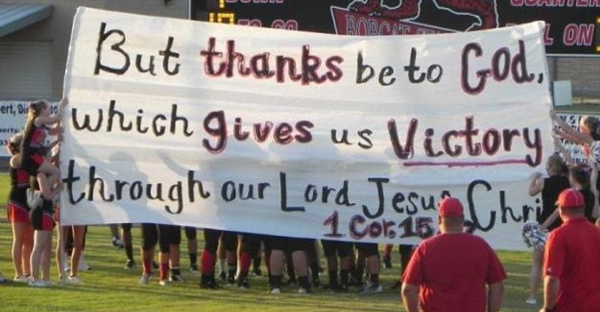
Student-led?  Or school-sponsored?

Student-led? Or school-sponsored?

What about See You at the Pole? Does it pass the Santa Fe test? Most observers agree that it does. Watchdog groups such as Americans United for Separation of Church and State have noted that students are free to pray all they want, as long as teachers and school officials don’t encourage or discourage student participation.

To this observer, though, it looks as if the organizers of See You at the Pole are intentionally pushing the boundaries of constitutionality. This year’s theme, for example, is Ephesians 6:18a: “Never stop praying, especially for others.” And promotional materials this year show students vowing, “We’ll never stop.”

It might just be my yen for pluralism and inclusion in public schools, but it seems to me as if this language is consciously tweaking the nose of our school-prayer tradition. As I argued a few years back (behind a paywall, sorry), many conservative evangelicals interpreted the 1963 Schempp decision as a constitutional cataclysm. They viewed the decision as evidence that our society had turned its back on God.

When an evangelical group promises, then, that they’ll “never stop,” we can’t help hearing a sort of promise that they will never accept the notion of pluralist schools. When students insist that they will be praying for others, we can’t help hearing a sort of promise that they will turn their public schools into revival meetings.

After all, among some conservatives, there has long been a drive to re-assert evangelicalism as the implicit theology of public education. For example, evangelists Brad and Susanne Dacus published a handy-dandy guidebook to “Reclaim Your School.” Writing from the Pacific Justice Institute, the Dacuses promised to help readers “evangelizing in the public schools.”

It seems to me as if the SYATP project wants students to do more than simply pray at their schools. The implicit promise is that these students will commit to preaching to other students in their schools. As national organizer Doug Clark told the Christian Post, the event helps students “represent [God] to their schools.”

To my ears, that sounds like more than just protection for the religious rights of students. It sounds to me like a plan to insert evangelical pressure into public schools. It sounds to me as if students are being encouraged to foster an environment in their public schools that might make non-evangelical or non-religious students feel decidedly unwelcome.

Is that my secular paranoia? Or do these SYATP events really encompass a sort of covert promise to reclaim public schools for public Christianity?

No, YOU’RE the Weirdo

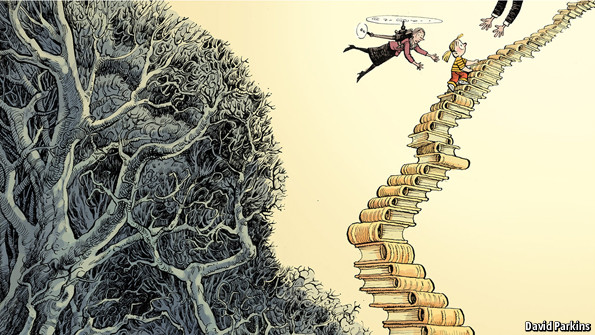
Do you have a smartphone? Does everyone you know have one? If so, that puts you in a small minority, even though you feel like you’re part of a vast majority. And that sort of presumption of normality has a lot to say about our continuing educational culture wars.

I came across the statistic in this week’s Economist. It seems over 1.7 billion people use smartphones. That’s a lot, but it leaves 80% of the human population phone-less.

What a bunch of WEIRD-os.

What a bunch of WEIRD-os.

So what? We might notice this as more fuel for the WEIRD fire.  As in Western, Educated, Industrialized, Rich, and Democratic.  Psychologists Joseph Henrich, Steven Heine and Ara Norenzayan argued a few years back that too many subjects of psychological tests came from this relatively restricted background.  The results of those tests, they argued, should really only be claimed to apply to people of similar backgrounds.

But I also think this is a good example of the culture-war dangers of what we might call “majority myopia.” The things to which we are accustomed sometimes seem as if they are common to everybody. With smartphones, for example, it might seem like an eccentricity these days to go without one.* But despite our perceptions, actually a vast majority of people share that “eccentricity.”

When it comes to public schooling, we see this sort of myopia time and again. When it comes to teaching evolution, for example, political scientists Michael Berkman and Eric Plutzer have argued that the most important question to ask–after teachers’ personal beliefs–is what the community believes about evolution. If the community tilts toward creationism, then teachers will, too.

As they put it,

traditional districts and cosmopolitan districts tend to hire teachers whose training, beliefs, and teaching practices serve to reinforce or harmonize with the prevailing local culture.

In other words, there are some ideas that seem universally shared. Why? Because everyone we know agrees on them. With science teachers, they may certainly feel as if they are teaching the ideas that everybody agrees to be true. They are teaching the ideas that everyone in their community seems to share.

This spreads wider than evolution, of course. Back in the late 1960s, political scientists Kenneth Dolbeare and Phillip Hammond set out to investigate the practical consequences of the Supreme Court’s 1963 Schempp ruling. In that ruling, an eight-to-one court decided that reciting the Lord’s Prayer and devotional reading of the Bible could not Constitutionally be part of a public-school day.

Dolbeare and Hammond journeyed into four municipalities in an unnamed Midwestern state. They found to their surprise that the Schempp decision had had virtually no effect. In schools that had prayed before, students and teachers still prayed. In schools that hadn’t, they still didn’t.

Most puzzling at all to the political scientists, none of this raised any whisper of controversy in any of the towns. For those who lived there, it simply seemed as if the vast majority of people must share their views about school prayer. Even if they knew what the Supreme Court had decided, their “majority myopia” made them see their own praying public schools as the norm.

I’m sure there are other cases out there. For some religious schools, I’m guessing it must seem as if everyone agrees on doctrines such as a young earth. And at some progressive schools, like the ones I attended as a kid, it certainly seemed as if everyone agreed on the basic principles of secularism and left-leaning social justice.

But as this smartphone statistic shows, even those things that seem most universal can really be part of a very small minority.

*Full disclosure: I’m smart-phone-less myself. Don’t judge me.

Don McLeroy’s Long Game

What do Phyllis Schlafly, Moses, and country/western music have in common? They all get happy shout-outs in new history textbooks in Texas.  Or at least, that’s what conservative education leaders wanted.  As Politico reported yesterday, new history textbooks in Texas are causing a stir.  But this time, it is liberal activists, not conservative ones, who are denouncing the textbooks as biased and ideological.

What Hath McLeroy Wrought?

What Hath McLeroy Wrought?

The new textbooks were written to satisfy new standards approved years ago by the Texas State Board of Education.  Back then, conservatives on the board, led by the genial Don McLeroy and the obstreperous Cynthia Dunbar, pushed through new standards that warmed the hearts of conservative activists.

No one who watched Scott Thurman’s great documentary about these Revisionaries can forget the moments when the SBOE debated including more country-western music and less hip hop.  More positive statements about Reagan and the National Rifle Association.  More happy talk about America’s Christian past and less insistence on the horrors of racial segregation.

The Revisionaries

The Revisionaries

As Don McLeroy said at the time, “America is a special place and we need to be sure we communicate that to our children. . . . The foundational principles of our country are very biblical…. That needs to come out in the textbooks.”

Now those changes in the Texas standards have shown up in new social-studies textbooks.  As Stephanie Simons reports in Politico, liberals have complained that the new texts are woefully biased.  In some spots, the books apparently knock Affirmative Action.  They pooh-pooh the benefits of taxes.  They imply that racial segregation was really not so bad.

For those who know the history of America’s educational culture wars, this seems like a drastic turnabout.  Throughout the twentieth century, conservative school activists complained that they had been locked out of educational influence by a scheming leftist elite.  Textbooks and standards, conservatives complained, had been taken over by pinheaded socialist intellectuals.

In one of the most dramatic school controversies of the twentieth century, for instance, conservative leaders lamented the sordid roots of new textbooks.  That battle took place in Kanawha County, West Virginia, across the tumultuous school year 1974-1975.  Conservatives were disgusted by the sex and violence embedded in new literature textbooks.  But some of them weren’t surprised.

Conservative leader Elmer Fike told readers that the textbooks were bound to be rotten.  In Fike’s opinion, conservatives didn’t even need to read the books.  As he explained,

You don’t have to read the textbooks.  If you’ve read anything that the radicals have been putting out in the last few years, that was what was in the textbooks.

As the Kanawha County battle ground on, California’s conservative celebrity schoolman Max Rafferty came to town.  Rafferty, too, told a crowd of West Virginians that they shouldn’t put any faith in textbook publishers.  Those publishers, Rafferty explained, only wanted to make a buck.  As he put it,

They have no particular desire to reform anybody, do anybody any good or find a pathway to heaven.

These days—in Texas at least—the shoe is on the other foot.  The conservative standards that the state adopted in 2010 have pushed market-conscious textbook publishers to come up with books that meet them.  And at least some conservatives are delighted with the success of their long game.  As conservative school board member David Bradley told journalist Stephanie Simon, liberals who complain about biased textbooks can lump it.  “They need to put on their big-girl panties,” Bradley crowed, “and go run for office.”


Obama Persecutes Christian Schools

Does President Obama have it out for conservative evangelical Christians?  Does he plan to crush them by hitting them where it hurts?  In the pages of today’s Christian Post, Michael Zigarelli worries that Obama’s anti-discrimination policy will do just that.  By putting the squeeze on religious colleges, Zigarelli writes, Obama plans to squeeze the life out of conservative evangelicalism.  This sort of conspiracy-theorizing may sound far-out to non-conservatives like me.  But for those who know the history of evangelical education, it might not seem so wacky.

Zigarelli is commenting on the recent controversy at Gordon College in Massachusetts.  As we’ve noted in these pages, President D. Michael Lindsay of Gordon College attracted attention for signing an open letter to President Obama.  In case you missed the story, Lindsay signed the letter requesting an exemption from a planned executive order.  The order would ban discrimination against LGBTQ persons.

For those like me outside of the world of conservative evangelicalism, Lindsay’s attitude sounds an awful lot like a license to discriminate.  If, as Lindsay wrote, Gordon College does not discriminate against gay students and does not plan to start, why would they need such an exemption?

I don’t want to put words in anyone’s mouth, but as I understand it, the evangelicals did not ask to be able to discriminate against anyone, but rather to be able to continue their policy that requires all students and faculty to agree to a goal of chastity outside of marriage.  As we discussed here at ILYBYGTH, to many non-evangelicals and former evangelicals, that seems like a distinction without a difference.

But if we put those sorts of questions to one side for a moment, we can see that Zigarelli’s attitude demonstrates key elements of evangelical thinking.  His op-ed articulates some of the fears of conservative evangelicals.  For many conservatives, Obama’s order means more than just the end to discrimination.  It means the end of conservative evangelicalism in general.  Once conservatives are no longer able to operate their schools and colleges as they see fit, they will no longer be able to educate their children properly.  As Zigarelli concludes ominously,

Empty desks will follow empty pews, at least if this capricious; destabilizing theology is foisted upon our Christian schools. It’s time to take a stand.

To historians, this sort of rhetoric sounds familiar. As I’ve argued in the pages of the Journal of Religious History, conservative evangelicals made very similar sorts of statements after the Supreme Court’s anti-prayer decision in 1963. That school decision prompted conservative evangelicals to shift their thinking about their relationship to the broader American culture. As the editors of the flagship evangelical magazine Christianity Today expressed it, before that decision, they were confident of their roles as leaders of America’s “devout masses.” After the decision, though, they worried that conservative evangelicals had become nothing but a “believing remnant” in a sinful American culture.

For evangelicals, like all other Americans, any loss of control over schooling can signal a loss of control over public life itself. Some of us may scratch our heads and wonder why evangelicals worry so much about President Obama’s planned non-discrimination order. If, as President Lindsay insists, conservative schools don’t discriminate against homosexuals, what do they have to worry about?

Throughout the twentieth century and into today, though, conservative evangelicals have maintained a tense relationship with the wider American culture. Many conservatives believe themselves to be the representatives of the real American mainstream, the “moral majority.” At the same time, however, conservatives see themselves as persecuted outsiders in a twerking culture besotted with sin, sexuality, and secularism. When big public-policy decisions seem to hurt Christian education, evangelicals react vigorously.

Does Obama plan to crush conservative opposition? As Zigarelli admits, such statements may sound “absurd” and “alarmist.” But given the past fifty years of evangelicals’ relationship with public education, the notion that the federal government might take drastic steps that hurt Christian education does not seem absurd or alarmist at all.


Fundamentalist Parents Can’t Relax

Rich parents can relax.  At least according to an article in this week’s Economist.  But fundamentalist parents never can.  They have to worry about more than their kids’ careers.  They have to fret about eternal damnation.  And they have to worry that Satan lurks in every textbook, every TV show, and every mainstream school.

The Economist article is worth reading in its entirety.  As it explains,

Well-to-do parents fear two things: that their children will die in a freak accident, and that they will not get into Harvard.

Getting into Harvard might be harder than getting into heaven...

Getting into Harvard might be harder than getting into heaven…

Both fears lead to exaggerated and ultimately counterproductive lifestyles.  In terms of safety, the article notes, an American child under five years of age in 1950 was five times as likely to die of disease or accident as that same kid would be today.  And though it is difficult to get into Harvard, most kids of affluent families will have fine careers without an Ivy-League transcript.

But fundamentalist parents have more to worry about.  Since the birth of American fundamentalism in the 1920s, conservative evangelicals have fretted about the influence of mainstream culture on their offspring.  Even if their kids don’t get polio, and even if their kids do get into Harvard, fundamentalist parents have to worry that success in life will lead to terrible punishment after death.  For fundamentalists, even Harvard itself can be more of a threat than an achievement.

As historian Randall Balmer put it in his blockbuster book Mine Eyes Have Seen the Glory,

the greatest fear that haunts evangelical parents is that their children will not follow in their footsteps, that they will not sustain the same level of piety as their parents—stated baldly, that they are headed for hell rather than heaven.

As I argued in my 1920s book, historically this fear for the children has fueled fundamentalism’s public campaigns.  Fundamentalist leaders and parents worried that no level of affluence and economic privilege could protect their children from a culture sliding nonchalantly straight to hell.

As conservative leader William Jennings Bryan explained in 1922, even the rich and powerful had lost the ability to protect the faith of their children.  As a former Secretary of State, Bryan knew many of these families personally.  He wrote about one acquaintance, a US Congressman, whose daughter came home from college only to tell the family that “nobody believed in the Bible stories now.”

It was not only conservative Congressmen who worried.  Fundamentalist evangelist Bob Jones Sr. liked to tell the story of a less powerful family who had a similar experience.  This family, Jones explained in one of his most popular 1920s sermons, scrimped and saved to send their precious daughter to

a certain college.  At the end of nine months she came home with her faith shattered.  She laughed at God and the old time religion.  She broke the hearts of her mother and father.  They wept over her.  They prayed over her. It availed nothing.  At last they chided her.  She rushed upstairs, stood in front of a mirror, took a gun and blew out her brains.

Even when fundamentalist families did not experience that sort of cataclysm, we must keep their anxiety in mind when we try to understand fundamentalism from the outside.  Why do conservative evangelicals fight against evolution?  Why do they insist on school prayer?  Why do they worry about rights for homosexuals?

In all these cases, conservative evangelicals’ public activism is made more desperate by their intense worry about their children.  In this, there is no difference between conservative evangelicals and mainstream Americans of any background.  As the Economist article points out, almost all parents love their children and make sacrifices for them.  In the case of mainstream affluent parents, it might even help if they relaxed a little bit.  As Bryan Caplan of George Mason University argues,

Middle-class parents should relax a bit, cancel a violin class or two and let their kids play outside.

Easy enough.  But fundamentalists face a very different situation.  If we want to understand the mind of fundamentalists, we can try a mental experiment.  Non-fundamentalist parents have a hard enough time relaxing about their kids, even though they feel at home in mainstream culture.  Non-fundamentalist parents fret too much about their kids’ futures, even if they don’t feel alienated by their local public schools and elite universities.

Let’s try to translate the anxiety experienced by fundamentalist parents into mainstream terms.  Imagine, for example, the sorts of public outcry there would be if public schools began promoting ideas or practices that affluent secular parents found dangerous.  For instance, what do you think would happen if a public school somewhere began promoting smoking as a fun and healthy activity?


Does Anyone Actually Read the Index?

My eyeballs are beginning to chafe.  This week, I’m finishing up the index for my new book.  It’s a lot of work, even though I had a gifted grad student do most of the intellectual heavy lifting.

How the sausage gets made...

How the sausage gets made…

So now I’m wondering: Does anyone actually read the index?  I know professional academic historians do.  In fact, that’s one of the first cheap tricks we learn in our PhD programs.  We flip quickly to the back to see what we can glean from the index.  What are the book’s themes?  What are its main ideas?  Its blind spots?

But do any normal people read a book’s index?  Make no mistake, I’m compiling a kick-ass index, whether anyone ever reads it or not.  But I can’t help but wonder if readers will find useful my painstaking distinctions between “authoritarian teaching” and “traditional education.”

Coming soon...

Coming soon…

Will anyone care that I spent so many long hours in a stuffy library teasing out the nuances of “educational conservatism” as opposed to the broader category of “conservatism” in general?


Protect Children from Jesus

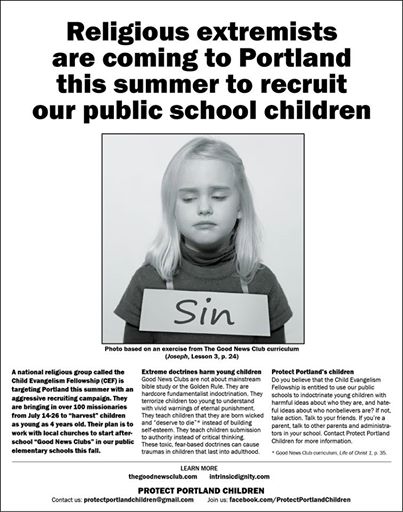
Have you heard the Good News?  If you live in Portland, Oregon, your children might hear It in their public schools.  Or they might not.

Activists in Portland have protested against the school-based evangelical outreach of the Child Evangelism Fellowship.  According to protesters, the CEF is inflicting damaging psychological messages on unwary children through its aggressive Good News Clubs.  For their part, the evangelists claim to be the victim of anti-religious discrimination.  Do parents have the right to kick out Christians?  Do evangelists have the right to preach to children?

These are big and potentially scary questions.  Each side in this case is warning that the other side is using sneaky tactics to target children.  But that kind of rhetoric belies the fairly restricted nature of this protest.  In this case, at least, the activists on each side are actually limiting themselves to fairly modest goals.

Save Our Children from Jesus!

Save Our Children from Jesus!

The Child Evangelism Fellowship has been active for a long time.  This summer, it planned to expand its Good News Clubs into more schools nationwide.  These clubs invite children to come to meetings at which they learn prayers and conservative Protestant doctrine.  In a 2001 decision from a town in my backyard, the US Supreme Court ruled that the Good News Clubs must be allowed to use public-school facilities after school hours if other groups are allowed to do so.  A few clarifications: the Good News Clubs are not active as part of the school day; public schools are free to ban ALL after-school activities if they choose; and Good News Clubs are not mandatory for children.  Still, for the CEF, the Supreme Court’s decision came as a welcome shot in the arm.

Portland protesters were not impressed.  This summer, the Protect Portland Children group mobilized to warn Portland parents away from Good News Clubs.  Due to the SCOTUS decision, the PPC is not trying to ban the clubs, but only to encourage parents to keep their kids away.  Why?  According to Katherine Stewart, a parent and author of an anti-CEF book, kids exposed to the Good News Clubs come away with a terrible message.  As Stewart told The Oregonian recently,

I started to hear about how kids attending the clubs were targeting their peers for what I can only describe as faith-based bullying and bigotry. The kids attending the clubs would say they knew the religion of the Good News Club “must be true” because they learned it in school. As one little six-year-old girl said to her classmate, “They don’t teach things in school that aren’t true.”

One Seattle activist agreed.  She insisted she was not anti-religion, but rather only opposed to the sneaky way the CEF attracted kids to their clubs, and to the terrifying message spread by those clubs.  As she put it, “Good News Clubs teach dark, divisive and potentially traumatic doctrines that are unique to fundamentalist forms of Christianity.”

Not surprisingly, conservative evangelical Protestants are defending the Good News Clubs. Creationist leader Ken Ham argued that this anti-gospel activism represented just another tactic in the continuing culture wars. “Many secularists,” Ham warned,

are deliberately and aggressively targeting our children and Christian ministries that teach the truth of God’s Word to children—and for a reason! They are going after the hearts and minds of this and coming generations, and if they continue to do so successfully, they’ll win the culture.

Ham’s interest makes sense.  After all, as he points out, anti-creationism activists have insisted that teaching creationism amounts to “child abuse.”  This Portland parent protest makes similar claims.  The protesters warn that this sort of religious message can be “psychologically harmful to children.”

According to protesters, both the tactics of the Good News Club and its message are dangerous to young people.  Learning that one is sinful and destined to eternal damnation, some parents feel, is not the proper religious message for children.  And luring those children to after-school activities with promises of treats and prizes seems immoral.

For their part, CEF activists claim that their clubs teach only the central doctrines of Christianity.  Whatever protesters may assert, according to the CEF, the Good News really is good news.  Schools with active Good News Clubs report improved student behavior and school environment.  Students act more kindly toward one another.  Students act more politely and thoughtfully about their behavior.  Who would have a problem with that?

But let’s clarify the issue: Portland protesters are NOT trying to block Good News Clubs from Portland schools.  And Good News Clubs are not part of the public-school day.  In spite of heated rhetoric, this case will not decide whether or not conservative Christian doctrines are dangerous for children.  This case will not decide whether or not evangelists can preach in public schools.

Nevertheless, activists on both sides are bringing out the big guns: Both sides warn that the other side is targeting their children.  That is a scary thing.  But neither side in this case really hopes to stop the other side from doing so.  Rather, each side seems to be limiting itself to more immediate goals.  Protesters are encouraging Portland parents simply to keep their kids home.  And evangelists are simply running an afterschool club and hoping to encourage kids to attend.

In my opinion, this is exactly where these discussions belong.  Evangelists should be free to spread whatever non-violent messages they choose.  And parents should be free to encourage others to keep their kids away.  If parents think Christianity is psychologically damaging, they should certainly tell their friends and neighbors about their concerns.  And if conservative evangelicals think that their message is the only way to avoid eternal damnation, they should certainly be free to tell anyone they like about it.


Hobby Lobby-ing for Religion in Public Schools

Has God been kicked out of America’s public schools?  The most common answer among religious conservatives is yes.  But a better answer might be that God has been kicked out as a host, but earnestly welcomed in as a guest.

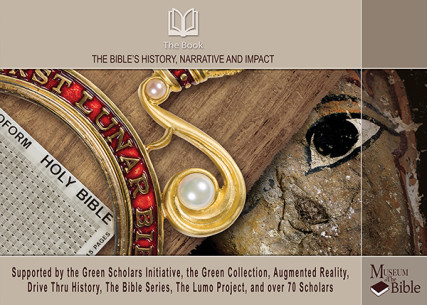
A new Bible curriculum for public schools hopes to reverse that trend.  As we’ve reported, Steve Green, conservative evangelical leader of the Hobby Lobby store chain, has funded a new Bible curriculum for public schools.  A recent study from the Texas Freedom Network insists that Green’s curriculum crosses the line.

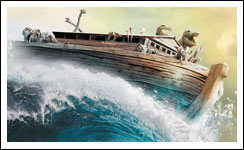
Hobby Lobby's Promotional Image for Its New Bible Curriculum

Hobby Lobby’s Promotional Image for Its New Bible Curriculum

The study of the Hobby Lobby Bible curriculum was undertaken by Mark Chancey of Southern Methodist University.  Chancey is a religious-studies professor with considerable expertise in the question of religion in public schools.

As Chancey reviews, it is entirely permissible for public school students to read and study the Bible.  The US Supreme Court has encouraged such study.  The problem comes when public schools attempt to teach a certain interpretation of the Bible.  In short, public schools can and should teach students about religion.  But they err when they teach students religion.

Chancey asks if the Hobby-Lobby-funded curriculum, The Book: The Bible’s History, Narrative and Impact, keeps on the constitutional side of this divide.  For several reasons, Chancey concludes that it does not.

First, though Chancey notes this is not conclusive, Steve Green himself has publicly stated his intention to spread his religion.  As Chancey notes, Green makes no secret of his evangelical ambition.

Simply because Green wants to spread his faith, of course, does not mean that this Bible curriculum tries to do so.  But Chancey argues that the Bible curriculum repeatedly insists or implies that a certain evangelical-friendly interpretation of the Bible is correct.  For one thing, the Bible curriculum suggests that the Bible is historically accurate.  The authors tell readers

that the Bible, especially when viewed alongside other historical information, is a reliable historical source.

Also, Chancey argues that the curriculum privileges a Protestant vision of the Bible.  And the curriculum suggests that the real story of the Bible is salvation, a narrative that points unerringly toward the salvation offered by Jesus Christ in the Gospels.

As Chancey concludes,

The combination of a religious purpose, pervading sectarian bias, and frequent factual errors demonstrates that this curriculum has a long way to go before being appropriate for a public school classroom.

What’s next?  Since a public school district in Mustang, Oklahoma has already adopted this Bible curriculum, it appears we are headed for another lawsuit.  If Chancey’s review of this curriculum is accurate, my guess is that this material will be ruled unconstitutional for public schools.


The Files Are In!

Well, there’s nothing more to be done about it now.  I’ve just sent my final draft of my next book manuscript to the publisher.  There’s a sense of relief at being done, but also trepidation at the impossibility of further revisions.  After years of researching, writing, then revising, revising, revising, it’s hard to believe I won’t be able to keep tweaking and improving.

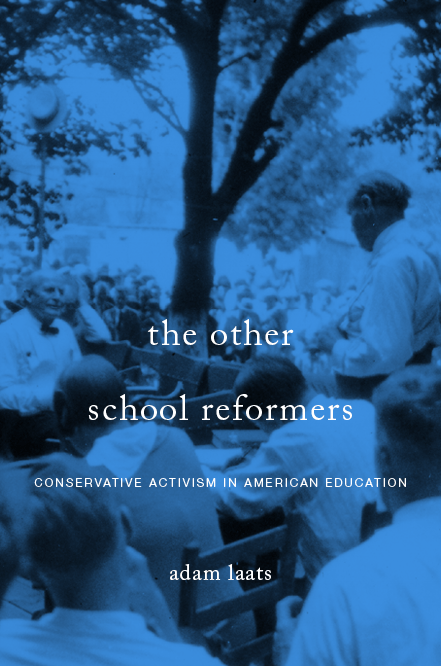
Pre-order your copy today!

Pre-order your copy today!

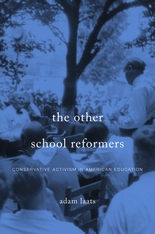
In general, though, I’m extremely pleased with the shape of the manuscript.  In a nutshell, I try to make the case that we’ve seen a potent tradition of educational conservatism in the United States, one that has had a decisive impact on the structure and content of schooling.  And, I argue, that tradition has not been recognized by historians or education scholars.

To make this case, I examine in four looooong chapters the four biggest school controversies in twentieth-century America: the Scopes Trial of 1925, the Rugg textbook controversy of 1939-41, the Pasadena superintendent ouster of 1950, and the Kanawha County textbook battle of 1974-75.  What did conservatives say and do in these controversies?  In each case, the attention-grabbing events attracted conservative participation from both locals and national leaders.  In each case, the issues prompted conservatives to articulate their visions of proper schooling.  To me, that’s the interesting question.

We’re still a ways from final publication.  The publisher will send me proofs in July.  At that stage, I’ll put together the index and fine-tooth-comb the proofs for any typos.  But I won’t be able to make substantive changes at that point, just minor corrections.

During these last weeks, as I’ve been going over the copy-edited chapter files, I’ve been very grateful for the careful work of the editor.  She or he pointed out some embarrassing errors on my part and I’ve been able to make changes in the argument.  Hopefully this draft is as crystal-clear as I can make it.

I’m looking forward to hearing what readers think of the book.  For that, I’ll have to wait until 2015.  The press will release the book on January 12, 2015.  Pre-orders are available!


The Supreme Court Just Kicked God Back Into America

Does America have a religion?  Many religious conservatives insist that the United States has always been a Christian country.  Yet some religious folks complain that the Supreme Court has “kicked God out of public schools” and public meetings.  In a ruling today, a slim majority on the US Supreme Court ruled that public meetings CAN be opened with a prayer, even if those prayers tend to represent mostly Christianity.

ILYBYGTH readers may remember this case from my upstate New York neighborhood.  The town of Greece held prayers before its meetings.  Though the town tried to open the prayers to a wide group of religions, complainants argued that the prayers tended to cluster around Christianity.  As SCOTUS had ruled in a 1983 ruling, Marsh v. Chambers, public meetings could constitutionally open with a prayer, as long as those prayers did not favor any one religion over another.

In the case of Greece v. Galloway, today’s ruling allows towns to continue with public prayers, even if those prayers tip toward Christianity.  And even if those prayers use explicitly Christian language.  As Adam Liptak noted in the New York Times, Justice Kennedy’s majority decision insisted that public prayers could even invoke sectarian ideas, such as the specific invocation of a sacrificial Jesus.  As Liptak summarized Kennedy’s decision, “it would be perilous for courts to decide when those prayers crossed a constitutional line and became impermissibly sectarian.”

According to Lyle Denniston on the SCOTUS blog, today’s ruling hinged on a distinction between “coercion” and “endorsement” as a rule of thumb in public-meeting prayers.  Such prayers, the majority held, are not constitutional if they imply coercion.  If non-believers are made to feel less welcome, for instance, coercion might be at play.  “Endorsement” is a lower hurdle.  Dissenting justices felt that any prayer in which government looked to be endorsing any religion must be unconstitutional.  Today’s majority ruling implies that “coercion” might become the new standard in judging questions of public religiosity.

As I’ve argued in the Journal of Religious History about the landmark school-prayer rulings Engel v. Vitale (1962) and Abington v. Schempp (1963), the status of public prayer has long served a crucial symbolic role in evangelical understandings of their role in American culture.  There is a tension at the heart of evangelicalism.  Believers in this tradition can consider themselves both the definition of true Americanism and a beleaguered minority in a sinful or secular land.  When the Supreme Court rules for or against public prayer, evangelicals tend to respond forcefully.

Will conservative religious folks celebrate this case as the time that the Supreme Court kicked God back INTO American public life?  The Alliance Defending Freedom, an Arizona-based group that defended the town’s prayer practice, calls today’s ruling an “Answered Prayer.”  As they put it, today’s ruling

Preserves the public prayer tradition that began with our founding.

Protects the freedom of community volunteers to pray according to their faith in a public setting, without censorship

Defends the prayer giver’s freedom of speech over an “offended” person’s demands for censorship

Writing in the evangelical WORLD magazine, Emily Belz took a more circumspect tone.  “The Greece case,” Belz opined,

doesn’t have huge immediate implications but puts the high court’s Establishment Clause jurisprudence on friendlier ground toward religion in the public square.

In the pages of the evangelical flagship publication Christianity Today, Ted Olsen insisted that SCOTUS got it right.  But not because this decision endorses the notion of the US as a Christian nation.  Rather, Olsen argued that sectarian prayers—whether to Jesus or to Apollo—represent the real faiths of real Americans.  “For Christians,” Olsen wrote,

such invocations let us bear witness to our own submission, to our gratefulness for God’s provision on a community level, and to our need for his wisdom and guidance. We needn’t “proselytize or disparage” in these prayers, just as we don’t do so in our prayers before meals, or with our families before bed. And we need not protest pagan prayers in our city council meetings any more than we protest them at our pagan neighbor’s apartment. Instead, we should see their prayers as a triumph of religious freedom (and as reminders to compassionately share the gospel with them).

Does it turn public meetings into Christian-fests if they are opened with prayers that specify the centrality of “the saving sacrifice of Jesus Christ on the cross?”  Or is it okay to have prayers, as long as everyone is invited to have a chance to lead them?  The Supreme Court says yes.