The Most Important Thing Anyone’s Ever Said

What is the most important line in the history of American education?  Something from Ben Franklin?[1]  Frederick Douglass?[2]  Horace Mann?[3]  John Dewey?[4]

According to Bruce Frohnen in the recent pages of The Imaginative Conservative, that honor goes instead to Annette Kirk.  Her line from the 1980s, Frohnen argues, offers traditionalist conservatives and anyone who cares about real education the only thread of hope in the blasted and devastated landscape of American public education.

Conservative intellectuals have long taken a dim view of the state of American education.  Frohnen opens his recent jeremiad with a nod to the terrible state of today’s schools.  “Can public education in the United States be saved?” Frohnen asks.

Given the stranglehold of teachers’ unions over school districts and state legislatures, the constant meddling of an ideologically motivated federal Education Department, the sheer weight of bureaucracy, and the commitment to mediocrity? Perhaps not.

But traditionalists such as Frohnen are not the only ones who tend to throw the school baby out with the modern bathwater.  Leftist historian Michael Katz, for instance, opened a new era of revisionist educational historiography in 1968 with his assertion that schooling in the United States has always been “conservative, racist, and bureaucratic.”[5]  Also from the left, Marxist economists Samuel Bowles and Herbert Gintis denounced American public education in 1976 as a tool of the economic elite.   Libertarian historian Joel Spring famously denounced the cookie-cutter domineering of “The Sorting Machine.”

Frohnen agrees with these folks about the terrible state of public education in the USA.  But it’s hard to imagine Professors Katz, Spring, Bowles, or Gintis agreeing with Frohnen about school’s saving grace.  According to Frohnen, the only glimmer of hope in the last generation has been a line inserted by Annette Kirk into the 1983 blockbuster report A Nation at Risk.

You history nerds out there might think that Frohnen is referring to some of the most famous lines of that report.  Every survey of American educational history, for instance, talks about the reports catchy warning about a “rising tide of mediocrity.”  Most surveys, too, note the apocalyptic edge to the report’s conclusion.  “If an unfriendly foreign power,” the report noted, “had attempted to impose on America the mediocre educational performance that exists today, we might well have viewed it as an act of war.”  Ouch!  Take that, teachers’ unions!

But those memorable lines were not the ones to which Frohnen referred.  No, the most saving line of the report, Frohnen argues, was one inserted by the true conservative Annette Kirk.  In Frohnen’s words, Kirk made sure that the report included the principle that “parents are the first and primary educators of their children.”

Thanks to this perspicacious inclusion, American education has been saved from the worst strangleholds of state-dominated educracy.  Parents in the United States, Frohnen points out, still have the freedom to free their children from the school system entirely.  Homeschooling offers such parents their last best hope of seeing their children truly educated.


[1] “Genius without education is like silver in the mine.”

[5] Michael Katz, The Irony of Early School Reform: Educational Innovation in Mid-Nineteenth-Century Massachusetts (Cambridge, MA: Harvard University Press, 1968), 3.
Homeschool: Latest Frontier for the Fabulous

Why do parents homeschool?  At least one mother has told us recently that homeschooling has become yet another perk for the fabulously fabulous.

As anyone who follows historian Milton Gaither’s blog knows, the world of homeschooling in the United States is fabulously complex.  There is no simple answer to the question of why some parents choose to homeschool.

For some readers and contributors to this blog (see, for instance, the experiences of Anna), homeschooling has resembled nothing so much as a horrific theocratic prison, similar to the recent expose in the pages of American Prospect.  For these families, homeschooling has functioned as a way to bind up their children’s minds in the over-tight wrappings of fundamentalist theology.

Yet for many other conservative religious folks, homeschooling has included equal parts theology, culture, and pedagogy.  Some non-conservative readers out there might be as surprised as I was to discover the number of conservative evangelical Protestants who homeschool for very progressive-sounding reasons.  Or even the number of conservative creationist homeschoolers who want to teach their children about evolution responsibly and accurately.

But homeschooling is not only for conservative religious folks.  At least since the early 1970s, progressive educators and hippies have been attracted to the allure of “unschooling.”  And homeschooling has long been a traditional option for students who cannot attend school due to health problems or even due to pregnancy.

A recent piece in the New York Times offers another rationale for homeschooling: it’s the only lifestyle that can be fabulous enough for those who have already maxed out on their fabulous-ness.  Jennifer Kulynych’s self-outing as a fabulous homeschool mom took as a pretext her difficulty in admitting to her homeschool practice.  At work, Kulynych explains, she has trouble telling colleagues that she homeschools her daughter.  Too many people, she writes, make too many assumptions about homeschooling.

At its core, though, Kulynych’s self-outing seems like nothing so much as a brag about homeschooling as the last frontier for the fabulous.  Kulynych explains that she began homeschooling her daughter when their public school failed to challenge her daughter intellectually.  Since Kulynych’s daughter was too smart for school, and their family couldn’t afford ritzy private schools, Kulynych chose to homeschool.  Plus, Kulynych explains, she was not willing to see her daughter raised by nannies and tutors.  Instead, Kulynych chose to keep her job as a lawyer, while still arranging a perfect intellectual environment for her perfect intellectual offspring.  The fabulous experiment has not been without cost, Kulynych explains.  She goes without spare time in order to keep up the fabulous pace of her fabulous homeschooling lifestyle.  She enjoys spending time learning with her daughter, as she explains, as “co-conspirators in a counterculture adventure, eating our academic dessert first whenever we like.”

Don’t get me wrong: I’m not knocking Kulynych for homeschooling.  I’m all for parents who sacrifice for the good of their children.  But I do wonder if Kulynych’s self-aggrandizement will mark a new normal in the kaleidoscopic world of American homeschooling.  Homeschooling has always been counter-cultural.  The traditional countercultures, though, have been those of the left or right.  For Kulynych, at least, the “counter” in counterculture seems to rely mainly on being simply too cool for school.


Save the Date!

Keep your evening free on Thursday, February 27th.  Here on the beautiful campus of Binghamton University in sunny Binghamton, New York, we’ll be hosting a listening session and panel discussion about Trey Kay’s new radio documentary, “The Long Game: Texas’ Ongoing Battle for the Direction of the Classroom.”

Readers may remember Trey Kay’s earlier award-winning radio documentary, “The Great Textbook War.”  In that piece, Trey explored the 1974-1975 battle over schooling and textbooks in Kanawha County, West Virginia.  In that fight–a fight that is also the subject of a chapter in my upcoming book–conservatives worried that a new textbook series presented students with perverted values and distorted grammar.

In his new documentary, Trey looks at ongoing ideological battles in Texas.  As filmmakers such as Scott Thurman and activists such as Zack Kopplin have demonstrated recently, there has been no better field for exploring cultural conflicts in education than the great state of Texas.

The details of our upcoming February 27 event are not yet finalized, but the general plan is clear.  We’ll be listening to “The Long Game,” then Trey and NYU’s electrifying historian Jon Zimmerman will offer a few comments, followed by a general discussion and Q & A.  I’ll post more details as they come available.

Learning by Discipline

What should schools do with students who behave badly?  Who assault other students?  Who treat teachers disrespectfully?

A new announcement about school discipline from Education Secretary Arne Duncan and Attorney General Eric Holder might drive some conservative pundits to distraction.  Discipline, the two leading officials of the Obama Administration announced yesterday, must be more sensitive to student background and more responsive to individual situations.  Blanket zero-tolerance policies, they proclaimed, lead to worse school discipline, not better.

Those zero-tolerance policies, however, grew out of a groundswell of popular conservative opinion throughout the 1980s and 1990s.  Conservative commentators and activists long complained that schools treated students too gingerly.  Good old-fashioned discipline, some conservative writers insisted, would help return schools to their proper role.  Instead of being places where polite students and teachers cower and wince at the domineering swagger of loud-mouthed punks, schools should be calm and orderly places where infractions of the rules are not tolerated.

Some studies have demonstrated the central importance of a reinvigorated school discipline to many conservative parents in the 1980s.  One Stanford study[1] of two new fundamentalist schools in the 1970s and 1980s found that leaders put bad discipline in public schools as one of their top reasons for opening their own school, right up there with “secular humanism,” “evolution teaching,” and the fact that “kids weren’t learning.”  In a fundamentalist school that opened in September 1974 with a grand total of eleven students, one teacher informed the Stanford researcher that most parents assumed that the fundamentalist school was “solving discipline problems the public schools could not.”

Another study, this one from Temple University in Philadelphia,[2] found that parents listed poor discipline as one of their top reasons for abandoning public schools in favor of private Christian ones.  Nearly 65% of switching parents listed “discipline” as a leading reason for changing schools.  By way of comparison, just over 68% of parents listed “secular humanism” as a primary reason for their switch.

It may come as no surprise that some conservative parents choose Christian schools out of fear of disorderly public schools.  Leading conservative religious writers throughout the 1980s insisted that public schools had utterly abandoned all attempt at imposing discipline.  Jerry Combee, for example, warned readers in a 1979 book,

Without Biblical discipline the public schools have grown into jungles where, of no surprise to Christian educators, the old Satanic nature ‘as a roaring lion, walketh about, seeking whom he may devour’ (I Peter 5:8).  Students do well to stay alive, much less learn.

Similarly, in his 1983 book The Battle for The Public Schools, blockbuster fundamentalist author Tim LaHaye insisted that one of the vital reforms that could save education was a return of traditional discipline.  As LaHaye put it, “We must return discipline, authority, and respect to public schools”

In 1986, conservative Texas school watchdogs Mel and Norma Gabler asked readers, “Why has discipline become so bad that policemen must patrol the halls of many schools?”  The Gablers’ answer was simple:

We were taught that if you plant potatoes, you get potatoes.  If you plant rebellion and immorality in children’s minds by teaching them that only they can decide what is right and wrong, that parents are old-fashioned, and that the Judeo-Christian Bible is a book of fairy tales, then what can you expect?  Garbage in—garbage out!

These conservative critiques of the sorry nature of school discipline were not limited to conservatives of a primarily religious background.  After his turn as Education Secretary under Ronald Reagan, William J. Bennett lamented the sorry state of school discipline.  In his 1994 book Index of Leading Cultural Indicators, Bennett cited a fraudulent but evocative historical comparison:

In 1940, teachers identified talking out of turn; chewing gum; making noise; running in the halls; cutting in line; dress code infractions; and littering [as “top problems”].  When asked the same question in 1990, teachers identified drug abuse; alcohol abuse; pregnancy; suicide; rape; robbery; and assault.

Due at least in part to this widespread sense that American public schools had reached a nadir of weak discipline, many states and school districts imposed variants of “zero-tolerance” policies.  According to these policies, student infractions would be met with an escalating series of ever-harsher punishments, including out-of-school suspensions and reports to police.  Politicians could claim that they were taking action to ensure a no-nonsense disciplinary attitude in America’s schools.

Yesterday’s announcement by Arne Duncan and Eric Holder represents the Obama administration’s repudiation of that zero-tolerance approach.  Though “zero-tolerance” may sound good, Duncan told an assembled crowd at Frederick Douglass High School in Baltimore, “Too many schools resort too quickly to exclusionary discipline, even for minor misbehavior.”  According to the Baltimore Sun, Duncan described a new federal approach that would de-emphasize suspensions and put more emphasis on creating nurturing in-school environments.  Attorney General Holder agreed.  Principals, not police, should be responsible for school discipline, Holder insisted.

Will conservatives care about this shift in school disciplinary policies?  If history is any guide, I’m guessing that conservatives will paint this new policy as yet another soft-headed, over-complicated liberal approach to a simple problem.  Folks such as Eric Holder and Arne Duncan may worry that zero-tolerance policies unfairly target racial minorities, but I’ll be surprised if conservative educational activists don’t complain that such social-science talk only obscures a far more obvious point.

If students misbehave in school, conservatives will likely insist, they should not be allowed to be in school.


[1] Peter Stephen Lewis, “Private Education and the Subcultures of Dissent: Alternative/Free Schools (1965-1975) and ChristianFundamentalistSchools (1965-1990),” PhD dissertation, StanfordUniversity, 1991.

[2] Martha E. MacCullough, “Factors Which Led Christian School Parents to LeavePublic   School,” Ed.D. dissertation, TempleUniversity, 1984.

Pre-K? No Way

Among some conservative intellectuals and pundits, nothing says “government overreach” like public education spending.

This morning in the pages of National Review Online, Michelle Malkin spits some bile at President Obama’s plans to invest in universal early-childhood education.

As have other conservatives such as Lindsey Burke and Rachel Sheffield of the Heritage Foundation, Malkin denounces federally sponsored pre-kindergarten schooling in the harshest terms.

Malkin argues that the vaunted promises of universal pre-k don’t stand up to intelligent scrutiny.  As have other fed-skeptics, Malkin seems to mix up a few federal reports.  She refers second-hand to a journalist’s citation of a 2010 study of pre-k’s long-term effectiveness.  If she really wanted to bash federally sponsored universal pre-k, though, she would have been wiser to cite the Department of Health and Human Services 2012 follow-up to that study.  The 2010 study suggested that Head Start programs had a significant positive impact on children.  The 2012 follow-up, in contrast, implied that those positive effects dissipated by third grade (roughly age 7/8).  The numbers seem pretty clear: universal pre-k is not the simple social and educational panacea that some progressives had hoped for.

But more than just these policy arguments, Malkin thinks federally sponsored universal pre-k has a bigger moral problem.  As she puts it,

Let’s set all of this science aside for the moment. There’s a bigger elephant in the room. As I’ve pointed out for years, these cradle-to-grave government-education/day-care services encourage drive-through, drop-off parenting. Subsidizing this phenomenon cheats children, undermines family responsibilities, and breeds resentment among childless workers who are forced to pay for costly social services.

Perhaps this moral dilemma is the reason why Malkin is not overly concerned with the social-science exactitude of her sources.  Her argument goes like this: federally sponsored pre-k doesn’t work.  And even if it did, it would still lead our society in morally monstrous directions.


The Ink Is Dry!

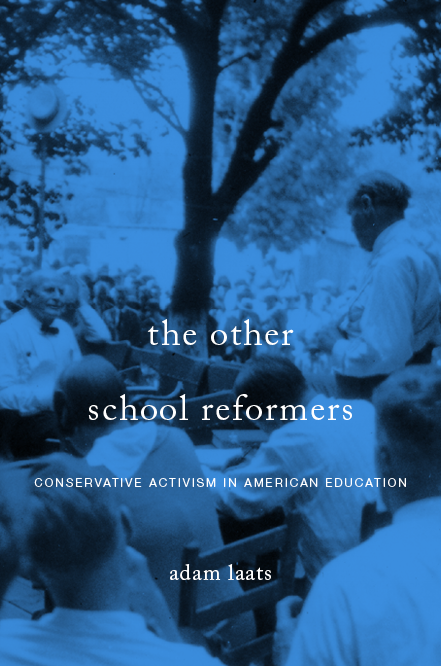
I’m tickled pink to announce I’ve signed a deal with Harvard University Press to publish my next book.  The subject?  No surprise to ILYBYGTH readers: the book takes a historical look at educational conservatism in America’s twentieth century.  What did conservatives want out of schools?  How did they work to make that happen?

I’m extremely pleased to have the book join HUP’s top roster of educational histories.  All my favorite books are on that list: David Tyack & Larry Cuban’s Tinkering Toward Utopia, Jon Zimmerman’s Whose America?, Jeffrey Moran’s Teaching Sex, and now Bill Reese’s Testing Wars.

I’m honored to join this all-star lineup.  My book—which at this point I’m calling The Other School Reformers: The Conservative Tradition in American Education—takes a look at the four most explosive school controversies of the twentieth century.  My approach has been to examine these four culture-war fights to see what sorts of educational reform conservatives wanted in each case.  At first, I thought I’d pile up histories of leading conservative organizations and individuals: the American Legion, Max Rafferty, the Gablers, etc.  But I couldn’t find a way to decide whom to include and whom to leave out.  Did the White Citizens’ Councils count as educational conservatives?  Did the Institute for Creation Research?  Did Arthur Bestor?

Instead of imposing my own definitions on the outlines of educational conservatism, I took more of a naturalist’s approach.  I set up my blind, so to speak, at the four most tumultuous fights over the content of American schools and watched to see what kinds of conservative activists showed up.

The school controversies were all very different.  First I examine the Scopes Trial of 1925.  Then the Rugg textbook controversy of 1939-1940.  After that, the firing of Pasadena’s progressive superintendent in 1950.  Finally, the literally explosive fight over schools and textbooks in Kanawha County, West Virginia, in 1974 and 1975.

What did I dig up?  In short, I argue that there is a coherent tradition linking conservative school reform across the twentieth century.  Not that these different activists had any sort of conscious organization or program.  Conservatives differed—often differed widely—about key issues such as public religion, race, and the role of government and experts.  More than that, the consensus among conservatives changed over time, as American culture and society changed.  For example, racial attitudes among white conservatives changed enormously between 1925 and 1975.  But in spite of all this change and difference, a recognizable tradition of educational conservatism linked these disparate school reformers.  Conservatives usually agreed with progressive school reformers that good schools were the key to a good society.  But unlike progressives, conservatives wanted schools to emphasize traditional knowledge and beliefs: patriotism, religion, and the benefits of capitalism, for example.

In addition, my book makes the case for the importance of understanding these conservative activists as school reformers in their own right.  Too often, the history of American education is told as the heroic tale of progressive activists fighting bravely against a powerful but vague traditionalism.  My book argues instead that educational conservatism is more than just a vague cultural impulse; conservatism has always been a raft of specific policy ideas for specific historical contexts, fought for by specific individuals and organizations.

So be sure to save some space in your holiday gift list for next year.  The book is slated to appear just in time for Christmas/Hannukah/Kwanzaa/Festivus 2014.


Required Reading: Molly Worthen on the Intellectual Civil War among American Evangelicals

What does it mean to be an “evangelical” in America?

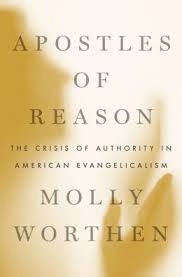
Molly Worthen of the University of North Carolina—Chapel Hill discussed her latest book recently with Tiffany Stanley of Religion & Politics.  The interview is sprinkled with gems that make me look forward to reading Worthen’s new book, Apostles of Reason: The Crisis of Authority in American Evangelicalism.

apostles of reason

Of course, for those of us interested in the intersection of conservative politics and American education, the meanings of “evangelical” are always of intense interest.  Controversies over sex education, prayer in schools, and creationism often feature conservative Protestant evangelicals as main players.

What does it mean to be “evangelical?”  In this interview, Worthen suggests three central questions that define the boundaries of the evangelical experience.  As she explains them,

First, how do you reconcile faith and reason? How do you maintain one coherent way of knowing? Second, how do you become sure of your salvation? How do you meet Jesus and develop a relationship with him, to use the language that some evangelicals prefer. And third, how do you reconcile your personal faith with an increasingly pluralistic, secular public sphere?

Worthen also suggests some useful insights into the complex interaction between evangelicalism and education.  For example, how does the historically defined divide between white and black evangelicals play out in schools?  As Worthen puts it,

If you really grilled black or Latino Protestants on this question [of creationism], many of them would say, “I prefer the Genesis narrative to Darwin’s account, but do I get worked up about it? No. I’m more concerned about educational opportunities for my kids and more concerned about structural injustice.”

And of creationists in general, Worthen hits on the deeper intellectual divide at the heart of the evolution/creation trenches.  “I think it’s a mistake,” Worthen told Religion & Politics’ Stanley,

to understand creationists as “anti-science,” at least if we want to understand how they see themselves. The reality is that the creationist movement comes out of a tradition of Biblical interpretation that understands itself as deeply rationalist, deeply scientific, that rests on the premise that God’s revelation is all one, that God is perfect and unchanging, and therefore his revelation must be perfect and unchanging too. Our two modes of encountering his revelation, in scripture and in the created world, cannot contradict each other. . . . To understand reality accurately, they say, you must take as your founding assumption the truth of God’s revelation. I think that is crucial for understanding the frame of mind of creationists and how they view their project.

Of course, as Dr. Worthen knows, it meant very different things to assert this “creationist” way of knowing in 1877 than it did in 1977.  As she points out, one of the main features of the American evangelical experience has been a profound and continuing tension between the claimed authority of religious leaders and that of the wider secularizing society.

In schools, this evangelical “crisis of authority” has often played out as a continuing tension between a lingering desire to assert Protestant authority over “our” schools and a lamentation that “God has been kicked out” of American education.

One of the continuing dilemmas of religious historians has been to reconcile the mixed bag of evangelical intellectual life.  On one hand, American evangelicalism has included many of the great thinkers of the American tradition.  On the other hand, it has included in its big revival tent some of America’s most fervently anti-intellectual personalities.  I’ll look forward to reading in more detail about the ways Worthen wrestles with these perennial questions.

Creationism in Texas: A Foreshortened History

Read it.  It’s good.  But be warned: this story has a fatal flaw.

Brentley Hargrove’s history of the Texas textbook wrangles is a helpful introduction to the recent round of textbook fights in the Lone Star State.

In the pages of the Dallas Observer, Hargrove introduces readers to the recent history of creationist influence in the selection of Texas science textbooks.  He offers the backstory of review-board members such as intelligent-design proponent Raymond Bohlin.

Hargrove takes the story of the Texas Textbook Two-Step back to the 1970s, when self-appointed watchdogs Mel and Norma Gabler wielded outsize influence on the adoption of books.

He describes the rise to educational power of creationist dentist Don McLeroy and the board membership of theologue Cynthia Dunbar.

This story is a must-read for everyone interested in today’s culture wars over education, not just in Texas but around the nation.  It joins films such as The Revisionaries and documentaries such as the Long Game in pointing out both the peculiarities of educational politics in Texas and the broader meanings Texas school politics has for all of us.

But as a historian of these school battles, I must protest against the foreshortened history Hargrove describes.  He gives a nod to the long history of cultural battles over education.  He mentions the nineteenth-century Bible wars that rocked America’s cities.  But then he skips from 1844 to 1961.  He leaves out the formative period of today’s educational culture wars.

As he puts it, since the nineteenth century,

the fear of secularism and modernity remains as potent as ever. Yet it wasn’t until the Gablers came along that this fear took shape in Texas and assumed power.

Now, that’s just not true.  I understand Hargrove is interested in the way these battles have developed over the past fifty years.  But the way they did so was decisively influenced by earlier generations of Texas activists.

To be fair, Hargrove’s historical myopia is widely shared.  In his Observer article, he quotes prominent sociologist William Martin.  “The Gablers,” Martin told Hargrove, “were the first people to have taken this on in such as systematic way.”

Even if we make allowances for the contemporary interests of journalists and sociologists, this sort of misrepresentation of the history of Texas’ school battles can’t be given a pass.

The tradition of conservative activism in which the Gablers, McLeroy, Bohlin, and Dunbar take part has direct roots in the 1920s battles in Texas and elsewhere.

As I argue in my 1920s book, anyone with even a passing familiarity with Texas history will recognize the historical importance of J. Frank Norris, for example.  In the 1920s, Norris established the activist precedent that later conservatives followed.  Norris fulminated against the directions of 1920s public schools in ways that McLeroy, Dunbar, and the Gablers would have appreciated.

And he had even more political pull.  In the 1920s, though a state-wide law banning the teaching of evolution failed in the Texas legislature, the governor ordered textbook publishers to remove any mention of evolutionary science from the state’s textbooks.

All well and good, you might say.  But does that pre-history have anything to do with today’s textbook fights?  If we want to understand the current moment, do we really have to go so far back?  Isn’t it enough to look to the Gablers and start there?

The school fights of the 1920s are of interest to more than just nitpicky academic historians like me.  Even if we want to start with the Gablers, we need to understand the formative school battles of the 1920s.  Mel Gabler was ten years old in 1925.  The content and structure of the schools he attended was decided by the activism of pundits such as J. Frank Norris and the pusillanimity of politicians such as the Governors Ferguson.

It was in the 1920s that America first battled over schooling in the terms that have remained so familiar ever since.  The issues and positions laid down in the 1920s have become the durable trench lines in American education.

As Gabler biographer James Hefley described, by the 1960s the Gablers had become

the cream of self-reliant Middle America.  They lived by the old landmarks, took child-rearing seriously, supported community institutions, sang ‘God Bless America’ with a lump in their throats, and believed that the American system of limited and divided governmental power was the best under the sun.

How did they get to be that way?  How did they become so confident that their vision of proper schooling and society must be fought for?  The Texas the Gablers loved had been defined by the activism of the 1920s and succeeding generations.  The vision of proper education that fueled the self-confident activism of the Gablers had been established as such in the controversies of the 1920s.

If we really want to understand what’s going on today, we need at the very least to acknowledge the longer history of these issues.  We need to understand that today’s fights grew out of earlier generations, and those earlier generations did not just spring up full-grown from the Texas soil.


Keep Your Kid Conservative

Watch out!  Going to school might ruin a perfectly good conservative child.

That’s the message this morning from pundit and school-founder Dennis Prager.

In the pages of National Review Online, Prager gives conservative parents advice about how to keep their kids conservative.

The danger is clear, Prager warns.  Those who believe in “traditional American values” must fight a “war” with “the media and the schools” for control of their children’s minds.

Kids must be told repeatedly and explicitly about the propriety of conservative ideas.  Not only that, they must be intellectually inoculated against the sorts of left-wing propaganda they will be subjected to in college.  One way to do that is to get high-schoolers to spend some time in the world of work before college.  By seeing a slice of the real world, young people will be protected from the drivel that passes for academic thought these days, Prager claims.

Another option is to have young people spend a year or so after college studying their faith.  After all, he says, leftism itself is an influential faith on college campuses.  Students who are grounded in their own religious traditions will have a better chance of resisting the siren call of college leftism.

In general, Prager writes, young people who are taught character, not given a false sense of “self-esteem,” have the best chance to remain sensibly conservative.

Overall, Prager tells conservative parents, don’t fret.  “It is not all that hard,” he says, “to produce a son or daughter able to withstand left-wing indoctrination.”  It just takes some doing.


Obamacore = Ku Klux Klan

We’ve seen this before, warns Robert Morrison of the Family Research Council.

The Common Core State Standards, which Morrison calls “Obamacore,” represent just another misguided and dangerous attempt to centralize America’s schools.

Centralization has long been a goal of education reformers.  Morrison correctly points out that the Ku Klux Klan successfully banned all private education in Oregon during the 1920s.  Though the Oregon law was blocked by the US Supreme Court, the goal was clear.  The Klan wanted to centralize school, to force all children to go through a government-directed educational program.

Back then, Morrison writes, the US Supreme Court had a better sense of the dangers of educational centralization.  These days, the bureaucratizers and centralizers have a freer hand.  It is up to religious conservatives such as those at the Family Research Council to resist.

“Under ObamaCore,” Morrison warns,

the elites in Washington shall direct the destinies of our children.

This is unwarranted. It will ultimately fail, just as the fifty-year record of federal usurpation of state and local authority in education has failed.

It necessarily involves indoctrination of all our children in federally-mandated curricula. We know what this means.

Strong stuff.  As we’ve noted before, conservatives as a whole are not united in their opposition to the Common Core State Standards.  Perhaps potent rhetoric like this will tip the scales.