What Do Conservatives Want from Public Schools?

We often hear of conservative attacks on this or that curricular item in public schools.  Conservatives want sex ed out.  They want evolution out.  They block this and they block that.

But many conservative school activists also have a strong idea of the kinds of things they want IN public schools.  The Texas Freedom Network Insider shared recently a review form from the Texas State Board of Education.  The questions asked by the SBOE tip readers squarely in the direction of conservative, traditionalist textbooks.

These Texas conservatives might take a page from their grandparents’ playbook.  In the 1920s and 1930s, conservative activists promoted their own textbooks in America’s public schools.  Tired of seeing books that bashed capitalism or traditional family values, conservatives in those decades took matters into their own hands.

The tactics from today’s conservative activists seem more modest.  As the TFN Insider points out, the review form used by the Texas SBOE asks reviewers to respond to “politically loaded” questions such as the following:

“Does this lesson present positive aspects of US heritage?”

“Does this lesson present unbiased materials and illustrations?”

“Does this lesson present generally accepted standards of behavior and lifestyles?”

“Does this lesson promote respect for citizenship and patriotism?”

“Does this lesson promote the free enterprise system?”

These questions hint at the kinds of things conservatives would like to see in textbooks and classroom materials.

Conservatives in Texas might find inspiration from their grandparents’ generation.  There’s nothing new about conservative hopes for textbooks that promote capitalism, patriotism, traditional lifestyles, and a good attitude about the USA.  But in the past, conservative activists did more than just ask reviewers to look for such things.

In the 1920s, for example, the American Legion sponsored a new textbook that promised to give students a patriotic yet accurate story of America’s roots.  When Charles Hoyne’s The Story of the American People appeared in 1926, conservatives lavished praise upon it.  The Klan-backed governor of Oregon, Walter M. Pierce, sent Hoyne a gushing letter.  Pierce called the volumes “the finest history of early America that we have ever had.”  Other conservatives agreed, calling the book a blessing to “the loyal and liberty-loving people of our country” and books that defended “the spirit of American patriotism.”

Unfortunately for Hoyne, for the American Legion, and for the conservatives who jumped to embrace the new textbooks, other readers had different opinions.  A Legion-appointed review committee found the books to be full of errors.  Writing in the pages of Harper’s, critic Harold Underwood Faulkner called the books “perverted American history.”
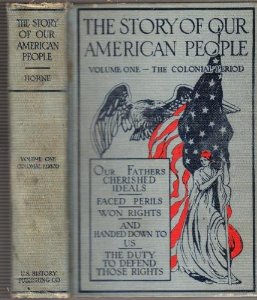
Image Source: Amazon.com

Image Source: Amazon.com

In the end, despite high hopes for schoolbooks that would finally put a positive—but accurate—spin on all things American, the Legion withdrew their support and Hoyne’s books went nowhere.

The National Association of Manufacturers had much more success producing capitalism-friendly school materials.  Starting in 1939, NAM sent educational literature and classroom posters to roughly 17,000 classroom teachers and school administrators.  Being savvy businessmen, the leaders of the NAM wanted to know if this investment was a good one.  They wanted to know if the pamphlets made people like capitalism better.  To find out, they hired pollster Henry Abt to survey the schools.  Abt reported that most of the teachers considered the NAM-produced books “primarily as an informational service; an authoritative source of economic and social data.”  From the NAM’s perspective, nothing could be better.  Students read NAM’s paeans to capitalism and took them as authoritative social science.

Perhaps the book reviewers in Texas might take a page from the lessons of the 1920s and 1930s.  If conservatives really want to see more conservative textbooks, they might have to publish them themselves.  Of course, they’d want to watch out for the Hoyne trap.  Any classroom materials must be more like the slick, glossy pamphlets and posters distributed by the National Association of Manufacturers.  Anything else will end up just an embarrassment.


Charter Schools Teach Fundamentalism

Can fundamentalist Protestant educators change their packaging and call their new schools charters?

Leaving Fundamentalism’s Jonny Scaramanga argued recently in the pages of Salon that some fundamentalist leaders are doing just that.

As we’ve seen, publicly funded charter schools elsewhere have been accused of simply re-branding religious schools and siphoning off public money.

Scaramanga, a product of the fundamentalist Accelerated Christian Education curriculum and now its fiercest critic, uncovered Texas charter schools in which ACE’s rigid fundamentalist materials are paid for with taxpayer dollars.

Check out the full article.  Scaramanga describes ACE-derived textbooks that promote skepticism toward mainstream evolutionary science.  He found evidence that ACE-influenced charter schools guided students by the Ten Commandments but called them non-religious “success principle[s].”  Most headline-grabbing, the ACE-ish books blamed evolution for the rise of Hitler.

Scaramanga even cites yours truly as a source, so you know his article’s gotta be good.


A Conservative Runs on Charter Schools

How can a Republican get votes in the Big Apple?  Mayoral candidate Joe Lhota thinks promises of charter schools will help.

In a recent advertisement analyzed in the New York Times, Lhota critiques Democratic candidate Bill de Blasio for threatening to charge rent to charter schools.  Lhota, in contrast, promises to double the number of such schools.

Why?  According to the ad, charter schools promise the best educational hope for “inner city” kids.

Charter schools also represent the first best hope for many conservative educational activists.  The free-market conservatives at the Heritage Foundation, for example, insist that expanding the number of charter schools will expand educational opportunity for all.

Lhota does not seem to support charters in order to prove his conservative credentials, however.  Just the opposite.  Charter schools, Lhota claimed, were the real “progressive education approach.”  Lhota insisted that his support for charters proved that he was the real educational progressive in this race.  “If you oppose charter schools,” Lhota told the Association for a Better New York, “and the programs and the other choices that are available for minorities and inner city children, and children of immigrants, you cannot call yourself a progressive.”

That’s educational politics for you: the more conservative mayoral candidate endorsing a school program beloved by conservatives and calling it the progressive choice.


Battle Map!

Where have Americans fought over public schooling?

The libertarian Cato Institute has put together a clickable Battle Map to help readers locate educational controversies.  Readers can search by state, by year, or by the type of conflict.  The Cato folks broke down school battles into such categories as curriculum, freedom of expression, gender equity, human origins, moral values, racial/ethnic diversity, reading material, religion, and sexual diversity.

Of course, the folks at Cato aren’t just providing a nerdy public service for those of us interested in studying cultural controversies.  The point of this exercise, from Cato’s perspective, is to prove that public education “divides [people], forcing them into conflict over whose values and histories will be taught, and whose basic rights will be upheld . . . or trampled.”

To this outsider, Cato’s argument seems a little strained.  After all, just because many family dinners turn into shouting matches, does that prove that dinner is a bad thing?


Libertarians and the Common Core

What’s a libertarian to do?

Will new Common Core State Standards exert a deadly centralizing impulse on all types of school?  Will independent options winnow down as private schools seek to prepare their students for new standardized tests?

That’s the worry articulated recently by JD Tuccille in the pages of libertarian flagship Reason Magazine.

Tuccille pointedly refutes the canard that the new standards are some sort of sinister conspiracy to agglomerate educational power in the hands of distant federal agents.  The problem, he writes, is more banal.  New tests aligned with the standards will likely exert pressure on independent schools to match their curricula to those of the public schools.  As he concludes,

Under the circumstances, “Waldorf,” Montessori,” “traditional academy” and “IB” risk becoming Coke vs. Pepsi brand names peddling similar products—assuming they can even survive the transition costs.

Private and religious schools, while mostly exempt from legal mandates to adopt Common Core, are also under pressure to toe the line. Some that accept tax-funded vouchers are required to adopt the standards to continue in such programs. Others find that non-Common Core-compliant textbooks are becoming difficult to find. And the biggest motivation might be the move by college entrance exams to test for mastery of Common Core standards.

Of course, as Tuccille notes, parents can always exempt themselves and their children from this pressure by opting out of institutional schooling entirely.  But for those folks who value free choices in education, it does seem palpably evident that any success for standardization will represent a narrowing of those choices.


A Conservative Takedown of Testing and Charters

Progressive education folks foam at the mouth when they talk about the new power of testing and charter schools.  Will conservatives join them?

We see recently a furious conservative condemnation of the current education “reform” mania. [The essay originally appeared last July in Crisis.]

Veteran history teacher Steven Jonathan Rummelsburg offered a conservative rationale for opposition to the Michelle Rhee/Waiting for Superman school reform crowd.

Those folks want to make public schooling more responsive.  They argue that schools should have more wiggle room to fire weak teachers; charter schools should be able to slash red tape to provide effective education for any child left behind.  Such reformers often also promise to hold teachers and schools “accountable” by mandating rigorous testing of students.  Such tests, the argument goes, will force teachers and schools to pay attention to the academic performance of all their students.

Progressive critics have teed off on this reform ideology for a while now.  Some have warned that charter schools are nothing but a capitalist scheme to siphon money away from public education.  And the mania for testing, progressives warn, represents a perversion of the promise of American public education.

Rummelsburg gives a different rationale for this same suspicion.  Placing hope in the panacea of charter schools, Rummelsburg argues, is a mistake.  Waiting for any kind of public-funded superman, Rummelsburg insists, misses the point.  The real responsibility for education must remain with the family, not with the government.  And standardized testing reduces the true goal of education to a series of bubbles filled in.

Rummelsburg doesn’t pull any rhetorical punches.  As he puts it,

Waiting for “Superman” illustrates how severely broken public education is and brings up the real issues of school reform and the voucher system. However, the “magic bullet” of charter schools is not the answer. A transfer of money and power from the dreadful public classrooms to charter schools is a bit like transferring the administrative duties of running Nazi death camps from the Germans to the Belgians, yet still the need for reform is beyond dire. However, reform is futile if the goal remains a high standardized test scores.

Ouch.  Will more conservatives join Rummelsburg’s condemnation of the current reform agenda?


Vouchers: The Path to the White House

How can a conservative candidate get elected in 2016?

According to a recent story in the Weekly Standard, the conservative path to 1600 Pennsylvania Ave. may be paved with school reform.

Image Source: Governor Jindal's webpage

Image Source: Governor Jindal’s webpage

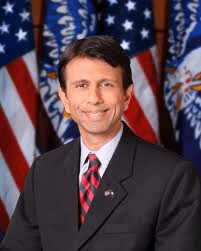
Louisiana Governor Bobby Jindal and former Florida Governor Jeb Bush stood side by side at a Washington press conference to denounce federal interference in conservative school reform efforts.

In Louisiana, that has meant a Department of Justice crackdown on the state’s aggressive voucher program.  The federal government has warned that Louisiana’s voucher system may violate racial desegregation laws.  For a while now, left-leaning pundits have warned that the voucher scheme swipes public school funding and gives it to conservative religious schools.  Diane Ravitch has concluded that Louisiana’s privatization program will drive a stake through the heart of quality public education.

Such criticisms don’t deter Governor Jindal.  He has insisted that the program represents the best educational hope for low-income students in his state.

Michael Warren of The Weekly Standard suggests vouchers may also represent Governor Jindal’s best hope for higher office.  As Warren notes,

the Obama administration’s attempt to thwart the voucher program has also been a gift for Jindal, who may run for president in 2016. Since the DOJ filed its lawsuit on August 18, Jindal has been campaigning loudly and publicly against the suit and, more broadly, for conservative education reform.


Decadence and the Fall of American Public Education

Things today ain’t as good as when I was young.

That’s the central notion, the vaguely articulated impulse, the often-unexamined presumption behind a good deal of conservative educational rhetoric.  Schooling these days has declined from glory days of the past.

In an essay in The American Interest, Charles Hill warns of the real consequence of decadence in American life.

As Hill notes, the idea of civilizational decline and fall is an old one.  Yet Hill insists that it retains explanatory power; Hill makes the case that twenty-first century America is sliding into a dizzying downward spiral.  Everything from technologically induced “screen culture” to awkward proletarianization of elites can be better understood as part of a lamentable decadence.

As Hill concludes,

Around the turn of the 19th to the 20th century, “decadence” arose as a romantically thrilling elitist fashion, providing a “sweet spot” in which a privileged, self-selected class could revel in dissolute practices while applauding their own cultural superiority. At the turn of the 20th to the 21st century something akin has emerged—call it a democratized form of decadence—among a far wider swath of the population, with the support of government and approbation of the cultural elite. Many observers have gazed upon such phenomena, then and now, and have seen mainly the sources of shifts in the art world. We move from the 1913 New York Armory Exhibition to mainstreaming of “street art” a century later rather effortlessly. But if what is at stake is world order, with national character and identity as its foundation stone, and democracy as the procedurally and practically most efficacious political form, then the fate of the art world may be the least of our concerns.

The essay is worth reading in its entirety.

Of particular interest here are its implications for American education.  Hill makes a few points about this himself.  For one thing, he notices the disturbing intellectual ramifications of “screen culture” especially among the young.  A generation accustomed to viewing people on computers, tablets, TVs, and phones, able to view without being viewed, Hill argues, adds a “new dimension” to old ideas about decadence.  Weaned on screen culture, Hill says, young people “can become oblivious to others.”

In a nuts-and-bolts way, Hill notes the way our current decadence has squeezed out learning in favor of training.

Of more consequence than the specific educational ramifications argued by Hill is the sense of decline Hill articulates.

As I’ve argued elsewhere, it is nearly impossible to understand the conservative impulse in American educational thought and activism without grasping the power of the idea of decadence.  Leading conservative intellectuals—even ones from very different backgrounds—have all grounded their educational philosophy on a notion that the educational system in the United States has ground down in a systematic pattern of decline.

In his landmark work Capitalism and Freedom, for example, free-market theorist Milton Friedman insisted that American public education entered a noticeable period of decline after the American Civil War when the government “gradually” (page 85) stumbled into the near-total “‘nationalization,’ as it were, of the bulk of the ‘education industry’”(page 89).

Conservative education leader Max Rafferty agreed about the decadence, but argued for a different time and cause.  The problem really began, Rafferty believed, in the 1930s, when “Dewey-eyed” reformers injected a deeply flawed notion of education into the American cultural bloodstream.  Instead of learning heroic truths and facing moral challenges, students in post-1930 “life-adjustment” classrooms only learned to revel in their own inability to determine right from wrong.  Such decadent teaching and learning, Rafferty argued in his 1963 book Suffer, Little Children, produced a weak generation, unable to combat the existential threat from “a race of faceless, godless peasants from the steppes of Asia [that] strives to reach across our bodies for the prize of world dominion.”

Though he viewed the goals of education very differently from Rafferty and Friedman, creationist leader Henry Morris agreed that public education had declined dramatically.  The root of the problem, Morris argued in his 1989 book The Long War Against God, lay in a one-two punch of Unitarianism and secularism.  The first blow had come in 1869, when Unitarians took over Harvard University.  Their example led American education away from its roots in what Morris considered to be authentic Christianity (pages 46-47).  The second decisive weakening came later, with John Dewey’s rising influence in public education.  That influence, Morris argued, led public schools away from religion into a markedly anti-religious humanism.

These examples could be multiplied nearly endlessly.  William J. Bennett, for instance, has argued with his Index of Leading Cultural Indicators that American culture as a whole—especially including its public schools—has declined terrifyingly since 1960.

It is taken as an article of faith among many conservative educational thinkers and activists that education today is worse than it has been.

This is more than the common griping about “kids these days.”  This is more than the old story about how when I was young I had to walk to school barefoot, through ten feet of snow, uphill both ways.

To understand conservative thinking about education, we have to understand this assumption of decadence.  Not many activists articulate this sentiment as clearly as the intellectuals described here.  Not many offer the careful examination of the meanings of decadence expressed by Charles Hill’s recent essay.

But behind many of the policies promoted by educational conservatives lurks this ubiquitous sentiment: things today are worse than they have been in the past.  Schools today are worse than they have been in the past.


It’s Your Own Fault

It’s your own fault if you’re bored this fall.

Binghamton University is hosting some events that will certainly be of interest to all ILYBYGTH readers.

For those in the area, there will be some great ways to think and discuss the possible meanings of American educational conservatism.

I’ll keep the list updated, but so far there are three talks of note.  All of them are free and open to the public.

1.) September 11, noon-1:30, IASH conference room, Library North 1106: Adam Laats, “‘Democracy’ and American Education, 1930-1960.”

Yours truly will be presenting some ideas from my current book about American educational conservatism in the twentieth century.  Specifically, I’ll be talking about the ways conservative activists in groups such as the American Legion framed “democracy” in strikingly different ways than did progressive educational thinkers such as John Dewey.  The talk will be part of the series of faculty fellows’ talks at Binghamton’s Institute for Advanced Studies in the Humanities.

2.) September 24, 5-6:15, specific topic TBA: Mario Rios Perez.

I’m not sure what he’ll be talking about, but Professor Perez (of Syracuse University) has done some great work with the history of schooling in Chicago.

3.) November 18, 5:00: Warren Douglas Allmon, “Creationism in 2013: Not in the Headlines but Never Far Away.”

Professor Allmon will be talking as part of the EVoS series of Monday seminars.  He is a paleontologist at Cornell, our neighbor to the north.  When I heard he was coming to our friendly campus, I looked up his sort-of recent article about the culture of creationism in Evolution: Education and Outreach.  In that article, Professor Allmon makes the powerful point that resistance to evolution is about more than just the knee-jerk “religion vs. science” clichés that we hear so often.  He argues that Americans’ resistance to evolution comes from five distinct categories.  As Allmon argues, “this multiplicity of causes is not sufficiently appreciated by many scientists, educators, and journalists, and the widespread rejection of evolution is a much more complicated problem than many of these front-line practitioners think it is.”

Hear hear!  Can’t wait to hear his talk in November.

Hope to see you there…


Creationism in the Business World

Forbes Magazine is not known for its religious fervency.

Yet, thanks to the all-seeing eye of the Sensuous Curmudgeon, we see that Forbes has welcomed to its pages some creationist commentary.

Just as we saw last month an odd creationist duck with Virginia Heffernan’s “postmodern creationism,” we now see a surprising sort of CPA creationism.  Forbes commentator Peter J. Reilly describes the tax difficulties of controversial creationist celebrity Kent Hovind.

This is not the first time Reilly has commented on Hovind’s tax dilemmas for Forbes readers.

But in his most recent column, Reilly does more than cover the Hovind tax story.  In his recent contribution, Reilly admits, “I’m probably something of a creationist myself.”  Though Reilly hedges a little bit by putting himself “at the far left of the creationist spectrum,” it is intriguing to see “creationism” embraced in this way.

Of course, conservative politicians have long gone to great lengths to support creationism.  Marco Rubio’s recent waffle in his GQ interview is just one example.

But it has been less common for conservative writers and commentators outside of the circles of evangelical Protestantism to embrace creationism.  Non-Protestant conservative intellectuals often maintain a polite silence on the issue, or assert a bland sort of openness to the idea of divine creation.

Reilly’s statement, like Virginia Heffernan’s, seems more provocative.

Could it become fashionable for pundits to embrace “creationism” even if they don’t represent the stereotype of “fundamentalist” Protestant believer?
