Creationism Comes to College Campus

Quick: what university would you think most likely to host a big creationism conference? Bob Jones? Liberty? Cedarville? How about Michigan State?

Viviane Callier of the American Association for the Advancement of Science’s Science Insider reports that, yes, Michigan State will be hosting a big creationist conference this weekend. The Origin Summit will host four speakers about such issues as the Evolution-Hitler connection and the weakness of the Big Bang Theory. The organizers have invited MSU philosopher Robert Pennock to debate and targeted MSU’s Richard Lenski. So far, Lenski and Pennock have ignored them.

Powered by the Gish Gallop?

Powered by the Gish Gallop?

Pennock, also known as “Darwin’s Border Collie” (get it?), has been a leading anti-creationist voice in the academy. Most famously, his expert testimony in the Dover Intelligent-Design case tore apart the scientific pretensions of ID theorists. And Lenski has attracted attention for his long-term evolution study using E. Coli bacteria.

It seems that the organizers of the Origin Summit targeted Michigan State as the home of such prominent anti-creationists. After all, one of the four morning workshops promises to explain specifically how Lenski’s research will bear no fruit.

But that’s not what the organizers will tell you. At least, it’s not what they told Viviane Callier. Mike Smith, the group’s executive director, said they planned to host similar meetings at pluralistic campuses nationwide. The target, Smith explained, is the student body. Many of them may never have heard the message of creationism. “Once students realize they’re created beings,” Smith told Callier, “and not the product of natural selection, they’re much more open to the Gospel, to the message of God’s love & forgiveness.”

This is what Smith’s group describes as their “backdoor strategy.” Too many students, the group warns, have been “brainwashed with the Darwinian dogma while the state refuses any mention of Creation whatsoever.” Their plan is to let students hear the creation gospel, hoping that “many, for the first time ever, [will discover] that the Bible is true.”

The question everyone’s asking is this: How will Michigan State scientists respond? Should they inform students of the scientific baselessness of creationist claims? Or should they use humor to deflate the conference? So far, the MSU community has decided that the best response is no response.

Lenski hopes the “summit” will turn out to be nothing more than “another forgettable blip in the long history of antiscience, antievolution screeds.” And best of all, the university itself has welcomed the meeting. As one official put it,

Free speech is at the heart of academic freedom and is something we take very seriously. Any group, regardless of viewpoint, has the right to assemble in public areas of campus or petition for space to host an event so long as it does not engage in disorderly conduct or violate rules. While MSU is not a sponsor of the creation summit, MSU is a marketplace of free ideas.

Hear, hear! There is nothing violent or threatening about this meeting. There is no reason any pluralist university should not welcome such dissenting ideas into their communities.

Only Religious Colleges Can Still Do It

Higher-ed types have a deskful of crises to pick from.  There’s the sexual-assault crisis, the student-debt crisis, the MOOC crisis.  One of the biggest of these crises doesn’t seem to attract its share of attention, though it threatens a bigger transformation of higher education than any of the rest.  And when it comes to this crisis, Christopher Noble of Asuza Pacific University suggests that only religious college might have the solution.

The crisis we’re talking about is the crisis in the humanities.  As Noble notes in the Chronicle of Higher Education, fewer and fewer students are signing up as English majors, or philosophy majors, or history majors.  The reasons aren’t too hard to find.  These days, a college degree is an increasingly expensive document.  And young people want to make sure that their work will turn into a well-paid job.  That’s not a guarantee with an English degree, the way it might be with a chemistry degree or engineering degree.

But Noble offers a ray of hope.  Many secular students these days are fully literate in a verbal culture, not a print culture.  For such students, Noble reflects, the humanities might rightly seem “obsolete.”  But this is not true of conservative religious students.  Those students, Noble argues, are hard-wired to embrace the humanities.  As Noble puts it,

Suppose . . . that there existed a large group of middle-class and upper-middle-class prospective customers in the educational marketplace who shared an intense prior commitment, consciously or not, to the obsolete textual worldview. That group of customers already believes, before ever setting foot in a classroom, that a ragamuffin set of ancient texts, a collection of dissonant poetic voices in unfamiliar languages, holds the key to human meaning.

Suppose further that those customers come to learn how much humanistic study will improve their facility with ancient texts. Envision consumers for whom hermeneutical skill and ancient wisdom, rather than technical expertise, constitute the nonnegotiables of a college education. Imagine a “people of the book” in the era of the book’s demise. Such is the condition of observant Muslims, Jews, and Christians in developed countries today.

Could it be true?  Could conservative religious colleges provide not only a religious haven, but a haven for the humanities?  If so, as Professor Mark Bauerlein of Emory University has pointed out, we’ll have to recognize the painful historical irony.  Bauerlein concludes with some satisfaction that many secular humanities professors are in fact

aggressively secular,  hostile to any expression of faith outside church and home. . . . If the humanities spring from a religious impulse, or at least need it to thrive, then the irreligious, irreverent postures of humanities professors are suicidal.

Certainly, following this logic, it seems that secularizing scholars might have eaten their own tails.  But is that really the case?  Aren’t there plenty of wholly secular reasons why some students will continue to embrace the humanities?

In my case, my interest in vigorously secular thinkers led me backwards.  Because I wanted to understand Sartre, I had to read Heidegger.  And because I wanted to understand Heidegger, I went back to Hegel.  And Hegel didn’t make much sense until I had spent time with Kant, Descartes, and Spinoza.

In my case, at least, none of my appetite for studying the humanities came from a religious impulse.  Not consciously, at least.  Am I the odd duck?  Or are Bauerlein and Noble simply hoping against hope for some ratification of their love for conservative religious colleges?

Rubio’s College Fix: Make Students Profitable

Vouchers. Charters. Conservatives these days like to offer “market” solutions to school problems. In the pre-run-up to the 2016 presidential contest, Florida Senator Marco Rubio is offering a market fix for college students: Sell shares in yourself.

Of course, not every conservative is a free-marketeer. “Traditionalist” conservatives (for good examples, check out the Imaginative Conservative or the American Conservative) decry the dehumanizing effect of ruthless commodification. But there has been a long tradition in these United States of tying traditional values to an apotheosis of the free market.

In education, the most influential voice for marketization has been the late Milton Friedman. As he remembered in the 1980s, when he started advocating vouchers, it was “far out of the mainstream.” But by the twenty-first century, such market ideas had become dominant. Parents should all have the right to choose the right school for their children, Friedman insisted. The only reason they could not, he wrote, was because self-interested teachers’ unions had seized control of education and forced an “excess of conformity.”

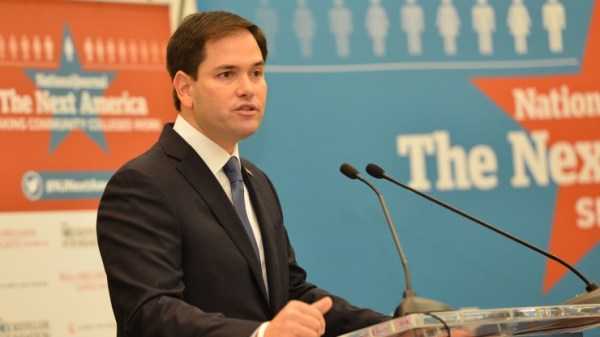
Rubio’s plan expands on this principle. In a recent talk organized by the National Journal, Rubio worried that the “American dream” of college education has become unaffordable for many. The danger, Rubio warns, is an increasing opportunity gap between those who have advanced education and those who do not. His plan will help narrow that gap by making it possible for everyone to go to college. Our “new economy,” he says, is still working with a higher-ed system built for the “old economy.”

Sell yourselves, students...

Sell yourselves, students…

Tuition costs have shot up far faster than the rest of the economy. Students from less-affluent backgrounds have been forced out of college, or saddled with impossibly huge debt burdens. Colleges are getting fat on these hefty tuition bills, largely financed by federal student loans. And, according to Senator Rubio, many “high-skilled, high-paying industries suffer from a shortage of labor.”

His solution? Among other ideas, Rubio wants students to sell shares in themselves. Instead of borrowing a fixed amount, students could promise investors, say, four percent of their earnings for ten years after graduation. Students might end up paying far more than they borrowed. Or they might pay less. But that is all part of the promise and peril of the market.

As Rubio notes, this will pusher higher education in “practical” directions. It will push students to pursue “the right degree, geared toward the right industry.” Not a lot of investors will jump at the chance to invest in a philosophy major. But students in “engineering, health services and education,” Rubio thinks, will be a good bet.

There are plenty of conservatives, I think, who would be aghast at this marketization plan. The purpose of education, many conservatives insist, is to humanize.

Rubio’s brand of conservatism is different. He wants to let the market work its magic.

Christianity Kicked Out of Public Universities

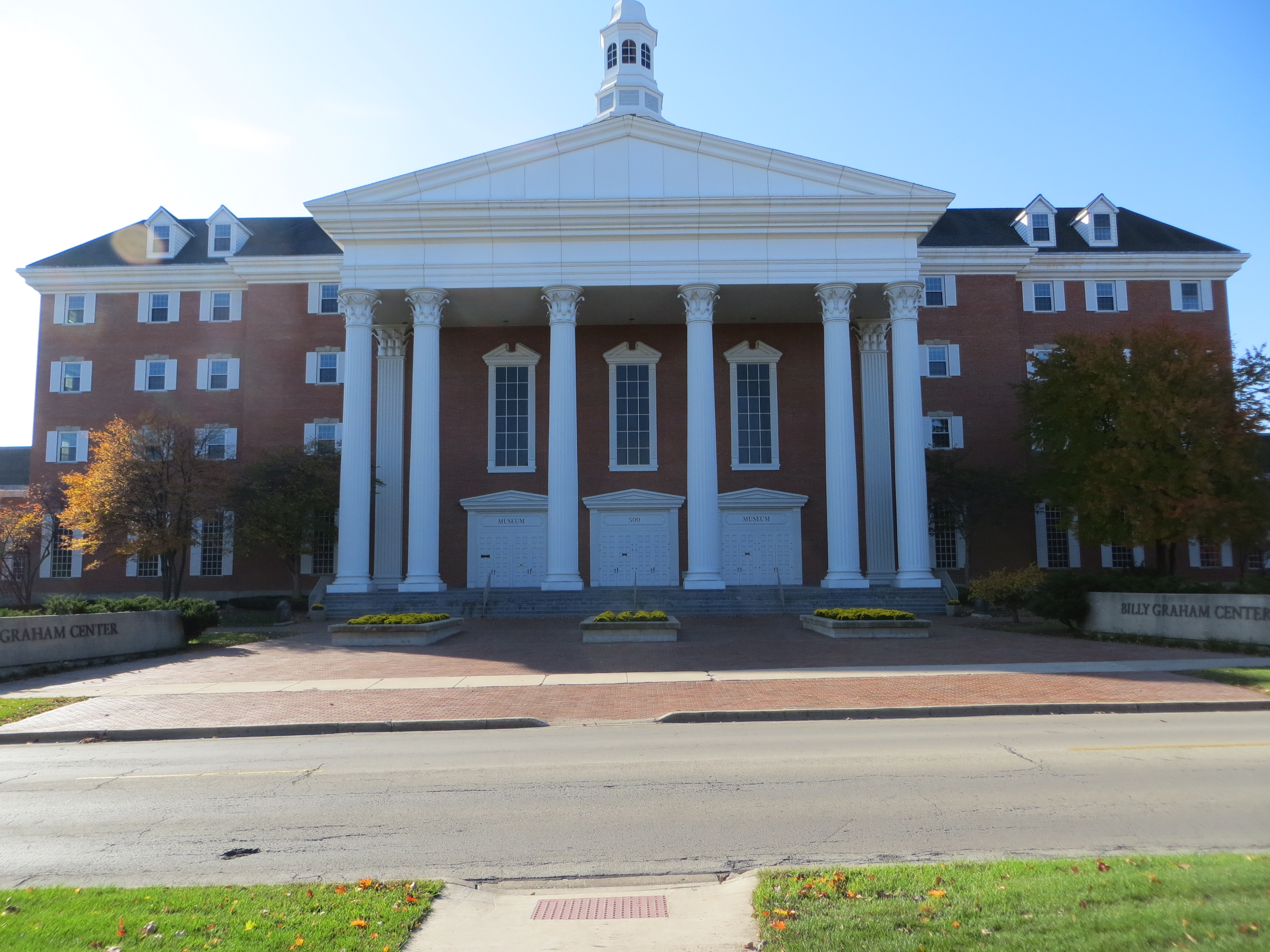
Ball State University doesn’t want any more attention. It has been the subject of a nationwide campaign by pundits who were shocked—shocked!—to hear that one professor spoke kindly of intelligent design. But my current work in the archives at the Billy Graham Center at Wheaton College shows me just how dramatically things have changed in the past fifty years.

You may remember the intelligent-design case. In mid-2013, Eric Hedin was accused of larding his class with religious content. The Wisconsin-based Freedom From Religion Foundation complained, and eventually Ball State’s president announced that religious ideas must not be taught as part of science classes.

Hedin’s use of religious themes became objectionable for two reasons. Mainly, observers complained that he was presenting religious ideas as if they were scientific. But Ball State University was also criticized as a public school using taxpayer dollars to favor one religious group.

According to Jerry Coyne, when Ball State President Jo Ann M. Gora made her announcement that religious ideas should not be taught as science, she emphasized both of these notions. Intelligent design should not be taught as science, Gora told the Ball State community, since

Intelligent design is overwhelmingly deemed by the scientific community as a religious belief and not a scientific theory. Therefore, intelligent design is not appropriate content for science courses.

But Gora specified that even if such religious ideas were taught as part of humanities courses, they must only be taught as ideas, not as dogma. That is, even non-science classes could not teach religious ideas as true, but only as history or literature. As Gora put it,

Discussions of intelligent design and creation science can have their place at Ball State in humanities or social science courses. However, even in such contexts, faculty must avoid endorsing one point of view over others. . . . As a public university, we have a constitutional obligation to maintain a clear separation between church and state. It is imperative that even when religious ideas are appropriately taught in humanities and social science courses, they must be discussed in comparison to each other, with no endorsement of one perspective over another.

Things have changed. As I’ve dug through the archives here at the Billy Graham Center, I’ve come across an intriguing historical coda to the Eric Hedin story. These days, professors at Ball State may not teach religious ideas as science. They may not even teach any single religious idea as history or literature.

But as late as 1957, Ball State University—like many other public universities—taught evangelical Protestantism explicitly and purposefully. Many public colleges, especially teachers’ colleges, had entire programs devoted to what was usually called “Christian Education.” In these courses, public-school students could learn the basics of evangelical proselytization, usually under the heading of learning to be “Sunday School” teachers. Most typically, students were women who hoped to begin or enhance their careers as part-time religious educators.

The current logo hints at this heavenly history...

The current logo hints at this heavenly history…

In some cases, today’s public colleges used to be religious or denominational schools. That doesn’t seem to be the case with Ball State. It claims to have always been part of the government system.

Not only did universities such as Ball State teach courses in spreading the evangelical Gospel to children, but they also accepted transfer credits from unapologetically fundamentalist seminaries. In my archival work, I’ve found several examples of students using their credits from the Winona Lake School of Theology to advance their degrees at public universities like Ball State and the University of Georgia. Even the state of California apparently accepted Winona Lake credits toward public-school teaching certificates.

At the time, Winona Lake School of Theology was a firmly fundamentalist summer school. It was going through an ugly separation from the Fuller Theological Seminary over Fuller’s alleged drift away from Biblical inerrancy. Now defunct, the Winona Lake school refused to go along as Fuller Seminary moved into a more ecumenical attitude.

And in 1957, teachers could use their credits from this religious school to complete their religious program in Christian Education at Ball State University. Though there is too much heated rhetoric about God being “kicked out” of American public education, this example shows us how things really have changed over the past decades.

In 2013, the president of Ball State had no problem announcing that her university must not favor one religion over another; as a public school it must not teach religion, though it can and should teach about religion. But as late as 1957, Ball State and other public universities found it unexceptional to teach entire programs in Christian evangelism. Ball State had no problem taking credits from a fundamentalist seminary, since both programs taught similar course content.

More evidence that we are not just replaying every old culture-war script. Things really have changed.

Hello, Wheaton!

Rolled into sunny Wheaton, Illinois last night to start my research at the fabled Billy Graham Center Archives. Located on the campus of Wheaton College, this archive is like nerd Disneyland. The collections are beautifully organized and intimidatingly expansive.

I'll be here all week...

I’ll be here all week…

What am I doing here? It’s the natural first stop for anyone interested in the history of conservative evangelical colleges. The collections offer two great things. First, Wheaton College itself has been a leading fundamentalist/ evangelical college since the 1920s. It enjoys a unique and uniquely influential history as a leader in the network of conservative colleges. As leading historian Joel Carpenter put it, in the 1920s

There was only one college of thoroughly fundamentalist pedigree . . . that was neither just half-evolved from Bible school origins nor still waiting for the ink to dry on its charter.

That school, of course, was Wheaton. For my current research, I’ll need to dive deep into the history of Wheaton itself. What was life like for students in different decades? For faculty? I also have some specific questions about interesting episodes. For instance, why did Wheaton kick out its fundamentalist president in 1939? Why did the board of trustees add in 1961 a line to the statement of faith that Adam and Eve were real, historical people? What did Wheaton’s version of the “free-speech” movement look like in 1964?

But these archives offer more than just a look at the history of Wheaton itself. Since the school was such an influential leader in the field of evangelical higher ed, its leaders kept in constant contact with other school leaders. In their correspondence, I’ll be digging to discover the issues that motivated school leaders across the entire network of conservative evangelical colleges. This will include prosaic issues such as admissions and accreditation, but also uniquely evangelical issues such as determining which schools remained orthodox and which threatened to slide into liberalism and modernism.

Best of all, decades of work by the archivists at the Billy Graham Center has created an invaluable collection of oral history interviews. Some of these are available online and I’ve been reading them during the past weeks. But many more are only here at Wheaton. In these interviews, alumni of Wheaton and the rest of the conservative evangelical college network remember what life was like at these schools in the 1920s, 1930s, 1940s, and more recently. Why did they decide to go to Wheaton? Or the Moody Bible Institute? Or John Brown College? Or a ‘secular’ public university? Many of these interview subjects offer unique perspectives on what college life was like.

With such a vast collection, I need to pace myself. There’s no way to take it all in during one short visit. Instead, I’ll see what I can discover and make plans to come back soon.


Bryan College: Creationism Déjà vu All Over Again

It’s all over but the shouting.  That’s the news from Bryan College.  Thanks to the ever-watchful Sensuous Curmudgeon, we see that Bryan College has settled its legal dispute with two of its professors.  The creationist courtroom drama may have been avoided, but we are left with one question: If this is part of a predictable pattern at conservative evangelical colleges, can we learn a better way to handle each new episode?

Why can't we all just get along...?

Why can’t we all just get along…?

Two Bryan College professors, Stephen Barnett and Steven DeGeorge, have settled their lawsuit with the school, according to the local newspaper.  Readers may remember that the school abruptly changed its statement of faith to insist that Adam and Eve did not descend from another species.  Faculty members had to make a tough decision: Could they agree to the newly explicit language about humanity’s origins?  Barnett and DeGeorge argued that it was not fair—nor even legal—for the school to impose such a decision on faculty.  It appears they have decided to drop the lawsuit, though the terms of this settlement have not been made public.

Why did Bryan’s leadership feel a need to make such a change?  They were in a tight spot.  As I’ve argued before, leading young-earth creationists such as Ken Ham are able to wield outsized influence on evangelical colleges.  Even the whiff of suspicion that a school has abandoned the true faith is enough to drive away students and their precious tuition dollars.  At Bryan—and I’m claiming no inside knowledge here, just a historian’s best guess—the leadership felt obliged to shore up its orthodox creationist bona fides.

This tension is nothing new at evangelical colleges.  Perhaps the most startling example of the deja-vu nature of the Bryan situation is an eerily similar case from Wheaton College in 1961.  In that case, faculty such as Russell Mixter hosted a conference on origins.  Whatever actually occurred at that meeting, rumors flew that Wheaton had opened itself to the teaching of evolution.  As a result, anxious trustees rammed through a change to the obligatory faculty creed.  From then on, faculty had to attest to their belief in “an historical Adam and an historical Eve, the parents of the human race, who were created by God and not descended from lower forms of life.”

Back then, Mixter signed.  He was more interested in the broad outlines of what he called “progressive creationism” than the details of the Garden of Eden.  But the nervousness of the leadership at Wheaton was palpable.  In addition to the change in creed, the school took out big advertisements in evangelical magazines such as Christian Life that trumpeted Wheaton’s continuing creationism.

The stories are so similar that it is hard to believe they are separated by over fifty years.  And they lead us to obvious questions: Why do evangelical colleges have such anxiety about their reputations as creationist colleges?  Why do leaders feel such a compelling need to publicize their continuing orthodoxy?  And perhaps most important, if these controversies are so predictable, why is there no better way to handle them?

As historian Michael Hamilton has argued about Wheaton, “Anxiety about constituent response hangs over virtually every decision the college has made since 1925.”  The same could be said for Bryan and every other school that relies on conservative evangelical families for its student bodies.

Each of these schools’ identities, after all, relied on the notion that they have been “safe” alternatives to mainstream schools.  At the more conservative Bob Jones University, for example, founder Bob Jones promised a different sort of college experience.  In 1928, just a few years after the school was founded, Jones promised,

fathers and mothers who place their sons and daughters in our institution can go to sleep at night with no haunting fear that some skeptical teacher will steal the faith of their precious children.

And even though Wheaton College was a very different sort of evangelical school, this central notion was the same.  In the 1930s, Wheaton advertised itself as a “safe college for young people.”

This pledge means more than just institutional window-dressing.  For conservative evangelical schools, the issue of orthodoxy looms large.  This stretches beyond the issue of creationism.  As we see in cases such as the recent controversy at Gordon College, ideas about sexuality also prove intensely controversial.  If schools want to change their policies, or sometimes even to clarify existing policies, they risk sparking a no-holds-barred fight that might threaten the continuing existence of their college.

No wonder school leaders are nervous.

The most recent episode at Bryan seems to have limped its way off the public stage.  But not without resentment, bitterness, and feelings of betrayal all around.  So we are left with a few questions for the leaders of conservative colleges: If this is such a central organizing principle of conservative orthodox colleges, why do they seem never to learn?  Why does today’s controversy at Bryan copy the pattern of Wheaton’s in 1961 so exactly?  Is there no better way to handle this predictable tension?

Why Don’t More College Christians Fight Campus Rape?

The fight against sexual assault on college campuses has cranked into high gear. At least one conservative intellectual is asking where the conservatives are in this fight. We could get even more specific: Where are all the campus Christians? Wouldn’t it make sense for conservative religious folks to lead the charge against drunken fornication?

California attracted attention recently for its new “yes means yes” law. Both (or all) partners in any sexual activity must give continuing and explicit consent to every new advance. Just because someone grinds on the dance floor, the reasoning goes, she or he has not consented to sex. Even the White House has gotten involved, launching a task force to investigate campus rape culture.

Allies in the fight against hook-up culture?

Allies in the fight against hook-up culture?

In this week’s Weekly Standard, Heather Mac Donald wonders why more conservatives aren’t participating in the current campaign against campus rape. As she puts it,

Sexual liberation is having a nervous breakdown on college campuses. Conservatives should be cheering on its collapse; instead they sometimes sound as if they want to administer the victim smelling salts.

She argues that the so-called “epidemic” of campus rape is a figment of the overheated leftist imagination. Yet Mac Donald acknowledges that college leftists have succeeded in their fight to redefine sexuality on many college campuses. They have done so, Mac Donald writes, by unintentionally creating a “bizarre hybrid of liberationist and traditionalist values.”

As we’ve seen, some evangelical groups have found themselves at loggerheads with secular schools. Why don’t they jump on this bandwagon? Could campus evangelical groups such as Intervarsity Christian Fellowship build bridges to campus feminists on this issue?

In the past, we’ve seen efforts in this direction. This same not-coalition of feminists and cultural conservatives has struggled to come together to fight against pornography.

Of course, what seems like an obvious partnership has even more obvious reasons to stay separate. Even when both groups staunchly oppose pornography or fornication, their yawning differences tend to split them apart.

The new batch of anti-rape rules, for example, never suggest that casual sex should be avoided. Rather, the rules imply that pleasurable, consensual sex is a valuable experience.  Schools should improve this experience, not eliminate it. In other words, the new campus affirmative consent rules do not hope to limit fornication, but rather to encourage it by making it safer and more pleasurable for all. As one proponent of affirmative-consent laws put it, “good communication between sexual partners can be fun, even sexy.”

It might make conservative campus Christians a little queasy to become political partners with activists who have this sort of attitude about the proper relationship between sexual partners. But historically, conservative evangelicals have managed to forge political partnerships with other groups they found theologically objectionable.

Perhaps the most dramatic example has been in the fight against abortion rights. As historians such as Daniel Williams have demonstrated, at the time of the Roe v. Wade decision, many conservative evangelical Protestants viewed the anti-abortion cause as a peculiarly Catholic issue. Yet over time, the pro-life cause united conservative Protestants with conservative Catholics. Though it may be hard to remember in retrospect, for decades—centuries even—conservative evangelicals viewed the Catholic Church as the embodiment of the Anti-Christ. For evangelicals to team up with Catholics required—for some—an enormous amount of nose-holding.

Couldn’t conservative evangelicals do the same here? They don’t need to agree with the sexual-liberationist ideology that guides many campus activists. Instead, they could partner with feminists to fight campus rape, while maintaining their own very different reasons for doing so.

Evangelicals and Homosexuality on the College Campus

Maybe President Lindsay feels better knowing that only high pressure can create diamonds. Because the leader of evangelical Gordon College is feeling intense pressure from two sides right now. On one hand, the school’s accrediting agency has threatened to take away its accreditation if Gordon does not revise its policy on homosexuality. On the other, the school’s conservative supporters insist the policy must stay in place. If history is any guide, it appears one group might make the crucial difference in this case.
Are all welcome?  MUST all be welcome?

Are all welcome? MUST all be welcome?

This Gordon-ian knot is one that all conservative evangelical colleges have tried to pick apart. Schools such as these are in a pickle: they need to remain intellectually respectable and financially viable, yet a decision either way threatens both intellectual consistency and the bottom line.

As I’m finding as I research my new book, similar schools have had a difficult time walking this line. In the 1930s, for example, Wheaton College leaders moved fast to bring Wheaton up to accreditors’ standards. As historian Michael Hamilton argued, the president at the time, Oliver Buswell, viewed accreditation as more than just a piece of paper. To Buswell, accreditation was the “one of the best ways to earn intellectual respect for fundamentalist Christianity.”

But college leaders such as Buswell were also under intense pressure to maintain both the appearance and the reality of theological steadfastness. Leaders needed to maintain the confidence of the evangelical community that their schools were not slipping into secularism. In 1929, for instance, Buswell withdrew from publication a controversial book he had written. Why? As he explained to a colleague, above all Buswell felt the need to keep “the confidence of fundamentalist leaders . . . in the administration of Wheaton College.”

Losing either accreditation or the respect of the “fundamentalist” community could mean a wasting death for an evangelical college. And the two have often pushed in opposite directions.
WWBD?

WWBD?

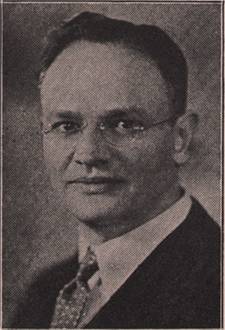
Much has changed since then, but President Lindsay at Gordon College finds himself coming under similar pressure from both sides. [Full disclosure: I worked with Michael Lindsay in the Spencer Foundation/National Academy of Education Postdoctoral Fellows program. I consider him a friend and colleague.]

For those who are just joining us, this story began back in July, when President Lindsay signed an open letter to President Obama about religious exemptions to an anti-discrimination law. Now, the question has become whether Gordon’s Statement on Life and Conduct violates the rules of its accrediting agency.

At issue is the Gordon ban on “homosexual practice.” The New England Association of Schools and Colleges has collaborated with Gordon in setting up a “discernment” group to examine the policy.  (As an aside, we could ask why only this part of the policy has come under investigation. After all, the Gordon policy also bans “blasphemy” and “profanity,” not to mention heterosexual sex outside of marriage. Doesn’t this impinge upon the free speech rights of potential students?)

For a host of reasons, the accrediting agency doesn’t care about blasphemy. But it is threatening to withdraw accreditation over the ban on “homosexual practice.” For Gordon College, loss of accreditation would have serious consequences. Its graduates would not necessarily be considered qualified for graduate school. Nor could they receive student loans backed by the federal government. Perhaps most important, though, loss of accreditation would be a symbolic slap in the face. Gordon would face the challenge of proving its continued intellectual respectability.

But that is not the only pressure facing Gordon right now. Just as President Buswell at Wheaton worried about both mainstream intellectual respectability and credibility within the world of conservative evangelicalism, so President Lindsay faces a double-sided threat.

Beyond accreditation pressure, Lindsay must consider the opinions of the far-flung community of conservative evangelicals. As one conservative pundit wrote recently in the pages of the Christian Post,

To Michael Lindsay, the gifted president of Gordon, and to the board of trustees, I remind you: Many eyes are watching you, knowing that the decisions you make could either strengthen or dishearten many other schools that will soon be put under similar pressure.

As this conservative writer worried, Gordon might be willing to “sell its soul” to maintain accreditation.  If it did, conservative students and parents might take their tuition dollars elsewhere.  But if it doesn’t it might lose accreditation.  Without that sort of mainstream credibility, students and parents might take their tuition dollars elsewhere.

So what is a conservative school leader to do? How can President Lindsay balance the pressure to reform with the pressure to hold fast to the faith once delivered to the saints?

In this case, there is a new wrinkle. Traditionally, alumni are one of the groups most likely to push school leaders to maintain conservative positions. Today, though, some Gordon alumni are hoping to convince Gordon to change its ways. A group of two dozen alums have published a letter encouraging Lindsay to remove any hint of anti-gay discrimination from Gordon’s policies.

In the past alumni have been one of the most vocal groups fighting any change at evangelical colleges. Conservative evangelical colleges have long been keenly aware of the pressures to modernize and secularize. Traditionally, alumni of these schools have been staunch foes of any perceived change, since any change could lead to an utter loss of the school’s steadfast character. Historian Michael Hamilton described this alumni attitude this way:

colleges, more than any other type of institution, are highly susceptible to change, and that change can only move in one direction—from orthodoxy toward apostasy. . . . The very process of change, no matter how slow and benign it may seem at first, will always move the college in a secular direction, inevitably gathering momentum and becoming unstoppable, ending only when secularization is complete.

In Gordon’s case, however, alumni—at least some of them—are pushing in the other direction. It is impossible to predict what will happen at Gordon. The board of trustees may decide this policy needs updating. Or they may not. And President Lindsay might decide that this language is a central part of the school’s evangelical character. Or he may not.

This case highlights the double pressure faced by conservative evangelical colleges. In a sense, they must serve two masters: the pressure to maintain a vague and shifting “respectability” with mainstream institutions; and the pressure to remain bastions of orthodoxy in a world hurtling headlong into secular mayhem.


No Free Speech for Conservative Students

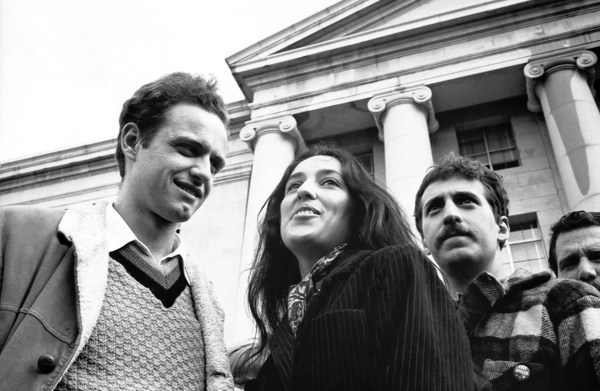
In less than a week, we’ll see the official fiftieth anniversary of the Berkeley Free Speech Movement. And some conservatives worry that college campuses will celebrate that milestone by cracking down particularly on the free speech of conservative students.

What Free Speech looked like fifty years ago...

What Free Speech looked like fifty years ago…

Some found it ironic that Berkeley Chancellor Nicholas Dirks began the commemoration season with an equivocal email. Dirks encouraged the Berkeley community to remember to temper its yen for free speech with an esteem for the value of civility.

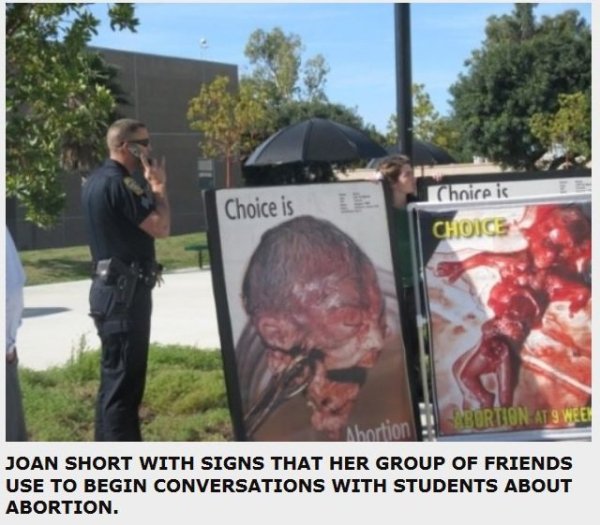
Over the past year, too, campuses nationwide have wrestled with their policies of establishing limited “free-speech zones.” In some cases, conservative students have come under special pressure, either for preaching conservative evangelical religion or for protesting against abortion.

This week in the Wall Street Journal, education scholar and historian Sol Stern lambastes the current climate of campus free speech. As he recalls, as a twenty-seven-year-old graduate student, he stood up for free-speech rights at Berkeley fifty years ago. But nowadays, he laments the trajectory of campus politics. “Though the movement promised greater intellectual and political freedom on campus,” Stern argues,

the result has been the opposite. The great irony is that while Berkeley now honors the memory of the Free Speech Movement, it exercises more thought control over students than the hated institution that we rose up against half a century ago.

Why do today’s campus activists face a more restrictive environment? Stern blames the new dominance of academia by closed-minded leftist autocrats. “Unlike our old liberal professors,” Stern writes,

who dealt respectfully with the ideas advanced by my generation of New Left students, today’s radical professors insist on ideological conformity and don’t take kindly to dissent by conservative students. Visits by speakers who might not toe the liberal line—recently including former Secretary of State Condoleezza Rice and Islamism critic Aayan Hirsi Ali —spark protests and letter-writing campaigns by students in tandem with their professors until the speaker withdraws or the invitation is canceled.

There seem to be two questions on the table. First, do campuses need to restrict student speech in order to maintain order? And, second, as Stern and other conservative commentators argue, do conservative students sustain the brunt of these anti-free-speech attacks?

Is this what free-speech looks like today?

Is this what free-speech looks like today?

From the Archives: Campus Rape in the 1930s

Do fundamentalist colleges encourage sexual assault?  It’s a terrible and difficult thing to talk about.  As we’ve seen in these pages, some alumni insist that fundamentalist schools force victims of sexual assault to blame themselves.  But we’ve also seen that sexual assault is not at all unique to religious schools.  As I continue the research for my new book about the history of evangelical colleges and universities, I’ve stumbled across a story that might shed light on these tricky questions.

Despot in Denver

Despot in Denver

The way we word the questions themselves is controversial: Are fundamentalist schools cults that pander to the lusts of authoritarian leaders?  Or do the strict sexual ethics of conservative evangelicalism help protect young women and men from predatory teachers and authority figures?

Critics of conservative evangelical colleges warn that that the pervasive “purity culture” of these schools leads directly to rape.  Bloggers such as Samantha Fields have accused fundamentalist colleges of blaming victims of sexual assault.  Journalists have blasted schools such as Patrick Henry College for fostering a rape-friendly environment.  Prominent evangelicals have suggested that the problem is not one of theology, but of an authoritarian institutional culture.  For example, Boz Tchividjian famously suggested that abuse can happen “in any culture, elevating leaders beyond accountability, leaving victims’ rights to their whim, and sidelining critics who challenge their rule.”

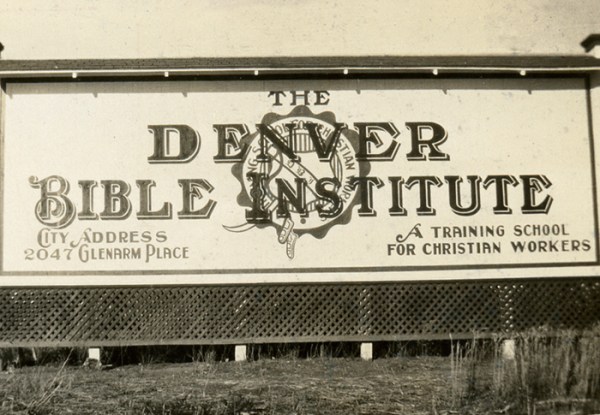
I’ve stumbled across a story from the 1930s that might illuminate the longer history here.  In 1936, a high-powered panel of fundamentalist leaders convened to investigate Denver Bible Institute (now part of Colorado Christian University).  At the time, DBI was led by charismatic founder Clifton L. Fowler.  Fowler wanted to join the Evangelical Teacher Training Association, and to do so ETTA demanded that rumors be cleared up.

Unfortunately for Fowler, an extremely disturbing picture emerged.  Fowler, the investigators concluded, ran DBI like a sex-crazed despot.  Students and faculty were pressured to declare lifelong commitments to the schools.  Married faculty members were pushed into pledging “continence.”  (I’m not sure what was meant by “continence” in this context.  Any suggestions?)  Students were encouraged to separate from parents and home churches.  Community members felt pressure to offer Fowler detailed confessions of their sexual sins.  And, yes, Fowler apparently routinely engaged in sexual activities with male students.

From one perspective, this historical episode might seem to confirm the dangers of authoritarian fundamentalist schools.  For as long as there have been fundamentalist schools, we might conclude, leaders have felt free to engage in predatory sexual practices.  Community members felt constrained by their own admitted sexual sinfulness from criticizing the dictatorial leadership.

On the other hand, as Michael Hamilton argued in his excellent 1994 dissertation, Fowler did not have a free hand to do as he pleased.  The accusations against Fowler forced DBI out of decent fundamentalist company.  Local fundamentalist churches cut off DBI.  The Evangelical Teacher Training Association would not let DBI join.  Fowler, in other words, was restrained in his behavior because of the network of fundamentalist schools and churches in which he worked.

As usual, history does not offer any pat solutions.  But this episode does demonstrate the long lifespan of these questions at fundamentalist schools.  It shows that school founders have always been accused of sexual predation.  But it also shows that fundamentalist leaders and communities worked hard to police their own ranks.

In this case, at least, both national leaders and local community members refused to look the other way.