What’s Left? Bernie Sanders on Education

It doesn’t really matter. But it has become a central part of the process nonetheless.

Even though the vast majority of thinking and funding of public schools is still done at the state and local levels, presidential candidates these days spend a good deal of time sharing their plans for fixing America’s schools. On the right, we’ve heard from all the GOP contenders. This week, Forbes Magazine summed up a few of Bernie Sanders’s positions on education. Some of the ideas are predictable, but some are surprising.
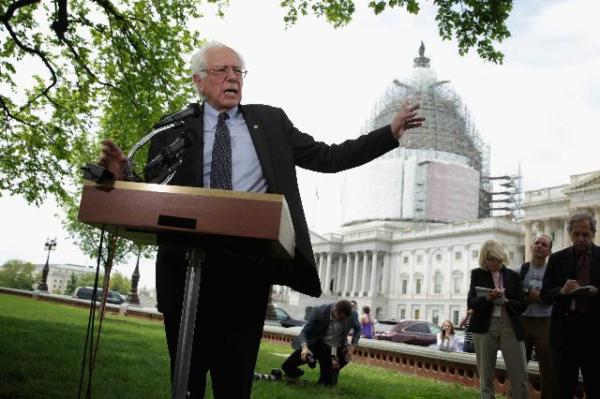
...and to my left...

…and to my left…

On the conservative side, candidates have a few hoops to jump through. Whatever their personal beliefs, contenders have to sound at least friendly to creationism. And these days—though as I argued recently this has not always been the case—GOP hopefuls have to denounce furiously any federal role in local schools.

Senator Sanders has a little more wiggle room. As a self-declared socialist representing the Peoples’ Republic of Vermont, Sanders has no real chance of snatching the nomination from front-runner Hillary Clinton. So his campaign can be more about ideas than votes.

What does the Socialist Senator say about schools?

First—no surprise—he has denounced the “privatizing” tendencies of vouchers and charter schools. Also, in February Senator Sanders suggested a federal program to cut college tuition in half. The federal government, Sanders thinks, must stop making profits off of student loans. More radically, Senator Sanders wants to make public universities tuition-free. Beyond higher education, Sanders has pushed for better pre-school options for all. And he has decried the fact that “the top 25 hedge fund managers earned more than the combined income of 425,000 public school teachers.”

It all fits. But there are some ideas that are conspicuous by their absence. Unlike other progressive pundits, we don’t hear from Senator Sanders an attack on the dehumanizing standardized tests that have taken over so many public schools. Nor do we see a strident defense of teachers’ unions.

Here in the Great State of New York, we’ve seen how protest candidates in the Democratic Party can win votes by adopting those popular positions. It’s still early days, of course, but we can’t help but wonder why Senator Sanders has not made more noise about these issues.


Ah Ha! Proof of Liberal Profs!

HT: VB

Everyone knows college professors are a liberal bunch, right? A new study from Harvard University, a school just outside of Boston, Massachusetts, seems to confirm this beloved stereotype. But is it really proof?

First, some background. As the sophisticated and good-looking regular readers of I Love You but You’re Going to Hell (SAGLRROILYBYGTH) are well aware, the notion that the professoriate skews liberal is a deeply held culture-war notion. Conservatives decry it, even pushing through a mandatory conservative chair at Colorado University. Even perspicacious liberal thinkers worry about it. Historian Jonathan Zimmerman of New York University, for example, has suggested that true intellectual diversity requires some sort of affirmative action for conservatives.

It is not a made-up phenomenon. As Neil Gross argued in his new(ish) book, Why Are Professors Liberal and Why Do Conservatives Care?, there really does seem to be a tilt toward liberalism in higher-ed faculties. Not because liberals are smarter (sorry, liberals), and not because conservatives suffer from discrimination (sorry, conservatives), but because historical patterns have pushed more liberals into the profession.

An article in the Harvard Crimson describes the political donations of the faculty. Turns out, those faculty members who give money to political parties tend to give almost only to the Democrats. In the Arts & Sciences faculty, the majority tipped a whopping 95.7% in the direction of the Democratic Party, compared to a measly 3.7% who gave to the Republican Party. Things were a little more balanced in the Business School, with 36.7% of donations going to the GOP. In some departments, such as the Graduate School of Education, a Brezhnevian 100% of donations went to the Democrats.

Should we worry?

If we hope for a system of higher education that pushes students to think critically about a range of issues, should these numbers cause us to consider home-colleging our students? Both for us liberals and our conservative colleagues, is it time to think about creating a better sense of real intellectual diversity on college faculties?

I think not, for a couple of reasons. First, as both the Crimson article and Professor Gross’s book insist, a tilt toward the Democratic Party does not equate with a rigid groupthink. From the history of the culture wars, we can see proof that conservatives do very well in schools dominated by liberal faculties.

Leading young-earth creationist Kurt Wise, for example, studied under the vehemently anti-creationist Stephen Jay Gould at Harvard. Both scholars reported a cordial and productive relationship. Dr. Wise is not alone. For generations, leading conservative scholars, intellectuals, and pundits have done just fine in schools with liberal-leaning faculty. From William F. Buckley Jr. at Yale to Dinesh D’Souza at Dartmouth, nerdy conservatives thrive in elite colleges.

Perhaps the explanation can be seen in the work of sociologist Amy Binder. Binder and a colleague studied conservative students at two elite colleges. Binder argued that conservative students are certainly shaped by their environments. But at both a large western public flagship college and an elite eastern one, conservative students honed and shaped their conservatism, rather than being groomed away into liberal ideologies.

More important, perhaps, is the fact that almost nobody actually attends the elite colleges that culture-war punditry focuses on. Harvard, Yale, Dartmouth, Colorado, Brown, NYU…perhaps the faculties on these schools tip heavily in a liberal direction. But very few students go to these schools. Of the young people who go to college, many more of them go to less-fancy places.

My hunch—and I’d love for someone to get some numbers to back this up or refute it—is that the faculty at less-elite colleges tends to be more politically and culturally conservative. From the field of teacher education, I have heard anecdotes that suggest it’s true.

The Crimson article gives us some proof, but not about higher education. Rather, all we see is that Harvard faculty tip liberal. Harvard may have plenty of influence, but it doesn’t actually do much. Though the alumni might bother people with their smug self-satisfaction, there really aren’t too many of them around.

School Punishes Girl for Modesty

It sounds like a dystopian fundamentalist fantasy: secular school wardens careening out of control, punishing religious students for having decent morals. But in France this week, a girl was really sent home because her skirt was too long.

Of course, things are different in France than they are in the United States. In France, public schools and institutions are governed by the rule of laïcité. No one may wear religious symbols to school, not headscarves, skullcaps, or big crosses.

In this case, “Sarah K.” was sent home when administrators decided her skirt represented religious garb. Like her friends and co-religionists at the school, Sarah had removed her headscarf as she went in. But her skirt still represented religious attire, school leaders believed. The principal wrote a note to her parents, according to the New York Times, warning them to “rectify her clothes if you want her to continue her schooling.”

"Ta jupe est trop longue..."

“Ta jupe est trop longue…”

In this country, we’ve seen our share of outraged religious conservatives kicked out of public schools for culture-war clothing issues. Remember the flap over the Romney shirt in Philadelphia? Or, up north, remember the kid who got kicked out for his “Life Is Wasted without Jesus” shirt?”

To this uninformed observer, Sarah K.’s case seems like an overreach by overzealous school officials. How can they decide if a skirt is part of a religious outfit, or if it is just a skirt? How can they conclude that Sarah K. intended for her maxi-skirt to be a statement of her religious faith?

But What about All the Dead Bodies?…

Forget about evolution and creationism for a minute. We see more evidence today that the first shot in many educational culture wars takes place not in science, but in history.

When it comes to schooling and culture wars, we spend a disproportionate amount of time talking about creationism and science. It makes sense. In that case, we see a stark and shocking disconnect between contending visions of proper knowledge for children.

But some of the most virulent culture-war battles happen over historical issues. Conservative Christians in the United States often embrace an historical narrative that is at odds with mainstream academic interpretations. Counter-historians like David Barton sell just as many books as do counter-scientists like Ken Ham. And the difference between mainstream academic history and dissenting Christian histories can be just as stark as the differences between the modern evolutionary synthesis and young-earth creationism.

In the United States, one of the most stubborn conservative dissenting histories has been that of neo-Confederatism. As David Blight demonstrated in his terrific book Race & Reunion, conservative history activists in the US South scored major successes in limiting public-school histories to those that flattered the losing side in the Civil War.

In nations around the world, culture-war conflicts often show up as debates over the nature of real history. In Japan, for example, the horrific crimes of the Japanese army in World War II are repeatedly minimized or even ignored in mainstream textbooks. In my own ancestral homeland of Estonia, a long Russian occupation has generated a kind of historic cognitive dualism. Most Estonians of a certain age know the pro-Russian history they got in their Soviet-era schoolbooks, but they don’t believe it. In contrast, Estonians tend to believe a folk history of heroic Estonian resistance, even though they don’t know much about it.[1]

In the pages of the New York Times this morning, we see another example of this kind of battle for history. In pro-Russian breakaway regions of Ukraine, new educational directives insist that the Soviet famine of the 1930s was not a Stalinist genocide, but rather a morally neutral tragedy that befell the entire Soviet Union.

Controlling the past to control the future...

Controlling the past to control the future…

According to mainstream historians, including especially Robert Conquest in English, the Ukrainian famine was anything but morally neutral. Instead, the famine—a tragedy that killed millions of people—was the precise goal of Stalinist policy. In order to bring restive provinces in line, Stalin intended for the region to suffer.

According to the NYT, the new “Fatherland History” hopes to emphasize the region’s long ties with Russia. It plans to minimize Ukrainian nationalist ideas. Igor V. Kostenok, the new minister of education in charge of the new historical guidelines, described the goal as the creation of “a culture, a culture for the Slavic world, for the Russian world.”

Will it work? Not likely. As is the case in every aspect of our educational culture wars, dissenting ideas have a way of surviving and even thriving in spite of official condemnation.

[1] See James V. Wertsch, “Is It Possible to Teach Beliefs, as Well as Knowledge about History?” in Stearns, Seixas, and Wineburg eds., Knowing, Teaching, and Learning History (NYU Press, 2000), pp. 38-50.

More Proof that Conservatives Won’t Win

Every once in a while a progressive pundit will howl a warning about the fundamentalist conspiracy. Watch out, we’re told, rich and sinister conservatives are organizing a vast army to mount an electoral coup of this great land. We see more proof today that these warnings are more fantasy than reality. The nature of conservative religion tends to work against any insuperable fundamentalist coalition.

The end is near...

The end is near…

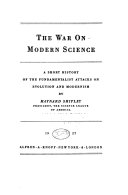
From the beginnings of America’s modern culture wars, fundamentalist-watchers have warned of the coming fundamentalist storm. In his 1927 book, The War on Modern Science, Maynard Shipley warned that the fundamentalist “forces of obscurantism” threatened to overthrow real learning. As Shipley put it,

The armies of ignorance are being organized, literally by the millions, for a combined political assault on modern science.

Ever since, science writers have warned of this impending threat. Isaac Asimov, for instance, warned in 1981 of the “threat of creationism.” Such unified anti-scientists, Asimov believed, had made great strides toward setting up “the full groundwork . . . for legally enforced ignorance and totalitarian thought control.”

Yikes.

But these Cassandresque warnings tell us more about Asimov and Shipley than they do about real fundamentalists. In practice, the nature of conservative Protestantism in America has usually made any sort of collective action impossible.

In the 1950s, to cite only the most obvious historical example, fundamentalists split from evangelicals over the question of Billy Graham’s crusades. Fundamentalists refused to embrace Graham’s wildly successful outreach, in spite of Graham’s conservative theology. Why? Because Graham also worked with liberal and progressive Protestants. Instead of making a pragmatic decision to support Graham as the least-bad option, fundamentalists instead clung to a purer separatism.

Conservatives' best hope?  Or biggest threat?

Conservatives’ best hope? Or biggest threat?

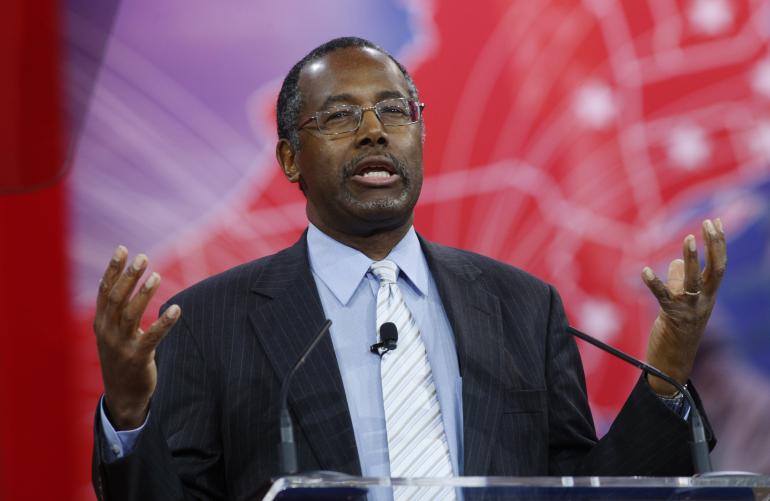
These days, too, conservative Protestants often refuse to win. Most recently, we see a protest among conservative Calvinist Southern Baptist pastors against conservative Seventh-day Adventist Ben Carson. As we’ve noted in these pages, Dr. Carson is a profoundly conservative religious thinker. And he seems like the best hope of religious conservatives in the 2016 elections.

Yet as Christianity Today reports, Southern Baptist conservatives have dis-invited Carson from their annual meeting. Carson’s Seventh-day Adventist beliefs, some SBC pastors noted, put him at odds with Baptist orthodoxy.

They’re right, of course. Seventh-day Adventism holds to many peculiar theological doctrines, including those in the prophetic writings of Ellen G. White.

But the refusal of Calvinist Southern Baptists to welcome a prominent Seventh-day Adventist helps demonstrate why Isaac Asimov and Maynard Shipley could have relaxed. Among conservative Protestants, suspicion and even virulent hatred of theological near-neighbors have long roots. The notion that a fundamentalist army—a creationist army—is organizing in conservative colleges and meetings just doesn’t match reality.

Could conservatives win? Sure. But intra-conservative clashes like this show how difficult it is for conservative Protestants to act together.

Academic Freedom vs. Creation College

nnu crusaders

President Alexander’s Last Crusade?

What is a college president to do? At conservative religious colleges, leaders are in a real pickle. Hosting faculty with unpopular beliefs could lead to a loss of tuition dollars. Getting rid of them could lead to charges of dictatorial ambition. At Northwest Nazarene University in Idaho, President David Alexander fired Thomas Jay Oord. Now Alexander has to deal with the consequences.

First, some background. According to Christianity Today, Alexander’s administration claims that the firing was due to financial straits. Professor Oord taught theology for a decade at the college and had earned a reputation for teaching evolution and “open theology.”

The faculty senate at NNU has protested the administration’s move. The school’s financial future is rosy, according to the faculty. Oord’s firing, they say, is more about reputation than budget.

As at many other conservative religious colleges, that reputation can be difficult to protect. As we’ve discussed in these pages, college leaders face intense pressure to remain orthodox. Parents and alumni control the pursestrings. Such folks can be ferocious defenders of traditional values.

School leaders are forced not only to keep teaching orthodox, but to avoid any appearance of liberalism. If a professor like Oord becomes well known for favoring theistic evolution, it can tarnish the creationist reputation of a college. Parents will send their creationist children elsewhere. Alumni will keep their money.

Could It Work?

Conservatives love to threaten it. But could they pull it off? Business Insider looked recently at the nuts and bolts of what it would take for a conservative president to make good on his threat to eliminate the Education Department.

Rand Paul is the most recent candidate to threaten. As the sophisticated and good-looking regular readers of I Love You but You’re Going to Hell (SAGLRROILYBYGTH) are aware, my historical look at this question ran recently in the pages of Time Magazine. Conservative candidates since Reagan have pledged to eliminate Education. No president ever has.

What’s their beef? As Rand Paul explained in this 2010 speech, many conservatives assume that federal control increases the left’s culture-war power in schools.

The assumption—for electoral purposes at least—is that federal power means less local ability to say no. As Paul put it in 2010,

I would rather the local schools decide things. I don’t like the idea of somebody in Washington deciding that Susie has two mommies is an appropriate family situation and should be taught to my kindergartner at school. That’s what happens when we let things get to a federal level.

Business Insider asked law guru Laurence Tribe to explain the president’s power to make good on this threat. Obviously, Tribe explained, no president can simply eliminate a federal government department by fiat. But there are things presidents can do. They can encourage legislators to push legislation to that effect. And they can strangle government agencies by cutting funding.

In a 2012 budget proposal, Senator Paul suggested an 83% cut to the Education Department. Only the popular Pell Grant program would remain. Indeed, in that proposal to save $500 billion, Education took the biggest hit at $78 billion. The National Science Foundation would face big cuts, too, along with huge cuts (78%) to the Interior Department and the utter elimination of the Departments of Energy and Housing and Urban Development.

Paul’s bluster raises a new question, one I didn’t consider in my historical commentary. If so many conservatives threaten the Education Department, why don’t any of them actually get rid of it? As Catherine Lugg described in her history of Reagan’s early efforts, it is easier to malign the Education Department than it is to eliminate it.

Part of the reason might be seen in Senator Paul’s 2012 budget proposal. The Education Department hosts several extremely popular programs, including the Pell Grant program. Even conservatives like to win elections, and it is difficult to win when you take money away from voters. This is why we still have Social Security and Medicaid, in spite of conservative ideological disgust.

In any case, be ready for more. As the 2016 GOP contest gets rolling, the Education Department will be threatened, insulted, and demonized. The one thing it won’t be, it seems, is actually eliminated.

GOP Politics and the Educational F-Word

What are the education words conservatives can’t say without spitting and gnashing their teeth?

“FEDERAL CONTROL OF EDUCATION”

History News Network has been kind enough to include an essay of mine about the presidential politics of education among conservatives.

Won't say it...

Won’t say it…

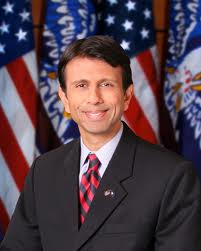
Among the leading presidential candidates in the Republican Party, only Jeb Bush will admit that he likes the Common Core.  And even he denies ferociously that he supports more federal “overreach” in local schools.

Why do conservatives so loathe the federal government’s role in education?  It wasn’t always this way, as I argue in the HNN article.  And there are some signs that thoughtful conservatives are returning to their roots as the party of centralized power.

Creationism in the Land of the Bible

Quick: When I say “creationist,” whom do you picture? Ken Ham, the Australian-American creationist impresario of Kentucky? Or Arye Dary of Israel’s Shas Party?

Is THIS the face of creationism?

Is THIS the face of creationism?

As Josh Rosenau of the National Center for Science Education pointed out recently, the question of Palestinian statehood received the lion’s share of attention after the last round of elections in Israel. But those elections could also have significant impact on the teaching of evolution in Israel’s schools.

In a nutshell, the new government will likely be dominated by conservative parties. In Israel, that means a significant political presence for the more conservative religious factions. Many of those groups oppose the teaching of evolution.

...or is THIS?

…or is THIS?

As Rosenau relates, the topic of evolution only recently became a required part of the middle-school curriculum in secular Israeli public schools. Arye Dary of the Shas Party, a likely government partner, made no bones about his opposition to evolution education. “As an ultra-orthodox party,” Dary explained,

that believes that our forefathers were Adam and Eve, Abraham, Isaac and Jacob, and that our holy matriarchs were Sarah, Rebecca, Rachel and Leah, we refuse to teach our children that they originated from apes.

For those few who continue to believe that creationism is uniquely American, or peculiar to conservative Protestantism, this serves as a healthy reminder of the truth.  Creationism as a political and educational impulse is strong worldwide.  Conservatives of many backgrounds in many countries insist that there is more to “truth” than can be divined by human scrabblings.

GOP Race Kicks Off…at Fundamentalist U

…and they’re off! Senator Ted Cruz of Texas plans to announce his formal candidacy for president today, according to the Houston Chronicle. And he’s making the announcement at Liberty University.

Why Liberty? As the Sophisticated and Good-Looking Regular Readers of ILYBYGTH (SAGLRROILYBYGTH) are well aware, I’m working on a history of fundamentalist higher education. These schools–places like Liberty, along with more liberal cousins such as Wheaton College and Biola University, and more conservative ones such as Bob Jones University—are central institutions of American conservatism.

Cruz at Fundamentalist U

Cruz at Fundamentalist U

Not only do they represent conservative evangelical belief, but also a vaguer (and politically powerful) sense of cultural traditionalism. The campuses of Wheaton, Liberty, and Bob Jones are not just in-your-face religious environments, but also places where you wouldn’t see until recently a man with long hair or a woman with a short skirt.

Not only that, but college campuses also represent cutting-edge learning. Fundamentalist and evangelical colleges are not only religious, not only conservative, but also forward-looking places. By hosting scholarship and teaching, evangelical schools represent the future.

For all these reasons, at least since Reagan, GOP candidates have made it a point to campaign at these campuses. As CNN noted this morning, everyone from Romney to McCain, Rick Perry to Michele Bachmann has put in an appearance.

It makes sense. And it leads us to an interesting question: If you planned to run for president, where would YOU make your announcement? I have an idea of what I’d do.