The Other School Reformers

Binghamtonians!  Are you busy next Tuesday nite?  You are now!

The place to be...

The place to be…

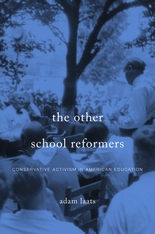
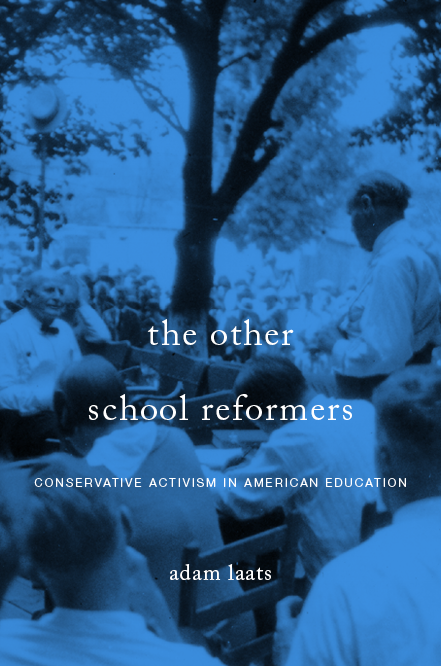
Come on down to RiverRead Books at 6:30 for a talk about my new book, The Other School Reformers. I’ll be sharing some of the questions that I’ve been wrestling with for the past decade or so, including the following things that keep me up at night:

  • What has it meant to be “conservative” about education?
  • Are our schools “conservative?” “Progressive?”
  • Why do conservatives love high-stakes testing?  Creationism? “Patriotic” education?
  • Should public schools teach “traditional” values?  Which ones?
  • And more!

Take TIME for ILYBYGTH

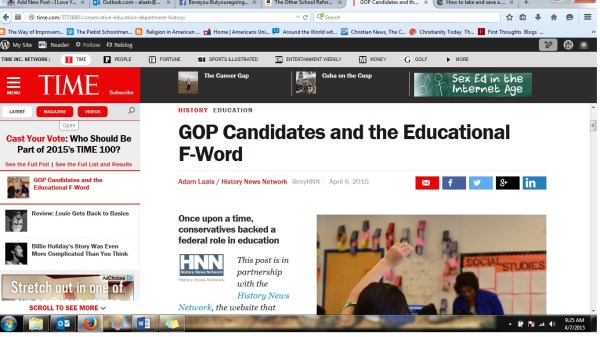
Didja hear that?  It is the sound of ILYBYGTH being enjoyed by the readers of Time Magazine!

Thanks to the reach of History News Network, my recent HNN commentary has been picked up by TimeTime screenshot

More proof that Americans want to hear the F-Word more often!

Are Schools Conservative?

Binghamtonians!  Come on down to RiverRead Books on April 21 at 6:30 PM.  Five Court Street in scenic downtown Binghamton.  I’ll be sharing some thoughts from my new book about schooling and conservatism.  Free and open to all.  I’m planning to bring brownies, but we’ll see if I actually get it done.

The place to be...

The place to be…

The book works through several questions:

  • ARE most of America’s public schools conservative places?
  • What has it meant to be “conservative” about education in the USA?
  • How have ideas of “conservatism” and “progressivism” in schools changed over time?
  • What kind of brownies should I make?

As the sophisticated and good-looking regular readers of I Love You but You’re Going to Hell (SAGLRROILYBYGTH) are aware, in my new book I examine four of the most famous educational controversies of the twentieth century: the Scopes Trial of 1925; the Rugg textbook controversy of 1939/40; the Pasadena superintendent ouster of 1950; and the Kanawha County textbook battle of 1974/75.   In each case, conservative activists articulated their ideas about proper education.  In each case, conservative leaders and thinkers viewed education as the best way to improve society.  If schools could be reformed, the thinking has always gone, then society could be saved.

What did they fight for?  How did they envision good schools?  How successful were they?

I’ll try to make the case that these “other school reformers” have played a leading role in determining the course of schooling in this country.  Whether we like it or not (and generally, I don’t), conservative thinking and political clout have played decisive roles in shaping America’s educational system.

So come on down to RiverRead to take place in the conversation.

GOP Politics and the Educational F-Word

What are the education words conservatives can’t say without spitting and gnashing their teeth?

“FEDERAL CONTROL OF EDUCATION”

History News Network has been kind enough to include an essay of mine about the presidential politics of education among conservatives.

Won't say it...

Won’t say it…

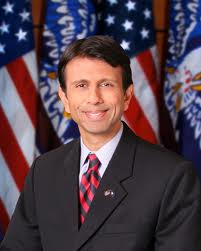
Among the leading presidential candidates in the Republican Party, only Jeb Bush will admit that he likes the Common Core.  And even he denies ferociously that he supports more federal “overreach” in local schools.

Why do conservatives so loathe the federal government’s role in education?  It wasn’t always this way, as I argue in the HNN article.  And there are some signs that thoughtful conservatives are returning to their roots as the party of centralized power.

Who Cares about Adam?

I don’t get it. Even after all these years studying conservative Christianity and creationism, I still don’t really get it. I mean, I understand the logic and history, but I have a hard time making sense of the ferocious emotion that goes into debates over the existence of an historical Adam & Eve. An author interview in Christianity Today outlines some of the tricky questions involved.

Who cares?

Who cares?

But first, a primer for those like me on the outside looking in: The debate over the historicity of Adam & Eve has a long history in conservative evangelical Protestantism. For us outsiders, making sense of this issue will go a long way toward helping us understand the theological underpinnings for young-earth creationist belief. Without making sense of this theology, it can be easy for mainstream scientists and observers to conclude mistakenly that young-earth creationism is nothing but some kind of cult of personality, a quirk of history.

At least since the 1960s (of course it is an ancient belief, but in 1960 it gained popularity among conservative American evangelicals as a vital theological notion central to orthodox belief), conservative evangelicals have insisted that the obvious meaning of Genesis is that God created two first humans in the Garden of Eden. These two, Adam & Eve, became the progenitors of the entire human race. Theologically, creationists have insisted, our belief in an historical Adam & Eve underpins our trust in the Bible. As Simon Turpin of young-earth ministry Answers In Genesis expressed it,

The debate over whether Adam was historical is ultimately a debate over whether we trust what the Scriptures clearly teach. If we cannot be certain of the beginning, then why would we be certain about what the Scriptures teach elsewhere? The uncertainty of truth is rampant in our culture partly due to the influence of post-modernism which is why many believe the issue over Adam’s historicity is unimportant.

For many creationists, believing the plain truth of the creation story in Genesis means believing in the trustworthiness of Jesus Christ. As Andrew Snelling of the Institute for Creation Research explained,

It is impossible to reject the historicity of the book of Genesis without repudiating the authority of the entire Bible. If Genesis is not true, then neither are the testimonies of those prophets and apostles who believed it was true.

Of course, for mainstream scientists, the notion that human genetic diversity came from only two original humans does not fit the evidence. In order to have today’s genomic sequence, I’m told, humanity must have begun with thousands of original humans.

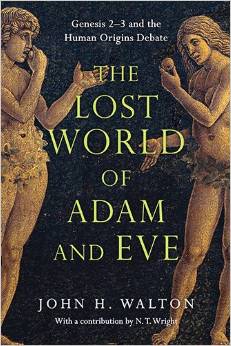
John Walton of Wheaton College explains to Christianity Today why evangelicals can accept this science while still remaining true to a conservative reading of Scripture. In his new book, The Lost World of Adam & Eve, Walton argues that Adam & Eve can be read as the “priests” of early humanity, not the only two first humans.

Again, for those of us outside of conservative evangelicalism, the controversial nature of such claims can be hard to figure. Recently, theologian Peter Enns was booted from Westminster Theological Seminary for advocating similar ideas. Walton explains in this interview why it is possible to respect the authority of the Bible while still reading Genesis in a way that is not contrary to modern science. Walton insists that

You can affirm a historical Adam, but that doesn’t have quite the implications for biological human origins that are often assumed.

The key, Walton argues, lies in reading Genesis as the original readers would have. To them, Walton says, creation would be more about how the world of Adam & Eve was “ordered,” not just how it was “manufactured.” We can understand Adam as both a real person, a real creation, and as an “archetype” for humanity. Though there may have been other early humans, Walton explains, Adam & Eve served as the ones in God’s sacred space.

Why do such ideas matter? Again, for folks like me trying to understand conservative Protestantism from the outside, it can be difficult to make sense of the ferociously controversial nature of such arguments.

Yet they are at the heart of conservative evangelical Protestantism. As I argued in my 1920s book, conservative evangelicals have never agreed on the proper relationship of Genesis to either modernist theology or science. From J. Gresham Machen in the 1920s to Harold Lindsell in the 1970s, conservative intellectuals battled to affirm the notion that any compromise is deadly to faith.

And as I’m finding in my current research, these battles have long sent shock waves through the world of conservative higher education. Recently, Bryan College has firmed up its insistence that faculty members affirm their belief in an historical Adam & Eve. In 1961, Wheaton College did the same thing.

And fundamentalists are not the only ones who will spring to repudiate theories like Walton’s. Leading atheist pundits, too, agree that Genesis requires an historical Adam & Eve. Jerry Coyne, for example, laments the apologism of folks like Walton. Of course, Coyne does not want people to reject mainstream science in favor of a belief in an historical Adam. Rather, he hopes people will simply accept the obvious conclusion that the Bible is a book of myths.

If all of these whirling debates make your head hurt, join the club. For those of us outside the circle of evangelical Protestantism, it can be very difficult to understand the ferocious feelings at play in the Adam debate. But that ferocity lies at the heart of evangelical belief. Historically, any attempt to rationalize our reading of the Bible, any attempt to explain away the most obvious interpretation of Scripture in favor of one that accords with modern science, any effort to bring our faith into harmony with science…all have been seen as the beginnings of apostasy.

For evangelical readers, Adam & Eve matter. For those of us trying to understand conservative Christianity, this complicated debate will be a good place to start. Why would professors lose jobs over it? Why would Christianity Today dedicate a major article to this interview with John Walton? Why will Walton’s position provoke such furious responses?

Fundamentalism and the Modern University

Are evangelical colleges modern? Or, with their insistence that knowledge has its roots in God’s Holy Word, are they somehow trapped in medieval ideas about knowledge and the purposes of higher education? The answer is more complicated than it might seem at first.

As the sophisticated and good-looking regular readers of ILYBYGTH (SAGLRROILYBYGTH) are sick of hearing, I’m hard at work on my book about evangelical higher ed. In the twentieth century, Protestant fundamentalists opened or transformed a network of colleges dedicated to protecting fundamentalist faith. If students are led astray at mainstream secular colleges, the thinking went, fundamentalists needed their own schools to teach each new generation of Christians how to be educated and evangelical.

As part of my reading list, I’m deep in Roger Geiger’s new book, The History of American Higher Education (Princeton University Press, 2015). I’m writing a full review for Teachers College Record and I’ll be sure to post links to that review when it comes out.

Are fundamentalists colleges modern? Or are they trapped in the 1600s?

Are fundamentalist colleges modern? Or are they trapped in the 1600s?

In the meantime, though, Professor Geiger’s survey of the first colleges raises some tricky questions for fundamentalist higher education. As with so many early American institutions, colleges such as Harvard and Yale represented the tail end of medieval traditions, just as they were changing into recognizably modern ways of thinking.

Conservative evangelicals like to point out that America’s leading colleges were often founded as religious schools. It’s true. Harvard and Yale were both intended, first and foremost, to defend orthodox Puritanism. Not only were they ferociously religious, but they envisioned their role in a radically non-modern way. Instead of serving as an institution that encouraged new thinking, Harvard and Yale in the 1600s and early 1700s both saw their role as passing along established truth. As Prof. Geiger puts it, in the early decades, “The corpus of knowledge transmitted at Harvard College was considered fixed, and inquiry after new knowledge was beyond imagining.”

Orthodoxy at these early schools was defended with a rigor that would make twentieth-century fundamentalists proud. Harvard’s first president, for example, was ousted for theological reasons. President Henry Dunster came to believe that infant baptism was not a scriptural practice. As a result, the General Court summarily got rid of him. In their words, no one could lead a college if they “manifested themselves unsound in the faith.”

Both Harvard and Yale made explicit their goals. In early years, Yale explained its primary religious mission:

Every student shall consider the main end of his study to wit to know God in Jesus Christ and answerably to lead a Godly sober life.

It was not much different at Harvard:

the main end of [a student’s] life and studies is, to know God and Jesus Christ which is eternal life, Joh. 17.3

In all these aspects, life at Harvard and Yale between the 1630s and 1720s seems remarkably similar to life at fundamentalist colleges in the early twentieth century. For schools such as Wheaton College, Bob Jones College, Bible Institute of Los Angeles, or Gordon College, these Puritan echoes resounded loudly. At all these fundamentalist schools, leaders insisted that the first goal was to help students understand themselves as Christians. The first intellectual challenge was to study seemingly distinct bodies of knowledge to see the hidden connections put in place by God.

In this way, then, it seems as if fundamentalist colleges—even those more liberal schools that eventually abandoned the “fundamentalist” label—hearken back to a pre-modern vision of higher education.

We have to be careful, though, before we assume too much. In other important ways, twentieth century dissenting religious colleges participated fully in the central intellectual tradition of modern higher education.

According to Professor Geiger, colonial higher education went through a revolutionary change in the 1720s-1740s. During that period, endowed professorships at Harvard gave some faculty members the independence to pursue new forms of knowledge. These professors began to incorporate the ideas of new thinkers such as Isaac Newton and John Locke.

The radical change came not only from the newness of the ideas, but from the notion that the college or university should be the place to explore such new ideas. As Professor Geiger puts it,

The significance and prestige of Newtonian science altered college teaching by introducing the experimental lecture employing apparatus, creating a demand for specialized professors and establishing the expectation that the curriculum should incorporate new knowledge.

A fundamental characteristic of the modern university emerged in the decades before the American Revolution. College, more than any other institution, came to be seen as the province of cutting-edge thinking. As Professor Geiger points out, even before Ben Franklin made his famous experiments with lightning, John Winthrop at Harvard used his endowed Hollis Chair funding to purchase equipment that would allow him to demonstrate the properties of electricity.

Just as the fundamentalist colleges of the twentieth century clung to the pre-modern notion that universities ought to pass along established truths, those same fundamentalist schools fully participated in the modern notion that universities ought to explore new truths.

An evangelical scientist, for example, such as Russell Mixter at Wheaton College in the 1950s, believed that no amount of human investigating could overturn the truths of Scripture. But Mixter (and others like him) also saw himself as an intellectual specialist, a scientist exploring the outer boundaries of biology to discover new things about God’s creation.

Are fundamentalist and evangelical colleges modern? In this sense, they certainly are. The faculty at twentieth- and twenty-first century conservative colleges are divided into academic disciplines. Each of them is expected to carry out research in his or her field. The definition of those fields may be different from the ones at secular institutions, but the fundamentally modern notion of research remains central.

At the same time, though, by envisioning themselves as the guardians of students’ faiths, fundamentalist colleges hearken back to the pre-modern roots of the Ivy League. As Professor Geiger argues about 17th century Puritan higher education, “the deeper purpose of the college course and the overriding preoccupation of the institutions were to demonstrate the truth of Christianity.”

Today’s evangelical colleges would agree.

What Does It Mean to Be Conservative about Education?

John Miller of National Review recently sat down with yours truly to talk about my new book, The Other School Reformers: Conservative Activism in American Education. For you cheapskates out there who haven’t yet bought your copy, you can listen to this ten-minute interview to get the gist. Then go buy a copy.

What is "educational conservatism?"

What is “educational conservatism?”

Miller asks great questions that get at the heart of my efforts:

  • What does it mean to be “conservative” about education?
  • What lessons should conservatives learn from this history?
  • What can this history tell us about current conservative angst over the Common Core?
  • …and more!

On the Reviewing Block

How do you decide what to read?  For nerds, academic journals provide page after page of book reviews.  I love to read and write these sorts of academic reviews.  But are they really worth the time?

Right now, for instance, I’m reviewing four books for a variety of journals.

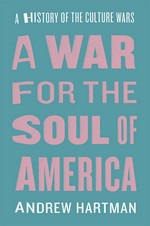
For History of Education Quarterly, I’m writing a review of Andrew Hartman’s War for the Soul of America (University of Chicago Press, 2015). Hartman

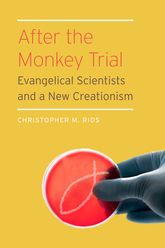
For the journal Church History and Religious Culture, I’m reviewing Christopher Rios’s After the Monkey Trial (Fordham University Press, 2014).rios

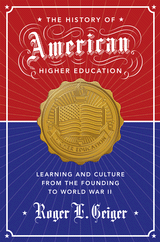
For Teachers College Record, I’m working on a review of Roger Geiger’s new book The History of American Higher Education (Princeton University Press, 2014).geiger

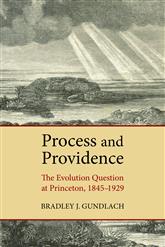
Last but not least, I just agreed to write a review of Bradley J. Gundlach’s Process and Providence: The Evolution Question at Princeton, 1845-1929 (Eerdman’s, 2013), for History: Reviews of New Books.gundlach

For those outside of the academic realm, here’s how the process works: Publishers send out review copies to a variety of journals and magazines.  Book review editors hunt down an appropriate reviewer, usually through word of mouth and academic reputation.  If the first person they ask can’t or won’t write a review, the editor asks for suggestions of other possible reviewers.

I love to write reviews for academic journals.  In each case, putting together a coherent review forces me to do more than simply absorb a book’s argument.  It forces me to take a sharper look at the sources, the implications, and the book’s strengths and weaknesses.  In all of the reviews I’m currently writing, I had planned to read each book already.  Writing the review simply forbids me to read any of them lazily.

But beyond the benefits for the writer, do these reviews matter?  After all, very few people read academic journals.  These days, the long peer-review process means that reviews in academic journals sometimes come out long after the books are published.  We might be tempted to conclude that these kinds of academic book reviews are merely an exercise in higher-education navel gazing.

I think there’s more to it than that.  After all, these reviews are not intended solely for individual readers or book buyers.  This is not just a “rotten-tomatoes” kind of review, in which readers might check out what has been said before choosing one book over another.  This is not simply “like”-ing something on Facebook or scrawling out an angry smear job on Amazon.  Those things may boost or crush sales and reach, but they don’t provide readers with careful descriptions of a book’s structure.

Book reviews in academic journals are different.  The audience for these book reviews is mostly university types, the professors who are choosing books to use with their classes and their students.  No one has time to read every book that comes out, but these short reviews allow academics to remain broadly aware of new trends in their fields.  A “good” review in this context does not mean glowing praise, but rather careful description of the book’s argument and significance.  A professor can choose which books to use in his or her classes.  Professors can also recommend certain titles to graduate students for further study.

Some things that are old fashioned deserve to wither away.  Cassette tapes, large lecture hall classes, and phones with cords come to mind.  This tradition of slow and careful review, on the other hand, may have its roots in a very different technological time.  Nevertheless, it remains a vital part of academic life.

The Social Sciences Need More Conservatives!

Let’s start with some ifs. IF diversity is really a minimum requirement for vibrant intellectual life, and IF college professors really tip toward liberalism and leftism, and IF academic groupthink has had a damaging effect on social sciences . . . IF those things are true, then don’t we need to improve political diversity in order to encourage real intellectual progress? A new study by a group of social psychologists argues that we do.  Only by encouraging researchers who embrace conservative worldviews, they write, can social scientists make real progress.

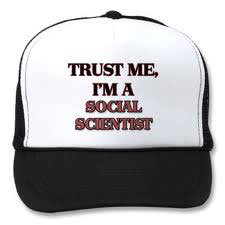
This academic team is not a collection of conservative pundits. As have other self-identified liberal academics such as Jonathan Zimmerman, these psychologists argue that in order to preserve even the liberal goals of the liberal arts, some sort of academic affirmative action is required.social-scientist

First, some background: this new study will be published soon in the journal Behavioral and Brain Sciences. It has been made available in an unedited, uncorrected pre-publication form to invite peer comment. The authors include José L. Duarte of Arizona State University, Jarret T. Crawford of The College of New Jersey, Charlotta Stern of Stockholm University, Jonathan Haidt of New York University—Stern School of Business, Lee Jussim of Rutgers University, and Philip E. Tetlock of the University of Pennsylvania. These academic psychologists are careful to note that none of them identify as political or cultural conservatives. Their argument is not a bitter lament from an excluded right wing, but rather a call to action by concerned academic insiders.

ILYBYGTH readers may remember Jonathan Haidt’s 2012 book, The Righteous Mind. In a nutshell, Haidt argued that Americans of all political stripes make up their moral minds first, then adduce reasons to explain their positions.

This new argument is different. The authors limit their claims to the field of social psychology. Their field, they contend, is

At risk of becoming a cohesive moral community. Might a shared moral-historical narrative in a politically homogenous field undermine the self-correction processes on which good science depends?

For example, studies of public attitudes toward climate change have described disagreement with mainstream science as “denial.” By calling one side “science” and the other side “denial,” doesn’t the very structure of the study adversely affect its outcome?

As the authors warn, “Embedding any type of ideological values into measures is dangerous to science.”

Not only does political homogeneity threaten to derail the answers found by social scientists, it tends to skew the questions they ask. As an example, the authors describe the career of the idea of “stereotype accuracy.” Due largely to ideological commitments, social psychologists had assumed that stereotyping was a false and negative tendency. In the 1970s, however, a rare conservative psychologist examined the question in a new way, and “found results that continue to make many social psychologists uncomfortable.” In this case, conservative psychologist Clark McCauley found that many stereotypes are actually based on rational assumptions and fact.

Why are there so few political and cultural conservatives in this academic field? The authors suggest a range of possibilities. They reject the notion that academic careers attract liberals because liberals are somehow smarter than conservatives. But they do find that the field may suffer from a self-propagating tendency. Since it is perceived as hostile to conservative thinkers, young conservative academics steer clear. Professor Haidt includes a sample of comments by conservative graduate students from his earlier work. One conservative academic told Haidt that he or she remained in the academic “closet.” Due to anti-conservative prejudice, this person wrote, “I find myself hiding my intellectual views and values every day.” Another conservative graduate student wrote that “the political ecology became too uncomfortable for me.”

This sort of weeding-out, the authors warn, threatens the field. By encouraging a culture of similar-minded researchers, the field of social psychology undermines its own scientific validity.

What is to be done? The authors offer a laundry list of suggestions, including more funding for conservative graduate students and an active recruitment process for tenure-track university positions. Universities are already good at searching for diverse faculties and student bodies. They only need to expand their notion of “diversity” to include a true intellectual, cultural, and political diversity. More broadly, the authors encourage all social psychologists to examine their own prejudices. “Instead of assuming,” they suggest,

That stereotypes are inaccurate without citing evidence, ask, ‘How (in)accurate are stereotypes? What has empirical research found?’ Instead of asking, ‘Why are conservatives so prejudiced and politically intolerant?’ . . . ask, ‘Which groups are targets of prejudice and intolerance across the political spectrum and why?’”

These are issues near and dear to ILYBYGTH hearts. Time and again, conservative intellectuals and pundits have complained that higher education has been lost to a morass of identity politics and destructive Red-Guardism. Perhaps most famously, William F. Buckley Jr. quipped that he would rather trust the government to the first four hundred people listed in the Boston phone book than to the faculty of Harvard University. More concretely, as I’m uncovering in my current historical research, conservative evangelicals have devoted considerable amounts of time and treasure to the establishment of dissenting conservative colleges, where students and faculty will be free to pursue truth undeterred by self-defeating and short-sighted secular humanism.

Certainly, this study will likely be embraced by conservatives as more proof that their complaints are justified. I wonder how many conservative intellectuals, though, will embrace the liberal premises of this study as well as its conservative-friendly conclusions. That is, will conservative thinkers agree that diversity is a requirement for true intellectual growth? Many conservatives, after all, have rejected racial affirmative-action programs that promise greater intellectual diversity. Can conservatives accept this study on conservative grounds?

It is worth repeating that this article limits its claims to the field of social psychology. But clearly its implications are worth considering for academia as a whole. Do mainstream colleges need a dose of true political diversity?

Does This Chapter Make my Book Look Fat?

Have you got your copy yet?  My new book is now available.  A conservative ILYBYGTH blog reader was kind enough to read the book and send me some reflections.  I’ll post them in full below.  They are very kind.  I’ll be sure to post news of less flattering reviews as well.

I finished reading The Other School Reformers.  These are just my thoughts and opinions.

I don’t think you made a mockery of conservatives / conservatism.  Some activists confound stereotypes, but there are certainly ones who confirm them.  It wasn’t always pretty, but it wasn’t mockery.  It’s just honest.  You talked about “specific people making specific claims about specific educational programs.”  And “specific times and places.”  (7)  It didn’t mean that every conservative would condone or support every action or idea.

I’m glad extremist examples were included.  Pointing out extremists, I think, can give valuable information.  I didn’t object at all to you talking about it.  In the whole context, it made sense to me to include extreme examples since the survival of the US was at stake.  (I don’t condone extremist tactics of course)  And as time went on, they found themselves “fighting for much narrower aims.”  (16)  I didn’t think this a couple years ago, but now think pointing out extremes is a positive thing and helps lead to an understanding that a reader wouldn’t get otherwise.

I started by reading the index, then going through the index again to see what people or ideas you were going to talk about the most.  That was helpful for seeing the continuity of the issues and just getting an idea of what the book was going to be about.

You made it very clear in the introduction and in the first chapter that your intent was to let conservatives speak for themselves and said that a few times in a few different ways.

Your introduction and first chapter were really well thought out and made the rest of the book clear.  I appreciated the quick progressions under A Moving Target starting on page (14) to get a good overview and to provide some understanding of the changes before delving in.

I appreciate that you started and ended with your personal experience in the schools.

I really enjoy your writing style. Though you allowed conservatives to speak for themselves and you put the spotlight on them, you were still the storyteller.  Imho, the style of your writing accurately portrays the feelings (of some conservatives and certainly the people you talked about), and keeps the reader engaged in the story.  There was a nice ebb and flow of being matter of fact, speaking in a bit of an indignant tone, and using creative language to get your point across.  Your writing enhances without sensationalizing or exaggerating.  (or if it does I think the reader knows that)  It can lead people to be introspective and curious.  (Well, it does for me.)

It was interesting to note that the Gablers didn’t seem to understand what a scientific theory was / is.  (195)   I may have said that before to you, but did note it in here.

You demonstrated all throughout the book change and continuity, and the goals and strategies.  There were many interesting things to note and some confirmations of things I’ve been thinking about.

I’d give it a ten out of ten, or a full 5 stars on Amazon.  I can’t see how it could have been better, it was so well thought out.  It provided the reader with a deep understanding of the issues and people.  It seemed to me that you delivered exactly what you said you were going to deliver in a way that made the argument for why you structured the book the way you did make sense.  If I’m supposed to find something negative about the book, that knowledge is above my head.

I enjoyed it!