President Carson 2016: The Education President?

What would a President Carson mean for education?

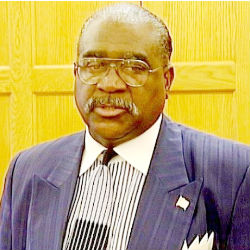
Recent reporting in the New York Times asks if prominent neurosurgeon Ben Carson is a 2016 GOP contender.  Carson has become hugely popular among conservatives.  In a recent speech at Conservative Political Action Conference, Carson received rousing applause when he mentioned that he had some good ideas . . . “if you should magically put me into the White House.”

Conservatives at CPAC loved Dr. Carson.  They should.  Carson has a dramatic life story and is a compelling public speaker.  His values are profoundly conservative.  He wants more public religiosity.  He wants a flat tax and a smaller public debt.  He wants America to beef up its military strength and return to a vision of the past in which Americans shared common values.

New York Times reporter Trip Gabriel noted that a recent Carson speech at a National Prayer Breakfast “criticized the health care overhaul and higher taxes on the rich, while warning that ‘the PC police are out in force at all times.’” True enough.  But those were just the starting points and final words of Carson’s half-hour talk.  By far the bulk of Carson’s address concerned the vital importance of education.

I wonder if reporter Gabriel ignored the bulk of Carson’s speech because Gabriel considered education to somehow be of lesser political interest than health care and tax policy.  If that’s the case, Gabriel couldn’t be more wrong.

Check out the speech itself if you have thirty minutes to spare.  You’ll see that Dr. Carson focused almost entirely on traditional conservative themes in educational policy and reform.

First of all, Carson lamented the sad state of American public education.  Citing statistics about high high-school dropout rates and low college completion rates, Carson deplored the fact that too many Americans are not getting a good education.  This had echoes of the ugly history of slavery, when it was illegal to educate a slave.  The lesson, Carson insisted, is clear: “When you educate a man you liberate a man.”

Carson shared his own remarkable educational history.  As a child, he grew up in a very poor household.  His mother had been married at age thirteen, soon abandoned by her bigamist husband.  She herself had only attained a third-grade education.  But she insisted ferociously that her two sons would be different.

She required young Ben and his brother to write two book reports per week for her to review.  Eventually, of course, Dr. Carson went on to his spectacular career as a leading pediatric neurosurgeon.

In Carson’s prayer-breakfast speech, he argued that Americans had always loved formal education.  But recently, Carson complained, “We have dumbed things down.”

That is not okay, Carson insisted.  America’s form of government requires a well-informed citizenry.  That is why Dr. Carson offers two programs for low-income youth: a college scholarship fund and reading rooms in low-income public schools.

Education, Carson promised, will prevent criminality.

More important, education will prevent cultural decay and decadence.  Look at Ancient Rome, Carson said.  “They destroyed themselves from within.  Moral decay, fiscal irresponsibility.”  The same thing could happen to the United States, Carson worried, if we don’t beef up our education system.

So what would a President Carson do for education?  Could he combine traditionally leftist education policies—such as financial assistance for the lowest income schools and students—with traditionally rightist policies—such as teaching traditional values and public religiosity in schools?

Even the superhuman brain surgeon himself couldn’t answer that.  But it is worth more consideration than some journalists and commentators seem willing to give it.

Are Conservatives Facing Oppression in Texas’ Private Schools?

The Texas Freedom Network Insider gives us a look this morning at an intriguing and influential line of conservative educational thinking.  For several decades now, conservative educational activists have claimed to be fighting for their civil rights.

The TFN, a liberal watchdog group, denounced Texas State Senator Dan Patrick’s attempt to make this argument recently.

Patrick, as chair of the Senate Education Committee, made his statement in favor of Senate Bill 573.  The bill would allow homeschool and private-school students to compete in the state’s University Interscholastic League.

Patrick claimed in a recent hearing,

“When you say the UIL has functioned for a hundred years, and everybody’s been happy, if you were black in this state before the civil rights movement, it didn’t function for you. And now I feel there’s discrimination against Catholics and Christians in these parochial schools.”

The TFN columnist and several commentators did not buy Patrick’s argument.  After sharing pictures of a lavish private school and a cramped, inadequate African-American school (c. 1941), the TFN columnist asked, “Seriously, guys?”

Commenter Linda Hunter asked, “Is it possible he [Patrick] actually believes what he’s saying? If so, perhaps he received the standard whitewashed version of history in school. Oh, I don’t think even that explains his argument.”

Whether Patrick is sincere or not, this line of argument has long been a favorite of conservative educational thinkers and activists.

Gish fossils say noTo cite just one example, in the early 1980s the late creationist leader Duane Gish was invited to join a conference of mainstream scientists to discuss evolution and creationism.  At the time, Gish was a leading voice at the Institute for Creation Research and best known for his book Evolution: The Fossils Say No! (1973, 1978, 1979)

At the conference with the American Association for the Advancement of Science, Gish grumbled right away that he had been led into a trap.  He complained that only two creationists had been invited to face a bevy of evolutionists.  As he put it, he would “proceed to take one of the two seats on the back of the bus reserved for the creationists in this meeting.”[1]

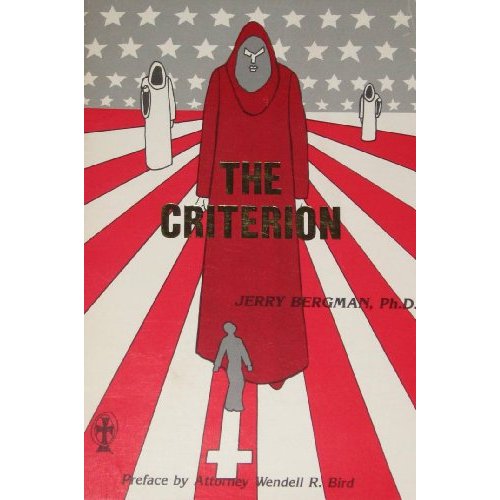
Around the same time, the creationist academic Jerry Bergman protested that he had been denied tenure at Bowling Green State University due to rampant discrimination against his religious beliefs.  As Bergman claimed in his 1984 book The Criterion,

“Several universities state it was their ‘right’ to protect students from creationists and, in one case, from ‘fundamentalist Christians.’. . . This is all plainly illegal, but it is extremely difficult to bring redress against these common, gross injustices.  This is due to the verbal ‘smoke-screen’ thrown up around the issue.  But, a similar case might be if a black were fired on the suspicion that he had ‘talked to students about being black,’ or a woman being fired for having ‘talked to students about women’s issues.’[2]

Bergman the criterionFor Gish and Bergman in the 1980s, as for Senator Patrick today, as for the generation of conservative activists in between, the notion is a powerful one.  Many intellectuals and pundits have claimed that conservatives today face the same kind of repression that bedeviled African Americans in the run-up to the Civil Rights movement in the 1950s.

For those of us who want to understand conservative educational philosophy, the Texas Freedom Network’s question is not the point.  Whether or not conservatives really believe they are oppressed, pundits and politicians have found the claim of minority persecution effective.

Check out Senator Patrick’s speech on the TFN Insider.  They include a video so we can see this ideology in action.


[1] Duane T. Gish, “The Scientific Case for Creation,” in Frank Awbrey and William Thwaites, eds., Evolutionists Confront Creationists: Proceedings of the 63rd Annual Meeting of the Pacific Division, American Association for the Advancement of Science, Vol. I, Part 3 (San Francisco: Pacific Division, American Association for the Advancement of Science, 1984), 26.

[2] Jerry Bergman, The Criterion: Religious Discrimination in America (Richfield, MN: Onesimus Press, 1984), 44.

What Do You Want Your 7-Year Old to Learn about Lynching?

A story yesterday from Jacksonville, Florida raises some difficult questions about what we want to teach our children.

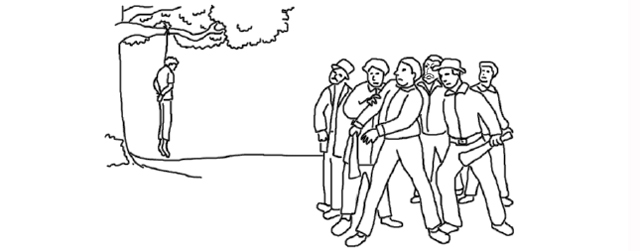
According to News4Jax.com, a parent of a second grader complained at the coloring book his child brought home.  The coloring book, “Who Was Jim Crow?” by edhelper.com, included some disturbing racial imagery.  Not least shocking was a picture of a crowd lynching a victim.

Image source: News4Jax.com

Image source: News4Jax.com

As a historian, I think we need to teach young people the sometimes-disturbing story of America’s past.  But this sort of classroom material raises all sorts of questions:

  • How old do Americans need to be to learn about racial stereotyping?
  • How should students be taught about America’s history of racial violence?
  • Should teachers be using cheap on-line teaching materials like this?  Even if the school board approved them?
  • Is this an example of racial political correctness gone wild?  Or is this an example of classroom racism?
  • Can offensive racial stereotyping ever make good teaching materials?

Nothing New? Not Quite, Mr. Perlstein

Is Toni Morrison bad for young people?  How about porn and graphic violence?

In yesterday’s Nation, Rick Perlstein offered an insightful article into the nature of these sorts of school debates over books.  As usual, Perlstein writes with clarity and perspective.  But his argument would be better if he had included a longer historical perspective.

The specific issue that attracted Perlstein’s attention was a recent flap in Fairfax County, Virginia, over the reading of Toni Morrison’s Beloved.  As Perlstein reported, parents complained about gruesome depictions of bestiality and rape.

Beyond just reporting another such dust-up, Perlstein made some great points about the predictable pattern of such cultural controversies.

First, he noted from his historical research into the 1970s how common it has been for conservative activists to claim to be merely shocked and offended parents, taken by surprise by the filth brought home in student backpacks.

Second, he decried the too-easy sanctimony of some liberals.  It is too easy to take the Kevin-Bacon-in-Footloose position, Perlstein wrote.

“Liberals get in the biggest political trouble, . . .” Perlstein argued in his 2008 book Nixonland, “when they presume a reform is an inevitable concomitant of progress.”

Perlstein’s argument is certainly worth reading in its entirety.  But it would be even stronger if he had stretched his timeline beyond the wall of 1968.  As I argued in my 1920s book, and as I’m developing in my current book, in order to understand conservative educational activism we have to go back at least to the 1920s.

For instance, the tradition of objecting to textbook content has long been a central conservative educational tactic.  Anti-evolution firebrand T.T. Martin tried this strategy in 1923.  The textbook at issue, Harold Fairbanks’ Home Geography for Primary Grades, contained a few basic evolutionary concepts.  Children reading such things, Martin charged, would soon abandon their Christian faith.  In typically colorful prose, Martin warned, “that child’s faith in the Saviour is gone forever, and her soul is doomed for Hell; and with your taxes, you paid to have it done.”

Image Source: JacketFlap

Image Source: JacketFlap

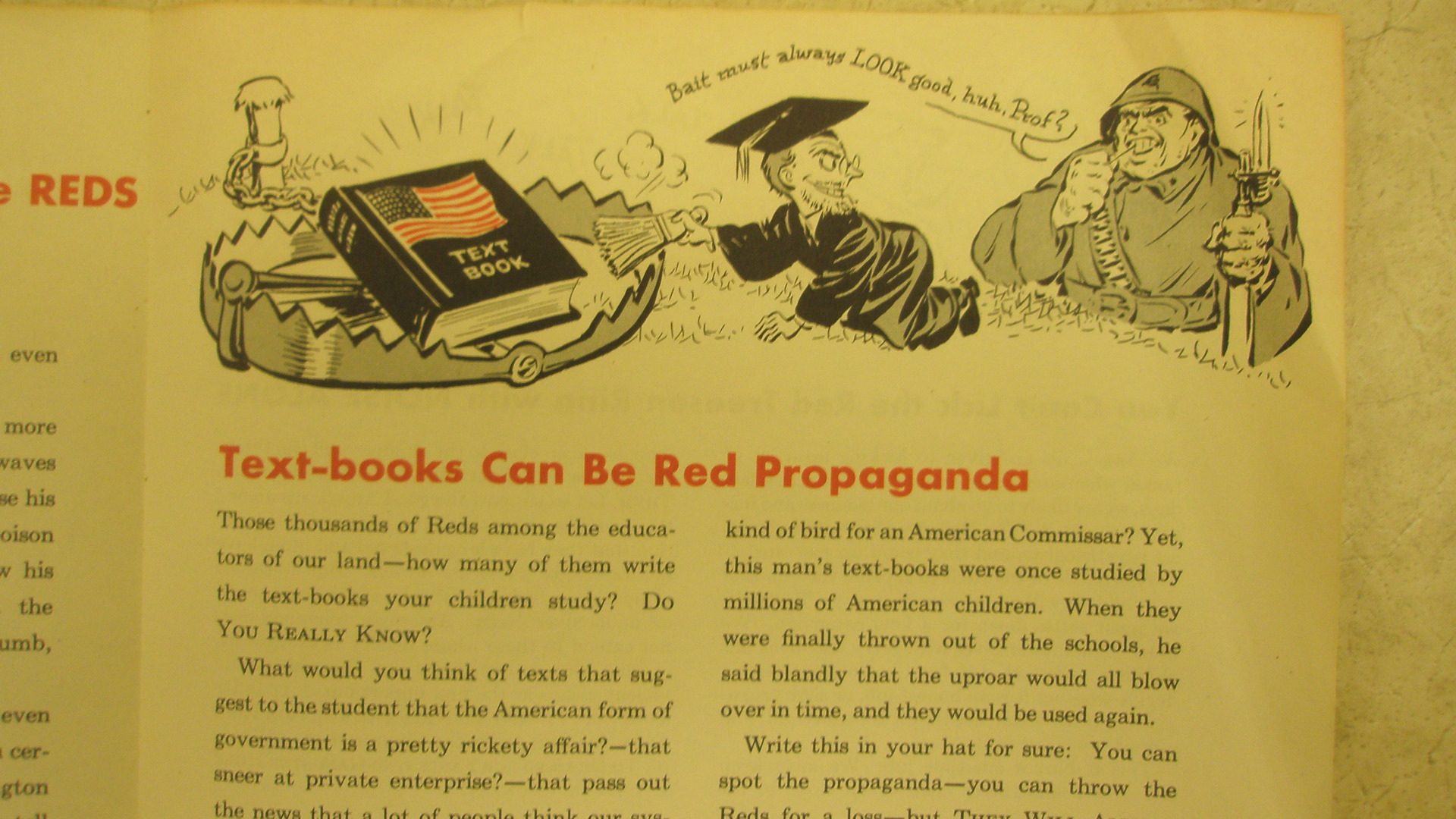
Similarly, an examination of the 1940 campaign to eliminate the social-studies textbooks of Harold Rugg could add a great deal to this conversation.  Before they came under attack from conservative activists in the American Legion and National Association of Manufacturers, these books sold in the millions.  Critics charged, however, that the books would pervert young people’s minds and morals.  As one influential American Legion critic put it in 1940, children reading Rugg’s books would soon be

“convinced that our ‘capitalistic system’ is the fault of selfish fellows like Benjamin Franklin and Thomas Jefferson who wanted to save their property; that the poor man wasn’t given proper consideration, that in Russia the youth are engaged in creating a beautiful, new democratic order, that modern business is for the benefit of the profit-makers, that advertising in an economic waste, that morality is a relative value, and that family life will soon be radically changed by state control.”    

Or consider this gem from the 1950s...

Or consider this gem from the 1950s…

Including the longer history of these sorts of controversies offers more than a chance for historians to sell a few more books.

In cases like this, a longer perspective helps us see that there are indeed ways in which each new book controversy offers “nothing new,” as Perlstein’s title suggested.  But there are other aspects of this long history that show us how things have changed dramatically.

Most compellingly, Perlstein comments that activists in 2013 seem to be reading from a conservative script in some ways.  In every case—whether from 2013 or 1974—activists claim to be mere surprised parents, frightened and disgusted by the literature imposed on their students.

Perlstein compares this to similar stories from the 1970s.  But there are equally familiar stories from much further back.  The wildly popular evangelist Bob Jones Sr. used to warn his audiences in the 1920s about the surprises in store for conservative parents at many modern schools.  One family had scrimped and saved to send their daughter to a fancy college.  The parents had no idea what kind of teaching went on there.  After one year, Jones preached,

“she came home with her faith shattered.  She laughed at God and the old time religion.  She broke the hearts of her father and mother.  They wept over her.  They prayed over her.  It availed nothing.  At last they chided her.  She rushed upstairs, stood in front of a mirror, took a gun and blew out her brains.”

In the 1920s, as in the 1930s, ’40s, ‘50s, and ‘60s, these claims of parent shock and surprise at the influence of schooling have resonated powerfully among American conservatives.

In other ways, the longer view can give us hope that this culture war is not simply and eternally deadlocked.  Since the 1970s, for instance, conservatives like the ones Perlstein mentioned have all argued that their opposition to books such as Toni Morrison’s Beloved did not make them racist.  Perlstein cites 1970s activist Alice Moore, who argued that her policies echoed those of the NAACP.  (Listen to this clip from a 1974 school board meeting in which Moore makes her case: Kanawha Board 4 – 11-74 – 3.

Such conservative efforts to fight an image of racism go back beyond the 1970s.  In a school fight in Pasadena in the late 1940s and early 1950s, conservatives insisted they did not fight against new zoning rules because they were racist.  In one telling comment, a conservative activist insisted that she could not have been racist, since her school petition had been signed by “her Negro, Mexican and Oriental neighbors” as well as whites.  She could not be a racist, she said, because she had quickly become friends with one of her new neighbors, a “Negro physician.”

However, before World War II, conservative activists made no such efforts to combat an image of racism.  As historian Jeffrey Moran has long argued (see here and here) white religious conservatives in the 1920s often paid little attention to their African American co-religionists.

Does it matter?  Can a longer historical perspective give us better understanding of the battle over Beloved in Fairfax County?

If we don’t see the ways conservative school activism has changed over the decades, we might be tempted to conclude too quickly, as Perlstein seems to do, that nothing ever changes.  That would be misleading.

Instead, the longer lens shows us that school battles have indeed changed dramatically over the course of the twentieth and twenty-first centuries.  For those of us who agree with Perlstein that schools should force students to “think and question, to blow apart settled ways of looking at the world, and, yes, force them into mental worlds that disturb,” the historical perspective offers a more profound reason for optimism.

Deneen on Bloom, Conservatism, and Multiculturalism

What does it mean for schools to embrace “multiculturalism?”

One of the sternest and most popular condemnations of the implications of multicultural ideology was Allan Bloom’s The Closing of the American Mind (1987).

Political philosopher Patrick Deneen recently evaluated the book and its legacy.  Deneen concludes that the book could have done much more to condemn the pernicious influence of “multiculturalism.”

As Deneen notes, Bloom explicitly refused the label “conservative.”  Nevertheless, his book became a favorite of those culture-war activists who battled over the cultural content of higher education.  Should colleges teach Plato, Locke, and Shakespeare?  Or should they instead teach Fanon, Derrida, and Gloria Anzaldua?

Bloom plaintively argued that American higher education had abandoned its central mission.   In order for young people to doubt, Bloom argued, they must have some ground from which to question.  They must understand themselves as inheritors of a cultural tradition.  Higher education, Bloom argued, had willfully denied its central role as caretakers of students’ souls.  Instead of teaching young people to explore and question Truth, higher education shamefully evaded its responsibility and taught students instead that Truth was an illusion.

It is easy to see how this argument endeared Bloom to many conservative activists.  Yet Bloom himself did not argue for any specific tradition.  He was not a religious man himself, nor did his book insist that any religion embodied the truth.  Rather, he argued that students must be recognized as yearning souls, rather than transformed into indifferent spiritual husks.

Deneen’s critique raises many intriguing points and is worth reading in its entirety.  Deneen wishes Bloom might have pursued the analysis of multiculturalism to its logical conclusion.  As Deneen writes,

The stronger case would have been to expose the claims of multiculturalism as cynical expressions from members of groups that did not, in fact, share a culture, while showing that such self-righteous claims, more often than not, were merely a thin veneer masking a lust for status, wealth and power. If the past quarter century has revealed anything, it has consistently shown that those who initially participated in calls for multiculturalism have turned out to be among the voices most hostile to actual cultures, particularly ones seeking to maintain coherent religious and moral traditions.

If Bloom could have seen the current state of American higher education, Deneen argues, Bloom would have seen that his 1987 book underestimated the scope of the problem.  In the late 1980s, Deneen believes, advocates of multiculturalism shared Bloom’s sense of the importance of curriculum.  These days, even that awkward defense of multiculturalism has been eclipsed by what Deneen calls “an age of indifference.”  The cultural left no longer insists on a left-leaning set of counter-readings.  Instead, Deneen points out,

not only is academia indifferent to whether our students become virtuous human beings (to use a word seldom to be found on today’s campuses), but it holds itself to be unconnected to their vices—thus there remains no self-examination over higher education’s role in producing the kinds of graduates who helped turn Wall Street into a high-stakes casino and our nation’s budget into a giant credit card. Today, in the name of choice, non-judgmentalism, and toleration, institutions prefer to offer the greatest possible expanse of options, in the implicit belief that every 18- to 22-year-old can responsibly fashion his or her own character unaided.

Whatever Bloom’s personal views, the notion that schools at every level must teach a set of core values has been and remains central to conservative thinking about schooling and education.  The central issue remains the question of the function of schooling.  Conservatives embraced Bloom the skeptic because he made a powerful argument in favor of school as a transmitter of cultural values.  “Multiculturalism,” in contrast, became a label for a very different vision.  For multiculturalists, the purpose of school was to help students overcome their inherited cultural values, clearing the way for a logical, tolerant, reasonable set of beliefs.

Does Loving the Bible Make Americans Racist?

Yesterday on GetReligion Terry Mattingly asked a hard question: “does anyone have any hard evidence that moral conservatives are more likely to be racists?”

Mattingly critiqued a pre-election story on NPR, in which David Cohen, a University of Akron political scientist, opined that President Obama’s race was a factor for many conservative voters.

Mattingly suggests issues such as abortion weigh more heavily on the decisions of “moral conservatives” than do issues of race.

The connection between white religious conservatives and racism is one I’ve been wrestling with lately in a book chapter I’m working on.  In the 1974 school controversy in Kanawha County, West Virginia, white conservative protesters (usually) insisted they were not racist.  Yet their liberal/progressive opponents, including an investigating committee from the National Education Association, usually assumed that they were.

It was a generation ago, to be sure, but in the 1974 controversy, some book protesters did indeed seem to be motivated largely by anti-African American racism.  For instance, the local Ku Klux Klan held sympathy rallies for the conservative protesters.

But other conservative protesters presented what seems to me to be solid evidence for their anti-racist conservatism.  Many religious protesters, such as Karl Priest, Avis Hill, and Ezra Graley, noted the racial balance of their church communities, including African Americans in leadership roles.

More secular protesters such as Elmer Fike noted that conservatives voted in large numbers for a conservative African American candidate for the state legislature, while liberals did not.*

Many liberals dismiss all such conservative claims of anti-racism as mere window dressing.  As we’ve discussed here recently, there is a long tradition among conservatives of using coded language to express racist sentiments in an apparently non-racist way.

What would it take for conservative anti-racism to be taken seriously?  One comment on Mattingly’s essay noted a 2007 PhD dissertation by Inna Burdein at SUNY-Stony Brook, “Principled Conservatives or Covert Racists.”  In her study, Burdein concluded that social conservatives tend to privilege racial considerations, while economic conservatives did not.  In other words, Burdein found that white “moral conservatives”–what we’re calling Fundamentalist America–would tend not to vote for African American candidates.

I don’t think Mattingly would insist that all white “moral conservatives” would vote for an African American President.  Some white conservatives are likely motivated by racism, to some degree.  But I think Mattingly’s question is still very important.  It does not seem that NPR’s story consulted work such as Burdein’s.  Commentators such as David Cohen simply take for granted the preeminence of white racism in conservative politics.

*This claim is reproduced in James Hefley, Textbooks on Trial (Wheaton, IL: Victor Books, 1976), pg. 171.

IN THE NEWS: Faith and Race

What does it mean to be a citizen of Fundamentalist America?  For some, it means making hard choices.

For instance, the Reverend Keith Ratliff of Des Moines, Iowa recently resigned his leadership post in the NAACP.  He did so after the NAACP officially endorsed same-sex marriage.  Ratliff was forced to choose between his religious beliefs and his leadership post, and he chose religion.

Ratliff’s story highlights the changing nature of Fundamentalist America.  For most of American history, conservatives, like progressives, have been starkly divided by the color line.  The recent decisions of prominent African American conservatives, like Ratliff, to emphasize their conservative ideology and theology demonstrates this change.  Even before resigning his leadership post in the NAACP, for instance, Ratliff publicly endorsed conservative Republican Bob VanDer Plaats for governor in 2010.

As reported by Catholic Online, Ratliff defended his decision as part of his Biblical faith:

During a Statehouse rally in March 2011, Ratliff said his support for traditional marriage was biblically based, adding, “This isn’t a private interpretation, a Burger King religion, and by that I mean a ‘have it your way’ religion.”

Traditionalist Teaching for Progressive Teachers? Lisa Delpit and Fundamentalism in Black and White

Fundamentalists don’t like progressive education.  They may not realize that they have some potential allies deep in the heart of the academic education establishment.

What do fundamentalists mean when they fight against “progressive education?”  For one thing, fundamentalists tend to pooh-pooh reading instruction that allows children to ‘discover’ reading on their own.  And they dismiss the notion that classroom teachers should put authority in the hands of students.  Also, fundamentalists often look askance at education professors who advocate soft-heading, child-centered classroom teaching that fails to deliver basic information and academic skills.

Generally, fundamentalists make these complaints from outside of the academy.  Some historians and other prominent academics—folks such as Arthur BestorRobert Hutchins,  or Arthur Schlesinger, Jr.—have critiqued the claims of progressive education, but most of the effective critics have worked outside of higher education.  But in the past generation, at least one prominent academic educator has critiqued “advocates of any progressive movement” who fail to consider the opinions of those “who may not share their enthusiasm about so-called new, liberal, or progressive ideas.”  The work of this world-famous educational activist is read at every school of education, especially ones in which teachers are trained to use progressive teaching methods.

Then why does she talk this way?  Because she framed the issue not as traditional and progressive, but as black and white.  Her name is Lisa Delpit, and her traditionalist critique of progressive education did not lead to her exclusion from the education academy.  On the contrary, she has received some of the academy’s most prestigious awards for her work, including a MacArthur “Genius” award in 1990 and Harvard Graduate School of Education’s Outstanding Contribution to Education award in 1993.

To be clear, Delpit demonstrated considerable differences from many other traditionalist education activists.  For example, she backs a multicultural approach to education, most conservative traditionalists do not.  (See the ILYBYGTH discussion of traditionalist critiques of multicultural education here, here and here.)  She supports reading in depth and excoriates rote instruction.

But she also pushes a traditionalist ideology of teaching.  She offers withering criticisms of progressive teachers’ justifications.  In one career-making speech and article from the late 1980s, Delpit castigated progressive educators for their misplaced softness toward students.  She cited with approval one African American classroom teacher who described her anger at white progressive teachers as “a cancer, a sore.”  This teacher had stopped arguing against progressive methods.  Instead, she “shut them [white progressive teachers and administrators] out.  I go back to my own little cubby, my classroom, and I try to teach the way I know will work, no matter what those folk say.”  Delpit suggested that a direct-instruction model matched more closely the cultural background of most African American students.  In one model Delpit described favorably, the teacher is the authority.  The goal is to teach reading via “direct instruction of phonics generalizations and blending.”  The teacher keeps students’ attention by asking a series of questions, by eye contact, and by eliciting scripted group responses from the students.  Such traditionalist pedagogy, Delpit noted, elicited howls of protest from “liberal educators.”

In a sentence that could come straight from such conservative traditionalist leaders as Bill Bennett or Max Rafferty, Delpit supported the notion of many African American educators that “many of the ‘progressive’ educational strategies imposed by liberals upon Black and poor children could only be based on a desire to ensure that the liberals’ children get sole access to the dwindling pool of American jobs.”

In another critique, Delpit argued that white, middle-class teachers hid their classroom authority in ways that were confusing to poor and African American students.  Teachers of all backgrounds, Delpit suggested, need to be more explicit about their power and authority in the classroom.  A good teacher, Delpit noted, was seen as both “fun” and “mean” by one African American student.  Such a teacher, Delpit’s interviewee argued, “made us learn. . . . she was in charge of that class and she didn’t let anyone run her.”

More important for fundamentalist activists, Delpit’s voice is not alone.  A call for traditional pedagogy and schooling seems to be gaining adherents among African American parents and educators.  We could look at the deep traditionalism of such prominent schools as the New York Success Academy Charter Schools.  Or we could probe the attitudes of those who run KIPP (Knowledge Is Power Program) Schools, which tend to serve significant numbers of African American students.  In a recent article about school “paddling” in USA Today, one African American school administrator confirmed that she believed in spanking “because I’m from the old school.”

The numbers indicate African American students tend to receive corporal punishment more often than students of other racial backgrounds, but don’t indicate the level of support for such punishment among African American teachers as opposed to teachers of other races.  There are some indications that African American parents tend to use corporal punishment more often than other groups.  This would support Delpit’s assertion that many African American students have different cultural expectations from other students when they get to school.  But the same study asserts that a huge majority of parents of other groups also use corporal punishment at home.  And, indeed, there is a lot of support for corporal punishment at school among white conservative activists.  But such support generally comes as part of a broader traditionalist, anti-progressive ideology of schooling.

Delpit’s argument is different.  She argues for traditional authoritarian teachers within a progressive, multicultural educational system.

What does this mean?  I’ve got a couple of reflections, and I’d welcome more.

For one thing, it tells us something about the current state of education scholarship.  Seen optimistically, we might conclude that the popularity of Delpit’s work proves that education scholars are willing to embrace a true diversity of opinion.  That is, education scholars might not be the petty intellectual tyrants some traditionalists accuse them of being.  To cite just one example, arch-traditionalist Max Rafferty in 1968 accused the “education bureaucrats” of only speaking to regular people “with that air of insufferable condescension.”  Such “educationists,” Rafferty charged, only listened to one another; they only hoped to turn America’s schools into something approaching a “well-run ant hill, beehive or Hitlerian dictatorship.”  Delpit’s example of progressive traditionalism might suggest that education scholars are more open to dissent than Rafferty and others have consistently charged.

In a less rosy light, though, we might conclude that this is yet another example of the ways the mainstream academy is hamstrung over racial ideology.  We might wonder if Delpit’s ideas would be welcomed as fervently if education scholars weren’t so terrified of being considered racially insensitive.  It helps, of course, that Delpit is a wonderful writer and powerful polemicist.  But it is hard to ignore the question: How warmly would a scholar be welcomed who trashed the idea of progressive pedagogy in general?  Not just for one group of students, but for students and schools in general?

One other point jumps out at us: we apparently need to be more careful when we talk about traditionalist education.  I’ll plead guilty.  I am most interested in those traditionalists who act out of what we can fairly call a conservative impulse to transform American schools and society.  Folks like Rousas Rushdoony, Max Rafferty, Sam Blumenfeld, Mel and Norma Gabler.  Groups like the Daughters of the American Revolution and the American Legion.  Activists from these groups have long believed that teaching must be made more traditional so that American society itself can reclaim some of its lost glory.  But there are traditionalists like Delpit who hope that schools will transform school and society in a vastly different way.

Perhaps we need to treat “educational traditionalism” the way we treat “evangelicalism.”  A lot of folks, scholars and normal people alike, tend to treat “evangelicalism” as if it were the sole domain of white, conservative folks such as Billy Graham and Jerry Falwell.  But religious historians are also interested in other forms of evangelicalism.  There have always been leftist evangelicals, for instance, as Raymond Haberski has recently noted.  And, of course, there has always been a strong evangelical tradition among African Americans.

Perhaps the most important notion to think about here is that we have more than one kind of educational traditionalism.  Bashing progressive education has long been the national pastime of educational conservatives.  For the last twenty-five years or so, such conservatives have been joined by an influential cadre of mainstream education scholars.

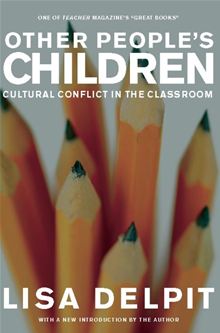
Further reading: Lisa Delpit, “The Silenced Dialogue: Power and Pedagogy in Educating Other People’s Children,” Harvard Educational Review 58 (Fall 1988): 280-199; Delpit, (1986). Skills and other dilemmas of a progressive black educator. Harvard Educational Review, 56(4), 379-386; Delpit, Lisa. (1995). Other People’s Children: Cultural conflict in the classroom. New York, NY: The New Press; Delpit, L & Perry, T. (1998). The Real Ebonics Debate: Power, Language, and the Education of African-American Children (Eds.). Boston, MA: Beacon Press; Delpit, L. & Dowdy, J. K. (2002). The Skin That we Speak: Thoughts on language and culture in the classroom (Eds.). New York, NY: The New Press; Delpit, L. D. (2012). Multiplication is for White People: Raising expectations for other people’s children. New York:The New Press.

Governor Haley and the Changing Face of Fundamentalist America

Governor Nikki Haley of South Carolina has a new book out.  The cutely titled Can’t Is Not an Option may be a bald-faced bid for the 2012 Republican vice-presidential nomination, but it can also tell us something about the ways Fundamentalist America is changing.  The book itself sounds sugary, but Haley’s personal story is compelling.

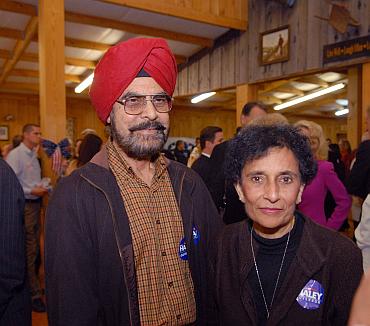
Haley is an Indian-American child of immigrants.  The fact that a dark-skinned female politician whose father wears a turban can succeed as a conservative Republican politician in a state known for racism and evangelical Protestantism means a lot. 

Haley joins a small but growing list of non-white conservative heavy hitters: businessman/politician Herman Cainwriter Dinesh D’Souza, politicians Bobby Jindall and Allen West, and jurist Clarence Thomas, among others.  Such a showing, especially among African Americans, makes a good deal of sense from a fundamentalist perspective.

Conservative intellectuals, notably those at the Heritage Foundation, have made a concerted strategic effort to overcome fundamentalism’s traditional connection to white supremacist ideology.

But although it may make strategic sense, it is a tall order politically.  African Americans have been tightly linked to the Democratic Party since the 1930s.  Before that, African American voters stuck just as close to the Republican Party, the Party of Lincoln.  For most of American history, the vortex of race and race consciousness has overwhelmed all other identity issues, pushing most African Americans to vote first as African Americans, and only second as conservatives, liberals, secularists, religious, etc.

But beyond party politics, African Americans tend toward a deep fundamentalism.  Gallup polls consistently demonstrate this.  For example, one 2005 poll showed that about seven in ten African Americans called themselves “evangelical” or “born again” Christians.  African Americans, according to a 1999 Gallup/CNN/USA Today poll are significantly more likely (85%) to support school prayer than are whites (69%).  This conservative religiosity among African Americans has influenced cultural attitudes among African American young people as well.  A 2002 poll found that only 8% of African American teens say they drink alcohol, compared to 25% of white teens, likely due to higher rates of conservative religiosity.  Among non-whites in general, according to a 2003 poll, only 52% think that premarital sex is morally acceptable, compared to 59% of whites.

Race is a tough issue for fundamentalists.  There are plenty of fundamentalist whites who seem to cling to traditionalism in their white supremacist ideology, just as they cling to traditionalism in religion, education, and culture.  But non-whites, in large majorities, are fundamentalists in everything except party politics.  If more non-whites like Nikki Haley continue to emphasize their cultural conservatism, and if they tie that cultural conservatism to political conservatism, then more and more non-whites may continue to embrace all the meanings of Fundamentalism.

IN THE NEWS: Arizona Fights the Cult of Multiculturalism

In today’s New York Times, you’ll find an update on Arizona’s remarkable effort to purge its schools of what educational traditionalists might call “The Cult of Multiculturalism.”  We’ve written about traditionalist objections to multicultural ideology here, here, and here.  Arizona’s law makes these theoretic objections legally enforceable.

Today’s article focuses on the dispute between the state and the Tucson school district.  Since January 1st, the school district has been ordered to enforce Arizona’s 2010 law.  According to the Huffington Post, Judge Lewis Kowal agreed with the state in late December that Tucson’s Mexican-Studies curriculum was guilty of “actively presenting material in a biased, political and emotionally charged manner.”

The law itself, passed two years ago, declared that no school curricula in Arizona could legally

  • Promote the overthrow of the United States government.
  • Promote resentment toward a race or class of people.
  • Are designed primarily for pupils of a particular ethnic group.
  • Advocate ethnic solidarity instead of the treatment of pupils as individuals.

The state superintendent of education at the time, Tom Horne, planned an energetic enforcement of the law.  According to a Fox News story, Horne declared in 2010,

Traditionally, the American public school system has brought together students from different backgrounds and taught them to be Americans and to treat each other as individuals, and not on the basis of their ethnic backgrounds.  This is consistent with the fundamental American value that we are all individuals, not exemplars of whatever ethnic groups we were born into. Ethnic studies programs teach the opposite, and are designed to promote ethnic chauvinism.

In today’s New York Times story, John Huppenthal, the new state superintendent of public instruction, told a reporter he viewed the enforcement of the law as a war.  Quoth Huppenthal, “This is the eternal battle, the eternal battle of all time, the forces of collectivism against the forces of individuality.”

We can’t help but wonder what Arthur Schlesinger Jr. would make of this law.  In his 1998 book The Disuniting of America the eminent historian denounced the “cult of ethnicity [that] has arisen both among non-Anglo whites and among nonwhite minorities to denounce the goal of assimilation, to challenge the concept of ‘one people,’ and to protect, promote, and perpetuate separate ethnic and racial communities.”

But in Arizona’s case, the fight against the tendency of multicultural education to promote what Schlesinger called the “fragmentation, resegregation, and tribalization of American life” has included some ideologically extraneous elements and politically unpalatable images.

First of all, the law itself targets not only ethnic-studies classes, but includes a remarkably broad shot at any schooling that “promote[s] the overthrow of the United States government.”  This boilerplate antiradical language would feel entirely at home in earlier generations of legislative attempts to control schooling.  In the 1920s, for example, the bundle of state laws that were generally called “anti-evolution” actually had a much broader goal.  They hoped not only to ban evolution but to assert traditional Protestant control of public schooling.  As I argued in my book Fundamentalism and Education in the Scopes Era, school laws with these limitless mandates are more of a cultural statement than a practical attempt at crafting educational policy.

For example, a law passed by the US Congress in 1924 prohibited teachers in Washington DC from any teaching that smacked “of partisan politics, disrespect for the Holy Bible, or that ours is an inferior form of government.”  The goal was more a statement of support for traditional values than to regulate school policy.  Arizona’s inclusion of a clause banning anti-US-ism seems similarly vague and symbolic.

Also, as Arizona state superintendent of public instruction John Huppenthal made clear, this law is part of a broader political and cultural effort to battle not only multiculturalism, but any perceived victory by “the forces of collectivism.”  Not only does this bundle the Arizona law into a broader package of anti-leftist activism, but it also reflects the simple political partisanship behind Arizona’s efforts.

Part of the energy behind the 2010 law came from a perceived effort by Democratic activists to use ethnic-studies programs as a way to turn Latinos against the Republican Party.  One of the reasons for the law was Republican outrage about a speech at Tucson High School by activist Dolores Huerta in which she assured students, “Republicans Hate Latinos.”

Republican lawmakers have united behind this school law as more than a way to keep schools from teaching what Schlesinger denounced as the “cult of ethnicity.”  They also see the programs as part of a deliberate partisan effort to undermine their influence with Latino voters.

However, their efforts might do more to undermine that influence than any ethnic-studies programs ever could.  It doesn’t take a political genius to see the electoral damage that might result from the image of school administrators going into classrooms in Tucson collecting copies of seven prohibited books.  Such stormtrooper tactics to save children from the likes of Paolo Friere’s Pedagogy of the Oppressed  and F. Arturo Rosales’ Chicano! The History of the Mexican-American Civil Rights Movement spell political suicide.

I imagine that Schlesinger and others who oppose the ideological overreach of multiculturalist education might recoil from these heavy-handed partisan attempts to control Tucson’s schools.  Such critics of multiculturalism, I imagine, would hope that the effort to ban aggressive assertions of the “cult of ethnicity” must only limit itself to the realm of ideas, not to knee-jerk partisan politics and twenty-first century book burnings.