Are Schools Guilty in Sexual Assault Cases?

It is a sobering question to ask: Do schools—all schools—put kids in danger? Another terrifying news story of rape at school demonstrates the point. Because schools take authority over young people, because schools put young people together, because schools necessarily put students in close private contact with peers, coaches, and teachers, schools of all sorts become the arena for rape, assault, and abuse. No type of school seems immune, but each type of school has its own unique blend of dangerous cultural components.

Exception?  Or rule?

Exception? Or rule?

The story of Owen Labrie at the elite St. Paul’s School in New Hampshire proves that parents can’t buy themselves out of this dilemma. Labrie was accused of participating in a tradition of a “senior salute,” in which students target younger students for sexual conquests.

Before we look more closely at the Labrie case, though, we need to ask some uncomfortable questions:

  • Do all schools inadvertently support rape culture?
  • Is there no way to protect vulnerable young people?
  • Does the culture of school push administrators to downplay the sexual dangers of their institutions?

In recent years, I’ve been exploring the troubled history of evangelical colleges and universities. As we’ve explored in these pages, such schools have a history of sweeping cases of sexual assault under the rug. At some of the more conservative schools, loyalty to the administration has trumped care for victims of assault and abuse.

But such schools are not alone. Though I’ve been accused of ignorance and insensitivity for pointing this out, secular and pluralist colleges also have a terrible record of ignoring sexual crimes on their campuses.

What’s worse, these things are not incidental or accidental. The history and culture of these schools contributes directly to the atmosphere of sexual aggression. In some schools, for example, football coaches and players have been elevated to godlike status. They have been protected from punishment for terrible crimes. At other schools, administrators pointedly ignore an alcohol-soaked “party culture” that attracts students but leaves them woefully vulnerable to assault and abuse.

As the recent case at St. Paul’s School shows, even the fanciest private prep schools haven’t avoided this dilemma. Though the school has denied it, some involved parties have accused St. Paul’s of fostering a culture of entitlement, a culture of callous arrogance, which turned vulnerable students into sexual targets.

Both sides agree that Owen Labrie and a younger student met on a school rooftop. They engaged in some kissing at first. Then the sexual activity escalated. The victim accused Labrie of ignoring her repeated attempts to stop. Labrie denied that they had had vaginal intercourse and denied that the victim had said “no.” The jury seems to have split, acquitting Labrie of the most serious felony rape charges but convicting him of several counts of electronic predation.

Who is guilty here? The victim’s family charged that the school “allowed and fostered a toxic culture that left our daughter and other students at risk to sexual violence.” As the New York Times reported, even Labrie’s defense accused the school of creating “an educational haven with a troubling culture of sex, entitlement and misogyny.”

Is the school culpable? Even more troubling, we need to ask if schools in general are culpable. Elite schools create environments of entitlement. Football schools create environments of hero-worship. Fundamentalist schools create environments of victim-blaming. Secular schools created environments of drunken hook-ups.

All schools, it seems, have their own dangerous mix of cultural factors. It can’t be enough for school administrators to issue statements of remorse, if those same administrators have tacitly condoned the things that encouraged sexual assault and abuse in the first place.

Us & Them Visits the Gablers

Who’s in charge of American public education? Some folks say that “progressive” ideas took over education back in the 1930s. John Dewey and his ilk, these folks insist, turned American education in progressive directions. But what about all the ferocious and successful conservative input into what schools teach? In the latest episode of Trey Kay’s Us & Them, Trey looks at the influence of Mel and Norma Gabler since the 1960s.

What Norma says goes...

What Norma says goes…

Trey only has a half-hour to work with, so he couldn’t include the longer historical context. For those in the know, however, Texas’s culture-war battles over textbooks and curriculum go back far longer than the 1960s, and they have changed in bigger ways than he has time to delve into.

Nevertheless, everyone interested in culture wars and education should spend a half-hour with the new Us & Them episode. Trey talks with former Texas board of ed chairman Don McLeroy, as well as with liberal critic Kathy Miller.

Throughout the 1990s and early 2000s, Texas’s fights over textbooks attracted attention nationwide. Conservatives pushed for more traditional visions of American greatness. Liberals fumed that Texas’s culture-war politics doomed schoolchildren to a skewed vision of the past. (For the best introduction to those fights, be sure to check out Scott Thurman’s documentary The Revisionaries.)

Before those recent battles, however, Mel and Norma Gabler made themselves famous as mom-and-pop culture-war heroes. Beginning in the 1960s, the Gablers insisted on their rights to speak at the hearings of the Texas State Board of Education. They compiled damning lists of factual errors in adopted textbooks. More important, they insisted on revisions to make textbooks more traditional, more religious, and more patriotic.

As you might expect, the Gablers play a leading role in my recent book about conservative educational activism. Long before they waged their gadfly campaign, however, similar culture-war fights roiled educational politics in Texas and elsewhere. Going back to the 1920s, Texas demanded and received special editions of its textbooks. The board demanded the excision of evolution and anti-Southern history. The board only adopted what one publisher in 1926 called “tactfully written” books that did not mess with Texas.

Indeed, when the Gablers became involved, they looked to several existing organizations for guidance and inspiration. As I recount in my book, the first group they looked to was the Texas chapter of the Daughters of the American Revolution. Since the 1920s, the DAR had played a leading role in textbook publishing and culture-war monitoring. In 1951, for example, the Texas DAR mobilized its thousands of members to make sure that schools and textbooks “taught the principles embraced by our forefathers.” That year, the Texas DAR claimed to have sent 1,695 of its members to observe history classrooms across the state.

If we hope to understand culture-war politics, in Texas and elsewhere, we need to be aware of this longer history. We also need to understand the ways 21st-century ed politics have changed. Throughout the twentieth century, conservative activists like the Gablers envisioned themselves as outsiders, charging hard to block the work of a progressive educational establishment. Like the Gablers and the DAR, conservative groups such as the American Legion successfully blocked textbooks they didn’t like.

By the 21st century, however, things had changed. Some conservative intellectuals have argued that dominant efforts in recent education policy, such as the Common Core standards and the No Child Left Behind Act, were actually inspired by conservative ideas and intellectuals. As Michael Petrilli and Frederick Hess of the American Enterprise Institute claimed about NCLB, that law “sketched a vision of reform informed by conservative intuitions and insights.”

Instead of the Gabler-style outsider approach, conservatives these days can claim to have taken over key parts of the educational establishment.

No one can gainsay the enormous influence of the Gablers on educational culture wars in the twentieth century. Everyone who is interested will benefit from listening to the Us & Them episode. Just remember to keep it in historical context!

The Crack Appears at Christian Colleges

It wasn’t hard to predict, but I’m surprised it has come so quickly.

World Magazine reported recently that a potential split had developed among the members of the Council for Christian Colleges and Universities. Two schools, it seems, have liberalized their policies about homosexual employees. Will this lead to a break in the CCCU? If so, it might be the last blow for a network that started with big ambitions.

SAGLRROILYBYGTH will know that I hardly ever get anything right. It is famously difficult for historians to use the past to predict the future. But in my current research, I see time and again that issues such as homosexuality have divided the family of evangelical colleges and university. It was not very hard to see that the recent SCOTUS decision about same-sex marriage would lead to a split among evangelical schools.

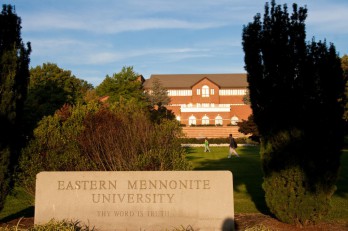
eastern mennonite university

A founding member of the CCC upsets the applecart…

Exactly three months ago in these pages, I put two and two together: the Supreme Court decision in favor of same-sex marriages would present evangelical schools with a terrible dilemma.

Sure enough, Goshen College and Eastern Mennonite University recently announced their plans to hire non-celibate homosexual faculty. They do not necessarily want to leave the CCCU, though. Leaders of the CCCU network are wondering: Will this lead to a split? Will member schools be forced to choose between a homosexual-friendly evangelical network and a traditional gay-is-not-okay one?

Unfortunately, the history of the CCCU offers little help on that question. In its early days as the Christian College Consortium, the network had some grandiose dreams. Some leaders, such as Hudson Armerding of Wheaton College, fantasized about a multi-campus evangelical university. The dream was to concentrate resources in order to keep up with secular colleges.

As far back as the 1950s, some evangelical college leaders toyed with this idea of a California-style mega-versity. Some schools, Armerding hoped, could offer more intense engineering programs. Others might focus on missionary preparation or languages. Yet others could host pre-med degrees. All of them would contribute toward a central graduate campus, too.

In this way, the future CCCU would remain orthodox in religion, yet be able to compete with big public and rich private universities.

As Armerding put it in a confidential letter to his fellow school leaders in 1955,

Each particular college would offer the same undergraduate instruction for the first two years and then would offer a limited number of majors for the final two undergraduate years and graduate studies leading to the doctorate. . . . There would be the possibility of mobilizing the entire evangelical community to support the proposed Christian university, challenging their loyalties through familiar and accepted institutions to which this constituency had already committed itself. Hence the continuing support of the university would be relatively assured. The geographic distribution would make possible a nation-wide impact upon the social and cultural life of the nation and would facilitate the educating of students who might otherwise be unable to travel to one central location.

Speaking from Gordon College near Boston, President James Forrester wrote in 1961 to evangelical intellectual leader Carl F. Henry to support the idea:

I have wondered if a beginning might not be made toward the consolidation of some of the evangelical effort at the undergraduate level on such a campus as ours. This could be done under a federated scheme similar to Oxford, Cambridge, the University of Toronto, Claremont College, and other associated programs. I think particularly of King’s and Barrington and wonder if some person who transcends the entrenched interest of our three schools, could bring together in conference key personnel for a discussion of this possibility. I do find that the limited assets available to Christian higher education in the area are divided among Wheaton, King’s, Barrington, and Gordon. All of us struggle with capital problems and operating deficits. . . . I am also conscious that with such a fractured effort as we now represent, we are no match for the consolidated interests of educators committed to the philosophical position of a naturalistic humanism in the university field. I also feel that this could be the natural groundwork from which could be extended ultimately your magnificent concept of a great Christian university.

It didn’t work out that way. In practice, the CCCU became a loose association of schools. So loose, in fact, that no one seems really sure what will happen now. Member colleges pledge vaguely

To advance the cause of Christ-centered higher education and to help our institutions transform lives by faithfully relating scholarship and service to biblical truth.

Can they do that if they welcome non-celibate homosexual faculty and staff? Or do those schools need to go elsewhere? If they do, how many of the 181 member schools will they pull with them?

From grand 1950s dreams of a powerful and aggressive evangelical multiversity, it seems evangelical colleges will be split yet again into smaller and smaller organizations.

Teaching Kids about Rape

How can we lessen the horrible frequency of sexual assault in colleges? The New York Times wants us to start in middle school. Their proposal suffers from a terrible case of Manhattan-itis.

NYT editors pointed to studies from Illinois and New York that seem to bolster their case. When kids learn to communicate their feelings, when they learn explicitly about safe places and violence, the amount of “sexual harassment” and “inappropriate touching” drops.

Manhattan, Kansas

Manhattan, Kansas

It makes sense to me personally. As a teacher and a parent, I’ve seen the positive results when young people learn to speak openly and frankly about all aspects of sex.

But as a historian, this proposal seems to willfully ignore reality. The NYT editors note that “some parents may object to their children learning about sexuality in middle school and even before.” Yet they seem not to worry about such predictable objections. If such programs succeed in the Netherlands, the editors assert, they can work here.

As I argued in my recent book, folks like these NYT editors (and me) have always woefully misunderstood the true political and cultural equations of schooling in the US of A. Things that may seem possible in a clinical trial are just not possible on a wider scale.

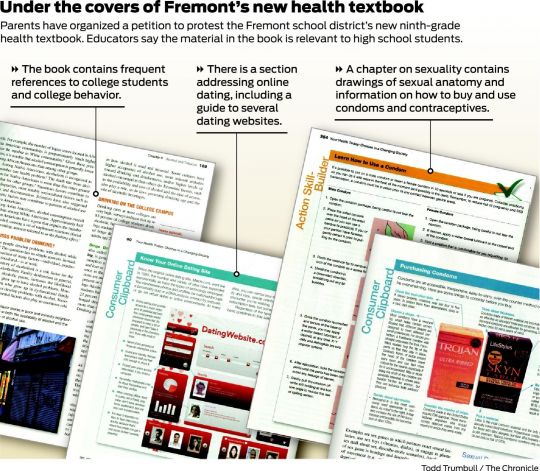
Consider just a few examples from recent history. In March, for instance, Kansas considered a law that would open teachers to prosecution for teaching children about sex—even from an approved sex-ed curriculum. That’s right: Teachers who taught explicit sexual terms could be prosecuted as sexual predators if they taught their classes as those classes were designed to be taught.

This is not just another case of something being the matter with Kansas. Last summer, parents in the San Francisco Bay Area protested about a sex-ed textbook that taught their middle-schoolers about sex. The problem was not that the textbook was not accurate. The problem was not that the material might not help students get a fuller and better understanding of sexuality.

The problem, rather, was more fundamental. Parents in these United States do not want their children to learn about sex in an explicit way. They do not want their children to know about rape, sexual assault, and other things.

And this is the problem with the New York Times editorial. The central question is not whether or not such programs are effective. The central question is not whether or not such programs work in the Netherlands. Rather, the most important question—and one that the New York Times sidesteps—is how to implement such programs in the face of the predictable and powerful opposition they are sure to elicit.

Too titillating?

Too titillating?

We have a difficult time understanding a seeming paradox: Americans want their schools to do more than teach kids things that are true. In many subjects, Americans insist that their schools help keep children ignorant. Or perhaps a better term is innocent. Sex, evolution, lynching . . . there are a host of truths that public schools are meant to un-teach. Not only can schools not do a good job teaching these things frankly and fairly, but in practice—considering the political realities—many schools are expected to do a good job of keeping children ignorant of such things.

Rule of thumb: schools won’t do anything you wouldn’t feel comfortable doing in a formal toast at a church wedding. Is it possible to use such a platform to speak frankly about sexual assault? Yes, and in some schools (and some weddings) it is done. But by and large such tactics are not considered acceptable by Americans. Teaching a child to say “vagina” and “penis” is difficult enough. Any hope to convince parents of the need to teach kids to say “rape” and “sexual assault” must be far more fraught with difficulty than the New York Times admits.

Is THIS the Future for Christian Colleges?

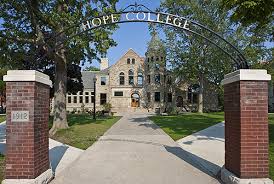
Now what do we do? That is the question plaguing conservative college administrators nationwide. Since the Supreme Court decision in favor of same-sex marriages, many evangelical schools have wondered if they will have to change the way they do things. In Michigan, Hope College has announced its accommodation with the ruling. Will other Christian colleges do the same thing?

The gateway to the future?

The gateway to the future?

As the Sophisticated and Good-Looking Regular Readers of I Love You but You’re Going to Hell (SAGLRROILYBYGTH) are well aware, questions of homosexuality and same-sex marriage have long bedeviled evangelical colleges. For non-evangelicals, it might come as a surprise to hear that the issue is contentious. After all, at most evangelical schools, the official doctrine clearly and resolutely condemns homosexual activity.

Yet at all sorts of schools, the campus community is much more welcoming. At Gordon College recently, the president’s reminder that the school officially bans “homosexual practice” brought furious protests from students and faculty. Even at the far more conservative Liberty University, faculty members do not always take the harsh tone we progressives might expect.

As our Supreme Court decided the constitutionality of state bans on same-sex marriage, many evangelicals fretted that their decision would trash traditional rules on their campuses.

At Hope College in Michigan—a school in the Reformed Church tradition—the leadership and campus has experienced similar turbulence on the issues of homosexuality. In 2010, for example, the administration provoked protests when it banned the film Milk. More recently, the campus has welcomed homosexual student organizations, though the administration has continued to endorse the Reformed position on homosexuality.

In its most recent announcement, the school’s leaders have declared their intention to abide by the SCOTUS decision. From now on, same-sex married partners of college employees will be eligible for the same benefits as heterosexual partners. The administration again affirmed its respect for the Reformed Church’s official doctrine that homosexuality is a sin. That does not mean, however, that the school will contravene the law.

Is this the path other schools will follow? Unlike pluralist colleges, evangelical schools face intense pressure to stay true to traditional beliefs and norms. As Professor Michael Hamilton wrote in his study of Wheaton College,

The paradigm that has dominated Wheaton through the century holds that colleges, more than any other type of institution, are highly susceptible to change, and that change can only move in one direction—from orthodoxy toward apostasy. . . . The very process of change, no matter how slow and benign it may seem at first, will always move the college in a secular direction, inevitably gathering momentum and becoming unstoppable, ending only when secularization is complete.

Hope College may find itself the front line for this debate within the Reformed Church in America. The church as a whole has gone back and forth for decades about the proper Christian reaction to homosexuality. Is it better to embrace the sinner? Or to drive out the sin? Conservatives within the RCA will doubtless take this announcement as proof that Hope has gone soft. Progressives will celebrate it as a small step towards equity.

Other evangelical schools will face similar scrutiny. If they openly welcome homosexual students, faculty, and staff, they will be subject to withering condemnation from conservatives. If they don’t, however, they’ll risk being sidelined, branded as anti-gay bigots.

Gay Marriage and Christian Resistance

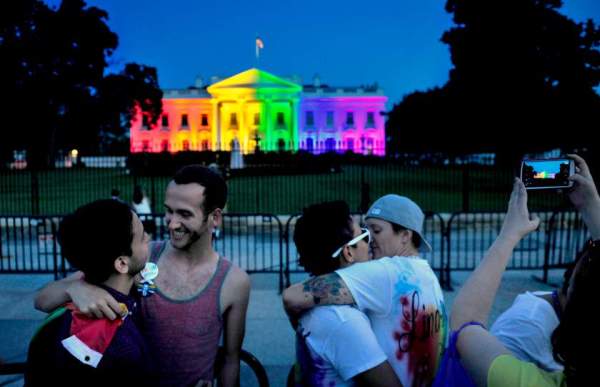
What is a conservative Christian to do? The US Supreme Court’s decision in favor of gay marriage has sent shock waves across America. Will conservative Christians accept this decision? Or, as some have warned, does this move our culture war over sexuality one step closer to real war?

More rainbows than a box of Lucky Charms...

More rainbows than a box of Lucky Charms…

Of particular interest at ILYBYGTH these days, the new ruling will likely meet its first test at conservative religious colleges. As we’ve noted (and as the New York Times eventually noticed) the SCOTUS ruling has brought up questions about the limits of acceptable dissent in higher ed. Can schools discriminate against homosexual “practice?” As I’m writing about in my current book, the same tension played out in the 1970s, when Bob Jones University insisted on its religious right to racial discrimination. It seems colleges will be the first institutions to feel pressure to accommodate demands to end institutional discrimination against homosexuals.

The reaction to the SCOTUS decision has been fast and furious among conservative evangelicals and other Christians. Rick Scarborough of Vision America told the New York Times that the decision must be resisted. “If they change the playing field and make what we do out of bounds,” Scarborough said,

we will disobey; we will disrespect this decision. . . . We’ll treat it like Dred Scott and other decisions courts have handed down over the years that counter natural law. God made a male and a female, and no amount of surgery is going to change that.

Similarly, Robert Jeffress told the Christian Post that the decision proves America’s persecution of Christians. As the Rev. Jeffress put it,

I think today’s decision is just one more step in the marginalization of conservative Christians. I made this argument and have been ridiculed for doing so, but I think it is very legitimate. The Nazis did not take the Jews to the crematoriums immediately. . . . The German people would not have put up with that. Instead, the Nazis begin to marginalize the Jewish people, make them objects of contempt and ridicule. Once they changed the public opinion about the Jewish people, then they engaged the [Holocaust]. . . . Once secularists have made Christians objects of contempt, I think it will be very easy to revoke other rights that they have as American citizens.

And in the pages of World Magazine, Ryan Shinkel advocated Christian resistance to an overweening state and society. “The movement for marital restoration is beginning,” Shinkel wrote just before the SCOTUS decision,

and the chance for moral courage and a life daring to be countercultural is at hand. By continuing to speak up for religious freedom, the restoration of a marriage culture, and dignity of the family in the face of potential setbacks at the Supreme Court, we can become the Nietzscheans who hammer the libertine and atomistic idols of our age.

Secular folks like me, progressive people who celebrate the SCOTUS decision, might blanch at these dire warnings. Some of my friends and colleagues might take these statements as proof that conservative Christians will never admit to marriage equality. But folks like us need to listen also to the other voices of conservative Christians.

In the Washington Post, for example, Russell Moore of the Southern Baptist Convention suggests Christians calm down. It is a terrible ruling, Moore agrees. And it does indeed push conservative evangelicals into a dissenting position that might seem “freakish” these days. But so what? Moore wants conservatives to “embrace a freakishness that saves.”

Similarly, Mark Galli of Christianity Today worries that evangelicals will react badly. “The temptation,” he writes,

is to go off and sulk in our holy corner. Or to dig in our heels and fight harder. Or to lash out in anger. Or to despair. We can do better.

The goal for Christians, Galli writes, is to take confidence that they are on the right side, God’s side. This decision provides another healthy—if intensely uncomfortable—opportunity for Christians to re-engage with important questions above love, marriage, and the proper relationship between Church and society. Though some conservatives might offer extreme rhetoric, Galli warns, evangelicals in America “are far from living at the margins.”

If we are to make sense of the culture-war rhetoric surrounding this SCOTUS decision, we need at least to remember some historical precedent. As I’ve argued elsewhere, for generations evangelical Christians have been battered by landmark SCOTUS decisions that seem to kick them out of public life. In every case, evangelical pundits have insisted that each new SCOTUS decision changed America from a Christian nation to a persecuting Babylon. In every case, however, evangelicals have continued to wield enormous cultural and political power.

Will this decision be any different? Will this decision really change the balance of power in America’s continuing culture-war debates?

College Sex

More bad news: Sexual assault is more than just another crime on college campuses. It is a crime that has been woven into the fabric of college life itself. Will it cause an exodus to conservative colleges?

The Washington Post recently released the findings of its new poll of college life. After surveying 1,053 students and interviewing fifty, the pollsters concluded that a quarter of college women had suffered “unwanted sexual incidents in college” and a fifth had endured “sexual assault.” That is bad news. The worse news is that the cause of these alarmingly high numbers is college itself. Part of what Americans want out of college has long been a licentious student atmosphere. For Frank the Tank and millions of other Americans, the allure of college includes binge drinking, casual sex, and “streaking the quad.”

These numbers have become—like most contentious issues in education—something of a culture-war football. As the Washington Post report points out, different polls have come up with very different results. The Post poll used a broad definition of sexual assault. Victims are those who have experienced

five types of unwanted contact: forced touching of a sexual nature, oral sex, vaginal sexual intercourse, anal sex and sexual penetration with a finger or object. . . . assailants used force or threats of force, or they attacked while their victims were incapacitated.

It is this last phrase that has caused the statistical battle. Last year, a government Bureau of Justice Statistics claimed that only 6.1 out of 1,000 college students experienced sexual attacks, a lower number than non-college students of the same age. But the BJS poll did not include sex that occurred when people were too drunk to give consent.

These days, there are orthodox positions on campus sexual assault. Progressives generally push for harsher punishments for perpetrators. Conservatives often lament the absence of due process on campuses. Hardening culture-war positions can be tested with high-profile cases: Do you think Emma Sulkowicz is a hero or a kook? Do you think Lee Bollinger is a monster?

All sides agree, however, that today’s student culture contributes to the problem. It is normal for students to binge drink. It is normal for students to engage in casual sexual encounters. In such an environment, it can be devilishly difficult to determine if and when students crossed a line from casual drunken sex to incapacitated sexual victimization.

For college leaders, this situation presents an unsolvable puzzle. As historian Roger Geiger has argued, by 1890 most schools participated in the emergence of the modern student lifestyle. Instead of days packed with required chapel visits and several recitations, modern colleges and universities offered students an array of possible majors and a much freer daily schedule. As a result, now-familiar student organizations such as fraternities and athletic teams became important parts of college experiences.

What Geiger called the “collegiate revolution” soon became an expected part of a full college experience. University leaders these days might huff and puff about fighting binge drinking. They might offer counseling and classes about appropriate sexual behavior. But if school leaders really cracked down on the drunken partying that leads to so much of this sexual assault, they’d quickly find themselves out of a job. Alumni donors insist on it. Potential students look for it. Like it or not, one of the expected parts of a college education these days is irresponsible behavior.

As SAGLRROILYBYGTH are well aware, I’m working on a book these days about a dissenting group of colleges and universities. These conservative evangelical schools—schools such as Wheaton College in Illinois and Bob Jones University in South Carolina—have often participated in many elements of modern academic life. For example, like mainstream schools, fundamentalist colleges divided their work into academic disciplines. They encouraged faculty research. They insisted that students complete high school before entering college. All of these things seem obvious to us, but they all came as revolutionary changes between roughly 1870 and 1920.

But fundamentalist schools resolutely refused to accept some of the revolutionary changes at mainstream colleges. For instance, they did not agree to the emerging concept of academic freedom for faculty. At fundamentalist colleges, professors had to agree every year to various school creeds. For students, fundamentalist college life also looked very different. Though most fundamentalist schools allowed student clubs and athletic teams, most of them banned fraternities. They also banned smoking, drinking, and sex.

Fundamentalist colleges have plenty of problems of their own when it comes to sexual assault. Most egregiously, as we’ve noted in these pages, some schools have accused victims of causing the problem. Others have participated in the kinds of shameful cover-up common among mainstream colleges as well.

Yet students at fundamentalist and conservative evangelical colleges will not likely suffer from the same sort of drunken, incapacitated sexual assault that seems so depressingly common at mainstream schools. I’ve been accused of ignorance and insensitivity for pointing this out in the past.

I still can’t help but wonder, though: If the sort of sexual assault reported in the WP poll really shocks people, will the teetotaling atmosphere on conservative campuses begin to seem more attractive? Will secular or liberal Protestants think about enrolling their children at conservative schools just to avoid drunken hookups and assaults?

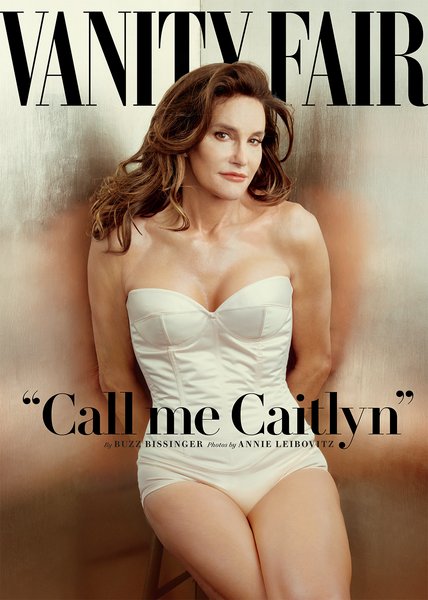
Christians & Caitlyn

What are conservative evangelical Christians to do? Mainstream American culture seems to be celebrating our newfound openness about sexuality and gender identity. Caitlyn Jenner is feted and adored, not stigmatized and isolated. Should evangelicals join in the celebration? In the pages of Christianity Today, evangelical psychologist Mark Yarhouse lays out his vision of the proper Christian response to transgender issues. Will it work? Can it lift evangelical churches above the culture-war fray?

First, the usual caveat: I’m no evangelical. I’m just a mild-mannered historian interested in culture-war issues. Today’s article by Professor Yarhouse will help outsiders like me understand one way conservative evangelicals might understand those issues.

Good news for the Good News?

Good news for the Good News?

Yarhouse works at Regent University in Virginia, where he directs the Institute for the Study of Sexual Identity. For evangelicals, Yarhouse argues, there are three common reactions to today’s discussions about gender dysphoria.

First, some Christians think of it as a question of “integrity.” God created us male and female, some think, and we need to respect that.

Or, Christians might think of gender dysphoria as a “disability.” Like depression or schizophrenia, gender dysphoria is a mental-health issue. It is not a moral question, Yarhouse argues, though the decisions people make as a result of their mental-health issues can certainly have moral consequences.

Finally, Yarhouse notes, many mainstream Americans see gender dysphoria through the lens of “diversity.” Seen this way, transgender persons should be celebrated for their bravery and moral courage.

In language that some conservative folks might find disconcerting, Yarhouse thinks there is value in all three of these approaches. Churches must continue to value ideas about gender integrity, he believes. Understanding maleness and femaleness must be part of any attempt to live Christian lives. But he thinks evangelicals should also approach transgender people with “empathy and compassion.” Not least, Yarhouse values the notion that transgender people should be welcomed and celebrated, just as every person who comes to every church should be welcomed and celebrated.

As he puts it,

When it comes to support, many evangelical communities may be tempted to respond to transgender persons by shouting “Integrity!” The integrity lens is important, but simply urging persons with gender dysphoria to act in accordance with their biological sex and ignore their extreme discomfort won’t constitute pastoral care or a meaningful cultural witness.

The disability lens may lead us to shout, “Compassion!” and the diversity lens may lead us to shout “Celebrate!” But both of these lenses suggest that the creational goodness of maleness and femaleness can be discarded—or that no meaning is to be found in the marks of our suffering.

Most centrally, the Christian community is a witness to the message of redemption. We are witnesses to redemption through Jesus’ presence in our lives. Redemption is not found by measuring how well a person’s gender identity aligns with their biological sex, but by drawing them to the person and work of Jesus Christ, and to the power of the Holy Spirit to transform us into his image.

Churches, Yarhouse argues, must rise above “culture wars about sex and gender that fall closely on the heels of the wars about sexual behavior and marriage.”

Now, I’m not an evangelical and I’m not a transgender person, so I’m probably getting this wrong. But as an outsider, I can’t help but feel underwhelmed by Yarhouse’s prescription. I can’t help but notice that many conservative evangelical communities are influenced at least as much by their conservative identity as by their evangelical one. For many thoughtful conservatives, the rush to embrace transgender people as part of a “new normal” seems pusillanimous. Even if they recognize the Christian weight of Yarhouse’s arguments, they still feel bound to defend traditional gender rules and norms.

And from the other side, if I were a transgender individual, I don’t think I’d feel fully welcomed into a church that still insisted on maintaining a respect for the “integrity” of male-female gender duality. That is, even in the best-case scenario, if a Yarhouse-ite church allowed me to become a member, but maintained a strong sense that I was suffering from a disability and that I was somehow going against the integrity of God’s gender plan, I don’t think I’d rush to join.

Am I off base? Do conservative Christian readers find Yarhouse’s ideas compelling? Do transgender folks?

Christians and the Gay Bandwagon

There’s no question that American attitudes toward homosexuality are changing at a dizzying pace. Conservative evangelical Americans are changing, too. A recent article in the New York Times described a high-level meeting between concerned evangelicals. As I found in the archival research for my new book, evangelicals used to feel an almost murderous fear and hatred of homosexuality. That is no longer the case. But conservative evangelicals still have a hard time justifying their growing acceptance of homosexuality.

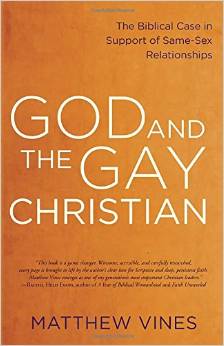
The NYT article describes a meeting at Biola University in California between Matthew Vines and a collection of influential evangelicals. The young Mr. Vines came to public attention recently with his Christian plea for acceptance, God and the Gay Christian. What is the proper evangelical attitude, the discussants asked—the Biblical attitude—toward homosexuality?

A lonely worker in the Vines-yard?  Or the wave of the evangelical future?

A lonely worker in the Vines-yard? Or the wave of the evangelical future?

The fact that this discussion took place at all shows the enormous changes in evangelical America on the subject. But the article raises a perennial question: Why are evangelicals changing? Is it just to keep up with changes in mainstream culture? Do evangelicals simply shift their interpretation of Bible passages when it becomes culturally convenient?

At the outset, I should clarify my position. I’m no evangelical and I have always had trouble understanding how anyone could think other people’s sexuality was their business. For me, the issue of gay rights has always gone beyond big questions of marriage rights to more basic claims to equality. In short, I believe, no one should have to apologize or explain their sexuality. I do think this is the moral high ground, but I recognize that it didn’t take any moral courage for me to get here. The way I grew up, it would be weird for me not to feel this way. I’m sure that if I grew up in different circumstances I would feel very different about it. Nuf sed.

At Biola, organizers invited Mr. Vines to talk about homosexuality and evangelical belief along with a panel of influential figures, including Biola professor and public intellectual Sean McDowell, local pastors Rev. Caleb Kaltenbach and Rev. Ian DiOrio, and Christian radio host Frank Sontag. For hours, the men talked about homosexuality and Biblical belief. Is it possible for evangelicals to understand Romans 1 in any other sense? In that oft-quoted passage, Paul explicitly condemned homosexual practice.

A majority in the room seemed disposed to embrace a change in evangelical attitudes. Vines himself is gay. Kaltenbach has a gay father and two gay mothers. DiOrio has a gay brother and worked in a gay nightclub. But those are not theological reasons.

Evangelicals are in a different position from secular folks. They can’t simply change their beliefs because it seems polite. Rather, they base their ideas on their readings of Scripture. Of course, intelligent evangelicals understand that our interpretation of Scripture can be wrong, even if Scripture itself can’t be. So while secular conservatives such as Dick Cheney can change their minds without much soul-searching, conservative evangelicals need to justify their change in terms of Biblical interpretation.

The Rev. Kaltenbach explained this evangelical dilemma. “In Romans 1,” Kaltenbach told the NYT,

I cannot get past where Paul says that the actual act of having sex with someone of the same gender is a sin. I can’t get past that. And believe me, with two parents who are gay, you’ve got to know I tried, even exegetically through the Greek.

Evangelicals don’t only have to change their minds. They have to justify that change by changing their interpretation of Scripture. And they have to do it fast. There can be no doubt, after all, that evangelical minds are changing. Even to host a respectful meeting between an openly gay evangelical and relatively sympathetic listeners marks the vast break from the past.

Buried in the Biola archives is evidence of a shockingly different attitude toward homosexuality. In the early 1950s, a former Biola student faked his own death in order to avoid exposure as a homosexual. Once the story was out, the student wrote an apology to Biola. He apologized for being a “filthy so-and-so,” and promised that prayer had cured him of his “perverted urge.”

Biola’s administration offered a public explanation of this student’s scandalous behavior:

He has for a number of years been a victim of a vicious condition of inherent baseness and depravity. The Bible clearly describes the condition in Romans One. We give it a more common name of ‘homosexuality.’ Socially it is condemned. Spiritually it is sin. It is impossible to have part in this sordid thing without paying the penalty of mental distress and mental illness that may even lead to more vicious acts, including murder. . . . Surely the devil has taken some measure of control of this man and we need to pray for him.

Of course, in the 1950s evangelical Americans weren’t the only ones with vicious and shockingly angry attitudes toward homosexuality. The US State Department purged homosexuals, since homosexuality was seen at the time as a national security risk.

For conservative evangelicals, however, changing norms carry a different moral weight. It is not acceptable to simply change one’s mind. Rather, conservative evangelicals need to remain true to the primacy of Scripture. If the Bible teaches X or Y, conservative evangelicals need to respect that.

The question facing Mr. Vines and other evangelical gay-rights activists is clear: Will evangelicals find a way to change their minds?

The Talk: Sex Ed at Us & Them

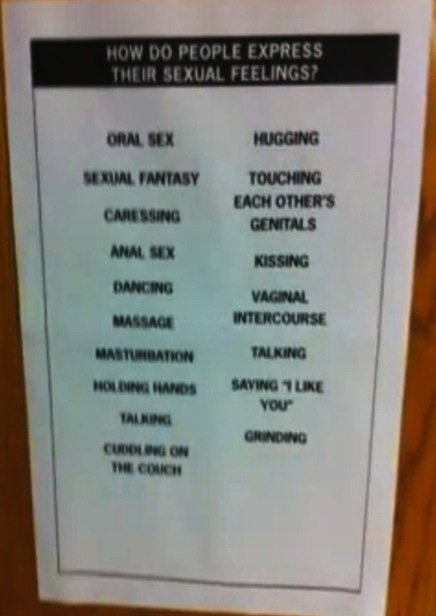
For a society so drenched in sexual imagery and innuendo, we have a surprisingly difficult time talking about sex.  As SAGLRROILYBYGTH are well aware, our American sex paradox leads to one of the most difficult and stubborn issues of our educational culture wars.  This week, Trey Kay explores the question of sex ed at Us & Them.  Is it too much to ask of schools to fix a wider culture that can barely talk about sex?

Can We Talk...?

Can We Talk…?

Kay describes a talk at his alma mater by conservative sex education activist Pam Stenzel.  Watch out, Stenzel yelled at the assembled teens.  If you get an STD, you could be ruined for life.

Kay also chats with a mother who wants kids to learn about sex in a rational, non-judgmental way.  Kids will be having sex, she thought.  It was criminal to leave students floundering without basic information about it.

Other conservatives such as Texas’s Don McLeroy weigh in, too.  If we really want to heal our sex-ed problem, McLeroy argues, we need to do more than teach a class or two about it.  We need to reform our whole society top to bottom.

Historian Jonathan Zimmerman might not agree with McLeroy on much, but he agrees that schools do not take the lead in sex education.  Zimmerman talks with Kay about his new book, Too Hot to Handle.  In that work, Zimmerman examines the history of sex ed and concludes that it has been most conspicuous by its absence in schools.  As Zimmerman explained in a recent talk here on the scenic campus of Binghamton University, in the United States the problem of sexually transmitted diseases was treated first and foremost as a problem for the schools to fix.  In Paris, they changed the laws.  In the US, they changed the curriculum.

The assumption in America has always been that schools can fix any problem.  But, as person after person told Kay about their own real-life sex ed, almost nobody learned anything of importance about sex from classes at school.  Perhaps the real culture-war battle over sex ed needs to learn from these interviews and move out of school onto the streets and TV rooms where the real education seems to take place.

As usual, Trey Kay does a great job of including people with very different perspectives.  Want to know what smart people on both sides of our culture-war divide think about sex ed?  Check out the whole podcast.