Sad Sex Ed

Want to keep young people from having sex?  Then make them watch what happens to girls who have babies.  Instead of purity campaigns or bland information sessions, perhaps a relentless display of sex, drugs, ‘n’ rock & roll might do the trick.

Economists Melissa Kearney of the University of Maryland and Phillip Levine of Wellesley College recently published the results of their study of MTV and teen pregnancy.  I’m too cheap to buy the paper, but it seems they found a 5.7% reduction in teen pregnancy among girls who watched MTV’s 16 and Pregnant and Teen Mom shows.  Also interesting, it appears that viewers of the shows became more avid consumers of health information about birth control and abortion.

Now, this is obviously not the sort of moral sex ed many conservative school activists prefer.  For many social conservatives, the idea of sex ed as an information service to allow safe and pregnancy-free sex for teens is abhorrent.  Real sex ed, for many conservatives, would mean teaching young people to learn about the morality of carnality.  As Rich Lowry concluded in the pages of National Review, these MTV shows still elevate some of their teen moms to “the tawdry satisfactions of minor celebrityhood.”

More important, this study does not suggest that teen viewers behaved any more morally after watching the show.  But from a public-health perspective, the relentless unpleasantness of life for the show’s teen moms seems to discourage a significant number of teens from following in their footsteps.

And some public-health sex ed advocates are celebrating.  According to Boston.com, Sarah Brown, CEO of the National Campaign to Prevent Teen and Unplanned Pregnancy, called the study a confirmation of the information approach.  “One of the nation’s great success stories,” Brown said in a public statement,

has been the historic declines in teen pregnancy. MTV and other media outlets have undoubtedly increased attention to the risks and reality of teen pregnancy and parenthood and, as this research shows, have likely played a role in the nation’s remarkable progress.

Fundamentalist Ducks

Okay, okay, I admit it.  I’ve been itching to write something about the recent Duck Dynasty culture-war imbroglio.  But until now there didn’t seem to be much worth saying.  One sentence said it all: Famous redneck shows ugly blind spot in racial issues and homosexual identities.  Didn’t seem like much more needed talking about.

For those of you who live in caves, bearded patriarch Phil Robertson ruffled feathers with recent ignorant and hateful comments about homosexuals and racial history.  In all his Louisiana life, he told a GQ reporter, he never saw an African American who seemed upset about lacking basic civil rights.  And homosexuals, he opined, should learn to prefer vaginas to men’s anuses.  After all, as Robertson concluded with invincible logic, “I mean, come on, dudes!  You know what I’m saying?”

Until today, everything I’d read about the scandal either defended Robertson’s right to his theology or attacked him for his hate.  But this morning I came across the comments of the brainy conservative Rod Dreher in the pages of Time.com.  For those not familiar with Dreher’s story, he moved back to his small-town Louisiana roots from a go-go New York media career after a family tragedy.

Dreher hit the nail on the head.  While Dreher doesn’t agree with Robertson’s positions, he remarked on the ridiculously excessive shock expressed by many media mavens.  Too many of those “culture-makers,” Dreher lamented,

are often every bit as parochial as those they condemn, but flatter themselves that they are the tolerant, cosmopolitan ones. I have lived in Manhattan, and I live once again in my tiny south Louisiana hometown. To paraphrase Solzhenitsyn, the border between narrow-minded and tolerant runs not between city and country, North and South, degreed and uneducated, but down the middle of every human community and every human heart.

. . .

The Duck Dynasty mess revealed that not all fundamentalists live in the Bible Belt, and that some of the biggest hicks live in Hollywood. The Duckman’s win is a score for authentic diversity and pluralism in the public square, and a victory for the right to be wrong without being ruined.

Hear hear.

When I began my current job as a university professor, I gave a talk about my dissertation research.  That work—which became my first book—concerned the first generation of American fundamentalists.  I soon realized that my tolerant, cosmopolitan university audience contained more than its share of Dreher’s hip hicks.  Not the entire audience, by any means, but certainly an influential group.  These culture-makers did not hope to understand fundamentalists; they did not seem interested in puzzling out the intellectual world I had tried to portray.  Instead, they only rushed to demonstrate their shock and horror at the ideas of people very different from themselves.

At the end of the talk, one member of my academic audience raised her hand and asked in a frustrated tone, “What is WRONG with these people?”  Heads nodded throughout the room.  The person who asked the question was not dumb, was not ignorant.  She was a prolific researcher and dedicated teacher.  In fact, she had worked throughout her career to make schools more inclusive for all sorts of students.  Yet she saw no contradiction in dismissing the thinking of a large percentage of Americans as “these people” out of hand.

Like Dreher, I don’t think Robertson’s comments are worth talking about, much less defending.  But the reaction to his comments can tell us a good deal about the current state of America’s intellectual myopia.   It serves as a sobering reminder of the widespread and unacknowledged ignorance among many Americans about what America is really like.


The Ink Is Dry!

I’m tickled pink to announce I’ve signed a deal with Harvard University Press to publish my next book.  The subject?  No surprise to ILYBYGTH readers: the book takes a historical look at educational conservatism in America’s twentieth century.  What did conservatives want out of schools?  How did they work to make that happen?

I’m extremely pleased to have the book join HUP’s top roster of educational histories.  All my favorite books are on that list: David Tyack & Larry Cuban’s Tinkering Toward Utopia, Jon Zimmerman’s Whose America?, Jeffrey Moran’s Teaching Sex, and now Bill Reese’s Testing Wars.

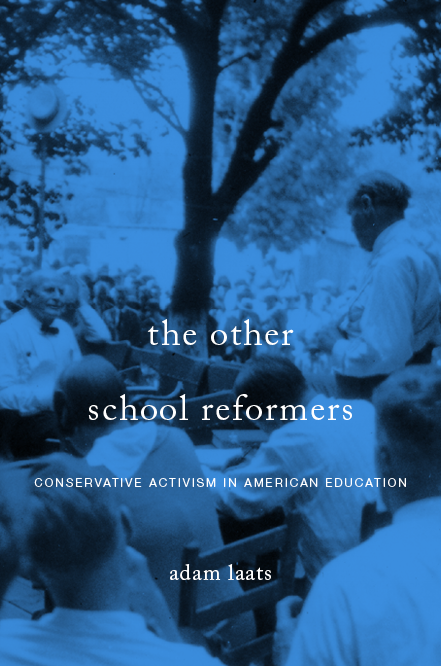
I’m honored to join this all-star lineup.  My book—which at this point I’m calling The Other School Reformers: The Conservative Tradition in American Education—takes a look at the four most explosive school controversies of the twentieth century.  My approach has been to examine these four culture-war fights to see what sorts of educational reform conservatives wanted in each case.  At first, I thought I’d pile up histories of leading conservative organizations and individuals: the American Legion, Max Rafferty, the Gablers, etc.  But I couldn’t find a way to decide whom to include and whom to leave out.  Did the White Citizens’ Councils count as educational conservatives?  Did the Institute for Creation Research?  Did Arthur Bestor?

Instead of imposing my own definitions on the outlines of educational conservatism, I took more of a naturalist’s approach.  I set up my blind, so to speak, at the four most tumultuous fights over the content of American schools and watched to see what kinds of conservative activists showed up.

The school controversies were all very different.  First I examine the Scopes Trial of 1925.  Then the Rugg textbook controversy of 1939-1940.  After that, the firing of Pasadena’s progressive superintendent in 1950.  Finally, the literally explosive fight over schools and textbooks in Kanawha County, West Virginia, in 1974 and 1975.

What did I dig up?  In short, I argue that there is a coherent tradition linking conservative school reform across the twentieth century.  Not that these different activists had any sort of conscious organization or program.  Conservatives differed—often differed widely—about key issues such as public religion, race, and the role of government and experts.  More than that, the consensus among conservatives changed over time, as American culture and society changed.  For example, racial attitudes among white conservatives changed enormously between 1925 and 1975.  But in spite of all this change and difference, a recognizable tradition of educational conservatism linked these disparate school reformers.  Conservatives usually agreed with progressive school reformers that good schools were the key to a good society.  But unlike progressives, conservatives wanted schools to emphasize traditional knowledge and beliefs: patriotism, religion, and the benefits of capitalism, for example.

In addition, my book makes the case for the importance of understanding these conservative activists as school reformers in their own right.  Too often, the history of American education is told as the heroic tale of progressive activists fighting bravely against a powerful but vague traditionalism.  My book argues instead that educational conservatism is more than just a vague cultural impulse; conservatism has always been a raft of specific policy ideas for specific historical contexts, fought for by specific individuals and organizations.

So be sure to save some space in your holiday gift list for next year.  The book is slated to appear just in time for Christmas/Hannukah/Kwanzaa/Festivus 2014.


Required Reading: Molly Worthen on the Intellectual Civil War among American Evangelicals

What does it mean to be an “evangelical” in America?

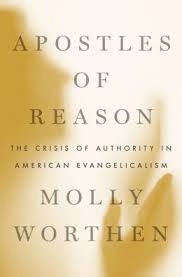
Molly Worthen of the University of North Carolina—Chapel Hill discussed her latest book recently with Tiffany Stanley of Religion & Politics.  The interview is sprinkled with gems that make me look forward to reading Worthen’s new book, Apostles of Reason: The Crisis of Authority in American Evangelicalism.

apostles of reason

Of course, for those of us interested in the intersection of conservative politics and American education, the meanings of “evangelical” are always of intense interest.  Controversies over sex education, prayer in schools, and creationism often feature conservative Protestant evangelicals as main players.

What does it mean to be “evangelical?”  In this interview, Worthen suggests three central questions that define the boundaries of the evangelical experience.  As she explains them,

First, how do you reconcile faith and reason? How do you maintain one coherent way of knowing? Second, how do you become sure of your salvation? How do you meet Jesus and develop a relationship with him, to use the language that some evangelicals prefer. And third, how do you reconcile your personal faith with an increasingly pluralistic, secular public sphere?

Worthen also suggests some useful insights into the complex interaction between evangelicalism and education.  For example, how does the historically defined divide between white and black evangelicals play out in schools?  As Worthen puts it,

If you really grilled black or Latino Protestants on this question [of creationism], many of them would say, “I prefer the Genesis narrative to Darwin’s account, but do I get worked up about it? No. I’m more concerned about educational opportunities for my kids and more concerned about structural injustice.”

And of creationists in general, Worthen hits on the deeper intellectual divide at the heart of the evolution/creation trenches.  “I think it’s a mistake,” Worthen told Religion & Politics’ Stanley,

to understand creationists as “anti-science,” at least if we want to understand how they see themselves. The reality is that the creationist movement comes out of a tradition of Biblical interpretation that understands itself as deeply rationalist, deeply scientific, that rests on the premise that God’s revelation is all one, that God is perfect and unchanging, and therefore his revelation must be perfect and unchanging too. Our two modes of encountering his revelation, in scripture and in the created world, cannot contradict each other. . . . To understand reality accurately, they say, you must take as your founding assumption the truth of God’s revelation. I think that is crucial for understanding the frame of mind of creationists and how they view their project.

Of course, as Dr. Worthen knows, it meant very different things to assert this “creationist” way of knowing in 1877 than it did in 1977.  As she points out, one of the main features of the American evangelical experience has been a profound and continuing tension between the claimed authority of religious leaders and that of the wider secularizing society.

In schools, this evangelical “crisis of authority” has often played out as a continuing tension between a lingering desire to assert Protestant authority over “our” schools and a lamentation that “God has been kicked out” of American education.

One of the continuing dilemmas of religious historians has been to reconcile the mixed bag of evangelical intellectual life.  On one hand, American evangelicalism has included many of the great thinkers of the American tradition.  On the other hand, it has included in its big revival tent some of America’s most fervently anti-intellectual personalities.  I’ll look forward to reading in more detail about the ways Worthen wrestles with these perennial questions.

“Rent” and Culture-War Cowards

A brave stand for traditional conservative values?  Or a petty dictator afraid of a changing world?

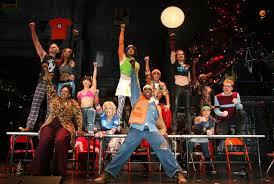
The recent decision of a high-school principal in Connecticut to ban the musical Rent will be called both of these things.  But there’s a better and simpler accusation: The principal is acting out of predictable culture-war cowardice.

As reported by the New York Times, Marc Guarino of Trumbull High School in Trumbull, Connecticut suddenly announced that the school’s drama club would not be allowed to put on a showing of Rent.  The popular musical deals with themes of drug use, HIV, and homosexuality.  To be sure, this is a cleaned-up high-school version, with the profanity removed and one sexually explicit song taken out.  But Principal Guarino still thought it was too racy for his school.

Power to the High Kickers!

Power to the High Kickers!

He’s not the only one to do so.  The play has been yanked from other high schools around the nation.

Predictably, administrators like Guarino have been accused of homophobia and head-in-the-sand obscurantism.  The world is changing, critics charge, and young people need to be aware of real-world issues like those presented by the musical.

So far, Guarino’s not talking.  So his decision might really be due to a belief that young people need to be protected from the world of singing, dancing, drug-using sex-havers.

But there’s a depressingly obvious explanation that is much more likely.  Guarino and the Trumbull school board are probably simply offering a public-school administrator’s knee-jerk response to anything that might raise the tiniest hint of controversy.  More than bad test scores, more than teen hijinx, school administrators fear becoming the center of a fight.  Because savvy administrators know that they will be the losers.

In my new book (coming soon to a bookstore near you!), I look at the most famous school controversies of the twentieth century.  In case after case, no matter what the fight is about, administrators lose.  In 1950, Pasadena’s superintendent got blamed for changing educational patterns.  In 1974, Charleston, West Virginia’s superintendent got blamed for new textbooks.

When a culture-war fight breaks out in schools, no matter what the topic, school administrators are the first casualty.

As a result, principals and other administrators develop keep political antennae.  If any book, teacher, or musical threatens to introduce a whiff of controversy into their schools or districts, most administrators ban it outright.  They want to stop any fight before it starts.

The response to Rent by Susan Collins, a school superintendent in West Virginia, demonstrates this reflexive culture-war caution.  A few years ago, she described her feeling to the New York Times.  “Our high school shows,” she explained,

are so important to our community — we have alumni who come back, we bus in children for them — and I didn’t see ‘Rent’ working here. . . . But look, I know we can’t stick our heads in the sand, I know drugs are out there, I know children are having babies at 12, I know teens are having sex and always must have safe sex. But I don’t know if we need ‘Rent.’

When a drama-club teacher proposed the show for Collins’ district, it only took her one viewing of the DVD to make a quick decision: No way.  She worried that her “back in the woods” community would not take kindly to this sort of on-stage sexiness.

She wasn’t against it.  But she wasn’t willing to stand up and shove it in the face of her community, either.

More than culture warriors, public school administrators often take this role of culture-war avoiders.

Though their book got the most attention for its survey of evolution education, political scientists Michael Berkman and Eric Plutzer made a broader point about schooling and culture wars.  Teachers, they argued, are best understood as “street-level bureaucrats.”  In teaching controversial issues, teachers tend to reflect the middle-of-the-road values of their communities.

The bland CYA politics of principals like Trumbull’s Guarino reflect this same sort of deliberate centrism.  Is Rent bad for kids?  Conservatives might say yes; progressives might say no.

But school controversy on any sort of culture-war issue is definitely bad for the career of any public-school administrator.


Red Carpet Culture War

Maybe it’s not the big-time red carpet.  Not the Emmys, the Tonys, or the Grammys.

But the People’s Choice Awards this year are promising to give people a chance to vote for their culture-war preference.

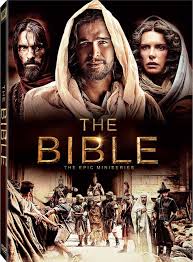
According to the Christian Post, The Bible and Liberace are going head to head.

In the category “Favorite TV Movie/Miniseries,” voters have placed these two at first and second place so far.

The Bible Miniseries?

The Bible Miniseries?

The Bible series has been a favorite among evangelical viewers.  Produced by “Touched by an Angel” star Roma Downey and her husband Mark Burnett, the project hoped to bring the Gospel message into the homes and hearts of millions.  As we’ve noted here on ILYBYGTH, the producers even hoped to bring The Bible into America’s public schools.

...or the story of this tempestuous love affair?

…or the story of this tempestuous love affair?

“Behind the Candelabra,” on the other hand, tells the love story of the flamboyant entertainer Liberace and his much younger lover Scott Thorson.

What do the people like better?  We’ll find out soon…


Creationism in Texas: A Foreshortened History

Read it.  It’s good.  But be warned: this story has a fatal flaw.

Brentley Hargrove’s history of the Texas textbook wrangles is a helpful introduction to the recent round of textbook fights in the Lone Star State.

In the pages of the Dallas Observer, Hargrove introduces readers to the recent history of creationist influence in the selection of Texas science textbooks.  He offers the backstory of review-board members such as intelligent-design proponent Raymond Bohlin.

Hargrove takes the story of the Texas Textbook Two-Step back to the 1970s, when self-appointed watchdogs Mel and Norma Gabler wielded outsize influence on the adoption of books.

He describes the rise to educational power of creationist dentist Don McLeroy and the board membership of theologue Cynthia Dunbar.

This story is a must-read for everyone interested in today’s culture wars over education, not just in Texas but around the nation.  It joins films such as The Revisionaries and documentaries such as the Long Game in pointing out both the peculiarities of educational politics in Texas and the broader meanings Texas school politics has for all of us.

But as a historian of these school battles, I must protest against the foreshortened history Hargrove describes.  He gives a nod to the long history of cultural battles over education.  He mentions the nineteenth-century Bible wars that rocked America’s cities.  But then he skips from 1844 to 1961.  He leaves out the formative period of today’s educational culture wars.

As he puts it, since the nineteenth century,

the fear of secularism and modernity remains as potent as ever. Yet it wasn’t until the Gablers came along that this fear took shape in Texas and assumed power.

Now, that’s just not true.  I understand Hargrove is interested in the way these battles have developed over the past fifty years.  But the way they did so was decisively influenced by earlier generations of Texas activists.

To be fair, Hargrove’s historical myopia is widely shared.  In his Observer article, he quotes prominent sociologist William Martin.  “The Gablers,” Martin told Hargrove, “were the first people to have taken this on in such as systematic way.”

Even if we make allowances for the contemporary interests of journalists and sociologists, this sort of misrepresentation of the history of Texas’ school battles can’t be given a pass.

The tradition of conservative activism in which the Gablers, McLeroy, Bohlin, and Dunbar take part has direct roots in the 1920s battles in Texas and elsewhere.

As I argue in my 1920s book, anyone with even a passing familiarity with Texas history will recognize the historical importance of J. Frank Norris, for example.  In the 1920s, Norris established the activist precedent that later conservatives followed.  Norris fulminated against the directions of 1920s public schools in ways that McLeroy, Dunbar, and the Gablers would have appreciated.

And he had even more political pull.  In the 1920s, though a state-wide law banning the teaching of evolution failed in the Texas legislature, the governor ordered textbook publishers to remove any mention of evolutionary science from the state’s textbooks.

All well and good, you might say.  But does that pre-history have anything to do with today’s textbook fights?  If we want to understand the current moment, do we really have to go so far back?  Isn’t it enough to look to the Gablers and start there?

The school fights of the 1920s are of interest to more than just nitpicky academic historians like me.  Even if we want to start with the Gablers, we need to understand the formative school battles of the 1920s.  Mel Gabler was ten years old in 1925.  The content and structure of the schools he attended was decided by the activism of pundits such as J. Frank Norris and the pusillanimity of politicians such as the Governors Ferguson.

It was in the 1920s that America first battled over schooling in the terms that have remained so familiar ever since.  The issues and positions laid down in the 1920s have become the durable trench lines in American education.

As Gabler biographer James Hefley described, by the 1960s the Gablers had become

the cream of self-reliant Middle America.  They lived by the old landmarks, took child-rearing seriously, supported community institutions, sang ‘God Bless America’ with a lump in their throats, and believed that the American system of limited and divided governmental power was the best under the sun.

How did they get to be that way?  How did they become so confident that their vision of proper schooling and society must be fought for?  The Texas the Gablers loved had been defined by the activism of the 1920s and succeeding generations.  The vision of proper education that fueled the self-confident activism of the Gablers had been established as such in the controversies of the 1920s.

If we really want to understand what’s going on today, we need at the very least to acknowledge the longer history of these issues.  We need to understand that today’s fights grew out of earlier generations, and those earlier generations did not just spring up full-grown from the Texas soil.

 

Help! My Teacher’s a Girl Now!

Do young children need to be protected from transgender teachers?

Ryan T. Anderson thinks so.  And in his argument, he joins a long conservative tradition of insisting on special culture-war protections for children.

Anderson, a prominent voice in the anti-gay-marriage coalition, argued recently in the pages of the National Review that transgender teachers would force young people to wrestle prematurely with issues of sexuality and gender identity.

His argument came in the context of his opposition to the Employment Non-Discrimination Act (ENDA), a bill that would make it illegal for some employers to discriminate against gay or transgender people.

In Anderson’s opinion, this is not the latest civil-rights bill.  Sexual identity and gender identity, Anderson argues, are self-identified and self-defined, unlike race.

Perhaps most compelling, Anderson thinks, this bill might force elementary schools to employ men who used to be women, or women who used to be men.  It would force children, Anderson says, to know too much too soon.

As he put it,

Issues of sex and gender identity are psychologically, morally, and politically fraught. But we all ought to agree that young children should be protected from having to sort through such questions before an age-appropriate introduction. ENDA, however, would prevent employers from protecting children from adult debates about sex and gender identity by barring employers from making certain decisions about transgendered employees.

Although ENDA includes some exemptions for religious education, it provides no protection for students in other schools who could be prematurely exposed to questions about sex and gender if, for example, a male teacher returned to school identifying as a woman.

Anderson’s argument about age-exemptions for culture-war issues echoes a traditional theme among educational conservatives.  On the issue of evolution, for example, many conservative intellectuals of the first generation of fundamentalists argued that evolution could fairly be taught, but only at the college level.

As I argued in my 1920s book, this seemingly moderate view was held by some of the most vituperative anti-evolutionists.

William Jennings Bryan, for example, the Bible-believing man-of-the-people who stood up for the Bible at the Scopes Trial, repeatedly insisted that evolution should be taught, but with proper regard for the intellectual maturity of students.  In colleges, it should be taught as an influential theory about the origins of life.  But in primary grades, students must not be taught that evolution was the simple and only truth.

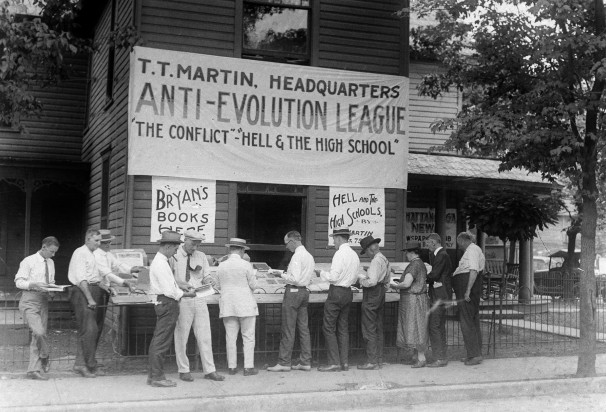
Even the hot-headed polemicist T. T. Martin, author of the relentless Hell and the High Schools, didn’t insist that evolution must be utterly banned from all schools.  In a 1923 speech, Martin suggested a new set of “graded books, from primary to university.”  These books could introduce evolutionary ideas gradually, until at last for the most mature students the books would present “fairly and honestly both sides of the Evolution issue.”

Martin's Booth at the Scopes Trial, 1925

As Anderson’s recent argument about transgender teachers makes clear, the notion that young people in school must enjoy special protection from threatening ideas still has punch in today’s culture-war debates.  Conservatives have long insisted that children must be protected from premature exposure to issues of sex and origins.


Gay Marriage Turns Children into Slaves

Will gay marriage lead to child slavery?

That’s the forecast implied recently by George Weigel in a recent column.

Weigel comments on a new bill proposed in Washington DC by the Council’s “most aggressively activist gay member.”  The bill would legalize surrogate child-bearing.  To Weigel, this arrangement treats both biological mother and child as mere commodities to be negotiated over.  As he laments,

The highest local legislative body in the federal capital is considering a bill that would commodify children as fit objects for sale and purchase—which is precisely what happened in Washington’s antebellum slave markets.

A tad histrionic, you say?

The liberal voice inside my head (and yes, I have several contending voices in there) shouts that this is just another cynical conservative attempt to demonize gay marriage.  Calling surrogate parenting a form of human trafficking is nothing but another bald-faced attempt to push irrelevant non-issues to the fore in the contentious discussion over gay marriage.

And I certainly believe that Dr. Weigel is trying to be provocative here.  But there is more behind Weigel’s accusation than just garden-variety demonization.

As we’ve argued repeatedly (see, for example, here, here, or here), questions of child ownership are central in every iteration of America’s blustery culture wars.

Schools have responsibility for children.  So do parents.  But who gets to make which decisions?

Some may assert that no one owns a child; a child is a person and therefore owns him- or herself.

But that sidesteps the issue.

Children, by definition, are not yet adults.  They are not able—legally or developmentally—to take responsibility for themselves.

Until they can, others must assume custodial roles.

When Dr. Weigel insists that non-traditional child-raising raises the specter of slave markets, he is walking a well-trod rhetorical path.

If children can’t quite own themselves, then questions about ownership will remain central to every culture-war discussion.


Battle Map!

Where have Americans fought over public schooling?

The libertarian Cato Institute has put together a clickable Battle Map to help readers locate educational controversies.  Readers can search by state, by year, or by the type of conflict.  The Cato folks broke down school battles into such categories as curriculum, freedom of expression, gender equity, human origins, moral values, racial/ethnic diversity, reading material, religion, and sexual diversity.

Of course, the folks at Cato aren’t just providing a nerdy public service for those of us interested in studying cultural controversies.  The point of this exercise, from Cato’s perspective, is to prove that public education “divides [people], forcing them into conflict over whose values and histories will be taught, and whose basic rights will be upheld . . . or trampled.”

To this outsider, Cato’s argument seems a little strained.  After all, just because many family dinners turn into shouting matches, does that prove that dinner is a bad thing?