Fundamentalist Fast Food? Christian Chicken? Fresh Hot Hate?

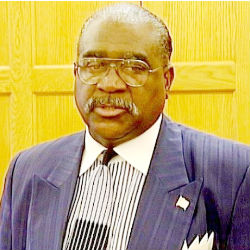
Chick-fil-A President Dan Cathy

The interweb has been squawking about Chick-fil-A President Dan Cathy’s recent statements.  Earlier this week, Cathy told the Baptist Press that his 1600-strong chain of fast-food restaurants was founded on Biblical principles, and will keep running that way.  Part of this means support for the traditional family.  “We are very much supportive of the family,” Cathy said,

“– the biblical definition of the family unit. We are a family-owned business, a family-led business, and we are married to our first wives. We give God thanks for that.”

Chick-fil-A’s committment to Biblical values goes beyond supporting traditional marriage.  Most famously, the restaurants are closed on Sundays.  The corporation also conducts missionary work among its workers, to its customers, and in its advertising.  When asked about his support for such Fundamentalist groups as Exodus International and the Family Research Council, Cathy happily replied, “Guilty as charged.”

Opponents have accused Chick-fil-A of an anti-gay position.  Many took umbrage at Cathy’s assertion that non-traditional marriages “invit[ed] God’s judgment on our nation.”  On Wednesday, Tim Carman asked in the Washington Post if readers would continue to eat there.  Not everyone will.  As Melissa Browning noted in the Huffington Post, “I can’t eat hate.”  But it appears Browning represents a minority, at least among Carman’s readers.  The results of the Washington Post poll (as of 11:00 New York time on Friday, July 20, 2012) showed 62% of almost 19,000 respondents planning to continue their patronage.

Nevertheless, Chick-fil-A offered yesterday a clarification of its position.  It officially noted that it takes no position on gay marriage.  However, it plans to continue its policy of “Biblically-based” management principles.

Does it matter if chicken is processed biblically?  More important, do we need to be sure that every dollar we spend supports only those corporations whose culture-war positions are as palatable as their products?

In the News: To Wed or To Bed? Blankenhorn and the Gay-Marriage Debates

What is a family?  What is sex?  What role should government and church play in defining these issues?

For the last generation, these questions have become trench mortars in America’s continuing culture wars.  Recently, a leading anti-gay-marriage voice switched sides.  Writing in the op-ed pages of the New York Times, David Blankenhorn declared, “I have no stomach for what we often too glibly call ‘culture wars.'”  Yet Blankenhorn has played his role as culture warrior.  Most famously, as leader of the Institute for American Values and author of 2007’s The Future of Marriage, Blankenhorn testified in favor of California’s 2010 Proposition 8.  This measure, like similar measures in states across the nation, defined marriage as a bond between one man and one woman.

Why did Blankenhorn change his position?  In sum, as he explains in his op-ed piece, he had hoped a defense of traditional marriage would protect the rights of children.  Instead, the cultural wind has shifted.  The issue has become one of equity and fairness for homosexuals.  As such, Blankenhorn hopes to move the discussion about gay marriage toward one that focuses on the rights of children and the responsibilities of parenting.

Defenders of traditional marriage have not taken Blankenhorn’s defection lightly.  At Public Discourse, Maggie Gallagher articulates her reasons for disagreeing with Blankenhorn’s change of heart.  Gallagher, founder of the National Organization for Marriage and a former colleague of Blankenhorn, insists that Blankenhorn goes too far in abandoning first principles about marriage.  “Marriage,” Gallagher argues,

“is the union of male and female, the way society tries to give a child the gift of his own mother and father in one family union. Gay marriage is part of the process of deinstitutionalizing marriage, removing it from a tight matrix of social norms designed to get this good for children; it is part of a larger process of reformulating marriage as a product of choice oriented toward the private goods of the people who choose it.”

At First Things, Matthew Schmitz takes Blankenhorn to task for ignoring the larger implications of the marriage debates.  Not only must gay marriage itself be fought against, Schmitz argues, but the fight must be kept up in order to maintain the rights of religious believers across the board.  After all, Schmitz insists, “As soon as we stop contending for the natural truth of marriage in the public square, certain people will try to strip us of the right to proclaim it anywhere.”

Similarly, Douglas Farrow accuses Blankenhorn of simply having lost his nerve.  “Regrettably,” Farrow notes,

“David has sought relief in a position that provides none. No one of sound mind supposes that same-sex marriage is being sought in order to bring sexual discipline to the homosexual culture (or the culture at large), or to enhance the institution of marriage and parenting. Whether it makes our stomachs churn or not, we must face the truth about the struggle that is under way and understand (as I have argued elsewhere) that no peace is to be had by capitulation.”

In all these debates, the culture-war divide in our understandings about marriage and sexuality becomes vividly clear.  As Blankenhorn notes in his op-ed piece, for many gay marriage supporters, the issue is simply one of human rights, of civil rights.  From this perspective, opponents of gay marriage look like nothing other than bigots and reactionaries, viciously clinging to outdated traditions in order to shore up untenable cultural vestiges.  For opponents of gay marriage, marriage is the bedrock of proper society.  Discussions about changing the nature of the marriage institution are harmful in themselves.  Furthermore, any erosion of traditional marriage will serve as the camel’s nose, spearheading the eventual abandonment of all sexual mores and traditional social bonds.  For historically minded conservatives, these frights are not mere fantasies.  Rather, the dissolution of traditional family and sexual norms has been the first step in the crumbling of every human civilization.  The fight against gay marriage, from this perspective, is nothing less than a fight for moral value itself.

With such a stark cultural divide, a public reversal from a leader such as Blankenhorn is truly remarkable.  He may say he has lost his stomach for culture-war battles, but I’m guessing Blankenhorn’s change of position will make him even more of a symbolic figure of great importance in these continuing marriage controversies.

All in the Family: The Westboro Baptist Church

–Thanks to EH

“God Hates Fags.”  That is the line that has attracted so much attention for Fred Phelps and his cultish Westboro Baptist Church.  This is the tiny family-based church from Topeka, Kansas that pickets the funerals of American servicemen and -women.  They insist that such casualties are God’s just punishment for America’s sinful ways.

ILYBYGTH’s attention was drawn to a fascinating interview with Nate Phelps, one of the pastor’s sons.  Nate grew estranged from the family church and has taken to public criticism.  Nate Phelps tells an horrific tale of cruelty and terror justified by dogmatic if erratic Biblicism.

We here at ILYBYGTH have only joked about Phelps’ brand of extreme fundamentalism.  We know it’s not funny, but we also feel that Phelps is not representative of Fundamentalist America.  Rather, as my new hero “Ivan Fyodorovich” perceptively commented during an online discussion about Nate Phelps’ story,

There’s some weird codependent relationship between Phelps and progressives.  I’m here a couple hours away from Topeka in Kansas City, where my sister and her family are heavily involved in an enormous evangelical community (which played prominent role in that revival Perry appeared at in Houston last year) that is activist in the same culturally conservative causes as as WBC is — opposition to gay marriage, anti-abortion, theocratic civil governance, and all part of End Time preperation — and she had never heard of Fred Phelps when I mentioned him a few years ago.  Because WBC is a non-entity in this larger world that is much more active, much more powerful and influential than WBC ever will be.
And yet those of us opposed to this worldview spend so much time on Phelps and so little time on the millions like my sister’s ministry.  The reason for that is that her ministry absolutely doesn’t want the sort of press that Phelps gets.  They are more influential without the press than they would be with it.  But Phelps wants this kind of press, though, because it’s not about being influential in achieving his worldview, it’s about the fact that he’s an evil fuck with a cult who loves the limelight.
The views that we despise in Phelps are views we rightly despise elsewhere.  And I’m not saying that we shouldn’t oppose him, really.  He’s noxious.  But he’s not really the face of the enemy.  In a way, he’s the face the enemy wants us to have of them.  We’re not helping our cause when we place some much importance and attention on Phelps.

In our opinion, Ivan Fyodorovich hits the nail on the head here.  Phelps’ WBC is part of Fundamentalist America.  Fair enough.  But for many outsiders, especially for many anti-fundamentalists, Phelps’ brand of Bible-based noxiousity ends up standing in for the real complexity of Fundamentalist America.  It does not lead to real understanding if we outsiders simply assume that Phelps’ pathology can be taken as a demonstration of the meaning of conservative Protestantism.  Please don’t misunderstand: I’m not trying to justify or dismiss Phelps’ angry sect.  We need to understand Phelps as one of the frightening possibilities of fundamentalism in America.  But we must not fall into the outsiders’ trap of assuming that Phelps is representative of anything except himself.

A much better place to begin would be with Ivan F.’s moving description of his family relationships that helps demonstrate a clearer picture of life in Fundamentalist America.

In the News: Here She Is….Miss Fundamentalist America…

After six months on the job, Miss America 2012 has planted a flag for Fundamentalist America.  Announcing her outreach program to serve children of incarcerated parents, Miss America Laura Kaeppeler explained,

“I believe my life was pre-written and predestined by a higher power before I was born. … What happened in my past is part of that, and (being) Miss America is part of that.”

Kaeppeler was raised Roman Catholic, but has since become a member and leader of the Northside Bible Church in Kenosha, Wisconsin.  As the Religion News Service reports, one woman who has long mentored students with incarcerated parents responded, “My first reaction when I heard Miss America would be speaking was, ‘Really? They’re still doing that?'”

Apparently so.

And conservative Christian women seem to have an edge.  Teresa Scanlan, Miss America 2011, also seems to have been a committed evangelical.  As she wrote in her blog at the start of the 2011 MA competition,

During Miss Nebraska week in North Platte, I began a journal in which I recorded not only the events of each day, but also a passage of Scripture and my thoughts and prayers. At the end of the week, on June 5th, 2010, just hours before the final competition, I was reading 2 Timothy and chose chapter 2, verse 15 as particularly applicable to me. It reads: “Be diligent to present yourself approved to God as a workman who does not need to be ashamed, accurately handling the word of truth.” As I thought about that verse and how it applied to me, I wrote the following prayer:
Dear God, please help me to be a diligent servant not only today but from here on out. Give me the strength and wisdom to accurately handle your word of truth and the diligence and perseverance necessary to be a worker who is not ashamed. I wish to be a shining light for you, a glowing example of who you are, and a grain of salt in a tasteless world. Whether or not this is achieved through a position, crown, title, or job, please place me exactly where you need me to be an effective ambassador for you. I am clay in your hands, your humble servant, willing to do whatever you wish for me in your perfect plan. I love you so much and thank you for blessing me so tremendously and bestowing such outstanding opportunity on me. My greatest wish is to exemplify your love through my words and actions in order to bring others to you.
Your Loving Daughter, Teresa
 That night I won the title of Miss Nebraska. From that, I know that this is exactly where God wants me to be, and He has a plan for each and every day of my life, not only this year, but every year. That was my prayer then; it has been my prayer these six months; it will be my prayer these next weeks at Miss America; and it will continue to be my prayer for the rest of my life. If I win the title of Miss America, I will know it is His will. If I do not win, and continue the next six months as Miss Nebraska, I will know it is His will. How incredibly calming it is to know that my life is in His hands!

No matter what happens, my prayer continues to be simply that I will fulfill His purpose in everything that I do. If you had not previously known my reasons and purpose behind why I do what I do, I hope you now understand what I believe my calling to be. Why am I competing in the Miss America competition over the next ten days? Because God has placed me in this position to show His love. Please pray that I might be able to accomplish this, and as always, please feel free to share your thoughts and comments as to how I might better achieve these things.

Well, I will not be posting until I return from Vegas, but stay tuned for all the details when I get back! Once again, thank you for your incredible support and encouragement; I wouldn’t be here without you!
To God Be The Glory,
Teresa
 
I don’t know much about the world of high-stakes beauty pageants.  Perhaps this embrace of biblical religion is simply another expected part of the princess package.  Or, perhaps, there is simply considerable overlap between those folks who place a high value on this traditionalist form of uber-femininity and traditionalist Christianity.  
After a little digging, we find that the tradition of Miss America and conservative Protestantism has even deeper roots.  Long-time host of Pat Robertson’s 700 Club Terry Meeuwsen won the crown in 1973.   Fox News’ Culture Warrior Gretchen Carlson took the crown in 1989.  I’m guessing there have been more winners from the world of Fundamentalist America who did not go on to such high-profile public careers.  Maybe it is time to change the name.  It might be a better fit to call it Miss Fundamentalist America. 

IN THE NEWS: Faith and Race

What does it mean to be a citizen of Fundamentalist America?  For some, it means making hard choices.

For instance, the Reverend Keith Ratliff of Des Moines, Iowa recently resigned his leadership post in the NAACP.  He did so after the NAACP officially endorsed same-sex marriage.  Ratliff was forced to choose between his religious beliefs and his leadership post, and he chose religion.

Ratliff’s story highlights the changing nature of Fundamentalist America.  For most of American history, conservatives, like progressives, have been starkly divided by the color line.  The recent decisions of prominent African American conservatives, like Ratliff, to emphasize their conservative ideology and theology demonstrates this change.  Even before resigning his leadership post in the NAACP, for instance, Ratliff publicly endorsed conservative Republican Bob VanDer Plaats for governor in 2010.

As reported by Catholic Online, Ratliff defended his decision as part of his Biblical faith:

During a Statehouse rally in March 2011, Ratliff said his support for traditional marriage was biblically based, adding, “This isn’t a private interpretation, a Burger King religion, and by that I mean a ‘have it your way’ religion.”

The Bible in America: Proof-Texting and the Cultural Divide

Quick: What does the Bible have to say about vegetarianism?  …about the war in Iraq?  …about Catholicism?

I don’t know the answers to these questions.  And, without meaning any disrespect, I can honestly say I don’t care.  I don’t think my ignorance on these issues makes me “ignorant.”  I don’t think it makes me uneducated.  I just don’t think the Bible’s opinions on these issues are important.  Don’t get me wrong: I’m not anti-Bible.  In fact, I’m confident I’d be better off if I had spent my youth memorizing the Psalms instead of the lyrics to the Gilligan’s Island theme song.  But I didn’t.  And I don’t feel the loss.

Just sit right back and you’ll hear a tale…

However, many citizens of Fundamentalist America would consider my ignorance deeply embarrassing.  For many conservative religious folks, especially among the Protestant denominations, the ability to cite Scriptural chapter and verse is one sign of an adequate spiritual education. 

This divide fuels America’s culture wars.  Many non- or anti-fundamentalists doubt that fundamentalists are even capable of rational, logical intellectualism.  (Consider a few examples: here, here, here, here, and here.)  The more ardently conservatives dig into their Bibles to prove their points, the more confident anti-fundamentalists become that conservatives have lost all claim to intellectual coherence.    

And many fundamentalists don’t seem to understand that their compilations of Biblical proof-texts carry very little weight outside the borders of Fundamentalist America.  They build arguments against homosexuality  or same-sex marriage based on collections of chapter and verse.  But such arguments are only compelling—or even comprehensible—if we accept the premise of the Bible proof-text in the first place.  As a result, different sides do not speak to one another.  They speak—or yell—past one another, scoring points that only the people on their own side can recognize.    

If we outsiders are to understand Fundamentalist America, we need to understand the proof-text tradition.  Why do religious conservatives care so much what Leviticus has to say about whether or not people should have sex with animals?   Why is it so important that evidence for a young earth can be found not only in Genesis, but also in Mark 10:6, 1 Corinthians 15:26, and Matthew 19:4,5? 

It is not a stretch to say that this style of proof-text argument had been, until the late 1800s or early 1900s, the standard style of theological disputation among Protestants.  In the nineteenth century, European scholars began to look at the Bible in a new way.  By the turn of the twentieth century, leading American Protestant theologians disputed the intellectual usefulness of the Scriptural proof-text.  In 1907, for instance, William Newton Clarke lambasted his more conservative colleagues for their continued reliance on this method.  “Even if,” Clarke argued, “a proof-text method were a good method in itself, it could not be successfully employed now, since the texts of the Bible have suffered such serious though unintended distortion.”  Since liberal theologians had come to disagree with the notion of an inerrant Bible, the method of proving an argument by assembling an overwhelming dose of chapter and verse no longer seemed compelling.

During the twentieth century, however, among Bible-centered Protestants—including self-styled fundamentalists, neo-evangelicals, Pentecostal groups, conservative Lutherans, and others—the proof-text tradition continued.  For those groups who maintained a faith in the Bible as inerrant, it remained convincing to prove every point with an assembly of relevant texts. 

Consider the following doctrinal statement from David Cloud’s Way of Life Ministries.  Each point is proven with an array of relevant texts. 

STATEMENT OF FAITH

Way of Life Literature
P.O. Box 610368, Port Huron, MI 48061
866-295-4143 (toll free), fbns@wayoflife.org
http://www.wayoflife.org


THE SCRIPTURES

The Bible, with its 66 books, is the very Word of God. The Bible is verbally and plenarily inspired as originally given and it is divinely preserved in the Hebrew Masoretic Text and the Greek Received Text. The Bible is our sole authority in all matters of faith and practice. The King James Version in English is an example of an accurate translation of the preserved Hebrew and Greek texts; we believe it can be used with confidence. We reject modern textual criticism and the modern versions that this pseudo-science has produced, such as the American Standard Version, the New American Standard Version, the Revised Standard Version, and the New International Version). We also reject the dynamic equivalency method of Bible translation which results in a careless version that only contains the general ideas rather than the very words of God. Examples of dynamic equivalency versions are the Today’s English Version, the Living Bible, and The Message.

2 Samuel 23:2; Psalm 12:6-7; Proverbs 30:5-6; Matthew 5:18; 24:35; John 17:17; Acts 1:16; 3:21; 1 Corinthians 2:7-16; 2 Timothy 3:15- 17; 2 Peter 1:19-21; Revelation 22:18-19

THE CREATION

We believe in the Genesis account of Creation and that it is to be accepted literally and not figuratively; that the world was made in six 24-hour days; that man was created directly in God’s own image and did not evolve from any lower form of life; that all animal and vegetable life was made directly and made subject to God’s law that they bring forth only “after their kind.”

Genesis 1; Nehemiah 9:6; Job 38:4-41; Ps. 104:24-30; Jn. 1:1-3; Acts 14:15; 17:24-26; Rom. 1:18-21; Col. 1:15-17; Hebrews 1:1-3; 11:3

THE WAY OF SALVATION (THE GOSPEL)

Salvation is by the grace of God alone, which means that it is a free gift that is neither merited nor secured in whole or in part by any virtue or work of man or by any religious duty or sacrament. The gift of God’s grace was purchased by Jesus Christ alone, by His blood and death on Calvary. The sinner receives God’s salvation by repentance toward God and faith in the Lord Jesus Christ. Though salvation is by God’s grace alone through faith, it results in a changed life; salvation is not by works but it is unto works. The faith for salvation comes by hearing God’s Word. Men must hear the gospel in order to be saved. The Gospel is defined in 1 Corinthians 15:1-4.

John 1:11-13; 3:16-18, 36; 5:24; 14:6; Acts 4:12; 15:11; 20:21; Romans 10:9-10,13, 17; Ephesians 1:7; 1:12-14; 2:8-10; Titus 3:3-8; Hebrews 1:3; 1 Peter 1:18-19; 1 John 4:10

CIVIL GOVERNMENT AND RELIGIOUS LIBERTY

We believe that civil government is of divine appointment for the interests and good order of human society; that magistrates are to be prayed for (1 Tim. 2:1-4), conscientiously honored and obeyed (Mat. 22:21; Rom. 13:1-7; Titus 3:1; 1 Pet. 2:13-14), except only in the things opposed to the will of God (Acts 4:18-20; 5:29); that church and state should be separate, as we see in Scripture; the state owing the church protection and full freedom, no ecclesiastical group or denomination being preferred above another. A free church in a free state is the Christian ideal.

We can see the proof-text tradition in David Cloud’s sermons as well. 

The way Cloud and Way of Life use proof-texts is just one example from a galaxy of possible examples out there.  Especially among Bible-based conservative evangelical Protestant groups, the proof-text is the method by which truth is established.  The Bible is the inerrant authority.  In order to make any point, about any subject, the name of the game is proof-texting.  Of course, among many conservative Protestants, the term “proof-text” has taken on negative connotations.  It should not mean that one simply has to slap a bunch of Bible citations together to prove a point.  In this continuing intellectual tradition, the cogency of the argument is based on the proper selection of texts.  How well do the selected texts establish the point at hand?  Does the author use each text in a way that respects the context and original meaning of the selected passage?  Does the author consider relevant passages that might disagree with this interpretation?  Or does a poorly educated pastor merely assume an air of false erudition by throwing Scriptural citations around willy-nilly

To be sure, it is an intellectual tradition that no longer carries weight in mainstream religion and culture.  Though large majorities of Americans might believe that the Bible contains the answers to all of life’s questions, those same majorities do not necessarily agree that the Bible should be the main intellectual authority in all matters.  Indeed, especially galling to many non- and anti-fundamentalists is proof-texters’ assumption that their particular religious tradition should be considered binding in matters of public policy.  In other words, it may be fine for Way of Life to demonstrate the validity of its creed through proof-texts.  But that does not mean that proof-texts can be used to demonstrate the need to teach religious doctrine in science classes. 

These are important arguments.  Proof-texters need to understand that their intellectual tradition does not carry weight outside the borders of Fundamentalist America.  But that is a much different thing than admitting to being non-intellectual or anti-intellectual.  If we outsiders can better understand the tradition of proof-texting, we will be better able to speak intelligently, reasonably, calmly, and even productively with Fundamentalist America.     

FURTHER READING: William Newton Clarke, The Use of the Scriptures in Theology (Edinburgh: T. & T. Clark, 1907); Timothy P. Weber, “The Two-Edged Sword: The Fundamentalist Use of the Bible,” Nathan O. Hatch and Mark A. Noll, eds., The Bible in America: Essays in Cultural History (New York: Oxford University Press, 1982), 101-120.

In the News: “Gay” Is not Slander in NY

In a story from my new hometown, a New York appellate court ruled recently that it no longer counted as slander to falsely accuse someone of being homosexual.  In this case, a woman spread a rumor that Mark Yonaty was gay in order to get his girlfriend to break up with him.  Yonaty sued and lost.  As the New York Times reported, the appeals court threw out earlier rulings in Yonaty’s favor, saying they were “based on a false premise that it is shameful and disgraceful to be described as lesbian, gay or bisexual.”

What does this mean for Fundamentalist America?  On one hand, it could mean that FA will find itself more marginalized if it maintains its opposition to homosexual sex and relationships.  Some conservative groups, for instance James Dobson’s Focus on the Family, emphasize love and care for those engaging in homosexual behavior or identifying as homosexuals, even while condemning all sex outside of marriage, especially including gay sex. 

Other FA voices keep up harder-edged language against homosexuality.  A recent article by Bryan Fischer, for instance, on Rightly Concerned, affiliated with the American Family Association, notes that America must discriminate against homosexuals not out of hate but out of love.  However, Fischer also compares healthy anti-homosexual discrimination to other healthy forms of discrimination:

We discriminate against adults, even priests, who have sex with children. We discriminate against teachers who have affairs with students. We discriminate against teachers who moonlight in the porn industry. We discriminate against students who engage in sexting. We discriminate against rapists. We discriminate against those who expose sexual partners unknowingly to the AIDS virus. We discriminate against those adults who commit statutory rape against minors.

If the recent ruling from Albany is a bellwether for the direction of mainstream American culture–and that’s a big if–then Fischer’s type of argument is swimming upstream.  If it is no longer an insult to call someone ‘gay,’ then it will make no sense legally, politically, or culturally to discriminate against homosexuality. 

There’s another lesson we can draw from this article.  At least one gay-rights activist has warned that this decision must not be taken as the end of discrimination against homosexuality.  As the UK’s Daily Mail reported, New York activist Jay Blotcher insisted that being identified as gay could still summon up “something akin to a lynching mob” in parts of the country.  “It’s still a thorny issue,” Blotcher said. “Bottom line, just because you have gay characters on television that make everybody laugh doesn’t mean that the entire country embraces gay people as equal citizens yet.”

Blotcher’s comments illuminate one of the most puzzling aspects of these kinds of “culture-war” debates.  Instead of celebrating the achievement of mainstream acceptability for homosexuality, Blotcher emphasizes the continuing persecution of homosexuals.  Like Blotcher, many voices from FA insist on their own status as beleaguered cultural minorities.  This tradition among American Protestantism has long roots, back to the seventeenth-century persecution of “Pilgrims” and “Puritans” that led in part to the founding of New England.  In the twentieth century, fundamentalist activists have often used Blotcher’s language of continuing discrimination to defend the borders of Fundamentalist America.     

To cite just one example, in 1965 in the wake of the US Supreme Court rulings against school-sponsored religious devotions in public schools, fundamentalist editor and publisher John R. Rice insisted that “White Minorities Have Rights, Too.”  In the pages of his Sword of the Lord magazine (volume 31, September 3, 1965, page 1), Rice asked,

“If Christian people do not have a right to have the Bible taught in the schools, then infidels have no right to teach infidelity in the schools . . . . Why not have freedom in America as much for one minority as another?  Why not observe the rights of white people as well as the rights of Negroes?  Why not observe the rights of nonunion workers as much as the rights of union workers?  Why not observe the rights of Bible believers as well as the rights of the infidels in the churches and infidels in courts or schools?” 

Just as Jay Blotcher warned not to remove homosexuality from the category of defended minorities, so fundamentalists such as Rice insisted that they be allowed to claim minority status.  One of the quirks of America’s culture wars is that both sides often claim the rights and privileges of both majority AND minority status.  If we hope to understand Fundamentalist America, we need to understand the continuing propensity of fundamentalists to do both at the same time.