Can YOU Pick the Right Decade?

I guess I should see a doctor. Reading the news from Highland Park, Texas, I had a dizzying sensation of whirling around in time, not sure if it was 2014 or 1974. The Dallas-area controversy over school readings sounded so similar to one that happened forty years ago, I’ve come up with a reader challenge: Can you put the quotations below in the right decade?

Here’s some background: As I describe in my upcoming book, in 1974 Kanawha County, West Virginia was roiled by a ferocious controversy over a new set of language-arts textbooks. Conservative protesters worried that the books had an anti-American tone. They worried that the books promoted a vicious sexuality, an angry rebelliousness, and an unhealthy sense of anti-authoritarianism. Until the books were removed, parents boycotted the region’s public schools. It got ugly. Buildings were firebombed, cars and school buses were attacked, and two people were shot.

From Trey Kay, "The Great Textbook War."

From Trey Kay, “The Great Textbook War.”

This year, as the New York Times reports, an eerily similar protest took off in Highland Park, Texas. In that fancy Dallas suburb, a short list of books were pulled from school shelves. Parents had complained that the books promoted a precocious deviant sexuality. After counter-protests, the district’s superintendent put the books back in schools.

So here’s the challenge: Can you guess the right decade for the quotations below?  Each quotation comes from a conservative challenge to school textbooks.  And the bigger challenge: Can you figure out if this means we are trapped in a never-ending cycle of educational culture wars?

QUOTATION 1: The books include “seduction, rape, child pedophilia, whether oral sex is sex, premarital sex as normative, reincarnation, or that those in authority over them approve of foul language.”[1]

QUOTATION 2: “I found this book to be crass, vulgar, and indecent for students.”[2]

QUOTATION 3: Offensive textbooks are “negative, racist, impulsive, and in some cases right-down vulgar.”[3]

QUOTATION 3: “The book introduces ideas . . . such as beastiality [sic], and sexual penetration by an object, among others.”[4]

QUOTATION 4: “In all of these books . . . I’ve seen many references to God and to Christianity . . . and every time it’s been derogatory.” These books “ridicule Christianity again and again.”[5]

QUOTATION 5: “A child’s formal education should expose him to a broad spectrum of views, but explicit and vulgar writings are not warranted.”[6]

QUOTATION 6: One objectionable book “seeks to frighten children of authority figures, asks children to criticize their parents and invasion of privacy is almost commonplace throughout.”[7]

QUOTATION 7: The offensive books “dwell at length on the sexual aspects of human relationships in such an explicit way as to encourage promiscuity.”[8]

How did you do?  Could you place the conservative protests in the right decade?  Without cheating?

More important, what does it say about our continuing battles over proper education that these parent protests sound so similar?

**********************************************************************************************************

[1] From the NYT article, 2014

[2] From conservative committee member minority report, 2014

[3] June 13, 1974: conservative protester speaking at school board meeting in Kanawha County.

[4] From conservative committee member minority report, 2014

[5] Conservative leader Alice Moore, speaking at school board meeting, June 27, 1974.

[6] From conservative parent protest website in Highland Park, 2014

[7] Judith Casto, “3 basic Kanawha book objections evident,” [sic no caps] The Herald Advertiser [Huntington, WV], November 24, 1974, 41, 44.

[8] Elmer Fike, “Textbook Controversy in Perspective,” Elmer’s Tune, n.d. [fall 1974].


War of the World Histories: Or, Is Bill Gates Smarter than H.G. Wells?

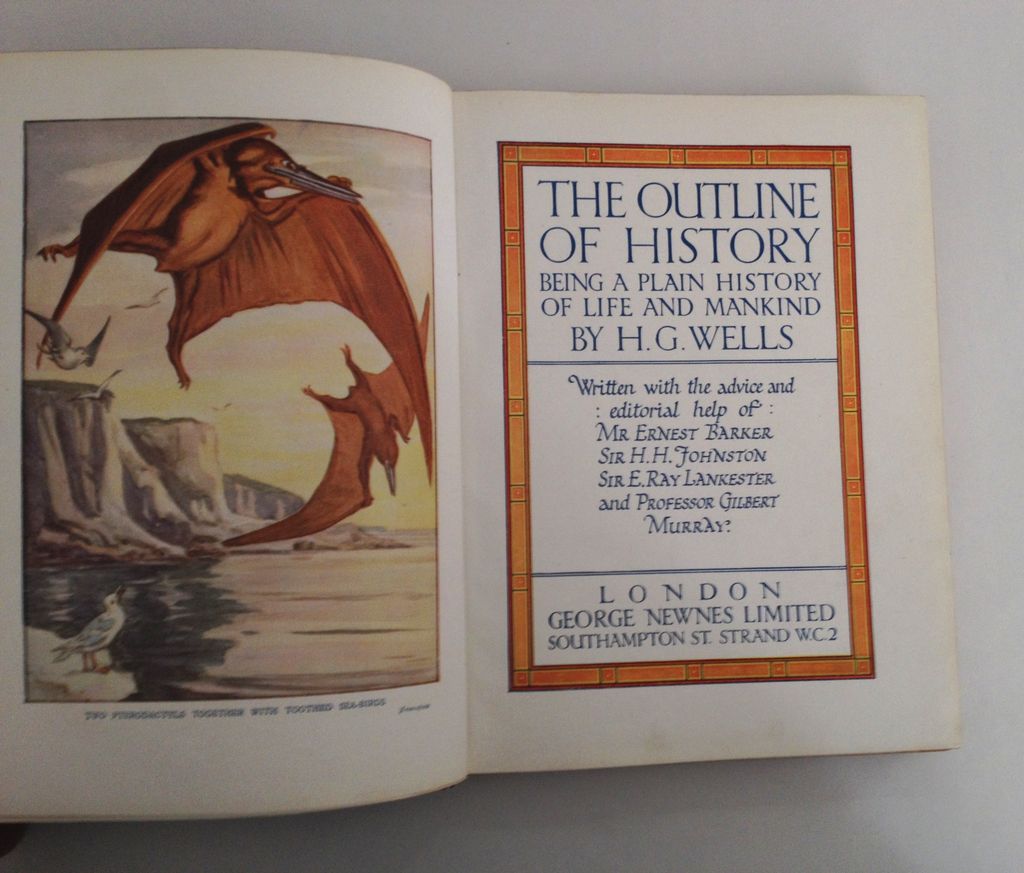
Tom Cruise might remember him best for his science fiction, including War of the Worlds and The Time Machine. But in the 1920s and 1930s, author H. G. Wells tried to save the world by saving the history classroom. Wells’ plan sounds eerily similar to a new revolutionary plan by gagillionaire Bill Gates. Why didn’t Wells’ scheme work, and what does that tell us about Gates’ chances?

Can Tom save this child from Bad History?

Can Tom save this child from Bad History?

Alert ILYBYGTH readers may remember our snarky critique of Bill Gates’ ingenuous entry into the evolution/creation controversies. Gates wants to revolutionize the teaching of history by replacing today’s tired curriculum with a breathless new “Big History.” Students would learn about everything ever, from the Big Bang to today’s Big Game.

As scholar Ken Osborne describes in the latest issue of the journal Historical Studies in Education, Gates is unknowingly following in the footsteps of H. G. Wells. As Osborne describes, Wells dedicated the latter half of his career to an ambitious but ultimately fruitless mission to reform history education. As Wells put it in 1921, “Upon this matter of the teaching of history, I am a fanatic.”

Just as Bill Gates did, Wells noticed that most school histories were dry and lifeless. As Wells argued in 1931,

If so many of us had not experienced it, few would believe it possible. . . . It is partly like heavy stale gossip about incredible individuals, partly like trying to get interested in the litigation of an unknown people in a remote country, and partly like watching a university don playing soldiers on his study floor.

To Wells, this was more than just a matter of wasted time. History as taught, Wells believed, had led directly to the cataclysm of World War I. Young people in each country had been drilled to believe in patriotic pablum instead of understanding themselves as part of the great unfolding of humanity. Wells was not alone in this belief. As British Prime Minister Lloyd George argued in the last year of the Great War,

The most formidable institutions we had to fight in Germany were not the arsenals of Krupp, or the yards in which they turned out submarines, but the schools of Germany. They were our most formidable competitors in business and our most terrible opponents in war.

In the years following the war, Wells published his sweeping Outline of History. As he described it,

Its background is unfathomable mystery, the riddle of the stars, the measurelessness of space and time. There appears life struggling toward consciousness . . . through millions of years . . . until it reaches the tragic confusions and perplexities of the world of to-day, so full of fear and yet so full of promise and opportunity.

Like Bill Gates, Wells wanted students to see themselves in cosmological time. Not only as citizens of a particular country, but as denizens of a universe of abiding mystery. And just as Gates wants to do with his Big History project, Wells hoped to do an end run around a hopelessly hidebound educational system. In Wells’ opinion, schools remained “a conservative force in the community . . . controlled by authority and bound officially as well as practically to respect current fears and prejudices.”

From dinosaurs to diplomacy...

From dinosaurs to diplomacy…

To overcome these prejudices, Wells devised a painstaking hour-by-hour plan to fix education. Just as Bill Gates is hoping to do, Wells hoped his ideas would take off with teachers first. Then, bit by bit, those teachers would use Wells’ grand healthy history to supplant the old musty stories.

It didn’t work. As Ken Osborne concluded, “when [Wells’ plans] were not simply ignored, dismissed as impractically utopian, or condemned as rigidly doctrinaire, they were domesticated and de-radicalized.”

It seems Bill Gates is traveling down this same road in all innocence. It seems ironic that Gates wants to revolutionize the teaching of history, but does not seem to have spent any time actually studying history. If he had, he might have learned from the doomed efforts of predecessors such as H. G. Wells. Or, even more simply, he might have learned from historians such as David Tyack and Larry Cuban. Twenty years ago, Tyack and Cuban offered a compelling argument about why the reform efforts of folks such as Gates and Wells end up so often in the dustbin of educational history.

The best-intended plans—and even the best-funded ones—never have much effect if they do not adapt themselves to the ubiquitous “grammar of schooling,” Tyack and Cuban argued. When a new reform helps teachers do what they already want to do, it is adopted with alacrity. Blackboards, for example, and now smartboards, offer good teachers a way to do a better job. On the other hand, when reforms ask teachers to change everything, those reforms end up collecting dust in a back closet in a school-district warehouse somewhere.

It’s always tricky to use the past to predict the future, but in this case the parallels between Bill Gates and H. G. Wells seem too blatant to ignore. Both men hoped to ride to the rescue of schools. Both men hoped to sidestep the people who could actually make their “Big Histories” happen.

As a result, both plans will end up the same way.

How Columbus Became Conservative

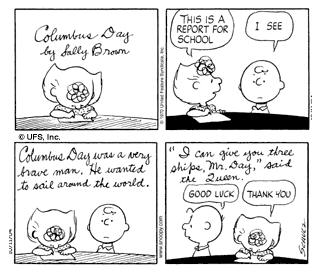
Christopher Columbus used to vote Democratic, but now he’s a leading voice among America’s cultural conservatives. Not the man himself, of course. But celebrations of Columbus’ life used to be lean to the left. These days, conservatives have become the leading celebrants. How did that happen?

What are the children learning about Columbus?

What are the children learning about Columbus?

In these United States, today is officially a federal holiday. Columbus Day was only established as a federally recognized holiday, though, due to the complicated politics of Franklin D. Roosevelt’s New Deal in the 1930s. Italian immigrants had long lobbied for recognition of their greatest ethnic hero. As Roosevelt cobbled together his powerful but shaky New Deal coalition, he couldn’t afford to alienate any urban constituency. Establishing a federal holiday was a politically cheap way to symbolize Roosevelt’s sympathy with Italian-American voters.

At the time, Christopher Columbus represented Italian pride. Columbus stood for the fact that Italy had produced world-beating explorers and scientists. By the early 1900s, of course, Italy had become a leading source of poor, sometimes-desperate immigrants to the United States. The image of Italian-Americans in the yellow press at the time had become one of poorly educated “garlic-eaters.” Columbus Day’s federal recognition in the 1930s represented both a repudiation of those stereotypes and a recognition of the increasing political clout of Italian-Americans in the Democratic Party.

Today, of course, Christopher Columbus has acquired entirely new meanings as a cultural symbol. Instead of representing the heroic triumph of Italians, Columbus has come to embody the culture war over the settlement of the Americas. On the left, Columbus personifies the nature of that settlement. To leading leftist historian Howard Zinn, for example, Columbus’ quest was for loot, and his method was rapine. As Zinn wrote in his popular People’s History of the United States:

The Indians, Columbus reported, “are so naive and so free with their possessions that no one who has not witnessed them would believe it. When you ask for something they have, they never say no. To the contrary, they offer to share with anyone….” He concluded his report by asking for a little help from their Majesties, and in return he would bring them from his next voyage “as much gold as they need … and as many slaves as they ask.” He was full of religious talk: “Thus the eternal God, our Lord, gives victory to those who follow His way over apparent impossibilities.”

Because of Columbus’s exaggerated report and promises, his second expedition was given seventeen ships and more than twelve hundred men. The aim was clear: slaves and gold. They went from island to island in the Caribbean, taking Indians as captives. But as word spread of the Europeans’ intent they found more and more empty villages. On Haiti, they found that the sailors left behind at Fort Navidad had been killed in a battle with the Indians, after they had roamed the island in gangs looking for gold, taking women and children as slaves for sex and labor.

Today’s leftist activists, too, hope to puncture the heroic legend of Christopher Columbus. As one described it, the main legacy of Christopher Columbus was to turn North America into a “crime scene.

In response, conservative intellectuals have tried to maintain Columbus’ place in the halls of heroes. As the recent controversy over the new Advanced Placement United States History framework has demonstrated, conservatives will unite against anything they perceive as a smear of America’s traditional heroes. For example, long before Dinesh D’Souza rolled out his recent patriotic film, he bashed the left’s tendency to bash Columbus. As D’Souza argued in 1995, Columbus had the moxie to cross a dangerous ocean. And Columbus may have misunderstood Native Americans, but he admired them. The violence came from the native side. As D’Souza put it,

While the first Indians that Columbus encountered were hospitable and friendly, other tribes enjoyed fully justified reputations for brutality and inhumanity. On his second voyage Columbus was horrified to discover that a number of the sailors he left behind had been killed and possibly eaten by the cannibalistic Arawaks.

For many conservatives, as for D’Souza, Columbus has come to represent more than just the beginning of the European colonization of the Americas. For conservatives, Columbus has become the poster child for the proper attitude toward the past. Historians on the left, many conservatives believe, have been very successful in spreading their anti-patriotic smears. The proper thing for conservatives to do, then, is rally around those symbols of traditional American exceptionalism.

Only Conservatives Can Be Good Teachers

Quick: What’s the most important trait a child needs in order to do well in school? Brains? A cool retro lunchbox? At World Magazine this morning, Amy Henry offers what she calls the “conservative” answer.

All I need is the Hoff...

All I need is the Hoff…

She tells the story of her struggles as a classroom teacher. No matter how dedicated, no matter how creative, Henry argues, no teacher can make any headway if students offer determined resistance. As Henry tells the tale,

Four times I asked him to take out a piece of paper. Four times I asked him to find a pencil. Each and every time we reached a new vocabulary word, I stopped reading and told him to write it down. By the time the history lesson was over, I was exhausted and so was he, I suspect. Whether the directive is to get out a book, pick up a piece of trash, or sit in a particular seat, I am met with stiff resistance, if not outright refusal to cooperate.

No student, Henry insists, can be taught if he or she isn’t willing to obey. As she puts it,

without obedience none of that [good teaching] can happen. I can teach an ADHD, dyslexic, dysgraphic child with severe anxiety issues the world, but I cannot teach a high-functioning, intellectually bright, whippersnapper of a kid who won’t obey a doggone thing.

For conservatives, Henry says, the most important ingredient in education is obedience. This is not just her off-hand observation. As evidence, Henry cites new-ish poll data from Pew Research. Those who identify as “consistent conservatives” are more likely than “consistent liberals” to place a high value on children’s obedience. She interprets those numbers in a sketchy way, I think, but let’s save that argument for another post. For now, let’s talk about why so many conservatives agree with Henry.

For Henry, conservatives are the only ones who really get it.  Liberals fudge and whine, but they avoid the obvious conclusion: education in classrooms can only happen if kids come to school equipped with an obedient attitude. As we’ve talked about in these pages, this notion has proven extremely influential among certain conservative activists throughout the twentieth century.

For example, from the mid-1960s, Max Rafferty attracted a huge popular following with his traditionalist nostrums on good education. [For any up-and-coming historians out there, we really need a good academic history of Rafferty’s career and ideology. It’s a fabulous dissertation just waiting for you in Iowa City and Sacramento.] Rafferty served as the state superintendent of public education in California, but he attracted the most attention with his syndicated columns about the nature of childhood and proper education. In one such column from the early 1960s, Rafferty explained why children must begin by learning to obey. In Rafferty’s words,

a child usually has neither the maturity nor the judgment to understand the need for self-discipline. Too many instructors, fresh from college and still pretty Dewey-eyed about things, compromise themselves and their careers in a hopeless attempt to convince some freckled-faced [sic] urchin with devilment coming out visibly all over him that he must discipline himself when all he really needs is a session after school with the ruler.

In the 1970s, too, leading conservative activists Mel and Norma Gabler agreed on the primary importance on obedience. The Gablers are best known for their indefatigable textbook commentary. At every Texas textbook-adoption meeting in the 1970s, the Gablers were there with long detailed lists of ideologically suspect material from the books under consideration. Given the influence of the Texas textbook market among publishers, the Gablers managed to punch far above their weight in terms of national textbook selection.

But the Gablers cared about more than conservative histories and science books. They prided themselves on their attitude toward children and obedience. As an admiring biographer wrote,

The Gabler boys were expected to be respectful and they were. A black friend of the family was always marveling, ‘Your boys are the only ones who call me, “Mister.”’ And the parents’ response was always, ‘They’d better.’

For the Gablers, as for so many cultural conservatives, parents needed to ensure that kids came to school ready to learn. That didn’t mean just pencils and lunchboxes. That meant children must come to school ready to submit to teachers’ authority.

In the narrower world of conservative evangelicalism, too, Henry’s focus on obedience has long roots. Many conservative Christians have agreed with Henry that children must obey, for both classroom and churchly reasons.

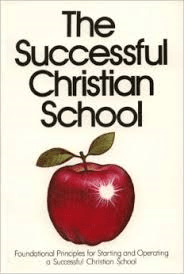
For example, as fundamentalist writer Jerry Combee argued in a late-1970s guide to good Christian schooling,

Without Biblical discipline the public schools have grown into jungles where, of no surprise to Christian educators, the old Satanic nature ‘as a roaring lion, walketh about, seeking whom he may devour’ (I Peter 5:8). Students do well to stay alive, much less learn. . . . If Christian educators give one inch on discipline, the devil will take a mile.

Certainly, among many conservatives, Henry is absolutely correct. Only conservatives can be good teachers, because only conservatives embrace the primary need for obedience. Without obedience, all the fancy-pants progressive toys and tricks in the world will do no good. But with obedience, any child from any background can learn.

Salon Article Wrong on the Right

Do conservatives hate the Common Core?  Like anything in cultural politics, it all depends on what we mean by “conservatives,” “hate,” and “the Common Core.”  In other words, I understand that this is a tricky subject. But it is still painful to read writers like Gabriel Arana get the Right so Wrong.

As we’ve discussed in these pages, conservatives are anything but united about the new common standards.  Some old-schoolers such as Phyllis Schlafly blast the new standards as “control by Obama administration left-wing bureaucrats.”  And Catholic conservatives have worried that the new standards will rob students of the “the virtues necessary to know, love, and serve the Lord.”  Libertarians have bashed the core as the death knell of educational independence.  More colorfully, one conservative politician described the standards as the ultimate progressive “beer bong for American education.”  We could go on and on.  Conservative pundits and politicians have offered a vast treasure-trove of reasons to oppose the newish standards.

On the other side, thinkers have also offered plenty of conservative arguments in support of the core.  Karen Swallow Prior of Liberty University, for example, has suggested that “no one more than evangelicals” should understand the reason for effective literacy instruction.  Kevin T. Brady and Stephen M. Klugewicz argue that the new standards will serve to weaken the power of the political Left.  The new standards, these conservatives assert, will force left-leaning teachers and educational bureaucracies to embrace the rich cultural tradition of Jesus, St. Paul, Martin Luther, and GK Chesterton.  Nuts-and-bolts free-market conservatives also like the standards.  Chester Finn and Michael Petrilli, for example, think that these standards are the least-bad way to insure that America “knows how all its kids and schools are doing . . . [with] a rigorous set of shared expectations for the three R’s.”

It’s complicated.  I get it.  But that complexity only makes me lament all the more the simplistic description offered by Arana’s recent Common-Core article in Salon.  A few days ago, Arana offered this glib and breezy drive-by of conservative attitudes:

Education policy wonks on the right oppose the standards because they view it as a step toward nationalizing education — as a general rule, they prefer to keep control local. Tea Party types, on the other hand, fear they will eventually be used to teach kids about dangerous stuff like evolution. But since George W. Bush signed No Child Left Behind into law — the largest federal education initiative to date — Republicans have in principle been less opposed to federal involvement in education. A lot of the pushback from Republicans . . .  is about the Obama administration, which has enthusiastically supported Common Core.

Let’s take a look at the claims here:

First, “Education policy wonks” don’t like the standards?  It’s hard to think of any more wonk-y conservatives than Michael Petrilli.  And Petrilli, the author of Wonk-tastic articles such as “How School Districts Can Stretch the School Dollar” and “America’s Private Public Schools” is the Right’s most vocal advocate of the new standards.

Next, it is true that some conservatives worry that the Next Generation Science Standards will push more evolution into schools.  It’s also true that some conservatives have bundled their opposition to the Common Core with their opposition to evolution.  But what leads Arana to call this “Tea Party” opposition?  Some polls suggest that conservatives who identify as Tea Party members tend to deny evolution at higher rates than other members of the Republican Party.  But as Dan Kahan has pointed out, any statements about a shift in Republican attitudes about creationism overall must be tempered.  And behind it all, how often do “Tea Party” types talk about creationism, compared to their central interests in smaller government?

Last but not least, Arana is smart to point out that things might be changing.  But is he aware of the difficulties conservative politicians face when it comes to supporting the Common Core?  Jeb Bush, for example, supports the new standards but is always very careful to differentiate the standards from federal control.  In contrast to Arana’s claim, Republicans are not less opposed to “federal involvement in education.”  They MAY be less opposed to shared standards, but “federal control” still remains the third rail of conservative education policy.

So, again, I don’t bash Arana—or anyone—for not following every curve and wrinkle of conservative debates over the Common Core standards.  But if you open your mouth to deliver pearls of wisdom, it always makes sense to at least get the general outline right.

School Protests and Negative Nellies

Suburban Jefferson County is in an uproar. Teachers and students have taken to the streets. They’re protesting a move by conservative school-board members to modify the new Advanced Placement US History framework. Predictably, conservatives nationwide have rallied behind those school-board members. In ways today’s protesters might not recognize, conservative rhetoric in this case dredges up a long conservative tradition—the fight against excessive negativity toward America. In surprising ways for “The Party of No,” when it comes to educational attitudes, conservatives have often been the party of “Yes, Please.”

This Denver-area protest is not the first to result from the changing framework for the Advanced Placement US History class. Conservative pundits have attacked the changes as pernicious and short-sighted. As we’ve noted here at ILYBYGTH, those conservative concerns have a legacy all their own. Conservative intellectuals and activists have protested that the new framework depicts the main themes of US History as oppression and racism. Some conservatives have called for US History to be taught in more traditional ways, more patriotic ways.

In this case, conservative school-board members proposed a new look at the framework. The five-member board has a solid three-member conservative majority, and those three called for a reform that would emphasize “positive aspects” of US History, an emphasis on ideas that “promote citizenship, patriotism, essentials and benefits of the free enterprise system, respect for authority and respect for individual right.” In addition, conservative leaders want less emphasis on materials that “encourage or condone civil disorder, social strife or disregard of the law.”

In protest, district teachers called for an orderly sick-out. Teachers planned to call in sick to draw attention to both this change in curriculum and a proposed change to teacher pay. As word spread, students joined in. Soon, teachers and students alike took to the streets to protest any change in the history curriculum.

Predictably, conservative commentators huffed and puffed at the student protest. Gretchen Carlson of Fox News called the protesters “punks.” “How can being patriotic or learning about patriotism be a negative?” Carlson asked. “And what does it say about our young people and the teachers joining the protests that patriotism is now a negative?”

Writing in the pages of National Review Online, Ian Tuttle had a similarly dismissive attitude toward these “sign-waving baby barbarians.” Not only did the students expose their own ignorance with their hopelessly ironic protest signs, but their movement could not even count as legitimate social protest. Real protest, Tuttle fumed, was a vital patriotic legacy. This sort of display, in contrast, was only “self-indulgent grievance-mongering.”
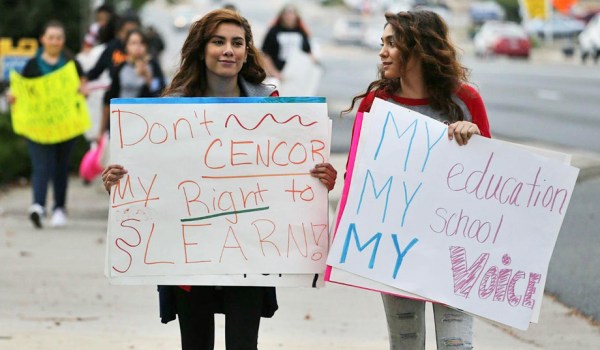
Maybe a little cencoring would be okay...?

Maybe a little cencoring would be okay…?

Back in Colorado, one of the conservative board members opined that the student protesters were being used as hapless “political pawns.” The real issue, he said, was the question of teacher pay. The teachers’ unions cynically exploited the naïve enthusiasm of students in order to line the pockets of union members.

There’s more going on here than just 1960s hangover culture wars. Beneath these specific worries about student orderliness and patriotism, there is a decided theme about the proper attitude schools and students should have toward American society in general. As I researched my upcoming book about conservative educational activism in the twentieth century, I came across this theme time and again. In addition to worries about political leftism and secularism in schools, conservatives have worried vaguely about a pervading sense of negativity in progressive school curricula. Sometimes this has had to do with the portrayal of America’s past, as in the current Colorado student protests. But sometimes it has been a broader complaint about a general negative attitude in school books.

In what follows, I’ll share three long examples from 1923, 1939, and 1970. In each case, leading conservative activists attacked the negativity of progressive educators. Just as in Jefferson County, conservatives in each case worried that students were being taught that America stunk, that life in general stunk.

First, a speech from April 16, 1923. In this speech, the leader of the National Society of the Daughters of the American Revolution warned of the creeping negativity and anti-patriotism of America’s teachers. Too many teachers, President General Anne Minor insisted, poured that negativity down the throats of trusting young schoolchildren.

Character and patriotism and obedience to law—there are the essentials of training in the schools. Do we find them everywhere? There are many who feel that there is a weakness of moral fibre [sic] in the teaching in many of our schools. And it is well known that there is an organized movement of many years’ standing among radicals to insinuate their doctrines into the schools and colleges all over the land….We want no teachers who say there are two sides to every question, including even our system of government; who care more for their ‘academic freedom of speech’ and opinion (so called) than for their country. Academic freedom of speech has no place in school, where the youth of our country are taught and their unformed minds are developed. There are no two sides to loyalty to this country and its flag. There is nothing debatable about allegiance to that flag and the Republic for which it stands. Freedom of speech does not give the right to teach disloyalty to our children and college youth. The teacher who does not wish to teach loyalty toward the land that employs him, has one good remedy. He or she may resign and go where disloyal opinions can find expression without harm to anyone. Guard well your schools, lest the life of the nation be poisoned at its source.

Years later, in 1939, a school-board member in Englewood, New Jersey lambasted the leftism and negativity of a popular set of textbooks. In this case, that conservative school board member was B.C. “Bertie” Forbes, the founder of Forbes Magazine. The textbooks at issue were a set of social-studies books by progressive scholar Harold Rugg. In this snippet, Forbes tells a story he repeated over and over again in his crusade against the Rugg books:

One of [a local teacher’s] pupils came to me, very much upset. In effect, he said that he had always regarded America and the American form of government as wonderful. But, he proceeded to relate that when the class had been asked to record their opinion as to whether ‘The people of the United States have a better government than have the people of any other county in the world,’ their teacher expressed disagreement with those young Americans who had replied, ‘Yes.’ According to this pupil she disabused their minds of any such idea. According to him, she told her young charges that the answer was ‘No’, that ‘there are several countries in Europe which have as good, if not better, forms of government than ours.’

At this critical time, when we are preparing to conscript our youths to become American soldiers, I cannot but question the wisdom of impregnating young minds with any such notion that our system of government is open to question.

If teachers of the Rugg books are seeking ‘subtly’, to use Professor Rugg’s own word, to convey such ideas to the coming generation, ideas which cannot possibly inspire them with veneration for their flag—which they are asked to salute every day—surely the parents of Englewood are entitled to learn the facts.

A generation later, in 1970, conservative activists Mel and Norma Gabler told the Texas State Board of Education that too many textbooks focused only on the negative. The Gablers went through the list of approved books, one by one. In each case, the Gablers noted the relentless negativity of the texts. In what follows, I’ll include a full long book-by-book quotation from the Gablers’ testimony:

This book contains some of the chilling, horror-type stories that seem to appeal to the morbid imagination of this age’s youth; but so much time spent thinking upon strangeness can make it almost seem normal. The characters in ‘The Jam’ are dope addicts. ‘The Hitchhiker,’ which follows, has an identical climax, both written to horrify. ‘The Birds’ was made into a Hitchcock movie, so is well-known, but in reading it there is so much more blood and gruesome detail that the reader feels the need to escape and cleanse himself from such horror. ‘Zero’ leaves the impression that it is normal for children to hate parents and for parents to be indifferent to the needs of children. Everything in the book is conducive to causing emotional instability in the impressionable mind.

This [Rebels and Regulars] is another very depressing book. As far as the language used, it is in keeping with the characters and plots of the stories, but not the sort of language the thoughtful parent would approve of in his children. There is throughout the book the undercurrent of ‘a cause,’ which gives a prejudiced viewpoint, always picturing the white man as the villain against different minority groups or individuals. Typical of the stories is ‘The Cyclists’ Raid,’ which is militant, lawless, defiant, and completely without consideration for the individual. . . . A whole semester of concentrating upon rebellion as pictured in these stories will have a negative effect upon an impressionable young person. It becomes more honorable to rebel than to obey laws or consider the rights of others. . . .

This book [Ways of Justice] indicates that justice is whatever an individual decides it should be. ‘Junkie Joe Had Some Money’ shows bullies getting away with murder because the only witness is intimidated. In ‘Manuel,’ a kindly act is rewarded with utmost cruelty, written in vivid detail. ‘Mateo [86] Falcone’ tells of a young boy who is bribed to reveal the hiding place of another, then his father kills him. Nothing here to indicate love or understanding is possible between parents and child. ‘Marijuana and a Pistol’ gives all the sordid details of a maladjusted youth who smokes ‘weeds,’ including the uncontrolled giggling and vomiting. ‘They Grind Exceedingly Small’ is a story about the person who has money, taking advantage of the poor, hard-working, underprivileged—indicating that all money and power are in the hands of the cruel, wicked, dishonest, and undeserving. . . .

Couldn’t half of the stories in this series tell about people living together in harmony, love, understanding, and helpfulness?

Is reality only negative? Does not reality also include the many acts of kindness between races that is evident across our nation? It must be remembered that qualities such as morality must be taught. They do not come naturally. Education without morality will result in a depraved society.

Our conclusion is that if these books do not contribute to rebellion, lack of respect for authority, sadism, violence, and disillusionment, they will most certainly defeat the whole purpose for studying literature in our schools; for there is absolutely nothing presented here that would open the wonderful world of the printed page to our youth and cause them to want to pursue reading for the pure joy of doing so!

In all these conservative protests, the notion that school materials must somehow be positive and patriotic takes center place. Whether it was in 1923, 1939, 1970, or today, conservatives have insisted that school materials do more than present the negative side of life. In today’s protest, the issue is the teaching of US History. And that has certainly been a central subject in these battles. But it was not only history that became controversial. As the Gablers pointed out, the negativity of the cultural left showed up in literature selections as well. As they asked so plaintively, “Is reality only negative?”  And, and President General Minor protested way back when, a pervasive, destructive negativity also showed up in teachers’ attitudes.

Again and again, conservatives have wanted students to learn positive messages. Conservatives have worried that too much negativity might produce a generation of cynics. In a sense, we might say that conservatives in schools have sometimes been the party of positivity.

Traditional Education Is Not Illegal…or Is It?

Nobody thinks men should punch their wives and drag them through hotels. But plenty of traditional educators and parents DO think that corporal punishment is not only proper, but necessary.  The recent controversies in the National Football League seem to show that corporal punishment is now both illegal and morally abhorrent.  Does this mean that traditional education is done for?

In case you don’t follow sports news, Ray Rice of the Baltimore Ravens has recently come under fire for brutally punching his then-fiancee and dragging her face-down through a hotel.  [Warning: This video is disturbing.]  The leadership of the National Football League, too, has been accused of initially downplaying this horrific incident.

Perhaps due to all this attention, another NFL star has been punished severely for physically abusing his son. In this case, Adrian Peterson has been accused of beating his four-year-old son with a switch.  His team immediately deactivated him and now a warrant has been issued for Peterson’s arrest.

Please don’t misunderstand me: I am not a supporter of corporal punishment in any form. I would not allow my daughter’s school to use physical punishment on her and I do not think schools should use such punishment on any kids.

But I understand that lots of people do support corporal punishment. It has long been a fundamental tenet of traditional education that children must be disciplined, physically if necessary.  In the arguments of traditionalists, this is in the children’s best interest.

For example, arch-conservative school leader Max Rafferty argued in 1964 that American education relied on sensible corporal punishment.  As Rafferty put it,

Prior to 1930 school discipline was built around corporal punishment. It always had been.  Education had walked and in hand with the hickory stick apparently since time began, and virtually every teacher who ever lived took this state of affairs for granted.

In Peterson’s case, the grand jury did not disagree that corporal punishment was legal. Rather, according to the New York Times, the grand jury concluded that Peterson’s punishment was “not reasonable and did not reflect community standards of what was reasonable discipline.” It seems Peterson hit his son severely enough to leave cuts and bruises.

Again, I fully support the criminalization and condemnation of this kind of severe beating of a young child. But sometimes publicity can have a strange effect.  In this case, Peterson was accused of beating his son TOO SEVERELY, not of beating his son in general.  The grand jury specified that Peterson’s application of corporal punishment violated community norms, not that Peterson’s use of corporal punishment was itself illegal.

Nevertheless, I wonder if the take-away for many Americans will be that all forms of corporal punishment have been rendered illegal. So here’s my question: Will traditionalist parents and teachers now assume that corporal punishment in toto is illegal?  Immoral?

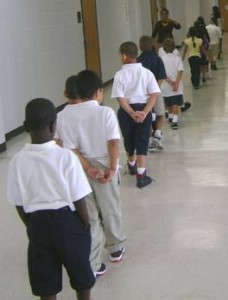
Children Must Submit

First learn to obey

First learn to obey

HT: MM

What is the role of the child in school? Many conservative thinkers, now and in the past, have insisted that children must learn to submit to teachers’ authority. Before they can learn to read or figure, children have to learn that obedience is their proper attitude. These days, this penchant for submissive children has leached out of the world of traditionalist thinking into the burgeoning world of charter schooling. A recent interview with a leading scholar highlights the ways conservative values have reasserted themselves as the mainstream norm.

Thanks to a watchful colleague, I came across this interview with Penn’s Professor Joan Goodman. Professor Goodman works in the Teach for America program at Penn and spends a good deal of time in urban charter schools. In many of those schools, Goodman finds a rigorous standardization and a vigorous effort to train children to be submissive. As Goodman told EduShyster,

these schools have developed very elaborate behavioral regimes that they insist all children follow, starting in kindergarten. Submission, obedience, and self-control are very large values. They want kids to submit. You can’t really do this kind of instruction if you don’t have very submissive children who are capable of high levels of inhibition and do whatever they’re told. . . . They want these kids to understand that when authority speaks you have to follow because that’s basic to learning.

At the same time, Goodman notes, the schools insist on lockstep performance by teachers. Every teacher is supposed to be delivering the same content at the same time in the same way. Goodman calls it a “very uniform and scripted curriculum.”

Ask anyone familiar with urban charter-school education these days, and you’ll hear similar stories. For those of us trying to figure out what “conservatism” means in education, this leads us to some difficult questions: Did these goals and values move from fundamentalist and conservative activists into the mainstream? And if they did, how?

In my historical research into the worlds of conservative educational activism, I’ve seen it time and again. For decades—generations, even—conservative thinkers have insisted that submission is the first lesson of successful schooling. Without submissive children, teachers will not be able to transmit information. Without the successful transmission of information from teacher to student—according to this conservative logic—education has not happened.

Originally published in 1979...

Originally published in 1979…

In the world of Protestant fundamentalist education, youthful obedience is often elevated to a theological value. Writing for an A Beka guide in the late 1970s, fundamentalist writer Jerry Combee warned that Christian teachers must be stern disciplinarians. “If Christian educators give one inch on discipline, the devil will take a mile.” Combee continued,

Permissive discipline, for example, is wrapped up with teaching methods that always try to make learning into a game, a mere extension of play, the characteristic activity of the child. Progressive educators overlooked the fact that always making learning fun is not the same as making learning interesting. . . Memorizing and drilling phonetic rules or multiplication tables are ‘no fun’ (though the skillful teacher can make them interesting). They can have no place in a curriculum if the emotion of laughter must always be attached to each learning experience a la Sesame Street.

That same A Beka guide to good fundamentalist schooling promised that good schools always taught in lockstep. At the time, A Beka offered a curriculum for private start-up Christian fundamentalist schools. Not only would schools get curriculum infused with dependably fundamentalist theology, but

the principal can know what is being taught. He can check the class and the curriculum to make certain that the job is getting done. Substitute teachers can also step in and continue without a loss of valuable teaching time.

Some bloggers confirm that fundamentalist schooling has continued to emphasize obedience over intellectual curiosity. Jonny Scaramanga, Galactic Explorer, and Samantha Field have all shared their experiences with this sort of fundamentalist educational impulse. In their experiences, fundamentalist schools and homeschools have insisted on obedience, and have done so in a sinisterly gendered way. Young women and girls, especially, were taught to submit to male authority figures. Every student, however, seems to be pressed to submit and conform, not as a punishment, but rather as a foundation for education.

To be fair, as I argued in an academic article a while back, there has been a lot of disagreement among fundamentalist Protestants about proper education. Just as the folks at A Beka were insisting that proper education began with submission, the equally fundamentalist thinkers at Bob Jones University pushed a very different vision of proper education. Led by long-serving dean Walter Fremont, the school of education at Bob Jones promoted a more child-centered sort of fundamentalist education.

We also need to note that this insistence on submissive children is not just a fundamentalist one. Secular conservatives have long insisted that learning can only begin with obedience. In many cases, this has been a conservative response to a left-leaning progressive pedagogy. For example, leading progressive thinker Harold Rugg began his career with recommendations for proper classroom attitudes. In an article from the 1920s, Rugg instructed teachers to share authority with students. Good teaching, Rugg wrote, did not dictate to children; it did not insist on obedience. Rather, good teaching pushed students to think of themselves as autonomous, self-directed learners. Good teachers, Rugg insisted, asked students again and again, “What do you think?”

In the 1920s, this notion of proper student behavior divided progressives from conservatives. One conservative leader of the Daughters of the American Revolution offered a very different vision of good teaching. Writing in 1923, Anne Minor explained that the best teachers begin with “truth and integrity, orderliness and obedience, loyalty and love of country.”

In the 1950s, another conservative Daughter of the American Revolution warned that teaching had gone astray when it encouraged children to be “persistent in their own ideas, disobedient, and resent[ful of] parental discipline.”

Another secular conservative in the 1950s agreed. One letter-writer to the Pasadena Independent described the problems with progressive education this way:

discipline, as well as the lack of fundamental knowledge teaching [sic], is one of the biggest lacks of the progressive school. Some parents shift the discipline to the school which is wrong, of course, but if the parents are at fault for lack of discipline, so are the schools. . . . Lack of consideration of others is the biggest fault of children today, and should not be too difficult to correct. Tantrums should never be tolerated, sassiness and disobedience should be controlled at an early age.

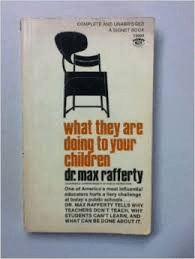
rafferty what they are doing to your children

And, of course, other conservative educational thinkers and activists also pressed for an obedience-first vision of good education. The leading secular conservative voice of the 1960s, Max Rafferty, agreed that schools could only function if children first learned to submit. As Rafferty put it in his 1964 book What They Are Doing to Your Children,

School, you see, was not considered ‘fun’ in those days. It was a mighty serious business and was conducted that way. At any rate, once the two premises are accepted that (1) boys won’t behave in schools unless compelled to do so and (2) boys must be made to behave so that they can learn things that are essential for them to know, then the whole paraphernalia of corporal punishment falls into proper perspective. . . . Things have changed of late in the field of discipline, and more than somewhat. They started to change at home first, back in the twenties and thirties. The prime mover in their change was the new psychology, which was widely publicized and which caused parents seriously to doubt their proper role vis-à-vis their children for the first time in the recorded history of the human race. . . . The result was the emergence of the least-repressed and worst-behaved generation of youngsters the world had ever seen.

As I researched my upcoming book about conservative activism in education, I found this theme repeated over and over. It goes something like this: Good schooling means the transmission of information to children. That transmission cannot occur unless children submit to teachers’ authority. Therefore, any meaningful education reform must begin with the establishment of an atmosphere of relentless obedience and submission.

Professor Goodman doesn’t talk about “conservatism” or “fundamentalism” in the schools she visits. And many of the reformers these days who push for youthful obedience and teacher standardization would never call themselves conservatives, let alone fundamentalists. But it is difficult not to notice the overlap.

Conservative notions of youth and education, it seems, have become the standard way to think about educational reform among groups such as Teach For America. First and foremost, in this understanding of education and youth, children must submit.

Will the REAL Conservative Fan of the Common Core Please Stand Up

Are the new(ish) Common Core Learning Standards “conservative?” Some say yes, some say no. But even among those who say yes, we see a split. Leading conservative educational thinker Sol Stern offers one “conservative” vision of the Common Core, while Michael Petrilli gives another. And their differences can tell us a lot about the complicated world of conservative educational thinking.

Among some conservatives—some of them literally from an earlier generation—the new standards seem obviously objectionable, simply because of their provenance. Phyllis Schlafly, for example, emerged from the 1970s to bash the Common Core as a power grab by “Obama administration left-wing bureaucrats.” Some pundits from a newer generation agree. Glenn Beck and Michelle Malkin warn that the new standards are turning American kids into “guinea pigs.”

But among those conservatives who like the Common Core—or at least think the new standards are the least-bad option—we see different emphases. Both Stern and Petrilli agree that the new standards will offer a more rigorous academic experience. But Stern suggests that such rigor is the core of the conservative case for the Core, while Petrilli says that academic rigor is only one aspect of the conservative argument in favor of the new standards.

Writing in the pages of the New Criterion, Stern defends the Common Core as the best “chance of restoring traditional academic content to the classroom.” As Stern explains,

As a conservative, I remain convinced that, faults and all, the Common Core still presents a golden opportunity and a challenge for states and school districts to rethink what is taught in their classrooms. The Standards are more than just a list of learning objectives and skills that American students are expected to achieve by the end of each grade level. The most hopeful part of the new Standards is that they reject the instructional malpractice that prevents the public schools from fulfilling their historic mission of producing literate American citizens who know something about their country’s history and its republican heritage. Contrary to the conservatives’ complaints, the Common Core is, in fact, a document that the founders would approve.

Michael Petrilli does not disagree. He thinks the Common Core will indeed help re-introduce academic rigor to public schools. But as he argued a while back in the pages of the Weekly Standard along with co-author Chester Finn, the real score of the Core is elsewhere. As Petrilli tells the story, the road to the Common Core began back in the days of Bill Bennett, Reagan’s second secretary of education.

Petrilli argues that the new standards fulfill a generation-long conservative plan to make schools more measurable, more interchangeable. With such standards in place, free-market conservatives have thought, public schools could be freed from the dead hand of left-leaning teachers’ unions. Parents could be offered a market-friendly menu of charter schools and voucher-funded private schools.

In Petrilli’s words,

Standards do a good job of clarifying the public’s expectations for schools, and signaling to parents and taxpayers whether the campus down the street is educating its students poorly or well. But standards-based reform has never had a suitable answer for failing schools. It can identify them but has had little success turning them around.

Choice, on the other hand, is great at creating new school options, places that can replace the failures and give needy kids decent alternatives. Yet market-based reform needs reliable consumer information for it to lead to strong outcomes—information that standards and tests are excellent at providing.

We might describe this difference in conservative emphases as a difference between a “classroom” approach to conservative school reform and a “systemic” approach. Or maybe a “traditionalist” versus a “free-market” approach.  And, again, we don’t want to make these plans sound entirely exclusive.

But it seems as if Stern is arguing that the heart of “conservative” reform must be with an intellectual change in the way kids are taught. Stern excoriates pedagogical ideas such as “balanced literacy.” Instead, Stern celebrates the approach of anti-progressive E.D. Hirsch. Instead of looking at structural reforms, Hirsch and Stern wanted conservative reforms to begin in the classroom. Students needed to learn basic cultural information, to focus on “Core Knowledge.”

Petrilli, on the other hand, emphasizes a different approach. Academic rigor is important, Petrilli argues, but it is only one of the reasons for conservatives to support the Core. At least as important, Petrilli says, is the boost the standards will give to school choice. Without what Petrilli calls “true external standards,” it will always be impossible to introduce a true educational marketplace. After all, how can parents know what school is the best if there are not measures that compare schools in a fair way?

In any case, these conservative pleas in favor of the Common Core might be too little, too late. Recent polls have indicated plummeting popular support for the new standards. In spite of the smart arguments of intellectuals like Stern and Petrilli, parents might decide that these standards are just too iffy.


Just the Facts, Ma’am

What should good history teaching look like?  As we’ve noted here at ILYBYGTH, conservative critics have warned that the new Advanced Placement US History framework pushes a “consistently negative view of the nation’s past.”  Now, two big historical associations have defended the guidelines.  But those associations are downplaying a central reason why so many conservative critics object to the APUSH framework.

Anyone with ears to hear can’t miss the conservative concern about the tenor of the new APUSH framework.  From the Republican National Convention to the blogosphere to the stuffed-shirt crowd, conservative pundits have teed off on the new guidelines for the advanced history classes.

Time and again, conservative activists such as Larry Krieger have warned that the new guidelines leave out key documents such as the Mayflower Compact and teach children that America’s history is the story of white exploitation, greed, and genocide.

The National Council for History Education and the American Historical Association have published letters in defense of the APUSH guidelines.  Mainly, these history groups insist that the new framework is not biased.  As the AHA puts it,

The AHA objects to mischaracterizations of the framework as anti-American, purposefully incomplete, radical, and/or partisan.

The 2012 framework reflects the increased focus among history educators in recent years on teaching students to think historically, rather than emphasizing the memorization of facts, names, and dates.  This emphasis on skills, on habits of mind, helps our students acquire the ability to understand and learn from key events, social changes, and documents, including those which provide the foundations of this nation and its subsequent evolution.  The authors of the framework took seriously the obligation of our schools to create actively thinking and engaged citizens, which included understanding the importance of context, evidence, and chronology to an appreciation of the past.

But there is a minor theme in these defenses.  In the snippet above, the AHA signatories mention that good history education goes beyond the “memorization of facts.”  Similarly, the NCHE insists, “The point of education is not simply to acquire a specific body of information.”

But for many conservative activists and their supporters, the definition of education is precisely the acquisition of knowledge.  And that definition has proven enormously politically powerful over the years.  Please don’t get me wrong—I’m an ardent supporter and sometime member of both the NCHE and the AHA.  But these letters downplay the culture-wars significance of what Paolo Freire called the “banking” model of education.

Not that conservative critics aren’t concerned with the partisan tone of the new guidelines.  That is certainly a key motivating factor for many, I’m sure.  But behind and beyond those worries lies a deeper conservative concern with the definition of education itself.  Not all, certainly, but many conservatives want education in general to remain the transmission of a set of knowledge from teacher to student.

This notion of proper education is so deep and so profound that it often goes unarticulated.  Conservatives—and many allies who wouldn’t call themselves conservative—simply assume that education consists of acquiring knowledge, of memorizing facts.  And this assumption lurks behind many of the big education reforms of our century.  The test-heavy aspects of the No Child Left Behind Act and the new Common Core standards rely on a notion of good education as the transmission of information.  If a student has really learned something, the thinking goes, a test can find out.

For over a century, progressive educators have railed against this powerful assumption about the nature of education.  But for just as long, conservative activists have worked hard to keep this idea of education at the center of public schooling.  As I argue in my upcoming book, conservatives have been able to rally support for this “banking” vision of proper education in every generation.

In the 1930s, for instance, one leader of the Daughters of the American Revolution defined education precisely as a body of ideas that “shall be transmitted by us to our children.”

And in his popular 1949 book And Madly Teach, pundit Mortimer Smith insisted that true education consisted precisely of transmitting the children “the whole heritage of man’s progress through history.”

Similarly, in 1950, an angry letter-writer in the Pasadena Independent insisted on the transmission model as the only proper method of education.  As this writer put it,

Children have the right to learn by being taught all and more than their parents and grandparents learned—one step ahead instead of backward, through each generation.

Perhaps the most articulate advocate for this notion of traditional, transmissive education was California State Superintendent of Public Education Max Rafferty.  In his official jobs and his syndicated newspaper column, Rafferty insisted that the only worthwhile definition of education was the transmission of knowledge from adult to child.  Two fundamental principles of “common sense” in education, Rafferty argued in 1964, were the following:

  • Common sense told us that the schools are built and equipped and staffed largely to pass on from generation to generation the cultural heritage of the race.

  • Common sense took for granted that children could memorize certain meaningful and important things in early life and remember them better in later years than they could things that they had not memorized.

We could list a thousand more examples.  This tradition among conservative activists has remained so powerful that it often goes without saying.  And it lurks behind conservative agitation against each new generation of progressive educational reform.

So when groups such as the AHA and the NCHE defend the new APUSH guidelines, they should spend more time explaining and defending their notion that good education relies on more than just the memorization of facts.  For many parents and teachers, the transmission of those facts is precisely the definition of good education.