The Girl with No Hands and Other Mysteries of History

Sometimes the archives just aren’t enough. As I research my new book, I’m working this week in the archives of beautiful Gordon College just north of Boston. As is usual in this sort of primary archival research, I’m stumbling across mysteries that I just can’t figure out.

Some of them are curious, but fairly predictable. For example, as was the norm with this sort of conservative evangelical school, parents complained when they heard rumors of student hijinx. Whenever there was a whiff of unchaperoned boy-girl time, parents grew alarmed.

One mother wrote the school’s president in the mid-1960s. This parent was worried about the moral state of Gordon College. Her daughter’s dorm, she complained, had been “raided” by boys. The details of the “raid” were extremely hazy, which makes me think there was some sort of hanky-panky going on. All I can tell from the archival record is that the raiders climbed in through a bathroom window, left “obscene signs,” and did not respect the girls’ repeated disinvitations. At least, that’s what the girl told her mother.

The scanty correspondence leaves many key questions unanswered. What were the “obscene signs?” Were the boys really so unwelcome? How, for instance, would a boy just happen to notice that one particular bathroom window would be unlocked? Didn’t the “raiders” need some inside help?

There’s no way to find out from the archives. All the writers mentioned the “obscene signs,” but decorum prevented them from giving a detailed description. And no administrator suggested even a hint of doubt to the girl’s mother that these boys had been assisted or even encouraged to make their “raid.” No whisper of doubt sullied the stalwart moral righteousness of the girls.

All these questions are tricky, but not utterly confounding. We will never know exactly what transpired in this case, but we can make reasonable guesses that connections between boys and girls went on outside the supervisory gaze of parents and school administrators. It can be tricky to nail down the details from the sketchy and overly polite archival record, but we can distill the basic contours of student life.

????????

????????

Every once in a while, though, I come across a true oddball artifact. One that goes beyond this sort of archival mystery. In 1969, a guy from Pennsylvania wrote to the president of Gordon College with a truly bizarre request. I’ll leave out the guy’s name and address to be polite, but I can’t leave out the rest of his puzzling letter. “I am writing this,” our strange correspondent opened,

                in request of your help in locating a girl that I beleive [sic] may be at your college.

I do not know her name. All I can tell you about her is that she has two mechanical hands, an artificial leg, brown hair, and, except for the mentioned physical detractions, she is quite attractive. I have reason to beleive [sic again] she lives in Cleveland, Ohio, or further west.

The information I need is her name, address, and if possible, her picture for positive identification. I will pay for any valid information leading to her.

For personal reasons, I cannot tell why I need this information, but I can assure you that there is absolutely no intention of harm for her or anyone concerning her.

I would appreciate it if you would answer my letter if you do or do not have her. I am presently writing to seventy-one other colleges and would like to be able to check yours off my list.

If you do have this girl, please do not let this get around, for I feel that she would be deeply hurt if it did, which is something I do not want.

What was going on here? The questions pile up the more we try to knock them down. If the girl was in Cleveland, why was he writing to a school in Boston? What happened to the girl to make her lose her hands and leg? Was the writer in love with her? Or, despite his protestations, did he have some nefarious purpose in mind? Of course, we can’t ignore the obvious explanation that this is all some sort of kooky joke…but to what end?

To their credit, the leaders of Gordon College did not offer any help to this woebegone writer.  I think they were just as puzzled as I am.  Someone at Gordon took a moment to write a single elegant question mark at the top of the page.  That says it all: ?

From the Archives: Fashion & Calvin

As an outsider to evangelicalism, one of the biggest surprises I’ve found is the new hipness of Calvin. No, not THAT fashionable Calvin. Not that one, either. For the past decade or so, Christian intellectuals have been thrilled or horrified by the very old theology of Ur-Protestant John Calvin. As I continue my research into the twentieth-century history of evangelical higher education, I see that the trendiness of Calvinism has longer twentieth-century roots.

Not THAT fashionable Calvin...

Not THAT fashionable Calvin…

Of course, we all know Calvinism as such has a much longer American history. In the early British colonies of Massachusetts and Connecticut, Calvinism served as the de facto governing theology. As time went on, dissenters blasted the rigid dictates of predestination. Most famously, in the early 1800s, febrile anti-Calvinist Lorenzo Dow famously warned, with Calvinism

You can and you can’t

You shall and you shan’t-

You will and you won’t-

And you will be damned if you do-

And you will be damned if you don’t.

As the Second Great Awakening unfolded in Dow’s era, some might think that Calvinism’s days would be numbered. The notion that God has predestined all things and all souls can sound a little intimidating to go-getting Americans. It might be a tough sell, one might think, to convince twenty-first century Americans to embrace such a 16th-century idea. Americans, we might think, prefer the anti-Calvinist Arminian idea that people can choose to embrace the grace that God freely offers.

Not that one either.

Not that one either.

But as Collin Hansen noticed in an attention-grabbing article several years ago in Christianity Today, Calvinism has been making a steady comeback among earnest American evangelicals. The “Young, Restless, and Reformed,” as Hansen called them, had become the most exciting scholars at several leading evangelical seminaries. Writers such as John Piper had fired the hearts of young intellectuals with his “New Calvinism.”

To folks like me—secular types heedless about the internecine theological disputes among evangelicals—such storms raged utterly unnoticed. We were not aware of earnest groups of scholars debating TULIPs and other blooms in the garden of predestination.

In my new research, I’m finding that the “New” Calvinism has always played a role in evangelical intellectual life. Just as secular young folks might continually rediscover the works of Frantz Fanon or Antonio Gramsci, so each new generation of evangelical intellectual seems to feel it has found something radically new and exciting in Calvinism.

In my archive work today, I came across an echo of this sort of intellectual excitement from the 1930s. I’m at storied Gordon College this week, in scenic Wenham, Massachusetts. After I happily survived the drive through storms of Boston drivers, I dug into the papers of second President Nathan R. Wood.

In 1934, Wood wrote to Loraine Boettner, author of The Reformed Doctrine of Predestination. Wow, Wood wrote (in essence). Wood’s actual words were these:

The thinking of the Christian world has in general drifted a long way to the left, and such thinking as yours will be a tonic and should help to bring back the swing of the pendulum from that extreme. I am a great admirer of Calvin. I do not promise to follow him at certain points, but if anyone could make me do it, it would be you yourself in your candid, devout and virile statement of that great system.

At Gordon College in the 1930s, just as at seminaries today, Calvinism has always been a lurking fashion among evangelical intellectuals. It might have experienced an upsurge in the past few years, as Hansen argues, but that upsurge itself is nothing more, it seems, than a perpetually reoccurring enthusiasm over the stern doctrine.

Are Colleges REALLY Charlie Hebdo?

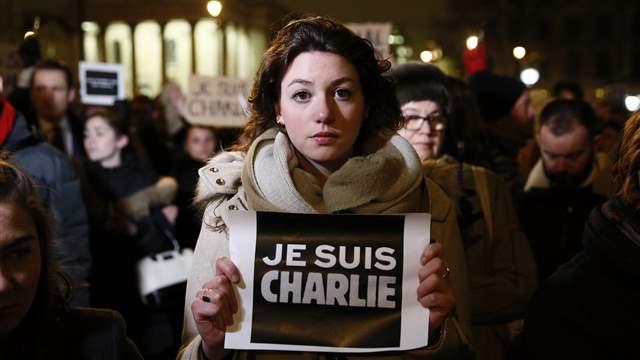
David Brooks raises a tough question about college culture. In the aftermath of the killings in Paris, shocked observers have voiced their solidarity with the slain writers and editors at Charlie Hebdo. But Brooks challenges college students and deans.

Are today's college students REALLY Charlie?

Are today’s college students REALLY Charlie?

“Let’s face it,” Brooks writes,

If [Charlie Hebdo] had tried to publish their satirical newspaper on any American university campus over the last two decades it wouldn’t have lasted 30 seconds. Student and faculty groups would have accused them of hate speech. The administration would have cut financing and shut them down.

As Brooks points out, critics of Islam such as Ayaan Hirsi Ali have been snubbed by schools such as Brandeis University. And anti-Islam comedian Bill Maher was the subject of a protest by students at Berkeley.

In neither case did students articulate the same sort of Islamic fundamentalism seen in the Charlie Hebdo murders. Rather, students protest that anti-Islam speakers were “racist” and must not be allowed to spew their “hate speech” on an enlightened campus.

Brandeis said it could no longer offer Hirsi Ali an honorary degree due to “certain of her past statements.” Hirsi Ali had apparently condemned all of Islam, not only “radical” Islam. She had called for Islam as a whole to be “defeated.”

In Berkeley, students protested the choice of Bill Maher as commencement speaker. In a much-ballyhooed argument with actor Ben Affleck, Maher denounced Islam as “the only religion that acts like the mafia.” Maher’s anti-Islam comments, students argued, constituted “racist and bigoted remarks.”

Maher himself insisted he still wanted to come to Berkeley. He pointed out the irony of celebrating the fiftieth anniversary of Berkeley’s famous Free Speech Movement by banning a speaker.

Obviously, these “attacks” on anti-Islam speakers are not the same as the murders in Paris, and Brooks does not equate them. But he does raise a question we need to consider: Are campus activists who ban speakers hypocritical when they now claim, “Je Suis Charlie Hebdo?”

Historians Rule the School

Why do educational historians have so much influence, relative to other kinds of educational scholars? This year’s Edu-Scholar influence rankings are in, and historians seem to be represented far beyond their numbers.

Like any ranking system, this one is imperfect. (It must be, since it didn’t include your humble editor.) Overall, the Edu-Scholar scale tries to couple academic influence with policy influence. As Rick Hess explains in the pages of EdWeek,

The rubric reflects both a scholar’s body of academic work—encompassing the breadth and influence of their scholarship—and their footprint on the public discourse last year. . . . I’m not sure that I’ve got the measures right or even how much these results can or should tell us. That said, I think the same can be said about U.S. News college rankings, NFL quarterback ratings, or international scorecards of human rights. For all their imperfections, I think such efforts convey real information—and help spark useful discussion.

Fair enough. Given those caveats, by this scale, at least, historians seem to punch far above their weight. Why?

Just in the top ten, for example, are historians Diane Ravitch (#1) and Larry Cuban (#8). At number four we find Gary Orfield, a sociologist whose work on desegregation is heavily historical.

We don’t have to go very far down the list (#26) to find Jon Zimmerman, ILYBYGTH’s house favorite. Penn’s Marybeth Gasman shows up at 18. Also included are David Labaree, Charles Payne (another sociologist who writes a lot about civil-rights history), and Sherman Dorn. Sam Wineburg is also on the list, and though he’s not officially an historian he writes about history and historical thinking.

That might not seem like a lot of historians, out of a total of 200 scholars. But when it comes to public policy, the surprise is that there are any academic historians at all. And doubly surprising to find more than one in the top ten! In general, academic historians get nervous when it comes to making pronouncements about current-day policy.

Many of the scholars here are full-time policy wonks. It would seem their work would do more to influence thinking about education than would the work of so many historians.

So why do all these wonderful historians exert so much influence on public discourse?

Something New for the Shelfie

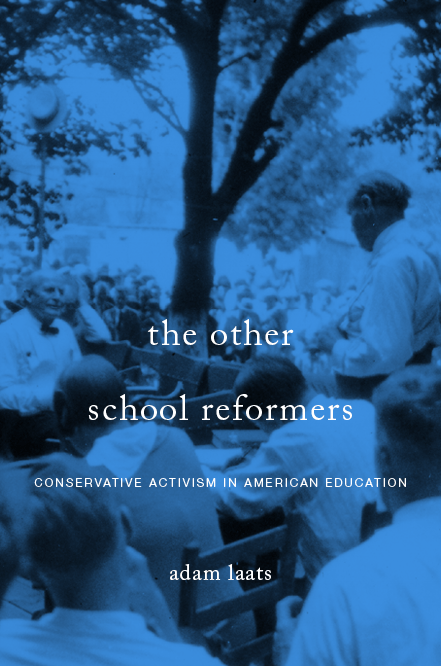
The first copies are in!  Thanks to the folks at Harvard University Press, I’ve got my hands on my new book, The Other School Reformers: Conservative Activism in American Education.

A snappy addition for the bookshelf...

A snappy addition for the bookshelf…

As far as I can tell, they should be getting into stores in the next few weeks.  So here’s my suggestion: Let’s all dress up as our favorite conservative activist, a la Harry Potter, and camp out outside our local bookstores until these babies hit the shelves!

Dibs on Max Rafferty…

What’s the Most Christian College?

If I want my child to have her faith protected at college (and I don’t), where should I send her? Sometimes the answer can be surprising, as new evidence keeps reminding us. Maybe the environment at “secular” colleges isn’t so hostile after all.

As my current research is hammering home to me, one of the most powerful themes among conservative evangelicals and fundamentalists in the twentieth century has been that mainstream education can be dangerous. Children, conservatives have believed, will learn evolution, secularism, and loose morals at most schools and colleges.

As a result, conservative evangelicals have founded and protected a network of explicitly fundamentalist colleges, schools such as Wheaton College, Bob Jones University, Biola University, and many others.

As a professor at a large public university, though, I can’t help but wonder if our “secular” universities are really such hostile places for conservative Christians. Don’t get me wrong: I am likely one of the secular, skeptical, left-leaning academic types many conservatives worry about. But are folks like me the only sorts of professors allowed at big research universities?

A new talk by Jeff Hardin of the University of Wisconsin—Madison helps shatter that stereotype. Hardin spoke with journalists a few weeks back at the Ethics and Public Policy Center about the proper way to talk about creation, evolution, and evangelical religion.

[Full disclosure: I am a Madison graduate myself, and I love the school dearly. My graduate work with Bill Reese and Ron Numbers began my continuing interest in the tangled history of education and conservative religion in these United States.]

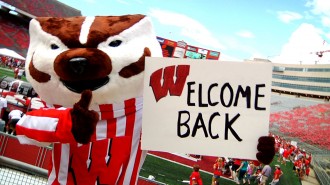
C'mon back, Christians!

C’mon back, Christians!

Hardin’s academic credentials are impeccable. He is a biophysicist at a leading research university. He has a PhD from Berkeley. He has published widely, including authoring a mainstream textbook. He now chairs Madison’s zoology department. And he is an evangelical Christian.

The main thrust of Hardin’s talk was the many differences between and among “creationists.” One can be a young-earth creationist like Ken Ham, or one can be an evolutionary creationist like Hardin himself. There are intelligent design folks, progressive creationists, and even run-of-the-mill unreflective creationists. Hardin wanted his audience of prominent journalists to be more aware of these nuances. He wanted them to avoid talking about “creationists” as an undifferentiated mass of young-earth believers. Certainly, an important point.

For our purposes, Hardin himself presents a more interesting idea. For many conservative evangelicals, mainstream colleges represent an onslaught of secularist ideas. Conservative religious students at such schools, evangelicals have assumed, must prepare themselves to be battered by hostile skeptical professors and an amoral campus culture.

Don't know much about religion...

Don’t know much about religion…

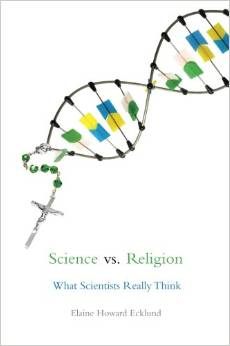
And of course there is some truth to such stereotypes. As sociologist Elaine Howard Ecklund has argued, elite academics at schools like Madison tend to be ignorant or even hostile to conservative religious faith. Like all stereotypes, though, there are important exceptions. In his talk, Hardin tells a story of his work at Madison. An evangelical graduate student came to him one day. As Hardin tells the story,

he spilled his heart out in this meeting, and he explained that he was very close to jettisoning his Christian faith when he came to the university because he realized what he had been told about science didn’t square with what he learned at the university, and so he felt that he was pushed into an impossible position:  either accept his Christian faith and jettison what he was learning about science or, conversely, accept was he was learning about science and cut loose his Christian faith.  He seemed to be in an impossible situation. And so we talked about options and I helped him think through a lot of these issues.

For this student, at least, attending a leading “secular” college did not mean his faith was battered and attacked. This student found an evangelical mentor at a school that has been infamous among fundamentalists since the start of the twentieth century, as I recount in my 1920s book.

So what is the most “Christian” college out there? Is it a staunchly evangelical school that insists all faculty conform to a fundamentalist statement of faith? Or it is a pluralist school that offers young scholars a range of mentors and intellectual futures?

Hardin helps demonstrate that our so-called secular universities are not quite so secular. A better word to describe them might be “pluralist,” since they include students and faculty members of a variety of religious backgrounds.

The Perfect Valentine’s Day Gift

Nothing says “I Love You” more than a book about conservatism and education in American twentieth-century history. Looks like the timing will be perfect.

How to say "I Love You" (But You're Going to Hell)

How to say “I Love You” (But You’re Going to Hell)

My new book is slated for release in early February. Hard to know how it will be received, but one pre-reviewer has called it “a major rethinking of the history of American education.” Another has added, “it would be flat-out wrong to ignore this important book.” Pshaw. . .

For the sophisticated and good-looking readers of ILYBYGTH, the content might not be surprising. In this book, I try to figure out what it has meant to be “conservative” about education in the United States.  How have issues such as creationism, school prayer, and sex ed developed over the course of the twentieth century?  How are they related?  How have conservative attitudes and strategies changed?  How have they remained the same?

In the early days of my research, I had planned to explore the educational activism of leading conservative groups such as the American Legion and the Institute for Creation Research. I was stuck with two big problems, though.

First, the Legion and other conservative groups remained active throughout the twentieth century. How could I describe different conservatives without rehashing the chronology over and over again? I didn’t want to work from the 1920s to the 1970s in every chapter. What to do?

My second problem was one of definition. How could I choose which “conservative” groups to study? I could copy the method of leading conservative scholars such as Russell Kirk or George Nash and use my selection to make an argument about the definition of conservatism. Both Kirk and Nash picked their subjects to give a particular definition to conservatism. For both writers, being a true conservative has meant being a heroic intellectual battling waves of ignorance and knee-jerk leftism. But I’m no conservative myself, and I wasn’t interested in imposing a flattering (or un-flattering, for that matter) definition on American conservatism. What to do?

Luckily for me, I had some help. At a conference back in 2009, I was describing my research. One of the audience members suggested a new approach. Instead of picking and choosing which activists counted as “conservative,” instead of describing the activism of one group after another, why not do it differently? Why not let conservative activists define themselves? This leading historian suggested that I investigate events, not groups.

That’s what I did. I looked at the four biggest educational controversies of the twentieth century: The Scopes Trial of 1925, the Rugg textbook fight of 1939-1940, the Pasadena superintendent ouster of 1950, and the Kanawha County textbook battle of 1974-1975. In each case, conservative activists and organizations fought for their vision of “conservative” schools. By looking at controversies instead of organizations, I could let conservatives define themselves. And I could move chronologically through the twentieth century without rehashing the stories in each chapter.

Did it work? Now I have to let readers and reviewers be the judge. My goal was to explore what it has meant to be “conservative” in the field of education. I did not want to make the relatively simpler argument that conservatism has really meant X or Y. I did not want to give conservatives a heroic history they could draw upon. Nor did I want to give their enemies a catalog of conservative sins. I’m hoping readers think this approach has worked.

So if you’re looking for that perfect romantic gift, consider The Other School Reformers!

Here’s What Creationists Call Anti-Science

Who is anti-science? Depends whom you ask! Recently World Magazine offered a creationist list of the real anti-science stories of 2014.

The sophisticated and good-looking readers of ILYBYGTH may be surprised to hear it, but there are still people out there who think this is a simple question. They have not read books such as Ron Numbers’ Galileo Goes to Jail. Such folks are trapped in the old notion that science and religion have been at loggerheads ever since Galileo and Giordano Bruno poked their scientific noses under religion’s intellectual tent.

Your anti-science or mine?

Your anti-science or mine?

Such naïve readers may assume that creationism is simply “anti-science.” They don’t know that creationists and non-creationists have, instead, been fighting for decades over the title of “real” science.

Karl Giberson is not one of these people. Giberson understands the complex cultural politics of creationism and science better than most people. So when Giberson published his list of top-ten anti-science stories of 2014, he knew he was making a political point, not a scientific one. Giberson blasted such creationist institutions as Bryan College, World Magazine, the Discovery Institute, and the Institute for Creation Research. He called out prominent creationists such as Ken Ham and Albert Mohler by name. Such folks, Giberson accused, led the list of “America’s flakerrati” with their “preposterous claims.”

As Giberson knows well, proving that your enemies are anti-science is good politics. In spite of some chatter to the contrary, very few Americans distrust science as an institution. Believe it or not, even conservatives tend to have more trust in science and scientists than they do in such things as big business and churches.

Sure enough, one of the institutions on Giberson’s anti-science list has taken some pains to dispute its anti-science status. At World Magazine, Daniel James Levine has offered a rebuttal. As Levine puts it,

WORLD believes good science is vital, so we want to contribute to the effort to keep research on the straight and narrow.

As we might expect, what World thinks of as anti-science looks very different from Giberson’s list. Levine offers seven top anti-science claims of 2014. Instead of creationism, Ebola hysteria, and climate-change skepticism, Levine gives these top seven anti-science ideas:

1.) “Selling abortion through euphemism;”

2.) “Denying homosexuals can change;”

3.) “Denying the dangers of the gay lifestyle;”

4.) “Searching for extraterrestrials;”

5.) “The ‘overpopulation’ crisis;”

6.) “Gender as a social construct;” and

7.) “The imaginative multiverse theory.”

Clearly, this is not simply a case of to-may-toe/ to-mah-toe. What each side views as “real” science is dramatically different. Nor must we simply shrug our shoulders and conclude that there is no way to differentiate real anti-science from false anti-science. With apologies to creationists and religious conservatives out there, I agree that mainstream science is better science than the creationist alternatives.

In the end, though, we must remember that accusations of “anti-science” are not really about science: They are first and foremost strategic moves in our continuing culture wars.

Libertarian Securitarianism on Campus

It’s just not funny. Campus culture has gotten so weird, comedian Chris Rock has accused, that it’s not even funny anymore. Conservative writer Peter Lawler has offered recently a mouthful of a phrase to help explain the paradox at the root of today’s bizarre campus culture.

Today’s students, Lawler charges, too often combine a libertarian faith that they can do as they please with a securitarian insistence that they be provided with an utterly safe environment to do so. As Lawler put it in the pages of The Weekly Standard,

The campus . . . can be close to a consumer-sensitive libertarian and securitarian paradise, where students are offered a comfortable, “no worries” environment in health-club dorms with gourmet food, recreational facilities, student-affairs staffs that function like concierges, and classes that are virtually impossible to flunk. Students are remarkably free to frolic with each other in the service of pure enjoyment. Sure, that’s an exaggeration and not true at all about some campuses. But like any good exaggeration, it points to an inconvenient truth—this one about privileges without responsibilities.

Lawler charges that the root of Rock’s disgust, the root of incredible stories such as the Virginia faux-rape case, the root of higher education’s increasingly jarring disconnect from reality, lies in this paradoxical expectation.

Colleges Call for Cop Killings

Do radical professors encourage violence? That’s the question some conservative commentators are asking in the wake of the vicious assassinations of two New York City police officers. As I argue in my upcoming book about educational conservatism, this sort of conservative worry has a long history. It goes much farther back than the campus radicalism of the 1960s.

Available soon: the more things change...

Available soon: the more things change…

At National Review Online, for instance, Katherine Timpf shares a story from Brandeis University. At that prestigious school just outside of Boston, student Daniel Mael has published violent tweets from fellow student Khadijah Lynch.

Mael blasted Lynch for advocating violence against the government, and Brandeis for supporting her. According to Mael, Lynch had tweeted that she had “no sympathy for the nypd officers who were murdered today.” Earlier, according to Mael, Lynch had written, “I am in riot mode. F*** this f****** country.”

Instead of being punished for such incendiary language, Mael noted, Brandeis had made Lynch an official campus student officer, responsible for advising younger students. She had been a featured speaker at university events and, according to Mael, remained an undergraduate student representative of her academic department.

Is the university to blame for encouraging racial violence?

Timpf is not the only conservative pundit to ask the question. At Minding the Campus, Peter Wood blasts college culture for nurturing violent extremism. Today’s leftist-riddled faculties and administrations, Wood charges, encourage and condone wild-eyed radicalism among students.

Students and faculty, Wood writes, have been implicated in recent anti-police violence in New York City. But that’s not all. On the bitterly divided campus of the University of Virginia, the administration has turned a blind eye to student violence against innocent fraternity members.

Wood gives several examples of graduate students and faculty who have encouraged racial violence. Does this implicate universities? As he concluded,

the links don’t have to be guessed at. They are there to be seen.  Some of the connections are in the form of forceful declarations. . . . Some of the connections are in the form of heedless enthusiasm from individuals who have no sense of where this goes.

Wood’s indictment goes beyond the murders of New York policemen. At the University of Virginia, Wood writes, violence against innocent fraternity members has been winked at by the administration.

After the debacle of the Rolling Stone article falsely accusing fraternity members of a horrific sexual assault, a group of UVA students attacked the fraternity house. They were not punished, even though their identities were well known, according to Wood. Wood writes,

faced with the real crime of serious vandalism against a fraternity that had been falsely accused, and having the opportunity at hand to charge the culprits, President Sullivan [of UVA] decided to take no action.

Virginia is not alone, Wood argues. At other schools, a certain sort of student violence is condoned or even encouraged by faculty and administration who sympathize with student attitudes. The radical likes of Ward Churchill and Bill Ayers, Wood implies, are only the most famous cases of red professors guiding student malfeasance.

Wood argues that this campus radicalism has been a problem “Since the 1960s.” But in reality both campus radicalism and conservative denunciations have a much longer history. In some cases, conservative denunciations can seem eerily eternal.

For example, Wood calls out a doctoral student by name at Teachers College Columbia. Aaron Samuel Breslow, Wood writes, has been an active supporter of violent resistance. In 1938, it was Teachers College doctoral student William Gellerman who attracted conservative ire. Back then, Gellerman published a denunciation of American Legion activism. The Legion, Gellerman accused, represented nothing more than

an expression of entrenched business and military interests which attempt to hide their true purposes under democratic guise.

Legion leader Daniel Doherty accused Teachers College of coddling this sort of inflammatory leftist claptrap. Doherty asked an audience at Columbia University,

Why not rid this institution of such baleful influences? The name of Columbia is besmirched from time to time when preachments containing un-American doctrines emanate from those who identify themselves with this institution. . . . Do you like having it called ‘the big red university?’

As I argue in my upcoming book, this sort of anti-higher-ed accusation was a standard part of conservative activism long before the 1960s. Indeed, its roots can be clearly seen in the 1920s.

In the 1930s, the question was clear: Should universities purge their leftist faculty? The same question echoes throughout conservative punditry today, with an inflammatory twist:

Are universities morally culpable in the assassination of police officers?