How Much Sex Is Too Much for Kids?

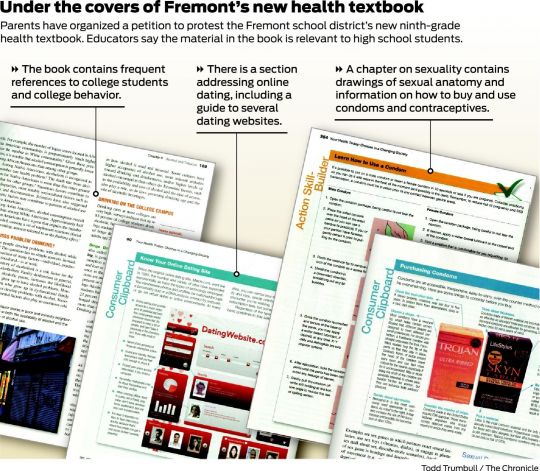
What should teenagers be learning about sex?  It is a perennial question at the center of our educational culture wars.  A recent controversy from California’s Bay Area shows how this old battle has changed, and how it has stayed the same.  This time, parents in Fremont, California objected to a sex-ed textbook they found too racy.  After parent protests, the district pulled the book.
Too titillating?

Too titillating?

As I note in my upcoming book about educational conservatism in the twentieth century, the pattern seems familiar: A textbook includes explicit information about sex.  Parents object.  The administration buckles, allergic to any whiff of controversy.  Progressives lament the parents’ Victorian attitudes toward sex. Conservatives crow that their children are being pimped by an educational establishment that does not respect their values.

That script certainly seems to be playing out in Fremont, but there are some wrinkles.  The textbook, Your Health Today, contained a twenty-page section on sexual behavior.  As the parent petition protested, this section included information about more than just the mechanics of sex.  It told students about

sexual games, sexual fantasies, sexual bondage with handcuffs, ropes, and blindfolds, sexual toys and vibrator devices, and additional instruction that is extremely inappropriate for 13 and 14 year-old youth.

And, as in similar controversies in the past, the protesting parents quickly reached out to national conservative activist organizations for support.  In this case, Fremont parents contacted the conservative Christian Pacific Justice Institute for back-up.

But the “conservative” parents made clear that they did not oppose sex ed in general.  What they did not like was the inappropriate college-level sex ed this book contained.  Parent activist Asfia Ahmed told the Christian Post that the problem was not sex ed as such; the problem was that this book in particular “speaks to adults; it does not speak to teens and adolescents.”

Predictably, progressive commentators accused conservatives of being trapped in the past.  As one writer noted, “It’s frustrating that this is still controversial.” I personally agree. I’m a teacher and parent. I want my students and daughter to have frank, explicit information about sex. And I think that such information needs to include some sense of the wide variety of sexual behaviors that are common in our society. It needs to include the basic fact that sex should be pleasurable and should never be coerced.  Perhaps most tricky, I think that public schools have a duty to convey this information.  After all, with pregnancy and HIV on the line, these are literally life-and-death subjects.

But the notion of some anti-conservatives that these issues have been resolved in the past demonstrates the dunderheadedness of my fellow progressives. Some progressive commentators seem to think that these debates have already been settled. Whether the issue is sex ed, school prayer, or creationism, progressives often express surprise that these questions are “still” controversial. Such attitudes demonstrate the ignorance of progressives.

Conservative notions about sex ed in public schools have always had a decisive influence on the goings-on in those schools. In this case, for instance, we see how quickly the administration caved to parent protests. Here and elsewhere, the notion that there is some healthy connection between kids and sex is a very touchy one in our society. Conservatives need only say that a book goes too far to have that book quickly yanked by the district.

Perhaps the hard-hitting journalists of the Today Show made the most salient point about this story. They interviewed some of the young teenagers who would have read this textbook. As one told them, “Like ewwww. . . . I don’t really feel like I need to know about that right now.”

 

Do You BELIEVE in Evolution?

It’s a deceptively simple question and it lies right at the heart of the creation/evolution controversies.  Unfortunately, Keith Blanchard’s recent opinion piece on the subject seems to miss the point.  Not because Blanchard doesn’t understand the issues, but because he deliberately hopes to change the conversation.  But it’s not that simple.  In at least two important ways, we need to wonder more deeply what we mean when we say we “believe” in evolution.

Can you BELIEVE this???

Can you BELIEVE this???

Blanchard writes from the heart of mainstream science.  We shouldn’t say we “believe” in evolution, Blanchard writes.  As he puts it,

if someone asks, “Do you believe in evolution,” they are framing it wrong. That’s like asking, “Do you believe in blue?”

Evolution is nothing more than a fairly simple way of understanding what is unquestionably happening. You don’t believe in it — you either understand it or you don’t…

Of course, we see what he means.  I even agree with his position.  But IMHO, this line or argument is nearly entirely beside the point.  It puts us evolution-supporters in the silly position of insisting that there is no debate about evolution.  Like Blanchard, we mean that the scientific facts of evolution are not open to debate, any more than is the fact of gravity or the fact of blue.

But so what?  How does that position get us anywhere?

Because there IS a debate about evolution, obviously.  Lots of influential people do not accept the facticity of evolution.  They do not accept that evolution explains the deep history of species on this planet.  Therefore, it matters to say that we believe in evolution.  Saying we “believe” in evolution, politically, means taking a stand about educational politics and cultural politics.

On a more basic level, too, saying that we believe in evolution has a value beyond Blanchard’s knee-jerk empiricism.  After all, in our society, we believe all sorts of things about which we only have a tentative or tenuous understanding.  For instance, when we have a serious medical malady, we trust in what medical experts tell us.  Not blindly, of course, but we talk to several experts and decide on a treatment course that seems to make sense to us.  We don’t necessarily understand every jot and tittle of the medical science.  But we take the life-or-death advice of doctors.  When it matters, we trust our experts.

And that is also the case here.  Saying we “believe” in evolution means something different than saying we understand its meaning.  Saying we “believe” in evolution means we trust a certain set of authorities over others.  Not blindly, of course, but in general outline.  So, for instance, when the National Center for Science Education mounts its Project Steve, I’m convinced.  The sheer numbers of mainstream scientists who publicly announce their “belief” in evolution convinces me.

After all, for educated folks these days, the un-interpreted evidence of our senses has long been suspect.  Blanchard writes that we should all trust the “evidence of [our] own senses.”  If we do so, he concludes, we’ll be convinced about the fact of evolution.  But educated people know that their senses might mislead them.  After all, the intuitive case for creationism is very strong.  Things seem to have been created according to some system, some plan.  Creationists might regularly appeal to people’s senses to prove their point, along the lines of Paley’s watchmaker.

As careful studies have proven, people who reject evolution don’t necessarily have a spottier understanding of science.  Contrary to what Blanchard says, people can and often do understand evolution yet reject it.  Michael Berkman and Eric Plutzer, for example, concluded from their large-group study of science teachers that creationists have an edge beyond the logic of folks like Blanchard.  Even among those Americans who understand that mainstream scientists agree on evolution, Berkman and Plutzer found, a large majority prefers that public schools teach both evolution and creationism.  That’s right: Even those Americans who know what mainstream science says about evolution still want schools to teach creationism.

In a world like that, Blanchard’s argument seems at best irrelevant.  Insisting that evolution is a simple fact, either to be understood or not understood, makes no sense in these circumstances.  On the other hand, if we say we “believe” in evolution, we’re doing something important.  Something with necessary political weight.

But there is one sense in which we should not try to “believe” in evolution.  Not Blanchard’s sense, but a more nuts-and-bolts kind of meaning.  As I’m arguing in an upcoming book with co-author Harvey Siegel, public schools need to get out of the belief business when it comes to evolution education.  That is, the goal of evolution education must not be to convince students to “believe” in evolution.  Rather, the goal should be to make sure all students understand it.

In a way, this is what Blanchard is saying, but I wonder if he would recoil in disgust from the implications.  Blanchard wants people to understand evolution.  We don’t “believe” in something that is obviously true.  We don’t “believe” in facts of nature.

In contrast, our prescription for public schools is that teachers adopt the goal of leading students to an understanding of evolution, and no more.  Students should be led to understand the principles of evolution, its mechanisms, and its evidence.  If they then choose not to “believe” evolution, that is an entirely private matter, beyond the realm of public school goals.

I don’t know for sure, but I suspect that this sort of “understanding-not-belief” is not what Blanchard has in mind.

What about you?  Do you “believe” in evolution?  What does it mean to “believe” it, rather than to just “know” it?  Or, from the other direction, what does it mean to “dis-believe” it, even if you understand it?


Creationists Love Angry Science Teachers

Why would America’s leading young-earth creation ministry go to the National Education Association convention?  After all, Answers In Genesis castigates the NEA for its “godless, liberal agenda.”  AIG frets that the NEA combats conservatives’ right to homeschool their children and to teach godly creationism.

But that anti-God bias is exactly why the creationists go every year.  Answers In Genesis tries to engage NEA attendees with the gospel of creationism.  The creationist outreach at the NEA convention hopes to explain the goals of creationists and melt the hard hearts of some secular teachers.

The folks at AIG are not the first conservatives to try such tactics.  For generations now, the National Education Association has been perceived by conservative education activists as the enemy.  The NEA is seen as promoting secularism and a wrong-headed moral relativism.  As conservative gadflies Mel and Norma Gabler argued in the 1970s, the NEA had always tried to get public schools to teach that “there was no absolute transcendental God, Bible, or system of beliefs.”

And even long before the Gablers, conservatives tried to maintain their influence with the NEA.  As I note in my upcoming book about conservative educational activism in the twentieth century, the patriotic school activists in the American Legion pioneered this approach.  For the stalwart conservatives in the American Legion, the NEA offered the best way to influence American public education.  Therefore, they held their noses and collaborated on American Education Week.  Starting in 1921, the Legion and the NEA encouraged schools nationwide to focus on a certain theme for a week.  They tried to get everyone in every community engaged with their public schools.  For the conservative leaders of the American Legion, this was a way to promote patriotism and religion in public schools.  For the leaders of the NEA, this seemed like a good way to direct the public’s attention toward its schools.

For conservatives, then, the NEA has long been a target.  Generations of conservatives have hoped to influence the NEA with conservative educational ideas.  Does it work?  The conservative creationists at AIG seem to think so.  One missionary to the NEA relates the story of “Tom,” a hostile secular science teacher.  After spending time with the creationists at the NEA convention, Tom was able to understand more about the wholesome gospel mission of the creationists.  Walls were broken down, hearts were touched.


Obama Persecutes Christian Schools

Does President Obama have it out for conservative evangelical Christians?  Does he plan to crush them by hitting them where it hurts?  In the pages of today’s Christian Post, Michael Zigarelli worries that Obama’s anti-discrimination policy will do just that.  By putting the squeeze on religious colleges, Zigarelli writes, Obama plans to squeeze the life out of conservative evangelicalism.  This sort of conspiracy-theorizing may sound far-out to non-conservatives like me.  But for those who know the history of evangelical education, it might not seem so wacky.

Zigarelli is commenting on the recent controversy at Gordon College in Massachusetts.  As we’ve noted in these pages, President D. Michael Lindsay of Gordon College attracted attention for signing an open letter to President Obama.  In case you missed the story, Lindsay signed the letter requesting an exemption from a planned executive order.  The order would ban discrimination against LGBTQ persons.

For those like me outside of the world of conservative evangelicalism, Lindsay’s attitude sounds an awful lot like a license to discriminate.  If, as Lindsay wrote, Gordon College does not discriminate against gay students and does not plan to start, why would they need such an exemption?

I don’t want to put words in anyone’s mouth, but as I understand it, the evangelicals did not ask to be able to discriminate against anyone, but rather to be able to continue their policy that requires all students and faculty to agree to a goal of chastity outside of marriage.  As we discussed here at ILYBYGTH, to many non-evangelicals and former evangelicals, that seems like a distinction without a difference.

But if we put those sorts of questions to one side for a moment, we can see that Zigarelli’s attitude demonstrates key elements of evangelical thinking.  His op-ed articulates some of the fears of conservative evangelicals.  For many conservatives, Obama’s order means more than just the end to discrimination.  It means the end of conservative evangelicalism in general.  Once conservatives are no longer able to operate their schools and colleges as they see fit, they will no longer be able to educate their children properly.  As Zigarelli concludes ominously,

Empty desks will follow empty pews, at least if this capricious; destabilizing theology is foisted upon our Christian schools. It’s time to take a stand.

To historians, this sort of rhetoric sounds familiar. As I’ve argued in the pages of the Journal of Religious History, conservative evangelicals made very similar sorts of statements after the Supreme Court’s anti-prayer decision in 1963. That school decision prompted conservative evangelicals to shift their thinking about their relationship to the broader American culture. As the editors of the flagship evangelical magazine Christianity Today expressed it, before that decision, they were confident of their roles as leaders of America’s “devout masses.” After the decision, though, they worried that conservative evangelicals had become nothing but a “believing remnant” in a sinful American culture.

For evangelicals, like all other Americans, any loss of control over schooling can signal a loss of control over public life itself. Some of us may scratch our heads and wonder why evangelicals worry so much about President Obama’s planned non-discrimination order. If, as President Lindsay insists, conservative schools don’t discriminate against homosexuals, what do they have to worry about?

Throughout the twentieth century and into today, though, conservative evangelicals have maintained a tense relationship with the wider American culture. Many conservatives believe themselves to be the representatives of the real American mainstream, the “moral majority.” At the same time, however, conservatives see themselves as persecuted outsiders in a twerking culture besotted with sin, sexuality, and secularism. When big public-policy decisions seem to hurt Christian education, evangelicals react vigorously.

Does Obama plan to crush conservative opposition? As Zigarelli admits, such statements may sound “absurd” and “alarmist.” But given the past fifty years of evangelicals’ relationship with public education, the notion that the federal government might take drastic steps that hurt Christian education does not seem absurd or alarmist at all.


Leading Historian Would Vote for Hitler

He just flew in from New York...

He just flew in from New York…

HT: MM

Would you vote for Philip Hitler? Jonathan Zimmerman would. At least, that’s what he told the funny man on The Daily Show the other day.

It’s a pretty funny bit. But more important, it’s great to see our leading educational historian getting to yuk it up with Jon Stewart’s minions.

If you’re not up on the world of educational history, you may not know Jon Zimmerman’s work. But for historians, Zimmerman’s the king. Kind of like the Derek Jeter of educational historians, except Zimmerman shows no signs of quitting.

When I started my graduate work, Zimmerman’s book Whose America pointed me toward the study of culture-war issues in educational history. And now, as part of Zimmerman’s book series on the history and philosophy of education, I’m working with philosopher Harvey Siegel on a volume about the ups and downs of evolution education. So Zimmerman has been hugely influential in my career, and I’m sure every other ed historian out there could say something similar.

And now it looks as if he’s moving into the comedy business. Fantastic.


Fundamentalist Parents Can’t Relax

Rich parents can relax.  At least according to an article in this week’s Economist.  But fundamentalist parents never can.  They have to worry about more than their kids’ careers.  They have to fret about eternal damnation.  And they have to worry that Satan lurks in every textbook, every TV show, and every mainstream school.

The Economist article is worth reading in its entirety.  As it explains,

Well-to-do parents fear two things: that their children will die in a freak accident, and that they will not get into Harvard.

Getting into Harvard might be harder than getting into heaven...

Getting into Harvard might be harder than getting into heaven…

Both fears lead to exaggerated and ultimately counterproductive lifestyles.  In terms of safety, the article notes, an American child under five years of age in 1950 was five times as likely to die of disease or accident as that same kid would be today.  And though it is difficult to get into Harvard, most kids of affluent families will have fine careers without an Ivy-League transcript.

But fundamentalist parents have more to worry about.  Since the birth of American fundamentalism in the 1920s, conservative evangelicals have fretted about the influence of mainstream culture on their offspring.  Even if their kids don’t get polio, and even if their kids do get into Harvard, fundamentalist parents have to worry that success in life will lead to terrible punishment after death.  For fundamentalists, even Harvard itself can be more of a threat than an achievement.

As historian Randall Balmer put it in his blockbuster book Mine Eyes Have Seen the Glory,

the greatest fear that haunts evangelical parents is that their children will not follow in their footsteps, that they will not sustain the same level of piety as their parents—stated baldly, that they are headed for hell rather than heaven.

As I argued in my 1920s book, historically this fear for the children has fueled fundamentalism’s public campaigns.  Fundamentalist leaders and parents worried that no level of affluence and economic privilege could protect their children from a culture sliding nonchalantly straight to hell.

As conservative leader William Jennings Bryan explained in 1922, even the rich and powerful had lost the ability to protect the faith of their children.  As a former Secretary of State, Bryan knew many of these families personally.  He wrote about one acquaintance, a US Congressman, whose daughter came home from college only to tell the family that “nobody believed in the Bible stories now.”

It was not only conservative Congressmen who worried.  Fundamentalist evangelist Bob Jones Sr. liked to tell the story of a less powerful family who had a similar experience.  This family, Jones explained in one of his most popular 1920s sermons, scrimped and saved to send their precious daughter to

a certain college.  At the end of nine months she came home with her faith shattered.  She laughed at God and the old time religion.  She broke the hearts of her mother and father.  They wept over her.  They prayed over her. It availed nothing.  At last they chided her.  She rushed upstairs, stood in front of a mirror, took a gun and blew out her brains.

Even when fundamentalist families did not experience that sort of cataclysm, we must keep their anxiety in mind when we try to understand fundamentalism from the outside.  Why do conservative evangelicals fight against evolution?  Why do they insist on school prayer?  Why do they worry about rights for homosexuals?

In all these cases, conservative evangelicals’ public activism is made more desperate by their intense worry about their children.  In this, there is no difference between conservative evangelicals and mainstream Americans of any background.  As the Economist article points out, almost all parents love their children and make sacrifices for them.  In the case of mainstream affluent parents, it might even help if they relaxed a little bit.  As Bryan Caplan of George Mason University argues,

Middle-class parents should relax a bit, cancel a violin class or two and let their kids play outside.

Easy enough.  But fundamentalists face a very different situation.  If we want to understand the mind of fundamentalists, we can try a mental experiment.  Non-fundamentalist parents have a hard enough time relaxing about their kids, even though they feel at home in mainstream culture.  Non-fundamentalist parents fret too much about their kids’ futures, even if they don’t feel alienated by their local public schools and elite universities.

Let’s try to translate the anxiety experienced by fundamentalist parents into mainstream terms.  Imagine, for example, the sorts of public outcry there would be if public schools began promoting ideas or practices that affluent secular parents found dangerous.  For instance, what do you think would happen if a public school somewhere began promoting smoking as a fun and healthy activity?


Green Eggs and (Ken) Ham

Do you think of Dr. Seuss as a “fundamentalist” author?  Me neither.  But the fundamentalists want to claim him for their own.

Marvin Olasky of World Magazine offered recently a top-ten list of good children’s books.  Topping the list was Dr. Seuss’ Horton Hatches the Egg for its staunchly pro-life message.  The story, according to Olasky, presents Horton as a “pro-life hero.”

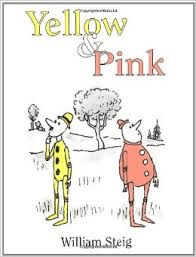
And that’s not all.  Olasky celebrates the conservative message of other leading mainstream children’s books as well.  William Steig’s Yellow & Pink tells more than just a cute story about puppets.  The two central characters wonder about their origins, with the evolution-y story of Yellow losing out to the creation-y story of Pink.

Where do we come from?

Where do we come from?

Dr. Seuss apparently didn’t like the pro-life associations of his Horton character.  But the creationism of William Steig is hard to miss in this book.

Makes me wonder—was Steig’s Shrek also some sort of creationist parable?


The Left Seizes Science

You’ve heard the howls from creationists over Neil deGrasse Tyson’s recent Cosmos series.  But did you know non-creationist conservatives also get cheeved at Tyson’s science punditry?

Science Snob?

Science Snob?

The creationist complaints make sense.  The hugely popular new science series pointedly called out young-earthers for their belief in a newish universe.  The series also insisted on the creation of species through evolution.

But the complaints of non-creationist conservatives might not seem so obvious.  In the pages of National Review, Charles C.W. Cooke took Tyson to task for his leftism, not just for his love of evolution.  Cooke accuses Tyson and others of his ilk of a puffed-up condescension, of glibly associating liberal politics with superior intellect.

Too many of these self-righteous faux-nerds, Cooke writes, wrap their insouciance in the mantle of science.  For these Tyson fans and wanna-bes, being smart does not mean doing actual intellectual work, but rather simply adopting a pre-packaged list of things to dislike.  As Cooke puts it, that list includes anything

southern, politically conservative, culturally traditional, religious in some sense, patriotic, driven by principle rather than the pivot tables of Microsoft Excel, and in any way attached to the past.

This sort of prejudice against anything recognizably conservative likes to call itself the side of “science,” Cooke argues.  Yet among progressives, real science often takes a beating.  “Progressives . . . ,” Cooke says,

believe all sorts of unscientific things — that Medicaid, the VA, and Head Start work; that school choice does not; that abortion carries with it few important medical questions; that GM crops make the world worse; that one can attribute every hurricane, wildfire, and heat wave to “climate change”; that it’s feasible that renewable energy will take over from fossil fuels anytime soon . . .

Yet in spite of this demonstrably unscientific attitude, Cooke laments, the Left insists on calling itself the “reality-based” party.

Cooke is not the first to complain about such things.  In the first generation of creation/evolution controversies, anti-evolution activists worked hard—and failed—to claim “science” for their side.  As I noted in my 1920s book, leading anti-evolutionist William Jennings Bryan maintained his membership in the staunchly pro-evolution American Association for the Advancement of Science.  He refused to allow that leading science group to be wholly taken over by fans of evolution.

Similarly, prominent 1920s fundamentalist activist William Bell Riley fought hard to keep his generation of Neil deGrasse Tysons from pushing conservatives out of the world of science.  As Riley put it in a 1927 speech, the creation/evolution debate was not a debate between

Experts on the one hand, and, as someone has said, ‘organized ignorance,’ on the other.  This is not a debate between the educated and the uneducated.

Like Bryan in the 1920s and Cooke in 2014, the conservative Riley was loath to cede the scientific and intellectual high ground to evolution-lovers.

One of the results of that first decade of evolution controversies was the formation of durable cultural associations, the associations about which Cooke complains.  Since the 1920s, “science” has become indelibly associated in the public mind with progress, with social experiment, with iconoclasm.  Politically, if not logically, all of those things are part of the broad package of cultural leftism.  And, like it or not, conservatism has been associated time and again with obstructionism and heedless obscurantism.

For conservative pundits like Cooke, trying to fight that tradition will be an uphill battle.


Does Anyone Actually Read the Index?

My eyeballs are beginning to chafe.  This week, I’m finishing up the index for my new book.  It’s a lot of work, even though I had a gifted grad student do most of the intellectual heavy lifting.

How the sausage gets made...

How the sausage gets made…

So now I’m wondering: Does anyone actually read the index?  I know professional academic historians do.  In fact, that’s one of the first cheap tricks we learn in our PhD programs.  We flip quickly to the back to see what we can glean from the index.  What are the book’s themes?  What are its main ideas?  Its blind spots?

But do any normal people read a book’s index?  Make no mistake, I’m compiling a kick-ass index, whether anyone ever reads it or not.  But I can’t help but wonder if readers will find useful my painstaking distinctions between “authoritarian teaching” and “traditional education.”

Coming soon...

Coming soon…

Will anyone care that I spent so many long hours in a stuffy library teasing out the nuances of “educational conservatism” as opposed to the broader category of “conservatism” in general?


Child Abuse or Church Camp?

The way we ask the question says a lot.

We could ask it this way: Is it abusive to encourage children to have certain religious experiences?

Or we could put it like this: Should children and toddlers be coerced and terrified?

Either way, these questions are prompted by a new church-camp video that is making the rounds these days.  In the video, we see young children experiencing some of the typical manifestations of charismatic Christian worship.  They jerk their limbs, fall to the ground, engage in babbling speech, cry and shout.

Adults surround the children, clearly encouraging them to behave the right way.  Some children seem to participate enthusiastically.  Others seem confused, intimidated, or tearful.

There’s not much new here.  These sorts of behaviors have been manifestations of charismatic worship for a long time.  For just as long, they have been criticized by critics.  In the first Great Awakening of the 1740s, Boston minister Charles Chauncy famously attacked the revivalists for their embrace of “enthusiasm.”  Their emotional services prompted false conversions, Chauncy believed.  Attendees at big revival meetings found themselves caught up in the moment, jerking their bodies, crying out, falling down, but not becoming truly Christian.

More recent critics focus on the way young children are bullied into a traumatic emotional experience.  Atheist pundit Jerry Coyne, for instance, puts it this way:

It’s brainwashing, pure and simple. The kids have no choice. Is there anyone who wouldn’t call this abuse?

These behaviors seem bizarre to me as well.  But I don’t call it abuse.  The adults in this video, to my mind, don’t appear to be victimizing children, but rather trying to share an authentically held belief with them.  That’s a big difference.

I know this is a difficult topic to discuss.  I also know that I have absolutely no personal experience with this sort of thing.  And I sympathize deeply with those who found themselves traumatized by this sort of intense religious upbringing.

But if we call it “abuse” we are doing more than simply insulting these adult believers.  If we call it “abuse” we open the door to government intervention in these religious ceremonies, and others.

Perhaps some other examples will help make the case.  It is sadly not uncommon for religious people to insist on alternative medical care for children.  Instead of chemotherapy, for example, some believers may lay hands on a child who is suffering from cancer.  This is abusive.  The child is being substantially harmed by being denied effective treatment.

It is also sadly not uncommon for religious organizations—and, to be fair, non-religious organizations—to cover up sex abuse of minors in the name of religious solidarity.  Here, too, the government must intervene.  This is abuse.

Again, my heartiest sympathies go out to those who are struggling to overcome religious upbringings they found coercive.  Writers such as Samantha Field and Jonny Scaramanga have educated me a great deal about the ways religious beliefs can cause emotional harm and long-term trauma.

I’m not dismissing that.  But the church-camp activities here seem to be something different than “abuse.”  Am I wrong?