I Love You but You Didn’t Do the Reading

Believe it or not, Labor Day is already here. Time to put away those white shoes, fellows. It has been a hectic last week of summer here at ILYBYGTH. Here are a few stories of interest that you may have missed:

Are some cultures better than others?

Love means never having to say you’re sorry: Trump pardons Sheriff Joe Arpaio.

At The Gospel Coalition, an open letter from Christian scholars denouncing racism.

Are white evangelicals more racist than Christian?

The problem with “privilege.” Jeffrey K. Mann wants us to look beyond race and gender.

What happened to all the Christian bookstores?

Yes, you read it correctly: Reese Witherspoon will be playing the role of a defector from the “God-Hates-Fags” Westboro Baptist Church.

Where are all the sinister atheists who are trying to undermine Christian America? The Trollingers couldn’t find them at the American Atheists Convention, from Righting America at the Creation Museum.

Family sues NYC schools over their son’s “gender expansive” preference for dresses. The school accused the parents of sexual abuse.

Vouchers and stealth vouchers: The Progressive offers a guide to the wild and woolly world of public-school funding options.

What should conservative evangelicals think about gender and sexuality?

Only in New York: A Brooklyn school principal accused of recruiting her students into the communist movement.
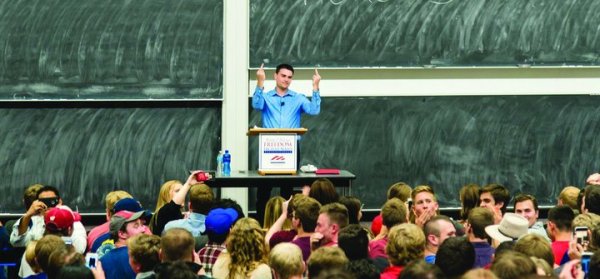

Why Campus Free Speech Laws Won’t Free Campus Speech

We’ve been down this road before. When conservative lawmakers hope to protect the right of conservative speakers on college campuses these days, they rehash a tactic from the 1920s evolution/creation battles.

shapiro-by_katie_cooney_720

Conservative pundit Ben Shapiro speaks freely at the University of Wisconsin.

Will it work this time? Not a chance. Why not? I lay out my argument this morning at History News Network. Click on over and check it out.

The Real Reason We Can’t Fix Our Schools

We all know public schools are not all equal. Rich kids get meticulous college-prep educations. Poor kids are often stuck in crumbling schools with shoddy expectations. Why haven’t we been able to fix this problem? We get a clue this week from an unlikely source. It underlines an unpopular argument I’ve been making for a while now: in spite of decades of “progressive” reform, our public education system is dominated by deeply conservative assumptions.

public school crappy

Do your local public schools look like this…

This week, our already-fractured academic world was thrown another culture-war bone to chew on by law professors Amy Wax (Penn) and Larry Alexander (UCLA). Writing at Philly.com, the two scholars articulated the unpopular idea that some cultures were better suited for modern American life than others. To help people in poverty, society should encourage them to live more stable personal lives, more in line with “bourgeois” culture.

Penn students and alumni condemned the essay as part of the culture of white supremacism. Some of Wax’s colleagues “categorically reject[ed] her claims.”

What does any of this have to do with school reform? A lot.

We don’t need to support or condemn Wax and Alexander in order to understand this. (Although, full disclosure, I personally put their argument in the same unfortunate category as James Damore’s Google goof. They twist social-science research to suit their own already-convinced positions. They play the provocateur merely to gain attention and they don’t mind articulating atrocious ideas in order to do so.)

public school fancy

….or more like this?

The point here is not whether or not Wax and Alexander are bold speakers of truth—as Jonathan Haidt has argued—or self-inflated stalking-horses for white supremacy.

The point, rather, is that this dust-up among elite academics shows the real reason why school reform is so difficult. It is not because we Americans are unwilling to invest in public education. As recent headlines from New York City have shown, we often have put bajillions of dollars into efforts to improve schools for students from low-income families.

As the case of the Wax/Alexander letter shows, the real reason we can’t fix public education is because we find it impossible to talk reasonably about poverty. Americans in general can’t even agree on the meaning of poverty. Some people think poverty is mainly due to personal failings. Others see the reason as structural inequality.

As a result, we talk instead about fixing schools so that poverty will be magically eliminated. Instead of talking about reforming society so that fewer students in public schools come from low-income families, we reverse the discussion. We talk about fixing schools so that more students from low-income families will get ahead in life.

In effect, our centuries-long strategy to avoid discussions of social reform by investing instead in school reform shows how deeply conservative our fundamental assumptions about schooling have always been. Instead of fixing society to eliminate poverty, we try to fix schools so that individual people might get a chance to escape poverty. Instead of directly addressing the third-rail topic of poverty in America, we sidestep the issue by making a few schools a little better.

The assumption is so deeply embedded in American culture that it is rarely noticed, let alone addressed. As long as kids from low-income families have access to a decent public school—the assumption goes—it is their own darn fault if they don’t improve their economic future. So money goes into shiny programs to make schools for low-income students a little better here and there, instead of going into programs that would change the fundamentally inequal structure of society itself.

SAGLRROILYBYGTH are sick of hearing it, but I have to say it again. At the root of our endless failure to reform public schools is our endless failure to address the real problem. Schools can’t fix society, schools ARE society.

From the Archives V: “No, He Is a Fundamentalist”

Editor’s Note: As SAGLRROILYBYGTH are sick of hearing, I’m just about finished with my book about the history of evangelical higher education. As always, there was a ton of great material I couldn’t fit in. I’ll share some of the archival gems here.

What is a fundamentalist? It’s not as easy a question as it might seem. As we’ve explored in these pages, any attempt at a simple definition quickly runs up against big problems. One quirky document from the archives of the Moody Bible Institute helped me understand how the term “fundamentalism” was really used during the twentieth century.

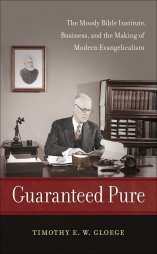
The biggest problem—at least to my way of thinking—is that fundamentalism said it was one thing, when it was actually something quite different. As Tim Gloege has argued convincingly in his book about the early history of the Moody Bible Institute, fundamentalists tended to talk about themselves as defenders of orthodoxy, but their views were in fact quite un-orthodox or even anti-orthodox.

Gloege Guaranteed Pure

Or maybe a “grammar. . . a corporate evangelical framework.”

They had to be.

Especially in the first half of the twentieth century, fundamentalism was something theologically new, a lowest-common-denominator coalition dedicated to fighting against theological modernism. Unlike real orthodoxies, fundamentalism could never agree on a set of hard and fast theological doctrines.

Instead, fundamentalism served, in Gloege’s words, as “the performance of ortho­doxy facilitated by modern promotional techniques.”

Fundamentalism, in other words, wasn’t a specific set of beliefs or practices, but a loud and often belligerent clubbishness in favor of conservative attitudes about church and culture. The kicker comes from the fact that early fundamentalists such as William Bell Riley said over and over again—loudly and often belligerently—that fundamentalism WAS a set of specific theological doctrines.

Riley wasn’t lying, but he was wrong. Riley wanted to insist on his nine-point creed as the one and only definition of true fundamentalism, but he couldn’t impose such a definition. Not for lack of trying, but because as a coalition of conservatives, fundamentalism itself could never be hemmed in by mere theology.

That’s the argument I’ll be fleshing out in more detail in my upcoming book anyway. On the campuses of fundamentalist colleges, universities, seminaries, and Bible institutes, the tenuous and ill-defined nature of fundamentalism was always starkly evident, if not often politely discussed.

As I was reviewing my files the other day, I came across one document that underlined the ways “fundamentalism” was used in real life. For admission to the Moody Bible Institute, students were required to submit recommendation forms. Like all higher-ed institutions, MBI wanted to know if potential students were good students. Unlike students at secular schools, though, potential MBI students had to provide evidence that they had good missionary potential.

One question asked recommenders if a potential student had any “doctrinal, or other peculiarities that would unfit him for Christian work”.reference he is a fundamentalist BETTER

One recommender’s response to that question can give us some insight to how the idea of “fundamentalism” worked in practice. Did the potential student have any “peculiarities”? “No,” the recommender wrote, “he is a fundamentalist.” To this recommender, at least, calling someone a “fundamentalist” meant that the person was vouched for, that the person was solid theologically, that he could be trusted as a missionary.

It did NOT mean that he or she shared a certain set of ideas about Christianity or about the proper way to read the Bible. It did not mean that he or she agreed with William Bell Riley’s nine-point list of fundamentals. It meant only that he or she had no “peculiarities.” He or she was within the circle of fundamentalist trust, even thought the exact outline of that circle could never be agreed upon.

What did being a “fundamentalist” mean? In practice, in this case at least, “fundamentalism” was an affiliation more than an orthodoxy. It was an in-group marker rather than a doctrinal platform. It identified someone as trustworthy without going into specifics about their theological or denominational beliefs.

From the Archives IV: The View from 1944

Editor’s Note: As SAGLRROILYBYGTH are sick of hearing, I’m just about finished with my book about the history of evangelical higher education. As always, there was a ton of great material I couldn’t fit in. I’ll share some of the archival gems here.

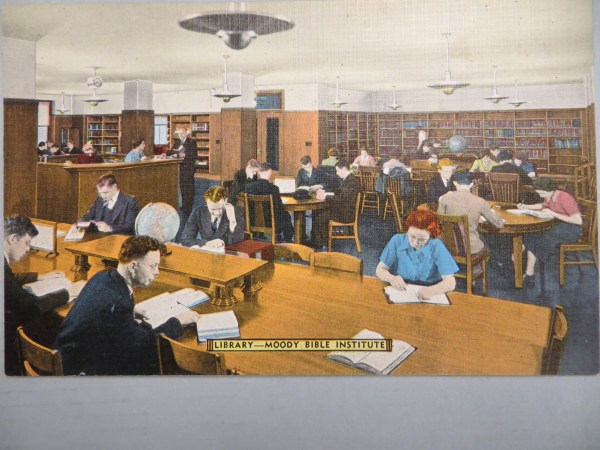
What did life look like at Moody Bible Institute in the 1940s? Thanks to one student scrapbook preserved in the archives, we have a couple of great souvenir postcards from the era to give us a hint.

1940s postcard dining room

Students fought hard to be able to eat with members of the opposite sex.

1940s postcard library

Getting those dispensations right…

1940s postcard proposed auditorium

Big plans for the future…

1940s MBI banner and patch

Rah rah.

I Love You but You Didn’t Do the Reading

You may have had difficulties reading the headlines after you burned your retinas looking at the solar eclipse, so we here at ILYBYGTH have done the work for you. Here are some headlines of note from the past week:

Should I stay or should I go? Trump’s evangelical advisors split on splitting.

Update from Arizona: Federal judge rules that the ban on ethnic studies program was racially discriminatory.

Penn State rejects talk by white nationalist Richard Spencer. President Barron: Spencer’s ideology is “abhorrent and contradictory to our University’s values.”Bart reading bible

Should you red-shirt your kindergartener?

They liked him then, they like him now: White evangelicals oppose calls to impeach Trump by big margins.

How can you get Ken Ham and Jerry Coyne to agree? Talk about the similarities between abortion and infanticide.

Don’t like Trump? Is it because, deep down, you know he is you? John Burtka IV argues that Trump IS America.

What do atheists think of creationists? The Trollingers speak at the American Atheist Convention, from Righting America at the Creation Museum.

Looks like Liberty University has some ‘splainin to do. Disclosures suggest Trey Falwell owns a “gay-friendly flophouse with an on-site liquor store” in Miami. Zoiks.

The 582-Million-Dollar Question

You’ve seen the headlines: One lucky person from Chicopee, Massachusetts won three-quarters of a billion dollars in this week’s powerball lottery. What can she do with her money? She could buy all the seats—ALL THE SEATS—at the next two Superbowls. She could buy an archipelago of private islands. But, apparently, even with all that money she couldn’t buy better schools for New York City students from low-income homes. Why not? We all know the answer, but we just don’t like to talk about it.

The New York Times reported today that New York’s 582-million dollar investment in its public schools has shown only meh results. Students at a couple of schools showed improvement on test scores, but overall the improvements don’t seem to match the size of the investment.

Why not?

The article concludes that the answer is mysterious. As the authors put it, “nobody knows precisely what works.”

That’s a cop out.

We all know what works: Schools that are part of enthusiastic, involved communities of families, teachers, administrators, and politicians. The problem comes when even the best-intentioned school reformers make the same error we’ve been making for centuries. If we want to improve educational outcomes, we can’t simply invest in academic interventions. And, to be fair, the program in NYC went beyond academics to provide health services for students.

Nevertheless, with apologies to SAGLRROILYBYGTH who are sick of hearing it, we need to repeat the mantra: Schools can’t fix society, schools ARE society. As long as students are living at the bottom of the economic ladder, they—as a whole, not as individuals—will continue to fare far worse on measures of educational achievement.

Why? Not because they lack talent or “grit,” but because they are carrying far heavier life burdens than students from more affluent families. Schools alone can’t level that playing field. No matter how much money we invest, we won’t be able to use academic interventions to solve the problems of poverty. Instead, we need to invest in schools as part of a broader investment in economic equality.

It’s not a mystery, but the sheer political impossibility of doing such a wide-ranging social and economic reform plan leads us always back to the same conundrum. We put the money into schools because we don’t want to confront the depressing truth that our problems are bigger than we like to think.

What’s a Guy Like Me Supposed to Do?

I’m torn. I don’t know what progressive historians are supposed to think. On the one hand, whenever conservative politicians try to ban a historian as “anti-American,” it makes us all want to rally around. On the other, though, when that historian has been convicted of peddling “bad history,” it doesn’t seem right to recommend him.

A new celebration of the late Howard Zinn at The Progressive brought all these questions back to mind. To many of my fellow progressives, it seems, Professor Zinn still represents real history, the “people’s” history. Even Matt Damon says so. Academic historians, however, even those with impeccable progressive credentials, have condemned Zinn’s work as schlock.

Most famously, Michael Kazin blasted Zinn’s work as “unworthy of . . . fame and influence.” Kazin pulled no punches. In words calculated to pierce the heart of any historian, Kazin accused Zinn of reducing

the past to a Manichean fable and mak[ing] no serious attempt to address the biggest question a leftist can ask about U.S. history: why have most Americans accepted the legitimacy of the capitalist republic in which they live? His failure is grounded in a premise better suited to a conspiracy-monger’s Web site than to a work of scholarship.

Ouch.

Kazin is not alone. Top historians could offer only a mixed bag of tepid enthusiasm and vague condemnation for Zinn’s legacy.

From Stanford, history-education guru Sam Wineburg came down staunchly against Zinn’s polemic effort. It might make for good leftist locker-room speeches, but Zinn’s book repeated all the terrible flaws of mainstream textbooks, Wineburg argued.

So what are we to make of Howard Zinn’s legacy? Should we encourage young people to read a book that isn’t great history? Because it might open their eyes to bigger truths about American society? Or are progressives supposed to be the side of unvarnished truth instead of self-serving propaganda?

The Proof’s in the Pudding

Well, I guess there ain’t no stopping it now. I’ve just received the proof pages for my upcoming book about the history of evangelical higher education. Fundy U proof title page

It is a very exciting moment for any nerd to see the way the book will actually look in print.

And now, the last stage of my work begins. I’ll go over these proofs with a fine-tooth comb, looking for any typos or other errors. It’s too late at this stage for me to make any major changes in the content, but I still want to be sure there are no goofs in the printing. fundy u proof TOC

I’ll also use this time to put together an index. I’m always surprised by how much I enjoy this process. It’s a ton of painstaking work, to be sure, but I like putting together a topical list of the book’s main ideas, sorted out by sub-headings.

When will all this come together as a final book? Once I send in the final proofs and the index, the folks at OUP will do their magic and get the book out by early 2018. I’ll keep you posted!

The Amazing Historio!

That’s right, folks, the Amazing Historio can tell the future. I can predict with shocking accuracy the path any new school-reform panacea will take. Actually, it’s not very amazing. Any teacher can do it. Anyone who has been paying attention can do it. The pattern is so depressingly predictable that the only real challenge is figuring out why journalists keep buying tickets for the same show. This time around, the story comes from San Antonio.

SAGLRROILYBYGTH know I’m working on a new book about America’s first urban school reformer, Joseph Lancaster. It’s not to Lancaster’s credit that his loud-mouthed ego-trip school-reform plan established this depressing pattern in the 1810s.

Here’s how it goes: A well-meaning, energetic young person pours his or her heart into building a great school. It works. Soon, the students are doing far better than anyone believed possible.

Buoyed by success, the reformer will build his or her ideas into a marketable plan, something that he or she promises will be able to fix urban schools without costing any more tax money.

It doesn’t work. Turns out, the thing that was really fueling the improvement was not any specific method of teaching or of organizing schools, but rather the energy and dedication that the community poured into its original reform effort. As soon as the “reform” becomes standard, it loses its pep and becomes merely business as usual.

Soon, jealous hacks notice that the reformers’ big promises didn’t pan out, and after explaining away the failure for a while, the reformer goes into some sort of awkward retirement.

For Joseph Lancaster in the early 1800s, his big reform was the “Lancastrian” system, which set up hundreds of kids from low-income urban families in big school warehouses, goaded by older student monitors. It worked great at first, at the Borough Road School in London. Lancaster ate lunch with kings and presidents and promised his system could save every city from hordes of illiterate urchins.

borough road school 1805

The solution, c. 1805. Never again would urban students from low-income families suffer from lower-quality education.

But guess what: Lancaster’s schools didn’t save every city. Students hated them. Parents hated them. Soon, Lancaster was in monstrous debt and his many detractors accused him of venality and obfuscation.

You’d think we’d learn the lesson, but we haven’t. The pattern has repeated itself with every new promise of a silver-bullet reform that will “save” urban education. Ask Colonel Parker. Ask Rod Paige.

And now we can ask Julian Castro in San Antonio. As a recent profile in Politico reports, the former mayor has built his meteoric career on a school-reform plan for the Texas city. The heart and soul of the plan is to enroll every San Antonian four-year-old in high-quality pre-kindergarten with a progressive pedagogy.

SA pre k

The solution, c. 2017. Never again will students from low-income families suffer from lower-quality education.

So far, so good. Getting every student into great schools really IS a great way to reform urban education. The problem is not in the idea itself. Rather, the problem comes when ambitious reformers think they have found a simple, transferable method for fixing schools. The problems begin to pile up when those same reformers hope to build their political careers by wildly overpromising.

In this case, the CEO of San Antonio’s program read her lines directly from Joseph Lancaster’s disastrous centuries-old script. As Politico reports,

Pre-K 4 SA has posted impressive results. Its kids start below the national average in cognition, math and literacy, and finish the year above average. Its founders have become evangelists for the idea that early-childhood education is key to giving poor kids an equal chance to succeed in school and life. The goal, says Sarah Baray, Pre-K 4 SA’s CEO, is nothing less than “to change the trajectory of San Antonio in one generation.”

Again, I’m all for progressive pre-K programs. I’m all for giving all students a great early education. Those are great things.

The problem comes when ambitious reformers suggest that changing the methods or structure of school will solve the problems of low-income families. The problems come when politicians promise that their plan will level the playing field and solve the challenges of poverty in a single generation.

They won’t, and it seems nearly criminal to build a career by making these obviously extravagant promises. When the politicians and CEOs have moved on to Washington DC and cushy corporate sinecures, local schools are always left tackling the same problems as ever.

The recipe for real reform is obvious, but it is never easy. Every kid should attend a school in which the entire community is engaged and enthusiastic. That’s not easy and it’s not cheap. But as we all know, it is the only school reform that really works.

Anything else is just hot air.