I Love You but You Didn’t Do the Reading

Your humble editor has been distracted lately by all the excitement of our New York National History Day competition in scenic Cooperstown, New York. The rest of the world, though, kept on rollin. Here are some of the stories we might have missed…

What does Steve Bannon think of God? Hugh Urban describes Bannon’s theology at Religion & Politics.

Baylor picks its first woman president. Is this a new normal for evangelical higher education?

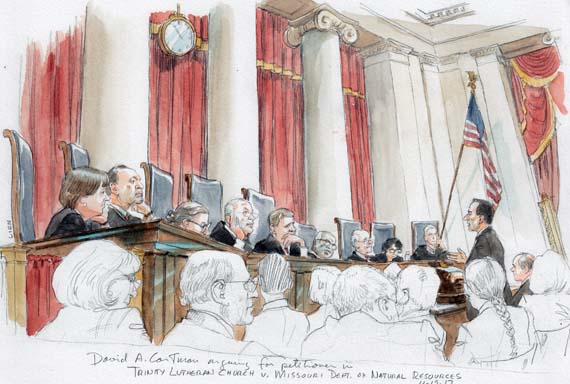
The latest from the Lutherans: Check out coverage of the Missouri church/school case currently before SCOTUS.

Trinity Lutheran v. Missouri, No.15-577

Can religious schools get ANY public money? How much? …for what?

Can arch-creationist Ken Ham support the March for Science? The answer won’t surprise you.

Will school lunches get fat again? Trump’s pick for the USDA might roll back nutrition guidelines for school meals, from Politico. (Scroll down).

Religious Literacy—Another Dead End?

“Religious literacy.” Nerds say it is a “critical dimension of understanding human affairs.” In some cases, it might be a question of life and death. Even your humble editor makes a plea for it in his new book. But as we’ve seen from other fields, it might just be a waste of time.

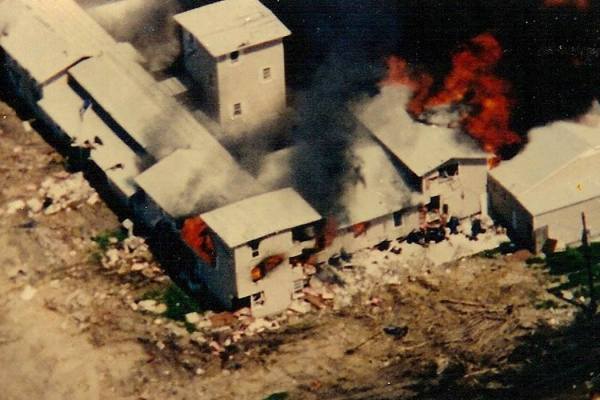
waco_compound_religious_literacy_1050x700

The deadly consequences of angry ignorance.

The latest call came from Peter Feuerherd in the pages of JSTOR Daily. He made a strong case that poorly informed religious antagonisms fueled the deadly government assault on David Koresh’s Branch Davidian compound in Waco, Texas, c. 1993. Seventy-six people died. With a little more “religious literacy” on the part of the government forces, Feuerherd argues, the death toll could have been avoided.

As Feuerherd put it,

with a little more patience and understanding of biblical theology, the massive loss of life could have been avoided. . . . Religion scholars argued that the FBI’s impatience at Waco grew out of theological ignorance and unquestioned assumptions. . . . Waiting longer, by offering Koresh the attention he felt his theological views deserved, would have averted the tragedy, said religion scholars who spoke out in its aftermath.

We might dispute Feuerherd’s conclusion, but it seems likely that a soldier who views his enemy as a “desperate apocalyptic cult” is probably going to be more aggressive than one who views his enemy as a “church meeting.”

As the Religious Literacy Project of Harvard Divinity School argues, religious illiteracy is a significant human problem: “it fuels conflict and antagonisms and hinders cooperative endeavors in all arenas of human experience.”

As I work on my new book about American creationism, I too fall into a sort of “religious literacy” argument. People need to understand creationist religion as it really is, I argue, not as some sort of Creation-Museum, Jesus-on-a-dinosaur cartoon.

But are all these arguments about “religious literacy” doomed from the start?

After all, in the field of creation/evolution debates, we’ve seen that notions of “scientific literacy” miss the point. Creationism is not simply an “illiteracy.” Creationists don’t yearn for knowledge of mainstream science. Rather, creationism is a strong and internally coherent alternative science.

If we want to change people’s minds about evolutionary science, thinking about them as “illiterate” won’t help. If we do, we will fall into Bill Nye’s ineffective brand of “save-the-world” missionary endeavor. As Nye sees it, creationism represents one facet of America’s “striking science illiteracy.” Nye’s answer is to go on TV and go to the Creation Museum and explain, explain, explain.

It won’t work. Bill Nye won’t save the world. Why not? Because the notion of “science literacy” is at heart naïve. As science-communication guru Dan Kahan might say, “literacy” is not a helpful concept in this case.

Bill Nye will not save the world by explaining science to it. Creationism, climate-change denialism, and other zombie sciences do not merely reflect an absence of knowledge about science. They do not suffer from “illiteracy.” Rather, they are obstreperous and lively alternative sciences. If we want to convince their adherents of anything, we need to do more than just tell them about better science.

Is the same true with “religious literacy?” I agree wholeheartedly that people can and should be better educated about all religions, especially ones that we tend to think of as threatening or hostile. But precisely because people think of many religions as threatening and hostile, I think we need to do more than just spread information around. We need to think of this as something other than “illiteracy.”

People KNOW things about religion in most cases, but those things can be false and those falsehoods can be dangerous, even deadly. Talking about “literacy” obfuscates this crucial point. So what would be better?

We could copy Dan Kahan and toss out “religious literacy” in favor of “religion communication.” Or, as many activists do, we could switch from talking about “literacy” to talking about “toleration.” Or even “appreciation.”

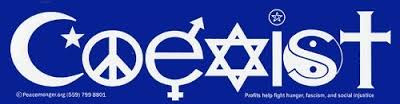
coexist bumper sticker

Is THIS the goal?

None of those options feels right. We don’t want to imply that we are trying to convert people from one religion to another. We don’t want to fall into the go-nowhere liberal trap of calling on people from different religions to merely “co-exist.” To my mind, anyway, that approach downplays the vital universal claims of many of the religions themselves.

What are we really after? Informed understanding about religious traditions besides our own…right? That’s more than “literacy,” and “literacy” implies that the knowledge is coveted by all and value-neutral. We need another term to describe this important goal.

What is it?

Helen A. Handbasket, America’s Schoolteacher

It can get weird. Sometimes, as a mild-mannered historian, I get a overwhelming sense of déjà vu. Sometimes stories from today’s headlines seem to shamble straight out of the past.

Case in point: As I warm my heels down here in sunny Florida, I got a little freaked out by the startling similarities of the letters in today’s local newspaper to those I uncovered in the research for my book about educational conservatism. Whatever the decade, it seems, people like to take potshots at teachers. Since the 1920s at least, it has been a popular national pastime to criticize the vast incompetence and presumed political chicanery perpetrated by our local teachers.

First, some background. SAGLRROILYBYGTH might have noticed a warmer, more humid tone in these pages lately. It’s due to the fact that I’ve been enjoying some family vacation time in sunny Florida. As a compulsive culture-war chatterer, though, I couldn’t just sit back and sip something. I cracked open the local paper, and 1949 jumped out.

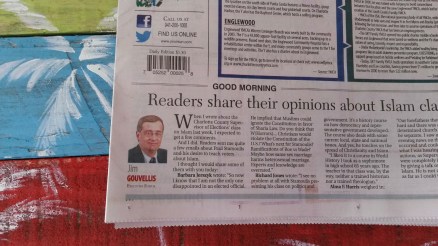
Florida newspaper

Hello? It’s 1949 calling…

The story in the Charlotte Sun from Executive Editor Jim Gouvellis concerned a controversial recent event by local politician Paul Stamoulis. Stamoulis had given a series of lectures about the dangers of Islam. Some folks thought it was a good idea. Others thought it was a scary abuse of power by a right-wing ideologue.

Editor Gouvellis opened up the pages of today’s paper to letters from the community. The issue of political Islam was relatively new, but the tone of the letters was eerily similar to those I found in archives around the country, from the 1920s through the 1980s.

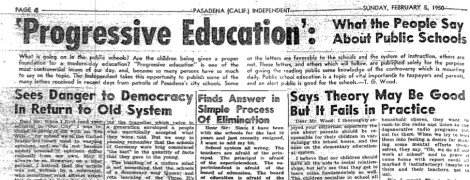
In particular, I was creeped out by the echoes from Pasadena’s school controversy between 1949 and 1951. Back then, an intrepid local newspaper editor tried the same thing. He asked for letters from the community. What did people think of their schools?

Pasadena indep

Nossir…I don’t like it.

The issues were different. Today’s Floridians are weighing in about the propriety of an elected official using public money to make inflammatory speeches. In Pasadena, parents were mad about the alleged misdemeanors of “progressive education.” You’d think the two things would have nothing in common.

But they do. Lots of people–wherever they live, whenever they lived–seem to assume that teachers are terrible. Public-school teachers, at least.

And to your humble editor, the tone and target of today’s letters seem shockingly similar to that of Pasadena, 1949. So similar, in fact, that I thought I’d try a little experiment. I’ll post below a clip from today’s Florida newspaper mixed in with a bunch from Pasadena, California, 1949.

Can you pick out the local one? Without cheating and clicking on the story link above?

  1. There is a growing feeling among parents that there is something amiss in our public schools.
  2. As for your comment and others’ regarding [XXX]’s lack thereof of a formal educational background, I do believe that perhaps we need more such “teachers” in our educational system today, based upon the misinformation being spoon-fed to our children by today’s so-called educators.
  3. Another claim that the teaching fraternity continually push forward is that they are grossly underpaid.  My observation is that in [XXX] this is untrue.  For nine months’ work and occasional brush-up courses in the summer they receive the same salary or better than competent office help receive for 11 ½ months’ work.
  4. I have personally felt that the modern school system of education is based on politics. . . . This larger percentage is easy prey to propaganda leaders and naturally look up to them, thinking the fault lies in themselves and not in the school system of education.
  5. In my opinion, the honorable school board is using our youngsters as educational guinea pigs.

Can you tell which one of these is today’s newspaper and which is from your grandparents’?

I Love You but You Didn’t Do the Reading

While we were napping, the world kept on turnin. Here’s some of what we may have missed last week…

Is it cruel to ask low-income kids to work for their school lunch? From the pages of the New York Times: New Mexico says yes.

cheating

Words, words, words.

Culture war? No, civil religion. In the Atlantic, Emma Green interviews Phil Gorski about American Covenant.

How can we tell if our teachers are any good? Not by using students’ standardized test scores. At least, that’s the decision in Connecticut this week.

Ivanka is “totally in love” with education issues. That’s what President Trump said, anyway, at a recent education town hall event. Other quips? Urban education is “rough.” Everyone loves Betsy DeVos. Common Core is out. Charters are in. As reported by WaPo’s Valerie Strauss.

Yes! Rick Perlstein explains in the New York Times why Trumpism took historians of American conservatism by surprise.

You’ve seen the clips: United Airlines beats up its customers in an attempt to keep its flights on time. Peter Greene argues that the incident is more proof against Trump-style school reform.

What’s wrong with the Department of Education? A Trumpist in Congress makes his case.

Thanks to the SAGLRROILYBYGTH for sending in the story tips! Keep em comin…

Why Do Schools Cover Up Rape?

Is it the “private” part? Or is it the “fundamentalist” part?

As SAGLRROILYBYGTH are well aware, we’ve gone back and forth in these pages about the troubled history of evangelical colleges and sexual assault. Leading fundamentalist institutions such as Bob Jones University have finally admitted to their own shocking denialism. At BJU and other fundamentalist schools, a cocktail of “purity-culture”-fueled attitudes and diehard loyalism fostered a legacy of abusive cover-ups.

As we see again today, though, fundamentalist schools are depressingly similar to non-fundamentalist schools when it comes to institutional cover-ups. Plenty of closed-mouth schools relegate the suffering of sexually abused students to secondary status.

In the New York Times, Alan Feuer relates the charges against Choate. Choate Rosemary Hall is an uber-elite boarding school in Connecticut. As Feuer reports, decades of student complaints about abusive teachers were hushed up. Predatory teachers were transferred or disciplined, but never reported or arrested.

choate

Idyllic? …or menacing?

It’s not that students didn’t complain. One student contracted herpes from her teacher. The school allowed the teacher to finish out the school year, then the teacher transferred to a different private school in Colorado. Another student was coerced into having sex with a teacher by threats of bad grades and bad college recommendation letters.

In one case, according to the outside report released last week, a student who accused his former faculty advisor was told that the situation was complicated. After all, grateful alumni had just donated hundreds of thousands of dollars to honor the teacher. Had the teacher been sexually aggressive with students? Maybe, the school’s alumni director wrote, but “his teaching did reach a lot of kids since 1944, and I’d rather let it go at that.”

The problem, it seems, ranges far beyond the insular world of fundamentalist schools. As Yvonne Abraham noted in the Boston Globe, “you have to wonder how parents could ever again entrust their children to this school — or any boarding school.” She repeats the central question from attorney Roderick MacLeish: “Do these schools have the moral authority to continue to exist?”

Of course, the details of every nauseating case are different. Catholic schools suffer from their antiquated celibacy rules for clergy and their ingrained institutional denialism. Football schools suffer from their anything-for-the-win tradition of hero worship. Private academies like Choate suffer from their addiction to alumni loyalty. And fundamentalist schools suffer from their slanted gender assumptions and us-against-them mindset.

The depressing truth, though, is that when it comes to sexual abuse, fundamentalist schools are more similar to than different from the rest of the school universe. Institutional loyalty trumps care of students. Complainers are hushed up. Abusers are talked to, not punished.

The problem is more deeply ingrained than any of us want to acknowledge. It lies at the heart of the way schools work. In addition to teaching and caring for students, schools have to control them in a variety of ways. Once students are in that kind of situation, the possibilities for abuse will always surface. From fundamentalism to football to financial contributions, schools have always had plenty of reasons to hush up allegations of sexual abuse.

Why do schools cover up rape? Two reasons. First, schools rely on taking power and authority away from students. If every student were allowed to accuse every teacher, the authority structure of schools would collapse. And second, schools are at heart self-perpetuating institutions. Like most institutions, they will tend to protect themselves first and their students later.

Are Christians Extra Post-Truth?

HT: HD, SD

Do you buy it?

I know a lot of SAGLRROILYBYGTH, unlike me, hail from evangelical intellectual backgrounds. And a lot of us have read and pondered Molly Worthen’s recent argument that evangelical Protestantism has midwived a “post-truth” culture. Is she right? Or is this merely true of every American intellectual subculture?

First, some of the usual disclaimers: I’m not neutral. I’m a big fan of Professor Worthen’s work. Her book about the twentieth-century history of the evangelical intellectual tradition is an absolute must-read for anyone interested in the history of American religion, politics, and culture.

I leaned on it heavily in my book about evangelical and fundamentalist higher education. Molly even kindly agreed to read and comment on my manuscript, helping me sharpen up my argument. So I’m biased.apostles of reason

But I think I can put that to one side to consider her latest broadside. What does she say? It’s worth your time to read the whole thing. To get our discussion going, however, here’s her argument in a nutshell:

Evangelicals like Rachel Held Evans were “taught to distrust information coming from the scientific or media elite because these sources did not hold a ‘biblical worldview.’”

At evangelical colleges, Worthen points out, faculty members have often been surprisingly free to teach evolution and biblical skepticism. Yet the deeply embedded evangelical suspicion of mainstream knowledge has led many of them to do “a little bit of a dance with parents.”

Evangelicals, Worthen argues, have long taught themselves to look askance at mainstream sources of information. When it comes to recent harrumphs over “post-truth” politics and charges of “fake news,” she writes, evangelicals find “nothing new.”

What do you think?

To my mind, Professor Worthen’s insight is valuable. Evangelical Christians have been taught for so long to be skeptical of mainstream truthiness that they certainly seem uniquely primed to jump on the post-truth bandwagon. And, as I’ve argued elsewhere, many of Trump’s post-truth themes have long been trump-eted (sorry) on the campuses of evangelical colleges and universities.

But I’m also a little stumped. Couldn’t we say similar things about ANY intellectual subculture? Since the Sixties, for example, left-leaning intellectuals have insisted on the untrustworthiness of mainstream news sources. It all came from “The Man,” after all.

So when I hear of a well-meaning neo-hippie doubting the truthiness of vaccinations, isn’t it the same thing as an evangelical doubting the truthiness of climate change? When I hear of an organcy Trader-Joe shopper turning up his nose at genetically modified crops, isn’t it the same thing as a fundamentalist pooh-poohing evolutionary science?

Is there anything here unique to the evangelical intellectual tradition? Aren’t we all just as guilty of creating a post-truth society?

Which Christian College Should My Kid Attend?

Looking for help picking an evangelical college? I’ll save you some time: I can’t help. And the worse news is that no one is sure how to categorize them. However, there are some guides out there.

I’ve been receiving inquiries lately from concerned parents. They’ve been looking for good evangelical colleges for their kids and they’ve stumbled across this humble blog. So they’ve asked me for help picking the “right” evangelical school.

Now, it’s true we talk a lot in these pages about evangelical higher education. My book about the twentieth-century history of such schools is almost finished. But I’m sorry to say I can’t offer any tips or strategies about how to pick the right evangelical college.

I wish I could help. I’ve got a kid in high school and I’m wondering about where she’ll go to college and how we’ll pay for it. I’m sure she won’t be going to an evangelical school of any sort, but besides that, I’m at a total loss. For evangelical Protestants, this tricky decision is made more difficult by the wide array of evangelical schools out there. There’s a wide variety in evangelical colleges and there always has been.

Evangelical families have to consider questions of location, price, academic prestige, size, and etc., just like the rest of us. But if they’re planning to attend an evangelical college—or as they tend to call themselves, a “Christian college”—they have to consider other factors as well. Is School X or Y too liberal? Too conservative? Too dispensationalist? Too Calvinist? Is it too friendly to same-sex partnerships? Too unfriendly? Too obsessed with young-earth creationism? Not obsessed enough? Etc.!

I’m not jealous. It can be exhausting and expensive to get the real scoop about any campus. They all tell us they are the best in everything and it can take some digging to find out what life is really like for their students. This is why the nebulous concept of “prestige” weighs so heavily in these decisions.

And I’ve got some bad news. Just like other sorts of college rankings, even the most well-informed experts can’t agree on how to categorize Christian colleges.

Among historians, at least, there has always been some dispute about whether different schools should be considered “fundamentalist” or “new-evangelical.”

Writing from the campus of Bob Jones University back in 1973, for example, historian George Dollar tried to list different sorts of evangelical schools: “militant Fundamentalist” ones, “moderate” ones, and the “modified or new-evangelical group.” He warned, however, that his lists had some problems. Even new-evangelical schools had some “hard-line Fundamentalists who take good stands individually.”

The View from Greenville: George Dollar’s Categorization of Evangelical Colleges (1973)
Militant Fundamentalist Moderate New-Evangelical
Bob Jones Philadelphia College of the Bible (now Cairn University) Barrington College (now part of Gordon College)
Midwestern Baptist Bible College Cedarville University Fuller Seminary
Baptist Bible College in PA (Now Summit University) Biola Wheaton College
Calvary College in Kentucky Westminster Seminary Gordon College
Clearwater Christian College in Florida Tennessee Temple University (now defunct) Houghton College
Faith Theological Seminary Moody Bible Institute King’s College
Central Baptist Seminary in Minnesota John Brown University Oral Roberts University

A decade later, another evangelical historian tried to offer a similar guide. William Ringenberg warned that there was no simple and definitive way to classify schools. The “fundamentalist” side of the family could be identified generally by their emphasis on revivalism, authoritarian leadership, focus on religious purity over academic freedom, and political conservatism. What evangelical schools counted as “fundamentalist” to Ringenberg? Liberty, Bob Jones, Baptist Bible of Missouri, and the now-defunct Tennessee Temple schools.

Around the same time, leading evangelical historian Timothy Smith offered another guide. For Smith, the list of “independent fundamentalist” schools included Biola, Grace College in Indiana, Northwestern College in Minnesota, Bob Jones, and Liberty.

Clearly, even the best-informed experts haven’t agreed on what counted as a “fundamentalist” school. How are the rest of us supposed to know what to think?

Plus, it’s been a while since then. Some of the schools have folded, others have combined, and certainly some have changed their focus. King’s College, for example, moved to the Big City and began to emphasize culture-war involvement. New schools, too, such as Patrick Henry College, offer a new kind of conservative evangelical higher education.

But the dilemma for evangelical families remains. Since there is such a wide spectrum among the expansive evangelical family, how can students and parents know if any particular school matches their own beliefs and attitudes?

Here’s the good news: There are guides out there to help. The expansive Council for Christian Colleges and Universities, for example, has a school guide for families to consider. Christianity Today also publishes a Christian-college guide. If families are committed to young-earth creationism, they can turn to YEC-specific guides like the one at Answers In Genesis.

Just as in the world of non-evangelical higher education, though, our best bet is to talk to people we know and trust. Visit campuses. Ask hard questions. Talk to alumni. Talk to students and faculty.

And then relax. Our kids are not just silly putty, vulnerable to any wacky idea or dangerous trend that might drift across their phone screens. All colleges, whatever their faith background or academic atmosphere, offer a lot of opportunity to their students.

Wait…WHY Was this Teacher Fired?

HT: MM

I know I’m not quick on the uptake, but usually I can follow the standard culture-war scripts. This story, though, has me confused. For the life of me, I can’t figure out what people didn’t like about this teacher’s activity. Or, to be more precise, I think I might get it, but I’m puzzled by the weird vagueness of this case.

Most intriguing, this seems to be more proof that our schools work with a hair-trigger sensitivity to lowest-common-denominator protests. Protestors don’t even need to explain their reasons, they only need to announce their stance as protestors.

Here’s what we know: According to Kristine Phillips in WaPo, a middle-school teacher in Hernando County, Florida, was fired after asking her students to complete a survey assignment. The questions asked students to rate their comfort level when encountering different types of people. How would you feel if a group of African American men walked toward you on the street? How about if a “Fundamentalist Christian” was your lab partner? What would you think if someone of your same sex asked you to dance?

how comfortable am i

Racist, sexist, anti-religious…is that it?

Now, I can think of a couple of reasons why different sorts of people would object to these sorts of questions for middle-school students. But no one involved seems willing to go beyond a vague and vacuous condemnation. It leads us to three tough questions:

  1. Why don’t they like this assignment?
  2. Why are they being so vague about it? And
  3. Do schools always ban first and ask questions later?

For example, one school district spokesperson explained, “In no way does this assignment meet the standards of appropriate instructional material.”

Why not? Does the school district object to the use of racial and ethnic and cultural stereotypes? Or does the district think students should not be asked to think about their reactions to homosexuality? Christianity? …what?

We can get a little better idea of the objections from one parent’s complaint:

How comfy are you if you see a group of black men walking to you on the street? That’s completely inappropriate. In no world, whatsoever, is that okay to question a child on.

She seemed most ticked about the use of racial stereotypes. And I get that. But I would also think that some conservative religious groups would be offended by the idea that their twelve-year-old sons and daughters would be asked to think about their own potential homosexuality.

So is it the generally “adult” material of the survey, including ideas about racism, gender, sexuality, and religion, that have parents and administrators spooked? Or is it more specifically the use of racial stereotypes?

We can’t help but notice, either, that both complainers used the word “appropriate” in their comments. Materials in middle-school, we might conclude, must remain appropriate. But to whom?

Here’s the thing that really has me intrigued. Time and again, in all sorts of schools from kindergarten through graduate school, teachers and administrators race to box out anything that anyone might accuse of “inappropriateness.” In this case, we hear from a few of the people involved who don’t feel any need to explain why they thought something was inappropriate. The accusation is enough.

Nailing Jello to the Wall…Again

Whatever you do, don’t invite an historian to lunch. They’ll ruin your meal with their endless disputes about stuff no one else cares about. In this case, it’s the definition of American fundamentalism that has us in a tizzy. Why is it so problematic?

These days, as SAGLRROILYBYGTH are sick of hearing, I’m just about finished with my book manuscript about conservative evangelical higher education. In the book, I’m arguing that colleges, universities, seminaries, and Bible institutes did more than most institutions to define evangelicalism. And I’m offering a new definition that will probably get me disinvited to more lunches.

It’s not as straightforward a question as you might think.

Back in the 1930s, the first academic history of Protestant fundamentalists—Stewart G. Cole’s History of Fundamentalism—defined fundamentalism as a “cult;” a blight on American society led by “disturbed men” who suffered from a “psychotic condition.” Ouch.

Soon, leading religious historian H. Richard Niebuhr (the famous theologian’s brother) gave academics a definition that was less vicious, but offered the same basic outlines. Fundamentalism, Niebuhr wrote, was a hillbilly affair, surely destined to wither in the sunshine of modernity.
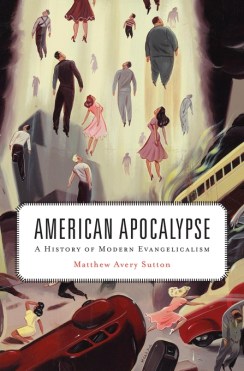
Sutton

What is fundamentalism? “Radical apocalyptic evangelicalism.”

In 1954, another academic history of fundamentalism suggested a similar explanation. Norman Furniss’ book The Fundamentalist Controversy assumed that fundamentalism meant a lack of knowledge about modern life, a head-in-the-sand stupidity.

These early definitions of fundamentalism were so far removed from reality that it was only a matter of time before a new generation of historians threw them out. Just as a 1960s class of historians from non-elite backgrounds offered new and better histories of minority ethnic groups and working classes, so too did historians from evangelical backgrounds redefine their own tradition.

Most influential, Ernest Sandeen argued that fundamentalism was best understood as the modern rebirth of an old evangelical theological tradition, premillennialism.

George Marsden counter-argued. Yes, premillennialism was vital to fundamentalism, but it was not enough. In his 1980 book Fundamentalism and American Culture, Marsden lay out the definition of fundamentalism that most nerds still use today. What is fundamentalism? Marsden noted that we need to include revivalism, premillennial theology, common-sense philosophy, and a vague but vital political and cultural conservatism.
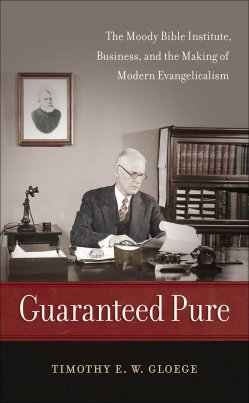
Gloege Guaranteed Pure

Or maybe a “grammar. . . a corporate evangelical framework.”

In the past few years, ambitious historians have re-opened the case. Matthew Sutton, for example, fresh off his blockbuster academic hit Aimee Semple McPherson, took on the challenge of defining American fundamentalism. Yes, fundamentalism is a blend of influences, Sutton argued in American Apocalypse, but it’s not just a jumble. If we want to understand fundamentalism, Sutton insisted, we need to understand that the defining feature of the radical evangelical experience has been its fixation with the end times.

Sutton isn’t alone in wondering what it has meant to be fundamentalist. Kathryn Lofton has pointed out (sorry, subscription required) that fundamentalists and their arch theological enemies were both “commonly modern.” Brendan Pietsch has demonstrated that one of the signature methods of fundamentalist Bible-reading—the dispensational lens—is a profoundly modern approach.

Most compelling, from my point of view, has been Timothy E.W. Gloege’s definition. Like me, Gloege focused on evangelical higher education, in his case, the earlier history of the Moody Bible Institute. From that lens, it seems clear that it will always be self-defeating to offer any simple theological definition to fundamentalism. Why? In short, fundamentalism worked as a set of goals, not a system of doctrine. Fundamentalism was a kind of least-common-denominator coalition, not a list of beliefs or a systematized theological vision.

Fundamentalists, Gloege argues, were united by their dream of creating a new, modern sort of orthodoxy, laid out on the model of the modern corporate business organization. But that approach left fundamentalists dangling when it came to traditional orthodoxy. They did not and would not mimic traditional denominational orthodoxies by agreeing on a systematic theology, because they were never willing to compete with denominations. At the same time, however, most fundamentalists valued and venerated the idea of a traditional Christian orthodoxy.
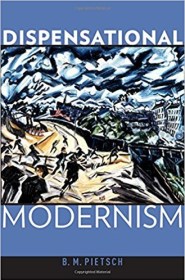
pietsch disp moder

Nothing old…

At the Moody Bible Institute, at least.

I’m still tweaking my argument, so you’ll have to wait until Fundamentalist U comes out to see the deets. (It will be soon, I promise.) It seems clear to me, though, that if we really want to understand the history of American fundamentalism and evangelicalism we will have to ditch our impulse to copy the theological creeds offered time and again by fundamentalists themselves.

If we don’t, we keep bumping up against unsolvable dilemmas:

  • What do we do with people like J. Gresham Machen, the breakaway Princeton Calvinist who said he was and wasn’t a fundamentalist?
  • What sense can we make of a fundamentalism that never agreed with itself on what fundamentalism required? For example, Bob Jones College forced its students to participate in dramatic plays, while Wheaton College banned such things. How can we step in and say one was right?
  • What IS the theology of fundamentalism? Calvinism? Yes. Arminian revivalism? Yes. Dispensational premillennialism? Yes. Amillennialism or postmillennialism? Yes.

It’s tempting to wade into these disputes with a hindsight definition. We might want to say Professor Machen was not a fundamentalist, but rather a Calvinist, or a creedal conservative, or a denominational conservative. All those are also true, but they sidestep the central difficulty that Machen was considered a fundamentalist during the peak of the 1920s controversies, including by himself.

We might want to say that fundamentalism was one core belief, fringed by an accumulation of disputed ideas. If we do that, we can say that both Bob Jones College and Wheaton were fundamentalist, but they disagreed on some non-essential details. That’s a smart approach, but it avoids the main problem—both sides insisted that their positions on student drama were CENTRAL to their fundamentalist identity.

We might try to say that one theology represented real fundamentalism, while others only thought they were fundamentalist.  Those others weren’t real fundamentalist theologies; they were confused. But this mistakes the central fact that both dispensationalists and non-dispensationalists worked together and considered themselves fundamentalists. Except when they didn’t. It ignores the fact that Calvinists, revivalists, and lots of others all taught at fundamentalist schools. Maybe not happily, but loosely united in their self-image as fundamentalists. Usually.

In short, there’s no way to untie this knot, definitionally. Instead, we need to cut it; we need to take a different approach to understanding fundamentalism. At least, that’s what I’m arguing in the book. And it’s not easy. It takes me about 128,000 words to make my case.

See? This is why I don’t get to leave the house much. Not many people find this kind of thing as interesting as full-time historians.

I Love You but You Didn’t Do the Reading

What did you miss last week?  Here are a few stories that might be of interest…

The tradition continues: The entire faculty senate at Gordon College resigned suddenly this week. HT: JF

All you college teachers out there: Dan Willingham reviews two new studies about students who use laptops during lectures.  Dell won’t be happy.

READING woman apple

Words, words, words…

Senator Bernie Sanders introduces his free college-tuition plan. He doesn’t think it will pass, but that’s not the point.

Will privatization school reformers repeat the mistakes of the GOP health-care flop? Andrew Rotherham makes the case.

Why are some free-marketeers nervous about Betsy DeVos? They want more charters and more choices, too, but they think her plans to get them might backfire.

Hersh? Ze? They! Grammar nerds decide we can use “they” and “them” instead of “he or she” and “him and her.” As in “everybody has their opinion,” instead of “everybody has his or her opinion.”

Evangelical Christians have always had a complicated relationship to nationalism and patriotism.  Is America a “Christian nation?” Has God been “kicked out?”  Is Trump’s appeal to Christian nationalism anything new?  For a great set of academic articles considering these tough questions, check out the new volume of Religions, edited by the inestimable Mark Edwards.