Which Neighbor Should Evangelicals Love?

Evangelical Protestants are on fire to help Syrian refugees. Except, they’re not. As Chris Gehrz points out, journalists who jump too quickly to define the “evangelical” position on refugees usually miss the boat.

Franklin Graham

What Would Billy Do?

There’s no doubt that leading evangelical organizations have taken the lead on welcoming refugees. The National Association of Evangelicals, for example, has warned policy-makers not to let fear of terrorists get in the way of Christian charity. As President Leith Anderson put it,

We are horrified and heartbroken by the terrorist atrocities in Paris, but must not forget that there are thousands more victims of these same terrorists who are fleeing Syria with their families and desperately need someplace to go.

At flagship evangelical magazine Christianity Today, too, editor Mark Galli has recently reminded Americans of their moral requirement to welcome and assist refugees.

As usual, though, Professor Chris Gehrz asks a more complicated and insightful question: Do such official and quasi-official statements really represent the thinking of most evangelicals? Gehrz worries it does not. He cites recent poll data that show large majorities of white evangelicals opposing a pro-refugee policy.

Gehrz wonders if other prominent evangelical voices might have more pull than do Galli or Anderson.  For instance, what about Franklin Graham’s warning that Islam is a clear and present danger? In a Facebook post, Graham wrote,

We cannot allow Muslim immigrants to come across our borders unchecked while we are fighting this war of terror. If we continue to allow Muslim immigration, we’ll see much more of what happened in Paris – it’s on our doorstep.

Similarly, at evangelical WORLD Magazine, Cal Thomas has called a pro-refugee policy “wishful thinking.” Even US passport-holders, Thomas writes, should not be allowed back into the country if they have visited countries that host ISIS training camps.

At The Gospel Coalition, Kevin DeYoung has suggested that the entire question is not cut-and-dried for compassionate Christians. As he wrote,

Christian charity means loving the safety of the neighbor next door at least as much as loving the safe passage of the neighbor far away. It’s not unreasonable or unfeeling to think that in some cases supplying refugee camps with humanitarian aid or protecting safe havens elsewhere could be a responsible approach that avoids the risks of immediate resettlement in the United States.

Those of us who aren’t evangelical Christians should learn a couple of important lessons from this back-and-forth. First, as I’m arguing in my current book about evangelical higher education, there is no simple way to define “evangelical” in strictly religious terms. Throughout the twentieth century, at the very least, to be an evangelical has meant an irreducible blend of religious, cultural, political, and social identities. It may be tempting to try for a clean-and-clear religious definition of “evangelical,” but the term has always been and will always be a mix of things.

Second, as Professor Gehrz points out, we need to be wary when people tell us about the “evangelical” position on any question, political or even theological.

What do “evangelicals” think about refugees? All sorts of things.

Should College Classes Make Students Uncomfortable?

Whitney Cox is right on. In her classes at the University of Houston, she insists that conservative religious students be open to the idea of discomfort as they study the Bible. Can we translate her advice to college students in general?

whitney cox

Preach!

Cox tells the story of a “star pupil” who worries that her Bible class might shake up his preconceptions. It should, she replies. She doesn’t want to tell the student what to believe. In fact, she insists that she is not willing or able to do so. But she does want her class to challenge him to think about the Bible in new ways.

Hear, hear. That is the purpose of education, especially higher education. IMHO.

So here’s our question: What if we change things around a little bit? What if we replace a conservative religious student with a left-leaning social-action student?

I’ve argued lately that the recent tumults on college campuses result from an “impulse to orthodoxy” among such leftist students. Students demand an end to ideas that make them feel “unsafe.” They demand the ouster of faculty and administrators with whom they disagree.

Could such students and such campuses benefit from Cox’s advice? Here’s what she told her conservative student:

I find frustrating the too-frequent sentiment from Christians that equates interrogating and examining the texts with destroying faith. There is a strain of anti-intellectualism in modern US Christianity that is vile, unbiblical, and deadlier to faith than scholarly examination could ever be. It demands an unquestioning obedience and punishes anyone who doesn’t conform to the party line, who dares to question the people in power.

I am forever angry at the orthodoxies that demand literal belief as an all-or-nothing proposition, not only because that kind of approach makes you immune to reason, but because it means that more likely than not, that one bit of counter-information that makes it through takes down the rest like a Jenga tower. I’ve seen this a lot with people raised as strict creationists but who later realize that the scientific support for evolution is overwhelming — and because they’ve been taught they can’t doubt one part without doubting it all, they end up tossing it all out the window. Because they’ve learned that any questioning is evil, they decide they have to take all their questions elsewhere.

Fantastic, and right on.  SO right on, in fact, that we should broaden it to include other sorts of student worry as well.

What if we tweaked the wording here and there? What if we gave this advice to students?

I find frustrating the too-frequent sentiment from left-leaning students that equates interrogating and examining the texts with racism. There is a strain of anti-intellectualism in modern US society that is vile, anti-social, and deadlier to social justice than scholarly examination could ever be. It demands an unquestioning obedience and punishes anyone who doesn’t conform to the party line, who dares to question the people in power.

Please don’t misunderstand me. As I’ve said repeatedly, I support the moral impulse behind the student activism at many schools today. Like many commentators, though, I worry that the necessary tension has been leached out of campus life.

Schools must be aggressive and decisive in their efforts to make sure every student feels welcome. Incidents such as the repeated racial hazing at Mizzou, for example, are not merely over-wrought snowflake problems.

The flip side of that campus necessity, however, is that students must be intellectually challenged. They must be physically safe. More than that, they have a right to demand institutional action to help them feel confident that they are safe from demeaning microaggressions.

Too often, however, this vital goal of safe spaces has turned into an overzealous drive for intellectual safety. Nothing will kill higher education faster than that.

I’ll say it again.  We need to remember both halves of the higher-education mandate:

  • Students must be physically and even emotionally safe.
  • Students should never feel intellectually safe.

If we’re doing our jobs, as Whitney Cox is, this should apply in equal measure to conservative creationists and progressive anti-racists.

The GOP and the God of Hate

Maybe I was wrong all along. My inbox has been filling up with links to a startling article in yesterday’s New York Times. Is the GOP really under the thrall of violently anti-gay extremists?

https://vimeo.com/129707480

I’ve argued in the past that my fellow secular progressives need to relax. The chance, I’ve said, of a fractious bunch of fundamentalists uniting to do anything more complicated than hosting an end-times bake sale were slim to none. Pre-tribulationists can’t get along with post-tribulationists. Lutherans can’t stand Seventh-day Adventists. Catholics look nervously at all of them.

More important, each side in our continuing culture-war debates tends to exaggerate the clear and present danger presented by the other side. Leftists point to abortion-clinic bombers. Conservatives warn of government jackbooted thugs. In general, I think we all need to remember that these boogiemen are distortions, fantastic bugbears trotted out to demonize the opposition.

But the news from Des Moines has me scratching my head. Kevin Swanson, an Orthodox Presbyterian pastor, hosted leading GOP hopefuls Ted Cruz, Bobby Jindal, and Mike Huckabee at a National Religious Liberties Conference. Swanson has become infamous lately for his repeated calls for homosexuals to be put to death.

Put to death!

According to the New York Times, Governor Huckabee claimed not to know of Swanson’s scary positions. Ted Cruz seemed unruffled. After all, his own father was a featured speaker of the conference.

Is this a simple case of primary extremism? In every election, the far fringes of each party wield outsize influence. We might say that such extremism will expend itself before the primary campaign gets rolling.

Similar claims, after all, have been made of President Obama’s connections with atheist terrorist Bill Ayers. Ayers was a real terrorist. His radical group really did try to bomb people. But he has long since—kinda sorta—denounced violence as a political tactic.

I’m flummoxed. I find it hard to believe that any serious presidential contender would consent to be associated with such a violent extremist.

Students: Customers, Wards, or What?

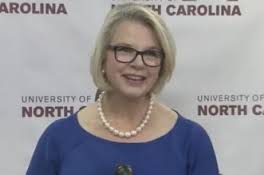
The devil stalks the University of North Carolina. At least, that’s the impression I get when I read the progressive Nation’s description of new system president Margaret Spellings. Of all the damning evidence against Spellings, perhaps the worst thing, for these progressives, is that she referred to students as “customers.” I wholeheartedly agree that good education, healthy education, shouldn’t be understood this way. But I don’t think progressives like me have come up with a better analogy. The only other likely candidate makes us even more uncomfortable.

Margaret Spellings

Sympathy for the Devil…?

Spellings has a long career in education. She has been one of the fiercest and most successful proponents of Milton Friedman’s prescriptions for better schools. If markets are allowed to do their magic, this school of thought explains, much of the dead hand of institutional lethargy will be stripped away.

In the K-12 world, market reformers have pushed vouchers, charters, and “choice,” with a lot of success. During her tenure as Education Secretary, President Spellings famously promoted a similar sort of market approach to higher education. The solutions to university blahs, the Spellings Report explained, lay in a new vision of students as “consumers,” with schools competing for their business.

“In this consumer-driven environment,” the report argued,

Students increasingly care little about the distinctions that sometimes preoccupy the academic establishment. . . . Instead, they care—as we do—about results.

A good college, from this perspective, is one that gives students good financial pay-back for their tuition investment. The “results” for “consumers” should be significant, in terms of higher salaries and better economic prospects for families.

Colleges, the Spellings Report insisted, need to adapt or die. If a for-profit college can deliver marketable skills better and faster, it should be encouraged, not deplored. Such law-of-the-jungle competition would push colleges in the right directions, toward “improving their efficiency.” A good higher-education system, the Spellings Report concluded, would give “Americans the workplace skills they need to adapt to a rapidly changing economy.”

Those of us who don’t like this vision of the proper form and function of higher education are not without alternatives. But for progressives, the primary alternative would not be an improvement.

For long centuries, colleges and universities operated on a very different model, what we might call the “family” plan. Students were not consumers, but rather more like apprentices. They entered into higher education with an understanding that they would be shaped according to the guidance of the school.

As historian Roger Geiger explained so clearly in his recent history of higher education, this system persisted much longer than did the apprentice system for young workers. Well into the nineteenth century, students had very few rights, very few choices to make.

They didn’t like it. As Geiger relates, the 1810s were a far more turbulent decade on American campuses than were the 1960s or 1970s. Indeed, if today’s students at North Carolina don’t like Spellings’s consumer model, they might learn a lesson from their predecessors. In 1799, UNC students held a week-long riot, in which they captured and horsewhipped their unpopular presiding professor. (See Geiger, pp. 116-129.)

What made these students so angry? The family model of higher education insisted on draconian rules for student life, including onerous daily recitals and endless rounds of mandatory chapel services. Students did not “consume” higher education in this family model, they submitted to it.

During the 1960s, student agitation against in loco parentis rules represented a late protest—and a very successful one—against the persisting vestiges of the family model. Students demanded an end to mandatory curfews and even core curricula.

The family model never totally disappeared, of course. Indeed, today’s “safe space” protests are usually built on an implicit assumption that the university will protect and shield students, implying a continuing authoritative family relationship.

In general, though, progressive students, faculty, and administrators don’t like the family model. They don’t want to impose a set of readings or experiences for students. They want students to be empowered to design their own educational experiences, to a large degree.

But if we don’t like the old family model, and we don’t like the new consumer model, what else is there?

As usual, I don’t have answers, only more questions.

  • If we don’t want to think of college students as customers, and we’re not willing to re-impose an authoritarian system, what should we call them?
  • Put another way: If the family model is out, and the consumer model is out, what’s left?
  • What could it mean to think of students as producers, rather than consumers?
  • If the nature of consumption has changed radically in the past fifteen years with online shopping and etc., might it mean something very different these days to call students “consumers”?
  • Is there wiggle room in the consumer model? Think of the differences, for instance, between equipping someone with tested, high-quality gear for a life-long expedition and equipping them with shiny junk they really don’t need.

Power on Campus: Fundamentalists Have the Last Laugh

It doesn’t make a lot of sense. At places such as Yale, Claremont McKenna, and Missouri, presidents are resigning and faculty are trembling. Ham-fisted protesters are demanding an end to free speech. Halloween costumes have become a disguise for racial oppression. To regular joes and pundits alike, this burst of campus outrage can seem puzzling. But there is one group to whom this phenomenon would make perfect sense.

A brief review of the cases:

The episodes can tell us a good deal about the real levers of power on campus. Who doesn’t have power? Administrators charged with insensitivity toward systematic racism and oppression. They get the boot, and fast, if they seem to oppose racial inclusivism.

Who else doesn’t have power? Students who want bread-and-butter economic reforms of higher ed. Even when a million students protested for lower tuition and lower student debt, it didn’t generate the same feverish buzz as these recent racial protests. To my knowledge, no university president has resigned because his or her school is expensive.

Who else is out? Even protesters against racial insensitivity, if they try to use physical coercion. When that happened recently at Missouri, for instance, the offending bully resigned and even sympathetic leftist pundits agreed that the protesters weren’t “always-wise.”

Just as informative, these protests tell us who really has power on campus. Who has it? Football teams. Duh. But even those athletes are energized by a surprising fact.

The real power on campus these days comes from an ancient but complicated moral idea. We might call it “the impulse to orthodoxy.” It can be tricky to understand, especially since no one is talking about it in those terms. The impulse to orthodoxy includes a moral two-step: Not only must people behave in a moral way, but they must actively seek out and root out those who fail to understand the proper reasons for moral action.

How does this ancient idea work in today’s campus protests? The successful campus protests these days insist not only that school leaders fight racism. More telling, protesters are fired up by the idea that they are under a moral imperative to expose and exclude all those who do not adequately understand the nuances of systematic racism.

At Missouri, for example, system president Tim Wolfe eventually resigned due to a perceived lack of administrative action against repeated racial incidents. The protesters wanted more than new policies. They wanted Wolfe out. Why? Because Wolfe personally seemed to misunderstand or even belittle complaints about systematic racism. One student leader went on a much-publicized hunger strike until Wolfe was kicked out. The student, Jonathan Butler, explained that only the ouster of Wolfe would make the school “a better place.”

At Yale, too, the impulse to orthodoxy has caused some observers to scratch their heads. On one level, it seems like a slightly hysterical protest about a fairly reasonable request. Faculty masters Nicholas and Erika Christakis suggested that students might relax about Halloween costumes. So what’s the problem? Morally orthodox students could not stand Christakis’s suggestion that they simply “look away” from offensive outfits. For the orthodox, looking away from immorality is as bad or worse than the immorality itself.

A similarly insufficient zeal damned an administrator of the elite Claremont McKenna College in California. Dean of Students Mary Spellman wrote a sympathetic email to a student who complained about racial insensitivity. So what’s the problem? Spellman included a line about non-white students who “don’t fit our CMC mold.” To protesters, such language smacked of a hidden, intolerable insensitivity.

In all these cases, school leaders and faculty are under attack for two reasons. First, they are accused of displaying an inadequate understanding of and zealousness about racial inclusivity. The oft-confusing part, though, comes from the second reason. The impulse to orthodoxy demands that such inadequate agreement be tirelessly sought out and ruthlessly purged. It is not enough to apologize. Campus protesters feel free to use any coercion, stamp out any speech, if those things seem to promote immorality.

Today’s racial protesters will be surprised at the people who might understand them best: Protestant fundamentalists. As I’m finding out as I research my new book, the history of fundamentalist higher education is mostly the story of a similar impulse to orthodoxy. Beginning in the 1920s, it was not enough for fundamentalists simply to protest against secularization of the academy. It was not enough simply to disagree with the theological implications of evolution. Rather, for fundamentalists since the 1920s, it was necessary to demand that schools purge all such things. When that didn’t work, fundamentalists opened their own schools, places such as Wheaton College, Bob Jones University, and Bryan College.

Throughout their histories, fundamentalist colleges have taken drastic action to purge any hint of compromise. In 1961, for example, Wheaton scientist Russell Mixter had to offer elaborate apologies to those who thought he might have accepted mainstream evolutionary theory.

These days, similar drastic action is wracking the campus of Bryan College. Faculty who seem not to be sufficiently zealous in their embrace of a young earth are being shown the door.

Of course, the specific moral ideas are extremely different. At fundamentalist colleges, the dangerous trends were toward theological modernism and evolutionary science. At today’s elite mainstream colleges, the moral imperative demands the removal—root and branch—of those who don’t sufficiently act against systematic racism.

Yet the impulse remains the same. The moral imperative of orthodoxy requires more than just a certain set of ideas. It implies a tireless and ruthless dedication to root out all those who do not adequately understand or embody those ideas.

Yale + Halloween = Kardashian

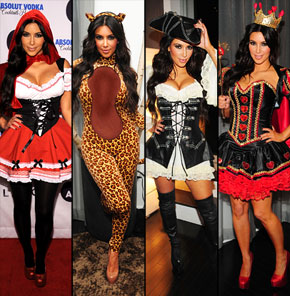
Do we dare not to care?  You’ve seen the news by now: Students and administrators at Yale fretted that thoughtless Halloween costumes might subject them to “cultural appropriation” and steal from them their “voice” and “agency.”  Certainly, it’s easy enough to poke fun at this sort of holiday “snowflake”-ism.  But there’s another question we should also ask: Why do we care?

Insensitive appropriation of cats?...pirates? ...bad taste?

Insensitive appropriation of cats?…pirates? …bad taste?

In case you’ve been preoccupied with real life, the story can be told quickly.  (If you’d like more detail, try here, here, or here.)  Yale’s administration issued an email suggesting that students should think in advance about the cultural sensitivity of their costumes.  Don’t use blackface.  Don’t go as a “wild Indian.”  Etc.  One faculty member, Erica Christakis, responded that such warnings reduced adult Yale students to quivering infants.  Can’t we all be trusted, she asked, to act a little subversive on Halloween?

The response was swift and sure.  Students and their allies denounced Christakis and called for her removal.  They denounced her intentions and racist and oppressive, though she had explicitly supported “concerns about cultural and personal representation.”

It is easy enough to bemoan Yalies’ response to this Halloween email as another egregious overreach by “Snowflake Totalitarians,” privileged students who censor and shout down any smidge of a disturbing idea.  It is also fairly easy to defend the students, in the words of one writer, “to understand why people of color would feel marginalized by the email and the university.”

I’ve said it before and I’ll say it again.  I tend to agree with the protestors.  Or, at least, I’m happier to see students morally outraged—perhaps to excess—than to see students drinking their way through country-club collegiate life.

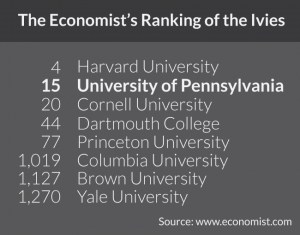
But let’s consider a different question today: Why do we care?  Why is it so very interesting to so many of us what goes on at Yale?  After all, hardly anyone actually goes to school there.  For almost everyone, college life is worlds removed from the elite goings-on at Yale, or Princeton, or Harvard.  And, if we measure college by relative earnings, Yale comes out near the bottom.yale low rank

So why do we care?  I’d like to suggest two possible reasons and I’ll welcome suggestions and denunciations.  In essence, though, I think we’re seeing here the higher-educational fruits of Americans’ ferocious love/hate relationship with celebrities.

First, I think there’s some amount of schadenfreude at play.  Just as ratings skyrocket when Kim Kardashian stumbles through another atrocious episode of her public life, we regular folk outside of the Ivy League love to see those snobs act stupid.  More proof, if we needed it, that those grapes were sour to begin with.

Also, I detect among academic schlubs like myself a certain titillation with the celebrity factor.  No one doesn’t know Yale.  Americans are excited and interested in the lifestyles of the rich and famous.

When Ivy-League students act with predictably adolescent over-zealousness to each new situation, do we all have to talk about it so much?  Or will it be culturally insensitive of us to take Professor Nicholas Christakis’s advice and “look away”?

Shocking Kids to Justice

Is it a good idea? For decades now, progressive teachers have sought to shock children into recognizing their traditional prejudices. Recently, a Kansas teacher ignited some controversy by showing a provocative video. His goal was to shock kids out of their anti-gay mindsets. They are not easy questions: Should teachers intentionally shock and provoke their students in order to make them better people?  It’s easy to see such teachers as heroes when we agree with their goals, but what about when we disagree?

But first, the latest: according to ThinkProgress, Tom Leahy is fighting for his job. Leahy, a high-school teacher from Conway Springs, Kansas, was disturbed by the anti-gay murmurings he noticed among his students. To help show his kids the light, Leahy showed them a short film, “Love Is All You Need.”

The film depicts a world in which heterosexual kids are bullied for their sexuality. One heterosexual girl ends up killing herself.

Outraged parents demanded Leahy’s ouster and the school district complied. At first, Leahy agreed to go, but after an outpouring of support he’s back in his classroom.

I think I would like Tom Leahy. He sounds like an engaged and caring teacher. I, too, was saddened and concerned in my high-school classroom by the nonchalance with which some kids made anti-gay statements. Like Leahy, I hastened to intervene to let kids know that such hateful attitudes, such targeted hostility was not okay.

But is it a good idea to shock kids into enlightenment?

The tactic has a long history. SAGLRROILYBYGTH have probably heard the story of Jane Elliott. In 1968, the story goes, when Martin Luther King Jr. was assassinated, Elliott began an anti-racism activity with her third-graders in Iowa.

Kids with blue eyes were given extra benefits. Kids with brown eyes had to wear fabric collars. Hostility quickly erupted between the two made-up groups of kids. Elliott didn’t let the two groups play together or drink from the same water fountains. She explained that collar-free kids tended to be smarter and better behaved. The next day, she reversed the set-up. Now blue-eyed kids wore the collars and suffered the consequences.

The point was to let white kids experience discrimination, to let them “[walk] in a colored child’s moccasins for a day.”

Are such shock tactics a good idea?

Sometimes, social justice is going to seem shocking. When the US Supreme Court ruled in 1954 that schools could no longer be segregated by race, nothing much changed, because no one in power was willing to ram such shocking change through the system.

Nevertheless, I think we need to remember to give such tactics the smell test. Even after forty-five years, Jane Elliott’s tactics seem harsh and unnecessarily cruel. Her taunting of her third-graders just doesn’t seem right, no matter how noble the goal.

Does Tom Leahy’s activism rise to the same level? It doesn’t seem that way to this reporter. As a former high-school teacher, I found the video he showed to be provocative, but not intentionally cruel to viewers. As far as I know, Leahy did not insult his students or belittle them in public to make his point. He merely showed a thought-provoking video.

What would I say, though, if a teacher pushed kids in directions with which I didn’t agree?  What if a teacher in a public school wanted to lead her kids in prayer?  Or what if a teacher showed a gruesome and intentionally provocative anti-abortion film?

I’m not confident that I would find such teacher activism brave and morally heroic.

Should we shock our students? Every day.

But we need to be very careful about our self-righteousness.  We must remember that our students are in class to be loved, not to be “fixed.”  This has to be true even in cases in which we agree with the moral activism of our teachers.

So how do we know when teachers are engaging in proper thought-provocation, and when they are being moral bullies?

We need to let students know that we are on their side, that we care about them as people even if we want to upset them a little with mind-blowing ideas.

Demonstrating our moral superiority by belittling kids can never be the proper path to a more just society.

Culture Wars Update: Who’s Winning?

Is the sky falling for progressives like me? In The Atlantic, journalist Molly Ball argues that liberals are losing the culture wars. The same topic just came up in our recent panel of educational historians. Is Ball right?

Four horsemen?

Four horsemen?

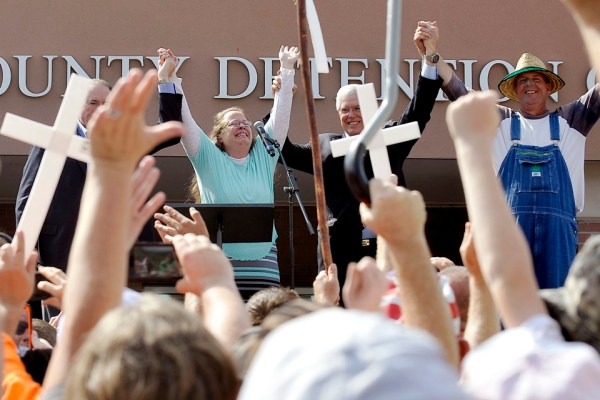
She looked at the results of the recent mid-term elections. In Ohio, voters rejected recreational marijuana. In Houston, they voted against gender-neutral bathrooms. In San Francisco, they booted an immigration-friendly sheriff. In Virginia, gun control struggled. In Kentucky, Kim Davis’s brand of in-your-face culture-war bluster helped win the governor’s office.

Ball’s conclusion?

taken together these results ought to inspire caution among liberals who believe their cultural views are widely shared and a recipe for electoral victory.

Fair enough. But not surprisingly, our all-star panel of historians came to different conclusions. To historians, these electoral losses don’t seem so cataclysmic. After all, consider the historical context: people are voting about making pot legal. Can you really deny Andrew Hartman’s argument that the echoes of the 1960s are dominated by the accents of hippies?

And yes, Houston lost its push for bathrooms that recognize the fluidity of gender. But look again: Who lost? The city in Texas with the openly gay mayor, that’s who.

We can make the same case for the other elections as well. Yes, conservatives here and there will have some successes in blocking the progressive changes that continue to roll through our society. Such blocking maneuvers, however, are a rearguard action.

Voting against gender-neutral bathrooms does not change the fact that we are now considering gender-neutral bathrooms. Thirty years ago—heck, even five years ago—that would not have been up for debate.

I think we need a more nuanced answer to the question of winning and losing when it comes to our culture wars. In my recent book, I looked at the educational activism of conservatives during the twentieth century. A lot of the time, they won. But just as with these recent cases, conservatives tended to succeed only in blocking or delaying certain limited sections of progressive change. Progressives still set the cultural agenda.

Here’s my two cents: first of all, I agree with our dean of educational historians, Jon Zimmerman. Jon argued this week that it is mostly meaningless to talk about winning or losing in this context. As does this Atlantic article, talk about winning or losing is usually a tactic to rally the faithful of each side, not a clear-headed analysis of shifting cultural trends.

Having said that, I think we can discern a century-long trend with these sorts of fights. In every case, conservatives might win or lose the specific battle. They do not win the war. What they do win, time after time, is the right to be listened to, the right to be considered part of the conversation about these issues.

For progressives like me and most of my friends, progressive change seems like an obviously good idea. Of course people should be able to smoke pot if they want. Of course transgender people should be able to use appropriate bathrooms. Of course guns should be controlled, immigrants welcomed, and same-sex marriage rights should be honored.

When we see election results like this one, though, we are reminded that not everyone agrees with us. When we see how strongly people disagree, we should not tear our hair and gnash our teeth. We should not lament the narrow-mindedness of our fellow citizens.

Rather, we should recognize the vast differences between Americans when it comes to these issues. As we do here at ILYBYGTH, we should do our best to understand and even sympathize with those voters who disagree with us.

After all, the only real victory in our bitter culture wars will come when we can respect those with whom we disagree.

The E-Word

You don’t have to love your enemies. You don’t even have to like them. But a founding principle of ILYBYGTH is that we should all try to understand those with whom we disagree. Indeed, as journalist and FOILYBYGTH* Trey Kay notes in a recent episode of his podcast Us & Them, there is a critical difference between disagreeing with someone and calling him or her an “enemy.”

And don't forget about frenemies!

And don’t forget about frenemies!

If you haven’t yet checked out Us & Them, it’s worth a listen. Different episodes explore issues near and dear to SAGLRROILYBYGTH, such as neo-confederate history, gay rights, and conservative textbook watchdogs Mel and Norma Gabler.

In the most recent episode, Kay explores the question of the enemy. As Kay reports, these days it’s not shocking to hear leading politicians describe the opposing party as the “enemy.” What sort of tone does that set for our day-to-day civil discourse? Can I have lunch with someone who is an “enemy?” Could I work on a school board with one?

Trey includes parts of a conversation he had with your humble editor. We talked about the origins of the name of this blog, and about the difficulties of understanding those with whom we disagree. As I told Trey, this blog is, in part, an effort for secular folks like me to understand what conservative religious people might mean if they say “I love you, but you’re going to hell.”

As he included in the segment, I think there are more important goals than simply winning culture-war battles. If we disagree about issues of religion and politics, we need at least to try to include those with whom we disagree in a civil discussion. We can’t do that if we resort to knee-jerk demonization.

That’s easy enough to do with things we don’t really care about. But what about when it hits home? What about when it is a question of what our kids are learning in school, or what rights we have? For example, for creationists it can be very difficult (I imagine) to relax and talk civilly to someone who wants to teach their kids that humans were not created by God. For people like me, it is enormously difficult not to demonize opponents who don’t agree with us about same-sex marriage rights.

So what do we do? To start, we can listen to the Us & Them podcast.

*Friend of I Love You but You’re Going to Hell, natch.

The Evangelical Vote: ABT

Who will conservative evangelicals vote for? Over the past forty years, it has become a common assumption that the “Religious Right” can make or break a presidential campaign. Among some evangelical pollsters and opinion-makers, a new “ABT” attitude—anyone but Trump—seems to be emerging.

For lots of WORLD's evangelical insiders, it's ABT...

For lots of WORLD’s evangelical insiders, it’s ABT…

Thomas Kidd of Baylor University made his position clear. “I will not support Trump under any circumstances,” Professor Kidd wrote,

and I would use what little influence I have to stop him from being elected president. If that means that Hillary Clinton or another Democrat gets elected by default, I am fine with that.

Russell Moore, too, the public face of the Southern Baptist Convention, denounced Trump in no uncertain terms:

We should also count the cost of following Donald Trump. To do so would mean that we’ve decided to join the other side of the culture war, that image and celebrity and money and power and social Darwinist “winning” trump the conservation of moral principles and a just society.

At evangelical WORLD Magazine, J.C. Derrick recently defended his survey of evangelical attitudes. The WORLD poll, Derrick explained, does not sample randomly from the population. It picks 103 people who have substantial claim to the label “evangelical insiders.” Who do THEY think should be president?

Ann Coulter accused the WORLD survey of being an anti-Trump set-up. Only Trump, Coulter fumed, displayed “real Christian courage.”

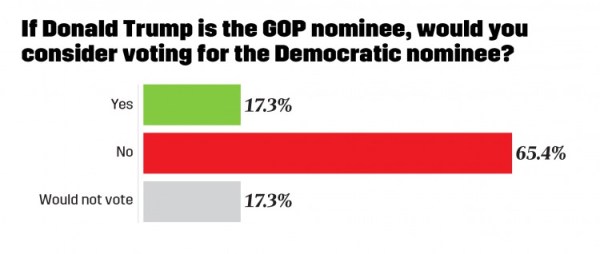
WORLD’s evangelical insiders disagreed. These days, they prefer Marco Rubio. Most telling, more than a third of respondents said they would either vote Democrat or stay away from the polls if Trump were the GOP candidate.

Ouch.

Similar stories emerge from another evangelical poll from the National Association of Evangelicals. NAE leaders were not in agreement about whom they thought best represented their values, but they seem heading toward the ABT camp. As the NAE report put it,

Trump did not perform well in the NAE poll with some leaders specifically noting ‘Not Trump’ or ‘Anyone but Donald Trump.’

With primaries and caucuses just around the corner, I wonder if this sort of evangelical ABT will catch on among conservatives.