Are the Culture Wars History?

I don’t get out much. So when I was invited to participate in a panel at the annual meeting of the History of Education Society, I jumped at the chance. Especially when it gave me the chance to rub shoulders with some nerd all-stars.

Meet me in Saint Looey...

Meet me in Saint Looey…

Our panel will include four authors of books familiar to SAGLRROILYBYGTH. First, Jon Zimmerman will tell us something about global sex ed from his new book, Too Hot to Handle.zimmerman too hot to handle

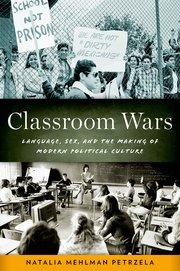
Then, Natalia Mehlman Petrzela will keep the sex-ed ball rolling while adding in some bilingual ed as she talks about her book, Classroom Wars.petrzela classroom wars

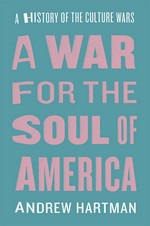
Next, Andrew Hartman will share some insights about education and culture wars from his blockbuster War for the Soul of America.Hartman

Last, I’ll talk a little bit about what it has meant to be “conservative” when it comes to education, from my new book.

What will we talk about? Hard to say until we get there, but the theme that ties these books together is that of educational culture wars. What have Americans (and people worldwide) seen fit to teach their kids about touchy subjects such as sex and God? Who has been allowed to make decisions about school?

One disagreement we might have could be about the winners and losers. If there are such things as educational culture wars, we all have different conclusions about who has won. Jon Zimmerman argues that kids overall—especially in the United States—get very little sex ed, due to consistent activism against it. I think, too, that conservatives have been able to exert veto power over many big educational programs. Both Andrew and Natalia, though, say that by and large progressive ideas have come out the winner in these battles.

What do you think:

  • Are there such things as educational culture wars?
  • If so, are they all in the past?
  • And, maybe most interesting to most people…who won?

My New Best Friend

It might not be air-traffic control, but writing academic books has its own nerve-wracking qualities. For years, we nerds research and write, honing the argument, polishing the draft, visiting and revisiting the archives. And we do it without much sense of direction. Is the argument solid? Does it make sense to normal people? When we’re up to our eyeballs in it, it can be difficult to get a clear view of the big picture. Given all this prolonged anxiety, it is a real thrill when someone we look up to likes the book.

Write any good books lately?

Write any good books lately?

Today I read with enormous pleasure Dr. Andrew Petto’s review of The Other School Reformers on the Reports of the National Center for Science Education.

First of all, I’m delighted that Petto finds the book worthwhile. He kindly calls it

a must-read for anyone interested in or hoping to effect educational reform—whether in the sciences or in other disciplines.

Woo! By my count, that’s within spitting distance of my ultimate career goal: someone calling a book of mine a “tour-de-force.”

Even better, Dr. Petto understands that my book, in many ways, is targeted at progressive types. Yes, it is a book about conservative school activism during the twentieth century. At heart, though, I hoped to introduce said conservatives to progressives like my younger self who did not understand them, who feared and loathed them…or rather caricatures of them.

As Dr. Petto puts it, for progressives,

The implications are clear: if progressive reforms are going to succeed in public education, then progressives need to address the real concerns of conservative parents and activists.

In the specific case of evolution and creationism, as I also argue in my upcoming book co-authored with philosopher Harvey Siegel, this means that evolution-education types need to spend more time learning about creationism and less time denouncing it as wicked, ignorant, and abusive.

Petto says it better than I ever could. As he concludes,

Conservative activism in education is part of a long and deep tradition, not a series of impromptu protests. To understand that history and the concerns that drive it, according to Laats, is to understand the state of public education in the US. And for those who hope to change things in the public schools, this is an important place to begin.

Required Reading: Gloege on MBI

It’s not just a metaphor, not just a handy way of speaking. According to Timothy Gloege, fundamentalism acts like a business because it was founded like a business. In his terrific new book Guaranteed Pure: The Moody Bible Institute, Business, and the Making of Modern Evangelicalism, Gloege digs into the history of America’s premier Bible Institute to uncover the reasons for these tight connections. Along the way, he tells us a lot about the history of evangelicalism and of evangelical higher education.Gloege Guaranteed Pure
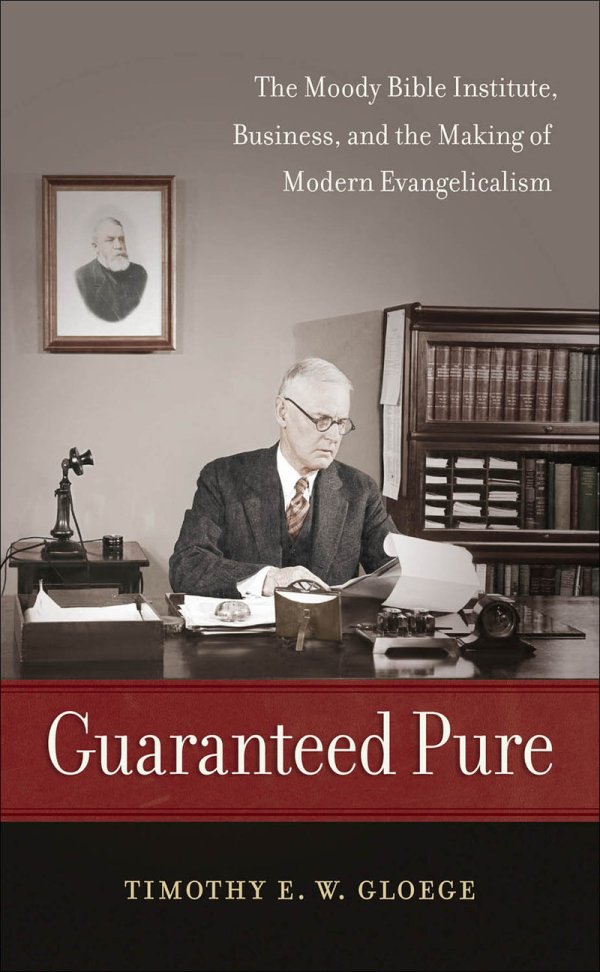
As SAGLRROILYBYGTH are sick of hearing, I’m up to my ears in writing my new book about fundamentalist/evangelical higher education. And Guaranteed Pure is the best book on the subject I’ve read in a long time.

For those in the know about evangelicalism and evangelical education, the centrality of MBI doesn’t need explaining. Started in the 1880s by Bible evangelists and their corporate backers, MBI became a juggernaut of publishing, broadcasting, and education. By the mid-twentieth century, MBI loomed large among evangelicals as a brick-and-mortar institution, a solid headquarters for a fundamentalist movement that often ran on shoestrings and prayers. As Gloege puts it near the end of his story (pg. 227), “It is difficult to think of an interwar fundamentalist that did not have or attempt to establish some connection to MBI.”

For those who are unfamiliar with these histories, Gloege’s book would be a great place to start. He offers vivid and fully realized portraits of central personalities such as Reuben Torrey. He fleshes out the complicated relationship between different types of conservative evangelicals around the turn of the twentieth century, from California Pentecostals to Minneapolis Fundamentalists and everything in between.

No matter how well you know these connections, you’re sure to find something enlightening in Guaranteed Pure. For example, Gloege offers the best history I’ve read of the emergence of The Fundamentals, a twelve-volume series of books that is often seen as the first articulation of emerging fundamentalism.

As Gloege recounts, the big-business ethos that emerged in the end of the 1800s did more than just set the tone for the founding of Moody Bible Institute. Rather, leaders such as Henry Crowell of Quaker Oats applied the same emerging modern attitudes toward marketing and profits to MBI as he did to oatmeal. That didn’t mean Crowell was cynical or insincere. Rather, it merely helps us make sense of the sometimes-strange career of early fundamentalism.

For example, every attempt to define early fundamentalism clearly quickly runs up against seemingly insuperable problems. Historian Matthew Sutton, for instance, in his recent book American Apocalypse offered a compelling definition. The thing that set radical evangelicals apart from other religious traditions, Sutton argued, was their overweening concern with the coming apocalypse. In Sutton’s words, it was “fundamentalists’ anticipation of the soon-coming apocalypse [that] made them who they were” (pg. 3).

True enough, but we quickly run into problems. There were leading intellectuals such as J. Gresham Machen who explicitly didn’t fit that label, yet who were considered—even by themselves—to be the brains of the fundamentalist impulse. And there were leading fundamentalist schools such as Bryan University (later Bryan College) that considered and rejected a statement about the coming premillennial apocalypse in their all-important creed.

Professor Sutton knows these things, but by asserting a theological definition on a wide-ranging movement he was forced to trim some edges here and there.

Gloege offers a way out of this pickle. Instead of giving us a rigid definition of fundamentalism, Gloege instead defines it in action. As he puts it (pg. 3),

Fundamentalism is often described in terms of manifestos and theological propositions. Yet at MBI at least, the life force of the movement was its corporate evangelical framework, which operated at a more foundational level. It functioned as a set of unexamined first principles—as common sense. Once developed, these principles became for conservative evangelicalism what the rules of grammar are to a conversation: something used rather than analyzed.

How could Machen be a fundamentalist intellectual if he hemmed and hawed about the fundamentalist movement? How could Bryan University be a fundamentalist school if it eschewed fundamentalist end-of-the-world theology?

Easy. They could be fundamentalists if everyone knew they were. They could be fundamentalists if it seemed like common sense to include them.

Gloege’s priceless contribution in terms of pinning this sort of definitional jello to the wall is not the only major contribution of his book. For those of us interested in evangelical higher ed, Gloege’s business context makes some things clear in new ways.

For example, evangelical colleges are famously anxious about the public image of their students. Depending on the decade, students were not allowed to smoke, drink, dance, or attend plays or movies. Even when they were not at school. Why? Because students were not seen as consumers of evangelical education, they were seen as its product. They were its advertisements, its guarantors of purity.

As Gloege describes, in the 1910s MBI published a painstakingly detailed student guide. Every aspect of student life was regulated, theoretically at least. Why was this so important? In Gloege’s words (pg. 159),

the students and faculty were themselves a form of promotion for the institute. MBI served as a sort of test kitchen demonstrating the effectiveness and purity of its message. No longer conceptualized primarily as workers learning on the job, students were treated as products of the Bible Institute.

Of course, such big-business thinking permeated all sorts of institutions at the time, not just MBI or evangelical colleges. As historian Roger Geiger argues in his new history of American higher education, not only MBI but all institutions of higher education were undergoing a transformative triple revolution during this same period.

Indeed, Gloege could easily have expanded his argument beyond the walls of the MBI. As I’m arguing in my new book, too, there’s no better way to make sense of fundamentalism and evangelicalism in the twentieth century than by uncovering the history of its most important institutions.


Do I Need to See the Light?

Joel Carpenter is. Mark Noll is. George Marsden is. Ron Numbers is was. John Turner is. John Fea is. I’m not. Does it matter?

Many of the best academic historians of evangelicalism and fundamentalism grew up as part of an evangelical church. Indeed, among academic historians in general, since the 1960s it has been seen as a big plus to have a personal background with the group(s) we study.

It’s not universal. As far as I know, Matthew Sutton didn’t. Molly Worthen didn’t. Tanya Luhrmann didn’t. And if they did, it is not a big part of their public persona. In other words, they write as scholars of evangelical religion, not necessarily as evangelical scholars of evangelical religion.

This is more than just “PC” cliquishness. Historians are sobered and humbled by their own history. Though African American historian WEB DuBois clearly debunked the dominant but false histories of Reconstruction way back in the 1930s, white historians didn’t catch up until the 1960s.

With fundamentalism in particular, non-evangelical historians did a terrible job. Until the 1970s, mainstream historians told us that fundamentalism died after the Scopes Trial of 1925. It had done nothing of the sort, of course. A new generation of evangelical historians such as Ernest Sandeen and George Marsden knew it hadn’t, since they had grown up with it.

Having a background in the world of conservative evangelicalism gives historians an ear for the language and a feel for the connections between groups. When I was stumbling through my graduate work at Wisconsin, for example, my mentor Ron Numbers was able to point me toward super-rare creationist documents from the 1930s. How did he know about them? They were written by his grandfather!

That sort of connection is something we outsiders can never acquire.

As outsiders, though, we non-evangelical historians enjoy some benefits. For us, there are no pre-existing good guys or bad guys. We aren’t embarrassed by the rhetorical excesses of 1920s fundamentalists. They don’t have anything to do with us! We don’t feel a need to demonstrate how different such hellfire preachers are from our own intellectual roots. To us, it’s all archival material.

In short, evangelical historians will always have insights I lack. But they will also have hang-ups and assumptions I’m free from.

Recent discussions on this blog have pointed out the continuing importance of these questions. When I noted the recent visit of Bob Jones University President Steven Pettit to the scenic campus of Wheaton College, I was mostly interested in the turbulent historical relationship between the two schools. At least one commentator, however, accused me of trading in “guesswork and gossip.” I didn’t mean to suggest that BJU was somehow “moving toward neo-evangelicalism.” Many readers within the world of fundamentalism and evangelicalism have very strong feelings about such things. I don’t.

As I plow forward with my new book about conservative evangelical colleges and universities, I need to keep these issues in mind. I need to remind myself that I might be missing out on subtleties of tone or implication that are obvious to those raised within this tradition. I need to watch for connections that are not made explicit to outsiders, but are nevertheless glaringly obvious to those in the know.

The REAL Reason It Doesn’t Matter that Ben Carson is a Creationist

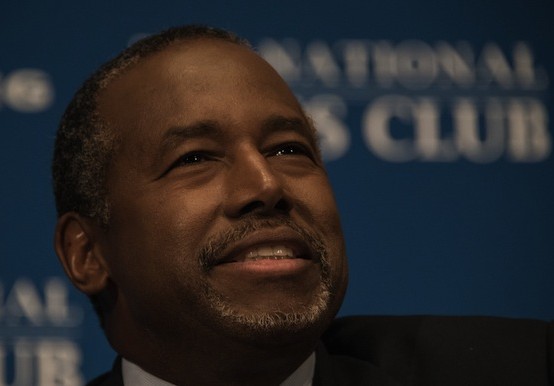
Have you seen it yet? Commentators such as Rod Dreher and Jeff Jacoby have opined that Ben Carson’s creationist Seventh-day Adventist faith doesn’t matter. All sorts of leaders, they write, hold kooky religious ideas. But that’s not why Dr. Carson’s faith doesn’t disqualify him. There’s a more complicated reason.

It's always worthwhile talking to an intelligent man...

It’s always worthwhile talking to an intelligent man…

Jacoby argues that Carson would be a perfect surgeon general. He could follow other creationist surgeon generals such as C. Everett Koop. When liberals comment that Carson’s creationist beliefs mean he’s anti-science, Jacoby points out that all sorts of religious people have all sorts of anti-scientific beliefs. Such theology does not mean they can’t perform their scientific duties.

As Jacoby concludes,

Can you regard someone’s religious creed as preposterous, yet entrust the person who is faithful to that creed with public office? Of course; Americans do it all the time. I can’t see Carson as president, but what I really can’t see is why his religion or his doubts about evolution (neither of which I share) should even enter the conversation.

There’s a simpler reason why Dr. Carson’s creationism doesn’t really matter. Like other humans, Carson is not a simple religious robot. We cannot read his denomination’s creed and assume we know everything he believes on every issue.  More important, we cannot read his creed and assume we know much about his lived faith.

As critics have pointed out, Dr. Carson has ranged far afield from his SDA roots in his effort to win votes. Traditionally, for example, Adventists decry the use of violence. Traditionally, too, Adventists insist on a rigid separation of church and state. Recent campaigning seems to have pushed Dr. Carson to put his conservative American identity in front of his SDA denominational identity on these issues. He has argued for more weapons in the hands of everyday Americans and more religion in everyday government.

I disagree with Dr. Carson’s positions on all these issues (for that matter, I also disagree with SDA orthodoxy on all these issues), but I’m glad he is not simply a creature of his denominational beliefs. After all, if someone had only their religious beliefs to guide them, he or she would be a terrifying leader.

What if a surgeon general believed only in faith healing, so he or she canceled government health programs? What if a leader of the Joint Chiefs of Staff believed only that non-Christians were evil, so he or she indulged in missionary warfare?

Luckily, that sort of religious extremism is atypical. Most of us have official beliefs that don’t really impact the way we live our day-to-day lives. We are Americans first, and then we are Catholic, or Muslim, or Hindu.

Indeed, it is not only religious people who do this but also anti-religious people. As Dostoyevsky’s Ivan personifies in Brothers Karamazov, there are atheists who fail to follow their anti-religious beliefs to their logical conclusions.

And thank goodness they do.

In short, Dr. Carson’s creationist beliefs don’t disqualify him for high office because he seems willing to back-burner them when necessary.

The One Thing We Know for Sure about Schools…

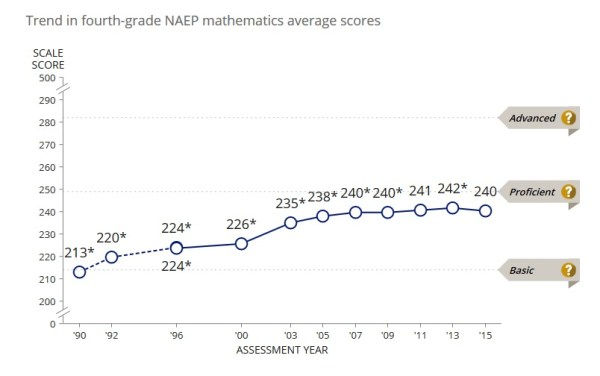
This week’s National Assessment of Educational Progress (NAEP) scores prove it. When it comes to education, there is one reliable truth out there. It’s not news; any educational historian worth his or her mortarboard could tell you about it.

But first, the news: NAEP, the “Nation’s Report Card,” shows stagnant or declining scores in math and reading. A bummer, after fifteen years of emphasis on jacked-up standards and high-stakes testing in public schools.

Up, up, up, ... and down.

Up, up, up, … and down.

Understandably, teacher activists who have derided the latest test-heavy reform efforts have offered bitter I-told-you-sos. The test-hungry reformers have scrambled to explain the decline. Michael Petrilli at the Fordham Institute retreats to the obvious explanation: It’s complicated. It might be due to non-testing factors such as classroom confusion, Petrilli explains. It might be due to the declining economy. Most important, Petrilli says, we need to remember that this decline might be only a “blip,” not a “trend.”

But anyone who knows the first thing about educational history knows it’s simple. There is one reliable constant in American education.

We can see it in bombshell cases such as Brown v. Board of Education (1954). Reformers hoped that ending legal racial segregation in schools could go a long way toward healing racism in this country. Sixty-plus years later, those assumptions seem painfully naïve. Schools are still segregated by race; cities even more so.

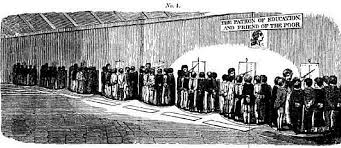
We can see it all the way back in the roots of urban school systems. Two hundred years ago, school reformer Joseph Lancaster promised a new method of organizing schools that would solve America’s poverty problem. Hundreds of low-income students could be educated with a cheap and simple monitorial system.

How schools can save society, 1815.

How schools can save society, 1815.

Guess what? It didn’t work. As long as there have been public school systems in this country, there have been eager reformers who have offered one idea or another as a silver bullet. Each reform, we’ve heard, will be the ticket to healing America’s schools and society. We’ve been told for hundreds of years that America’s schools will FINALLY fulfill their promise to end poverty, fix the economy, and etc. etc.

It’s just not that simple. Today’s round of high-stakes testing made elaborate promises. No Child, we heard, would be Left Behind. Schools, we heard, could now finally fix social inequalities and heal society’s injustices.

Would that it were so.

What we have instead is another reminder of the one thing we can count on in schooling, the one reliable truth about education.

Ready for it?

Here it is: Schools can’t fix society. Schools ARE society.

Ben Carson Wants Federal Control of Higher Education

If you’d like to be popular at a GOP event these days, don’t wear an Education Department lapel pin. As they have for decades now, conservative presidential candidates these days are falling all over themselves in their threats to eliminate the Education Department. But not Ben Carson! The uber-conservative neurosurgeon has something he wants the Ed Dept. to do.

SAGLRROILYBYGTH are tired of hearing this, but I’ve pointed out in my recent book and in the pages of Time.com that conservatives have not always hated the idea of federal influence in education. Back in the 1920s, cultural conservatives wanted the federal government to pump money into educational programs that would make America more conservative. Some conservative intellectuals these days have made similar noises—if the Ed Dept. can push conservative programs, some conservatives think, then conservatives need to get over their antipathy.

Dr. Ben Carson’s plan for the Ed Dept. goes even further. As he told Glenn Beck, Carson wants the federal government to seize control of higher education.

Here’s the plan: Carson hopes the Ed Dept. will “de-fund” colleges that ban conservative speakers. The department, Carson explained, should “monitor our institutions of higher education for extreme political bias and deny federal funding if it exists” [about 3:41 of the interview].

It’s not clear exactly what Dr. Carson thinks such defunding will mean. Nor can I tell how “extreme political bias” would be defined. But such quibbles largely miss the point.

For us at ILYBYGTH, the remarkable take-away from Carson’s candor is that he wants to assert sweeping new powers for the Education Department. This is a departure from both the past fifty years of mainstream conservative thinking and from the past hundred-fifty years of Seventh-day Adventist tradition.

Adventists, after all, have never been supporters of government power. Not even to push society in ways they might prefer. As liberal pundits have become eager to point out, Carson’s rhetoric about strong Americanism is a marked departure from SDA tradition. These days, Dr. Carson displays a weirdly non-SDA penchant for a powerful, intrusive government.

It’s certainly the case with Carson’s recent comments about the Education Department. I can’t imagine that SDA universities such as Loma Linda or Pacific Union College would endorse more federal control of their activities.

What Joe Biden Didn’t Mean to Say

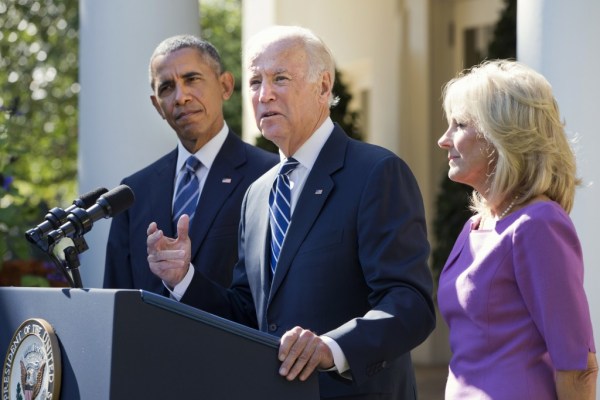
Unlike the GOP, the Democratic presidential hopefuls seem united about education policy, to the point of boringness.  In his promise not to join the race, however, VP Joe Biden made some odd historical claims about schooling.  Surely he didn’t mean to imply what my nerdy ears heard.

Say, it ain't so, Joe...

Say, it ain’t so, Joe…

The Democratic leaders seem to have rallied around the promise of free or reduced college tuition for all.  That was the point Vice President Biden made.  “We need to commit,” Biden intoned,

To 16 years of free public education for all our children.  We know that 12 years of public education is not enough.  As a nation, let’s make the same commitment to a college education today that we made to a high school education 100 years ago.

With apologies to the SAGLRROILYBYGTH, let me clarify at the outset: I am no Biden-basher.  I will be voting Democrat in the upcoming presidential election.  Guaranteed.

But that doesn’t mean that Democrats get a free pass to Stupid.  Let’s politely ignore for the moment Biden’s implication that students in the USA now receive 12 years of public education.  For most kids, the real number is thirteen years, including kindergarten.  In many states, it is fourteen years or more, including pre-k and preschool.  But let’s not focus on such details.

The real stumper in VP Biden’s claim is that the United States committed to free high school for all in or around 1915.  That just doesn’t fit, for two reasons.  First, the history of high school attendance and tuition is much more depressing and complicated than Biden implies.  Second, there is a much more obvious parallel that he and other leading Democrats could draw.  Why don’t they?

To take them one at a time: Every nerd knows that a majority of 14-17-year-olds did not begin attending high school until the 1930s, not the 1910s.  Moreover, most so-called “public” high schools—the line between “public” and “private” schools as we know them was vague—stopped charging tuition by the 1870s, not the 1910s.  As historian extraordinaire William J. Reese has demonstrated in his book The Origins of the American High School, the high school has had a long and jagged path from elite finishing school to mass institution.  There was no obvious transformation 100 years ago.

Here’s the worst part for Biden: The reason more kids began attending high school in the 1930s was depressingly obvious.  The Great Depression crushed the economy and squeezed the most vulnerable workers out of scarce jobs.  For young people, there was often no viable option outside of school.  I know Biden didn’t mean it, but his promise to revisit America’s commitment to high-schooling for all implies a desire to return America’s economy to the dumpster.

Nerds have another question for Democrats: Why don’t they make the more obvious parallel?  This great nation has a long history of free college tuition.  Some of the best of our public institutions began with free (ish) tuition for locals.  If we want to go back that far, The University of Pennsylvania was opened as a radical new vision of higher education, one that would be attainable to all.  Cornell University, too, promised that students could work their way through without worrying about tuition costs.

In more recent and relevant history, the University of California system—still home to our country’s most prestigious public universities—long promised a tuition-free education for residents.  The City College of New York, too, was built on the idea of free elite college educations.

Of course, students still paid in one way or another.  School was not absolutely free but rather a mish-mash of fees and living costs.

When they talk about free college, why don’t Democratic leaders talk about this history?  Maybe they do and I just haven’t paid close enough attention.  But in recent debates and speeches, Secretary Clinton, Senator Sanders, Governor O’Malley and now VP Biden all repeated this dream of free college as a new thing, an innovation, a shiny promise.

Why don’t they sell it instead for what it is: One of America’s most cherished traditions of higher education?

I have a hunch.  Democratic leaders don’t want to be seen as old-school leftists, rewarming the failed policies of the 1780s, 1860s, 1930s, or 1960s.  Instead, they want to appear to offer the public something new, something bold, something untried and remarkable.

I’m all for it.  My beloved university is not tuition-free for all, but it fulfills the promise of affordable public higher education for many of our students.  I believe in the American tradition of affordable and attainable higher education for those who want it.

But I also believe in learning from the past.

Time to Bury the Fundamentalist Hatchet?

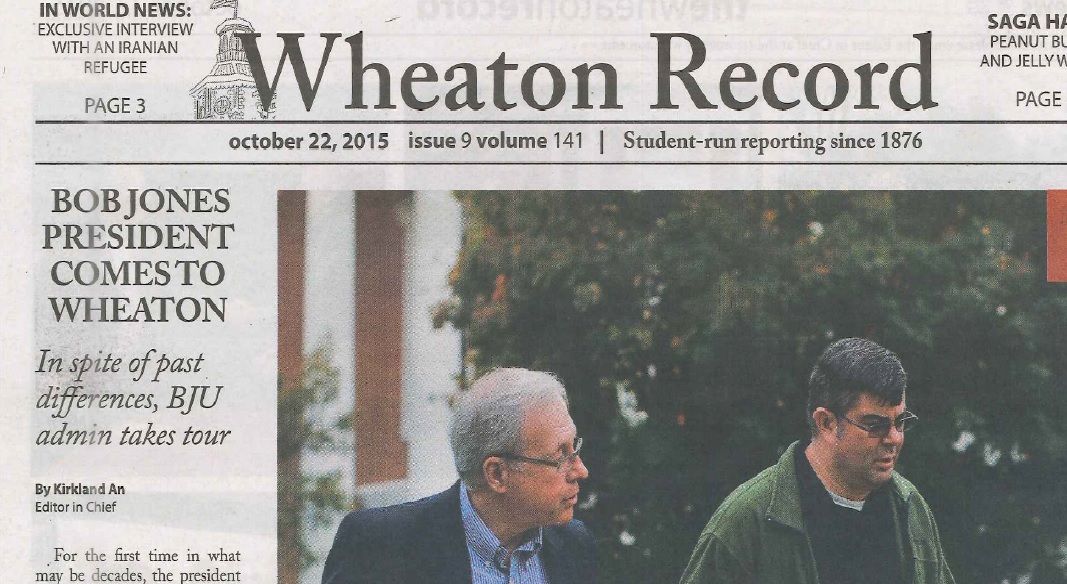
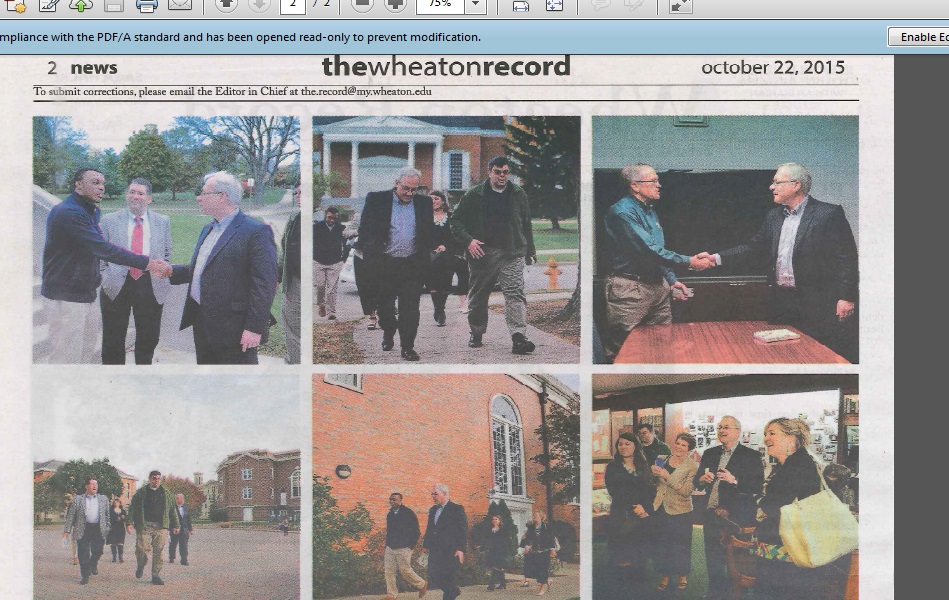
Maybe there’s hope for us all. In the world of evangelical higher education, the relationship between fundamentalist Bob Jones University and evangelical Wheaton College has always been a rocky one. According to a story in the Wheaton Record [sorry, not available online], last week BJU president Steve Pettit visited Wheaton’s campus, the first time a Jones leader has done so in a long time. There were smiles all around. Does this mean that the times they are a-changin?

Smiles, everyone, smiles...

Smiles, everyone, smiles…

For those who don’t know their history, last week’s visit may have seemed like no big deal. The leader of one evangelical college visited another evangelical college. What’s the big whoop? As I’m discovering in the research for my new book about the history of conservative evangelical higher education, this détente may signal an important shift in the worlds of fundamentalism and evangelicalism.

Since the beginning in the 1920s, leaders of the two schools fought viciously. BJU founder Bob Jones Sr. accused sitting Wheaton president J. Oliver Buswell of jealousy. Jones wrote,

Dr. Buswell and his field staff working under him were putting out propaganda everywhere that Bob Jones’ credits had no value and that we were misrepresenting facts when we told students that our graduates were admitted to leading graduate schools. . . . [Buswell is a] conceited, frustrated, ambitious, disappointed man.

Ouch. For his part, Buswell retorted that he had never said such things, had never been anything but friendly and helpful to Jones’s new school. What he had done, Buswell admitted, was protest against the sin-friendly policies at Bob Jones College. For those who don’t know their Wheaton history, it may come as a shock to find out that in the early days, Wheaton accused Bob Jones of not being fundamentalist enough. Wheaton’s President Buswell had critiqued Bob Jones’s new school in a review of a book of Jones’s sermons. The sermons themselves were first-rate, Buswell wrote.

But Dr. Jones, let me ask you a question or two. Your own educational program is reeking with theatricals and grand opera, which lead young people, as I know, and as you ought to know, into a worldly life of sin.

Double ouch.

Things never got much better from that point on. Bob Jones Jr., son of the founder and second president of Bob Jones University, told a story of his father’s traveling days. One time, Jones Sr. was on a train with some Wheaton students. One of the students, “trying to be very smart,” asked Jones how Bob Jones College could allow dramatic productions and still call itself fundamentalist. As Bob Jones Jr. explained,

Wheaton used to turn up their self-righteous noses at our drama, but they played inter-collegiate football, which we had had to give up at Bob Jones University because we found the people were betting on our games, littering our campus with whiskey bottles when they came out to see us play; and we found that inter-collegiate athletics were a definite blight to our spiritual lives.

By the 1970s, the relationship turned from one of frigid civility to outright hostility. In 1974, Bob Jones III officially changed the status of Wheaton in BJU’s internal coding system from “Friendly” to “Unfriendly.” Jones’s secretary explained the shift in an internal memo:

The above school or organization has been coded “F”; however, Dr. Bob III, has changed the code now to “U” to make our coding system more consistent. It has been a problem for some people because an organization or school would be coded “F” but we would treat them like “U” people.

From that point on, BJU officials would not even maintain their polite façade of cooperation with Wheaton officials. In 1977, an administrator from Wheaton wrote to Bob Jones III to ask for guidance in establishing a student drama program. He asked if Jones would offer some tips from its long experience with such programs. Through a secretary, Jones informed the Wheaton official, “because of the Neo-Orthodox position of Wheaton College, we are unable to give you the assistance you request.”

Pettit visits wheaton 2

No self-righteous noses here…

Given that protracted and ugly history, President Pettit’s visit to Wheaton’s campus seems revolutionary indeed.

Have things turned a corner? Does President Pettit’s visit really signal a thaw in this long evangelical cold war? Several signs point to yes.

First of all, Pettit is no Jones. For the first time in the history of BJU, the school is not led by a direct descendant of the founder. Maybe that gives Pettit a little more wiggle room to ignore family feuds.

Also, BJU is changing. It now claims accreditation as well as athletic teams. It has apologized for its history of racism.

Wheaton is changing, too. As did BJU in the 1970s and 1980s, Wheaton has tussled with the federal government. Just as BJU did in the 1980s, Wheaton insists that its religious beliefs must give it some leeway when it comes to federal rules.

If Wheaton sees itself pushed a little more out of the mainstream, and Bob Jones University pushes itself a little more toward that mainstream, they might just meet somewhere in the middle. There will always be some jealousy between these two giants of evangelical higher education, but it seems possible that the worst of the fundamentalist feud may have passed.

A Field Test for Progressive Education

I’ve spent the past few years of my life trying to figure it out.  What has it meant to be “conservative” about American education? It’s not as obvious as it might look. Similarly, it can be extremely tricky to figure out what makes something educationally “progressive.” Peter Greene offers what might be a handy field test.

A test for the tests...?

A test for the tests…?

As SAGLRROILYBYGTH are aware, my recent book argues that an identifiable tradition of “educational conservatism” emerged in the twentieth century. Speaking broadly, educational conservatives mixed free-market structures with Christian morality; they mixed traditional pedagogy with traditionalist social norms. Jesus and phonics, Friedman and fundamentalism. Time and again, conservative activists successfully asserted their right to be heard about textbooks, school rules, and classroom practices.

In recent months, I’ve been expanding my reading list to include more non-conservative arguments about education. One of my favorite progressive anti-testers has been Peter Greene at Curmudgucation.

Greene repeated his argument recently that there is an easy way to find out if any evaluation is authentic. Or, more precisely, he offers a quick way to decide if one is inauthentic:

The hallmark of inauthentic assessment is that it’s easy to cheat, because you don’t have to be good at what you’re allegedly being judged for– you just have to be good at the assessment task which, because it’s inauthentic, consists of faking proxies for the real deal anyway. What it really measures is the proxy-faking skills.

If we want a handy-dandy field guide to progressive education—a notoriously slippery concept to define—perhaps Greene’s warning might help.

We might call classroom practices “progressive” if they fundamentally make it impossible for students to cheat. Not by eagle-eyed watchfulness or elaborate security precautions, but because of the nature of the tasks themselves.

In a traditional classroom, for instance, information is transferred from teacher and textbook to student. The student is expected to incorporate this knowledge. At some point, a “test” will be administered, in which said student repeats back the knowledge. He is measured by how much and how well he repeats back the knowledge.

In a progressive classroom, in contrast, students will not have tests of that sort. Rather, they will be expected to make something, perform something, achieve something. Since the parameters are not set up in advance, it is impossible for a student to cheat.

For instance, if assessment is based on a student’s performance in a research-informed discussion, she is free to bring in as many notes as she wishes. If she is able to use that information in a coherent and convincing way, she will have done well on the project.

In a traditional classroom, methods of cheating are as traditional as the lectures themselves. Students cheat by writing facts on their arms, by copying answers from another student, or by any of an enormous corpus of tried-and-true methods.

Pssst...I find these methods of assessment inauthentic....

Pssst…I find these methods of assessment inauthentic….

Indeed, we might conclude that the overwhelming political support for traditionalist policies such as No Child Left Behind and Race to the Top results from the fact that progressive education has sunk such shallow roots in the United States. Even the most ardent fans of progressive education admit that it is “hard to beat, but also hard to find.”

By and large, progressive education—as classroom practice, not as political decision—has crashed on the reefs of testing. By and large, American parents and voters cling to the notion that “real” education means acquisition of knowledge. We cling to the idea that “real” education can be evaluated by “real” tests.

Is it true? I know SAGLRROILYBYGTH include self-styled progressives as well as self-styled conservatives. Do the “progressives” out there yearn for evaluations that simply can’t be cheated? And do conservatives agree that the heart and soul of real education can be measured with a good test?