School Punishes Girl for Modesty

It sounds like a dystopian fundamentalist fantasy: secular school wardens careening out of control, punishing religious students for having decent morals. But in France this week, a girl was really sent home because her skirt was too long.

Of course, things are different in France than they are in the United States. In France, public schools and institutions are governed by the rule of laïcité. No one may wear religious symbols to school, not headscarves, skullcaps, or big crosses.

In this case, “Sarah K.” was sent home when administrators decided her skirt represented religious garb. Like her friends and co-religionists at the school, Sarah had removed her headscarf as she went in. But her skirt still represented religious attire, school leaders believed. The principal wrote a note to her parents, according to the New York Times, warning them to “rectify her clothes if you want her to continue her schooling.”

"Ta jupe est trop longue..."

“Ta jupe est trop longue…”

In this country, we’ve seen our share of outraged religious conservatives kicked out of public schools for culture-war clothing issues. Remember the flap over the Romney shirt in Philadelphia? Or, up north, remember the kid who got kicked out for his “Life Is Wasted without Jesus” shirt?”

To this uninformed observer, Sarah K.’s case seems like an overreach by overzealous school officials. How can they decide if a skirt is part of a religious outfit, or if it is just a skirt? How can they conclude that Sarah K. intended for her maxi-skirt to be a statement of her religious faith?

The Coming Split at Conservative Colleges

Is your school for bigots?…Or for apostates? That’s the choice that conservative school leaders have faced throughout the twentieth century. And it is coming round again. As the US Supreme Court hears arguments about same-sex marriage in Obergefell v. Hodges, conservative religious schools and colleges should gear up for another divisive debate over equality and theology. If SCOTUS rules in favor of same-sex marriage, will evangelical and fundamentalist schools face a return to the hot tempers of 1971?

More bad news for conservatives...

More bad news for conservatives…

The case itself is a combination of cases from four states. In short, SCOTUS is trying to decide two issues: whether or not the Constitution requires states to allow same-sex marriage; and whether or not same-sex marriages in one state must be recognized by all states.

Conservative Christians have made their feelings clear. Among the hundreds of friend-of-the-court letters are one from the US Conference of Catholic Bishops and one from Governor Mike Huckabee’s advocacy group.

At the Christian Post this morning, we see nervous worries about the possible fall-out for conservative Christian schools. Justice Samuel Alito made an explicit reference to the precedent on every conservative’s mind: the Bob Jones University case. Back in 1970, the leaders of BJU refused to allow racial integration on their South Carolina campus. As a result, the Internal Revenue Service took away BJU’s tax-exempt status. By 1983, BJU had taken its case all the way to the Supreme Court. It lost.

Alito asked Solicitor General Donald Verrilli if the precedent would apply:

JUSTICE ALITO:  Well, in the Bob Jones case, the Court held that a college was not entitled to tax­exempt status if it opposed interracial marriage or interracial dating.  So would the same apply to a university or a college if it opposed same­ sex marriage?

GENERAL VERRILLI:  You know, I ­­ I don’t think I can answer that question without knowing more specifics, but it’s certainly going to be an issue. ­ I don’t deny that.  I don’t deny that, Justice Alito.  It is ­­ it is going to be an issue.

Conservatives worry that this might mean the end of religious schools and colleges. Should religious schools refuse to provide housing for same-sex married couples, the federal government could revoke their tax-exempt status. For most schools, that would mean a sudden and impossibly steep tax bill. When schools are already teetering on the brink of financial insolvency, it could certainly mean the end.

But that’s not all. If history is any guide, Christian school leaders should also prepare for another kind of crisis. Back in the 1970s, fundamentalist schools endured a vicious and destructive split over Bob Jones University’s position on racial segregation.

As I’ve been finding in the archives this past year, even schools that agreed with BJU’s fundamentalist theology sometimes disagreed with BJU’s position against interracial marriage. At the Moody Bible Institute, for example, leaders decided to cancel an invitation to pro-BJU fundamentalist leader John R. Rice. The decision subjected MBI’s leaders to withering criticism from fundamentalists nationwide.

Reporters and observers have noted that SCOTUS’s decision in this case might raise questions for leaders of conservative religious schools. Those leaders should also consider another likely outcome. If SCOTUS’s decision puts pressure on school leaders to recognize same-sex marriages, it might lead to another in a long line of bitter fights among schools.

Will conservative evangelicals and Catholics submit to the law of the land? Or will they resist, citing a higher authority? Will conservative schools lose their conservative credibility if they give in to the new cultural ethos?

It’s not going to be an easy choice. If I were the president of a conservative Christian school or college, I’d get myself ready for a lose-lose decision. Do I want my school to be labeled a bunch of fanatical bigots? Or would I prefer to join the ranks of schools that don’t take their religions very seriously?

But What about All the Dead Bodies?…

Forget about evolution and creationism for a minute. We see more evidence today that the first shot in many educational culture wars takes place not in science, but in history.

When it comes to schooling and culture wars, we spend a disproportionate amount of time talking about creationism and science. It makes sense. In that case, we see a stark and shocking disconnect between contending visions of proper knowledge for children.

But some of the most virulent culture-war battles happen over historical issues. Conservative Christians in the United States often embrace an historical narrative that is at odds with mainstream academic interpretations. Counter-historians like David Barton sell just as many books as do counter-scientists like Ken Ham. And the difference between mainstream academic history and dissenting Christian histories can be just as stark as the differences between the modern evolutionary synthesis and young-earth creationism.

In the United States, one of the most stubborn conservative dissenting histories has been that of neo-Confederatism. As David Blight demonstrated in his terrific book Race & Reunion, conservative history activists in the US South scored major successes in limiting public-school histories to those that flattered the losing side in the Civil War.

In nations around the world, culture-war conflicts often show up as debates over the nature of real history. In Japan, for example, the horrific crimes of the Japanese army in World War II are repeatedly minimized or even ignored in mainstream textbooks. In my own ancestral homeland of Estonia, a long Russian occupation has generated a kind of historic cognitive dualism. Most Estonians of a certain age know the pro-Russian history they got in their Soviet-era schoolbooks, but they don’t believe it. In contrast, Estonians tend to believe a folk history of heroic Estonian resistance, even though they don’t know much about it.[1]

In the pages of the New York Times this morning, we see another example of this kind of battle for history. In pro-Russian breakaway regions of Ukraine, new educational directives insist that the Soviet famine of the 1930s was not a Stalinist genocide, but rather a morally neutral tragedy that befell the entire Soviet Union.

Controlling the past to control the future...

Controlling the past to control the future…

According to mainstream historians, including especially Robert Conquest in English, the Ukrainian famine was anything but morally neutral. Instead, the famine—a tragedy that killed millions of people—was the precise goal of Stalinist policy. In order to bring restive provinces in line, Stalin intended for the region to suffer.

According to the NYT, the new “Fatherland History” hopes to emphasize the region’s long ties with Russia. It plans to minimize Ukrainian nationalist ideas. Igor V. Kostenok, the new minister of education in charge of the new historical guidelines, described the goal as the creation of “a culture, a culture for the Slavic world, for the Russian world.”

Will it work? Not likely. As is the case in every aspect of our educational culture wars, dissenting ideas have a way of surviving and even thriving in spite of official condemnation.

[1] See James V. Wertsch, “Is It Possible to Teach Beliefs, as Well as Knowledge about History?” in Stearns, Seixas, and Wineburg eds., Knowing, Teaching, and Learning History (NYU Press, 2000), pp. 38-50.

More Proof that Conservatives Won’t Win

Every once in a while a progressive pundit will howl a warning about the fundamentalist conspiracy. Watch out, we’re told, rich and sinister conservatives are organizing a vast army to mount an electoral coup of this great land. We see more proof today that these warnings are more fantasy than reality. The nature of conservative religion tends to work against any insuperable fundamentalist coalition.

The end is near...

The end is near…

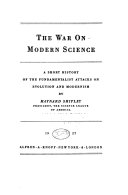
From the beginnings of America’s modern culture wars, fundamentalist-watchers have warned of the coming fundamentalist storm. In his 1927 book, The War on Modern Science, Maynard Shipley warned that the fundamentalist “forces of obscurantism” threatened to overthrow real learning. As Shipley put it,

The armies of ignorance are being organized, literally by the millions, for a combined political assault on modern science.

Ever since, science writers have warned of this impending threat. Isaac Asimov, for instance, warned in 1981 of the “threat of creationism.” Such unified anti-scientists, Asimov believed, had made great strides toward setting up “the full groundwork . . . for legally enforced ignorance and totalitarian thought control.”

Yikes.

But these Cassandresque warnings tell us more about Asimov and Shipley than they do about real fundamentalists. In practice, the nature of conservative Protestantism in America has usually made any sort of collective action impossible.

In the 1950s, to cite only the most obvious historical example, fundamentalists split from evangelicals over the question of Billy Graham’s crusades. Fundamentalists refused to embrace Graham’s wildly successful outreach, in spite of Graham’s conservative theology. Why? Because Graham also worked with liberal and progressive Protestants. Instead of making a pragmatic decision to support Graham as the least-bad option, fundamentalists instead clung to a purer separatism.

Conservatives' best hope?  Or biggest threat?

Conservatives’ best hope? Or biggest threat?

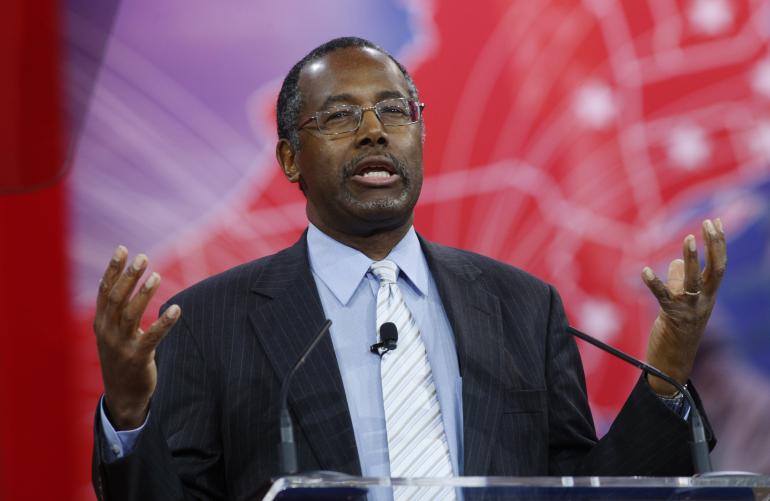
These days, too, conservative Protestants often refuse to win. Most recently, we see a protest among conservative Calvinist Southern Baptist pastors against conservative Seventh-day Adventist Ben Carson. As we’ve noted in these pages, Dr. Carson is a profoundly conservative religious thinker. And he seems like the best hope of religious conservatives in the 2016 elections.

Yet as Christianity Today reports, Southern Baptist conservatives have dis-invited Carson from their annual meeting. Carson’s Seventh-day Adventist beliefs, some SBC pastors noted, put him at odds with Baptist orthodoxy.

They’re right, of course. Seventh-day Adventism holds to many peculiar theological doctrines, including those in the prophetic writings of Ellen G. White.

But the refusal of Calvinist Southern Baptists to welcome a prominent Seventh-day Adventist helps demonstrate why Isaac Asimov and Maynard Shipley could have relaxed. Among conservative Protestants, suspicion and even virulent hatred of theological near-neighbors have long roots. The notion that a fundamentalist army—a creationist army—is organizing in conservative colleges and meetings just doesn’t match reality.

Could conservatives win? Sure. But intra-conservative clashes like this show how difficult it is for conservative Protestants to act together.

Can It Work?

Is it possible for conservative religious people to know and understand evolution without believing it? And, if it is possible, what does it look like? What does it mean? At the ever-challenging Cultural Cognition blog, Dan Kahan challenges the notion of “cognitive apartheid.” Do Professor Kahan’s ideas match real experience?

As the sophisticated and good-looking regular readers of I Love You but You’re Going to Hell (SAGLRROILYBYGTH) are aware, I’ve written a new book with philosopher Harvey Siegel suggesting a different approach for evolution education. Too often, the implicit goal of evolution education is to encourage student belief in evolution. Students from families who dissent are sometimes made to feel unwelcome in public schools, as if their dissent disqualifies them as science students. Instead, we argue, the goal of evolution education must be to foster knowledge and understanding of evolution. If students choose not to believe it, that is their right.

But is it possible? It seems difficult to know something and not believe it. Do I really know that 2 + 2 = 4 if I don’t believe it, like some sort of Orwellian thought-victim?

Studies of real students have shown that it is not only possible, but a relatively common practice. In 1996, W.W. Cobern suggested that resistant students commonly practice what he called “cognitive apartheid.”[1] Students who don’t want to believe the philosophical or religious implications of evolutionary theory, Cobern thought, could segregate out those ideas for use only in specific situations. When they needed to pass a science test, for example, students could pull up their knowledge of evolutionary theory, but in other contexts, they could keep those ideas separate from the rest of their thinking.

In a 2012 study, Ronald S. Hermann looked at the ways this apartheid worked in practice. Hermann located students who did well on tests of evolutionary ideas. Then he talked to two of them who knew and understood evolutionary theory very well, yet refused to believe it. “Krista” and “Aidan” both described the ways this process worked for them.

For those of us from secular or liberal religious backgrounds, these interviews provide fascinating insights into the ways conservative religious people justify their seemingly conflicted knowledge and belief. Hermann argues that the mental processes involved are “unclear and ambiguous in nature.”

For Aidan, his thorough knowledge of evolutionary science jostled along uncomfortably with his religious beliefs. As he tried to explain to Hermann,

I don’t know enough to make a real good judgment. I just try and take the Bible as its literal interpretation, and kind of leave the science stuff alone.

Krista had an even more complex relationship to evolutionary knowledge. As Dan Kahan points out, she did not simply wall off her knowledge in one segregated part of her brain. That is, she did not simply memorize a list of facts for use on rare occasions such as tests. Rather, she served as a tutor in Hermann’s class and planned a career as a veterinarian. She was able to teach evolutionary concepts to other people. And she planned to use basic evolutionary ideas in her future career. Yet she says she does not believe them.

From the snippets of her interview provided by Hermann, Krista does not seem to wall off evolutionary knowledge in her mind. Rather, she seems to be able to switch back and forth from knowing it and using it in some situations, to disbelieving it in others. Or, more precisely, she seems to know evolution in a different way. She tells the interviewer at one point, “I don’t think I, like, put my emotion into it.”

Professor Kahan wants to call this something other than “cognitive apartheid.” A better description, he suggests, is “cognitive dualism.” Some people, from Pakistan to Kentucky, seem to believe mainstream science at work, but disbelieve it at home.

In K-12 public schools, too, I think we see similar effects. Students tend to believe all sorts of things at school, then switch to a different set of beliefs at home. This is not only about controversial ideas in science, literature, or history. Rather, students do this constantly with their social identities. They might be one kind of person at school, with peers and teachers, then present a very different persona to their families at home.

As usual, I don’t have much personal experience with this kind of cognitive struggle, whether it be “apartheid” or “dualism.” Have you experienced such struggles in your life? Do you remember maintaining a dual belief system in your youth, only to move more firmly in one or another direction as you grew older?

[1] Cobern, W.W. Worldview theory and conceptual change in science education. Science Education 80, 579-610 (1996).


Racist Fundamentalists…It’s Complicated

Sometimes the archives can make things too complicated. White fundamentalists have always been accused of racism—a charge they’ve vehemently denied. But what do we do when an African American fundamentalist agrees with the racism of his white fellow fundamentalists?

First, a quick historical sketch: Since the 1920s, as I argued in my first book, fundamentalism got tangled up with ideas about Southern Pride. Conservative religion has often become part and parcel of a broader cultural conservatism, one that included support for racial segregation and white supremacy.

Racist? Or just fundamentalist?

Racist? Or just fundamentalist?

By the 1970s, leading white fundamentalists became some of the most public supporters of racial segregation. Most famously, Bob Jones University steadfastly clung to its whites-only policy long after many white Southerners and white fundamentalists had grudgingly moved on. Some historians, such as Randall Balmer, have insisted that white racism among fundamentalists was the real root of the so-called New Christian Right that emerged in the 1970s.

I disagree. There is no doubt that white fundamentalism—especially in the South—has long had close ties to white racism. There is more to the story, however, than quick condemnations of conservative religion as a front for white supremacy.

In my recent work at the archive of the Moody Bible Institute, I came across a document that reminds us how messy history is. In 1970, the leaders of Moody dis-invited prominent fundamentalist John R. Rice from Moody’s big annual Founder’s Week event. Why? Because Rice had come out in support of the segregationist policies of Bob Jones University.

As President William Culbertson informed members of the Moody community,

Moody Bible Institute has for 85 years welcomed young people of all races and nationalities to its tuition-free training in the Bible. Through times of changing social mores the policy has always been to emphasize the salvation from God by which all men who believe are made one in Christ. We have sought, and do seek, to apply the spiritual principles set forth in the Word of God to the practical problems of our culture. We believe that there is nothing in the Bible that forbids interracial relationships. We are absolutely opposed to injustice and exploitation. We are dedicated to the proposition that we are debtors to all men.

Moody Bible Institute, Culbertson told anyone who would listen, still agreed wholeheartedly with John R. Rice’s fundamentalist theology. Moody refused to compromise with those who would modernize the Bible or water down fundamentalist religion. But Moody could not be seen as part of a racist, segregationist movement.

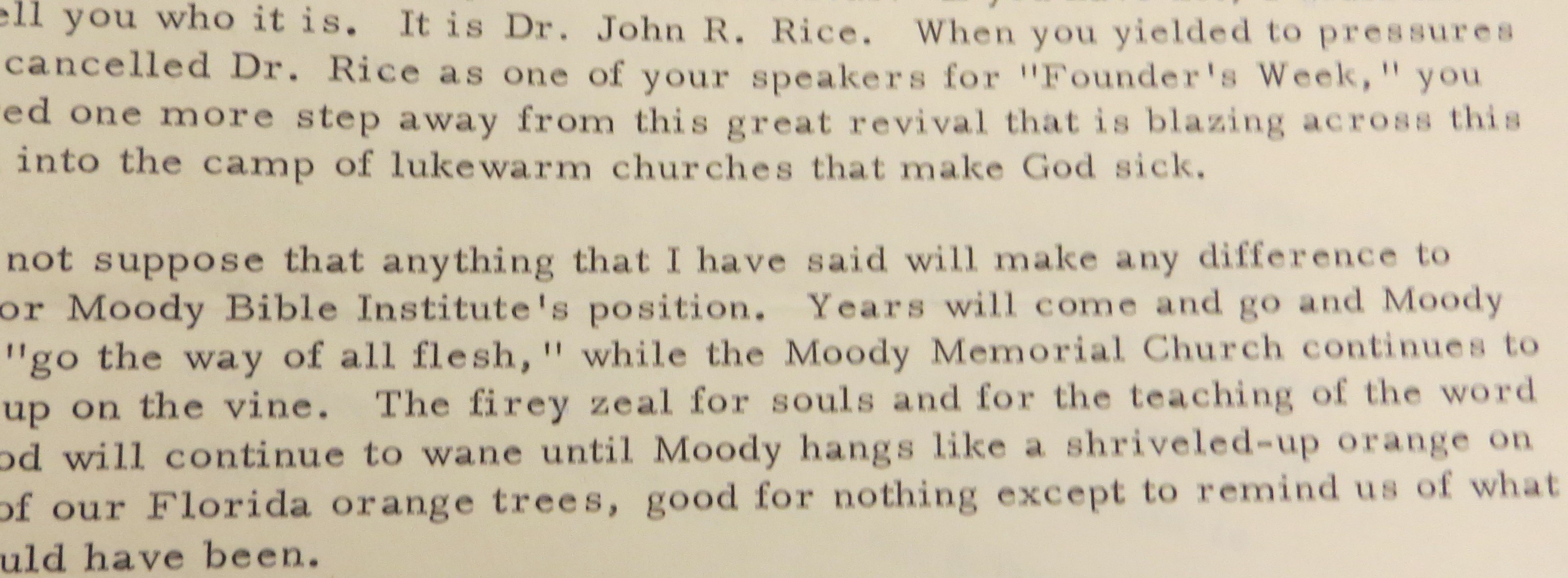
Naturally, John R. Rice and his supporters blasted this decision. More evidence, one Rice supporter charged, that Moody had

moved one more step away from the great revival that is blazing across this land into the camp of lukewarm churches that make God sick. I do not suppose that anything that I have said will make any difference to you or Moody Bible Institute’s position. Years will come and go and Moody will ‘go the way of all flesh,’ while the Moody Memorial Church continues to dry-up on the vine.

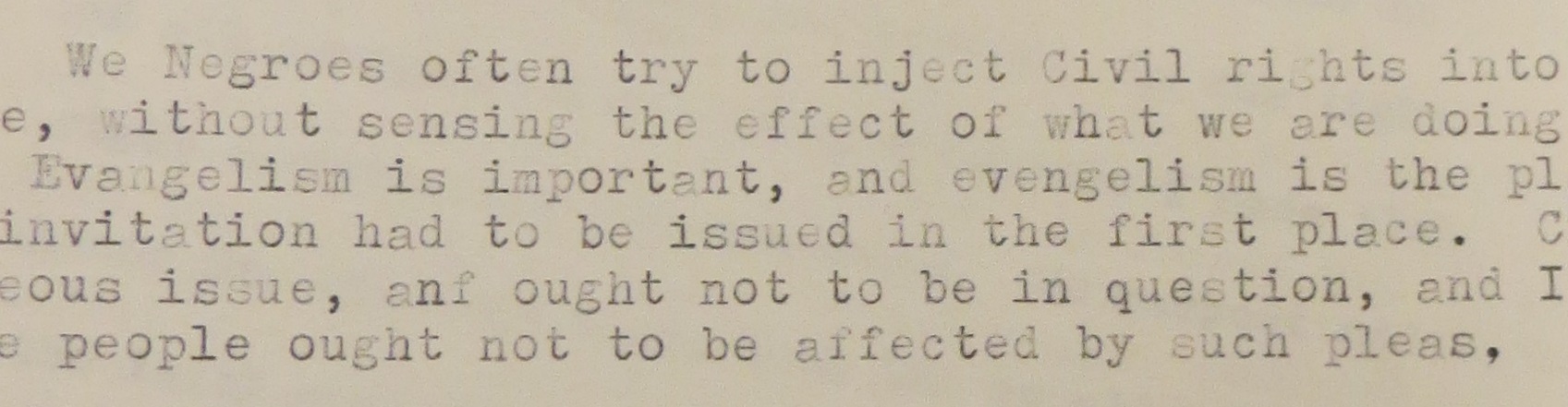
Among the fat stack of angry letters supporting John R. Rice, one stands out. It came from William H. Dinkins of Selma, Alabama. Dinkins was an African American fundamentalist and, in his words, someone who “stand[s] with Dr. Rice for fundamentalism and the old-time religion and all that goes with it.” Too often, Dinkins charged, “We Negroes [sic] . . . try to inject Civil Rights into every circumstance, without sensing the effect of what we are doing.” When it comes to religion and the Word of God, Dinkins continued, “Civil Rights is an extraneous issue, and ought not to be in question, and I feel that responsible people ought not to be effected by such pleas.”

The view from Selma, 1971

The view from Selma, 1971

Dinkins’s letter raises difficult questions about race and religion. First of all, we wonder if this letter was legitimate. Could someone have faked it in order to create an impression of biracial support for racial segregation? If not, we wonder how common such sentiments have been. As historian Jeffrey Moran has argued, white fundamentalists have long tended to ignore their African American co-religionists, at best. And, as John Dittmer and others have showed, in the early days of the Civil Rights movement many African American leaders in the Deep South supported segregation, at least temporarily and pragmatically.

In the early 1970s, was there really any support for racial segregation among African American conservatives? Did fundamentalism trump race?

Phonics for Phundamentalists

How can conservative religious people save their children from a monstrously hypertrophied public school system? In the pages of the Christian Post, Paul de Vries offers a few suggestions to restore the educational prerogatives of conservative families and churches. Could they work?

De Vries, an evangelical philosopher and school leader, suggests a religious solution to angst over high-stakes Common-Core tests. In short, de Vries wants to “restore” the “prize-winning, God-ordained architecture of education that made our country great.” Instead of passing off education to the public-school system, de Vries writes, conservatives need to increase the educational role of the family and the church. Not only can this plan help students learn to read and cipher, but it will inject a dose of Christian morality and soul-winning into a woefully secularized system, de Vries believes.

He offers a menu of specific things conservative religious people can do to assert more control over education. For instance, churches can offer Saturday school in phonics instruction to all the kids in their neighborhoods. It would be a win-win. Young people would get better reading skills, which would help them in their education and standardized school tests. Churches would get more people to heaven, by using the Bible as the only textbook, instilling a deeper appreciation for the Christian Gospel in all the kids of the neighborhood.

Could it work? De Vries says that it does already. Calvary Baptist Church in Manhattan, one of the foundational churches of the fundamentalist movement in the 1920s, already runs a program like this.

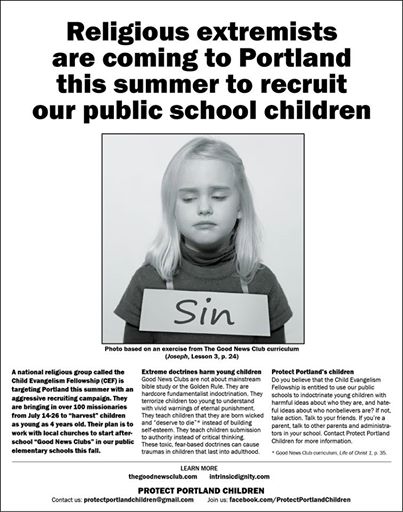
Save Our Children from Jesus!

Save Our Children from Jesus!

Elsewhere, though, religious add-on programs have run into trouble. In Portland, Oregon, for example, parent activists mobilized to spread the word about Christian attempts to spread the Word to children. As the sophisticated and good-looking regular readers of I Love You but You’re Going to Hell (SAGLRROILYBYGTH) may remember, in that case the Child Evangelism Fellowship promised to educate kids about God and phonics in fun-filled after-school programs. The CEF had the Supreme Court on its side, but non-evangelical parents promised to block access to unwary children.

Professor de Vries hopes that parents will want educational success badly enough that they’ll send their children to Saturday morning church-school. The phonics program, he hopes, will be an attractive lure for children who might otherwise never enter a church.

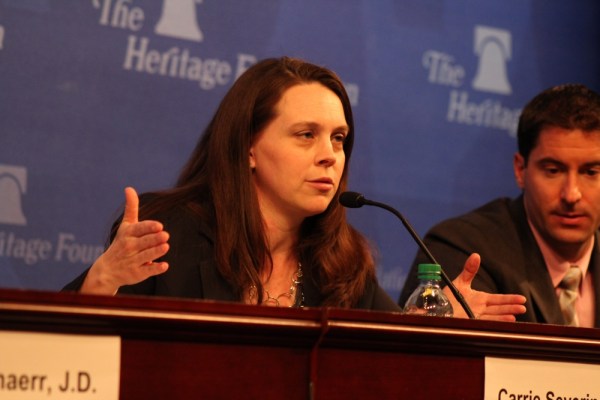
The Biggest Creationists in the World

Is Christianity the most creationist religion?  Islam?  A new study from Europe, Africa, and the Middle East suggests some surprising conclusions about the relationship between religion and creationism.

The study by Pierre Clément of the Université de Lyon used a questionnaire distributed to teachers throughout Europe, Africa, and the Middle East.  Fifteen of the questions had something to do with evolution.

Creationist hotspot, whatever your religion...

Creationist hotspot, whatever your religion…

Perhaps not surprising, in countries where teachers tended to be more religious, they also tended to be more creationist.  In Algeria, for example, 91.9% of respondents identified as Muslim.  Only 1.3% called themselves atheists or agnostic.  And over 90% of those Algerian teachers thought that “Only God” was responsible for the origin of humanity.

Compare that to France, where just over half of teachers identified as atheist/agnostic, 38.1% called themselves Catholic, and 1.5% said they were Muslims.  Only about 2% of French teachers thought that “Only God” was responsible for the creation of humanity.

The authors had wondered if Islam tended to push teachers harder toward creationism than did Christianity.  That is, do Muslims tend to be more creationist than Christians?  Their conclusion: Not in these countries, it seems.  As Clément put it,

There is not a specific effect on the Muslim religion itself on the teachers’ conceptions of evolution, but a more general effect of their degree of belief in God, whatever their religion.

In creationist-heavy countries, that is, Christians and Muslims agree.  On creationism at least.

Hot & Bothered in Binghamton, New York

Clear your calendars! Next Friday Jonathan Zimmerman will be coming to scenic Binghamton to give a talk about his new book.

Zimmerman is a prolific historian and public intellectual. You may have read his blockbuster books such as Whose America? Culture Wars in the Public Schools. Now you can get your hands on his latest, Too Hot to Handle: A Global History of Sex Education. You may also have seen him in the pages of the New York Times or on The Daily Show.

Who's for it?

Who’s for it?

Next Friday, May 1st, at 4:15 in the Admissions Center, Binghamton University will host Professor Zimmerman for our 23rd annual Couper Lecture. In the past, this lecture series has brought to our campus such luminaries as Bill Reese, Michael Apple, Maris Vinovskis, and many more.

As the sophisticated and good-looking regular readers of I Love You but You’re Going to Hell (SAGLRROILYBYGTH) are well aware, sex ed is one of the touchiest topics in America’s continuing culture wars. What should schools tell students about sex? How much is too much?

In his new book, Professor Zimmerman explodes the boundaries of these debates. The culture war over sex ed, Zimmerman argues, is not merely between conservatives and liberals in the USA. Rather, worries about the right relationship between sex and children spread from the US to cover the globe during the twentieth century.

So slip on your smarty-pants and come on over to our scenic campus. All are welcome, but registration is requested.

Bizarre Attacks on Conservatives

Watch out! Conservative ideas might subject you and your family to thuggish home invasions. Even more creepy, conservative ideas might get you erased from your own personal history. As we observe American conservatism from the outside here at ILYBYGTH, we’ve noticed the steady stream of conservative complaints about persecution. Today’s crop of victim alerts, though, rises to a new level of weirdness.

As one sophisticated and good-looking regular reader of I Love You but You’re Going to Hell (SAGLRROILYBYGTH) noted recently, conservatives are not the only ones to emphasize their own status as victims. Patrick asked,

Who doesn’t emphasize their own victimhood these days? Perhaps the question should be why doing so has become an American tradition. One way of looking at it is to point out that we are an optimistic bunch, perpetually hopeful that if we consistently expose unfairness and hypocrisy, we will help solve the problem by raising awareness of it. Why else would the news always be so depressing?

It makes intuitive sense that every side in our tumultuous culture wars would complain loudly about their own suffering. It is the same dynamic as any family squabble. Victims get justice. Aggressors get punished, at least in theory.

Bubbling up from the conservative commentariat this morning we find two new claims to victimhood. In Wisconsin, we hear, conservative activists have been subjected to jackbooted attacks. And one high school has taken steps to erase its memory of one of its conservative graduates.

First, to Wisconsin: David French’s exposé of hardball culture-war politics tells the story of mild-mannered conservative families subjected to brutal attack. In the aftermath of Wisconsin’s Act 10, conservatives have been targeted as part of a concerted campaign to embarrass and humiliate them. In short, according to French, Milwaukee District Attorney John Chisholm pushed a “John Doe” investigation of Wisconsin conservatives.

In this kind of investigation, proceedings are kept secret. Investigators have wide latitude to seize relevant documents. As a result, conservative activists had their homes invaded by terrifying police agents. Doors were pounded on. Floors were stomped on. Children were shaken out of bed. Neighbors gathered and gaped. Conservatives were threatened. Computers and phones were seized. Dogs barked.

As French put it, “For select conservative families across five counties, this was the terrifying moment — the moment they felt at the mercy of a truly malevolent state.”

These raids turned at least one Wisconsin conservative into an outlaw, in her imagination at least. As she explains,

I used to support the police, to believe they were here to protect us. Now, when I see an officer, I’ll cross the street. I’m afraid of them. I know what they’re capable of.

Yikes.

Conservatives targeted for home invasions precisely because of their conservative activism. Police used as intimidation agents, to harass and intimidate political activists. All bluster aside, these are profoundly disturbing charges.

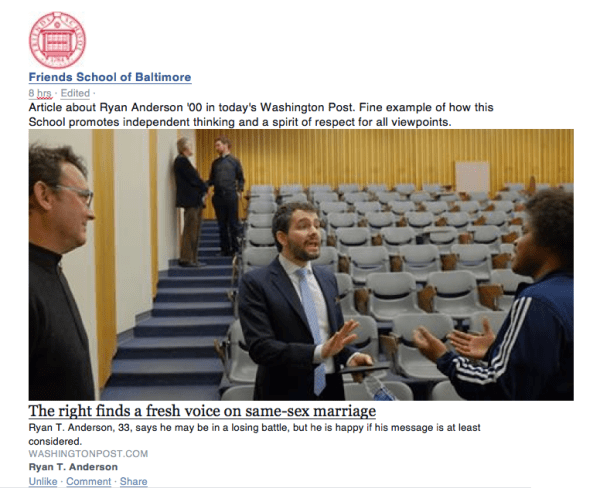
Even more bizarre, though, is the story coming from a Baltimore high school. Ryan T. Anderson, an outspoken opponent of gay marriage, was first lauded, then removed, from his high school’s Facebook page.

Anderson had been the subject of a front-page story in the Washington Post. The article called Anderson a “fresh voice” for traditional marriage.

At first, according to a story in the Heritage Foundation’s Daily Signal, Anderson’s high school posted news of this alumni success on its Facebook page. Later, the school took down the post. Why? In the words of school head Matt Micciche,

I can understand why the belief that Mr. Anderson’s views were being endorsed by the school would be deeply troubling to some members of our community. The nature of these views goes beyond the realm of abstract political ideology and calls into question the fitness of same-sex families to raise children and the right of gay and lesbian citizens to marry the person they love. While Mr. Anderson undoubtedly has the right to express such views, by posting this article we created legitimate confusion as to whether or not they were being validated by the school.

Maybe it is less scary to be removed from Facebook than to have one’s house broken into by aggressive police, but the implications of this Baltimore story are, IMHO, more sinister.

We're proud of our alumni!  Oh, wait...no.

We’re proud of our alumni! Oh, wait…no.

By removing notice of the significant conservative accomplishments of Anderson, his alma mater, in effect, suggested that conservatism is somehow shady, illegitimate, disreputable . . . even shameful.

I don’t say this as an endorsement of Anderson’s ideas. Nor do I claim to understand the intricacies of Wisconsin’s culture-war politics. For those of us trying to understand conservatism and the culture wars, though, both these stories raise important questions:

  • Is it legitimate to oppose same-sex marriage?
  • Do conservatives have a claim to victimhood?
  • Do these strange stories offer proof that conservative thinkers and activists have been uniquely and unfairly persecuted?