I Love You but You Didn’t Do the Reading

Welcome to your weekly round-up of ILYBYGTH-themed stories from around the interwebs. Thanks to everyone who sent in tips.

Nun in the huddle! Sister Jean and March Madness, at NYT. HT: DW.

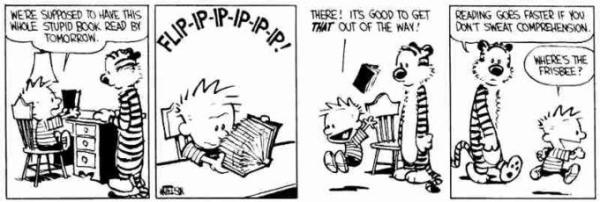
calvin reading

My kind of Calvinism…

White evangelicalism—the church of the “slave state,” at Forbes. [Editor’s note: The original Forbes article was taken down as “way out of bounds,” but the text is still available at this new link. Thanks to alert reader for pointing it out.]

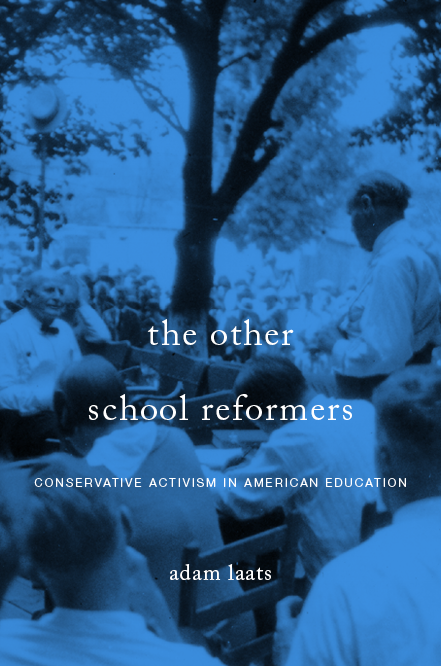
Don’t have your copy of Fundamentalist U yet?

Campus cults and “passion plays:” “War on Cops” author Heather MacDonald talks with “What’s Happened to the University” author Frank Furedi at CJ.

What do college students think about free speech on campus? New poll numbers at KF.

What does Queen Betsy think? A tough interview at 60 Minutes.

Creationist Ken Ham praises the Oklahoma university that welcomed his lecture—see his op-ed at KHB.

The view from Greenville: An instructor at Bob Jones U explains why he voted Trump, at HNN.

Dripping Wax: Professor Amy Wax suspended from teaching mandatory class after latest disparaging racial remarks. At IHE.

Is the Museum of the Bible just an evangelical missionary outfit “masquerad[ing] as an educational institution”? That’s the charge at R&P.

Teacher pay and underpay: Check your state at Vox.

Students who walk out should be punished. So says Daniel Willingham. HT: XX

Too close for comfort? Ben Carson’s aide chummy with secretive religious charity, at the Guardian. HT: LC.

Fundamentalists Forget their Furious Family Feud

Maybe there’s hope for every family feud. The death of Billy Graham last week inspired an outpouring of love and respect from people whose fundamentalist forefathers loathed Graham’s revivals. Creationist impresario Ken Ham, for example, never one to water down his fundamentalist faith, had nothing but praise for Graham’s ministry. The archives tell a much different story.

Some of today’s no-compromise conservatives seem to have forgotten the legacy of their fundamentalist forefathers. Ken Ham, for example, praised Graham’s evangelistic outreach. As a child he listened to a Graham rally in Australia. As Ham recalled,

I remember people going forward in this church after listening to him and committing their lives to Christ.

Of course, it’s never kosher to speak evil of the dead. Ken Ham, however, lauded the whole body of Graham’s evangelistic outreach, from the 1950s through today. Ham included no whisper of accusation about Graham’s work.

Does he not know the backstory? Or have fundamentalists given up their ferocious feelings about Graham’s revivals in the 1950s?
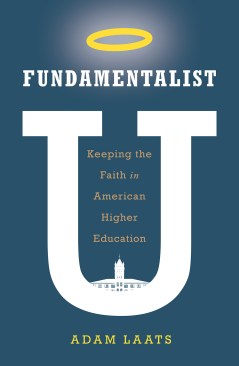
Cover art final

Yes, there is a place to read the full story…

To be sure, Graham’s passing has attracted some criticism from intellectuals. Historian Matthew Avery Sutton blasted Graham’s reactionary politics. D.G. Hart recalls the fact that many conservative Protestants were “not exactly wild about Graham’s ministry.”

The epochal anger and denunciations sparked by Graham’s outreach, however, seem to have been forgotten by some latter-day fundamentalists themselves.

I look into this history in my new book about evangelical higher education. In a nutshell, Graham’s revivals split the conservative evangelical community. The sticking point was follow-up. At Graham’s hugely popular services, audience members who felt Jesus’s call were put in touch with a sponsoring church. Those churches included more liberal Protestant churches as well as more conservative ones.

Fundamentalists worried that Graham’s preaching was leading souls directly into the pit of hell, by sending them to false churches to learn poisoned theology. These fears weren’t limited to a few right-wing wackos; they were a prominent part of conservative evangelical thinking in the 1950s, 1960s, and 1970s.

In 1963, for example, Samuel Sutherland of Biola University denounced Billy Graham. To a correspondent who accused Sutherland of cooperating with Billy Graham, Sutherland wrote,

I do appreciate the truth found in the Word of God which Billy Graham proclaims.  We appreciate also the souls that are saved and who find their way to Bible-believing churches and thus are nurtured in our most holy faith.  We deplore quite definitely, and have said so publicly, that there are so many doctrinally questionable individuals who are identified in prominent ways with the campaign and we are disappointed beyond words in the knowledge that so many of those who profess faith in the Lord Jesus Christ at the crusades will doubtless find their way into churches where the Word of God is not proclaimed and where they will not have a chance to know what the Gospel is all about or what it means, actually, to be born-again.  I am with you.

In 1971, one outraged fundamentalist wrote to Moody Bible Institute President William Culbertson to express his disgust at the Graham crusades. As he put it, the Graham crusades only sent people into false churches, such as “Luthern” [sic], “Jehovah’s Witnesses, Seventh Day Adventists, Christian Scientists, etc.”
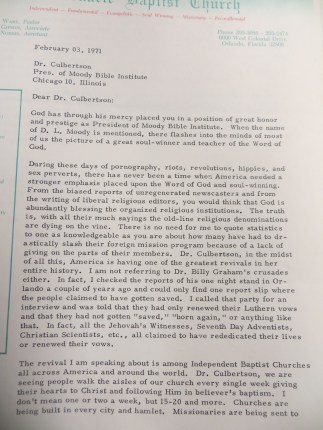
anti culbertson anti graham letter 1

Fundamentalists didn’t like Billy Graham…

For a fundamentalist, that was a serious accusation.

Such accusations flew fast and furious around the world of fundamentalist higher education. The magazine of Biola University ran one typical reader letter in 1958. Reader Dorothy Rose condemned Graham as a false Christian and a servant of world communism. Rose warned (falsely) that Graham had been expelled from two “outstanding, sound Bible colleges.” As Rose wrote direly,

It is easy to be popular with the high-ups and with the press if we are willing to compromise.  But what is the cost spiritually?

No one denounced Graham more fiercely than Graham’s former mentor Bob Jones Sr. In 1958, for example, Jones wrote to a fundamentalist ally,

No real, true, loyal, Bible friend of Bob Jones University can be for the Billy Graham sponsorship . . . . [Billy Graham is] doing more spiritual harm than any living man.

Fundamentalists have come a long way. When it comes to the legacy of Billy Graham at least, no-compromise conservatives seem to have forgiven, or more likely, forgotten the divisive nature of Graham’s ministry.

Billy Graham and Bob Jones

The news is in: Billy Graham has passed away at age 99. I’m not among his evangelical followers, but over the past several years I’ve gotten to know Billy Graham as I’ve worked on my new book about evangelical higher education.

Billy Graham

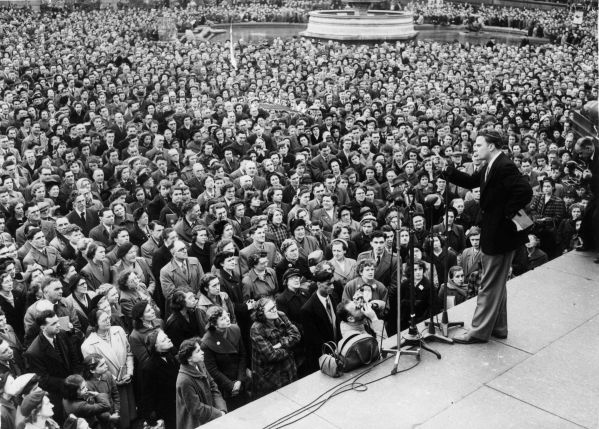
Graham preaching to the multitudes, London 1954.

In the 1940s and 1950s, Graham became the embodiment of a new spirit among American fundamentalists. He reached out to other Protestants to help lead big revival services all across the world. Some fundamentalists thought he went too far. (For details, check out my archival survey of fundamentalist fury about Graham’s revival successes.) As I note in my book, Bob Jones Sr. in particular had a long and tempestuous relationship with Graham.

Graham had started his college career at Bob Jones College. After a year, though, Graham left, ending up with an anthropology major from Wheaton. Jones and Graham kept in close contact and their correspondence is the best single source I’ve found to understand the rift between fundamentalists and new-evangelicals.

By the 1950s, Jones actively warned fundamentalists not to trust Graham or any institution that welcomed Graham. Jones’s letters show both the reasons and the personal anguish involved. Below I’ll quote from a five-page single-spaced letter Jones wrote to Graham in 1951.

                Here is the difference between your mistakes and mine: My mistakes grew out of the way I did things because I did not know how to do them.  After I got the right kind of advice, I quit making them.  Your mistakes have not grown out of your lack of information or your inability to get information.  Your mistakes have grown out of the fact that you are not building your evangelistic campaigns on the right foundation and the right principles.  Billy, if you build a house on the right foundation, the storms and wind may blow that house down, but you do not have to ever rebuild the foundation. . . .

In your heart, you love Jesus, and you are happy to see people saved; but your love for glamour and your ambition (which is the strongest ambition I have ever known any man in evangelistic work to have) and your desire to please everybody are so dominant in your life that you are staggering from one side of the road to the other. . . . You, in your effort to please, are putting yourself on the spot. . . .

Most of the material that goes out about you, you put out. . . .

I could tell you much more, Billy; but it does not do any good to talk to you.  You will agree with a fellow, but you go on just as you are, and that is the discouraging thing about it. . . .

You are popular like any showman is popular, but you have no real grasp upon the hearts of the people like Billy Sunday and other men had. . . .

[When you were young, you begged me] to call you one of my boys and told me that you got your slant on evangelism at Bob Jones  University.  My evangelistic heart was touched, and I put about you the arms of evangelistic affection.  I came back here to the school and told everybody that you were one of our boys.  I did not tell them what kind of a record you made here.  I took at face value what you said about going to Florida because of your health.  I asked all of our boys to pray for you.  I asked my friends to pray for you.  Remember, Billy, that was before you made the headlines. . . .

you began to think that probably the best thing for you was at least on certain occasions and in certain places not to let people know that you were here [as a student at Bob Jones College] and that, as you had said, you got your slant on evangelism here.  So you began to sort of soft pedal. . . .

Now that you are in the headlines, the fact that I ever said that you were one of our boys because you told me to, and people know about that, and you cover it up gives the idea that we are trying to hang on to your coat tail because you are in the headlines; but we are not, Billy. . . .

I still love you…

The Ugly Truth: Sex Abuse at Evangelical Colleges

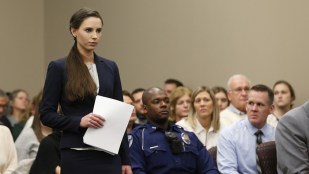
I wish it were a shock or a surprise. Instead, the terrible stories coming out of the Larry Nassar case are all too familiar: young people threatened and abused, an abuser tolerated for the sake of victory, the whole story hushed up. Why did so many responsible adults look the other way? One phrase from gymnast and whistleblower Rachel Denhollander struck me: “not simple institutional protectionism.” Denhollander sees it as a theological problem, but in the research for my new book about evangelical colleges, I found a more complicated truth.

rachel denhollander

Denholland testifies…

Of course, the demon of sexual abuse and institutional cover-up is not a problem for evangelical churches and colleges alone. The Catholic Church, big football schools like Penn State, and in the Nassar case, Michigan State all have an atrocious record of institutional protectionism.

However, I argue in my book that evangelical colleges faced a peculiar double-pronged problem. First, in the early years of the fundamentalist movement, leaders were keen to protect the reputation of their controversial movement. Second, without an outside arbiter—a denominational convention or presbytery or Vatican—fundamentalist institutions tended to turn into self-contained fiefdoms. The thoughts and plans of charismatic leaders tended to become authoritative, if not authoritarian.

A couple of examples will illustrate the trend. In the 1930s, Denver Bible Institute was wracked with a gruesome sex-abuse scandal. The accused leader and perpetrator, Clifton Fowler, turned to a blue-ribbon panel of Bible-institute worthies to clear his name. The panelists tried hard, in the words of the chair, to keep their investigation a “strictly private matter among Christian brethren.” They wanted to find out the truth about Fowler, but they didn’t want to publicize it. They were worried about the reputation of fundamentalism as a whole and Bible institutes in particular. It wasn’t a cover-up, exactly, but it was a form of discouraging complaint and public outcry.

This sort of “institutional protectionism” isn’t exactly theological, but it has been a tradition written deep into the bones of conservative evangelical and fundamentalist institutions since the 1920s. The movement has always had a sense of beleaguered outsider status, of being ripped off and usurped, kicked out of its rightful role as leaders of denominations and higher education. Certainly, this sense of hyper-defensive circle-the-wagons clubbishness is related to the theology of fundamentalism, but it is not itself a theological notion.

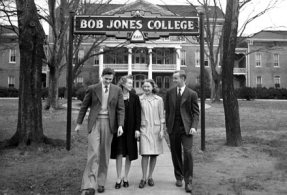
Maybe one more example will help illustrate the tradition. At Bob Jones College during its Tennessee years (1933-1947), founder and president Bob Jones Sr. established the patterns that guided the school for decades. Unfortunately, those patterns also fostered and abetted sexual abuse. During the 1930s, Jones established his rule against “dirty gripers.” Anyone who complained—faculty and students alike—about conditions at the school, Jones insisted, was not welcome. As Jones put it in a chapel talk:

we are not going to pay anybody to ‘cuss’ us. We can get ‘cussin’’ free from the outside. . . . We have never been a divided college. . . . Gripers are not welcome here. If you are a dirty griper, you are not one of us.

It is not difficult to see how this rule discouraged student victims from coming forward. With no other authority to turn to, evangelical colleges like Bob Jones College sometimes deteriorated into authoritarian echo chambers. For years, students and faculty at institutions like this had no chance to condemn their abusers.1940circa-cl000198-bjcsign-4students

This sort of authoritarian structure isn’t strictly a theological thing, but it is also a central part of the fundamentalist tradition. As in the Denver case, Bob Jones College leaders had to create some sort of self-supporting authority. They couldn’t turn to denominational boards or conventions. Instead, they vested authority in other ways, including in overweening charismatic leaders like the Bob Joneses.

Again, these sorts of institutional protection are not at all unique to evangelical colleges. But there are historical patterns that are specific to the fundamentalist movement. Those patterns can make abuse worse. At times, they are linked to theology, as Denholland pointed out. Far more common, though, they are a result of the unique history of evangelical institutions as a self-consciously defensive group that had no higher bureaucracy to help figure out disputes.

The Prodigal College Returns

The trend seems clear: Michigan, Florida State, Texas State, Ohio State, and other big schools have banned fraternities. School administrators are scrambling to control dangerous drinking, deadly hazing, and horrifying sexual assault. I can’t help but ask: Have the fundamentalists been proven right?

blanchard hall

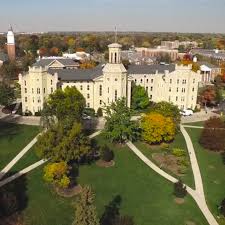
Do all paths lead back to Blanchard Hall?

A hundred years ago, after all, as I explore in my new book, fundamentalists founded their new network of evangelical colleges, institutes, and universities for two main reasons. First, they wanted an intellectual refuge. Mainstream colleges, fundamentalists universally agreed, had drunk the Kool-aid of evolutionism and materialism. At least as dangerous, however, were the behavioral norms that had come to prevail at mainstream schools.

In the 1920s, fundamentalist school leaders such as Charles Blanchard at Wheaton College in Illinois and Bob Jones at Bob Jones College in Florida promised their schools would protect students from both loose ideas and loose behavior.

At Wheaton, for example, fraternities were banned, along with smoking, drinking, cinema, dancing, and card-playing. The school posted spies outside the downtown movie theater to make sure Wheaton students weren’t sneaking in. At Bob Jones, students were prohibited from “loitering,” talking freely with members of the opposite sex, and absolutely anything that hinted of “jazz.”

For a century now, evangelical schools have been mocked as small-minded anti-intellectual “church colleges,” hopelessly out of touch with modern higher ed. They have also been attacked—often by their own students—as ridiculously controlling.

Back when he was a Wheaton student in 1966, for example, historian Mark Noll led the drive to reexamine the “Pledge.” It was simply not possible, students felt, for them to receive a decent college education if they weren’t allowed to make their own decisions. They were embarrassed to tell their friends at other schools that they weren’t allowed to go to the movies.

But who is embarrassed now? As leaders of secular colleges struggle to find ways to impose restrictions on student behavior, are they reverting to fundamentalist arguments of the 1920s? As Frank Bruni argued recently in the New York Times,

On a range of fronts, fraternities — and sororities — contradict our stated values and undercut our supposed goals for higher education, putting our inconsistencies and hypocrisies under a magnifying glass.

To ban them, though, or even to take real moves to enforce rules against certain types of student behavior, wouldn’t be as simple as it seems. As the first generation of fundamentalist college leaders lamented, a central principle of mainstream higher education has been the notion that students themselves must be in charge of their decisions.

To make any real change in the deadly culture at many frats, mainstream college leaders would need to make big changes in the way they see their role. Like fundamentalist colleges and their evangelical heirs, mainstream schools would need to insist on their roles as moral guardians.

Are Evangelical Colleges Obsolete?

What is the point of sending your kid to a conservative religious college? For almost a century now, many conservative evangelical families have worried that if they didn’t, liberal or secular colleges would steal the faith of their Christian children. New research data suggest that those fears might no longer be realistic. But the new study won’t reassure evangelical parents or college administrators.

As I’m arguing in my new book about the history of evangelical higher education [shameless plug: Pre-orders available now!], a leading reason evangelicals established their own network of dissenting colleges and universities in the 1920s was the fear that mainstream college robbed children of their faith.

As he appealed to fundamentalist parents to send their kids to his new Bob Jones College, for example, evangelist Bob Jones Sr. liked to tell a scary story: A good Christian family scrimped and saved to send their precious daughter to a fancy mainstream college. “At the end of nine months,” Jones reported,

she came home with her faith shattered. She laughed at God and the old time religion. She broke the hearts of her father and mother. They wept over her. They prayed over her. It availed nothing. At last they chided her. She rushed upstairs, stood in front of a mirror, took a gun and blew out her brains.

Never fear, Jones said. Though mainstream colleges had gone to the dogs, new fundamentalist schools like his could be trusted to protect children’s faith in the crucial college years.

Those fundamentalist fears were not left back in the early twentieth century. Today’s conservative leaders, too, warn of the deadly spiritual threat of liberal colleges. A few years back, young-earth creationist pundit Ken Ham defended his insistence on pure creationist colleges. As he put it, too many schools—even nominally evangelical Christian ones—end up putting intellectual

stumbling blocks in . . . children’s way that could lead them to doubt and ultimately disbelieve the Scriptures.

In every century the evangelical assumption has been the same: The college years are a uniquely important and a uniquely dangerous time for young people. If children are raised in conservative evangelical homes, skeptical college professors might turn them away from their family faith.

Religious-Switching-Unaffiliated-Table-1-1024x491

Could be worse; could be Notre Dame…

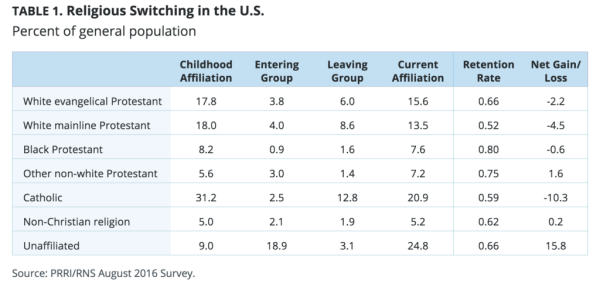
New data from the Public Religion Research Institute (PRRI) suggest that colleges aren’t really to blame when young people ditch their religion. At least, not anymore. PRRI’s Daniel Cox explains that more young people these days are leaving their religions before they enter college. As he writes at FiveThirtyEight,

Seventy-nine percent of young adults age 18 to 29 who have become religiously unaffiliated report having made this decision during their adolescent and teen years. But this was not always the case. Those age 65 or older who left their childhood religion reported doing so much later: Only 38 percent who reported leaving their religion did so during their childhood years. The majority (63 percent) of unaffiliated senior citizens left during their college and post-college years.

In other words, the college years USED TO be a vital time, a time of choosing to leave or stay with one’s childhood religion. It seems like that’s not really true today.

Does this mean that conservative evangelical colleges have become obsolete? If one main purpose of those schools is to nurture and protect evangelical faith, it seems as if they are not useful. Rather, if we accept this data, it would seem that evangelicals should focus on K-12 schools instead.

And we should note that evangelical college leaders might look at this data in a more optimistic way. According to the PRRI study, evangelical Protestants are losing adherents at a much lower rate than other American Christian groups. Evangelicalism is still losing young people, that is, but much slower than Catholicism or “mainline” Protestantism. It could be argued that evangelical colleges have helped stem the anti-religious tide among evangelical young people.

Still and all, I’m glad I’m not president of an evangelical college. If I were, I would wonder what to tell parents of potential students. If I couldn’t promise to help protect students’ faith, I wouldn’t have much else to talk about.

How Do You Know?

It might seem sloppy or even a little slapdash. Historians claim to know things about the past, but most of us don’t have hard-and-fast proof for the arguments we make. This morning I’d like to share one small example of the way the process works, at least in the case of my upcoming book.

I just finished reading John Lewis Gaddis’s Landscape of History with my graduate class. Gaddis is a leading historian of the Cold War. In Landscape of History, he argues that academic historians don’t try to make the same claims as social scientists. And that’s okay.Gaddis landscape

Gaddis uses a painting of a wanderer looking down on a fog-cloaked valley to illustrate his point. Historians can never be absolutely sure of their data; they are like the wanderer—looking into a distance that is cloaked and ultimately mysterious. Some social-scientists might object that the process makes claims it can’t back up with real data. Gaddis describes one such encounter:

Some years ago I asked the great global historian William H. McNeill to explain his method of writing history to a group of social, physical, and biological scientists attending a conference I’d organized. He at first resisted this, claiming that he had no particular method. When pressed, though, he described it as follows:

“I get curious about a problem and start reading up on it. What I read causes me to redefine the problem. Redefining the problem causes me to shift the direction of what I’m reading. That in turn further reshapes the problem, which further redirects the reading. I go back and forth like this until it feels right, then I write it up and ship it off to the publisher.”

McNeill’s presentation elicited expressions of disappointment, even derision, from the economists, sociologists, and political scientists present. “That’s not a method,” several of them exclaimed. “It’s not parsimonious, it doesn’t distinguish between independent and dependent variables, it hopelessly confuses induction and deduction.”

Gaddis liked the method anyway, and so do I. As I’m reviewing my research files for my upcoming book about the history of evangelical higher education (available for preorder now!) I came across a few items that didn’t make the final cut, but they do help illustrate the way I came to make the arguments I’m making.

One of the central arguments of the book is that evangelical and fundamentalist colleges have always been subjected to furious scrutiny from the national network of fundamentalists. There has always been a strong sense among the evangelical public that evangelical colleges must be held to a high standard of religious purity. Naturally, parents and alumni of every sort of college watch their schools closely. After all, they might be spending big bucks to send their kids there. In the case of evangelical higher education, even unaffiliated busybodies feel entirely justified—even compelled—to intrude.stenholm notes in controversial Kodon

Another key argument of the book concerns the feud between the fundamentalist and evangelical branches of the conservative-evangelical family. Beginning in the 1940s and 1950s, the fundamentalist network split into fundamentalist and new-evangelical camps. Some historians have called this a “decisive break” or an “irreparable breach,” but at institutions of higher education, it always felt more like a continuing family feud. At least, that’s the argument I make in the book.

How do I know?

As Professors McNeill and Gaddis insist, it is mostly a question of time. I spent long hours and days in the archives of various schools. I read everything. As I did so, ideas about these themes developed. As they did, I went back and reread everything. Did the idea seem to match the historic record? Over and over again, I noticed that school administrators fretted about the eternal and invasive fundamentalist scrutiny to which they were subjected. Over and over again, I noticed the tones of betrayal, hurt, and intimate outrage that characterized the disagreements between “fundamentalist” and “evangelical” schools.

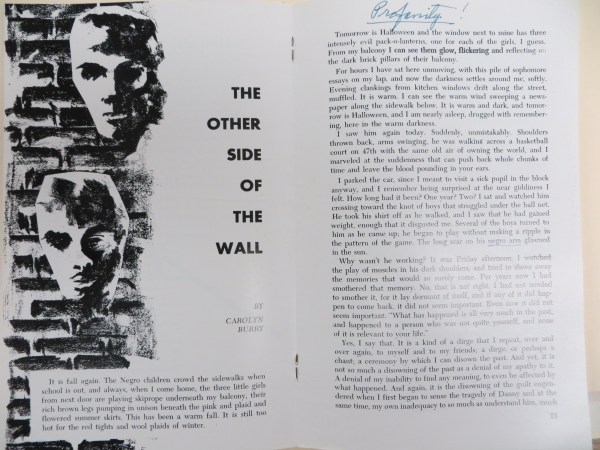
Not all the evidence made it into the book. One episode I do discuss is a controversial student publication from Wheaton College in Illinois. Back when he was an earnest evangelical student in the early 1960s, Wes Craven—yes, the Nightmare on Elm Street guy—was the student editor of Wheaton’s literary magazine. As part of his intellectual revolt against fundamentalism, Craven published two stories that he knew would ruffle fundamentalist feathers. In one, an unmarried woman wonders what to do about her pregnancy. In another, a white woman is sexually attracted to an African American man.

A quirk of the archives helped me see the ways the controversy unfolded. At the time Craven’s magazine came out, Gilbert Stenholm had been working at fundamentalist Bob Jones University for quite some time. He kept everything. His archive files are full of unique documents that helped me see how fundamentalist higher education worked in practice.

For example, he saved his copy of Craven’s controversial student magazine. His notes in the margins helped me understand the ways fundamentalists were outraged by their new-evangelical cousins. Along the edges of one story, an outraged Stenholm penned in one shocked word: “Profanity!” Elsewhere, Stenholm filled the margins with exclamation points.

What did this one-of-a-kind archival find tell me? It helped me see that fundamentalist schools like Bob Jones University had never really washed their hands of evangelical schools like Wheaton. For Stenholm, at least, the goings-on at Wheaton were always of intense interest. And it helped clarify to me the ways members of the far-flung fundamentalist community watched one another. They were always nervous about slippage—always anxious that trustworthy schools could slide into the liberal camp.

Stenholm’s outrage in the case of Craven’s student magazine didn’t make the book’s final cut, but this copy of Wheaton’s student magazine in Stenholm’s collection told me a lot. It doesn’t serve as the kind of “parsimonious,” independent-variable method that Gaddis’s social scientists would prefer. But taken all together, bits and pieces of archival gold like this one guided me to the argument I finally “ship[ped] . . . off to the publisher.”

Felony Football Assault at Fundamentalist U

The world of evangelical higher education is reeling at the revelations from Wheaton College in Illinois. Five football players have been charged with felony assault in a brutal hazing incident. The incident reminds us of the long tensions between aggressive, win-at-any-cost college athletics and the behavioral rules of evangelical colleges.

1940s MBI banner and patch
Rah rah.


It’s easy enough to forget nowadays, when big evangelical schools like Liberty are making their mark in the competitive world of college athletics. Since the beginning, however, as I detail in my new book, thoughtful evangelicals wondered if the pressures that inevitably accompanied sports success threatened the mission of their religious institutions.

The story from Wheaton is gruesome. A freshman football player was attacked in his dorm room by senior teammates. His wrists were duct-taped together and he was thrown into the back of a car. His teammates piled in on top of him, threatening him with sexual assault. As Chris Gehrz has pointed out, the language they used—crudely blaring that Muslims commonly engaged in bestiality and sexual aggression—points out the deep structural flaws that can cocoon students at evangelical schools. Even worse, Wheaton seemed to be willing to sweep this assault under the rug, letting the players keep playing after they performed some community service and wrote apologetic essays.

The victim ended up abandoned half-naked in a field with torn muscles in both shoulders. He immediately left the school.

Sadly, there’s nothing unique about this sort of brutal collegiate assault, done under the banner of team-building “hazing.”

Schools like Wheaton, however, have built their reputation as different sorts of schools, schools that hold their students to a higher standard of conduct. As long as there have been evangelical colleges and universities of this sort, however, there have been deep tensions about athletic programs. For many schools, hosting winning sports programs are an intrinsic part of being a “real” college.

Back in 1944, for example, one Wheaton student wrote home in excitement that the new sports program (it only started in 1939 at Wheaton) gave her school a tradition to embrace. As she prepared to head to the weekly football game, she told her mother that the game against rival North Central College was a big deal on campus. “You see,” she explained to her mother,

Wheaton is to N.C. what Army is to Navy, or Harvard is to Yale.

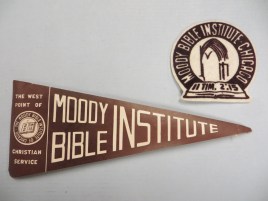
Even in the sequestered world of the Moody Bible Institute, students glowered at their relative lack of athletic success. In 1945, one student complained that MBI teams should earn more wins. In spite of their large student body and their good athletic facilities, this student wrote in the student paper, the MBI “A” team still lost at basketball to the Wheaton “Bs.”

There had always been anxiety about the behavioral implications of athletics. In its first years, for example, Bob Jones College (it became Bob Jones University only in 1946) fielded teams under the name the “Swamp Angels.” The school’s leaders soon canceled the athletic program, however. As Bob Jones Jr. later remembered,

We found the people were betting on our games, littering our campus with whiskey bottles.

Even in that first generation of evangelical higher education back in the 1920s, critics charged that school leaders cared more about sports success than soul-saving. The short-lived and ill-fated fundamentalist experiment at Des Moines University demonstrated this conundrum better than any other school. When Toronto’s fundamentalist firebrand T. T. Shields stormed into town and took over the school, he fired all the faculty and forced them to reapply. Every potential faculty member went through an intrusive personal interview regime to get their jobs back. The entire faculties of the science and math departments quit in disgust. But not the football coach. Observers quickly noted that the coach was welcomed back in spite of his open cynicism about evangelical religion. When asked if he had been converted, for example–“born again”—the coach reputedly sneered, “Yeah, lots of times.”bju banner

Even elite Wheaton can’t claim innocence about questions of athletic influence. As soon as it started its athletics programs in the 1930s, critics on and off campus charged that football coach Fred Walker was not an appropriate evangelical role model. Walker was accused of a non-Christian tough-guy approach to coaching, cussing at players and using foul language to belittle them. In spite of all the charges, Wheaton kept Walker on.

Even back then, the college wanted to be seen as a real college. It wanted students to think of Wheaton as more than just a dumpy second-rate church school. Part of the package, since the very beginning, was a game-winning athletics program.

The behavior of students and administrators in this recent assault are nothing new. They only remind us of the ever-present tension at evangelical colleges like Wheaton. Like every school, Wheaton gives its athletes too much leeway. The results are often criminal and catastrophic.

Whew…

It wasn’t pretty, but it got done. I just sent in my proofs and index for Fundamentalist U: Keeping the Faith in American Higher Education. It’s a huge relief—that’s the last step for me before the book comes out.

index mash up FUndy U

How the sausage gets made…

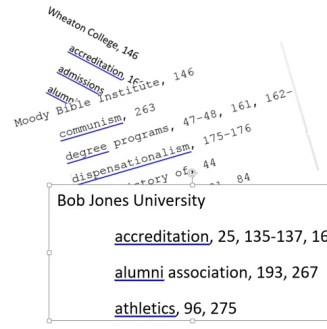
Making an index is a weird job. There are professional indexers you can hire, but to me it seems like an intrinsic part of an author’s job. Nobody knows the book as well as the author; no one can tell what sections need to be emphasized in the index and which ones can be cut out.

Making this index wasn’t particularly fun, but it was a good chance for me to pore over the proofs one last time. It allowed me to think about the book’s argument from a new perspective and get a new take on writing I did quite a while ago.

So what’s next? I just sent it all in to the Oxford folks and they will put it all together. We’re hoping the book will come out in early 2018. I’ll keep you posted!

What Is the REAL Deal with Fundamentalists and the Big Eclipse?

As Bart Simpson put it best, “The ironing is delicious.” Secular folks like me blast kooky fundamentalists for their wacky ignorance of science, while we ourselves show a curiously stubborn ignorance about what fundamentalists really believe. Tomorrow’s big eclipse gives us another example of the way most outsiders don’t understand conservative evangelical culture.

What are fundamentalists thinking about tomorrow’s eclipse? It might be tempting to agree with the right-wing watchers at Americans United for Separation of Church and State. The AU folks stumbled across a blog post from Billy Graham’s daughter Anne Graham Lotz. Lotz worried that the eclipse is meant as a warning of God’s impending judgment on the USA. Foolish Americans, Lotz warned, are blithely

preparing to mark this significant event with viewing parties at exclusive prime sites. The celebratory nature regarding the eclipse brings to my mind the Babylonian King Belshazzar who threw a drunken feast the night the Medes and Persians crept under the city gate.  While Belshazzar and his friends partied, they were oblivious to the impending danger.  Belshazzar wound up dead the next day, and the Babylonian empire was destroyed.

At Americans United, Rob Boston warned that this sort of blather proved the sad truth about “fundamentalist Christians these days.” Folks like Lotz, Boston wrote, wallow in their

utter repudiation of science. It’s not that they can’t understand it – they choose not to try. Furthermore, they often heap disdain upon it.

Now, I’m no fundamentalist and I’m not worried that the eclipse is a fulfillment of Joel 2:31 or Ezekiel 33:1-6. In fact, I don’t really care what the Bible says about eclipses or anything else. But as I work on my new book about American creationism and my soon-to-be-released book about the history of evangelical higher ed, I can’t help but protest that Boston’s viewpoint is astoundingly ironic. Secular anti-fundamentalists like Boston (and me) need to do more to understand the real relationship between conservative evangelical religion and mainstream science. Too often, it’s not that we can’t understand it, it’s that we choose not to try. And then we often heap disdain upon it.

…oh, the ironing!

In fact, even the most conservative radical creationist institutions in these United States are acting remarkably similar to mainstream institutions in their embrace of tomorrow’s eclipse as a way to bring science to the masses. To be sure, it’s a very different sort of science, what ILYBYGTH calls “zombie science,” but it is nearly the opposite of an “utter repudiation” of science. Radical creationists LOVE science; they engage in endless missionary outreach to bring their vision of real Biblical science to the benighted secular and moderate-evangelical multitudes.

At Answers In Genesis, for example, radical creationist missionaries are falling all over themselves to help curious people view the eclipse and draw the correct scientific lessons from it.

At fundamentalist Bob Jones University in Greenville, South Carolina, administrators are pulling out all the stops to use the eclipse to spread the word. Located right in the path of totality, BJU is hosting a huge party, with speakers explaining the proper way to understand the relationship between the Bible and science.

bju eclipse

Belshazzar at BJU?

Bryan College, too, another creationist stalwart, is throwing a viewing party on campus, with faculty experts offering lectures on the proper fundamentalist way to understand eclipses.

Are these radical-creationist institutions saying the same thing as secular institutions about the eclipse? Of course not. No secular scientific experts care much about the Bible’s explanation of eclipses. But just as secular scientific organizations are using eclipse mania to attract attention to their programs, so too are these creationist groups crowing about their scientific expertise and their many scientific resources.

So, even though some conservative evangelicals are warning people away from viewing parties and eclipse-related hubbubbery, many more are using the eclipse as a way to explain their vision of the proper relationship between God and science.